
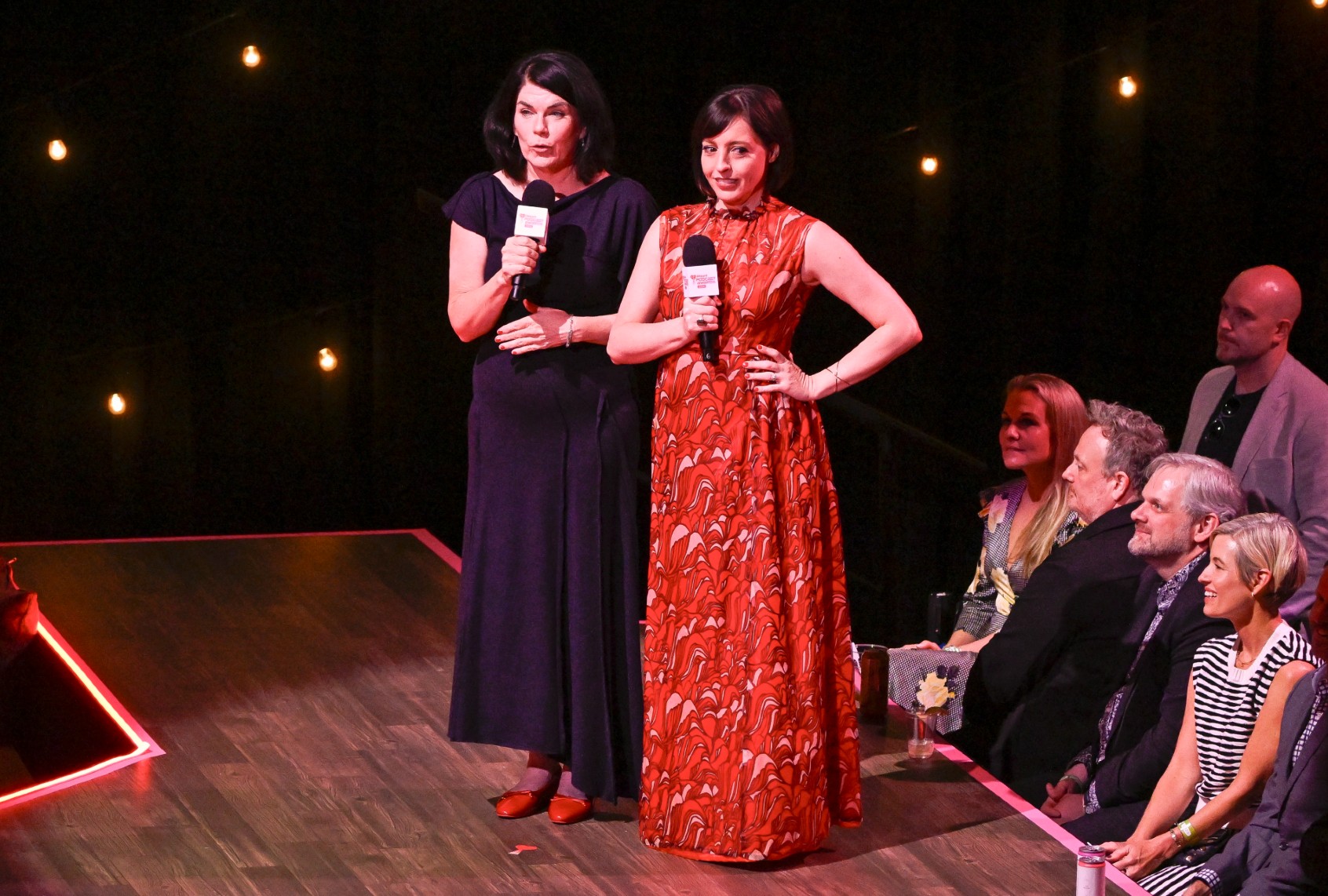

Back in 2019, when the combination advice guide/memoir “Stay Sexy and Don’t Get Murdered” came out, I interviewed its authors, Karen Kilgariff and Georgia Hardstark, in a theater packed with women. There were probably some men there as well, but if so, they were mostly ornamental; this event was all about the ladies. Specifically, about the ladies so devoted to the duo’s podcast, “My Favorite Murder,” that they called themselves Murderinos. They faithfully downloaded the show’s two weekly episodes, in which the hosts traded terrifying accounts of serial killing, cult slaughter, and era-defining violence. They discussed the podcast, and true crime in general, in a sprawling Facebook forum, and convened smaller subgroups organized by location (Montréal Murderinos), vocation (Teacherinos) or secondary obsession (Meowderinos for cat lovers, Rollerinos for derby girls).
MFM turns 10 this year, making it one of the longest-running podcasts ever, along with one of the most profitable and, not unrelatedly, the most controversial.
And they revered “MFM” for pretty much the same reason that Kilgariff and Hardstark began the podcast: It celebrates an unapologetic fascination with the darkest parts of human existence. Lore has it that Kilgariff, 55, met Hardstark, 45, at a party where the latter was transfixed by the former’s story of witnessing a terrible accident; their giddy relief at finding someone flying the same freak flag was the seed of MFM. On TV, in books and on other podcasts — including “Serial,” the 2014 podcast that kickstarted a podcasting gold rush — true crime was about investigation and forensics; here, it was the way two professionally funny women forged a friendship that within a short time became one of podcasting’s first blockbusters.
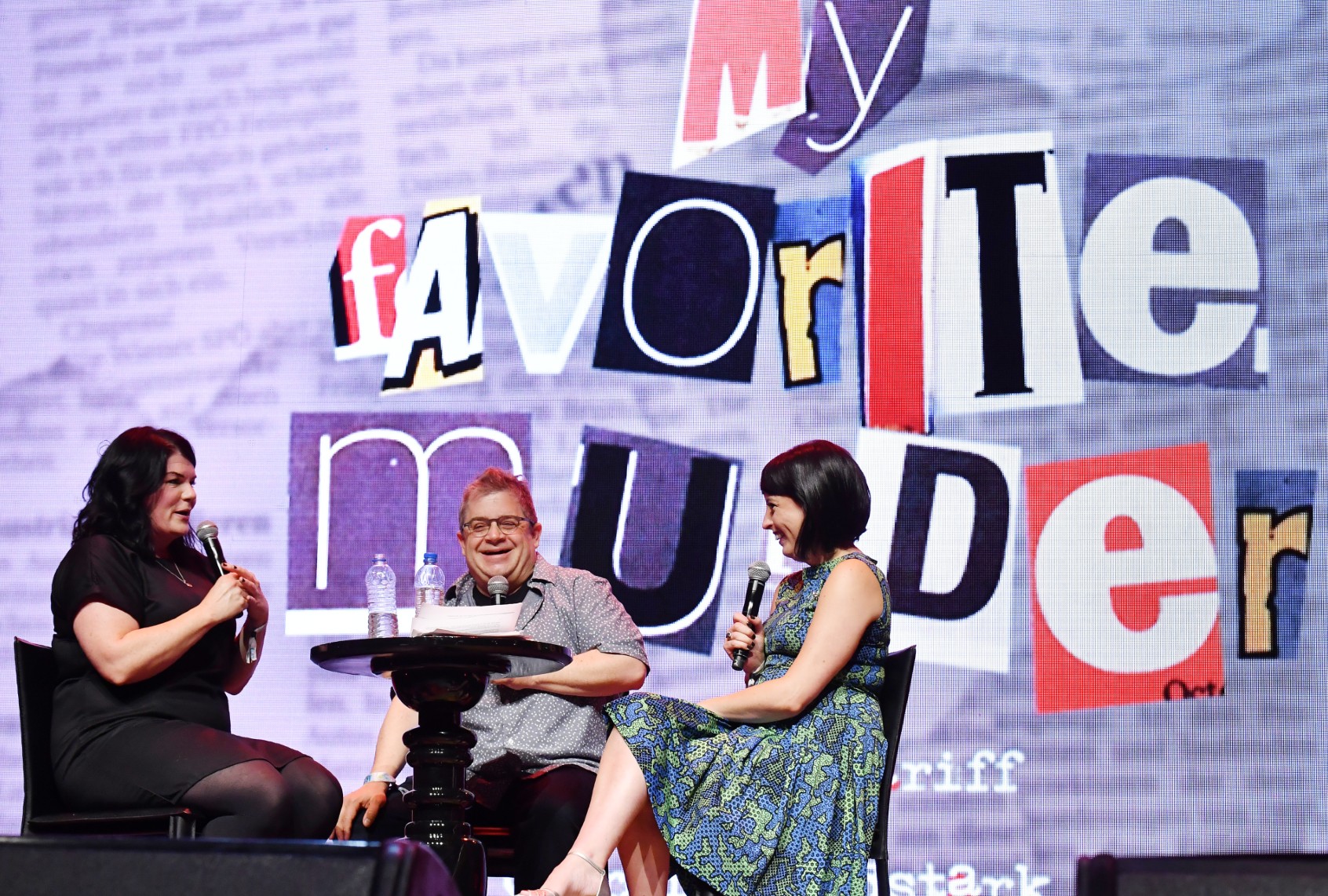
(Jeff Kravitz/FilmMagic for Clusterfest) Karen Kilgariff, Patton Oswalt and Georgia Hardstark speak onstage at the 2019 Clusterfest on June 23, 2019 in San Francisco, California.
MFM turns 10 this year, making it one of the longest-running podcasts ever, along with one of the most profitable and, not unrelatedly, the most controversial. A decade on, there are countless podcasts in the genre, generally known as true-crime comedy, that it helped establish, from “Wine & Crime” and “True Crime Obsessed” to “Small Town Murder” and “Sinisterhood.” There is also a sizable contingent of Murderinos who, despite once selling out MFM’s live shows and book events, found themselves uncomfortable with the genre and conflicted about repurposing real, gruesome events as lighthearted entertainment.
Phoebe is one of those women; her dark sense of humor and love of mystery novels led her to MFM about a year into its run. “I worked in a warehouse, and I really liked how casual the show was, like I was just there with Karen and Georgia. They weren’t trying to be experts, they were just talking to each other. And it wasn’t like they were laughing at murder” — they were simply acknowledging humor as a release valve for fear and anxiety.
The history of morbid curiosity is as old as history itself, and the extremes of human violence a staple of narrative in many mediums, from gothic literature and penny dreadfuls to murder ballads and slasher films to mass-market paperbacks and “Forensic Files.” And though women have always been the primary audiences for true crime, their reasons for consuming it have been scrutinized through a gendered lens. “My mother and grandmother got me into true crime,” Phoebe says, citing her grandmother’s copies of “Fatal Vision” and “Helter Skelter” as foundational texts. “But it wasn’t a thing they’d talk about at the post office.”
Part of what drew Phoebe to MFM was its explicit engagement with a paradox: that women were simultaneously stereotyped as true-crime consumers and judged for consuming true-crime content. There are plenty of theories about what makes true crime compelling to women, and “My Favorite Murder” reflects several of them. It’s a form of empathy; it’s a flavor of gossip. It gives women historical context for systemic misogyny. It lays bare the way race and class are leveraged by the carceral system to protect women, but also used to explain — or worse, justify — violence against them.
That said, the hypothesis around which Kilgariff, Hardstark and their listeners most often coalesced was a straightforwardly psychological one. For women raised in a world that constantly warns them of lurking dangers named and unspoken, can exposure to narrative depictions of those dangers be therapeutic? Research suggests it can; a New York Times article about the podcast’s tremendous following referred to a 2010 study, published in the journal Social Psychological and Personality Science, that found women “use ‘tales of rape, murder and serial killers’ as a way to process the dark persistence of misogynistic violence in society at large.”
Want more from culture than just the latest trend? The Swell highlights art made to last.
Sign up here
MFM, in contrast to its male counterparts like the crass true-crime bro-down “Last Podcast on the Left,” emphasized fear’s presence on the periphery of female existence and the media and pop-culture glamorization of charismatic predators that’s meant to intensify it. Kilgariff and Hardstark wrestled with what it meant to be transfixed by murder committed by men against women and calling bulls**t on law-enforcement and legal protocols that treat female and female-presenting victims as though they are criminals too. The podcast itself had impeccable timing: It debuted the same year Trump was elected and coincided with the burgeoning #MeToo movement, and its fandom echoed the rhetoric of ‘90s-era girl power in tagging MFM as empowering and validating. The hosts talked openly about their struggles with anxiety, addiction and depression and reminded their social media followers to “take your meds,” a phrase that joined “stay out of the forest,” “fu*k politeness,” and “you’re in a cult; call your dad” in a growing pantheon of MFM taglines.
For Phoebe, who was in her 20s when she started listening, MFM was a weekly reminder of the need to be vigilant: “I was single and on the apps, always reminded that even dating could be risky.” She knew stockpiling real-life violence in her mind wasn’t a cheat code for surviving it herself, but she also didn’t see the harm in it. It was, after all, a time when the bar for what constitutes magical thinking was sinking to the floor: Was “If I consume enough stories about murder, I can unconsciously protect myself from being murdered” really more implausible than, say, corporate media’s insistence that Donald Trump was somehow, at some point, going to pivot away from narcissism and self-dealing to become a thoughtful, norms-respecting statesman?
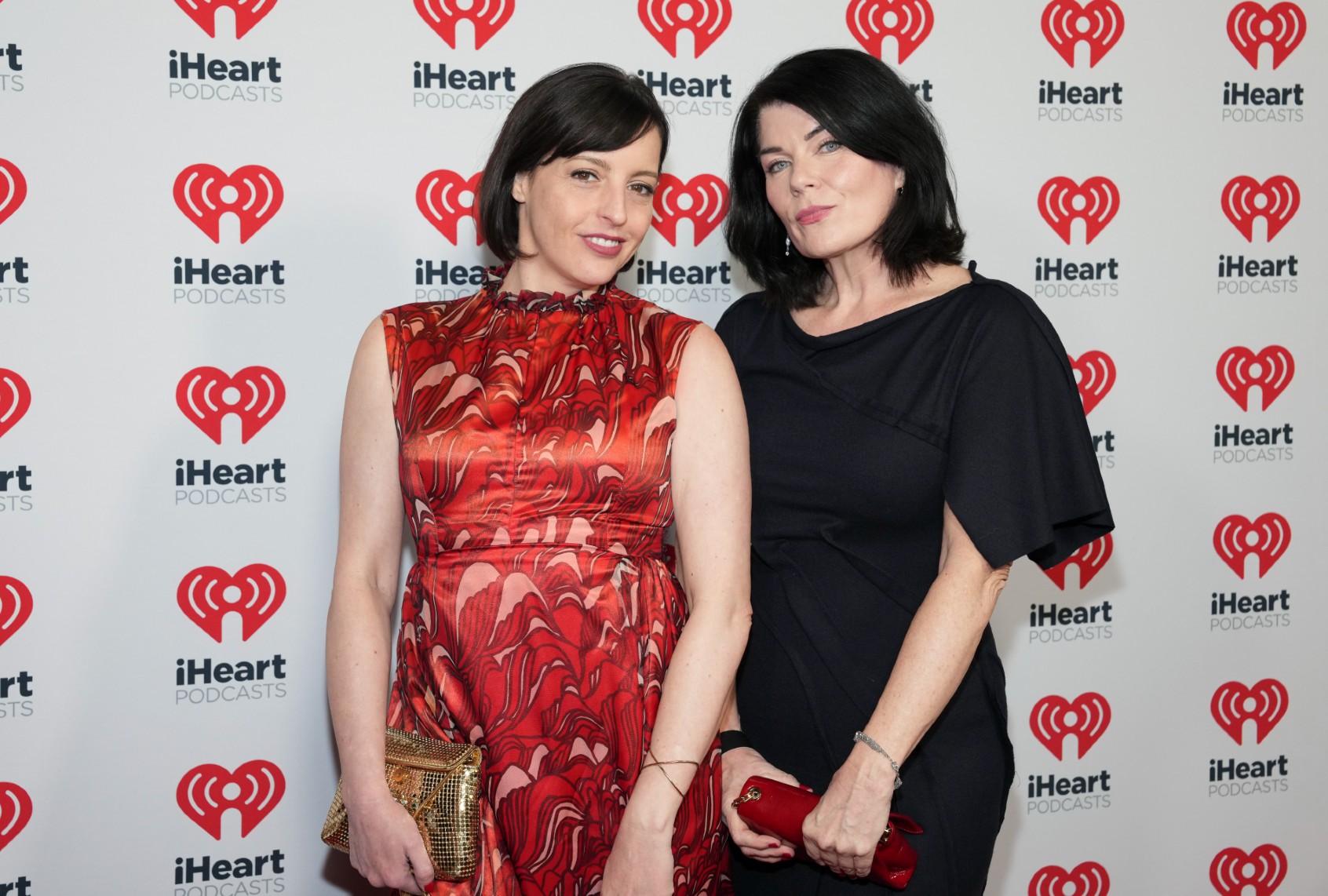
(Amy E. Price/SXSW Conference & Festivals via Getty Images) Georgia Hardstark and Karen Kilgariff at the 2025 iHeartPodcast Awards on March 10, 2025 in Austin, Texas.
“My Favorite Murder”’s fast-growing fandom exposed the various ethical risks of mining actual incidents of violent crime for amusement. There was the fact that MFM’s content came from Wikipedia entries and other unvetted sources whose errors and inaccuracies were then replicated by the hosts. There were the verbal tics that could come across as insensitive, like Hardstark’s habit of shortcutting through stories with a singsonging “da da da da da.” There was the conspicuous whiff of victim blaming in the show’s signoff, “Stay sexy and don’t get murdered,” and the inconvenient reality that living by the credo of “F*ck politeness” was a privilege that was available to a small number of women and often deadly for many others. And there was the hosts’ initial openness to critique that eventually soured into defensiveness, dismissal and the replacement of MFM’s original Facebook community with a “fan cult” that Murderinos could join for a yearly fee.
The overarching conflict in true crime’s podcast era was one that always existed: the morally unsound business of profiting from the torment of victims’ families and loved ones. Even when done with care and good intentions, true-crime comedy makes a mockery of nightmares that can’t be switched off.
Adding to existing tensions, meanwhile, was the growing conflation of obsession and expertise within true-crime fandom overall. It reached a tipping point in the summer of 2021, when 22-year-old vlogger Gabby Petito disappeared and her boyfriend, Brian Laundrie, became the prime suspect. The number of true-crime fans who self-deputized as citizen sleuths with discomfiting speed and relish was what prompted Phoebe, along with other MFM devotees, to rethink the role of Murderino. It was one thing to enjoy Karen and Georgia talking about horrific crimes of the past from the vantage of the present, but quite another for true-crime stans to swarm Petito’s social media, hunting for clues and jockeying to present their own theories. “It was like, I don’t want to be associated with this anymore,” says Phoebe. “It felt gross.”
But the overarching conflict in true crime’s podcast era was one that always existed: the morally unsound business of profiting from the torment of victims’ families and loved ones. Even when done with care and good intentions, true-crime comedy makes a mockery of nightmares that can’t be switched off. In her 2019 essay “Don’t Use My Family For Your True Crime Stories,” author Lilly Dancyger minced no words about true crime as podcast content: “[F]or someone to splash [my cousin’s] last moments and the horror of her death onto a TV screen, or to narrate it between advertisements for Casper mattresses,” she writes, “would be intolerable to me.”
We need your help to stay independent
In a Hollywood Reporter feature marking the podcast’s anniversary, Kilgariff inadvertently echoed the frustration of ex-Murderinos, saying “[S]ometimes I don’t understand what the f*cking appeal here is.” But MFM remains a huge success by any measure: nearly 20 million monthly listeners, major partnerships with Netflix and Wondery, a seat at the top of podcast charts. Even fans who jumped ship credit the show’s creators with navigating what launched as a passion project but became a global juggernaut. “I think they really did their best,” muses one Reddit user in one of the many MFM subreddits that are still going strong. “I’m just mourning the loss of the show I once loved.” Another asserted, “It’s basically a completely different podcast now than when it started . . . [I]f you’re someone who didn’t try this podcast for the first time until [after] 2020, you’ll never understand why it got popular in the first place. But if you were there from the beginning, it makes sense.”
Phoebe eventually rekindled her love for true crime, these days supporting independent podcasts that prioritize investigative rigor and a focus on justice over rehashing sensational crimes. Occasionally, she’ll cross paths with another escapee from MFM’s fan cult and feel a jolt of the familiar, righteous solidarity that it inspired. Ultimately, though, “I miss what it was, but I moved beyond it.”
Meanwhile, the big business of true crime keeps getting bigger, which means that its unresolved ethical quandaries, when they resurface, are kicked a little further down the road. And the genre’s transgressive luster has definitely dimmed, set now against a growing backdrop of unrelenting injustice, open sadism and buffoonish villains with dangerously unchecked power. The biggest difference visible in the decade since MFM debuted isn’t the fan base, the research or the stories themselves — it’s that the desire to find escapism in true crime seems itself to be a bygone fiction.
Read more
about true crime
