
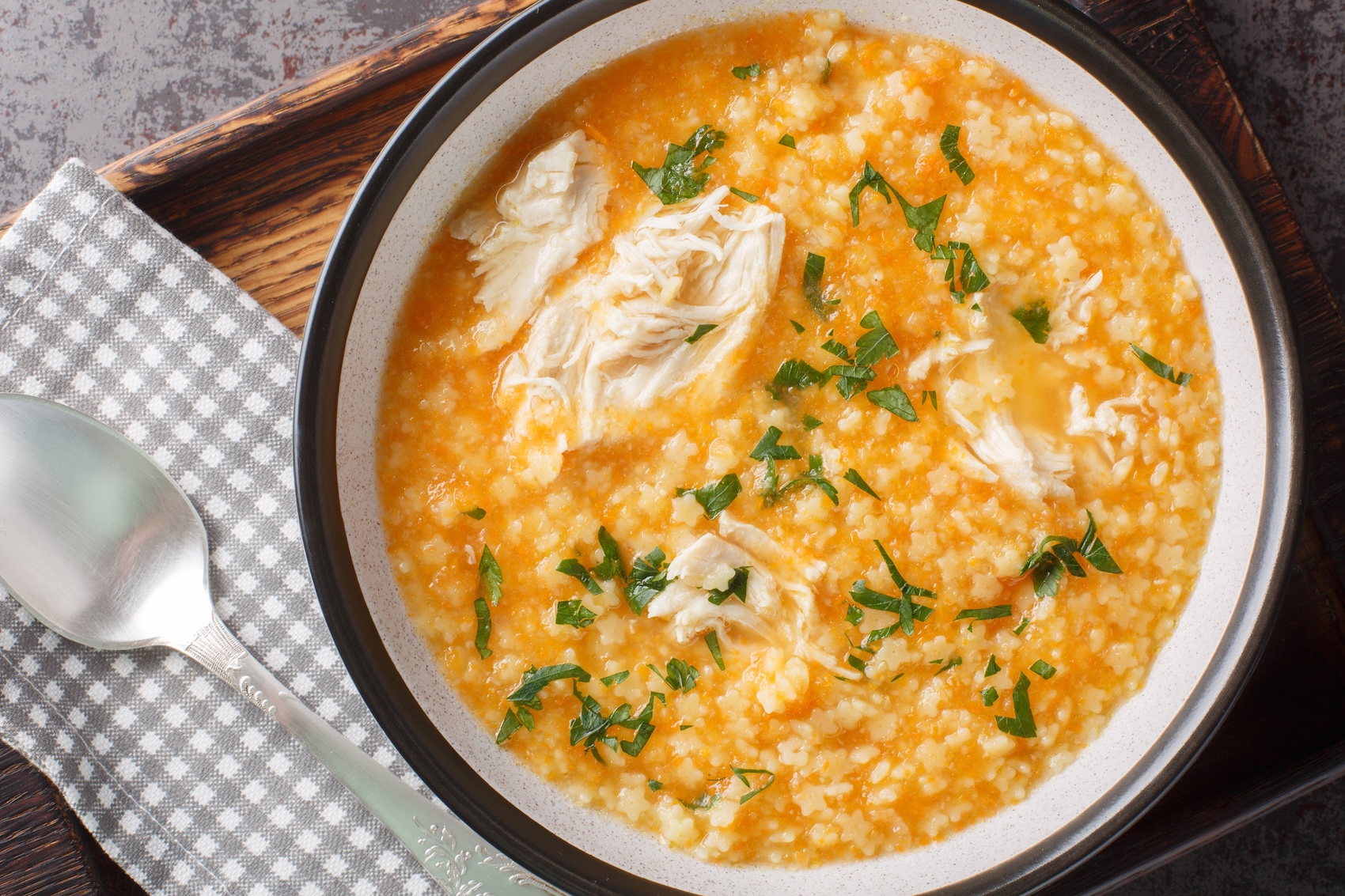

There is generations’ worth of wisdom about what to eat when one is convalescing — and something faintly romantic about the ritual of it, spoon by spoon nourishing yourself back from the brink, until one day you look up from a bowl of chicken soup and realize, with a small shock, I feel like myself again.
But what of the days when you aren’t really sick, you just don’t have an appetite? You wake up and feel a little off — maybe it’s sadness, maybe it’s excitement, maybe it’s burnout, maybe it’s just the weather and your inbox conspiring against you. Either way, you’ve landed in the appetite gap: you’re hungry, but not hungry-hungry. Every dish you imagine feels either too heavy or too insubstantial. You know you need to eat, but nothing sounds good.
Consider this a guide for those days, from someone who has lived enough of them — and loves food enough to have developed a surprisingly rigorous philosophy about what, exactly, to do when desire disappears.
The first thing that helps is to stop thinking in dishes and start thinking in sensations.
Instead of wrestling with the endlessly broad question What do you want?, try something gentler and more specific. What temperature could you tolerate right now? Do you need crunch or acid? Softness, or something slurpable? And — perhaps most importantly — how much energy do you actually have to expend? (Low desire often travels with low motivation to get in the kitchen, though not always, and that information matters.)
It can help to think in loose categories — less a rubric than a set of handles you can grab when decision-making feels like too much:
Temperature: cold, room temperature, warm-but-not-hot, steaming
Texture: slurpable, crunchy, soft, spoonable
Flavor note: acid, salt, gentle umami, creaminess
Effort: one pan, one bowl, zero chopping
Once you start thinking this way, certain foods begin to reveal themselves — not as recipes so much as answers. Here are some of my favorites.
Cold-brewed green tea
Something broke in my body when I turned 32 and my caffeine tolerance plummeted seemingly overnight. I was recently reminded of this after having what I thought was a cute little mid-afternoon coffee, only to wake up at three in the morning acutely aware of every cell in my body, my heart racing, my breath shallow. Was I having a heart attack? Dying? No — just profoundly over-caffeinated.
Which, I suppose, makes it a little charming that one of my favorite parts of the day now is opening the fridge for breakfast and reaching for the big glass jug of cold-brewed green tea I keep on hand (it used to hold cold-brew coffee, but alas, no more). While it isn’t food, it reliably supports me on days when I know appetite is going to be a problem — and when dumping caffeine onto an empty stomach would only make things worse.
My current favorite is a blend of bancha green tea and dried yuzu peel. I steep a few bags overnight in cold, filtered water, which yields a lightly sweet, lemony green tea that’s smooth and refreshing, less verdant and tannic than its hot-brewed counterpart, and infinitely gentler than chilled coffee. It’s not breakfast, exactly—but it makes breakfast possible.
Rice and egg bowls
For something warm and grounding that my body can reliably handle, I have a go-to breakfast: rice and eggs. Sweet breakfasts have never been my natural habitat—good oatmeal is a beloved, comparatively rare exception, as is a single yeasty, griddled buttermilk diner pancake swimming in syrup. Mostly, I want something hearty that isn’t a three-egg omelet or a cheesy BEC on a toasted bagel.
Enter my dummy-simple version: I start the rice cooker before taking my dog, Otto out, and when I return, I spoon a bit into a small bowl and slide a quick over-easy egg on top. A drizzle of soy sauce, a scatter of scallions, and always — always — some lemon zest, which cuts through the yolk’s richness and, once blended, produces what my brain now registers as lazy hollandaise. Warm, savory, digestible, familiar—I reach for this most mornings, appetite or no.
Want more great food writing and recipes? Sign up for Salon’s free food newsletter, The Bite.
Part of what makes the rice-and-egg bowl such a reliable ally against the “Nothing sounds good” demons is its modularity. You can riff depending on fridge contents or, after a brief sensory inventory, what feels right in the moment. Crisped bacon, chopped into uneven bits like salty candy? Fatty slices of avocado, dusted with everything bagel seasoning or drizzled in chili crisp? If you caught onto the feta-egg trend of yesteryear, here’s a perfect time to deploy it. All of it works. All of it is permissible.
Soft-on-the-body soups
Soup is the obvious recommendation for days when appetite has gone AWOL, but two in particular stand out as personal MVPs: the “tiny everything” pastina and rotisserie chicken congee. They sit in similar registers — closer to porridge than broth, a texture that my brain immediately interprets as nourishing.
For the pastina, I cook finely chopped carrots, onions, and celery until soft, then remove and blend about half until silky smooth. Back in the pot it goes, along with chicken stock, pastina (or any other teeny-tiny pasta shape) and frozen miniature meatballs—sometimes homemade, sometimes store-bought. What’s important is that they all hit temperature together, resulting in a warm, savory bowl that quietly covers protein, carbs, and some vegetables, all without fuss.
Then there’s the congee.
Late last year, I visited a pop-up at HAIBAYÔ, a Vietnamese coffee shop and community space in my Chicago neighborhood. One special featured a comforting rice porridge, simmered until thick and creamy, studded with Costco rotisserie chicken—an unparalleled convenience food. It’s a brilliant way to bulk up a basic congee recipe (or swap it in for the mini-meatballs in the pastina) with almost no extra effort, and somehow, the ritual of stirring and watching it thicken makes the body believe it’s getting exactly what it needs.
We need your help to stay independent
A better smoothie
For years, I never bothered making smoothies at home. I was stuck in the strawberry-banana register, and honestly, the frozen fruit section of the supermarket felt intimidatingly small. My early smoothie experiments ended with a freezer full of ice-burned banana slices and sad curls of kale — truly the saddest smoothie packs imaginable.
But the world of frozen fruit has expanded, and surveying bags of mango, wild blueberries and dragon fruit inspired me to develop a few go-to smoothies for low-appetite days — because sometimes, the only way you want (or can) get nutrition is through a straw. It’s also a perfect moment to sneak in some supportive protein: protein powder, silken tofu, or nut butters.
A few things I’ve learned along the way: I like using slightly sweetened, roasted fruit, usually prepped in a big batch at the start of the week. It gives the smoothie a jammy backbone, while frozen banana provides the “ice” element. Don’t sleep on seasoning: warming spices like cinnamon, allspice and cardamom, plus baking favorites like ginger, citrus zest, or vanilla, take a smoothie from functional to delicious. And if dairy milk or yogurt feels heavy, plant-based alternatives like coconut or soy milk work beautifully.
Right now, the version I won’t let go of combines honey-roasted peaches, coconut milk, Greek yogurt, a touch of frozen banana and cinnamon — a smoothie that somehow feels indulgent while still quietly supporting the body.
Crunch, without commitment
Another low-desire-day favorite is what I internally call a “crunch plate.”
It’s a small, deliberate collection: thin-cut vegetables—slightly-thicker-than-paper radish slices, slim carrot and cucumber matchsticks, sugar snap peas pre-snapped in half—some crackers (the more durably woven and Triscuit-like, the better), maybe a pickle spear or two and a herby, creamy dip. The dip is nothing fancy: Greek yogurt, a squeeze of lemon, a swirl of miso and whatever herbs happen to be languishing in the fridge — usually dill and parsley.
It’s deceptively simple, but intentional. The thin-cut vegetables make it easy to nibble a bite at a time, rather than staring down a full head of lettuce in a salad bowl. Crunch, as a sensation, sometimes works like a gentle tether back to appetite. Best of all, it’s snacky, which feels low-pressure, but nourishing enough to count as a meal.
Chilled noodle salads
When it comes to chilled noodle salads, I think of two main varieties.
There’s the Italian-style pasta salad, tossed in olive oil and vinegar and studded with olive-bar favorites — roasted red pepper, artichoke hearts, basil — and perhaps some deli stalwarts, like chopped cured meats or cheeses. Then there are the Chinese or Taiwanese cold sesame noodles: bouncy wheat noodles dressed in a creamy, savory, nutty sauce of sesame paste, soy, black vinegar, garlic, chili oil and sugar, usually topped with fresh, crunchy additions, like julienned cucumber, cilantro, peanuts and scallions.
I love both because they thrive in the gray area of appetite: nothing too hot, nothing too cold, nothing that makes me recoil from a bite. They’re forgiving, flexible and satisfying in a quiet, slurpable way.
Room-temperature, savory, slightly textured — these salads often hit my sweet spot when I want something that exists between snack and dinner.
Just a really good turkey sandwich
Sometimes the answer is the thing you already trust. Sourdough bread, thin-sliced turkey, and a smear of Kewpie — that’s my base. If I’m feeling saucy, shredded iceberg and Swiss join the party. The number of times I’ve let out a relieved sigh at the sight of these familiar components should probably tell me something about myself.
And here’s a truth I like to remember on rough days: when it comes to nourishment, you don’t have to make it beautiful. You can eat the same thing three days in a row. Repeating foods isn’t a failure—it’s information, a quiet signal of what your body actually wants.
At the end of the day, eating something is enough.
Appetite comes and goes. Some days, it whispers; other days, it hides behind everything else you’re carrying. Feeding yourself is not a test, nor a performance—it’s an ongoing conversation between your body, your mind and the world you’re navigating.
So, above all, when nothing sounds good, start small. Start with what asks the least of you: a spoonful, a sip, a slice, a bite. Let eating be not just another demand, but a way back to yourself.
Read more
about this topic
