
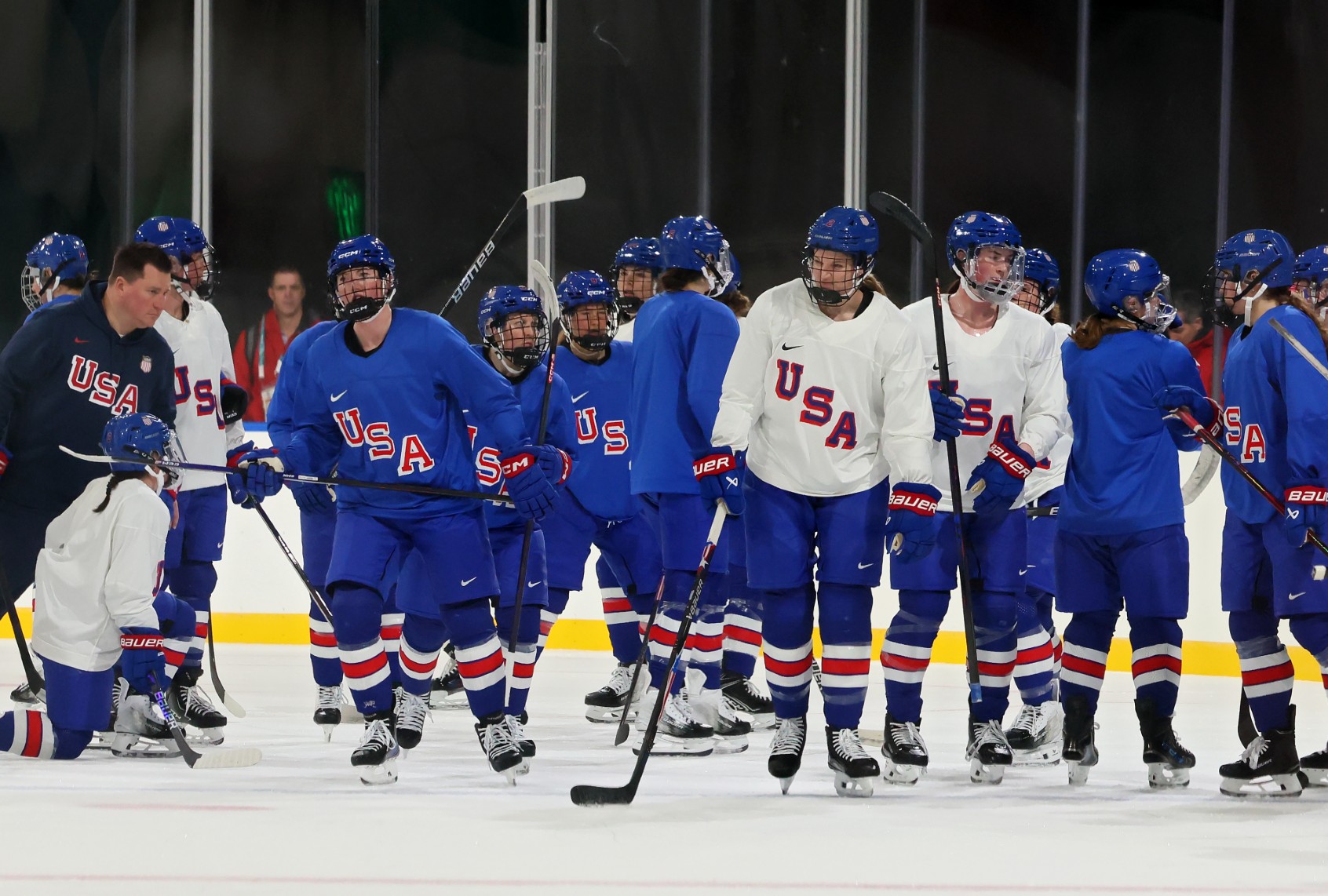

The boos started early in 2025, at NHL and NBA games in Canada. When the U.S. national anthem played before the opening of hockey’s 4 Nation Face-Off: boos. As the Vancouver Canucks squared up with the Colorado Avalanche, more boos. At a Toronto Raptors home game, “The Star-Spangled Banner” was booed again, though not before a round of polite cheers for the 15-year-old girl who performed it. Donald Trump had kicked off his second term as president of the United States with the unusual tactic of purposely alienating its neighbor to the north, and across the country, Canadian sports fans responded in the most powerful way they could without actually staying home: They booed, loudly and often.
“Anytime an American sports team travels abroad the next three years, they will likely be cast as villains,” predicted sportswriter Will Leitch in an Intelligencer column early in March; with the opening ceremony of the Winter Olympics this Friday, we’re about to see whether he was right. Olympic history is full of American athletes who have showed up to represent the United States in times where being on the world stage is, let’s say, less than ideal. But for Team USA, this particular moment, amid tensions around an ICE presence in Milan Cortina, might feel like being the child of a hated school principal strolling into the cafeteria right after an announcement that Spring Break has been canceled.
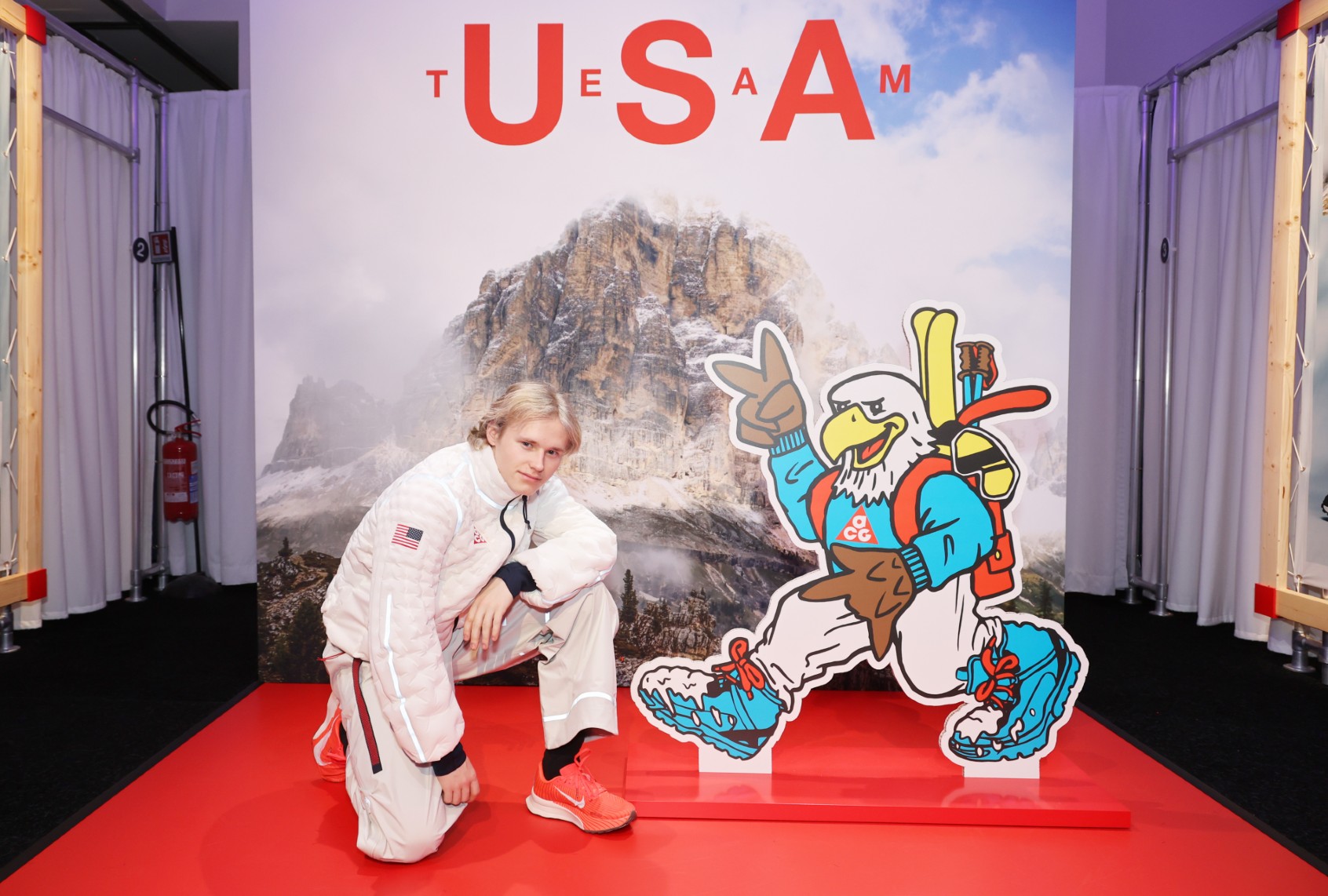
(Joe Scarnici/Getty Images for USOPC) Ilia Malinin attends the Team USA Welcome Experience at the Milan-Cortina 2026 Olympics
For Team USA, this particular moment, amid tensions around an ICE presence in Milan Cortina, might feel like being the child of a hated school principal strolling into the cafeteria right after an announcement that Spring Break has been canceled.
Being a spectator feels fraught this year as well. Even as a lifelong Winter Olympics fan, mustering up national pride as Republican leadership embraces fascism, lies shamelessly to and about Americans and basks in cruelty and corruption — and as Democrats’ show alarming disinterest in stopping it — is a tall order. The more inhumane the Trump administration’s grandstanding is, the less popular it gets. Yes, being an American is embarrassing at the moment. But for the next few weeks, we need to pull our socks up, bust out the big foam fingers, and cheer for our stupid country.
The most obvious reason to support this year’s Olympians is that the games are their moment, the culmination of years of hard work amid setbacks, injuries, self-doubt. These athletes, and often their families, invest — and sacrifice — a lot to help them arrive at this point. Professional lugers and curlers don’t get paid like NFL and NBA players. In most cases, they shoulder training and equipment individually, with costs that can run as high as $100K per year. Even athletes with sponsorship deals are often working full-time jobs; the U.S. Olympic and Paralympic Committee covers their insurance premiums, but other than that, athletes are on their own. They have earned their moment in the sun, and a man who’s never had to work hard, never been meaningfully challenged, and never known the exhilaration of barrelling down a mogul-studded ski slope or stepping onto a gleaming ice rink shouldn’t be allowed to get in the way of that.
The Olympics is history told through sports. Ask, say, any American Gen Xer how they learned about the Cold War and I would bet folding money you’ll hear stories about the 1980 Winter Olympics (site of the U.S. Men’s Hockey team besting the gold-medal Soviets) and the dueling boycotts of the 1980 and 1984 Summer Olympics. (That, and “Rocky IV.”) The Games have been the site of indelible moments in both world and American history: Jesse Owens obliterating Adolf Hitler’s claim to Aryan supremacy in 1936, John Carlos and Tommie Smith raising their fists in solidarity with the Black Panthers in 1968, the Black September attack in Munich in 1972, North and South Korea representing side by side in 2000.
And Olympic competition is part of American identity: after all, we love being champions almost as much as we love pretending to be underdogs. The ethos and rituals of the Games emphasize connection almost as much as they celebrate competition; they highlight the individuality of countries and cultures while underscoring what the world has in common: Determination. Persistence. Grit. Stunning young people in their physical prime. (There is a reason that organizers of the 2024 Summer Olympics in Paris supplied the Olympic Village with a reported 300 thousand condoms.)
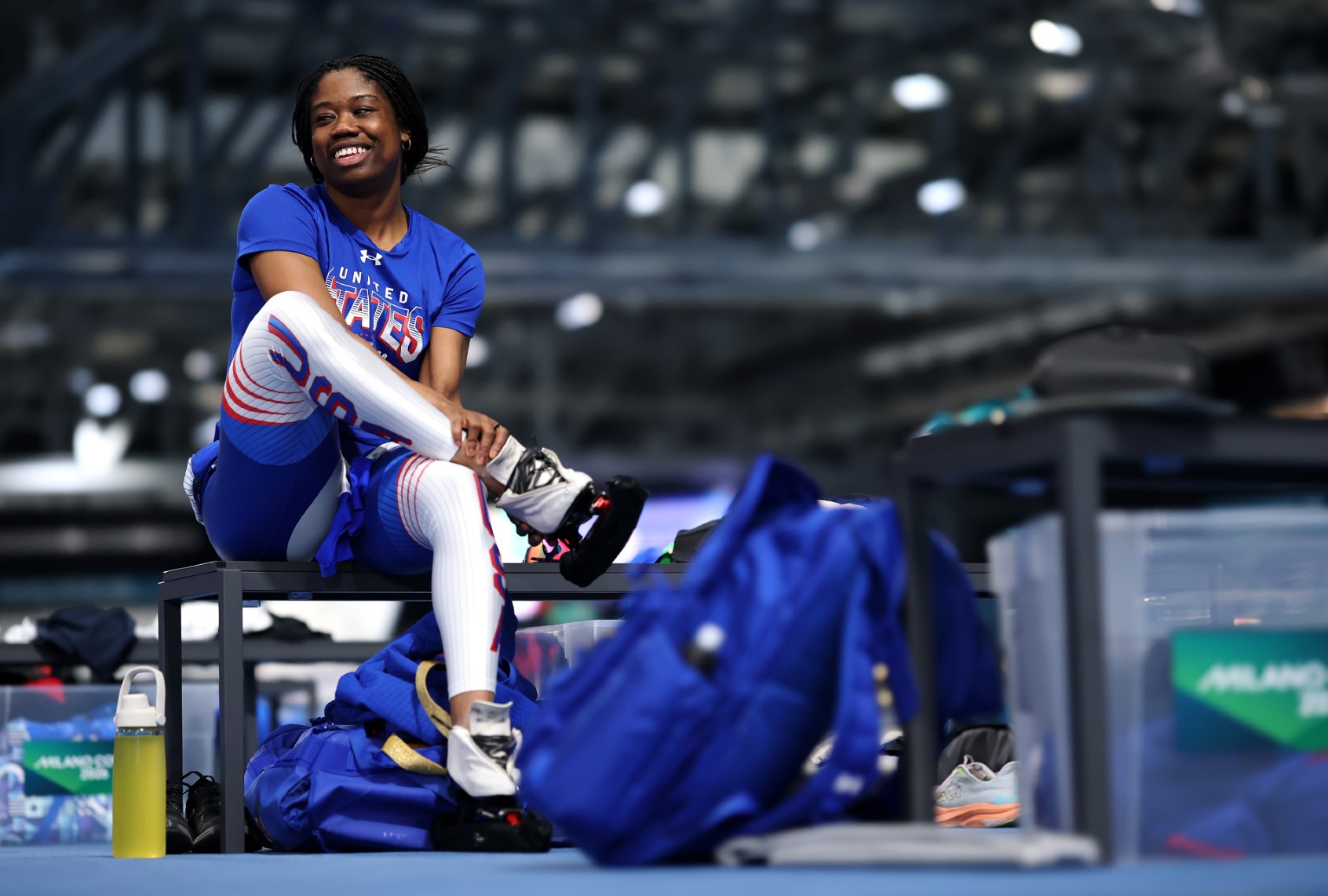
(Dean Mouhtaropoulos/Getty Images) Erin Jackson of Team United States of America puts on her skates prior to training on day minus four of the Milano Cortina 2026 Winter Olympic games
Yes, being an American is embarrassing at the moment. But for the next few weeks, we need to pull our socks up, bust out the big foam fingers, and cheer for our stupid country.
And the Olympics are a reminder that sport is a source of shared pride and introduces traditions from one country to others by way of new events. It’s not always a success (breakdancing will not be returning to the Summer Olympics in 2028), but 2026’s new addition to the roster of events — ski mountaineering, or skimo — is a shared practice as old as downhill skiing itself. Donald Trump seems committed to alienating and insulting America’s allies by repeatedly, loudly and inaccurately asserting that it has always been self-sufficient — insisting, for instance, that the United States handily won World War II without any help from Allies.
At the recent World Economic Forum summit in Davos, the president’s latest whopper — that the U.S. “barely needed” help from NATO allies in the war against Afghanistan — was not well received in Europe. Trump needs to believe that America can triumph in isolation for the same reason he needs to believe that his own success was entirely self-made. His image is one of singular, unilateral power, and acknowledging that America didn’t succeed all on its own means maybe he didn’t either.
And though anyone can see that politics — of race, of nationalism, of ownership and more — is an intrinsic part of them, participants and spectators alike are still chided for acknowledging it — and athletes who stand up (or kneel down) for what they believe put their careers at risk by doing so. Last month, after telling reporters he was “horrified” by the news of citizens being killed by ICE in Minneapolis, the San Antonio Spurs’ Victor Wembanyama stopped there, admitting, “I know that saying everything that’s on my mind will have consequences too great to me right now.” Anyone who wants to understand how and why sports are political can’t do much better than “The best defensive player in the NBA has reason to worry that criticizing the U.S. government will get him deported.”
Want more from culture than just the latest trend? The Swell highlights art made to last.
Sign up here
In withdrawing from global alliances, insulting and attacking other nations, and making cartoonishly grandiose statements about America’s entitlement to take over Greenland by force, the Trump administration is isolating and endangering the United States in ways that aren’t going to be easy to reverse. The Milan Cortina Olympics is the first of a handful of events, including the FIFA World Cup in June and America’s semicentennial in July, where the eyes of the world will be on the United States. And the proud venality of our Dunning-Kruger All-Stars has a lot of us feeling the need to rethink what real patriotism looks like.
Sports is just another arena for Donald Trump’s incoherent fury and authoritarian fantasies. After attending 2025’s Super Bowl to both cheers and boos — in other words, not the stadium-shaking adoration he was after — he’s playing it safe and not attending 2026’s game. He’s made it clear that he intends to use the World Cup events hosted by the United States as a stage for ostentatious strongman theatrics. And his sport-related plans for the semicentennial are telling: They include the “Patriot Games,” whose tournament format and teenage contestants (one boy and one girl from each state in the nation) drew mocking “Hunger Games” comparisons, and a proposed Ultimate Fighting Championship match on the White House lawn.
(Ryan Pierse/Getty Images) The Olympic rings in Cortina town centre
The weaponization of patriotism under Donald Trump, as floridly obvious as it’s been, has had a definite chilling effect since the start of his second term. While citizens of the Great White North were lustily booing “The Star-Spangled Banner,” the U.S. spent the past year pulling its punches: Dave Zirin, who has chronicled sports and social justice for The Nation for more than 20 years, wrote in December that 2025 “was the most disappointing, depressing year of sports activism—whether by players, media, or the unions—in my professional lifetime.” The growing mobilization of regular Americans against authoritarian tactics, he wrote, makes the lack of sustained pushback from within the sports world all the more noticeable; the impact of legalized sports betting, meanwhile, just adds to the deafening quiet.
It’s not just that the imminent celebration of athletic excellence is the wrong time to extend that silence. It’s that even in this moment when the most powerful people in the U.S. government are determined to rewrite history and reverse-engineer America into a hostile, simplistic place they never have to spend a moment doubting, sports still have the potential to inspire joy and admiration and exhilaration. It speaks to the possibilities that come into view when minds are open and highlights the stinginess of a ruling party that sees the world in zero-sum terms. We have borne witness in the past month to what makes America great, and it’s not the angry bleating of sore winners who talk a big game but prove themselves to be small at every turn.
Read more
about the Olympics, past and future
