
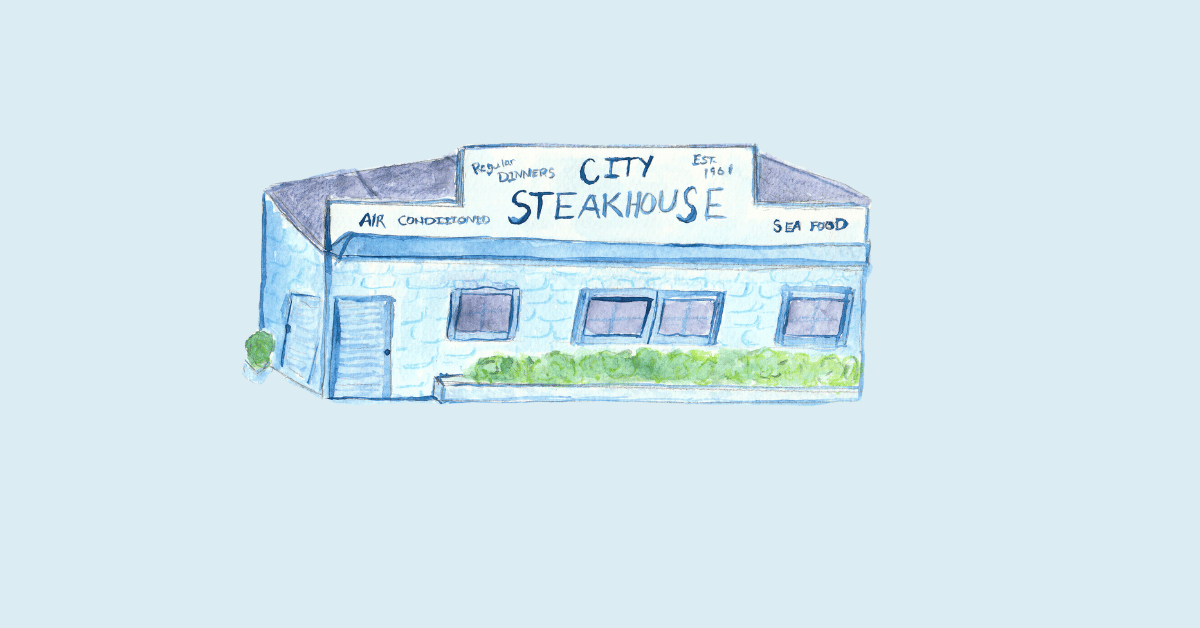

Let’s talk about meatloaf.
It is many things: diner stalwart, weeknight hero, cafeteria punchline. It has been, unfairly, the butt of jokes and the beige backdrop of childhood dinners. But to me? Meatloaf is the most underrated order in the steakhouse canon.
Truly. If you’re not in the mood for a hulking sirloin — and if just creamed spinach and a frosted martini feel like insufficient ballast — skip the burger. Order the meatloaf. It’s the move.
Because when it’s good, steakhouse meatloaf is less “comfort food” and more quiet luxury. It arrives in a thick, architectural slab, edges bronzed, interior plush but disciplined. No slumping. No sugary ketchup lacquer. Instead: savor. Structure. A kind of basso-profundo depth that lingers.
It is rarely flashy. Rarely Instagrammed. Rarely the table’s headline act. And yet — when done properly — it is extraordinary. Steakhouse meatloaf works because it leans into the savory: deeply seasoned, unapologetically umami, held together with intention. Not sweet. Not mushy. Not nostalgic for nostalgia’s sake.
I have tenderness, of course, for the loaf of my childhood — the one bound with Italian breadcrumbs and glossed with ketchup, unapologetically tomato-forward, studded with green pepper. It was earnest. It was red. It knew what it was.
But the version I crave now? It hums. It trades the sweetness of green pepper for black-pepper heat. It leans more mushroom than tomato, so the whole thing carries a low, woodsy murmur. It forgoes the sticky glaze in favor of a deep brown gravy that pools and clings. Each slice cuts cleanly, like something that has been thought through.
This loaf is less spaghetti night, more steak dinner in disguise.
Want more great food writing and recipes? Sign up for Salon’s free food newsletter, The Bite.
Yet if steakhouse meatloaf feels like a revelation, it’s not because of wizardry. It’s because of choices. Small, intelligent, slightly indulgent choices.
There are four smart moves home cooks can make to take a basic meatloaf from cafeteria-core to corner-booth-at-8-p.m.
Start with good meat
One of the reasons a steakhouse is such a prime place to order meatloaf is simple: the meat they are loafing is usually excellent. This is not the moment for austerity.
At home, that means remembering that fat is not the enemy — it is the infrastructure. Reach for 80/20 ground chuck as your baseline. If you’re feeling ambitious (or flush), ask the butcher for a blend: chuck plus a little short rib or brisket. That extra marbling translates into depth, tenderness and a loaf that tastes intentional rather than apologetic.
Avoid ultra-lean blends; they bake up tight and crumbly, the culinary equivalent of overcorrecting. And if you can swing it, freshly ground meat — from a butcher counter rather than a foam tray — makes a difference you can actually feel. When meat is ground just before cooking, the fat remains distinct rather than smeared. That distinct fat melts slowly in the oven, creating a loose, craggy structure that sizzles into a proper crust on the outside while staying plush within.
Ultimately, this is the thesis: fat is where it’s at. It lends moisture. It lends structure. It lends flavor. It gives the loaf its swagger.
And swagger, in meatloaf, is everything.
Go big on breadcrumbs

(Ashlie Stevens ) Panko
If the meat is the body, the breadcrumbs are the scaffolding. And this is not the time for soft, sandy Italian crumbs that disappear into paste. We want craggy. We want texture. We want Panko.
Those jagged flakes create little air pockets throughout the loaf, keeping it tender rather than dense — plush, not packed. But here’s the quiet flex: toast them first.
A quick turn in a dry skillet (or a low oven) coaxes out a nutty depth that feels almost unfair. You are, essentially, pre-browning part of the loaf before it ever meets the meat. The flavor begins building before the baking even starts.
And then — season them aggressively. Before they hit the bowl. Before they even glimpse the beef.
We need your help to stay independent
Onion powder. Garlic powder. Black pepper, and not shyly. Paprika for warmth. Dried oregano for that faint, steakhouse-adjacent whisper. When you season the crumbs directly, you’re ensuring that flavor disperses evenly throughout the loaf rather than pooling in pockets. Every bite tastes considered.
This works because breadcrumbs aren’t filler; they’re a delivery system. They hold moisture, yes — but they also carry spice into the interior like a well-trained courier.
The result is a loaf that tastes seasoned all the way through, not just on the surface. Structured. Savory. Cohesive.
Build flavor and moisture intentionally

(Ashlie Stevens ) Cream
This is the beat-by-beat section. The part where we stop hoping for depth and start engineering it.
My ideal loaf is layered: not chaotic, not overloaded, but deliberate. First, the binders. Yes, an egg, for cohesion. But also a panade: take half of those toasted breadcrumbs and fold them with a few generous splashes of cream until they slump into a soft paste. Leave the remaining crumbs craggy and intact.
You get the best of both worlds — tenderness from the cream-soaked panade, texture from the toasty shards. The loaf holds together, but it doesn’t feel homogenized.
Then we move to the stovetop. Finely dice white onion. Finely dice pancetta. Sauté them together until the pancetta renders and lightly crisps, the onions turning translucent and sweet at the edges. Let the mixture cool and drain before folding it into the meat. Patience here prevents grease pockets and keeps the texture even.
Now we deepen.
Secret ingredient number one: a spoonful of dried mushroom gravy mix. It sounds slightly Midwestern aunt, but trust me. It hums. It adds a concentrated, woodsy bass note that reads as “expensive” rather than “shortcut.”
Secret ingredient number two: a small drizzle of beef bouillon paste. Not enough to dominate. Just enough to tighten the savoriness, to round the corners.
And finally, a handful of chopped parsley. Not for wholesomeness. For lift. For color. For that green flicker against all the brown. The goal texture here is precise: moist but not wet. Sliceable with clean edges. No crumbling collapse, no rubbery density. When you drag your knife through it, it should yield — not squish, not resist — just yield.
This is what separates a loaf from a log.
Ditch the loaf pan
This one is small, but it is mighty.
Instead of packing your mixture into a loaf pan — where it will steam apologetically in its own juices — hand-form it on a sheet pan. Free it. Let it exist in three dimensions.
When you shape the loaf yourself, you create more surface area. More surface area means more browning. And browning, as we know, is one of flavor’s favorite party tricks. It also allows the fat to render away naturally instead of pooling at the edges and turning the sides soft and gray.
Think of it less as “meatloaf” and more as a freestanding roast.
Once you’ve shaped the loaf on the sheet pan, slide it into the refrigerator for 20 to 30 minutes before baking. That brief chill allows the fat to firm and the panade to finish its quiet work, hydrating and binding. When the loaf hits the oven, it holds its posture instead of slumping like something that regrets its choices. The structure sets. The edges brown more decisively. The slices later cut clean and confident.
Before it goes into the oven, lightly pat the exterior with olive oil — not a drench, just a gloss — then finish it with a final snowfall of black pepper and a pinch of flaky salt. That outer seasoning blooms in the heat, forming a savory crust that feels deliberate.
The result? Deeply bronzed edges. A real crust. A clear contrast between exterior and interior. It’s crisp and caramelized on the outside, tender and structured within.
Ingredients
-
2 pounds 80/20 ground chuck (or a blend of chuck plus ½ pound short rib or brisket, if your butcher is feeling generous)
-
1 cup Panko breadcrumbs
-
½ teaspoon onion powder
-
½ teaspoon garlic powder
-
1 teaspoon freshly ground black pepper, plus more for finishing
-
1 teaspoon paprika
-
½ teaspoon dried oregano
-
½ cup heavy cream (plus more as needed)
-
1 large egg
-
½ cup finely diced white onion
-
3 ounces pancetta, finely diced
-
1 tablespoon dried mushroom gravy mix
-
1 to 2 teaspoons beef bouillon paste
-
2 tablespoons chopped fresh parsley
-
Kosher salt, to taste
-
Olive oil, for finishing
-
Flaky salt, for finishing
Directions
- Preheat the oven to 375°F. Spread the Panko in a dry skillet over medium heat. Toast, stirring frequently, until lightly golden and fragrant, about 3 to 5 minutes. Remove from heat. While still warm, season the crumbs with onion powder, garlic powder, black pepper, paprika, oregano and a generous pinch of kosher salt. Toss well to distribute.
- In a small bowl, combine half of the seasoned breadcrumbs with the heavy cream. Stir until the mixture forms a soft paste. If it looks dry, add another splash of cream. Set aside. Leave the remaining breadcrumbs toasty and craggy.
- In the same skillet, cook the pancetta over medium heat until it begins to render and lightly crisp. Add the diced onion and sauté until softened and translucent, about 4 to 6 minutes. Remove from heat and let cool completely.
- Mix the loaf. In a large bowl, combine the ground meat, egg, panade, remaining toasted breadcrumbs, cooled pancetta-onion mixture, mushroom gravy mix, beef bouillon paste, and parsley. Season with 1 to 1½ teaspoons of kosher salt. Using your hands, gently mix until just combined. Do not overwork; the mixture should feel cohesive but not compacted.
- Line a sheet pan with parchment paper. Transfer the mixture to the pan and gently form it into a freestanding loaf, roughly 9 by 5 inches and about 2½ inches tall. Smooth the sides lightly without compressing. Refrigerate for 20 to 30 minutes. This allows the fat to firm and the structure to set, ensuring better browning and cleaner slices.
- Lightly pat the exterior of the loaf with olive oil. Sprinkle generously with freshly ground black pepper and a pinch of flaky salt. Bake for 55 to 70 minutes, or until the internal temperature reaches 155 to 160°F and the exterior is deeply browned.
If you’d like extra color, broil for 2 to 3 minutes at the end, watching carefully.
7. Rest and slice. Let the meatloaf rest for at least 10 minutes before slicing. This is nonnegotiable. The juices redistribute, and the loaf settles into its final form.
Slice thickly and, if you like, serve with warm brown mushroom gravy. (I love this recipe.)
This story originally appeared in The Bite, my weekly food newsletter for Salon. If you enjoyed it and would like more essays, recipes, technique explainers and interviews sent straight to your inbox, subscribe here.
Read more
about this topic
