
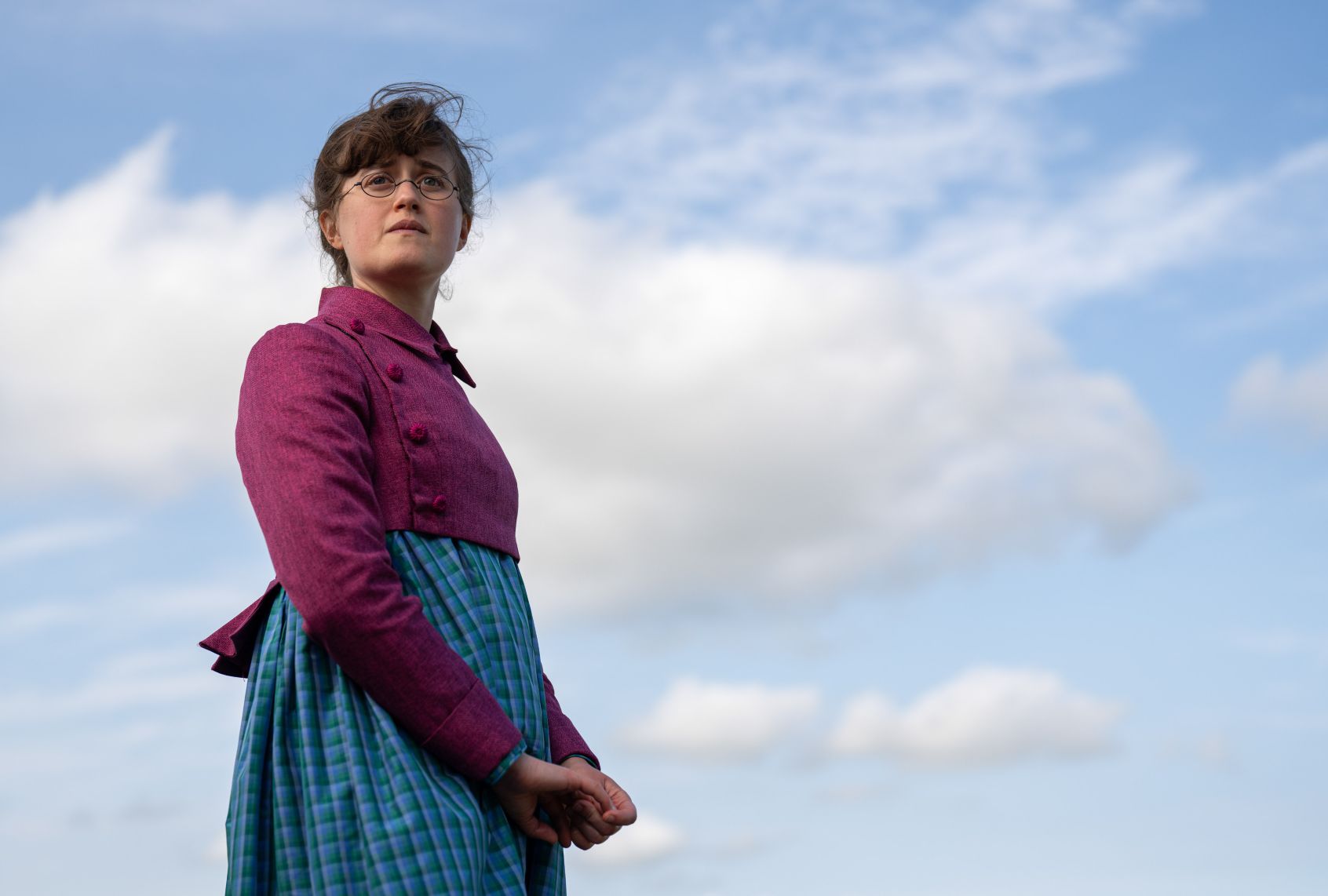

If “The Other Bennet Sister” has taught us anything, it’s that romance can be summed up in two words: bird calls.
In one of the most awkward yet endearing moments in the BritBox series – which imagines what happens to unmarried sister Mary Bennet (Ella Bruccoleri) after the events of “Pride & Prejudice” – she’s faced with a rather overly attentive Mr. Thomas Hayward (Dónal Finn) while walking through the forest. Mary had always been drawn to the solicitor and only recently learned that his understanding with another woman had ended. Unaware that her tender feelings are reciprocated, Mary begins talking about birds, as one does.
“It’s classic Mary, not to see what’s standing right in front of her,” head writer and executive producer Sarah Quintrell told Salon. “She needed to stop him talking, and I thought she would say, ‘Is that the lark?’ And then I thought she’ll do some really embarrassing bird noise. Then, because it’s Hayward, he’ll join in, and it was really important to show that he matches her.”
What follows is an unrepentantly goofy scene in which Mary attempts a serious discussion about and demonstration of the difference between lark and thrush calls. Mr. Hayward’s answering bird noise is enthusiastic, if not entirely precise.
“I was with my partner the night before, and we were listening to birds on YouTube,” Ella Bruccoleri told Salon. “I was like, ‘Oh, let me really try and nail the thrush.’ and I was really trying to go for accuracy, listening to it over and over again.
“Then I get to set, and Dónal has not gone for accuracy,” she continued. “He’s just gone for the most insane version. He’s like – it could be a parrot, it could be anything – he’s just squawking away. So I’m like, OK, but I think that’s probably quite alright because Mary would go for accuracy.”
Quintrell added, “It’s sweet because [Mr. Hayward] is connecting to her. He’s saying it’s OK to be yourself, and you don’t have to be perfect.”
As Regency-era gestures of love go, inaccurate bird impersonations are simultaneously the nerdiest and wackiest. Mr. Darcy would never . . . and that’s the point. Mr. Hayward isn’t trying to impress Lizzie Bennet; he’s communing with Mary, in all of her meek and geeky glory.
Mary, Mary, quite contrary
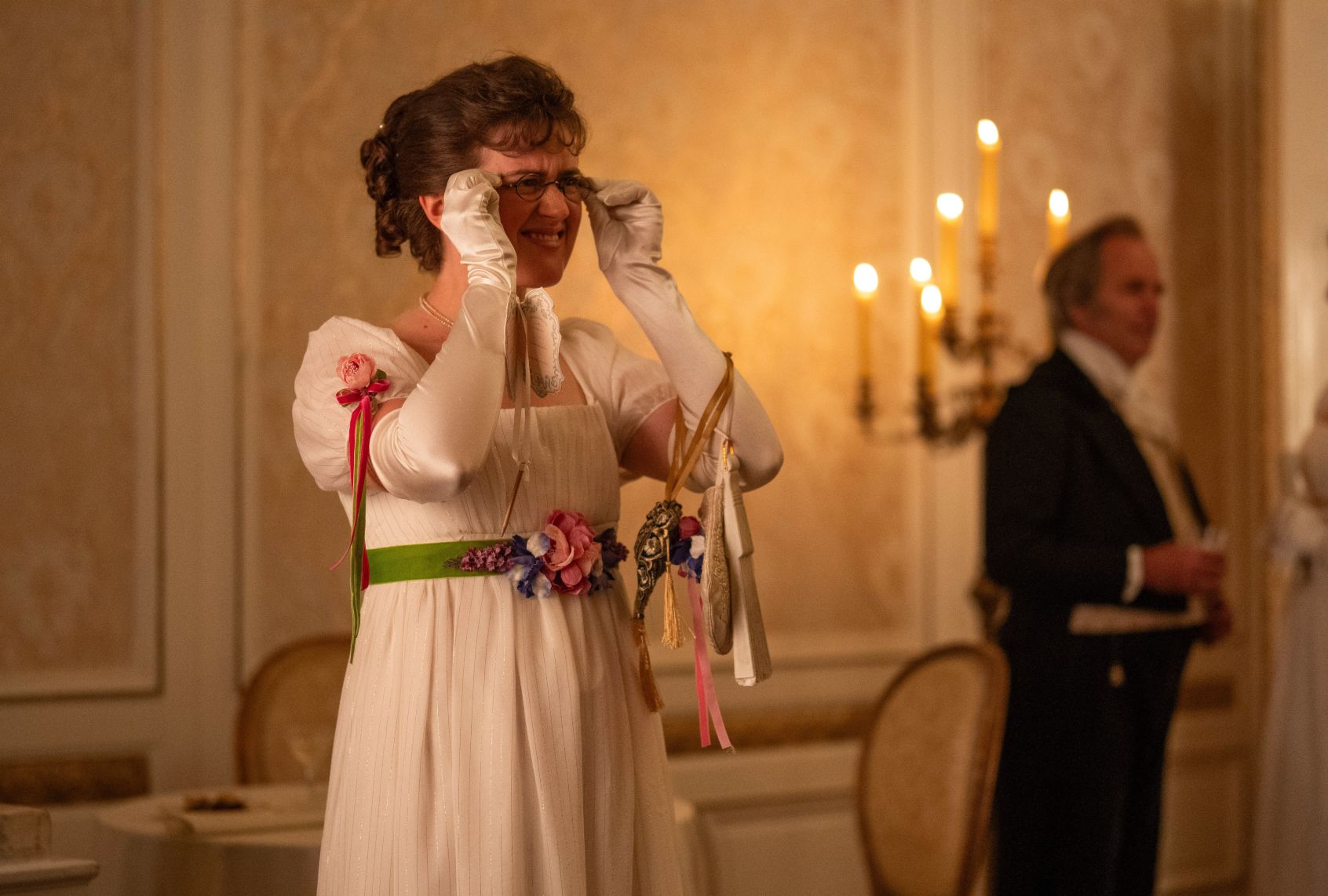
(BBC/Bad Wolf/James Pardon) Ella Bruccoleri as Mary Bennet in “The Other Bennet Sister”
Janeites may be forgiven for overlooking, if not outright loathing, Mary Bennet from Austen’s sacred “Pride & Prejudice” text. In a novel full of insufferable characters interfering with romantic soulmates, Mary commits the sins of both pedantry and priggishness. She also – gasp – views the sniveling Mr. Collins favorably.
As much as the series is Mary’s bluestocking origin story, it also spells her freedom, which comes from no longer trying to impress or contort herself to fit the expectations of others.
In 2020, however, Janice Hadlow’s novel “The Other Bennet Sister” upended that framing. Austen, and perhaps the readers, had done Mary wrong. Yes, Mary may suffer from classic middle child syndrome (mathematically she is the median sibling with two older and two younger sisters), but neglect is the least of her challenges.
In the series adaptation, matriarch Mrs. Bennet (Ruth Jones) disdains Mary to the point of telling an acquaintance, “Mary has an awfully ruddy complexion. And she is clumsy, ungainly, maladroite as they say. Four good marriages will have to do. I only hope that she does not ruin her sisters’ chances.” This overheard comment, plus a confluence of socially embarrassing events at the Meryton ball later, push Mary to the point of breakdown.
She believes that if all the signs point to a partner-less destiny anyway, then she may as well flout the dictates of her mother and the marriage mart. Resolute, Mary sets out on a path to become the serious-minded goody-goody readers recognize.
“No more ribbons, ballgowns or dance cards!” Mary declares to herself. “The old Mary would be no more. I would transform into the intellectual one. That was how I would stand out as the other Bennet sister.”
As much as the series is Mary’s bluestocking origin story, it also spells her freedom, which comes from no longer trying to impress or contort herself to fit the expectations of others. While Mrs. Bennet abhors glasses on women, Mary embraces them, the better to read her books with. Soon, the wireframe spectacles – often sitting comically askew on her nose – becomes a charming signature look for her, especially during the series’ more romantic scenes.
“There’s this trope, isn’t there, where she lets her down, she’s beautiful, everyone gasps,” observed Bruccoleri. “Or it’d be this insidious thing of just for those romantic scenes, she doesn’t have her glasses on, and they soften the way she looks a little bit. We were very keen to push against that as much as possible, so that she just looks more like herself in those moments.”
In fact, in her first meet-cute with Mr. Hayward, he dons his own glasses, the first of many acts in which he matches Mary in the series. Beyond wearing glasses, Bruccoleri also embodied Mary through her actions and posture.
“I worked with a movement coach, a lady called Lucie Pankhurst, and she was teaching me the social etiquette of the period, and how women would be expected to hold themselves,” said the actress. “I thought Mary would break a lot of that because she just wouldn’t understand why she had to be demure. So we learnt the rules in order to break them.
“We decided that a lot of her energy was in her hands and she does a lot of picking her hands under the table. This part of her hand she would take out a lot of her frustration on. The makeup artists were amazing, because every day they would make that a bit raw and put prosthetics around the fingers. She can’t be vocal about all of these frustrations that she has, right? So, yeah, we use that as a focal point.”
Ungraceful Mary, full of grace
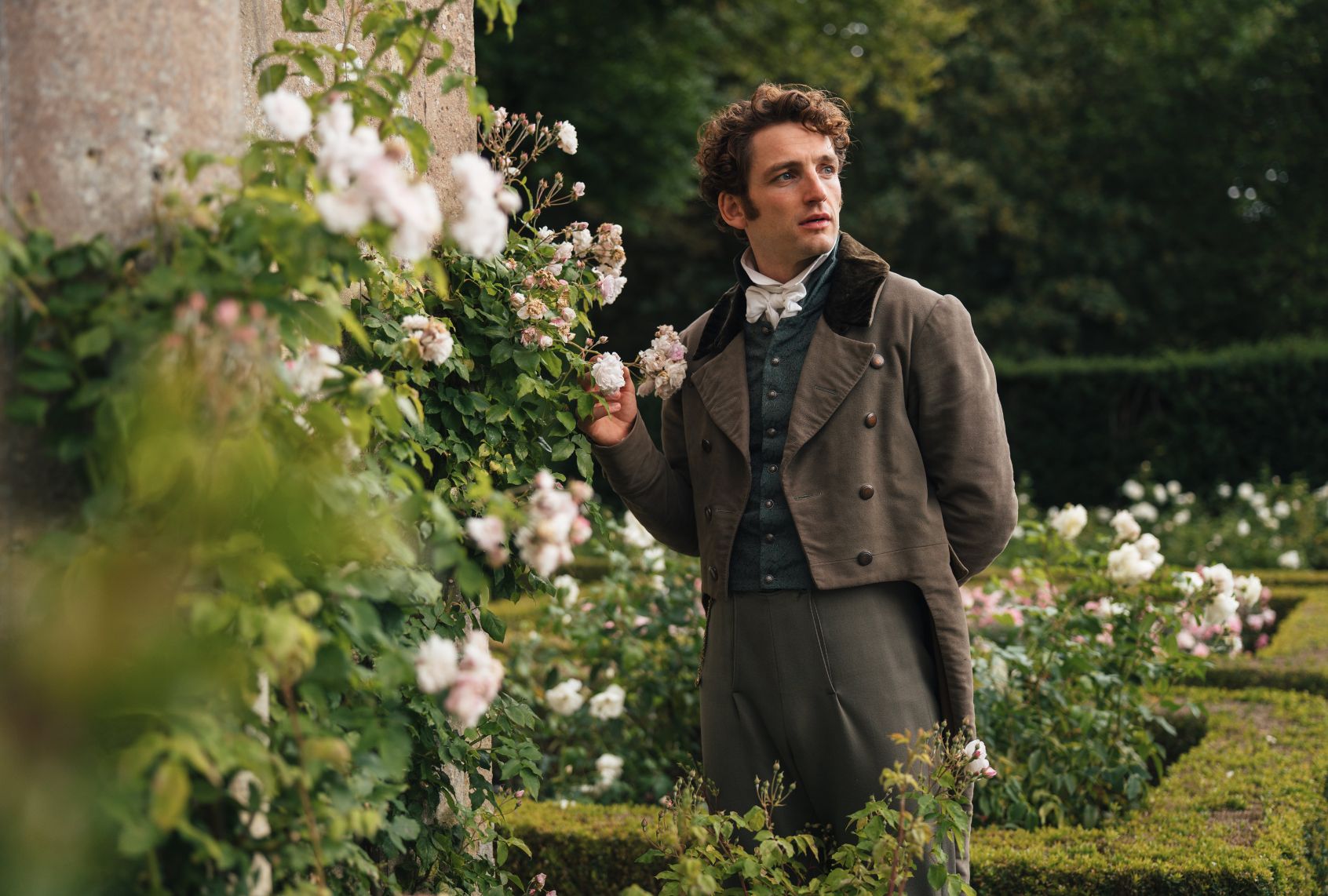
(BBC/Bad Wolf/James Pardon) Laurie Davidson as William Ryder in “The Other Bennet Sister”
Despite Mary’s misfit qualities, she exhibits a kindness that even the sweetest of her sisters, Jane, lacks. Throughout the series, Mary becomes the catalyst for multiple unsavory characters from “Pride & Prejudice” to gain redemption. This begins with Charlotte Lucas (Anna Fenton-Garvey), who regrets marrying Mr. Collins (Ryan Sampson) out from under the Bennets’ noses; then Mr. Collins himself, who feels his wife’s contempt keenly; and finally the social climbing backstabber Caroline Bingley (Tanya Reynolds), who finds herself once again competing with a Bennet sister over a man. In this case, Mr. William Ryder (Laurie Davidson) acts as a rather dashing foil to the bird-calling Mr. Hayward.
Bruccoleri said, “In terms of being opposite a person and trying to read how they’re feeling, [Mary] is actually extraordinarily good at it. I think she finds that easier than looking inside herself sometimes, just wanting to be empathetic towards this other person, and wanting to reassure them. I love that about Mary, that she doesn’t want to jump on the bandwagon of, ‘Let’s all like rail against this person.’ Yeah, everyone kind of thinks Mr. Collins is an idiot, but she’s looking deeper than that and being like, ‘Maybe he needs a bit of understanding.'”
“The Collins bit is from the book, and I thought we can build that out,” said Quintrell. “I wanted to show that she’s somebody who, on her journey, understands the way that the world has treated her and decides not to treat people the same way. It starts with the dinner with Mr. Hurst (Fergus Craig). She’s really gutted; she’s deliberately been put at the other end of the table from all her friends. She’s with a load of old people, and one of them’s got a cough, and one’s got an ear horn. I decided to start there, with her going, OK, I’m gonna make an effort with this man.
“It all comes from Janice’s novel speaking to me, and so I decided, well, we can do that with Caroline Bingley and with Ryder, when he reads the poem when they’re on horseback,” she continued. “He reads the poem to her, and he bundles the first line, and that was scripted. I thought, wouldn’t it be interesting if we suddenly see he’s not as polished? He doesn’t get everything right, and when he doesn’t, she says, ‘Don’t worry about it.’ Because her whole life, she’s been told, ‘You’re wrong, you’ve messed up, you’ve got things wrong.’ She decides not to be like that towards other people. She decides to go her own way.”
The more Mary affords grace to others, the more she gains confidence in who she is, as a person with a strong moral compass forged away from her mother’s ambitions. Bruccoleri portrayed this evolution in Mary’s physicality.
“The more true to herself she is, the more people love her, and the more drawn people are to her. She doesn’t change herself for anyone else.”
“I used corsets as one of my hacks because I wanted Mary to feel initially quite uncomfortable in her own body,” she said. “It’s that thing of when you’re a teenager and you haven’t quite found how you inhabit your own body, and your limbs kind of feel weird. So we had quite tight corsets on initially, corsets to help with her repressed pent-up-ness. And then we loosened them as we went on the journey. I wanted her to suddenly have her shoulders back and be able to breathe. It’s like she’s become a woman, and a woman who knows herself and feels comfortable within herself.”
This is in keeping with a revelatory conversation Mary has with Mr. Collins in which he introduces her to Aristotle’s theory about achieving happiness.
“What I have discovered seems to suggest that it is only through self-knowledge that genuine happiness experienced,” he tells Mary. “I think it is only when we have examined and understood our strengths and weaknesses and been honest enough about what we truly desire from life, only then do we have any chance at all of attaining happiness.”
“So what Aristotle is saying is that our happiness is in our own hands,” she concludes.
I spoke to Bruccoleri while she was in Austin, Texas for the ATX TV Festival in May. The series had just premiered its seventh episode in a packed theater, during which she wore a long red gown. Although it is not trimmed with spring green, as with the first dress Mary ever commissioned for herself, Bruccoleri confirmed that she had styled herself that day.
“I did choose it. It’s very Mary,” she said. “Sometimes, I’ve done events where they bring clothes last minute. Because everything’s so quick, they’re like, ‘Oh, we’ve got this for you to wear,’ and because it’s last-minute, you like, ‘I want to feel like myself, but I’ve got to wear it.’ They’re trying to get you to wear big brands; it’s part of this ecosystem. On a personal level, I don’t care what brands I’m wearing.
“I feel like existing in my industry is an interesting comparison [to Mary’s Regency life], because you do have a lot of people telling you what you should be and how you’re going to be palatable and appealing to other people,” Bruccoleri continued. “It’s really difficult to not listen to it. I try and keep Mary in my head since doing a show. The lesson there is that the more true to herself she is, the more people love her, and the more drawn people are to her. She doesn’t change herself for anyone else.”
Proud Mary keep on burnin’
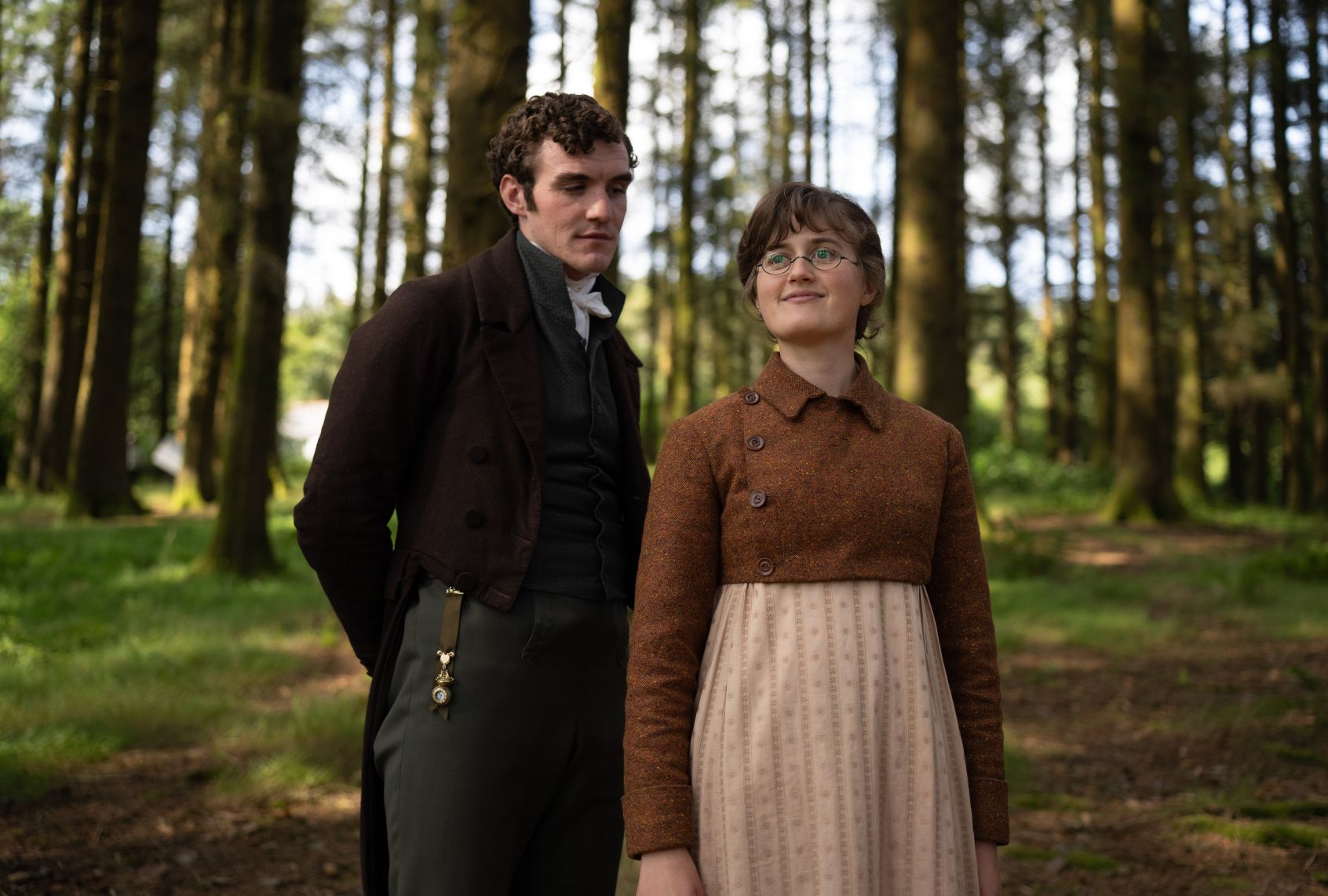
(BBC/Bad Wolf/James Pardon) Dónal Finn as Thomas Hayward and Ella Bruccoleri as Mary Bennet in “The Other Bennet Sister’
It’s a truth universally acknowledged that a Jane Austen or Austen-inspired project must be in want of an adaptation; however not all make the transition to screen with the same impact. To this day, fans still hold two “Pride & Prejudice” adaptations in their hearts – the 1995 BBC series starring Jennifer Ehle and Colin Firth and the 2005 Joe Wright film starring Keira Knightley and Matthew Macfadyen – both of which inspired references in “The Other Bennet Sister.”
Countless other adaptations exist, but few hit. For every “Bridget Jones’s Diary,” “Fire Island” or “Clueless,” disappointments also crowd the TV and movie landscape. Some recent examples include the critically panned Netflix take on “Persuasion” starring Dakota Johnson, and Hallmark’s 2024 “Sense & Sensibility,” which despite some buzz for its predominantly Black cast, failed to find an audience.
In some ways, “The Other Bennet Sister” had strong DNA and timing on its side. Author Janice Hadlow had a degree in history and had worked for the BBC consulting on and producing historical projects. Therefore, when she turned her hand to Austen, the world and the challenges she crafted for Mary felt authentic.
Releasing in Spring 2020, the novel became a pandemic hit, providing both escape and solace from the world’s harsh uncertainty. Here was a bookish young woman who was told that she would not be enjoying the fruitful life that her sisters had, that her fate had already been decided. Readers embraced the novel, and its adaptation was a no-brainer for co-producers BBC and BritBox. The series attracted a stacked cast, including Ruth Jones, Richard E. Grant, Indira Varma and Richard Coyle. But finding the right Mary was paramount.
“There’s such a scrutiny on the way women should look and the way women should behave, and if you try and break the mold in any way, you can be celebrated for that, but you can equally be judged pretty harshly for it.”
“We needed an actress who could carry the entire show on their shoulders,” said Quintrell who admitted to having “sweaty palms” when the casting process stretched longer than she expected. “We needed an actor who could play vulnerability. Actors are very good at smoothing things out and making themselves likable, and actually we needed someone brave enough to be unlikable. And have edges and be scratchy, and also be able to play the real pain of it, but the comedy of it as well. And Ella Bruccoleri embodied all of them.”
The series has been an unqualified hit. Its March BBC debut became the biggest launch for a new drama since May last year, and later its arrival on BritBox drove five times the number of new subscribers than any previous launch on the service.
Bruccoleri believes both Mary and her journey pushing back at society resonate strongly with viewers. “People have quite emotionally responded to Mary,” she said. “I suppose a lot of people who feel it’s a tale of an outsider, and I think a lot of people feel like that within their own lives and in their own experiences. So they feel quite seen by her.
“But also, I think women are frustrated, and have been for quite a long time,” she added. “And it feels like we’re allowed to be more vocal about that. It’s set in Regency England, but those things haven’t changed. There’s such a scrutiny on the way women should look and the way women should behave, and if you try and break the mold in any way, you can be celebrated for that, but you can equally be judged pretty harshly for it. Why the constant commentary? Do you know what I mean? It would just be nice to be able to exist without fear of that commentary. It doesn’t feel like we’ve arrived at that point yet at all.”
Quintrell, who has also helped developed sci-fi series “The Power” for Amazon Prime, doesn’t take the success of “The Other Bennet Sister” for granted, knowing full well that even a well-reviewed series can miss finding success.
“It’s weird, isn’t it? You can make a show and with so much love, and it just isn’t the right time,” she said. “That’s happened to me before, and it’s been really painful when that’s happened.
“But in 2026, we [all] have a much better understanding of ourselves and our relationships, of the impact of our families on us growing up, and the psychology of all that. Ultimately, this is a story about kindness and not being judged, and we live in a world that is constantly judging. With young people on social media being told, ‘You need to dress like this, you need to have this, you need to be that.’ It’s a distorted hall of mirrors; you’re either perfect or your life is the worst in the world. The truth is, we have good days and bad days when you live in the real world, and I think to have a show that just says, ‘Stop judging. Try and be yourself, and let’s just be kind.’ I don’t know if there’s a better time for that than right now.”
Read more
about the Jane Austen-verse
