Glenn Greenwald

What do these religiously motivated terrorist acts tell us?

(updated below)

From Haaretz, today:

Alleged Jewish terrorist: I know God is pleased

The Jerusalem District Prosecutor's Office on Thursday charged alleged Jewish terrorist Yaakov (Jack) Teitel with two murders, three attempted murders and other acts of violence.

"It was a pleasure and an honor to serve my God," said Teitel at the Jerusalem courthouse. "I have no regret and no doubt that God is pleased."

Teitel also denied recent reports that he had operated as an undercover Shin Bet agent. .. . The indictment also lists Teitel's efforts for more than a decade to harm Arabs, gays and lesbians, leftists, police officers and messianic Jews.

From Terror in the mind of God:  The Global Rise of Religious Violence:

Are there any broad lessons to be drawn from these acts of religion-inspired terrorism? Do they tell us anything about Judaism or Christianity itself?  How about other similar examples from both religions?

Joe Lieberman and others have called for investigations into why an Islamic extremist was allowed to remain in the U.S. military.  Earlier this year at Salon, Matt Kennard documented how white supremacists and Neo-Nazis were being allowed to openly serve in the U.S. military, likely due to recruitment shortages for our various wars.  A former Blackwater employee alleges that CEO Erik Prince "views himself as a Christian crusader tasked with eliminating Muslims and the Islamic faith from the globe," and that Prince's company -- responsible for horrific massacres of civilians -- "encouraged and rewarded the destruction of Iraqi life."  Numerous reports have documented that Christian fanaticism is rampant in the U.S. military, including high-pressure evangelizing both within the military and in Muslim countries we occupy, and even violence justified by religious doctrine.  As Harper's Jeff Sharlet documented, organized groups within the military have emerged that view allegiance to Christianity as superior to allegiance to the Constitution or orders from superiors.  [The Israeli military is burdened by the same problem:  "Recent reports of atrocities committed by Israeli soldiers in the course of the intervention in Gaza have described the incitement of conscripts and reservists by military rabbis who characterized the battle as a holy war for the expulsion of non-Jews from Jewish land" and religious soldiers who refuse to follow orders to evict settlers because they perceive their religious duties as paramount.]  Will Joe Lieberman's "investigations" include these problems?  Should they?  


UPDATE:  Also from Haaretz this week:

Just weeks after the arrest of alleged Jewish terrorist, Yaakov Teitel, a West Bank rabbi on Monday released a book giving Jews permission to kill Gentiles who threaten Israel.

Rabbi Yitzhak Shapiro, who heads the Od Yosef Chai Yeshiva in the Yitzhar settlement, wrote in his book "The King's Torah" that even babies and children can be killed if they pose a threat to the nation.

Shapiro based the majority of his teachings on passages quoted from the Bible, to which he adds his opinions and beliefs.

"It is permissable to kill the Righteous among Nations even if they are not responsible for the threatening situation," he wrote, adding: "If we kill a Gentile who has sinned or has violated one of the seven commandments - because we care about the commandments - there is nothing wrong with the murder."

Several prominent rabbis, including Rabbi Yithak Ginzburg and Rabbi Yaakov Yosef, have recommended the book to their students and followers.

As indicated above, there are Christian religious leaders who preach much the same thing.  All are small minorities within their religion -- just as is true for those who kill civilians in the name of Islam -- but if we're so eager to launch investigations and draw broad conclusions from episodes like the Fort Hood shootings, we ought to be asking the same questions about episodes and people like this.

The underlying divisions in the healthcare debate

Ed Kilgore has a very perceptive analysis in The New Republic about the underlying (and largely unexamined) ideological and strategic differences among progressives that are at least partially driving the rift over the health care bill.  He argues -- correctly -- that the current debate "displays a couple of pretty important potential fault lines within the American center-left" that have manifested in other disputes as well.  That was the principal point of this much-maligned Daily Kos post observing that many (but not all) of the progressive bloggers most vehemently demanding passage of the health care bill also supported the Iraq War.  As the author of that post (Jake McIntyre) explicitly said, his intent wasn't to suggest that those individuals shouldn't be listened to because of their Iraq position six years ago (that would be an invalid and unfair claim), but simply that -- as Kilgore says -- there are underlying and significant differences in strategic and ideological outlook driving the health care debate that have been present for some time but are typically ignored.

Shared contempt for the Bush administration (at least once Bush and the Iraq War became discredited) largely obscured these differences when Bush was in office.  The desire to undermine the Bush GOP and dislodge that movement from power subsumed all other objectives and united people with vastly different political outlooks and agendas.  There is still a shared revulsion towards the Palin/Limbaugh Right, but that faction is too marginalized and impotent to serve the same function.  With the unifying force of Bush/Cheney gone, the divisions Kilgore describes are now vibrant and increasingly potent.  In addition to health care and Iraq, roughly the same progressive fault lines are seen over the bank bailout, escalation in Afghanistan, Obama's economic team, tolerance for Obama's embrace of Bush/Cheney civil liberties polices, and even the reaction to Matt Taibbi's recent Rolling Stone article on Obama's subservience to Wall Street. 

There are many reasons for the progressive division on the health care bill.  There are differences over the narrow question of health care policy, with some believing the bill does more harm than good just on that ground alone.  Some of it has to do with broader questions of political power:  if progressives always announce that they are willing to accept whatever miniscule benefits are tossed at them (on the ground that it's better than nothing) and unfailingly support Democratic initiatives (on the ground that the GOP is worse), then they will (and should) always be ignored when it comes time to negotiate; nobody takes seriously the demands of those who announce they'll go along with whatever the final outcome is.  But the most significant underlying division identified by Kilgore is the divergent views over the rapidly growing corporatism that defines our political system.

Kilgore doesn't call it "corporatism" -- the virtually complete dominance of government by large corporations, even a merger between the two -- but that's what he's talking about.  He puts it in slightly more palatable terms:

To put it simply, and perhaps over-simply, on a variety of fronts (most notably financial restructuring and health care reform, but arguably on climate change as well), the Obama administration has chosen the strategy of deploying regulated and subsidized private sector entities to achieve progressive policy results. This approach was a hallmark of the so-called Clintonian, "New Democrat" movement, and the broader international movement sometimes referred to as "the Third Way," which often defended the use of private means for public ends.

As I've written for quite some time, I've honestly never understood how anyone could think that Obama was going to bring about some sort of "new" political approach or governing method when, as Kilgore notes, what he practices -- politically and substantively -- is the Third Way, DLC, triangulating corporatism of the Clinton era, just re-packaged with some sleeker and more updated marketing.  At its core, it seeks to use government power not to regulate, but to benefit and even merge with, large corporate interests, both for political power (those corporate interests, in return, then fund the Party and its campaigns) and for policy ends.  It's devoted to empowering large corporations, letting them always get what they want from government, and extracting, at best, some very modest concessions in return.  This is the same point Taibbi made about the Democratic Party in the context of economic policy:

The significance of all of these appointments isn't that the Wall Street types are now in a position to provide direct favors to their former employers. It's that, with one or two exceptions, they collectively offer a microcosm of what the Democratic Party has come to stand for in the 21st century. Virtually all of the Rubinites brought in to manage the economy under Obama share the same fundamental political philosophy carefully articulated for years by the Hamilton Project: Expand the safety net to protect the poor, but let Wall Street do whatever it wants.

One finds this in far more than just economic policy, and it's about more than just letting corporations do what they want.  It's about affirmatively harnessing government power in order to benefit and strengthen those corporate interests and even merging government and the private sector.  In the intelligence and surveillance realms, for instance, the line between government agencies and private corporations barely exists.  Military policy is carried out almost as much by private contractors as by our state's armed forces.  Corporate executives and lobbyists can shuffle between the public and private sectors so seamlessly because the divisions have been so eroded.  Our laws are written not by elected representatives but, literally, by the largest and richest corporations.  At the level of the most concentrated power, large corporate interests and government actions are basically inseparable.

The health care bill is one of the most flagrant advancements of this corporatism yet, as it bizarrely forces millions of people to buy extremely inadequate products from the private health insurance industry -- regardless of whether they want it or, worse, whether they can afford it (even with some subsidies).   In other words, it uses the power of government, the force of law, to give the greatest gift imaginable to this industry -- tens of millions of coerced customers, many of whom will be truly burdened by having to turn their money over to these corporations -- and is thus a truly extreme advancement of this corporatist model.  It's undeniably true that the bill will also do some genuine good, as it will help many people who can't get coverage now to get it (though it will also severely burden many people with compelled, uncontrolled premiums and will potentially weaken coverage for millions as well).  If one judges the bill purely from the narrow perspective of coverage, a rational and reasonable (though by no means conclusive) case can be made in its favor.  But if one finds this creeping corporatism to be a truly disturbing and nefarious trend, then the bill will seem far less benign.

As I've noted before, this growing opposition to corporatism -- to the virtually absolute domination of our political process by large corporations -- is one of the many issues that transcend the trite left/right drama endlessly used as a distraction.  The anger among both the left and right towards the bank bailout, and towards lobbyist influence in general, illustrates that.  Kilgore says that anger among the left and right over corporatism is irreconcilable, and this is the point I think he has mostly wrong:

To put it more bluntly, on a widening range of issues, Obama's critics to the right say he's engineering a government takeover of the private sector, while his critics to the left accuse him of promoting a corporate takeover of the public sector. They can't both be right, of course, and these critics would take the country in completely different directions if given a chance.  But the tactical convergence is there if they choose to pursue it.

This supposedly irreconcilable difference Kilgore identifies is more semantics than substance.  It's certainly true that health care opponents on the left want more a expansive plan while opponents on the right want the opposite.  But the objections over the mandate are largely identical -- it's a coerced gift to the private health insurance industry that underwrites the Democratic Party.  The same was true over opposition to the bailout, objections to lobbying influence over Washington, and most of all, the growing anger that Washington serves the interests of financial elites at the expense of the working class.  

Whether you call it "a government takeover of the private sector" or a "private sector takeover of government," it's the same thing:  a merger of government power and corporate interests which benefits both of the merged entities (the party in power and the corporations) at everyone else's expense.  Growing anger over that is rooted far more in an insider/outsider dichotomy over who controls Washington than it is in the standard conservative/liberal ideological splits from the 1990s.  It's true that the people who are angry enough to attend tea parties are being exploited and misled by GOP operatives and right-wing polemicists, but many of their grievences about how Washington is ignoring their interests are valid, and the Democratic Party has no answers for them because it's dependent upon and supportive of that corporatist model.  That's why they turn to Glenn Beck and Rush Limbaugh; what could a Democratic Party dependent upon corporate funding and subservient to its interests possibly have to say to populist anger?

Even if one grants the arguments made by proponents of the health care bill about increased coverage, what the bill does is reinforces and bolsters a radically corrupt and flawed insurance model and and an even more corrupt and destructive model of "governing."  It is a major step forward for the corporatist model, even a new innovation in propping it up.  How one weighs those benefits and costs -- both in the health care debate and with regard to many of Obama's other policies -- depends largely upon how devoted one is to undermining and weakening this corporatist framework (as opposed to exploiting it for political gain and some policy aims).  That's one of the primary underlying divisions Kilgore identifies, and he's right to call for greater examination and debate over the role it is playing.

Tom Friedman, museum exhibit

This might be one of the most self-contradictory episodes in the annals of American punditry:

Tom Friedman, The New York Times, yesterday:

A corrosive mind-set has taken hold since 9/11. It says that Arabs and Muslims are only objects, never responsible for anything in their world, and we are the only subjects, responsible for everything that happens in their world. We infantilize them.

Tom Friedman, over and over and over, for the last two weeks, on Afghanistan:

I feel like we're like an unemployed couple who just went out and decided to adopt a special needs baby.

The person who has spent weeks depicting Afghanistan as a "special needs baby" is now lecturing us about the "corrosive mind-set" of "infantilizing" Muslims.  And the person who is now inveighing against seeing ourselves as "subjects" and Muslims as "objects" was one of the most vocal cheerleaders for the attack on Iraq on the ground that our invasion would "put Iraq on a more progressive path and stimulate some real change in an Arab world."

The "point" of Friedman's column yesterday is to call for a "civil war" in the Muslim world.  Calling for wars is what Tom Friedman does most frequently.  Today's not one of those days when I'm willing to wallow in the muck of his "argument," but Daniel Larison's superb response makes that unnecessary.  Suffice to say:  if I had to identify one fact that would illustrate for historians the rot and destructiveness of American political and media culture in this era, I would point to the fact that the trite, sociopathic, and grotesquely muddled mind of Tom Friedman is widely considered by political and media elites to be deeply Serious, profound and oozing great wisdom.


UPDATE:  In addition to everything else, Friedman's views of the Muslim world are as stagnant as they are patronizing.  In yesterday's column, he wrote:  "How many fatwas — religious edicts — have been issued by the leading bodies of Islam against Osama bin Laden and Al Qaeda? Very few."  That is virtually identical to this false claim from a column he wrote more than four years ago -- on  July 8, 2005:  "To this day - to this day - no major Muslim cleric or religious body has ever issued a fatwa condemning Osama bin Laden."   As Juan Cole documented the last time Friedman made that claim, there have been numerous such fatwas from some of the most influential Muslim leaders of various stripes and sects.

Friedman thinks it's wrong to "infantalize" Muslims.  That's why he spends so much of his time lecturing them on what they should do and/or urging that new wars be waged on and among them.

White House as helpless victim on healthcare

AP
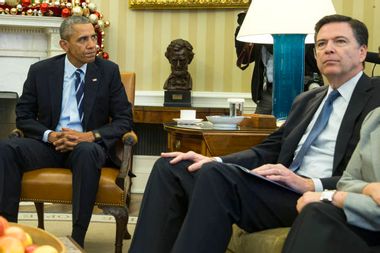
President Barack Obama makes a statement on health care reform after meeting with Senators, Tuesday, Dec. 15, 2009, at the White House in Washington. From left are, Senate Banking Committee Chairman Sen. Christopher Dodd, D-Conn.; Senate Finance Committee Chairman Sen. Max Baucus, D-Mont.; the president; and Senate Majority Leader Harry Reid of Nev.

(Updated below - Update II - Update III - Update IV - Update V)

Of all the posts I wrote this year, the one that produced the most vociferous email backlash -- easily -- was this one from August, which examined substantial evidence showing that, contrary to Obama's occasional public statements in support of a public option, the White House clearly intended from the start that the final health care reform bill would contain no such provision and was actively and privately participating in efforts to shape a final bill without it.  From the start, assuaging the health insurance and pharmaceutical industries was a central preoccupation of the White House -- hence the deal negotiated in strict secrecy with Pharma to ban bulk price negotiations and drug reimportation, a blatant violation of both Obama's campaign positions on those issues and his promise to conduct all negotiations out in the open (on C-SPAN).  Indeed, Democrats led the way yesterday in killing drug re-importation, which they endlessly claimed to support back when they couldn't pass it.  The administration wants not only to prevent industry money from funding an anti-health-care-reform campaign, but also wants to ensure that the Democratic Party -- rather than the GOP -- will continue to be the prime recipient of industry largesse.

As was painfully predictable all along, the final bill will not have any form of public option, nor will it include the wildly popular expansion of Medicare coverage.  Obama supporters are eager to depict the White House as nothing more than a helpless victim in all of this -- the President so deeply wanted a more progressive bill but was sadly thwarted in his noble efforts by those inhumane, corrupt Congressional "centrists."  Right.  The evidence was overwhelming from the start that the White House was not only indifferent, but opposed, to the provisions most important to progressives.  The administration is getting the bill which they, more or less, wanted from the start -- the one that is a huge boon to the health insurance and pharmaceutical industry.   And kudos to Russ Feingold for saying so:

Sen. Russ Feingold (D-Wis.), among the most vocal supporters of the public option, said it would be unfair to blame Lieberman for its apparent demise. Feingold said that responsibility ultimately rests with President Barack Obama and he could have insisted on a higher standard for the legislation.

"This bill appears to be legislation that the president wanted in the first place, so I don’t think focusing it on Lieberman really hits the truth," said Feingold. "I think they could have been higher. I certainly think a stronger bill would have been better in every respect."

Let's repeat that:  "This bill appears to be legislation that the president wanted in the first place."  Indeed it does.  There are rational, practical reasons why that might be so.  If you're interested in preserving and expanding political power, then, all other things being equal, it's better to have the pharmaceutical and health insurance industry on your side than opposed to you.  Or perhaps they calculated from the start that this was the best bill they could get.  The wisdom of that rationale can be debated, but depicting Obama as the impotent progressive victim here of recalcitrant, corrupt centrists is really too much to bear.  

Yet numerous Obama defenders -- such as Matt Yglesias, Ezra Klein and Steve Benen -- have been insisting that there is just nothing the White House could have done and all of this shows that our political system is tragically "ungovernable."  After all, Congress is a separate branch of government, Obama doesn't have a vote, and 60 votes are needed to do anything.  How is it his fault if centrist Senators won't support what he wants to do?  Apparently, this is the type of conversation we're to believe takes place in the Oval Office:

The President:  I really want a public option and Medicare buy-in.  What can we do to get it?

Rahm Emanuel:  Unfortunately, nothing.  We can just sit by and hope, but you're not in Congress any more and you don't have a vote.  They're a separate branch of government and we have to respect that.

The President:  So we have no role to play in what the Democratic Congress does?

Emanuel:  No.  Members of Congress make up their own minds and there's just nothing we can do to influence or pressure them.

The President:  Gosh, that's too bad.  Let's just keep our fingers crossed and see what happens then.

In an ideal world, Congress would be -- and should be -- an autonomous branch of government, exercising judgment independent of the White House's influence, but that's not the world we live in.  Does anyone actually believe that Rahm Emanuel (who built his career on industry support for the Party and jamming "centrist" bills through Congress with the support of Blue Dogs) and Barack Obama (who attached himself to Joe Lieberman when arriving in the Senate, repeatedly proved himself receptive to "centrist" compromises, had a campaign funded by corporate interests, and is now the leader of a vast funding and political infrastructure) were the helpless victims of those same forces?  Engineering these sorts of "centrist," industry-serving compromises has been the modus operandi of both Obama and, especially, Emanuel.

Indeed, we've seen before what the White House can do -- and does do -- when they actually care about pressuring members of Congress to support something they genuinely want passed.  When FDL and other liberal blogs led an effort to defeat Obama's war funding bill back in June, the White House became desperate for votes, and here is what they apparently did (though they deny it):

The White House is playing hardball with Democrats who intend to vote against the supplemental war spending bill, threatening freshmen who oppose it that they won't get help with reelection and will be cut off from the White House, Rep. Lynn Woolsey (D-Calif.) said Friday.  "We're not going to help you. You'll never hear from us again," Woolsey said the White House is telling freshmen.

That's what the White House can do when they actually care about pressuring someone to vote the way they want.  Why didn't they do any of that to the "centrists" who were supposedly obstructing what they wanted on health care?  Why didn't they tell Blanche Lincoln -- in a desperate fight for her political life -- that she would "never hear from them again," and would lose DNC and other Democratic institutional support, if she filibustered the public option?  Why haven't they threatened to remove Joe Lieberman's cherished Homeland Security Chairmanship if he's been sabotaging the President's agenda?  Why hasn't the President been rhetorically pressuring Senators to support the public option and Medicare buy-in, or taking any of the other steps outlined here by Adam Green?  There's no guarantee that it would have worked -- Obama is not omnipotent and he can't always control Congressional outcomes -- but the lack of any such efforts is extremely telling about what the White House really wanted here.

Independent of the reasonable debate over whether this bill is a marginal improvement over the status quo, there are truly horrible elements to it.  Two of the most popular provisions (both of which, not coincidentally, were highly adverse to industry interests) -- the public option and Medicare expansion -- are stripped out (a new Washington Post/ABC poll out today shows that the public favors expansion of Medicare to age 55 by a 30-point margin).  What remains is a politically disastrous and highly coercive "mandate" gift to the health insurance industry, described perfectly by Digby:

Obama can say that you're getting a lot, but also saying that it "covers everyone," as if there's a big new benefit is a big stretch. Nothing will have changed on that count except changing the law to force people to buy private insurance if they don't get it from their employer. I guess you can call that progressive, but that doesn't make it so. In fact, mandating that all people pay money to a private interest isn't even conservative, free market or otherwise. It's some kind of weird corporatism that's very hard to square with the common good philosophy that Democrats supposedly espouse.

Nobody's "getting covered" here. After all, people are already "free" to buy private insurance and one must assume they have reasons for not doing it already. Whether those reasons are good or bad won't make a difference when they are suddenly forced to write big checks to Aetna or Blue Cross that they previously had decided they couldn't or didn't want to write. Indeed, it actually looks like the worst caricature of liberals: taking people's money against their will, saying it's for their own good --- and doing it without even the cover that FDR wisely insisted upon with social security, by having it withdrawn from paychecks. People don't miss the money as much when they never see it.

In essence, this reinforces all of the worst dynamics of Washington.  The insurance industry gets the biggest bonanza imaginable in the form of tens of millions of coerced new customers without any competition or other price controls.  Progressive opinion-makers, as always, signaled that they can and should be ignored (don't worry about us -- we're announcing in advance that we'll support whatever you feed us no matter how little it contains of what we want and will never exercise raw political power to get what we want; make sure those other people are happy but ignore us).  Most of this was negotiated and effectuated in complete secrecy, in the sleazy sewers populated by lobbyists, industry insiders, and their wholly-owned pawns in the Congress.  And highly unpopular, industry-serving legislation is passed off as "centrist," the noblest Beltway value. 

Looked at from the narrow lens of health care policy, there is a reasonable debate to be had among reform advocates over whether this bill is a net benefit or a net harm.  But the idea that the White House did what it could to ensure the inclusion of progressive provisions -- or that they were powerless to do anything about it -- is absurd on its face.  Whatever else is true, the overwhelming evidence points to exactly what Sen. Feingold said yesterday:  "This bill appears to be legislation that the president wanted in the first place."


UPDATE:  It's also worth noting how completely antithetical claims are advanced to defend and excuse Obama.  We've long heard -- from the most blindly loyal cheerleaders and from Emanuel himself -- that progressives should place their trust in the Obama White House to get this done the right way, that he's playing 11-dimensional chess when everyone else is playing checkers, that Obama is the Long Game Master who will always win.  Then, when a bad bill is produced, the exact opposite claim is hauled out:  it's not his fault because he's totally powerless, has nothing to do with this, and couldn't possibly have altered the outcome.  From his defenders, he's instantaneously transformed from 11-dimensional chess Master to impotent, victimized bystander.

The supreme goal is to shield him from all blame.  What gets said to accomplish that goal can -- and does -- radically change from day to day.


UPDATE II:  I'll be on MSNBC this afternoon at 3:00 p.m. EST with David Shuster/Tamron Hall discussing this post.


UPDATE III:  Over at Politico, Jane Hamsher documents how Joe Lieberman's conduct on the health care bill provides the perfect vehicle to advance the agenda of the White House and Harry Reid.  Consistent with that, she independently notes media reports that White House officials are privately expressing extreme irritation with Howard Dean for opposing the Senate bill as insufficient, but have nothing bad to say about Lieberman, who supposedly single-handedly sabotaged what the White House was hoping for in this bill.


UPDATE IV:  Immediately prior to the MSNBC segment I just did -- video for which I will post when it's available -- an NBC reporter explained how Robert Gibbs used his Press Briefing today to harshly criticize Howard Dean for opposing the health care bill.  Why did Gibbs never publicly criticize people like Blanche Lincoln, Ben Nelson, Joe Lieberman and the like if they were supposedly obstructing and impeding the White House's agenda on health care reform (this is a point Yglesias acknowledges as a "fair" one)?  Having a Democratic White House publicly criticize a Democratic Senator can be a much more effective pressure tactic than doing so against a former Governor who no longer holds office.

Meanwhile, as one would expect, health insurance stocks are soaring today in response to the industry-serving "health care reform" bill backed by the Democratic Senate and White House -- the same people who began advocating for "health care reform" based on the need to restrain on an out-of-control and profit-inflated health insurance industry (h/t Markos).


UPDATE V:  Here's the roughly 4-minute segment I did with David Shuster today:

Welcome to Gitmo North

(AP/M. Spencer Green
A sign stands in the snow outside the Thomson Correctional Center, Tuesday, Dec. 15, 2009, in Thomson, Ill.

(updated below)

The Obama administration announced today that it will create a new "supermax" facility in Thomson, Illinois, and will transfer to it many of the detainees currently held at Guantanamo.  Critically, none of those moved to Thomson will receive a trial in a real American court, and some will not be charged with any crime at all.  The detainees who will be given trials won't go to Thomson; they'll be moved directly to the jurisdiction where they'll be tried.  The ones moved to Thomson will either (a) be put before a military commission or (b) held indefinitely without charges of any kind.  In other words, they'll have exactly the same rights -- or lack thereof -- as they have now at Guantanamo.

William Lynn, Obama's Deputy Defense Secretary, sent a letter today (.pdf) to GOP Rep. Mark Kirk of Illinois, answering multiple questions Kirk had posed, and made clear that all Thomson detainees will either have military commissions or indefinite detention without charges; none will get real trials (click images to enlarge):

The administration has already announced that it will rely on the Bush/Cheney theory to justify its indefinite detention power -- that Congress implicitly authorized that when it enacted the 2001 Authorization to Use Military Force.  But because Congress has banned the transfer of any Guantanamo detainees to the U.S. for any reason other than to be tried in a court, the administration will now seek express legal authority to transfer detainees inside the U.S. to hold them without charges indefinitely. Former White House Counsel Greg Craig said back in February that it's "hard to imagine Barack Obama as the first President of the United States to introduce a preventive-detention law."  One no longer needs to "imagine" it; it's soon to come.

Particularly Orwellian was Lynn's response to Kirk's inquiry about which detainees will be given the gift of an actual trial:

How perverse.  Lynn is right that prosecutions traditionally occur only "when admissible evidence or potentially available admissible evidence will probably be sufficient to obtain and sustain a conviction."  But traditionally, what happens when such evidence is insufficient is not that the state just imprisons them anyway with no trial or puts them before some less rigorous tribunal; what's supposed to happen when the state cannot convict someone is that the individuals are not charged and therefore not imprisoned.  But here, the Obama administration is turning that most basic principle on its head:  only those who it knows it can convict will get trials, but the rest will be shipped to Thomson -- Gitmo North -- to be put before a military commission or simply imprisoned without charges of any kind. 

The sentiment behind Obama's campaign vow to close Guantanamo was the right one, but the reality of how it's being done negates that almost entirely.  What is the point of closing Guantanamo only to replicate its essential framework -- imprisonment without trials -- a few thousand miles to the North?  It's true that the revised military commissions contain some important improvements over the ones used under Bush:  they provide better access to counsel and increased restrictions on the use of hearsay and evidence obtained via coercion.  But the fundamental elements of Guantanamo are being kept firmly in place.  What made Guantanamo so offensive and repugnant was not the fact that it was located in Cuba rather than Illinois.  The primary complaint was that it was a legal black hole because the detainees were kept in cages indefinitely with no charges or trials.  That is being retained with the move to the North.

There is, I suppose, symbolic value in closing Guantanamo.  But what made Guantanamo such an affront to basic liberty and the rule of law was far more than symbolism, and it certainly had nothing to do with its locale.  If anything, one could argue that it's now more dangerous to have within the U.S., on U.S. soil, a facility explicitly devoted to imprisoning people without charges.  Even worse, by emphasizing that Thomson will be an even more "secure" supermax than the utterly inhumane hellhole at Florence, Colorado -- even boasting that it will be the most secure prison "of all time" -- it's likely that individuals who have never been charged with any crime will be held indefinitely in a facility even worse than Guantanamo. 

Are we really supposed to believe that the Muslim world -- at whom this symbolism is supposedly aimed -- is so simplistic that they'll be happy because Muslims are now being indefinitely imprisoned with no charges in Illinois instead of on a Cuban island?  In many ways, this move is classic Obama:  pretty words, rhetorical appeals to lofty ideals, self-congratulatory preening, accompanied by many of the same policies that were long and vehemently condemned by him and most of his supporters.


UPDATE:  ACLU Executive Director Anthony Romero had this to say today:

The creation of a "Gitmo North" in Illinois is hardly a meaningful step forward. Shutting down Guantánamo will be nothing more than a symbolic gesture if we continue its lawless policies onshore.

Alarmingly, all indications are that the administration plans to continue its predecessor's policy of indefinite detention without charge or trial for some detainees, with only a change of location. Such a policy is completely at odds with our democratic commitment to due process and human rights whether it’s occurring in Cuba or in Illinois. In fact, while the Obama administration inherited the Guantanamo debacle, this current move is its own affirmative adoption of those policies.

It's hard to argue with that.

(updated below w/transcript - Update II)

[link to recorder fixed]

The case of Mohamed v. Jeppesen -- brought by five victims of Bush's torture/rendition program against the Boeing subsidiary that shipped them to be tortured -- was the Obama DOJ's first test of its commitment to restore basic accountability and the rule of law.  Back in February, it resoundingly failed that test when they demanded that the case be dismissed in its entirety by invoking the same radicalized version of the "state secrets" privilege which the Bush DOJ, to great controversy, repeatedly invoked.  That was the first sign that things would go terribly awry with Obama's rule of law and civil liberties record.  This warped rendition of the "state secrets" doctrine transforms it from a long-standing, simple evidentiary privilege (i.e., this specific document is too sensitive to use in the litigation) into a sweeping, dangerous shield of immunity for government lawbreaking (i.e., courts have no right to review the legality of the crimes we commit in secret). 

The Obama administration now insists that courts must dismiss lawsuits alleging presidential lawbreaking whenever the CIA Director claims the lawsuit would jeopardize state secrets; or, as the ACLU Brief puts it, "torture victims must be denied a day in court based on an Affidavit submitted by their torturers."  The Obama DOJ has gone on to invoke that same Bush-created version of the secrecy theory to demand dismissal of numerous other cases alleging various types of lawbreaking by the Executive Branch.

In April, a three-judge panel of the Ninth Circuit emphatically rejected the Bush/Obama "state secrets" argument and refused to dismiss the Jeppesen case.  The appellate court made clear that the Obama DOJ was literally arguing that "the Judiciary should effectively cordon off all secret government actions from judicial scrutiny, immunizing the CIA and its partners from the demands and limits of law."  The court instead held that the proper use of the state secrets privilege allows the government to object to the use of specific documents on a case-by-case basis, not to shield itself from judicial review when it is accused of breaking the law.  The appellate court thus ordered the District Court to proceed to what the country urgently needs:   a ruling on the plaintiffs' claims that the law was broken, and their rights violated, when they were "rendered" and tortured by the Bush administration.

Rather than let that crucial precedent stand, the Obama DOJ instead asked the full 9th Circuit to vacate the ruling and instead dismiss this case.  The Oral Argument on the government's appeal is being held today in San Francisco at 1:00 pm EST, and my guest today on Salon Radio is Ben Wizner of the ACLU, who is arguing the case for the plaintiffs.  We discuss the significance of this appeal and the reasons the DOJ's position is so threatening to basic accountability and the rule of law.  

Notably, Wizner emphasizes that -- in light of the DOJ's announcement that it will not prosecute anyone who tortured in accordance with the Bush-OLC torture memos -- cases of this type are now the sole remaining avenue for obtaining a judicial ruling as to whether the Bush torture program was illegal.  If the Obama DOJ succeeds in blocking any such judicial adjudication, it means that some future administration (or even the current one), armed with its own John Yoo, can once again claim that torture is legal and the President has the power to order it.  That's one reason why it's so vital to obtain judicial rulings on whether these Bush programs were illegal:  because only judicial rulings of that type can prevent similar arguments from being invoked in the future.  You can listen to the 10-minute discussion by clicking here.  A transcript will be posted shortly.

One last point:  when the Obama DOJ first began invoking the very same version of the "state secrets" privilege that infuriated progressives for years (as well as Obama himself), two defenses were typically offered by some Obama supporters:  (1) Obama was only doing this because he secretly hoped to lose and thus give us the gift of good precedent; and (2) this was the fault of hold-overs from the Bush DOJ, not Obama appointees.  Yet now, the Obama DOJ is aggressively seeking to have vacated one of the best judicial rulings ever that limits the state secrets privilege.  Moreover, its own internal guidelines now require the personal approval of Eric Holder before the "state secrets" privilege can be asserted in a judicial proceeding, meaning that Holder himself approves of the positions on this appeal.  That ought to conclusively prove how wrong those excuses were.  There's simply no getting around the fact that -- as TalkingPointsMemo thoroughly documented -- the Obama DOJ is vigorously advocating the exact same "state secrets" privilege as the Bush DOJ created, and is doing so with the same result:  to shield the Executive Branch from judicial review when it breaks the law.


UPDATE:  Slate's Dahlia Lithwick has a characteristically insightful article -- which I highly recommend reading -- on how "each time an opportunity arises to assess the legality of Bush-era torture, the Obama administration shuts it down," and how "the practical effect of this effort will be to ratify such policies and the legal architecture that supports them."  Think about that in terms of what Obama promised and what his supporters expected in this area.

The transcript of my discussion with Wizner is now available here.


UPDATE II:  The full Oral Argument in the Jeppesen case, held today, can be listened to or downloaded here.

Secret war purposes and justifications

(updated below)

In a post yesterday about public opinion and war, I noted that Joe Klein justified the war in Afghanistan by claiming it was necessary to prevent war between Pakistan and India -- a justification and purpose never cited by the U.S. Government.  To justify the fighting of a war for reasons different than the stated official reasons, Klein propounded the highly undemocratic proposition that "some of the best arguments about why this war is necessary must go unspoken by the President."  Yesterday Klein and Andrew Sprung, writing at Andrew Sullivan's blog, both responded to what I wrote -- Klein by pointing to Obama's statements in a 2008 interview about the need to diplomatically resolve the India-Pakistan dispute and Sprung by pointing to statements made by various commentators and experts about the importance of the India-Pakistan dispute in the region.

None of that really disputes, but rather bolsters, what I wrote.  I wasn't disputing Klein's reporting that many people, including inside the administration, privately claim that we need to stay in Afghanistan to prevent conflict between India and Pakistan, nor was I criticizing him for reporting that this was the case, nor was I even commenting on whether that war justification is valid.  My objection is that the U.S. Government, in all the times it explained why this war was necessary, never cited that as a justification or a goal.  If, as Klein and Sprung both claim, that is truly one of the Government's primary goals, then we're fighting this war for reasons different than what the public is being told.  Klein basically acknowledges this ("Over the past few weeks, especially since Obama's West Point speech, I've been struck by the narrowness of the Afghan discussion--by the President and the press"), as does Sprung ("you can argue that the Administration should itself air these concerns more fully").  Indeed, Klein not only acknowledges, but justifies, the disparity between our stated war justifications and our real ones ("some of the best arguments about why this war is necessary must go unspoken by the President").  That is what I find profoundly undemocratic and dangerous.

When George Bush first announced the war in Afghanistan, he justified it almost exclusively with the need to drive out Al Qaeda from that country, a goal that has now essentially been met; indeed, Bush made clear that he would have left the Taliban in power had they met our demands.  There wasn't a word about the need to keep peace between India and Pakistan.  In 2001, when Congress authorized the use of military force "against those responsible for the recent attacks launched against the United States," it cited one goal and only one goal:  "to prevent any future acts of international terrorism against the United States by such nations, organizations or persons."  There's no authorization to use military force to keep peace between India and Pakistan; what, then, is the legal basis for fighting a war for that purpose?  And when Obama announced and explained his escalation in Afghanistan last week, he repeatedly justified it by claiming it was necessary to protect the Homeland from attacks by Terrorists; tensions between Pakistan and India weren't even mentioned, let alone cited as a justification or goal of the war.

The fact that a bunch of super-smart, highly Serious, in-the-know Washington insiders chatter with one another that India-Pakistan tension is a Key Reason for the war -- while the public at large is fed a bunch of melodramatic, scary cartoon claptrap about 9/11 and Terrorists and Al Qaeda -- doesn't undermine the point I made.  It is the point.  Now that there's virtually no Al Qaeda left in Afghanistan, if a primary reason we're now fighting that war is to prevent conflict between India and Pakistan, if that's really the war aim we have, then the President is compelled to say so.  Congress should be asked to declare or authorize a war for that purpose.  That way, the public can actually participate in a genuine debate about whether it wants to support the war given those goals, rather than being hoodwinked by manipulative and ancillary (at best) storylines about big, bad Scary Terrorists who attacked us on 9/11.  The notion that "some of the best arguments about why this war is necessary must go unspoken by the President" is exactly the opposite of what ought to happen in a democracy when a Government tries to persuade the citizenry to support its latest war.


UPDATE:  To address several comments:  I'm neither assuming Klein is correct or incorrect in his claim that India-Pakistan is a major reason for the administration to want to stay in Afghanistan.  Since the administration is not saying this and Klein won't identify who said this, I have no idea if it's true.  My point is that the Government should state its primary justifications and goals for war, and Klein's argument -- that "some of the best arguments about why this war is necessary must go unspoken by the President" -- is wrong, undemocratic and dangerous.  Both Klein and Sprung insist that India-Pakistan is a major reason for the Obama administration to want to wage war in Afghanistan; if that's true -- and I'm not saying it is -- then it should be disclosed.  Secret war justifications and goals -- i.e., misleading the public about why we're fighting -- are wrong for reasons that should be obvious.  I'm not assuming that the Obama administration is doing that, only that Klein is saying they are and then justifying it.

Page 1 of 202 in Glenn Greenwald Earliest ⇒

Glenn Greenwald's Unclaimed Territory

I was previously a constitutional law and civil rights litigator in New York. I am the author of two New York Times Bestselling books: "How Would a Patriot Act?" (May, 2006), a critique of the Bush administration's use of executive power, and "A Tragic Legacy" (June, 2007), which examines the Bush legacy. My most recent book, "Great American Hypocrites", examines the manipulative electoral tactics used by the GOP and propagated by the establishment press, and was released in April, 2008, by Random House/Crown.

Twitter: @ggreenwald
E-mail: GGreenwald@salon.com

Currently in Salon

Other News