Amanda Fortini

Boobs, bulimia and breakups

Does female confessional journalism really harm women?

  • more
    • All Share Services

Have you heard? According to a recent article in the Guardian, there is a “new and very weird” genre of writing on the rise. This is called “female confessional journalism.” To diagnose the troubling trend, writer Hadley Freeman marshals as evidence a Daily Mail article in which the author chronicles the vicissitudes of her fake breasts (the result of botched surgeries and several “encapsulations”), and another article, also from the Daily Mail (a publication Jezebel has cleverly dubbed the “Daily Fail”), in which the author writes with commendable if discomfiting honesty about her pathological obsession with thinness. (Anna N. of Jezebel, in a post praising Freeman’s “very smart piece,” fills out the trend by adding playwright Zoe Lewis’ recent lament at having chosen career over family, and Lori Gottlieb’s now-infamous exhortation to settle for a less-than-perfect man.) “A female journalist describes his or her obsession with her weight/breast/ageing face/food or alcohol problems/inability to have a happy relationship,” writes Freeman. “These are tales of daily woe. It concludes with the writer still sufficiently unhappy to be commissionable for another very similar piece.”

In what universe is the phenomenon of women writing about themselves a new genre? Remember Kathryn Harrison’s “The Kiss,” her tale of her incestuous relationship with her father, or “At Home in the World,” Joyce Maynard’s painfully detailed account of cohabitating with J.D. Salinger, or “Prozac Nation,” Elizabeth Wurtzel’s seismographic charting of her depression? These memoirs were published more than a decade ago. While, in the realm of journalism, there are indeed numerous recent examples — Emily Gould’s ambivalent mea culpa for blogging her life, Sandra Tsing Loh’s dissection of her divorce — there is also plenty of precedent. Lauren Slater has written of her mental health, her ailing marriage, her tendency to prevaricate, her lack of desire. Katha Pollitt has admitted to “Google-stalking” her ex and her inability to drive a car. Way back in 1996, Daphne Merkin told of her predilection for spanking. Further back, in the ’70s, there was Joan Didion, who, if she didn’t pioneer the genre — Bernarr MacFadden founded True Story magazine in 1919 — she arguably perfected it, with her memorable rendering of her neuroses and her migraines, with lines like “We are here on this island in the middle of the Pacific in lieu of filing for divorce.”

Of course, confessional writing has never been the exclusive province of women. Men have penned their own “tales of daily woe,” chronicling depressions and breakdowns, struggles with alcoholism, and bewilderment about women and sex — see William Styron’s “Darkness Visible,” say, or Frederick Exley’s “A Fan’s Notes.” The term “confessional,” in fact, was first employed to describe the autobiographical poetry of Robert Lowell. Journalistically, too, there is no shortage of examples: Harold Brodkey’s “I Have AIDS” essay for the New Yorker; Andrew Solomon, in the same magazine, describing a melancholy so deep he could not rouse himself to urinate; Andrew Sullivan writing, in the New York Times Magazine, about his medical use of synthetic testosterone. More recently, the Michaels — Chabon, Lewis — have explored the bemusements of fatherhood, and Christopher Hitchens has recounted his adventures in waxing for Vanity Fair. True, men don’t often flay their own bodies with surgical precision, but they do write about preoccupations personal to them. “The Men — Mailer, Updike, & Roth Inc. — can natter away all they want about cunts and orgasms and the humiliations of desire,” Daphne Merkin wrote several years ago, in a discussion of confessional writing published in Slate, “and no one takes that to be the sum of their parts.”

No one takes them to be mentally unstable, either. (Or, if they do, this is considered part of the job description. When have writers ever been models of mental health?) No one worries that they “need help” and should get it instead of writing. Was anyone concerned that the New Yorker was exploiting Harold Brodkey by publishing his pieces chronicling his slow death from AIDS? Many thought that his own egotism got the better of him, not that his editors did. It’s believed that men confess because they want to — this is the piece they choose to write — not because a confession has been extracted from them by a mercenary, “misogynistic” boss. And if their writing makes them appear as “needy, helpless, childlike narcissists,” to quote Freeman on female journalists, this doesn’t perpetuate any “offensive stereotypes” about men, nor does it set any cause (like, um, feminism) “back by about 50 years.”

This points to the most galling aspect of the Guardian article: its paternalism and reductionism. Freeman not only frets about the women who write confessional journalism, but she also frets about the women who consume it. These are “vulnerable readers” for whom sentiments about disordered eating “are surely just as dangerous and potentially influential as the photos of the skinny models the journalist professes to abhor,” to quote Freeman. Journalism of this stripe supposedly makes women appear “self-hating” and “self-obsessed.” But why should a female journalist writing an essay be required “to open a window into what life is like for women today?” Why can’t she write a singular account of herself, and expect that readers will recognize it as such? Why not trust that they will perceive what is useful or interesting or even damning about an article? How boring if all pieces of writing were made to meet some standard of exemplary behavior and thought. I say, if some women want to write about their miseries, let them. And let readers judge for themselves. 

The Great He-cession

With huge numbers of men pushed out of the workplace, are we experiencing the death of macho?

  • more
    • All Share Services

What centuries of feminist protest didn’t accomplish, the global recession will. So argues Reihan Salam in “The Death of Macho,” an article recently in Foreign Policy magazine. Salam writes that today’s “Great Recession” has not only done away with “the macho men’s club called finance capitalism,” but will — with 80 percent of domestic job losses sustained by men, and, by the end of 2009, 28 million men out of work worldwide — also result in “a collective crisis for millions of working men across the globe.” This “he-session,” as economists and bloggers have begun to call it, has created a backlash that will result in nothing less than a new world order: one in which electorates will respond by voting women into power, male-dominated fields like construction and manufacturing will shrink, and predominantly female sectors — education, healthcare, social services — will expand. Men, unemployed and undereducated, will be forced to adapt to this woman-friendly world, or they will end up “surly, lonely, and hard-drinking” — or worse, “historically obsolete.” Bleak, indeed. Get ready, Salam warns, for the death of macho.

Salam, a fellow at the New America Foundation, defines macho as “aggressive, risk-seeking behavior.” He blames these tendencies for the global financial and housing crises. But it isn’t just the “macho men” of finance who are to blame; so are their “mostly male counterparts” in government who served to “prop up macho.” In fact, according to Salam, “the housing bubble in the United States was a pro-male policy.” By refusing to halt the bloat in the housing sector, policymakers buoyed industries populated mostly by men, like construction, real estate, truck transport, and architecture. This was because a growing housing market meant increased employment, which in the end meant more votes. “Indeed, subsidizing macho had all kind of benefits, and to puncture the housing bubble would have been political suicide,” Salam writes.

There are some obvious problems with this line of reasoning, not least of which is calling the housing bubble — a phenomenon that resulted from the failure of mortgage-backed securities and the subsequent credit crisis — a “policy.” Then, too, it’s possible to argue that the inflation in the housing sector also served to “prop up” women, since, at least for a time, more women were able to afford their own homes. Finally, it seems exceedingly odd to say that it would have been political suicide not to support macho. Women vote too, and, since 1980, in greater numbers than men. Wouldn’t it have been political suicide to alienate female voters as well?

But let’s leave aside further critique of Salam’s very broad argument, like the fact that much of his evidence actually breaks down along class lines, and when Americans had the chance to elect a woman, we didn’t. Let’s assume his premise is correct, that we are witnessing an unprecedented shift in power, from men to women. “As women start to start to gain more of the social, economic, and political power they have long been denied, it will be nothing les than a full-scale revolution the likes of which human civilization has never experienced,” Salam writes. While I’m certainly in favor of the advancement of women, Salam’s assumptions, and the ideas about gender in which they’re rooted, are essentialist and problematic. Men are aggressive, seeking and taking risks, and women are … what? The domesticated opposite? Salam doesn’t say. But his article assumes that women (and the mysterious qualities they possess) will nevertheless reign supreme.

Are we to believe that in this forthcoming female-run world, where women form, say, the majority of the U.S. Senate, the CEOs of Fortune 500 companies, and the partner class at law firms and on Wall Street, they will behave the same as when they filled the ranks of the service industries? Does it make sense to predict that women with power will act the same as women without? Or that men, shorn of their power, must either get with the revolution by neutering themselves, or roam around pissed-off and drunk? Isn’t this –  to charge Salam with the crime often committed by feminist scholars –  reductive and overly “gendered”? Perhaps it’s not men who are innately aggressive risk-takers; perhaps the institutions themselves engender these qualities. There have certainly been plenty of female leaders who have exhibited aggression and swagger; think of Margaret Thatcher, or Indira Gandhi, or Golda Meir. If women do eventually run the world, as Salam suggests, will the world change, or will running the world change women?

If the recent mistakes of certain men at the highest levels of finance and government have altered our beliefs and opened our minds toward the possibility of more women in power, that’s progress. But to conclude that the mistakes of a handful of men say anything conclusive about the entire gender is wrongheaded. And as for Salaam’s assumption that women aren’t aggressive or daring, well there’s only one word for it, isn’t there? Macho.

Continue Reading Close

Who’s afraid of the female playwright?

There's a gender bias against women writing for the stage -- but the culprits may surprise you

  • more
    • All Share Services

Why do so few plays written by female playwrights get produced? Is this the result of discrimination, or, as many artistic directors claim, lack of material? These were the questions explored by Princeton undergraduate Emily Glassberg Sands in her thesis, “Opening the Curtain on Playwright Gender,” which confirmed that female playwrights experience bias at every level, from script selection to play production — but not always from the usual suspects. (A PowerPoint presentation that summarizes Sands’ thesis can be found here.)

In the theater world, it has long been an open secret that plays written by women are not produced as frequently as those written by men, that the former are not produced in the most prestigious venues, that they are not often awarded the most prestigious prizes — the Pulitzer, for instance — nor do their authors get the most prestigious jobs. In 2002, a much-discussed report on the status of women in the theater (“We passed it around like a joint,” the playwright Theresa Rebeck has said) funded by the New York State Council on the Arts found that a mere 17 percent of the plays produced in this country were written by women. Six years later, Sands’ figure, from 2008, is frustratingly similar: Women penned only 18 percent of plays in production at nonprofit subscription houses. (Broadway is an even sorrier story; women write fewer than one in eight plays produced.)

Why such unequal circumstances should persist is a topic about which many female playwrights have long opined. Women tend to write plays about women, and one popular theory is that male artistic directors — the majority are male — do not care to watch plays featuring female protagonists. (This theory would seem to be refuted by Blanche DuBois and Mary Tyrone, to name just two great female protagonists. But Sands points out that plays with female leads fare just fine if they are written by men, as do plays featuring male protagonists written by women.) It’s also been said that women write “political” plays, by which is generally meant plays about women’s issues, and that, once again, male artistic directors are not interested. Finally, some cry discrimination outright. In a 2003 New York Times article, Theresa Rebeck recounted an anecdote in which a prominent male director told her, without any attempt to sugarcoat, “Women don’t write good plays.”

Received notions like these are what make Sands’ research, and her counterintuitive findings, so fascinating. Sands sent out scripts by four well-known female playwrights (Lynn Nottage, Julia Jordan, Tanya Barfield, Deb Laufer) under pseudonyms that were similar but varied by gender — i.e., Mary Walker and Michael Walker, Larry Young and Lisa Young — to artistic directors and literary managers, and noted their reactions. In a surprise twist, female readers discriminated against playwrights of their own gender more often than male ones did, rating the “Mary” scripts 15 percent lower (“of lower overall quality”) than the “Michaels.” The men rated scripts by either gender equally. While this outcome would seem to invite all sorts of postulating — Queen Bee syndromes and women-are-their-own-worst-enemy theories — Sands’ conclusion is more charitable. She has suggested that female artistic directors and literary managers likely assumed that plays by women “will be less well received” — that they “perhaps possess a greater awareness of the barriers female playwrights face,” according to the New York Times. In other words, female readers took into account the perceived bias against female playwrights, and then, sadly, helped to perpetuate it.  (Men are not totally blameless, however; as the majority of artistic directors, they are partly responsible for a system in which less-than-profitable plays by men receive equal runs to profitable plays by women.)

Is it this looming threat of bias that discourages women from writing plays? Because Sands also found that, indeed, there are not as many female playwrights as there are male — and they also don’t author as many plays. Julia Jordan, who urged Sands to undertake this thesis project, has said that she stopped writing for three years at one point because she hadn’t had a play produced in a decade. Perhaps it is encouraging for female playwrights to know that Sands also found that plays by both sexes are produced at the same rate (proportionately, that is). The reason, then, that fewer plays by women get produced may simply be that fewer women write fewer plays. Thus a which-came-first question: Do women write fewer plays because the theater world discriminates against female playwrights, or does the theater world discriminate against female playwrights because they write fewer plays?

Whatever the case, the solution seems obvious. More women should write plays, and more of them. (It may be that there are sociological factors, whether educational or economic, deterring women from writing — but that’s for another article.) And artistic directors would do well to mount these productions: According to Sands, “female-written” shows, once they actually make it to Broadway, are 18 percent more profitable than “male-written” shows. (Somewhere between 60 to 70 percent of theatergoers are women, and they probably care about female protagonists and their “political” issues.) If anything is apt to remedy the situation quickly, it’s that there’s money to be made.

Continue Reading Close

Why your marriage sucks

Passion has died, argues author Cristina Nehring, taking domestic bliss with it. But is romance really in crisis?

  • more
    • All Share Services

Why your marriage sucks

Why would anyone submit to the doomed delusion that is marriage? The unmarried among us have surely begun to ask this question. (No doubt the married have, too, though in the past tense.) For several years now, disdain for heterosexual unions has been on the rise — or at least the disdainful have been more vocal — and it’s become increasingly difficult to believe that a lasting marriage is possible. If it is possible, the “hard work” it requires will wring the partnership of all passion and wonderment and joy. From the narratives of wifely grievance routinely published in women’s magazines to the spectacular public bust-ups of numerous celebrity marriages in which we have placed our bruised faith, it’s easy to glean that we currently inhabit a vast and bleak landscape of marital discontent.

There are numbers to corroborate this: In a much-discussed recent survey of 35,000 American women, published in the July issue of Woman’s Day, 72 percent of married women said they had considered leaving their husbands. Seventy-nine percent said they’d like sex more often, and 52 percent said they have no sex life to speak of. Contemporary marriage, all signs would indicate, is a long, tedious slog toward sex-starved paunchiness via an endless, embittering negotiation of banalities: who will shuttle the kids, walk the dog, prepare the meals, wash the laundry.

Last week, as though timed to the release of the survey findings, two female writers offered their respective takes on the subject. In a heavily parsed essay in the July/August issue of the Atlantic Monthly titled “Let’s Call the Whole Thing Off,” writer Sandra Tsing Loh explores the dissolution of her 20-year marriage, pinpointing as the superficial cause her extramarital affair and subsequent inability “to take on yet another home- and self-improvement project, that of rekindling [her] romance.” From her personal predicament she diagnoses a broader epidemic of dissatisfaction — emotional, social, familial and, most of all, sexual — among women. “To work, to parent, to housekeep, to be the ones who schedule ‘date night’ … and then, in the bedroom, to be ignored — it’s a bum deal,” she writes. Literary critic and essayist Cristina Nehring, who also happens to write for the Atlantic, takes a more impersonal approach in her contrarian polemic, “A Vindication of Love”; she writes of the bankrupt state of romantic love in our society: “We inhabit a world in which every aspect of romance from meeting to mating has been streamlined, safety-checked and emptied of spiritual consequence … Romance in our day is a poor and shrunken thing.”

Do our problems with marriage arise from our impoverished ideas about romance? Though Loh cites lack of love, a fairly standard excuse, as a reason for her divorce — “I did not have the strength to ‘work on’ falling in love again in our marriage,” she says, in the therapeutic parlance of our day — Nehring is convinced that love as we currently define it, or at least as we practice it, is too safe, too sterile, acculturated and tamed. We are apparently unwilling to acknowledge love in all its unresolved messiness, unable to recognize that transgression, obsession, power inequities and strife might enflame our passions rather than diminish them, saving us from blandness and boredom. “It is the trivialization of love that is the tragedy of our time,” Nehring writes, with signature melodrama. “It is the methodical demystification, recreationalization, automatization, commercialization, medicalization, and domestication of Eros that is making today’s world a much flatter place.” Her solution is a kind of perceptual readjustment. “Romantic love needs to be reinvented for our time. For those of us as bored by the cult of safe love as we are by the man-hating clichés of old-style feminism, it needs to be formulated afresh.” A change in ideology, perhaps, will bring about a change in attitude.

But I don’t believe that our notions of romantic love are at fault, nor are they all that different from the ideal Nehring propounds. For many of us, our models of deep romantic feeling have been formed through books and films and television. Romance novels comprise 32 percent of adult mass-market paperback sales; Harlequin, the predominant publisher of bodice-ripping tales, sold 130 million books in 2007, notes a recent article on the genre. These portraits rarely involve what Loh calls “companionate marriage,” with partners divvying up the childcare and chores. Fictional love tends to be obsessive, transgressive, regressive, operatic, unequal, full of conflict or a disaster of the grandest proportions — in other words, characterized by many of the elements on which Nehring places such a premium.

As with most Americans, my own ideas about love were formed not only by books — “Jane Eyre” and “Pride and Prejudice,” “Emma” and “Wuthering Heights,” yes, as well as the incestuous “Flowers in the Attic” series, “The Thorn Birds,” and the Andrew Greeley books with their fornicating priests — but also by soap operas and romantic comedies: the tempestuous on-again-off-again affair of Bo and Hope on “Days of Our Lives,” the jaunty repartee of “When Harry Met Sally.” “Almost everything in modern society militates against our falling in love hard or long. It militates against love as risk, love as sacrifice, love as heroism,” writes Nehring. This is not entirely true. Even if the self-help establishment promotes romance as an “organized adult activity with safety rails on the left and right, rubber ceilings, no-skid floors, and a clear, clean destination: marriage” — and I’m not sure it does — tension exists between the domesticated romance of relationship manuals and the many depictions of outlaw love in the culture around us.

As a result, most people long to experience love, especially love of the wildest, most complicated sort. And I would venture to guess that many have — romance born of mischief, with a co-worker, perhaps, or a professor or student; obsessive love characterized by vigilant waiting for calls and e-mails, or a humiliating inability to stop calling even after the relationship is broken. Most of us have not consciously or categorically banished passionate love from our lives, we just can’t seem to make it fit. Indeed, if being in love is such a stimulating and gratifying state — and it is, of course — why would we do without it unless, in some sense, we had to? One of the reasons that we have resigned ourselves to a certain dearth of passion may be that we can’t seem to afford it economically or temporally. Here is Cathi Hanauer, editor of the bestselling anthology “The Bitch in the House,” describing her typical day: “nursing a baby at the computer while trying to make a deadline; sprinting home from my daughter’s nursery school, both kids in tow, to return phone calls; handing the children off to Dan [her husband], the instant he walked in at night so I could rush off to a coffee shop to get my work done.” And here is Loh, on her inability to cram romance into her life: “Which is to say I can work at a career and child care and joint homeownership and even platonic male-female friendship. However, in this cluttered forest of my 40s, what I cannot authentically reconjure is the ancient dream of brides, even with the Oprah fluffery of weekly ‘date nights,’ when gauzy candlelight obscures the messy house, child talk is nixed, and sexy lingerie is donned.”

When the bureaucratic nightmare that is everyday life has become so intrusive, when both parents work out of the home, the circumstances that allow for intimacy and passion are imperiled. (Sandra Tsing Loh tells us that her musician-husband traveled 20 weeks a year.) When are we to form deep connections? How and where is this hot sex supposed to happen? You can’t stay up all night when you have to wake up and go to work the next day; no one is going to grant you a leave of absence for passion. (In an interview with the Telegraph, Arianna Huffingon once discussed sleep deprivation as a negative byproduct of love affairs. “So I’ve gotten to be a good breaker-upper,” said Huffington.) We have, you might say, been forced to adapt to a world that is hostile to romance, our lives full of ever-clamoring responsibilities: bills to pay, BlackBerrys to monitor, e-mails to answer. Talk to almost any therapist, and he or she will tell you that the primary reason people don’t have sex is that they’re too tired, or have built up a little mountain of resentments over the difficulty of running a household together. If you want an intense, consuming passion, you’re probably not going to be as productive, to put it in mundane terms. This is in part why we are so fascinated with marriages that appear, from the outside at least, highly functional and romantic: How do the Obamas make time for “date night” when Barack has a country to run? How, while raising their brood, do the Jolie-Pitts manage philanthropic work and careers?

What’s particularly frustrating about Nehring’s sophomoric and overlong book (like most book-length polemics, a magazine article would have sufficed) is the vagueness at its core: She ignores reality, writing as though social life takes place entirely in a vacuum, as though culture occurs on some astral plane. In the course of many pages of rather pedestrian literary analysis — on Chaucer’s “The Wife of Bath’s Tale,” Tristan and Iseult, and Emily Dickinson’s “Master” letters, among others — she hardly comments on how we currently live. Nor does she offer any prescriptions as to what sort of configurations or lifestyle choices might be more conducive to the sort of love she values. (By examining the literature of the past, she attempts “to identify alternative modes and arresting new visions of romantic behavior for the twenty-first century.”) But there’s something dishonest about advocating for a kind of instantaneous sentimental or intellectual reorientation, when a withdrawal from the systems and obligations of contemporary life is what would be required: to stop worrying, say, whether your husband had bought the right brand of detergent or that e-mail messages are idling unopened in your in box. On a larger level, this may mean nothing less than a sacrifice of ambitions or possessions; it may mean simplifying, downsizing or moving. Reading a few books and applying nostrums about transgression and difference hardly seems sufficient.

In the end, I’m not sure the message of “A Vindication of Love” is all that different from any other exhortation to transgression we have seen over the years — books like “The Sensuous Woman” or articles in Cosmopolitan. If anything has dulled our love nerves, it might be decades of detailed instructions on how to spice up our sex life and marriage. The other night, while loitering in the kitchen of some friends in their 20s, I noticed, pinned to their refrigerator, a page ripped from Cosmo, the title something along the lines of “101 Sex Tips to Try Before You Die,” that contained pointers so explicit (let’s just say the word “perineum” was in there), it made me blush. I write this article from a hotel room in New York City, where nearly a dozen porn movies are on offer, and, among the potato chips and dry-roasted nuts in the mini-bar, there sits a “pleasure kit” with “silk bondage ties.” If romantic love is uncommon or endangered, it’s not for lack of trying. It may, in fact, be from trying too hard, from attempting to control a willful, quixotic, emotional impulse. Nehring’s argument also left me somewhat bewildered: The female literary figures she praises as models of romantic derring-do acted in repressive, often very religious societies; these days, really, when nothing is taboo, what are we to transgress against?

It’s interesting that even as heterosexual women are sounding the death knell for their nuptials, homosexual men and women are fighting for the right to marry traditionally. It may be that you can’t properly loathe an institution of which you are not yet a member. And gay marriage, for many in this country, remains intriguingly unfamiliar. Come to think of it, if the current venting among the unhappily married accomplishes anything, it may send the rebellious and romantic-minded to the altar with a defiant sneer. After all, the more marriage is maligned, the more dangerous and transgressive it will appear. 

Continue Reading Close

Did David Letterman get a free pass?

Just because you dislike Sarah Palin's politics doesn't mean you shouldn't defend her against sexism.

  • more
    • All Share Services

Did David Letterman get a free pass?

If there was any question that a stubborn strain of old-school sexism persists in Obama’s America, one has only to look at certain leaders of what the right wing loves to call the “liberal media” but which is sounding and acting, recently, more like the frat-house media. There, like a virus hiding in the body before, perhaps, staging a comeback, misogyny has found a place to lurk almost undetected, at least by the usually sharp eyes of progressive feminists.

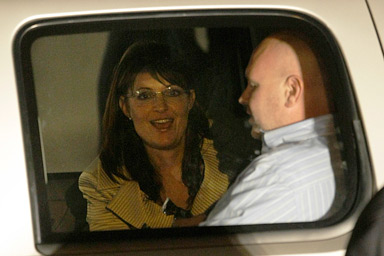
Examine the symptoms of this infection, beginning with David Letterman’s comments (widely noted but insufficiently analyzed) about Sarah Palin “buying makeup at Bloomingdale’s to update her slutty flight attendant look,” as well as his joke about Palin’s teenage daughter: “Sarah Palin went to a Yankees Game yesterday … during the seventh inning stretch, her daughter was knocked up by Alex Rodriguez.” (Letterman insists he was talking about her 18-year-old daughter, Bristol, who actually had been, well, knocked up, not her 14-year-old, Willow, the daughter who attended the game.) A week before these remarks aired, there was an uglier outbreak of the contagion in the pages of Playboy — never a bastion of egalitarian forward thinking, but still — where writer Guy Cimbalo published a list of 10 conservative women he’d like to “hate fuck,” a term that various observers interpreted as rough sex, sex tinged by rage, or rape. (Gabe Winant wrote for Broadsheet about the ”Hate Fuck” story, which has since been yanked by Playboy.) Worse than the violence of the general sentiment was the graphic specificity of the “Hate Fuck Rating” appended to each woman — a list that included Michelle Malkin, Elisabeth Hasselbeck, Dana Perino and Laura Ingraham. On Hasslebeck: “You’d be better served sucking off Regis Philbin.” On Malkin: “Worse than fucking Eva Braun.”

Both cases were met with a tepid response from the left. Though Letterman apologized on Wednesday’s show (see video below), his tone was mock-serious, and his audience chuckled along.

Imagine if, say, Michelle Obama, or Rachel Maddow, or Nancy Pelosi became the target of similar invective. The outcry from the left would be deafening. Shouldn’t liberals exhibit the same sort of decorous treatment we demand for ourselves? Sexist comments like Letterman’s and Cimbalo’s also evoke a troublingly insular, clubhouse atmosphere in lieu of an inclusive political party. What’s more, the gender-based stereotypes they conjure are as stale and ignorant as any voiced by the old Neanderthal right: Pretty women are de facto stupid, sexually promiscuous and low-class. Indeed, it’s the latter slight that has been least remarked upon and is, perhaps, the most disturbing. “Slutty flight attendant” is not just a sexual put-down; it’s a socioeconomic one. Likewise, when Cimbalo says, of right-wing blogger Pamela Geller, “Even a Silkwood shower won’t get rid of the stench of Fascist divorcee and Elizabeth Arden’s Red Door,” the classist sentiment is unmistakable. It’s a combination of gutter misogyny and snobbery, a return to a 1950s kind of insult. This is like saying a woman has a “reputation,” that she’s “that kind of girl,” one from “the wrong side of the tracks.” Cimbalo seems to be holding his nose not at the smell of some supposedly déclassé perfume but at the stench of working for a living, of being middle-class or having middle-class tastes.

And what’s the problem with sexy women, anyway? The facile answer is to say that female sexuality is threatening in some visceral, primitive way. But maybe the deeper fact is that pretty women remind us that the world is essentially unfair — and if the world is unfair, then the progressive quest for fairness may be quixotic and unnatural. There is no more free market economy than your average singles bar. In any case, stern conservative strength in a woman has undone the left for ages: See Margaret Thatcher. Liberals would probably contend that these women present much to argue with, propounding odious views with real-world implications — they do, they do — but why not attack their ideas rather than insult them? Newt Gingrich and Rush Limbaugh incite their share of leftist rage, but I have yet to hear Gingrich maligned as a bimbo, or Limbaugh as a slut (just a “big fat idiot,” to borrow a phrase from Al Franken, an impersonal and genderless slight). Partly, of course, this is because no such terms exist for men — another digression entirely.

Asking why it is that liberal women do not often take liberal men to task for these attitudes is well worthwhile. Maybe we don’t want to appear shrill and humorless, unable to take a joke. Or maybe it’s thought that conservative women are too ideologically reprehensible to merit a defense. But to challenge this kind of sexist talk is not the same thing as agreeing with a woman’s politics. If the left is allowed to remain a refuge for this sort of misogyny, if this virus in the body politic is allowed to flourish, then it is likely only a matter of time before it is once again directed at liberal women who are threatening in some way, as happened to Hillary Clinton. Call Pamela Geller racist for her anti-Islamic views, but leave her “top-heavy frame” aside.

Continue Reading Close

The perfect first family. Dammit

Are the Obamas setting an unrealistic standard for marriage?

  • more
    • All Share Services

Are the Obamas creating a nationwide inferiority complex? An article in the Times Styles section marveled over the pair’s recent “date night” in New York, where they ate at a restaurant and took in a Broadway play. “How do they make the time?” a reader might ask. There are children to raise, a mother-in-law to house, a puppy to walk and, oh, a superpower to run. Author Jan Hoffman assesses the nation’s “romance envy” and imagines slighted wives glaring and elbowing at the breakfast table and henpecked husbands feeling “betrayed by the commander in chief.” Meanwhile Sean Gregory, in an article in Time titled “Obamas, Stop Ruining My Marriage,” attempts to console such anxious couples: “But in the relationship department,” Gregory writes, “no one should ever wonder why they’re not meeting a standard set by the Obamas.”

It’s true that the Obamas appear to be an intimidatingly functional pair, with their constant affectionate winking at each other, their enlightened, considerate “Michelle time” and their adorable, well-behaved daughters – the legacy of the Obamas’ studied, reasonable parenting – who perform “first chores” and are always, without exception, in bed by 8. In the White House, we haven’t seen many such ideal models of marriage and family, but rather numerous examples of blazing dysfunction. Think of the retrograde Reagan marriage (he called her “mommy”), or the florid infidelities of Bill Clinton. As for the first children, they provide a virtual parade of maladjustment: the sullen, tomboyish Amy Carter; the rebellious, disaffected Reagan kids; the hard-partying Bush twins, and poor Chelsea, who often seemed a sort of first prop. Not since JFK was in the White House has there been a political marriage Americans have envied to this extent, a first family they might actually like to emulate.

Perhaps more relevantly, never before have we seen a White House marriage so thoroughly imbued by our therapy-saturated culture. Who’s to say whether the Obamas have ever seen a shrink or read “Getting the Love You Want.” Like everyone else in America, though, they have spent the past two decades steeped in self-help concepts and ideas – like, well, that of date night, or the idea that one must consciously “make time” for one’s spouse. Indeed, while they appear to love and admire each other, their marriage does not seem accidental or organic. They appear to think about and tend to it, presumably pulling weeds when they arise. (In his new book, “Renegade,” political journalist Richard Wolffe notes that their marriage hit a rough patch some years ago: Michelle apparently found Barack too focused on his career; he found her “cold and ungrateful” – both blessedly humanizing tidbits.) Their marriage looks as if it requires what it is often said all marriages require: hard work. Gregory reassures readers that the Obamas have time to do this work because they have the “advantages” of, among other amenities, 8,000 cooks and maids, a 132-room house and a mother-in-law on call. In doing so, he points out, intentionally or not, the discomfiting flip side of any self-help concept, the same notion Susan Sontag emphasized in “Illness as Metaphor”: If you can help yourself, then it’s your fault if you don’t. If there are methods by which to resuscitate a marriage, however corny or contrived they may seem, you have only yourself to blame if you don’t try them.

Thus the dark but fairly obvious truth that Americans have long relished the psychodrama of the first family. It’s entertainment (most of us prefer the bickering of “The Osbournes” to the anesthetizing comfort of, say, “Our House”), but it also makes us feel better about our inability to fix our own flawed relationships and lives. It may be that Obama was elected in part because voters idealized the Obama marriage – next to the Clinton, Edwards and McCain partnerships, it surely ranks as the most enviably healthy – but now we must watch it in all its glory for the next four years.

It’s a little like attending a collective couples’ counseling session that sets forth a model of exemplary marital behavior. By turns, the example spurs us to improvement and reminds us of our inadequacy. Then again, we can also look back at the supposedly halcyon exhibit of the Kennedys and realize that any marriage, no matter how dazzling, is always more complicated than it appears.

Continue Reading Close

Page 4 of 4 in Amanda Fortini