Calvin Woodward

Romney oversimplifies debt ‘inferno’

On the campaign trail, Romney has repeatedly ignored the actual causes of the nation's runaway debt

  • more
    • All Share Services

Romney oversimplifies debt 'inferno'In this May 15, 2012, photo, Republican presidential candidate, former Massachusetts Gov. Mitt Romney speaks during a campaign stop in Des Moines, Iowa. When Republican Romney decried the “prairie fire” of U.S. debt Tuesday, he ignored some of the sparks that set it ablaze. One was the Great Recession that took hold before Barack Obama became president. That landmark event went unmentioned in Romney’s speech. Another was a series of Bush-era tax cuts that Romney wants to follow with even lower rates. (AP Photo/Charlie Neibergall)(Credit: AP)

WASHINGTON (AP) — When Republican presidential hopeful Mitt Romney decried the “prairie fire” of U.S. debt Tuesday, he ignored some of the sparks that set it ablaze.

One was the Great Recession that took hold before Barack Obama became president. That landmark event went unmentioned in Romney’s speech. Another was a series of Bush-era tax cuts that Romney wants to follow with even lower rates.

Instead he laid the blame on Obama, a president who has certainly increased the nation’s eye-popping debt — but not, as Romney claimed, by nearly as much as all other presidents combined.

A look at some of Romney’s assertions and how they compare with the facts:

___

ROMNEY: “America counted on President Obama to rescue the economy, tame the deficit and help create jobs. Instead, he bailed out the public sector, gave billions of your dollars to the companies of his friends, and added almost as much debt as all the prior presidents combined.”

THE FACTS. Hardly. Presidents from George Washington through George W. Bush ran the national debt up to $10.62 trillion, the amount it was on the day Obama took office. Today, it is $15.67 trillion, according to the Treasury Department’s Bureau of Public Debt. So it has gone up by $5.05 trillion under Obama. That’s roughly half of the amount amassed by all the other presidents combined.

In short, the debt has gone up by about half under Obama. Under Ronald Reagan, it tripled.

___

ROMNEY: “I will lead us out of this debt and spending inferno. We will stop borrowing unfathomable sums of money we can’t even imagine, from foreign countries we’ll never even visit. I will bring us together to put out the fire.”

THE FACTS: Romney’s tax and spending plans don’t support his vow to dampen the debt fire. He proposes to cut taxes and expand the armed forces, putting yet more stress on the budget, and his promise to slash domestic spending isn’t backed by the big specifics. Romney’s tax plan would cut the top income tax rate to 28 percent from 35 percent and other rates by 20 percent each. He says he’d broaden the tax base and eliminate many deductions in the process, but details are missing.

A study by the nonpartisan Committee for a Responsible Federal Budget concluded earlier this year that Romney’s plans would not make a dent in deficits, and could worsen them considerably. That study was done before Romney upped his tax cuts, inviting even deeper debt.

That’s not to say he can’t at some point lay out the spending cuts necessary to achieve his aims. But he would have to slash domestic programs by more than 20 percent — far more than the 5 percent in immediate cuts he has proposed. It is nearly unthinkable that Congress would approve the evisceration of basic federal functions such as food inspection, air traffic control, the Border Patrol, FBI, grants to local governments, health research, housing and heating aid for the poor, food aid for pregnant women, national parks and much more.

Nowhere in Tuesday’s speech was there a new idea of how Romney would accomplish the promised deficit reduction. He spoke generally of reforming Social Security and Medicare, eliminating duplicative government programs, and transferring some functions to the states or the private sector, adding that he would “streamline everything that’s left.”

The closest he has come to laying out a specific spending plan has been in his endorsement of the budget blueprint passed this year by House Republicans, which also fails to produce his promised deficit reductions.

___

ROMNEY: “The people of Iowa and America have watched President Obama for nearly four years, much of that time with Congress controlled by his own party. And rather than put out the spending fire, he has fed the fire. He has spent more and borrowed more. … When you add up his policies, this president has increased the national debt by $5 trillion.”

THE FACTS: Much of the increase in the debt is due to lower tax revenues from depressed corporate and individual incomes and high joblessness in the worst recession since the Great Depression. The recession officially began in December 2007, when George W. Bush was president and the national debt stood at just over $9 trillion. Financial bailouts, stimulus programs and auto rescue spending that started under Bush and continued under Obama contributed to the run-up of the debt.

But so did the Bush-era tax cuts enacted in 2001 and 2003. With bipartisan support, Congress has extended the tax cuts until the end of this year, and Romney’s proposals for big cuts of his own would risk another squeeze on revenue.

To be sure, Obama as a presidential candidate in 2008 was just as eager as Romney is now to pin blame for mounting debt on a president from the other party.

Ignoring economic circumstances and the role of both parties in Congress, Obama accused President George W. Bush in that campaign of driving up debt by $4 trillion “by his lonesome” and taking out “a credit card from the Bank of China in the name of our children.”

FACT CHECK: Romney oversimplifies debt ‘inferno’

  • more
    • All Share Services

WASHINGTON (AP) — When Republican presidential hopeful Mitt Romney decried the “prairie fire” of U.S. debt Tuesday, he ignored some of the sparks that set it ablaze.

One was the Great Recession that took hold before Barack Obama became president. That landmark event went unmentioned in Romney’s speech. Another was a series of Bush-era tax cuts that Romney wants to follow with even lower rates.

Instead he laid the blame on Obama, a president who has certainly increased the nation’s eye-popping debt — but not, as Romney claimed, by nearly as much as all other presidents combined.

A look at some of Romney’s assertions and how they compare with the facts:

___

ROMNEY: “America counted on President Obama to rescue the economy, tame the deficit and help create jobs. Instead, he bailed out the public sector, gave billions of your dollars to the companies of his friends, and added almost as much debt as all the prior presidents combined.”

THE FACTS. Hardly. Presidents from George Washington through George W. Bush ran the national debt up to $10.62 trillion, the amount it was on the day Obama took office. Today, it is $15.67 trillion, according to the Treasury Department’s Bureau of Public Debt. So it has gone up by $5.05 trillion under Obama. That’s roughly half of the amount amassed by all the other presidents combined.

In short, the debt has gone up by about half under Obama. Under Ronald Reagan, it tripled.

___

ROMNEY: “I will lead us out of this debt and spending inferno. We will stop borrowing unfathomable sums of money we can’t even imagine, from foreign countries we’ll never even visit. I will bring us together to put out the fire.”

THE FACTS: Romney’s tax and spending plans don’t support his vow to dampen the debt fire. He proposes to cut taxes and expand the armed forces, putting yet more stress on the budget, and his promise to slash domestic spending isn’t backed by the big specifics. Romney’s tax plan would cut the top income tax rate to 28 percent from 35 percent and other rates by 20 percent each. He says he’d broaden the tax base and eliminate many deductions in the process, but details are missing.

A study by the nonpartisan Committee for a Responsible Federal Budget concluded earlier this year that Romney’s plans would not make a dent in deficits, and could worsen them considerably. That study was done before Romney upped his tax cuts, inviting even deeper debt.

That’s not to say he can’t at some point lay out the spending cuts necessary to achieve his aims. But he would have to slash domestic programs by more than 20 percent — far more than the 5 percent in immediate cuts he has proposed. It is nearly unthinkable that Congress would approve the evisceration of basic federal functions such as food inspection, air traffic control, the Border Patrol, FBI, grants to local governments, health research, housing and heating aid for the poor, food aid for pregnant women, national parks and much more.

Nowhere in Tuesday’s speech was there a new idea of how Romney would accomplish the promised deficit reduction. He spoke generally of reforming Social Security and Medicare, eliminating duplicative government programs, and transferring some functions to the states or the private sector, adding that he would “streamline everything that’s left.”

The closest he has come to laying out a specific spending plan has been in his endorsement of the budget blueprint passed this year by House Republicans, which also fails to produce his promised deficit reductions.

___

ROMNEY: “The people of Iowa and America have watched President Obama for nearly four years, much of that time with Congress controlled by his own party. And rather than put out the spending fire, he has fed the fire. He has spent more and borrowed more. … When you add up his policies, this president has increased the national debt by $5 trillion.”

THE FACTS: Much of the increase in the debt is due to lower tax revenues from depressed corporate and individual incomes and high joblessness in the worst recession since the Great Depression. The recession officially began in December 2007, when George W. Bush was president and the national debt stood at just over $9 trillion. Financial bailouts, stimulus programs and auto rescue spending begun under Bush and continued under Obama contributed to the run-up of the debt.

But so did the Bush-era tax cuts enacted in 2001 and 2003. With bipartisan support, Congress has extended the tax cuts until the end of this year, and Romney’s proposals for big cuts of his own would risk another squeeze on revenue.

Continue Reading Close

Obama and Romney: Where they stand on the issues

  • more
    • All Share Services

WASHINGTON (AP) — A look at where Democratic President Barack Obama and Republican presidential hopeful Mitt Romney stand on a selection of issues, in brief:

ABORTION and BIRTH CONTROL:

Obama: Supports abortion rights. Health care law requires contraceptives to be available for free for women enrolled in workplace health plans.

Romney: Opposes abortion rights. Previously supported them. Says state law should guide abortion rights, and Roe v. Wade should be reversed by a future Supreme Court. Said he would end federal aid to Planned Parenthood.

___

DEBT:

Obama: Fourth-straight year of trillion-dollar deficits is projected. Won approval to raise debt limit to avoid default. Calls for tackling the debt with a mix of spending cuts and revenue increases. Central to Obama’s plan is to let Bush-era tax cuts expire for couples making more than $250,000

Romney: Defended 2008 bailout of financial institutions as a necessary step to avoid the system’s collapse, opposed the auto bailout. Would cap federal spending at 20 percent of gross domestic product by end of first term, down from 23.5 percent now, with largely unspecified spending cuts. Favors constitutional balanced budget amendment.

___

ECONOMY:

Obama: Term marked by high unemployment, a deep recession that began in previous administration and gradual recovery. Responded to recession with a roughly $800 billion stimulus plan. Continued implementation of Wall Street and auto industry bailouts begun under George W. Bush. Proposes tax breaks for U.S. manufacturers producing domestically or repatriating jobs from abroad, and tax penalties for U.S. companies outsourcing jobs.

Romney: Lower taxes, less regulation, balanced budget, more trade deals to spur growth. Replace jobless benefits with unemployment savings accounts. Proposes repeal of the law toughening financial-industry regulations after the meltdown in that sector, and the law tightening accounting regulations in response to corporate scandals.

___

EDUCATION:

Obama: Has approved waivers freeing states from the most onerous requirements of the Bush-era No Child Left Behind law. “Race to the Top” competition has rewarded winning states with billions of dollars for pursuing education policies Obama supports.

Romney: Supported the federal accountability standards of No Child Left Behind law. Has said the student testing, charter-school incentives and teacher evaluation standards of Obama’s “Race to the Top” competition “make sense” although the federal government should have less control of education.

___

ENERGY and ENVIRONMENT:

Obama: Ordered temporary moratorium on deep-water drilling after the massive BP oil spill in the Gulf of Mexico but has pushed for more oil and gas drilling overall. Achieved historic increases in fuel economy standards that will save money at the pump while raising the cost of new vehicles. Achieved first-ever regulations on heat-trapping gases blamed for global warming and on toxic mercury pollution from power plants. Spent heavily on green energy and has embraced nuclear power as a clean source. Failed to persuade a Democratic Congress to pass limits he promised on carbon emissions.

Romney: Supports opening the Atlantic and Pacific outer continental shelves to drilling, as well as Western lands, the Arctic National Wildlife Refuge and offshore Alaska. Wants to reduce obstacles to coal, natural gas and nuclear energy development, and accelerate drilling permits in areas where exploration has already been approved for developers with good safety records. Says green power has yet to become viable and the causes of climate change are unknown.

___

GAY RIGHTS:

Obama: Supports legal recognition of same-sex marriage, a matter decided by states. Opposed that recognition in 2008 presidential campaign, and in 2004 Senate campaign, while supporting the extension of legal rights and benefits to same-sex couples in civil unions. Achieved repeal of the military ban on openly gay members. Has not achieved repeal of the Defense of Marriage Act, which denies federal recognition of same-sex marriages and affirms the right of states to refuse to recognize such marriages. Administration has ceased defending the law in court but it remains on the books.

Romney: Opposes legal recognition of same-sex marriage and says it should be banned with a constitutional amendment, not left to states. “Marriage is not an activity that goes on within the walls of a state.” Also opposes civil unions “if they are identical to marriage other than by name,” but says states should be left to decide what rights and benefits should be allowed under those unions. Says certain domestic partnership benefits —largely unspecified — as well as hospital visitation rights are appropriate but “others are not.” Says he would not seek to restore the ban on openly gay military members.

___

HEALTH CARE:

Obama: Achieved landmark overhaul putting U.S. on path to universal coverage if the Supreme Court upholds the heath care law and its mandate for almost everyone to obtain insurance. Under the law, insurers will be banned from denying coverage to people with pre-existing illness, tax credits will subsidize premiums, people without work-based insurance will have access to new markets, small business gets help for offering insurance and Medicaid will expand.

Romney: Promises to work for repeal of the law modeled largely after his universal health care achievement in Massachusetts because he says states, not Washington, should drive policy on the uninsured. Proposes to guarantee that people who are “continuously covered” for a certain period be protected against losing insurance if they get sick, leave their job and need another policy. Would expand individual tax-advantaged medical savings accounts and let savings be used for insurance premiums as well as personal medical costs.

___

IMMIGRATION:

Obama: Failed to deliver on a promised immigration overhaul, with the defeat of legislation that would have created a path to citizenship for young illegal immigrants enrolled in college or enlisted in the armed forces. Government has deported a record number of illegal immigrants under Obama, nearly 400,000 in each of the last three years.

Romney: Favors U.S.-Mexico border fence, opposes education benefits to illegal immigrants. Opposes offering legal status to illegal immigrants who attend college, but would do so for those who serve in the armed forces. Establish an immigration-status verification system for employers and punish them if they hire non-citizens who do not prove their legal status.

___

SOCIAL SECURITY:

Obama: Has not proposed a comprehensive plan to address Social Security’s long-term financial problems. In 2011, proposed a new measure of inflation that would reduce annual increases in Social Security benefits. The proposal would reduce the long-term financing shortfall by about 25 percent, according to the Social Security actuaries.

Romney: Protect the status quo for people 55 and over but, for the next generation of retirees, raise the retirement age for full benefits by one or two years and reduce inflation increases in benefits for wealthier recipients.

___

TAXES:

Obama: Wants to raise taxes on the wealthy and ensure they pay 30 percent of their income at minimum. Supports extending Bush-era tax cuts for everyone making under $200,000, or $250,000 for couples. But in 2010, agreed to a two-year extension of the lower rates for all. Health care law provides for tax on highest-value health insurance plans. Together with Congress, built a first-term record of significant tax cuts, some temporary.

Romney: Drop all tax rates by 20 percent, bringing the top rate, for example, down to 28 percent from 35 percent and the lowest rate to 8 percent instead of 10 percent. Curtail deductions, credits and exemptions for the wealthiest. Eliminate capital gains tax for families making below $200,000 and cut corporate tax to 25 percent from 35 percent.

___

TERRORISM:

Obama: Approved the raid that found and killed Osama bin Laden, set policy that U.S. would no longer use harsh interrogation techniques, a practice that had essentially ended later in George W. Bush’s presidency. Largely carried forward Bush’s key anti-terrorism policies, including detention of suspects at Guantanamo Bay despite promise to close the prison. Expanded use of unmanned drone strikes against terrorist targets in Pakistan and Yemen.

Romney: No constitutional rights for foreign terrorism suspects. In 2007, refused to rule out use of waterboarding to interrogate terrorist suspects. In 2011, his campaign said he does not consider waterboarding to be torture.

___

WAR:

Obama: Ended the Iraq war, increased U.S. troop presence in Afghanistan then began drawing down the force with a plan to have all out by the end of 2014. Approved U.S. air power in NATO-led campaign that helped Libyan opposition topple government. Major cuts coming in the size of the Army and Marine Corps as part of agreement with congressional Republicans to cut $487 billion in military spending over a decade. Opposes near-term military strike on Iran but holds that option open if it proves the only way to stop Iran from getting nuclear weapons.

Romney: Would increase strength of armed forces, adding almost $100 billion to the Pentagon budget in 2016. Has spoken in favor of covert action by the U.S. and regional allies in Syria but “the right course is not military” intervention by the U.S. Criticizes Obama’s approach on Iran as too conciliatory but has not explicitly threatened a near-term U.S. military strike.

___

Associated Press writers Ben Feller, Matt Apuzzo, Ricardo Alonso-Zaldivar, Stephen Ohlemacher, Alan Fram, Dina Cappiello, Anne Gearan, Ken Thomas, Jim Kuhnhenn and Christopher S. Rugaber contributed to this report.

Continue Reading Close

A slo-mo evolution for Obama on gay marriage

  • more
    • All Share Services

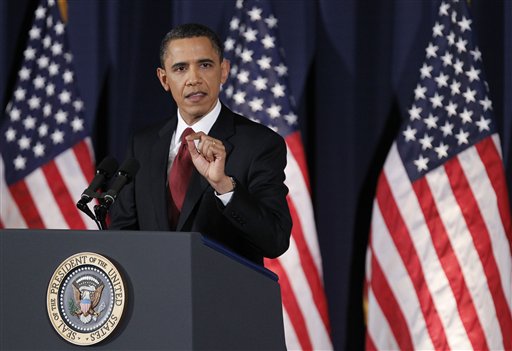
A slo-mo evolution for Obama on gay marriageFILE - In this May 8, 2012 file photo, President Barack Obama speaks in Washington. President Barack Obama faced mounting pressure Wednesday to express support for same-sex marriage after a setback for gay-rights advocates in North Carolina. (AP Photo/Carolyn Kaster, File)(Credit: AP)

WASHINGTON (AP) — President Barack Obama’s evolution on gay marriage unfolded at a Darwinian pace, like that of the giant tortoise. For more than a year — eons in politics — he danced up to the edge of endorsing it, always stopping short, still “evolving.”

Until very recently, much of the betting was on Obama taking a pass on the touchy issue until after the election. Why pick that fight now?

On Wednesday, he picked it. Obama gave a heads-up to a spiritual adviser, among others, and staked his position in a TV interview as the first president to declare himself in favor of same-sex marriage rights.

In doing so, he closed the loop with gay-rights activists who are important financiers and supporters of his re-election campaign while putting himself on a potentially perilous path with voters in states such as North Carolina. That state backed him in 2008 but voted solidly Tuesday to ban gay marriage in the state constitution. And it hosts the Democratic National Convention in September.

As told by aides, Obama concluded earlier this year that gay couples should have the legal right to marry and planned to say so before the convention. Speaking on condition of anonymity to discuss internal White House conversations, they said the White House felt compelled to accelerate its plans after Vice President Joe Biden declared his support for gay marriage on a Sunday morning talk show and said he was “absolutely comfortable” with same-sex couples being legally wed.

Then on Monday, Education Secretary Arne Duncan, a longtime friend and basketball buddy of the president, stirred the pot further. Asked on a morning show whether he believed same-sex couples should legally be allowed to marry, Duncan said simply, “Yes, I do.”

To outsiders, an element of orchestration seemed apparent — a softening of the ground before Obama stepped forward. After all, Biden has spoken out of turn before — as when he asserted during the 2009 swine flu outbreak that he would keep his family off airplanes and subways altogether — and the White House has some practice cleaning up after such remarks.

But aides said Biden’s comment was impromptu. He taped his appearance on NBC’s “Meet the Press” on Friday, and top officials said they and the president were quickly made aware that the vice president went further than Obama ever had on the issue. While officials said Obama was not angry with Biden, he decided that his vice president’s remarks made it difficult to keep his own views private for much longer.

After Biden’s interview was broadcast Sunday morning, gay-rights advocates swiftly proclaimed him to be the highest-ranking U.S. official to endorse gay marriage publicly and pressed the president anew to do the same.

The White House and Obama campaign struggled to manage the fallout. Biden’s office released a statement insisting the vice president had not broken ranks with Obama. David Axelrod, a senior campaign adviser, chimed in on Twitter, saying Biden and Obama shared the view that all married couples should have the same legal rights.

White House press secretary Jay Carney’s daily briefing Monday afternoon was dominated by questions about the president’s position on gay marriage and whether he had become increasingly isolated on the issue within his own administration. “He, as you know, said that his views on this were evolving, and I don’t have an update for you on that,” an exasperated Carney said.

By Tuesday morning, Obama and his aides concluded that they couldn’t contain the matter any longer. They started putting a plan in motion for Obama to embrace gay marriage in a television interview, which is how they had always planned for him to break the news. North Carolina’s vote for the ban that night added urgency, for Democrats outside the White House if not inside.

Ed Rendell, a former Pennsylvania governor and Democratic chairman, voiced that urgency before the expected victory of anti-gay-marriage forces in North Carolina came to pass. He said on TV Tuesday that Obama should “man up” and make his position known.

On Wednesday, Obama called the Rev. Joel Hunter, who prays often with the president, and told him what he was doing.

Hunter, an evangelical pastor and founder of the 15,000-member Northland church in the Orlando, Fla., area, told The Associated Press they spoke for about 15 minutes. “I said I disagreed with this decision,” he said. “I said, more precisely, ‘This is not how I read Scripture,’ and he totally understood that. In the end, he was doing what he believed was right, what he thinks is authentic for him at this time in his life.”

Hunter said the president acknowledged the decision could make it difficult for clergy to defend him in the face of criticism from Christian conservatives over a number of issues. “Those of us who love him and have invested into his life, he’s very aware that this costs us something and that’s something that I think weighs on him,” Hunter said. “I don’t abandon people because I don’t agree with their decisions. But there will absolutely be blowback from his personal decision.”

To be sure, Obama’s shifting body language has been obvious for a long time, even if the words were not there.

In 2010, he told liberal bloggers “it’s pretty clear where the trend lines are going” on gay marriage rights. Soon after he began speaking of “evolving” away from his position in favor of civil unions but not formal marriage rights.

In June 2011, he praised the decision in New York state to legalize same-sex marriage and spoke at a news conference of a “profound recognition” in the country that gays must be treated like every other American.

But as for his own views, he was still evolving.

“I’ll keep on giving you the same answer until I give you a different one,” he said when pressed. “All right? And that won’t be today.”

That night, Obama held a reception at the White House for Lesbian, Gay, Bisexual and Transgender Pride Month. Author and sex columnist Dan Savage attended, wearing a button that said “Evolve Already.”

On Wednesday, that different answer came, and one evolution was complete.

___

AP Religion Writer Rachel Zoll contributed to this report.

Continue Reading Close

Obama, Romney offer classic choices on big issues

  • more
    • All Share Services

Obama, Romney offer classic choices on big issuesPresident Barack Obama gestures while speaking to the Building and Construction Trades Department Legislative Conference, Monday, April 30, 2012, in Washington. (AP Photo/Evan Vucci)(Credit: AP)

WASHINGTON (AP) — For the better part of a year, Mitt Romney has tethered himself to an array of positions designed for the Republican presidential primaries, stances that put him to the right of where he’s been through much of his career and raise questions about where he really wants to go. President Barack Obama’s politicking has tacked to the left, thanks to all those speeches to Democratic fundraisers and other activist-heavy events that play up the liberal in him.

Now, though, it’s time for both politicians to start maximizing their appeal to the broad electorate, a task Obama had the luxury of starting early as the incumbent without an intra-party struggle to settle. And as they compete for that middle ground, the essential differences between them may become harder to see.

Those differences surely exist. Obama and his Republican challenger are offering voters a distinct choice on taxes, a sharp disagreement over health care and a classic ideological divide on social issues that neither candidate seems eager to talk about. So, too, Obama has shown he believes in the power of the purse — or the power of debt — to right an economic downturn in ways that Republicans find hard to swallow.

Take taxes. Romney and Obama are at odds over whether low taxes on the wealthy help fuel the engine of economic growth or are an unfair giveaway to people who don’t need it.

That’s far more than a debating-society point. Despite the substantial tax cuts Obama has supported since becoming president, he wants to push even more than in 2008 to raise taxes on the rich and on companies that outsource jobs. Romney wants lower rates for all incomes and no special tax penalties on corporate behavior.

Romney vows to try to roll back Obama’s health care law if the Supreme Court doesn’t do it in its pending ruling on the case, and to set a different course that lets states drive policy on that front.

Should he succeed, it would be a massive uprooting of one of the most significant reconstructions of social policy in generations. This from a man who, as Massachusetts governor, pioneered the approach Obama adapted for the nation at large.

Although presidential candidates rarely are explicit about it, they have a hefty interest in reworking the ideological balance of the Supreme Court, now with the slimmest conservative majority, should they get that chance.

Romney’s opposition to abortion rights can’t go very far when those rights were affirmed long ago by the court, but that could be a different story with the addition of another conservative or two. Obama’s health care law would not be in judicial jeopardy if he’d been able to nudge the court left.

Both have records that defy easy labels.

Romney governed pragmatically in Massachusetts. He says he had no choice in a state so dominated by the opposing party. That record, along with his flips on some issues, has fed the perception that he’s a man of the middle, not necessarily a terrible place to be in a general election. But if he’s gone through the GOP race as a moderate in conservative’s clothing, that’s not to say he and Obama are indistinguishable on the big and little issues of the day.

Obama clearly believes in the value of regulation, despite efforts to roll back some burdensome rules. Romney just as evidently wants to cut them, despite assurances he’s not looking to throw out the whole federal rulebook. Obama’s environmental record is mixed, even disappointing, in the eyes of advocates, due to his aggressive posture on drilling and his failure to win a cap and trade law even from a Democratically controlled Congress.

But he still stands in contrast to an opponent who wants to open more protected waters for exploration, looks dimly on the potential of green energy, questions the science of climate change and blames environmental regulation for holding back the promise of American energy.

For all those Republican primary debates and Obama’s time in office, there are blanks that need to be filled in for both.

Obama has not come up with a plan to rescue Social Security; his opponent has made more of a start on that by proposing to raise the future retirement age for full benefits by one or two years and to reduce inflation increases in benefits for wealthier recipients, while protecting the status quo for people 55 and over.

Romney’s handling of any number of foreign policy crises cannot be seen until and unless they confront him in office, whereas Obama has a record to judge.

In any event, only so much can be read into their positions. The makeup of Congress after the election will determine whether a candidate’s to-do list gets done, a reality often neglected when presidential candidates make bold promises.

Circumstance, too, will shape what gets done. Obama walked into a steep recession, with the financial sector, auto industry and housing market reeling. By necessity he became a manager on the fly, much as George W. Bush did when the terrorist attacks of 2001 changed everything for years to come.

Continue Reading Close

Obama and Romney: Where they stand on the issues

  • more
    • All Share Services

WASHINGTON (AP) — A look at where Democratic President Barack Obama and Republican presidential hopeful Mitt Romney stand on a selection of issues, in brief:

ABORTION and BIRTH CONTROL:

Obama: Supports abortion rights. Health care law requires contraceptives to be available for free for women enrolled in workplace health plans.

Romney: Opposes abortion rights. Previously supported them. Says state law should guide abortion rights, and Roe v. Wade should be reversed by a future Supreme Court. Said he would end federal aid to Planned Parenthood.

___

DEBT:

Obama: Fourth-straight year of trillion-dollar deficits is projected. Won approval to raise debt limit to avoid default. Calls for tackling the debt with a mix of spending cuts and revenue increases. Central to Obama’s plan is to let Bush-era tax cuts expire for couples making more than $250,000

Romney: Defended 2008 bailout of financial institutions as a necessary step to avoid the system’s collapse, opposed the auto bailout. Would cap federal spending at 20 percent of gross domestic product by end of first term, down from 23.5 percent now, with largely unspecified spending cuts. Favors constitutional balanced budget amendment.

___

ECONOMY:

Obama: Term marked by high unemployment, a deep recession that began in previous administration and gradual recovery. Responded to recession with a roughly $800 billion stimulus plan. Continued implementation of Wall Street and auto industry bailouts begun under George W. Bush. Proposes tax breaks for U.S. manufacturers producing domestically or repatriating jobs from abroad, and tax penalties for U.S. companies outsourcing jobs.

Romney: Lower taxes, less regulation, balanced budget, more trade deals to spur growth. Replace jobless benefits with unemployment savings accounts. Proposes repeal of the law toughening financial-industry regulations after the meltdown in that sector, and the law tightening accounting regulations in response to corporate scandals.

___

EDUCATION:

Obama: Has approved waivers freeing states from the most onerous requirements of the Bush-era No Child Left Behind law. “Race to the Top” competition has rewarded winning states with billions of dollars for pursuing education policies Obama supports.

Romney: Supported the federal accountability standards of No Child Left Behind law. Has said the student testing, charter-school incentives and teacher evaluation standards of Obama’s “Race to the Top” competition “make sense” although the federal government should have less control of education.

___

ENERGY and ENVIRONMENT:

Obama: Ordered temporary moratorium on deep-water drilling after the massive BP oil spill in the Gulf of Mexico but has pushed for more oil and gas drilling overall. Achieved historic increases in fuel economy standards that will save money at the pump while raising the cost of new vehicles. Achieved first-ever regulations on heat-trapping gases blamed for global warming and on toxic mercury pollution from power plants. Spent heavily on green energy and has embraced nuclear power as a clean source. Failed to persuade a Democratic Congress to pass limits he promised on carbon emissions.

Romney: Supports opening the Atlantic and Pacific outer continental shelves to drilling, as well as Western lands, the Arctic National Wildlife Refuge and offshore Alaska. Wants to reduce obstacles to coal, natural gas and nuclear energy development, and accelerate drilling permits in areas where exploration has already been approved for developers with good safety records. Says green power has yet to become viable and the causes of climate change are unknown.

___

GAY RIGHTS:

Obama: Once opposed federal recognition of same-sex marriage, later said his views were “evolving” and has not taken a position since. Opposes constitutional amendment to ban it. Supports civil unions and letting states decide about marriage. Achieved repeal of the military ban on openly gay service members.

Romney: Favors constitutional amendment to ban gay marriage, says policy should be set federally, not by states. But said he would not seek to restore a ban on openly gay service members.

___

HEALTH CARE:

Obama: Achieved landmark overhaul putting U.S. on path to universal coverage if the Supreme Court upholds the heath care law and its mandate for almost everyone to obtain insurance. Under the law, insurers will be banned from denying coverage to people with pre-existing illness, tax credits will subsidize premiums, people without work-based insurance will have access to new markets, small business gets help for offering insurance and Medicaid will expand.

Romney: Promises to work for repeal of the law modeled largely after his universal health care achievement in Massachusetts because he says states, not Washington, should drive policy on the uninsured. Proposes to guarantee that people who are “continuously covered” for a certain period be protected against losing insurance if they get sick, leave their job and need another policy. Would expand individual tax-advantaged medical savings accounts and let savings be used for insurance premiums as well as personal medical costs.

___

IMMIGRATION:

Obama: Failed to deliver on a promised immigration overhaul, with the defeat of legislation that would have created a path to citizenship for young illegal immigrants enrolled in college or enlisted in the armed forces. Government has deported a record number of illegal immigrants under Obama, nearly 400,000 in each of the last three years.

Romney: Favors U.S.-Mexico border fence, opposes education benefits to illegal immigrants. Opposes offering legal status to illegal immigrants who attend college, but would do so for those who serve in the armed forces. Establish an immigration-status verification system for employers and punish them if they hire non-citizens who do not prove their legal status.

___

SOCIAL SECURITY:

Obama: Has not proposed a comprehensive plan to address Social Security’s long-term financial problems. In 2011, proposed a new measure of inflation that would reduce annual increases in Social Security benefits. The proposal would reduce the long-term financing shortfall by about 25 percent, according to the Social Security actuaries.

Romney: Protect the status quo for people 55 and over but, for the next generation of retirees, raise the retirement age for full benefits by one or two years and reduce inflation increases in benefits for wealthier recipients.

___

TAXES:

Obama: Wants to raise taxes on the wealthy and ensure they pay 30 percent of their income at minimum. Supports extending Bush-era tax cuts for everyone making under $200,000, or $250,000 for couples. But in 2010, agreed to a two-year extension of the lower rates for all. Health care law provides for tax on highest-value health insurance plans. Together with Congress, built a first-term record of significant tax cuts, some temporary.

Romney: Drop all tax rates by 20 percent, bringing the top rate, for example, down to 28 percent from 35 percent and the lowest rate to 8 percent instead of 10 percent. Curtail deductions, credits and exemptions for the wealthiest. Eliminate capital gains tax for families making below $200,000 and cut corporate tax to 25 percent from 35 percent.

___

TERRORISM:

Obama: Approved the raid that found and killed Osama bin Laden, set policy that U.S. would no longer use harsh interrogation techniques, a practice that had essentially ended later in George W. Bush’s presidency. Largely carried forward Bush’s key anti-terrorism policies, including detention of suspects at Guantanamo Bay despite promise to close the prison. Expanded use of unmanned drone strikes against terrorist targets in Pakistan and Yemen.

Romney: No constitutional rights for foreign terrorism suspects. In 2007, refused to rule out use of waterboarding to interrogate terrorist suspects. In 2011, his campaign said he does not consider waterboarding to be torture.

___

WAR:

Obama: Ended the Iraq war, increased U.S. troop presence in Afghanistan then began drawing down the force with a plan to have all out by the end of 2014. Approved U.S. air power in NATO-led campaign that helped Libyan opposition topple government. Major cuts coming in the size of the Army and Marine Corps as part of agreement with congressional Republicans to cut $487 billion in military spending over a decade. Opposes near-term military strike on Iran but holds that option open if it proves the only way to stop Iran from getting nuclear weapons.

Romney: Would increase strength of armed forces, adding almost $100 billion to the Pentagon budget in 2016. Has spoken in favor of covert action by the U.S. and regional allies in Syria but “the right course is not military” intervention by the U.S. Criticizes Obama’s approach on Iran as too conciliatory but has not explicitly threatened a near-term U.S. military strike.

___

Associated Press writers Ben Feller, Matt Apuzzo, Ricardo Alonso-Zaldivar, Stephen Ohlemacher, Alan Fram, Dina Cappiello, Anne Gearan, Ken Thomas, Jim Kuhnhenn and Christopher S. Rugaber contributed to this report.

Continue Reading Close

Page 1 of 5 in Calvin Woodward