David Marchese

The secret life of pimple poppers

It's a social taboo -- but why is it all that different from blowing your nose? Salon investigates

  • more
    • All Share Services

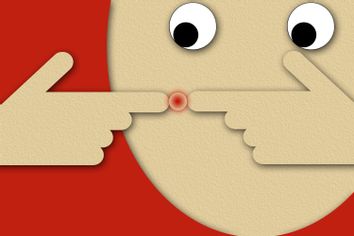
The secret life of pimple poppers

I have a friend with whom I often discuss things I don’t discuss with anyone else. Bowel movements, infections, bodily fungi — it’s all fair game with him. But just the other day, I mentioned that I’d popped a large pimple on my back. A back-juicer, I called it. “Dude,” my friend said to me, “that’s gross.”

On one hand, I understood. On the other, who hasn’t popped a pimple? Who doesn’t get a painful little prick of satisfaction from doing so? I didn’t see why my revelation deserved such a disgusted reaction. In our current gross-out moment, when Lady Gaga’s labia can become water cooler fodder, when Tiger Woods’ golden shower-related texts are read by millions, and when there are popular websites — and best-selling books — devoted to excrement, pimples reside firmly in the socially radioactive TMI zone. Discuss at your own peril.

For most of us, that is. Just below the mainstream lies a thriving pimple-popping culture. On YouTube, graphic videos of people squeezing impressive pimples (or sometimes having the zits squeezed for them) earn hundreds of thousands of views. These clips have no narrative or context. If they were pornos, they’d be all money shots. Facebook groups are devoted to the topic (check out “Feeling Satisfied After Popping the Biggest Pimple“).

Outside the fetish cornucopia that is the Internet, though, pimple popping hides in plain sight. We see the effort put into pimple popping all the time: The dude in the next cubicle with the scabby blemish on his face; the sunbathers at the beach with acne scars dappling their shoulders. Yet we never bring up the subject the way we do with other similarly icky biological matters. Why is it socially acceptable, if indelicate, for someone to sit beside you on the bus and blow thick streams of snot into a thin tissue but verboten to pop a pimple in public?

“Trying to determine why we have such a negative view of pimple popping is almost an existential question,” says Mark Bowers, a pediatric psychologist based in Ann Arbor, Mich., who has written about acne-related pathologies. “I think it has to do with societal norms, and who’s to say why those are what they are? Why is it OK if I raise my ring finger at you, but not my middle finger? Similarly, blowing one’s nose in public is acceptable, but there’s no place for pimple popping. I don’t know that there’s a ‘good’ explanation for why that is.”

The virtuous killjoys on the Mayflower could surely hazard a guess: Pimple popping arouses our puritan streak. We’ve all heard the old wives’ tales about where pimples come from: eating too much candy, touching one’s face with greasy hands, not washing enough — all the habits of an individual with a weak, decadent will.

If acne-sufferers are bad, poppers are even worse. They can’t keep their hands off themselves long enough to heal. Instead, they feverishly work at a sensitive part of their bodies, usually when no one’s around, increasing the tension until it’s resolved in explosive fashion. (Remind you of anything? In his 2007 novel “The Flawless Skin of Ugly People,” author Doug Crandell created a protagonist who could not leave his pimples alone, a sign of his own self-destructive impulses.)

There’s also a contradictory element of self-improvement and unintended defacement to pimple-squelching. We scan our faces in the mirror looking for blemishes, and then try to fix the ones we find — only to create scabs and swelling. The pursuit of satisfaction is at the root of both motivations.

“I feel like I’m doing my body a justice when I do it,” says Liam Buckley, an 18-year-old from Edinburgh, Scotland, and longtime acne sufferer. “I enjoy it — not in a disgusting way, mind you. In my experience my acne heals faster when I do it. Popping is fun because it makes you feel like you are beating the acne. I’m almost 100 percent clear now.”

“Pimple popping offers instant gratification,” seconds Laura Cooksey, who “pops pimples all day long” as an aesthetician at the Face Reality acne clinic in San Leandro, Calif. “People find it pleasurable the way that having your legs waxed is pleasurable. It can be uncomfortable and sort of nasty — we’ve all been grossed out when the pus hits the mirror — but you’re doing something that can help you toward your goal of clearer skin.”

For Cooksey, prowess at pimple popping, which in the dainty parlance of her trade is called “extraction,” is also a matter of professional pride. “Any aesthetician worth his or her salt likes to do it.” Certainly there are some parents, amateur aestheticians of the world that they are, who understand.

Despite what you may have heard, pimple popping isn’t necessarily bad for you. “It can definitely be helpful, you just have to know the right way to do it,” says Dr. James Fulton, a fellow at the American Academy of Dermatology. “The problem is that people get neurotic about it and pick and pop before the pimples are ready. You have to have the patience to wait until you can see the whites of the pimple’s eyes. If everyone followed that advice, we would see less acne scarring. But not enough people have been properly educated.”

To help spread the gospel, Daniel Krebs of Acne.org, which draws 1.2 million unique visitors a month, has posted a “how to” guide. “Look,” he says, “if people have a big pimple staring at them in the mirror, they’re going to pop it. That’s the reality of the situation. So I think it’s only right that they have the opportunity to learn the most gentle and effective way of doing it. If you happen to enjoy it, more power to you.”

There’s nothing to be ashamed of. Surely, even the most easily queasy among us can admit that as an activity, pimple popping (when not done neurotically) is not that different from, say, cleaning one’s ears.

“Pimple popping is only troublesome if it becomes pathological,” says Bowers. “That is, if it’s disrupting your day-to-day functioning. Otherwise, it’s not something that has to be understood as problematic or off-putting.”

“And anyway,” he continues, “there’s way grosser stuff out there.” 

Tales of the other Tony

While you were watching "The Sopranos," Broadway threw itself a big party ... well, maybe not that big.

  • more
    • All Share Services

Tales of the other Tony

Crowds of beautiful people decked out in gorgeous clothing. Music. Dancing. Yes, one of New York’s most vibrant communities threw itself an amazing party Sunday night. Unfortunately, the Puerto Rican Day parade was ending just as I was due to take my place on the Tony awards red carpet and await the arrival of luminaries like Donnie Osmond and Doogie Howser.

Bigger stars than Donnie and Doogie also strolled down the ruby rug, but the truth is, the Tonys, Broadway’s big toast to itself, are a decidedly low-wattage event. For every star who strolls into Radio City Music Hall accompanied by a chorus of pleading and first-name calling (Liev Schreiber, Ethan Hawke, Felicity Huffman), there are two or three eager thespians who saunter down the carpet at a snail’s pace, occasionally glancing over to the press gang with the hopeful look of dogs at the pound. Sorry, Xanthe Elbrick (“Coram Boy”), David Pittu (“LoveMusik”) and Orfeh (“Legally Blonde: The Musical”): You haven’t been in enough movies for earn the paparazzi’s attention and you weren’t in the night’s big winners, the rock musical “Spring Awakening” and Tom Stoppard’s “The Coast of Utopia.”

Sam Waterston’s furrowed eyebrows and gruff “No,” in response to my question about whether he ever talks politics with presidential hopeful and fellow “Law and Order” castmate Fred Thompson made it plainly clear that Elbrick, Pittu and Orfeh weren’t missing out on much — the red carpet is no place for real discussion. But I did manage to learn that John Turturro, one of the evening’s presenters, has the Spurs winning the NBA Finals in six games; that Justin Bond, a nominee for “Kiki and Herb: Alive on Broadway” and resplendent in lascivious red lipstick and a low-cut gown, thinks theater people are much more boring than music people; and, after some serious pressing, that “Spring Awakening” cast member Jonathan B. Wright only appears to be pleasuring himself onstage during the sexually charged musical.

Wright’s “Spring Awakening” costar John Gallagher Jr. won the night’s first award — for his featured performance as the tortured, tragic Moritz. His victory turned out to be a good omen. “Spring Awakening,” about the sexual coming-of-age of a group of German teens, took home eight awards, including those for best musical, best original score and best direction. That was one more award than the number earned by best-play winner “The Coast of Utopia,” Stoppard’s weighty trilogy about Russian intellectuals. But the seven awards earned by Stoppard’s eight-and-a-half-hour behemoth set a record for most Tonys won by a play.

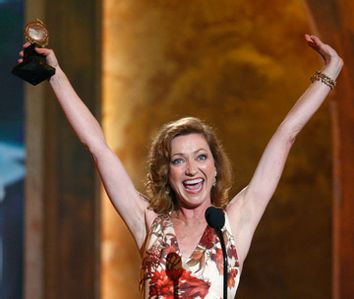
For a bunch of people who make their living onstage, the winning actors and actresses were a relatively staid group, as Frank Langella (best actor, for his complex portrait of Richard Nixon in “Frost/Nixon”), Jennifer Ehle (best featured actress in a play, “The Coast of Utopia”), Christine Ebersole (best actress in a musical, “Grey Gardens”) and David Hyde Pierce (mild upset winner for his performance in the musical “Curtains”) all offered demure, gracious acceptance speeches. Only Julie White of “The Little Dog Laughed,” who beat out the likes of Vanessa Redgrave and Angela Lansbury for the award for best actress in a play, showed much spunk, calling the Tony voters “a bunch of wacky, crazy kids” and thanking her agent for never being venal and conniving “to my face.”

If the onstage scene was mostly dull, backstage was even worse. Aside from the elegant Bill T. Jones, who won for his “Spring Awakening” choreography and who delivered some heartfelt words about the role of avant-garde dance on Broadway and the theater’s difficulty in attracting young African-Americans, there was hardly a winner who gave more than the rote remarks about how great it is to win. It wasn’t entirely their fault, though — the questions lobbed their way were as fluffy and empty as the profiteroles and éclairs lining the complimentary media-room buffet table. But around the fourth iteration of “No, I didn’t expect this; yes, my collaborators were amazing,” I’d grown mighty envious of the fella to my left, who was watching reruns of “30 Rock” on his laptop.

Uber-clever “Utopia” playwright Stoppard briefly broke the fawning monotony with a gag about retitling a musical version of his play “Serf’s Up,” but it wasn’t long before people whose names and faces I didn’t recognize from shows I haven’t seen went back to talking about why their production was a life-changing experience and the epic struggle to have it produced. By the time “Spring Awakening” capped the evening with its win for best musical (“This is the thing that’s everyone talking about?” I heard a waiter mutter backstage during an on-air performance by the show’s cast), I was only half paying attention. Instead my mind wandered out the window to the lights twinkling across the Hudson in New Jersey. Had Tony Soprano been whacked?

— David Marchese

Continue Reading Close

New music

New albums from Bj

  • more
    • All Share Services

“Volta,” Björk

“Volta” has a lot of the things you can always count on a Björk album to deliver: those soaring moments when the avant-pop pixie lets loose with her magical, rubbery alto; some of the most surprising rhythms this side of R&B or jazz; and, of course, a bunch of stuff that sounds unlike anything you’ve ever heard. So why doesn’t it measure up?

One of Björk‘s greatest strengths has always been the way her sense of experimentation, even in its darker moments, feels suffused with joy, an almost childlike glee at the array of possible sounds to play with and the multitude of emotions to explore. But that effervescent spirit is largely absent on “Volta,” weighed down as it is by the thinly veiled politicizing on tracks like “Declare Independence” and “Earth Intruders” and, even worse, a generally turgid musical sense. Oddly enough, the prime examples of the latter problem are the three much-hyped Timbaland/Björk collaborations, in which the rap maestro’s metallic, shifting beats fit awkwardly alongside the Icelandic songstress’ swooping vocal melodies.

But “Volta” is a Björk album, which means there are still a handful of unpredictable thrills: “Wanderlust” mixes some glitchy drum programming with a regal horn arrangement straight off a Gil Evans/Miles Davis album; “Dull Flame of Desire” features Björk and guest duet partner Antony Hegarty trading lines over a fanfare of Coliseum trumpets and rolling-thunder drum work; and “I See Who You Are” mixes torch-song dramatics with mournful Chinese stringed instruments. Those tracks ensure that “Volta” isn’t an outright dud — Björk is probably incapable of delivering one of those — but it’s closer to the sound of stasis than she has ever gotten before.

Favorite track: “Dull Flame of Desire”

“Keren Ann,” Keren Ann

Along with Charlotte Gainsbourg, Sean Lennon and Feist, Israeli-Dutch singer-songwriter Keren Ann (born Keren Ann Zeidel) is part of a thriving subset of glamorous and cosmopolitan 30-somethings making pop music that drifts along in the netherworld between the “White Album’s” quieter moments and the dark decadence of Jacques Brel and German cabaret.

Moonlit and melancholy, “Keren Ann” — the follow-up to the singer’s 2004 breakthrough, “Nolita” — is a prime example of the subgenre’s alluring sound: Guitars wrap around each other like lace, pianos say goodnight to sleepy cellos and Keren Ann whisper-sings about pink tourmaline and weeping willow trees. If it all sounds a bit too precious, well, it is. “Keren Ann” is a lovely album, but the oppressively downcast atmosphere makes heartbreak out to be a terminal illness. Except for a slight rhythmic bounce on the penultimate track, “Between the Flatland and the Caspian Sea,” the album offers no suggestion of hope, no glimmer of transcendence. We all need a good cry every now and then, but we need more than that too.

Favorite track: “Where No Endings End”

“New Moon,” Elliott Smith

Posthumous collections of unreleased material are always a dicey proposition. For every caringly assembled Johnny Cash/Rick Rubin album, there’s yet another disc of subpar Jimi Hendrix or Tupac outtakes slinking its way onto the shelves. Thankfully, Elliott Smith’s “New Moon,” a double CD of rare and unreleased tracks recorded between 1994 and 1997, is much closer to the former than the latter. Full of rumpled, heartbroken balladry and Beatles-esque pop, it stands proudly alongside Smith’s best work.

It’s true that Smith’s untimely passing, in 2003, casts a dark shadow over “New Moon’s” sighing melodies and lilting finger-picked guitar, but the album is far from depressing. Unlike on “Keren Ann,” there’s never the sense with Smith’s music that sadness is an end in itself. One listen to “New Moon’s” beautiful, hopeful cover of Alex Chilton’s “Thirteen” — an ode to young romance and rock ‘n’ roll — proves that Smith knew what Keren Ann doesn’t: Music’s power is that it helps us transcend our problems, not that it allows us to wallow in them.

Favorite track: “Thirteen”

— David Marchese

Continue Reading Close

“Idol” slayer?

Our favorite critics -- Powers, Christgau, Klosterman, Marcus and more -- on whether Sanjaya is "Idol" haters' savior.

  • more
    • All Share Services

Can one man topple an empire? “American Idol” has reigned supreme as a popular-culture juggernaut, scoring huge television ratings, turning unknowns into huge stars, and delivering barrels of cash straight to Fox’s door. And up until very recently, “Idol” showed no signs of slowing down, as this season — the show’s sixth — kicked off with the highest ratings ever. But out of nowhere — well, out of Federal Way, Wash. — came hope for resistance, in the form of a skinny 17-year-old named Sanjaya Malakar.

It was a mild surprise when the not overly talented Malakar survived the first cut, to 24 contestants. But mild surprise turned to shock when show after show came and went and Sanjaya was still around, smiling as he delivered one earnest off-key performance after another. Even withering comments from the judges (Simon Cowell went so far as to tell a tabloid show that he wouldn’t be back if Sanjaya won) had no effect. It would be a stretch to say Sanjaya is thriving — he seemed overjoyed when Simon said last night’s performance of “Besame Mucho” “wasn’t horrible” — but somehow, some way, the kid is surviving.

At first, it could’ve just been his puppy-dog, Tiger Beat looks that got him by. But in recent weeks a conspiracy to derail the show has been promoted by Howard Stern, who put his considerable leverage behind Sanjaya in order to make fools of Cowell & Co. Stern’s goals aligned nicely with the Web site VoteForTheWorst.com, which supported Sanjaya under the pretense that by subverting the show’s goal — rewarding real talent — “Idol” would become even more entertaining.

So: What to make of Sanjaya’s unlikely celebrity now? Is a vote for Sanjaya a subversive act against the oppressive “Idol” machine? If Sanjaya wins, could “Idol” be maimed or worse? Or does the “Text for Sanjaya” campaign simply enrich Cowell, Rupert Murdoch — and “Idol” partner Cingular — even more? To help answer those questions, we turned to some of our favorite cultural observers, whose responses appear below.

– David Marchese

“The notion of the subversive act is one that should be adduced with extreme caution in discussions of popular culture — it’s a self-congratulatory cliché. Also, I haven’t looked at ‘American Idol’ for more than 15 minutes total this season, in part because my daughter is now 21 and is getting sick of it. Those two things said, I am rooting for Sanjaya. I’d love to see ‘American Idol’ devalued, and I’d love for a popular uprising to be part of a process that in the long run is presumably inevitable, but don’t tell ‘Saturday Night Live’ that. What a great story it would be. I might watch a show yet.”

– Robert Christgau, music critic for Rolling Stone and NPR

“I was surprised to hear that anyone thought voting for Sanjaya could be subversive. He’s a perfectly legitimate ‘Idol’ contestant, and in fact more admirable than some — instead of stumbling when he failed to satisfy the surface requirements of this ‘singing competition,’ he found his pop appeal and is working it for his full 15 minutes of fame. Unlike this season’s other younger contestants, whose prefab eagerness reads totally Disney, Sanjaya’s got that MySpace aura — he’s a savvily exhibitionistic child of the future. Never mind the nuevo-retro hair — his sarcastic streak and gleeful deployment of limited skills are totally of the moment. He’s a little bit Tila Tequila, a little bit lonelygirl15. The ‘Idol’ crew should be grateful that he’s keeping their amateur hour up-to-date. Who else are the IM kids gonna vote for?”

– Ann Powers, music critic for the Los Angeles Times, author of “Weird Like Us: My Bohemian America”

“As neocon dreams of American Empire recede, replaced by the daily body count from the slaughter bench that is Iraq, we’re moving into our Caligulan phase. Little surprise, then, that as a nation we’re in a schadenfreude mood. We’re living in a world of pain, and it’s some cold comfort to know that somebody else feels it. With his desire to pole-ax America’s Favorite Show, Howard Stern has his finger on the mass pulse. ‘American Idol’ has always been about schadenfreude; Stern is simply retargeting that free-floating emotion, training our cross hairs not on the show’s painfully lame contestants but on the Lord High Executioner, Simon Cowell. Strangely, Stern hasn’t been very expansive about his motivations, which seem to be (as always) about salving his gnawing sense of inadequacy with a public display of demographic muscle. Of course, there’s the sneaking suspicion, voiced by ‘American Idol’ producer Ken Warwick, that the self-styled King of All Media is naked — that Stern’s fan base simply isn’t big enough to have any appreciable effect on the show.

“But if Stern and his legions of arrested adolescents do end up bringing the show to its knees, what will it mean? That the logic of Google-bombing applies offline, too? That ‘You,’ immortalized as Person of the Year on a recent Time cover, are giving Big Media the finger? Too bad shock radio’s best-known Alpha Dweeb can’t rally his fandom behind a smarter cause — like, say, media-reform issues such as corporate concentration or the FCC’s utter capitulation to media moguls like Murdoch. Imagine what Stern’s American idol, Lenny Bruce, would have done with the obscenity police off his back, a bully pulpit like Stern’s and Web 2.0 at his command. For all his FCC-rebel posturing (Stern’s Web site features a logo that rips off the clenched fist of ’60s radical chic), Stern is about as politically subversive as Nelson Muntz. His ‘American Idol’ campaign is on a par, intellectually, with a YouTube video of a mailbox whack. OK, so it’s Rupert Murdoch’s gold-plated mailbox that Stern is whacking. It’s still mailbox whacking.”

– Mark Dery, cultural critic and director of the undergraduate media criticism program in New York University’s Department of Journalism

“Is it ‘subversive’ to vote for Sanjaya? It’s fun, and defensible — which ought to be enough to justify a minor activity. In a tiny way, it twists the pseudo-democracy of a media-saturated universe. But subversive? Any more subversive than not watching the show? It would seem to me more ‘subversive’ to apply the precious minutes you would have spent watching ‘American Idol’ lobbying for universal healthcare, or against mindless war spending. I note, by the way, that the VoteForTheWorst.com, yes-on-Sanjaya campaign accepts the premise that voting for singers is a worthy activity. Thus: ‘Many good people are turned away and many bad singers are kept around to see Simon, Paula and Randy so that America will be entertained.’ Fine, but please don’t tell me that there’s anything ‘subversive’ about the goal of ‘making a more entertaining show.’”

– Todd Gitlin, author of the upcoming “The Bulldozer and the Big Tent: Of Identities and Ideals in the Uproar of American Politics” and professor of journalism and sociology at Columbia University

“As long as people vote in huge numbers the show will soldier on. If someone profoundly untalented was to win or make the top two I think it will require some changes in the format and irritate much of the audience. But the downfall of ‘AI’ will ultimately be boredom with the format and oversaturation of ‘winners’ in the market, so that victory in that competition will mean less and less. What ‘AI’ makes clear, however, is that while the record industry is dying, people still love music, even if it comes from folks with strange hair.”

– Nelson George, author of “Hip Hop America” and director of “Life Support”

“If we lived in a futuristic dystopia where the state forced the totality of its populace to watch ‘American Idol’ every week after constitutionally decreeing that this program would serve as the sole arbitrator for creative integrity, then, yes, voting for Sanjaya would be ‘subversive.’ As things currently stand, I would classify purposefully voting for a television personality you don’t like as ‘astonishingly idiotic.’ It is difficult to understand why people would direct effort toward negatively impacting a TV show they could just as easily not watch, especially since their efforts will (clearly) have the exact opposite effect on the very program they (allegedly) despise.”

– Chuck Klosterman, author of “Chuck Klosterman IV: A Decade of Curious People and Dangerous Ideas”

“The question as I understand it is, ‘Is a vote for Sanjaya Malakar’ — currently the subject of a Howard Stern-led campaign to ‘vote for the worst’ in aid of getting rid of ‘American Idol’ once and for all — ‘subversive’? Alas, obviously not. Clearly, any vote at all is a form of participation with ‘American Idol’ (as well as with Mr. Stern), thus providing for both a measurable sense of their own damn worth — and a nice round fat countable number to sell to their advertisers. Hell, you don’t even have to vote to accidentally have participated in the perpetuation of these particular media conglomerates. You could, like me, merely have gone to YouTube and watched the guy perform, and you would have left a footprint for corporations of one kind or another to take note of. These days, true subversion is not knowing who Sanjaya is — nor Simon, nor Paula, nor ‘American Idol,’ nor even how to access any of them with the touch of a button. Sadly, that kind of subversion has no purchase in the world of the media. True, it’s hard to dismantle the master’s house without using the master’s tools — but these particular vandals are merely serving to make the master’s house into a goddamned mansion.

“So no, it’s not subversive. But the question may have a more serious import, which is how and why the people (or the People, as it were) are able to believe that by voting for Sanjaya, they are somehow expressing some kind of opposition or resistance to mass culture. Therein lies the rub. Voting for Sanjaya is definitely not subversive, but the clearly expressed wish to see the demise of ‘AI’ by making it look stupid demonstrates a complete lack of understanding on the part of votees of the media’s iron grip. Also, I’d give the impulse (to dismantle ‘AI’) a hell of a lot more credence if the person chosen to represent ‘the worst’ weren’t someone as obviously differently raced and gendered as Sanjaya Malakar. Somehow I can’t imagine ol’ Howard choosing a fattish white guy like himself as the subject of his prank (just as I can’t imagine Don Imus characterizing a successful all-white men’s basketball team as ‘incipiently-balding future thugs’). The fact that people can straight-facedly interpret a vote for Sanjaya — a nonwhite and slightly effeminate guy with very strange hair — as a subversive act pretty much says it all, especially given that Sanjaya’s ‘terrible’ voice is no better or worse than that of the singers of approximately 7,000 rock bands, and that those whom he is supposedly ‘unfairly’ trouncing in the voting are fine, but automatronic, karaoke singers without an ounce of authentic emotional pitch. Q: How would Neil Young, Bruce Springsteen or Bob Dylan fare if one of their voices was secretly, synthetically, linked to Sanjaya’s performance? I’d fain suggest that that little experiment might be a subversive act, since it would all just lead to more participation in what some scholars have characterized as the main job of television viewers, i.e., ‘the work of being watched.’”

– Gina Arnold, author of “Kiss This: Punk in the Present Tense”

“The notion of controversy over people voting for the guy whose hair stands up assumes that the previous winners are not national embarrassments.”

– Greil Marcus, author of “The Shape of Things to Come: Prophecy and the American Voice”

Continue Reading Close

Dixie Chicks win, Grammys lay an egg

Despite a few riveting performances, the hopelessly square industry music awards go out not with a bang but with a (baby) boom!

  • more
    • All Share Services

Dixie Chicks win, Grammys lay an egg

Oh, to have been a fly on the wall during the production meeting before last night’s Grammy Awards. I imagine it went something like this: A hopelessly out-of-touch baby-boomer industry bigwig dumped a pile of his favorite albums on a boardroom desk, said “make it happen” to a bunch of yes people and walked out. How else to explain such a backward-looking and tone-deaf production?

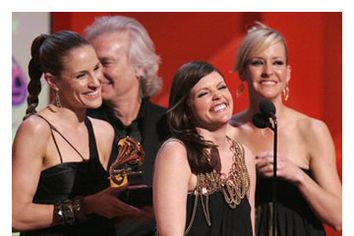
Sure, the Dixie Chicks walked away with the night’s biggest awards. In the evening’s lone display of good sense, Natalie Maines, Martie Maguire and Emily Robison’s win for album (“Taking the Long Way”), record and song (“Not Ready to Make Nice”) of the year was a thumb in the eye of all the conservative country radio yahoos who dropped the Chicks from their playlists after Maines criticized Bush at a 2003 London concert. But that was a rare reprieve from the nostalgiafest. It kicked off with a band, the Police, that hadn’t played together in over 20 years. The shockingly well-preserved Lionel Richie dropped by to sing “Hello.” Earth, Wind & Fire and Burt Bacharach made appearances. Smokey Robinson was dusted off to sing “The Tracks of My Tears.” And, most mind-blowingly, there was a three-song tribute to those young tyros the Eagles. Ladies and gentlemen, I give you the 2007 Grammy Awards.

It was actually sort of fitting that the show began with a song about a hooker (“Roxanne”) because the lackstravaganza that followed exhibited all the decision-making smarts and sensitivity of a cheap one-night stand. Justin Timberlake, pop music’s most kinetic performer, was stuck behind a piano for the first of his two appearances. The cryptic jazz genius Ornette Coleman was paired as a presenter with Natalie Cole — I guess because their last names have a syllable in common. Noted head-banger Al Gore earned loud applause when he and Queen Latifah presented the award for best rock album to the Red Hot Chili Peppers. Beyonc&eacute sang a song, “Listen,” that wasn’t nominated for a Grammy (but was for an Oscar, where she’s expected to again perform it in a mere two weeks). MTV’s Video Music Awards apparently lent its hokey fraudience, which filled the space at the foot of the stage and gyrated obediently during the performances. Then there was this whole weird biz where television viewers were repeatedly implored to vote to give one of three pretty young things the chance to duet with Timberlake. Having never seen any of these girls before, I was thus hard-pressed to care when one of them (Robyn Troup) ended up singing “Ain’t No Sunshine” and “My Love” with J.T. The one time Timberlake was free to dance, unencumbered by a baby grand, he’s paired with an amateur.

A possible clue to the evening’s origins came when, during his brief speech telling everyone how amazing the National Academy of Recording Arts and Sciences is, academy prez Neil Portnoy revealed that seeing Elvis on TV when he was 6 years old made him realize what he wanted to do with his life. That fact was instructive. It makes sense that the Grammys — so soulless and bland — are headed by a man who saw Elvis on TV and thought: “I want to be a record executive.”

Still, there were a handful of performers whose charisma and talent cut through the crap. Mary J. Blige — who took home three awards — proved herself incapable of delivering anything less than a riveting performance when she tore her soul out during “Without You.” Another one of the night’s big winners, the Dixie Chicks, looked beautiful and sang even better when they performed “Not Ready to Make Nice.” Teen R&B sensation Chris Brown threw off sparks with his explosively athletic dancing during “Run It.” Christina Aguilera paid fitting tribute to James Brown with a wailing rendition of “It’s a Man’s Man’s Man’s World.” Cee-Lo Green and Danger Mouse of Gnarls Barkley brought a welcome dose of weirdness when they performed a slowed-down, beefed-up version of their schizo-soul number “Crazy” while dressed as airline pilots. And Blige brought the goods a second time when she returned toward the end of the broadcast to sing the hook on rap album of the year winner Ludacris’ ghetto tragedy “Runaway Love.” Of course, this being the Grammys, the Blige/Luda fireworks were quickly doused by having James Blunt immediately follow them with his inescapable wet noodle of a ballad, “Beautiful.”

The presenters generally fared about as well as Blunt. Scarlett Johansson and Don Henley put themselves in the pole position to star in a remake of “Adam’s Rib” with the following exchange:

Henley: So you’re recording your first album?

Johansson: Yeah. Do you have any advice for me?

Henley: No.

And what was wrong with Pink, who seemed bored and pissed off as she stood, hand on hip, and presented a lifetime achievement award to the Doors (timely!) with all the enthusiasm of an employee at a McDonald’s drive-through window. Although to be fair, anyone would have a hard time mustering enthusiasm for lines like: “The Doors lit a rock fire that’s burning to this day.” But there was no excuse for Quentin Tarantino’s behavior, as he appeared under a greasy slick of hair that looked like a 45 had melted on his head and affected his bizarre Noo Yawk accent while presenting the nominees for record of the year. Tony Bennett stood alongside Tarantino and smiled amiably, old pro that he is.

It’s true that the Grammys face a series of challenges that the Oscars and Emmys don’t have to deal with. There are too many awards with too much overlap, meaning we see the same faces on the podium too many times. And musicians, unsurprisingly, tend not to be the best public speakers, which results in endless lists of thankees read off cue cards — I stopped counting when Blige’s roll call zoomed past 30 names on her first trip to the podium. The obvious counter to these problems — more music from today’s stars — was ignored. The electric Chris Brown was jammed behind Robinson and Richie. Carrie Underwood sang “Desperado” instead of her own smash, “Jesus Take the Wheel.” Contemporary acts (and eventual winners) Wolfmother and the Flaming Lips were relegated to the untelevised portion of the event. Breakthrough rapper T.I. merely performed a guest verse on Timberlake’s “Sexyback.” Hell, what was the point of flying in Super Bowl showstopper Prince from his purple planet just to have him say, “One word, Beyoncé”?

Jeff Lebowski had it right: “The fucking Eagles?”

Continue Reading Close

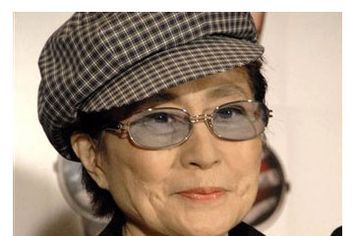
Ono? Oh, yes!

Yoko Ono talks about fame, John Lennon, and teaming up with Cat Power and the Flaming Lips on her new album.

  • more
    • All Share Services

Ono? Oh, yes!

For Yoko Ono, fame is a paradox. When Ono met and married John Lennon, she was already a well-known conceptual artist, drawing attention for work like “Cut Piece,” where she sat onstage and invited audience members to use scissors to cut away at her clothing until she was naked. But once she married the smart Beatle, it might be fair to say that Ono became the world’s most famous artist whose art you know almost nothing about.

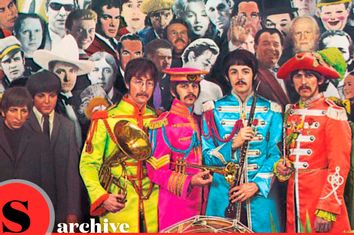
Her work has long been eclipsed by her fame. But that may be starting to change. The 73-year-old Ono’s new album, “Yes, I’m a Witch,” features the cream of the indie music crop (Cat Power, the Flaming Lips, Antony of Antony and the Johnsons, and others) reinterpreting their favorite Ono music by creating new backing tracks for her original vocal performances. That musicians who came of age long after the Beatles broke up are responding to her music comes as vindication for Ono. “It just means that my work had power of its own,” she says. “It wasn’t overshadowed by John or the Beatles.”

Salon spoke with Ono about the new album, what her art might have been like if she hadn’t been so famous and whether one ever gets used to life in the public eye.

The people who collaborated with you on the new album are a pretty diverse list. Were they all people you felt some sort of musical kinship with?

These are indie music people, superstars of indie music. They’re very heavy people actually — heavy musicians, heavy songwriters. I’m very pleased that they even bothered to do it. Each of them are very strong people, strong bands, so it became a very strong CD.

Do you think there’s anything in the treatments they gave your music that changed how you saw your original compositions?

I was having fun with it. I just felt great. Because each time I felt there was something totally different. There was creativity that they put on. It just gave a new aspect of that song — which is very nice.

Was the eagerness of people to collaborate with you validating? For a long time your music was overshadowed.

Totally. Totally.

Do you think it has taken time for your work to be judged on its merits? Is that why now we’re seeing more musicians into your music?

It just means that my work had power of its own. It wasn’t overshadowed by John or the Beatles. And that’s great. My feeling is that I was an indie artist in those days single-handedly and now I’m just part of the indie trend. It’s great. Indie music is “it” now. It’s kind of a revolution to the music: 1980s, 1990s music was getting very sanitized; they were complying with the music industry. Music was getting more and more dead in a way. Now, because of the social climate that’s very severe, the artists are compelled to start being real. It’s really great that indie music is now. It’s future, but it’s now too.

Do you think, now, with the music world as fragmented as it is —

It’s very easy to say “fragmented as it is.” In the ’60s, people were still very protective of each field that they belonged to. Avant-garde artists didn’t know about rock or pop or jazz. And the jazz people of course didn’t want to know about any other music. They were all just kind of protecting their territory. Now it’s different. Fragmented is not the word for it. I think it’s very nice that everybody has everything at their disposal. They can use anything.

To what extent are you considering the form of the pop song when you write music? Or are you thinking more conceptually?

Well, when you listen to all the songs on the CD, you will notice that each one is covering a different genre. That’s what I like about it. I was always doing that. When you listen to my CDs you will notice that it’s not really covering just one genre. You can’t say “pop rock” or jazz or whatever. It’s all very different. I like it that way. I think it’s great that I’m doing [music] in many different styles. And also the idea of being an avant-garde artist and saying “I’m avant-garde and that’s it” or something — again, you’re limiting yourself with that label. When I was in the avant-garde, I was really there, but at the same time I was thinking, “Don’t take it too seriously, please.” I was moving away already.

Before you met John, you were already a well-known avant-garde artist. For the last 40 years, you’ve lived in the public eye to a certain extent.

I say I’m still living, please.

How does that affect your relationship to art? Your life is not what it was when you first started.

I don’t feel that way. I’m just me. I was always just me. I was starved during the Second World War and evacuated as a child to some country house. Well, I was still me. When I was living in a rather extravagant environment when I was a little girl — that was still me. In other words, the environment doesn’t really — it does affect me in a way. All different environments were educational, let’s put it that way. But it didn’t change me.

Your fame afforded you a large platform for your views. Do you think you would have been as compelled to engage in politics or social issues if you felt your platform wasn’t —

I was always engaged in politics. Please. When I was sitting in a bag or something and saying I was doing that for world peace in Trafalgar Square, I was not that famous. Well, I was a famous avant-garde artist, but it wasn’t really translated into world fame. I was known in London, and the journalists would come and say, “Is that Yoko?” because I’m in a bag or something standing in Trafalgar Square, and I would say, “Yes, yes, it’s me.” That was the extent of it. I was always political. But we are all political. We have to be because all of us are social animals. Of course we are political, just by not being political even. So I was political, yes.

So you don’t feel you would have been a different type of artist if you had not been so famous?

To the extent of, let’s say that I was an avant-garde artist when I was in London or something and made the “Bottoms” film [Ono's 1966 experimental film that consisted of close-ups of people's butts as they walked on a treadmill], and when I made the “Bottoms” film, all my avant-garde friends were up in arms saying “She sold out.”

You weren’t indie enough.

No, no, I wasn’t indie enough. Suddenly I wasn’t invited to dinner parties by avant-garde artists.

Which is probably not a bad thing.

Well, I don’t know. I felt very lonely because nobody was inviting me. And then John picked me up, so that’s OK. It was really like that. Every turn of my life. It’s literally like that. When I was a little girl I was in — where was I? — Long Island [where, as a child, Yoko lived from 1940 to 1941 before returning to Japan] or something like that, and the block that I was living in, it was OK. Everybody loved me and we all loved each other and there was kindness there. But two blocks away from that district and — surprise, surprise — kids were stoning me. Actually hurling stones at me. And the reason is because it was second anti-Asian time. All the films were showing and any enemy or any baddie was Asian. And then I went back to Japan and they were stoning me conceptually as someone who came back from a foreign land and my body movements or something were a little foreign. Then I was evacuated to the country [in 1945, after Tokyo had been fire-bombed] and the country kids stoned me because I was a city kid — actually throwing stones at me. The thing is, it’s a very strange life, but each time I was just me.

Just recently there was some negative stuff about your personal life that came to light. [Ono's chauffeur was arrested for allegedly trying to blackmail her with private conversations he had recorded.]

Don’t say “came to light.” The point is that there wasn’t anything I was hiding. It was somebody making something up.

That’s the wrong choice of words, but that occurred. Then today I was walking by a comic book store and they had 30 John Lennon dolls in the window.

Oh my God. I didn’t know that there were dolls like that.

Do you ever normalize that level of public interest in your life?

Normalize that? I’m just being normal. A normal woman. Well, I don’t know what a normal woman is, but I’m a woman and I’m Yoko and I’ve never changed that. It’s not like I was insisting on being this one. But it feels like I’m trying to sort of expand my views and try to do something that’s new and that’s totally out of Yoko Ono, that’s distant from what Yoko is. But then in hindsight that’s very Yoko. I can’t escape from myself it seems. And that’s OK. I don’t know what is normal. Do you know what is normal? You just grab one person out on the street and start asking what kind of life this person has, you’ll be surprised that each one is very, very strange, you know what I mean?

What are your future plans?

Do you know what your future plan is? I don’t have any goals. The fact is that maybe that was my strength — I’m always living in “now” and hopefully don’t get too bothered by the past. I don’t think about what’s going to happen in the future. The future for me is an open book. That’s how I was always. I don’t have a goal. I don’t limit myself to a goal.

Continue Reading Close

Page 1 of 5 in David Marchese