Jonathan Easley

The debt ceiling backlash within the GOP

Some conservatives are watching the GOP's debt ceiling posture and exclaiming: This isn't what we signed up for!

Bill O'Reilly and Rep. Michele Bachmann

Wall Street is panicking, the credit rating agencies are increasingly nervous, and the Aug. 2 debt ceiling deadline is now less than two weeks away. But the loudest conservative voices in Congress and on the airwaves are still resisting compromise, and some are even arguing that the debt ceiling shouldn’t extended under any circumstances — even if it means a default.

But this posture is not universal on the right. In fact, an increasing number of influential conservatives are beginning to speak up, warning about the catastrophic effects of a default and chastising those who refuse to even consider compromising. Some highlights from this outbreak of sanity:

David Brooks: The conservative New York Times columnist surprised a lot of folks with this July 4 write-up on how a “normal” Republican Party would have handled negotiations:

If the Republican Party were a normal party, it would take advantage of this amazing moment. It is being offered the deal of the century: trillions of dollars in spending cuts in exchange for a few hundred billion dollars of revenue increases.

A normal Republican Party would seize the opportunity to put a long-term limit on the growth of government. It would seize the opportunity to put the country on a sound fiscal footing. It would seize the opportunity to do these things without putting any real crimp in economic growth.

But Brooks was just getting warmed up. This week he singled out individual Republicans that he says are to blame for missing what could have been a “glorious moment in Republican history”:

Republicans now have a group of political celebrities who are marvelously uninterested in actually producing results. Sarah Palin and Michele Bachmann produce tweets, not laws. They have created a climate in which purity is prized over practicality.

Bill O’Reilly: The Fox News host began his July 19 interview with Michele Bachmann by telling her, “I believe Secretary Geithner when he says it will be catastrophic for America if the debt ceiling is not raised.” He spent the rest of the seven-minute segment aggressively challenging her claims, telling her at one point, “Tough love is OK, as long as the rest of the country doesn’t get hurt.”

Doug Holtz-Eakin: The one-time  chief economic policy adviser to John McCain spelled out the potential default consequences in a Fox News interview:

“There’s the potential for something that looks like 2008 — a financial crisis, with a spike in interest rates, higher monthly payments on everything that you owe, and the inability of households to get credit at all,” he said. “We cannot risk another episode like two or three years ago.”

Megan McArdle: The right-leaning Atlantic blogger provided a widely circulated list of the “very immediate, very theatrical” outcomes of not raising the debt ceiling:

The nation’s nuclear arsenal is no longer being watched or maintained.

The doors of federal prisons have been thrown open, because none of the guards will work without being paid, and the vendors will not deliver food, medical supplies, electricity,etc.

The border control stations are entirely unmanned, so anyone who can buy a plane ticket, or stroll across the Mexican border, is entering the country. All the illegal immigrants currently in detention are released, since we don’t have the money to put them on a plane, and we cannot actually simply leave them in a cell without electricity, sanitation, or food to see what happens.

All of our troops stationed abroad quickly run out of electricity or fuel. Many of them are sitting in a desert with billions worth of equipment, and no way to get themselves or their equipment back to the US.

No federal emergency assistance, or help fighting things like wildfires or floods. Sorry, tornado people! Sorry, wildfire victims! Try to live in the northeast next time!

The market for guaranteed student loans plunges into chaos. Hope your kid wasn’t going to college this year!

The mortgage market evaporates. Hope you didn’t need to buy or sell a house!

The FDIC and the PBGC suddenly don’t have a government backstop for their funds, which has all sorts of interesting implications for your bank account.

Unemployment money is no longer going to the states, which means that pretty soon, it won’t be going to the unemployed people.

Larry Kudlow: The CNBC host has taken to speaking out on the dangers of default, using an interview with Tim Pawlenty to lecture the presidential candidate about the unrealistic nature of hardline conservative demands on the debt ceiling. And writing in the National Review recently, Kudlow dismissed the notion that the Treasury can get by paying its bills without issuing additional debt:

The revenue-allocation view of not raising the debt ceiling really doesn’t hold any practical water. Why some of my conservative friends keep pushing this is beyond me.

Bruce Bartlett: The policy adviser to Ronald Reagan and treasury official under George H.W. Bush was one of the first to argue that if Congress can’t get its act together, President Obama should invoke the the 14th amendment and circumvent the debt ceiling negotiations altogether:

The president would be justified in taking extreme actions to protect against a debt default. In the event that congressional irresponsibility makes default impossible to avoid, he should order the secretary of the Treasury to simply disregard the debt limit and sell whatever securities are necessary to raise cash to pay the nation’s debts.

David Frum: Frum was a speechwriter for George W. Bush, but here he comments on the GOP’s irrational demand for full surrender:

In this debt-ceiling fight, I’m having horrible flashbacks to the Republican debacle over healthcare. Then as now, what could have been a negotiated deal turned into all-out political war. Then as now, Republicans rejected all concessions by the president as pathetically inadequate. Then as now, Republicans refused any concessions of their own, instead demanding that the president yield totally to their way of thinking. Then as now, Republicans convinced themselves that they had the clout to force the president to yield. With healthcare, Republicans calculated spectacularly wrong. They pursued an all or nothing strategy and got — nothing. They neither shaped the bill nor did they stop it. Will they make the same mistake again on the debt ceiling?

Mark Salter:

John McCain’s speechwriter and book collaborator said that Obama occupies the high ground in the debt ceiling debate:

Obama has, or at least appears to have, put on the table a proposal that seems practical, reasonable and bold — and which made Republicans appear truculent and small. He has, as the saying goes, done well by doing good. Now it’s the Republicans’ turn to do the same.

Ross Douthat: And finally, the New York Times’ other conservative columnist flat-out called the Republicans unreasonable:

Obama has been playing the reasonability card so successfully because his opponents won’t (or can’t) play one of their own. It’s not that Republicans needed to tug their forelock and go along with whatever grand bargain the White House whipped up. But to win the endgame, they needed something they were willing to concede, something they could tout in public as an example of meeting the Democrats partway. Their inability to make even symbolic concessions has turned a winning hand into a losing one. 

Eric Cantor’s glaring conflict of interest

He's the GOP's chief debt ceiling negotiator. He's also invested in a fund that will skyrocket if there's a default

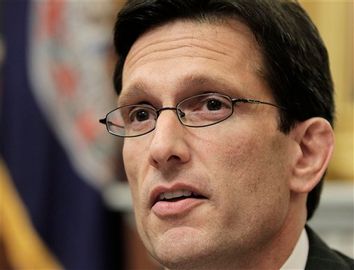
House Majority Leader Eric Cantor, R-Va., meets with reporters in his office at the Capitol in Washington, Monday, June 13, 2011. Cantor praised Vice President Joe Biden for his shepherding of the bi-partisan Congressional panel working to solve the debt crisis. (AP Photo/J. Scott Applewhite)(Credit: AP)

When Eric Cantor shut down debt ceiling negotiations last week, it did more than just rekindle fears that the U.S. government might soon default on its debt obligations — it also brought him closer to reaping a small financial windfall from his investment in a mutual fund whose performance is directly affected by debt ceiling brinkmanship.

Last year the Wall Street Journal reported that Cantor, the No. 2 Republican in the House, had between $1,000 and $15,000 invested in ProShares Trust Ultrashort 20+ Year Treasury EFT. The fund aggressively “shorts” long-term U.S. Treasury bonds, meaning that it performs well when U.S. debt is undesirable. (A short is when the trader hopes to profit from the decline in the value of an asset.)

According to his latest financial disclosure statement, which covers the year 2010 and has been publicly available since this spring, Cantor still has up to $15,000 in the same fund. Contacted by Salon this week, Cantor’s office gave no indication that the Virginia Republican, who has played a leading role in the debt ceiling negotiations, has divested himself of these holdings since his last filing. Unless an agreement can be reached, the U.S. could begin defaulting on its debt payments on Aug. 2. If that happens and Cantor is still invested in the fund, the value of his holdings would skyrocket.

“If the debt ceiling isn’t raised, investors would start fleeing U.S. Treasuries,” said Matt Koppenheffer, who writes for the investment website the Motley Fool. “Yields would rise, prices would fall, and the Proshares ETF should do very well. It would spike.”

The fund hasn’t significantly spiked yet because many investors believe Congress will eventually raise the debt ceiling. However, since Cantor abruptly called off debt ceiling negotiations last Thursday, the fund is up 3.3 percent. Even if an agreement is ultimately reached before Aug. 2, the fund could continue to benefit between now and then from the uncertainty. (One tactic some speculators are using is to “trade the debt ceiling debate” — that is, to place short-term bets on prices as they fluctuate with the news out of Washington.)

Salon’s Andrew Leonard calls the debt ceiling negotiations “Washington’s titanic game of chicken,” and the longer the game goes on, the more skittish the bond markets will become.

“Cantor’s involvement in the fund and negotiations is not ideal,” Koppenheffer said. “I don’t think someone negotiating the debt ceiling should be invested in this kind of an ultra-short. We can only guess how much he understands what’s in his portfolio, but you’d think a politician would know better. It looks pretty bad.”

Cantor spokesman Brad Dayspring noted that U.S. Treasury bonds make up a large portion of the congressman’s pension, and said investment in ProShares ETF serves to balance that investment and to diversify his portfolio. Disclosure forms indicate that Cantor has considerable personal assets, including real estate in Virginia worth up to $1 million, and a number of six- and seven-figure loans to private entities and limited liability companies. So his investment in ProShares ETF represents only a small portion of his overall portfolio — but that share could grow a little larger just over a month from now.

Continue Reading Close

The day the drug war really started

When Len Bias died of a cocaine overdose 25 years ago, stunned Americans demanded action -- and boy did they get it

Background: Friends of the late University of Maryland basketball star Len Bias carry his casket from the college chapel in this June 23, 1986 after a private funeral at College Park, MD.

On June 19, 1986, 25 years ago Sunday, University of Maryland basketball star Len Bias died of cocaine intoxication. Many believed the 6-foot 7, 220-pound small forward possessed a level of talent equal to that of Michael Jordan, and only two days earlier he’d been selected as the No. 2 overall pick in the NBA draft by the reigning champion Boston Celtics.

In Ronald Reagan’s America, Bias instantly became the poster child for what could happen to anyone who didn’t just say no. His sudden, shocking death dominated the headlines and unnerved millions of Americans, who were told that the cardiac arrhythmia he suffered was the result of casual, one-time experimentation with drugs. “Leonard’s only vice,” his college coach, Charles “Lefty” Driesell, had declared just days earlier, “is ice cream.”

Responding to this outpouring of grief and fear, Congress promptly passed (and Reagan signed) the Anti-Drug Abuse Act of 1986. In their haste, they may not have fully grasped what they were doing.

The law has resulted in 25 years of  disproportionately harsh prison sentences for defendants who are disproportionately black. It called for felony charges and mandatory minimum prison sentences for anyone caught with even a small amount of cocaine; inexplicably, it triggered the mandatory sentences for crack cocaine possession at 1/100 the amount of powder cocaine. Rather than rooting out the traffickers, it filled the country’s jails with blacks and Hispanics, who in some cases serve more time for possession than convicted murderers. It was only after ’86 that the number of blacks surpassed the number of whites in prison for the first time, and many of the offenders who were picked up that year are still locked up.

Richard Nixon formally declared America’s war on drugs 40 years ago, but the 1986 law was the first significant piece of legislation related to it. To mark the 25th anniversary of the tragedy that led to the drug war as we now know it, we spoke with Eric Sterling, who served as counsel to the House committee that drafted the ’86 law. Now president of the Criminal Justice Policy Foundation, he discussed the legislative frenzy that followed Bias’ death and its consequences, and what might have been if Bias had lived.

Remind us of Len Bias the rising basketball star, before he became a symbol of the drug war.

Len Bias grew up in the D.C. area where he was a high school basketball star. By 1986 he was an All-American at the University of Maryland, which was one of the top basketball programs in the country. He was a player on the same scale as a Michael Jordan — they were essentially contemporaries.

And then what happened?

After the NBA draft, he caught a plane back to Washington — he was still living on campus at the time. He was celebrating the signing with some of his friends, they were drinking, and then one friend came over and they started snorting cocaine. He had a seizure in the early morning and someone called 911, but before the morning was over he was dead. That morning the newspapers still had stories about his signing and pictures of him at the draft, but if you turned on the radio or TV there were stories that he was dead. It was a tremendous scandal.

So it was a tragic, sensational story, but Congress doesn’t jump on every headline like they it here. Why did they seize on this one?

Any member of Congress who watched sports in the ’80s had seen Len Bias dozens of times driving to basket, making these incredible shots, blocking and rebounding — he was a hardworking, effective and beautiful athlete. The Boston Celtics drafted him and they had just won the NBA championship the year before. Len flew up to the Boston Garden for the draft and appeared at a press conference where there were something like 25 TV cameras around him for the signing. He had also just signed a multimillion-dollar shoe contract with Reebok. He was the biggest college basketball star of his time, so aside from the sports angle, this was just a big news story.

And it coupled well with another big news story of ’80s, which was the cocaine problem.

That’s right. There was this growing problem of crack cocaine and there was a lot of the violence that surrounded the trade that really increased the stigma of it. In 1984, Reagan was able to convince voters that he was stronger than Walter Mondale on the issues of drugs and crime, so the Democrats were looking for a way to regain control of that story. [House Speaker] Tip O’Neill was about to retire, and as a swan song he thought he could help the Democrats regain control by getting tough on these issues.

And it just sort of escalated from there?

It became the sole focus of legislative activity for the remainder of the session on both sides of the aisle. Literally every committee, from the Committee on Agriculture to the Committee on Merchant Marine and Fisheries were somehow getting involved. Suddenly, the Len Bias case was the driving force behind every piece of legislation. Members of Congress were setting up hearings about the drug problem and every subcommittee chairman was looking to get a piece of the action. They were talking about Len Bias at every press conference and it was all tied together — the Len Bias tragedy and the potency of drugs and this evil that was killing America’s youth. He became shorthand, a high-profile symbol for all of these issues. People were shouting about how crack cocaine was the most addictive or dangerous substance to ever exist, and one lawmaker was calling for the death penalty for some drug-related offenses. It was hyperbole piled on top of exaggeration.

And the story that was pushed in the media made it even scarier?

Bias was a clean-cut guy. To be that kind of an athlete and to operate at that level he had to be. Had he used cocaine before? Possibly. But there wasn’t any evidence that he was an addict. So there was this idea that if it can happen to this healthy kid, it can happen to anyone. The story became that if you try it even once, it can kill you. That was the story of Len Bias and cocaine.

How did the legislation come together?

Usually when you want to introduce a new bill, you sit down and carefully write the policy. Are we clear on what the implications are? You write a draft and maybe circulate it around for ideas. You ask federal judges, prisons, prosecutors, U.S. attorneys, the DEA, law professors, sentencing commissions, criminal defense lawyers and the ACLU how it will affect things. You have hearings. All of this was skipped [for the drug sentencing bill]. Both sides were trying to be quicker and tougher than the other.

So the DEA came up with numbers to define high-level trafficking, but a congressman from Kentucky said he would never be able to use the law because they didn’t have trafficking that high in his area. So we needed new numbers. Nobody stopped to say, “But Louisville isn’t Miami or Hollywood or New York. You should be lucky you don’t see this in Louisville.” Suddenly, these numbers just wouldn’t work — we needed “better” numbers. So I called a very respected narc named Johnny St. Valentine Brown, whose nickname was Jehru, to detail to the committee what the numbers should be on minimum trafficking violations.

So a narc was responsible for the 100-to-1 crack-to-powder ratio?

Yes. And later he turned out to be a perjurer and went to federal prison. He had lied for years about graduating from Howard University’s School of Pharmacy and being a pharmacist. In preparation for his sentencing he provided some letters attesting to his good reputation from various figures in D.C., including judges. It turned out he had forged the letters he was submitting to the court to get a more lenient sentence!

Anyway, there was no conversation to determine if crack was even more dangerous than cocaine, or what quantity a mid-level crack dealer might carry in comparison to a mid-level cocaine dealer. It was a seat-of-the-pants judgment from this one narc about what the drug trade in one part of the country might have looked like at that moment in time.

That’s insane.

And those were last-minute items thrown into the first bill that was passed by the House. At the time, the Senate was controlled by Strom Thurmond and the Republicans. They looked at it and said: “OK, well if the Democrats have a sentence of five years to 20 years, let’s up it to 10 years to 40 years. And if the Dems say 20 grams, we’ll make it 5!” Nobody looked at the proper ratios based on how harmful it was. It was completely detached from science. Nobody could say that crack was 100 times more dangerous than powder.

What were the social effects of these laws?

In 1986 the federal prison population was 36,000. Today it’s 216,000. And in the 25 years since, more than half of federal prisoners are brought in on drug charges. The prison population is disproportionately black and Hispanic. The federal government does about 25,000 cases a year and only one out of four of those defendants is white. Also, it’s widely believed that crack cases are mostly minorities, while the powder cocaine cases are mostly white, but that’s a myth. It’s true that only one in 10 crack cases are white, but the overwhelming majority of powder cocaine defendants are still black or Hispanic.

From that angle it certainly looks like intentionally racist legislation.

There were all of these mythologies about how Congress did this intentionally because powder was only used by whites. The way it was put together wasn’t racist, it just wasn’t thought out.

But the other thing that was skewed was that the Department of Justice was supposed to be focusing on high-level traffickers. You look at global trafficking — this stuff is coming in on boats by the ton, but more than a third of federal cases involve less than an ounce of crack cocaine.

So the federal government is looking at insignificant local cases and handing out long sentences to defendants that are predominantly black or Hispanic. No matter what the intentions were in 1986, if these measures had been carried out by a local D.A. instead of the federal government, that D.A. would be indicted for violating civil rights laws.

Have the laws changed at all in the last 25 years?

Attorney general after attorney general has utterly failed to say the first word on this. The drug czars continue to ignore the fact that people of color are being given inconceivable sentences. It’s outrageous, but it can be a tricky thing. I remember Charlie Rangel proposed the Crack Cocaine Equitable Sentencing Act, but those words don’t mean anything! How are you going to convince people to vote for something when it sounds like the Let Crack Dealers Out of Prison Early Act? You have to call it something like the Cocaine Kingpin Punishment Act.

But anyway, in 2010 they passed the Fair Sentencing Act, which raised the amounts that triggered minimum sentencing, and lowered the crack cocaine ratio from 100-to-1 to 18-to-1.

Is that ratio still just as arbitrary?

Yes.

What other changes would you still like to see?

The Department of Justice is the most powerful law enforcement agency in world. They can use the CIA and the military, they can take on money laundering investigations and look at wire transfers at every bank in the world. If they were focused on the drug trade instead of helping sheriffs break down doors, we would see a big change.

Another change could be done administratively. The attorney general could tell attorneys not to make it a federal case if it’s under 200 kilos, unless it involves a homicide or intimidation of a witness or something like that. There are 1.7 million state and local drug arrests every year and 300,000 state felony convictions. We’re already prosecuting crack dealers all over the country. The feds are just piggybacking on the local guys.

Len Bias would be 48 this year. How would the world be different if he hadn’t died of a cocaine overdose in 1986?

The world would be completely different. Hundreds of thousands of people would never have gone to jail if Len Bias had not died.

This story has been updated to reflect the following changes:

It was originally reported that Bias flew to Madison Square Garden for the draft. This has been changed to the Boston Garden. Also, it was not the Senate Committee on Agriculture, Nutrition and Forestry involved in the legislation, but rather the House Committee on Agriculture.

Continue Reading Close

Watch Julian Assange’s life under house arrest

A short video documents the WikiLeaks founder's daily activities as he fights extradition

WikiLeaks founder Julian Assange is seen with his ankle security tag at the house where he is required to stay, near Bungay, England, Wednesday, June 15, 2011. Assange says his house arrest over sex allegations is hampering the work of the secret-spilling site, and his supporters accuse Britain of spying on him. The 39-year-old Australian has spent six months at a supporter's rural estate as he fights extradition to Sweden, where he is accused of the rape and sexual assault of two women.(AP Photo/Kirsty Wigglesworth)(Credit: AP)

Julian Assange has been under house arrest in Norfolk, England for 191 days now. As he fights efforts to extradite him to Sweden for allegations of rape and sexual molestion, WikiLeaks has released a short film documenting Assange’s daily routine and the logistics of his confinement.

The film crew follows Assange on trips to the police station and shows him working to keep WikiLeaks viable from an 18th century manor owned by journalist Vaughan Smith where he’s under lock-down.

Watch it here:

House Arrest from Winston Burrows on Vimeo.

The revolving door keeps spinning

How have the senators who retired in 2010 enriched themselves since leaving office? Let us count the ways

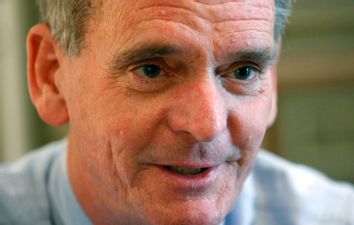
Senator Judd Gregg (R-NH) speaks during an interview with Reuters on Capitol Hill in Washington March 30, 2009. REUTERS/Kevin Lamarque (UNITED STATES)(Credit: © Kevin Lamarque / Reuters)

Judd Gregg doesn’t have experience identifying growth in emerging markets or putting together complex financial models. But that didn’t keep him from landing a plum gig at the most talent-rich and fiercely competitive investment bank in the world. His life of public service now complete, the former three-term Republican senator from New Hampshire — who had briefly agreed to serve as President Obama’s first commerce secretary before backing out — joined Goldman Sachs last week as an international advisor.

In his new role, Gregg will be responsible for such nebulous duties as “providing strategic advice to the firm and its clients, and assisting in business development initiatives across the global franchise.”

Goldman CEO Lloyd Blankfein, whose firm was upbraided by a Senate committee only one month ago for perpetrating a massive fraud in the run-up to the financial crisis that some now believe warrants criminal charges, said of Gregg, “His experience and insight will contribute significantly to our firm and our continuing focus on supporting economic growth.”

Gregg, of course, is only the latest in a growing roster of former government workers who have recently been added to the Goldman payroll — and only the latest recent congressional retiree to cash in with a lucrative gig at a firm that depends on staying in the good graces of the federal government.

Here’s a recap of other public servants who left Congress in 2010 to work for lobbying firms or the banking industry:

The Hollywood-Dodd Act: Chris Dodd was trailing in the polls in 2010 when he decided against seeking a sixth term as a senator from Connecticut. At the time, he swore off the idea that he’d ever turn to lobbying after leaving the Senate, musing about life in academia. “No lobbying, no lobbying,” Dodd insisted. Less than a year later, though, he’s now Hollywood’s top lobbyist, pulling in $1.2 million a year in salary as the head of the Motion Picture Association of America. Dodd has a history of film industry appearances — at one point he nixed a futures trading market for Hollywood films at the behest of the big studios.

Bosom Buddies: K Street lobbying firm Arent Fox amassed a bundle of political capital when it announced in a joint press release that it had hired former North Dakota Democratic Sen. Byron Dorgan and former Utah Republican Sen. Bob Bennett. But the lobbying family extends beyond just these two; Dorgan’s wife is also a lobbyist, and Bennett simultaneously launched the Bennett Consulting Group.

Staxyn vs. Viagra: Former North Dakota Rep. Earl Pomeroy was one of the few on this list to lose a reelection bid, rather than bowing out ahead of one, but that didn’t diminish his private sector desirability. Now he’s the chief of staff for K Street firm Alston + Bird, which lost Tom Daschle as a “special policy advisor” last year. Pomeroy joins Bob Dole at the firm, which represents Merck; Dole apparently prefers Merck-made Staxyn to Pfizer’s Viagra nowadays.

Lobby Hobby: Former Missouri Gov. and four-term Sen. Kit Bond wants you to know that his intentions are pure. The K Street lobbying firm he joined, Thompson Coburn, is based in Missouri, so Bond can split time between his home state and Washington. And anyway, Bond says he has no intention of doing lobbying work even when his cooling-off period is over, and that he’s only taking this position because he’s not ready to stop working.

Hedgehog: Former Indiana Gov. and two-term Sen. Evan Bayh decided against seeking a third term last year, a move that has paid off big. Bayh, who sat on the Senate Banking Committee, recently joined hedge fund lobbying firm Apollo Global Management as a senior advisor. While that’s a title lobbying firms hand out liberally, don’t expect to be considered for such a role unless you’ve spent time representing the people.

Continue Reading Close

The excuses discredited doomsday prophets make

What do they say when the appointed hour comes and goes ... and nothing happens?

(Credit: Jeff Malet Photography)

There’s a line in the book of Matthew that doomsday prophets like Harold Camping — the 89-year-old who promised the world would end on Saturday — always seem to ignore: It says that nobody knows the actual day or the hour, not even Jesus or the angels.

It’s a line that serves as a reminder that nobody can know the mind of God. But it clearly hasn’t stopped Camping and his ilk from trying. In honor of Camping’s (latest) doomsday flameout, here’s look at some of the (many) other apocalyptic forecasts that failed to materialize — and at the morning-after excuses those false prophets offered. (Or, since I’m actually writing this before Saturday, perhaps it’s documented evidence of how I ended up on the wrong side of the biggest I-told-you-so in history …)

This is who you should thank: Dorothy Martin’s end of the world predictions were bizarre even by the high standards of doomsday forecasting. She claimed to have received psychic messages from aliens on the planet Clarion informing her that she and her followers would be beamed-up to a flying saucer on Dec. 21, 1954. This was good news for them — according to Martin, everyone else on Earth would be left to drown like rats in a terrible flood. As is customary, her followers quit their jobs, gave away everything and spent the days leading up to the flood in fervent prayer. Instead of offering a mea culpa when nothing happened, Martin took credit for mankind’s salvation. She said it was her devotion to the Clarion-ites that saved the Earth from destruction.

Harold Camping redux: As Salon’s Steve Kornacki detailed here, the Family Radio front-man has been in the business of terrifying small children since at least the early ’90s. His peculiar brand of science and math last led him to declare that the world would end on Tuesday, Sept. 6, 1994. But Camping had a built in excuse — his book was titled “1994?” and was therefore not an absolute declaration of the Armageddon. But 17 years later, the Camping pamphlet I received had no such equivocations.

88 reasons why he was wrong: Edgar Whisenant wrote a bestselling book called “88 Reasons Why the Rapture Will Be in 1988.” He initially bought himself a little bit of wiggle room by predicting the horsemen to ride sometime between Sept. 11 and 13 of that year. When it did not come to pass, he revised his dates, first by a few days, and then by a few weeks. Whisenant cited various oversights, such as Rosh Hoshana needing to be complete all over the world, not just in Little Rock, Ark. (the time zones paradox). Despite his clear lack of authority on the matter, the following year he published “The Final Shout: Rapture Report 1989,” and continued selling millions of these books with the same title and a revised year through 1993.

Perhaps this is how it should be done: Michael Stifel was an ambitious young German monk whose apparent capacity for numerical mysticism and cabalistic interpretation landed him in a great deal of trouble. Despite his fellow clergymen’s attempts to get him to shut up about it, Stifel proselytized that the end of the world would come on Oct. 3, 1533, at precisely eight o’clock in the morning. His congregation was appropriately freaked out by this news, so when the hour came and went, he was summarily ejected from his ecclesiastical quarters and flogged in the streets.

Continue Reading Close

Page 1 of 2 in Jonathan Easley

www.salon.com/writer/jonathan_easley/index.html