Nina Burleigh

Anita Perry, closet liberal?

Not quite. The spouse of the stumbling front-runner embodies the decent conservatism he has left behind

  • more
    • All Share Services

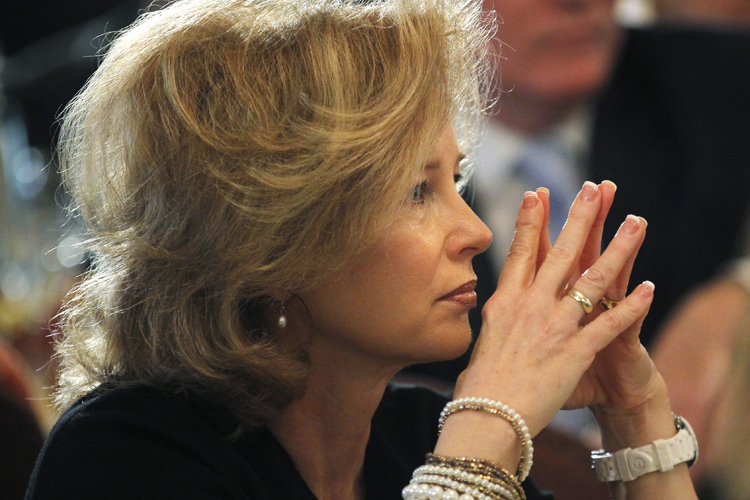
Anita Perry, closet liberal?Anita Perry(Credit: Reuters)

The monarch butterflies on their way down to Mexico drift like autumn leaves above the barren cotton fields of Haskell, Texas, like they do every fall. But the cotton gins behind the field where the Indians will play football on Friday nights are idle, the white tufts on the grass mere remnants of last year’s crop.

Haskell County farmers planted last spring just like every year, but nothing green came up. No rain. Most people say it’s to do with natural weather cycles. A few say it’s the good Lord, indicating his displeasure with them for not sharing the Word. It’s hard to find anyone who puts much stock in the idea that human behavior has anything to do with what’s going on with the weather.

Haskell, population 2,681, located in cotton and ranch country north of Abilene, is a place where people can spot a fake a mile away. It’s also the place where Anita Thigpen Perry grew up, third of four kids of the town doctor, interested enough in medicine that she went on rounds with him before she was 10. She went on to be voted the 1970 Haskell High Homecoming Queen and though she went away to nursing school, she came back to Haskell right after. It’s the place where Anita and Ricky met and got married in 1982, in the Howards’ barn, just outside of town, after a packed service at the Methodist Church, Anita wearing her mother’s wedding dress from the 1950s.

Haskell is conservative, but in a way Rick Perry is not. Sure, some people there don’t like gay marriage and abortion, and believe evolution is a “theory” that’s “got some holes.” But they are fewer and far less fervent on the subjects than one might think from the way their former inhabitant, the presidential candidate, has presented himself. The tone is different. They are politically polite in the old-fashioned sense of the word, quiet and respectful of each other. Crucially, they recognize that the problems they — and the country — face right now transcend cultural differences, and can’t be solved by the talk and ideas that excite the Tea Party base.

Opposites attract

Haskell people first sent Rick Perry into politics, electing him as a Democrat in 1984 to the state Legislature, while Anita stayed behind and worked as an RN, first in her dad’s clinic, in a house by the 50-bed hospital, and then as head of nurses at the Haskell Hospital itself. 

Neat as a pin, she favored subdued shades of slate blue in clothing and curtains and carpets. She was quiet, organized, not a showoff. She kept such a neat house that the housekeeper she hired to come once a week would walk into the one-story L-shaped brick ranch house on F Street just north of the square and say to herself, “What am I supposed to do?”

Anita didn’t have much taste for politicking. And until recent weeks, when the presidential campaign has trotted her out, first in Florida and more recently in Iowa, Texas political observers joked about how unhappy she looked whenever she appeared at a campaign event with him.

According to a friend, Anita Perry had a “prayerful” change of heart about the presidential race last February, at a point when Rick Perry was actually considering getting out of politics to earn some money. And now, she is the one doing the reading and homework on the race, and urging him to step up his game and do his homework, too, rather than trying to fly by on confidence alone.

Folks in Haskell think that’s just because she’s the reticent ballast to Rick the glad-hander. Opposites attract.

They first met at a piano lesson, when she was 8 and he was 10. They went on a date later, in high school, but didn’t get married until years later, after she went off and got her nursing degree and he had come back from Texas A&M. Before they got married, she was actually dating another guy, who went on to become a dentist. “She was courtin’ two guys at once,” recalled Dr. Wayne Cadenhead, who along with his father, Frank Cadenhead, shared a medical practice with Anita’s dad. “And Ricky just won out, I guess.”

The Methodist Church, where Anita was churched and where they got married, is a big red brick with fancy stained-glass windows from the late 1800s, one of the prettiest buildings in Haskell. The message on the lawn sign for this week is “Treat Everyone the Way You Wish to Be Treated.”

Haskell’s Methodist Church Pastor Dustin Wilhite says his parishioners aren’t unduly concerned about gay marriage, abortion or taxes. “Haskell Methodists, we are probably not as political as churches in bigger cities,” he said, as Sunday worshipers drifted out, shaking his hand and thanking him for his sermon on grace and baptism.

“Those social issues we are more concerned with,” he went on, “are helping the poor and needy and helping those who have nothing have something in these hard financial times, helping them move forward. As far as social issues, poverty is the one issue we are going to be focused on in this church.”

Poverty? That sounds so … ACORN. And yet that’s the main concern in the home church of the Superman-haired Texas conservative who calls Social Security a Ponzi scheme, takes pride in executions and has courted Texan hybrid “Teavangelicals” by officiating at a Houston stadium with so-called Apostolics who believe the government should be theologically based.

While Rick was in the Legislature, Anita Perry held down a job in Haskell. In fact, she was the family breadwinner. When Perry switched parties in 1990, became a Republican and ran for statewide office (after chairing Al Gore’s campaign in Texas in 1988), a lot of people in Haskell were angry for a while, but he beat Democrat Jim Hightower to become the state’s agricultural commissioner. Anita and the kids finally moved to Austin with him, but she kept working. First she was a lobbyist specializing in healthcare, then worked for a political consultant.

She quit that job when Perry was first elected governor in 2001, but two years later she went back to work as a fundraiser for the Texas Association Against Sexual Assault, becoming the first Texas first lady in history to hold a job. Reporters have noted that the contributors to her cause were also big contributors to Perry’s political coffers. Having her on board, she was a rainmaker for donations. According to Austin American Statesman, of 37 donors to TAASA during her tenure as fundraiser, only three didn’t have ties to the governor or state business.

 The Austin women’s community appreciates that sort of fundraising punch and is thrilled to have her around. “We recruited her in 2001,” Sheryl Cates, a lawyer and founder of the National Domestic Violence Hotline, told Salon. “She went to shelters in rural areas. She’s the real deal. She was a catalyst for change.”

It’s highly unusual to find conservative women working in organizations like TAASA, or speaking out on things like domestic violence, because they tend to reject organizations that highlight female victimization, let alone organizations usually staffed by patchouli-scented, Take Back the Night college girls politically to the left of Barack Obama.

Funding her cause

The possibility that Anita Perry might be Rick’s left hand is an accusation she’s taken pains to address, as recently as earlier this summer, at a Hill Country conservative meeting, where she reportedly replied to a question about whether she would be pro-abortion like Laura Bush with: “You don’t have to worry about that with me.”

Yet she has quacked like the duck. In October 2004, she participated in a “Silent Witness” ceremony in which 153 red female statues commemorating the 153 women killed in domestic violence the prior year were displayed in the state Capitol. “Those living with abuse often conceal their pain as well as signs of abuse,” she said then. “That’s why many times it takes someone to see past the layers and excuses: a friend, another family member, a co-worker, a teacher or clergy.”

In 2006, Perry’s opponent in the gubernatorial election charged that he had hurt domestic violence causes by asking for a $2.4 million cut in the state domestic violence prevention programs. A campaign spokesman was quick to ridicule that charge, pointing out that he “goes home every night to a wife … who has made raising awareness and helping women who have been victims of domestic violence one of her causes for her entire life.”

The pillow talk seemed to have an effect. In 2007, Perry signed into law a “pole tax” on “sex oriented businesses” — aka strip joints — that also serve alcohol, with proceeds earmarked toward helping battered and abused women and children. The pole tax, which strip clubs are still fighting against, has raised $85 million, according to the Austin American Statesman, some of which has gone to TAASA.

Angela Hale, a publicist for women’s anti-violence nonprofits in Austin, says Anita Perry’s activities shouldn’t be confused with feminist ideals. “These issues aren’t political in Texas. We have Republican leadership throughout the state, and these issues are taken seriously. It’s about changing lives and helping people. That’s not political.”

Democratic consultant Chris Lippincott used to work at TAASA in a cubicle beside the Texas first lady, where they talked a lot of football. “She’s definitely no Lynn Cheney. She didn’t concern herself with politics. But she’s a boomer, a modern woman, who worked.” Lippincott had been predicting Perry wouldn’t run for office, mainly because he thought Anita would oppose it. She proved him wrong.

In the race for first spouse, Anita Perry joins a crowded and distinguished field including: Dr. Marcus Bachmann, who has a Ph.D. in clinical psychology, and who has been married to Michele since 1978; Newt Gingrich’s lovely third wife, the former Calista Bisek, his former aide, born in 1966; Gloria Etchison Cain, who married Herman in 1968, a year after he graduated from Morehouse; Jon Hunstman’s wife, Mary Kay Cooper, who met her husband in high school but didn’t start dating him until they were both working at a pie shop in 1981; and Ron Paul’s wife, Carol Wells, who met Ron when she invited him to her 16th birthday party in 1952 and married him in 1957. Gary Johnson is separated from Denise Johnson, whom he met in college and married in 1977.

Anita, born in 1952, came of age with the Age of Aquarius, a fact commemorated in her senior yearbook, which had a zodiac theme. But that’s as far into Haskell High as the ’60s extended. Girls in her class took home economics, learning how to bathe infants and bake muffins, and were not allowed to wear pants to school.

Haskell’s town doctor, Wayne Cadenhead, graduated with Anita and is carrying on the medical practice started by Anita’s father, Dr. Joe, and his own dad, Dr. Frank Cadenhead. Dr. Wayne, as the nurses call him to differentiate him from Dr. Frank, bears a passing resemblance to Dick Cheney, accentuated by his passion for hunting (dozens of heads of horned beasts and gators he’s killed adorn his living room wall) and his rather extreme political views. His take on Anita is that “she’s a good nurse, I’d let her work on me if I was sick,” and “she’s not uppity” and “she wouldn’t be into it except for Rick.”

Cadenhead — who concedes he “couldn’t survive” as a doctor without Medicare and Medicaid paying at least 60 percent of his patients’ bills — thinks the Anita he knew 20 years ago at the clinic would have been equally happy raising five kids out on a ranch as being married to a governor running for president. “I don’t know what her political ambitions are now,” he said. “But if your husband is in a position to run for president of the United States, you fall in behind him. And if you don’t, you’re not much of a wife. I think she’s going to do what it takes.”

One of Anita Perry’s admirers in Haskell put it this way: “When it’s all about getting elected, you will say and do things. But people here in Haskell keep their politics to themselves. It’s not in your face, we are neighbors and friends. Because of the hyperbole of the last few decades that’s a line we don’t cross together, because we have to work together.”

As Rick Perry starts to flame out, slogging around in the wasteland between rock-ribbed façade and his own moderation involving immigrants and female healthcare, his handlers, striving for authenticity and maybe worried about his numbers with women, are sending out Anita Perry, who’s proving herself more into the game than anyone in Austin predicted. It’s both sad and startling to try to imagine what sort of presidential candidate Rick Perry would have been had Haskell’s sort of conservatism still had a place in the Republican Party, and had the candidate remained as true to his roots as his wife has. 

What no-drama Obama could learn from no-hysterics Eric

With mild manners, New York Attorney General Eric Schneiderman takes a hard line

  • more
    • All Share Services

What no-drama Obama could learn from no-hysterics EricNew York Attorney General Eric Schneiderman answers a a question during a news conference in his New York City office, Friday, March 18, 2011. The New York attorney general says the earthquake resistance of the Indian Point nuclear power plants should be considered in the plants' application for new 20-year licenses. Attorney General Schneiderman says federal regulators have ignored the plants' quake safety in the relicensing process. He said Friday that the Nuclear Regulatory Commission should amend its regulations to require a seismic analysis. (AP Photo)(Credit: AP)

The man New Yorkers elected as their latest Sheriff of Wall Street seems so much smaller than one expects a man in such an outsize job to be, sitting behind his huge desk flanked by a potted rubber plant on one side and the state flag on the other. Behind him, the behemoth black iron shell of the Freedom Tower — Manhattan real estate’s rough, unfinished rebuke to terrorists — hogs the sky and blocks out the sunset.

Low-key and boyish-looking at 55, New York Attorney General Eric Schneiderman is the American progressive movement’s best and probably last hope for some kind of public retribution against the banksters, some righting of wrongs — rolling of heads — as far as the Great Recession. Yet, he is the anti-Spitzer, in style, if not substance. He has none of Eliot’s dominating physicality, none of the hawk-eyed vigor of the man striding around town with everyone’s high hopes riding on his shoulders, until he fell, quite literally, on his own figurative sword. This reasonable character could not, one hopes, turn out to be Client 10.

Schneiderman, like Obama, comes from the low-drama school of political presentation. He doesn’t get red-in-the-face mad. He doesn’t seduce. He’s earnest and self-effacing and pedagogical. But unlike the president, he has a steady refusal to back down and a ready willingness to fight. He is the antihero that boiling mad progressives hope can manacle and perp-walk those responsible for the financial crisis.

Schneiderman may not disappoint. In an interview with Salon in his office, Schneiderman refused to get specific about criminal or civil, jail time or fines. But he made clear that he has committed time and staff to an investigation with goals that go well beyond extracting $20 billion in exchange for release from prosecution, the deal that his fellow state attorneys general have tossed onto the table down in Washington, and which the Obama administration would like to see him sign.

“The people who caused this crash have to be held accountable and I don’t detect any diminution in the desire of the people of New York for that basic kind of justice to be done,” he said. “Part of this [investigation] is to air this out and expose it so we can make sure it never happens again.”

What everyone wants to know, of course, is can he play to win in the contact sport of Wall Street litigation? If, as he says, his time in the New York Assembly taught him that politics was “a contact sport,” it was football. The Wall Street game is more extreme, Thai boxing, maybe. I asked him if he thought he had what it might take — the starch, the fight and the clean trou with which to wade into battle. I asked, or rather told him, his fight was “dangerous.”

“Well, we’ll find out, won’t we?” he shrugged.

As if responding on cue to that taunt, the New York Post reported two days later that one of Schneiderman’s staff attorneys had been moonlighting as a dominatrix for hire under the name Alisha Sparks. In her day job, she had negotiated deals with errant bankers, by night she was allegedly taking money to whip submissive men into states of bliss. Schneiderman promptly put her on unpaid leave on the basis of the charge that she had broken the rule against outside employment. His press secretary assured me that Sparks hadn’t come anywhere near the current ongoing investigation. But financial bloggers immediately smelled a rat and suggested the outing was just the beginning of a coordinated dirty war on Schneiderman’s office as he turns up the heat with bank subpoenas.

“I think the banks are very scared,” said Tom Adams, a former securities insurer who now writes about the banking industry for nakedcapitalist.com. Adams says he believes Schneiderman has no shortage of hurt and angry former Wall Street players willing to talk to him about what went down.

“To impose accountability seems to be an overarching theme for him, by pursuing this in a way the SEC hasn’t,” Adams went on. “A crisis happened and there were people responsible. I think he has fertile territory in MBS [mortgage backed securities] and CDOs [collateralized debt obligations] and if he actually names individuals and gets meaningful time, that would be significant, more than taking away the jets or the Hamptons homes.”

For all his mildness, Schneiderman disdains the current discourse of Washington.

“One of the things that concerns me right now is this effort to rewrite history, to move us away from the fact that it was bad deregulatory moves and greedy, risky conduct that caused this to happen and that it wasn’t the fault of the teachers and cops and firefighters who now seem to be the targets of this effort to cut spending. The markets didn’t crash because we were paying too much to teachers.”

Nice words to hear from someone with subpoena power on Wall Street. But in June, Iowa Attorney General Tom Miller booted Schneiderman off the 50-state AG’s committee that’s been trying to make its own deal with the banks over mortgage servicing. Miller’s spokesman in Des Moines said Schneiderman’s desire to go after the big fish — the investors and banks — would hurt consumers.

“We are trying to focus on homeowners, not investors,” said Geoff Greenwood of the Iowa AG’s office. “We are focused on foreclosure, servicing. We are not trying to address everything under the sun in connection with our financial crisis and we think that by including securitization we are definitely stalling the case, broadening beyond homeowners and potentially pitting homeowners against investors.”

Schneiderman responds that he’d rather not “get into a tit for tat” over what happened with the Iowa AG, but insisted that their tack is too narrow. So, he’s pursuing a New York-based investigation, which may or may not lead to a separate and better deal, leveraged with depositions and subpoenaed documents revealing facts about the mortgage servicing issues that affect consumers, and also the so-called securitization issues — the mortgage-backed securities and CDOs, investor products that actually led to the economic crash still playing out on the shabby streets and foreclosed homes of Main Street America.

“The sense of public confidence has been eroded so badly,” he says. “People still haven’t gotten over the crash and the bailout … and people are not going to be satisfied until they have a sense that those responsible have been held accountable. This was a man-made catastrophe.”

Schneiderman said his office is “digging into” earlier phases of the mortgage-backed securities era. “Origination, the pooling of loans by the banks, the securitization, sale,” he said, and activities after 2004, when the housing bubble started filling with air, and the numbers of mortgages dropped. “That’s when things started to shift and you can see this whole process of — making money of these securitizations was so profitable, that it didn’t stop when it should have stopped.”

Around the same time, he noted, investors began scrutinizing MBS more carefully, and diverting money into the more complex but also troubled collateralized debt obligations. As everyone knows in hindsight, the quality of mortgages deteriorated, the quality of securities deteriorated, and it all collapsed. “We are looking at what caused that to happen and what people were doing and what people knew,” he said.

The same well-heeled Manhattan stream that spawned Spitzer also produced Schneiderman. He’s a privileged, Jewish native of the Upper West Side, where he still dwells. His dad was a lawyer, he attended the city’s elite Trinity prep school and then Harvard Law. Schneiderman’s trajectory into politics was a little less perfectly aimed, or perhaps a little more perfectly progressive. He seems to have collected all the progressive merit badges. Besides a stint helping out his aunt running an abortion clinic in Washington before Roe v. Wade, when he was 17, he spent a college year in China talking with people there about Vietnam, and worked in a jail in the Berkshires, in western Massachusetts, starting up a drug and alcohol program.

He spent 15 years with a corporate firm and occasionally defended bankers and financiers. But he gravitated toward pro bono work, and eventually decided to run for the New York state Senate. There, he managed to so irritate the Republicans in control that they attempted to gerrymander him out of a job by redrawing his West Side district to include all of Hispanic Washington Heights and Inwood, and almost none of white, Jewish, Upper West Side New York. He won anyway and learned some “political Spanish” along the way. “I know how to say the state budget is not balanced in Spanish,” he said.

New York Public Interest Group lawyer Gene Russianoff worked with Schneiderman when the public action group sued the transit authority over a fare hike, on civil rights grounds, and won. “He was like a gift from the gods,” Russianoff said. “Politically savvy, a great lawyer and really good on his feet. He made things happen, but he’s not your table-banging extemporaneous politician. He’s thoughtful.” Russianoff recalled sharing space at a news conference with him when he was a state senator. Schneiderman leaned over and drily advised, “Answer all the questions: The sponsor has not read the bill.”

Schneiderman deflects comparisons with Spitzer, with whom he is friendly. “Look, I did not expect to get engaged in this more national level. The difference is, Eliot brought cases because he had jurisdiction” — cases that no one in the Bush administration Securities and Exchange Commission or Justice Department would have bothered with at the time. “This is a very different time. This is more politically significant than nationally significant. I think the Indian Point case [a groundbreaking action against nuclear power] was a case of national significance.”

Given that he’s now running a case of national political significance, the question is, can he withstand the heat, as Spitzer and, yes, Anthony Weiner — New Yorkers with similar political, if not other, passions — could not?

“I didn’t get involved in public life because I need a job or some lust for power,” he said. “I liked public policy law and I can always go back to that and if I can’t pursue my long-term vision of what I think is right and what I think is the quintessentially American mission of constantly working toward greater equality and greater justice, then I can go do something else! People think everyone in politics is like Bill Clinton, who was 8 and wanted to be president. That’s certainly not my profile.”

In pursuing his own investigation, Schneiderman has irritated the administration and the bankers, but he hasn’t buckled. He says that to believe there is any other possible way to resolve things is misguided.

“Look, this [the AG's deal] is fraying at the edges. I don’t know at what point this thing actually ends.” He admits pressure from the Obama administration to get on board: “There were sort of calls made to friends,” he said without naming names. “But my take is people who are concerned about this, borrowers, unions whose members’ pension funds got some of the bad paper, they are all very supportive.”

Since Schneiderman left Tom Miller’s pack, he has garnered the support of other AGs. Delaware’s Beau Biden (in whose state, like New York, most of the trusts were registered), Massachusetts’ Martha Coakley, Minnesota’s Lisa Swanson and Kentucky’s Jack Conway have indicated they support his tack of investigate first, negotiate later.

“He’s taking on the administration, which wants to put everything behind us without doing any work,” said Tom Adams. “The administration wants to impose best practices going forward and put everything else behind. What do you expect? The Obama chief of staff is from Chase Bank.”

Schneiderman doesn’t share progressive discontent with Obama, though. “I think that he is doing the best he can with a party on the other side that will do things that are really bad for the country just to beat him. We haven’t seen this kind of politics in my lifetime. It’s the kind of thing you expect in less developed countries.”

Continue Reading Close

Amanda Knox’s captivating womanhood

The world was gripped by her murder trial -- but for many Italians, it was her femininity that held the appeal

  • more
    • All Share Services

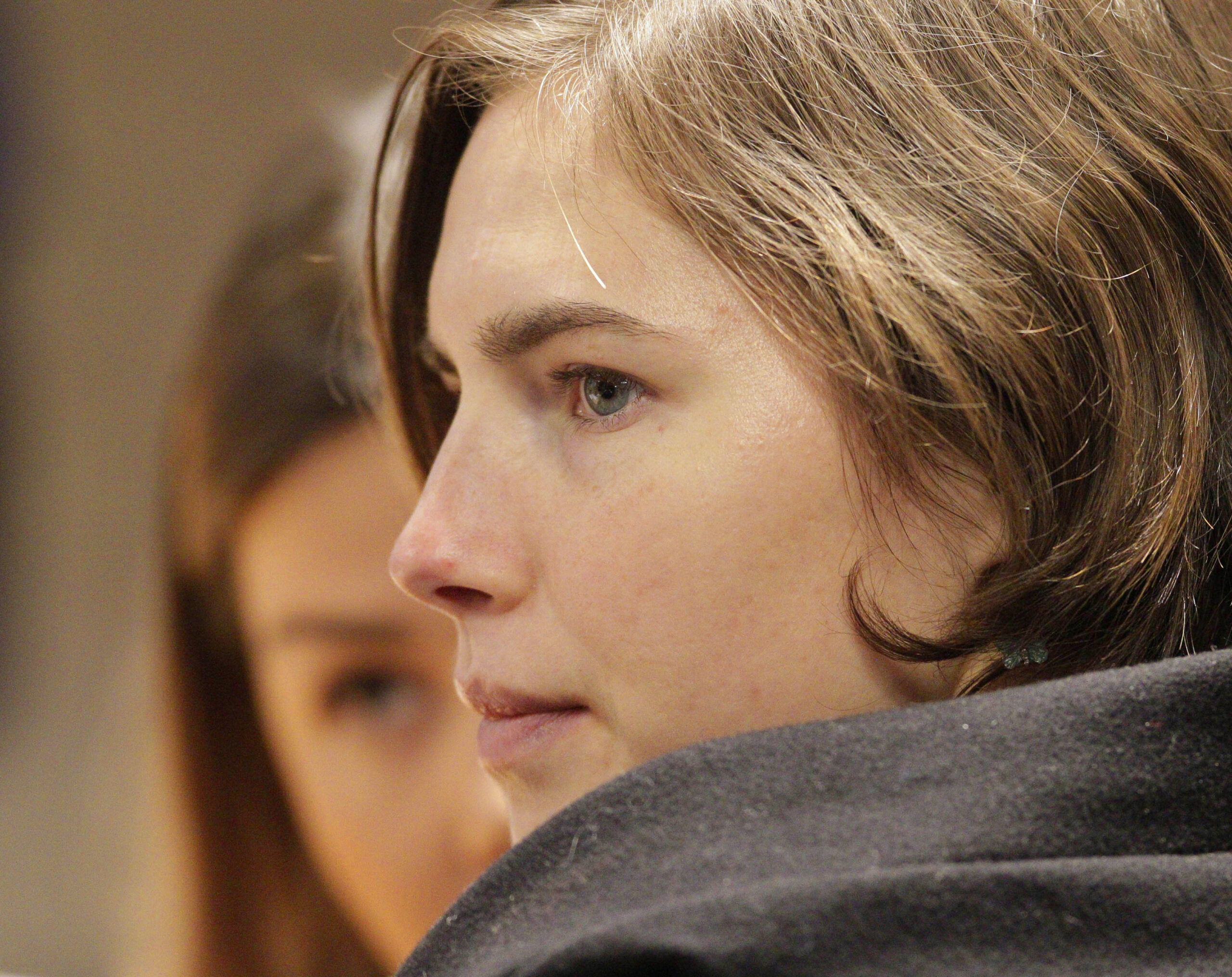
Amanda Knox's captivating womanhoodAmanda Knox, foreground, sits next to her lawyer Maria del Grosso during a hearing in her appeals trial, at Perugia's courthouse, Italy, Saturday, Dec. 11, 2010. The 23-year-old American student was convicted of murder and sexual assault in the 2007 death of her flatmate, British student Meredith Kercher, and sentenced to 26 years in prison. (AP Photo/Pier Paolo Cito)(Credit: Pier Paolo Cito)

People often wonder why, since three suspects were convicted of killing Meredith Kercher, most can only remember the name of the woman. One, not the only, reason is the Italian attitude toward women. The story starts with a spirituality based in sex and the worship of the female. Our word “veneration” comes from Venus, goddess of fertility, called in Italian, Venere. The primeval object of “veneration” was the goddess with the power to call forth desire from men, and to make barren women fertile.

Despite the fact that the Pope resides among them, Italians are not as Catholic as one might expect. Italy remains, as the journalist Luigi Barzini put it, “gloriously pagan.” In Italy, “Christianity has not deeply disturbed the happy traditions and customs of ancient Greece and Rome” but is a “thin veneer over older customs.”

Pagan pantheism survives in the Italian proliferation of saints. But in Italy, one feminine deity has always been venerated above the rest. Throughout Italy, one confronts images of a beatific young mother holding or nursing a baby, gazing down mysteriously from a roadside edicola — tiny shrine — or from a niche in a church, or from the walls of art museums.

There’s a pagan element in the cult of Mary, the mother of Jesus. The young virgin is worshipped apart from God or Christ. The Mary cult is stronger in Italy than in any other European nation. Italy has the greatest number of Church-validated Marian “apparitions” — sightings of the Virgin — than any other nation throughout recorded Church history.

Italy is home to hundreds of regional Mary cults. The most common name for the local Madonna deities is, simply, Santa Maria delle Grazie — the Mary of thanks, the Mary who dispenses favors. Traditionally, favor seekers approach the icon of Santa Maria delle Grazie on their knees with ex voto objects, small pressed metal or painted tile offerings, usually depicting a body part — a heart, an arm, a pair of eyes — whose recovery will be attributed to the attention of the Madonna delle Grazie.

Favors, though, are not granted for free. Madonnas in the Italian Mary cult are not necessarily altruistic. Like the vengeful goddesses of ancient Rome, the Madonnas are jealous and fickle and demand veneration. “The madonnas and saints worshipped by Italian Catholics are seen to have the power to cure and protect, they are also seen as a source of danger,” wrote a scholar of popular Italian Catholicism, Michael Carroll. “This danger has nothing to do with the punishment of sin, it derives from something much simpler: the saints and madonnas of Italy want to be worshipped, and it is toward this end, and the maintenance of their own cults, that they use their great power.”

The flip side to Italian veneration of the female deity is wariness about her legendary insatiable neediness, the voracious desire and jealousy of females, embodied in the whore, who is also still very much a part of modern Italian culture. All women are assumed to be in possession of bewitching seductive powers, but proper women are assumed to know how to use control and limit those powers.

Modern young women visiting Italy might not recognize those limits, though, because the stripper or girly-showgirl was so mainstreamed in Italy, especially during the years of Silvio Berlusconi’s control of Italian television and politics. The gusher of hard, sex-based commercial marketing, the nearly naked television dancers called veline jiggling on political talk shows, were just the visual element of a political structure that officially degraded women.

Their schizophrenic status had subtle effects on Italian women. The nation had a large and growing class of professional women who were not veline. Female lawyers, police, judges, and forensics experts played key roles in the Amanda Knox trial. While most media focused on the male judge, prosecutor, and lawyers, all of these men had female lieutenants who did most of the heavy lifting in the case. The best lawyer in the case was a woman, Giulia Bongiorno, a powerful Parliamentarian who had, inexplicably, used her wits to help womanizer Berlusconi stay in power.

But Italy was ranked 74th out of 128 nations in the World Economic Forum’s 2010 global index of gender equality, lowest in the EU and behind Ghana and Kazakhstan. For professional women like the lawyers and policewomen involved in the Kercher murder investigation and trial, the years leading up to and during the murder trial were a time of massive disconnection between their apparent and their real status. Italian professional women like Bongiorno and the other female lawyers and police in the Knox case put up with their veline sisters and the national girl-ogling sport, but uneasily. Many were divorced or single. The ancient Madonna/whore split poisoned their private lives, not to mention their attitudes toward other women — including the American college vixen Amanda Knox.

Two popular Madonnas reside in Perugia. One is the Madonna del Verde, a very old fresco from the mysterious round hilltop Tempio Sant’ Angelo, dating to the Dark Ages, whose background color green represented hope. The temple, located at the highest point in Perugia, is locally believed to have originated as a temple to Venus or Vesta. The site was probably also important to the Etruscans, who kept spiritual sanctuaries and tombs on hilltops adjacent to, but separate from, the city centers reserved for the living.

The other Perugia Madonna is the Madonna delle Grazie in the Duomo. Giuliano Mignini, the prosecutor of the Knox trial, kept her image hanging on the wall behind his desk and spoke of how she had helped his uncle escape from certain death at the hands of the Russians in the 1940s. The icon is a larger-than-life, clearly pregnant young woman, painted in 1515 by Giannicola di Paolo, one of Perugia’s Renaissance greats. She wears a brocade blue dress, and her pale eyes are strangely distant and slightly uneven. Perugians hundreds of years ago adorned her image with a real crown. Every day, parishioners can be seen kneeling before her. Over the centuries, they have appeased or thanked her with thousands of ex voto offerings — silver hearts and other body parts tied with small red ribbons — tucked in the glass case behind her.

Both Perugia’s Madonnas have pale, heart-shaped faces, tiny pert noses, light distant eyes, small perfect mouths. Amanda Knox bears an uncanny resemblance to both of them. The hippie soccer player from twenty-first-century Seattle could have been the Renaissance artist’s model.

Nina Burleigh is the author of “Unholy Business: A True Tale of Faith, Greed, and Forgery in the Holy Land,” “A Very Private Woman: The Life and Unsolved Murder of Presidential Mistress Mary Meyer,” and two other books. She has written for the New York Times, the New Yorker and Time, and is a contributing editor at Elle.

Excerpted from “The Fatal Gift of Beauty: The Trials of Amanda Knox. Copyright @ 2011 by Nina Burleigh. Reprinted by permission of Broadway Books, an imprint of the Crown Publishing Group, a division of Random House, Inc., New York. 

Continue Reading Close

The maternal is the political

In a new book, one of the founders of MoveOn.org argues that the next Web-based grass-roots political movement should be led by mothers.

  • more
    • All Share Services

The maternal is the political

Whatever we think of the perennial quest, undertaken most recently by Caitlin Flanagan and Judith Warner, to unpack the political, social, sexual and economic ramifications of American motherhood, we can agree on one thing: All the verbiage has not yet produced a more family-friendly nation. Now comes Joan Blades, co-founder of MoveOn.org, with an idea she says whose time has come: a Web-based, grass-roots attempt to weld mothers into a coherent political force. Earlier this month, Blades launched a multimedia campaign to spark this mother’s movement. The centerpiece of the effort is the Web site, MomsRising.org, which signed up 40,000 members during its first week online, after it was advertised in an e-mail blast to the 3 million members of MoveOn.org.

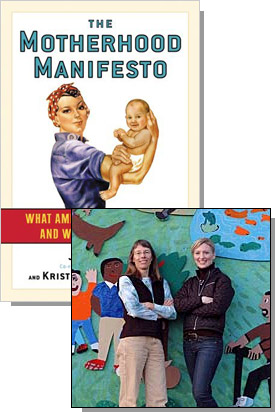
In conjunction with the new Web site, Blades co-wrote and released a new book, “The Motherhood Manifesto: What America’s Moms Want and What to Do About It.” The book, with a Rosie the Riveter-style, kerchief-clad woman on the cover elbow-curling an infant, is an even-tempered examination of six problems Blades and her coauthor, environmental policy consultant Kristin Rowe-Finkbeiner, believe American mothers need to see addressed — whether they’re home or working, Republican or Democrat. Each chapter also includes harrowing anecdotes from stretched and strained working mothers, and sometimes, fathers, struggling to be parents in the United States today.

Blades and Rowe-Finkbeiner intend their book and Web site to be nonpartisan, which explains the underlying restraint with which they deliver their arguments. In the nation of motherhood, they say, there are no red states or blue states, just one big, shared landscape in which mothers want roughly the same things. As laid out in their “manifesto,” those things correspond with the mnemonic acronym “MOTHER”: maternity and paternity leave, open and flexible work, TV we choose and other after-school programs, healthcare for all kids, excellent child care, and realistic and fair wages. To some cynics, “The Motherhood Manifesto” might sound an awful lot like the policies progressives have been fighting for with little or no success for years.

Blades, 50, and Rowe-Finkbeiner, 37, each have two children, and both work from home, Blades from Berkeley, Calif., and Rowe-Finkbeiner from Washington state. Salon spoke to them recently by phone about the pay bias against mothers, why quality television programming is a political issue, and how mothers can swing the next election.

What was the genesis of this project?

Blades: A couple of years ago I wrote a two-page document that I called “The Motherhood Manifesto,” which was very similar to what’s in the book. I shared it with Arianna Huffington and she invited me to talk about it at a gathering of political types she held in her home after the 2004 election. So I did, and a number of powerful people told me they thought it was a great idea. That was the inspiration for doing the book. The issues have been out there, but the general public is not mobilized around them.

“The Motherhood Manifesto” is also the name of a documentary we produced. The women we feature in the book are in the film and we will be previewing it in June at the Take Back America conference. After that, we will do organizing around it. We want to create massive grass-roots support for issues that affect mothers. Once people realize that it’s not just their personal problem but that these are issues we all share, I think there will be a huge opportunity to back good leadership and good policy.

Dedicated people have been out there promoting these very issues in legislatures across the country and in Washington for decades without success. How is your effort different?

Blades: As a founder of MoveOn.org, I have seen the power of grass-roots mobilization. It’s unleashing the so-called wisdom of crowds. Give people a connection and a way to engage and they will, in deep and intelligent ways.

Rowe-Finkbeiner: We are developing a blogging roster on MomsRising.org for people who will be able to come in and talk about what is important to them, whether it’s child care, healthcare or other issues. Also going up is a networking function, an online forum so moms can talk to moms and organizations can talk to organizations about who is doing what where.

We are trying to offer avenues for engagement — everything from reading a story about other mothers’ dilemmas and solutions to calling your legislator. Ultimately we’d love to have a “how to start your own group” piece. Certainly we’ll do house parties around the film. We are also encouraging book groups. There are also talking points if you want to get together as a play group or for afternoon tea. Basically we are saying here are some things to discuss, and some background. It’s community building in person as well as online.

Blades: We are going to learn a lot from our members about what they want to work on. We are going to give them opportunities to engage. And they will give us great ideas. That’s where we will go deeply and explore more. I believe good online work is a two-way dialogue. The Web site went up this week and it is rapidly growing. We have had an amazing response, with close to 40,000 members signing on in five days. We have both a petition and a sign-up. The petition urges policymakers to be more genuinely family-friendly by supporting legislation to close the wage gap between mothers and men. It reads: “It’s time for our leaders to do more than talk about valuing families. Join us as we let American leaders know we support common sense family-friendly policies that protect and invest in mothers, children, and families today.”

Can we realistically hope to mandate things like more maternity/paternity leave and open and flexible work in today’s political and economic climate? Are there any companies that are models for this? You mention Google in the book, but are there others?

Rowe-Finkbeiner: One model is Johnson Moving and Storage in Denver. They have done an amazing job with open and flexible work in a sector not known for flexible work. They are able to attract and retain really high-qualified employees by offering them flexible schedules. JetBlue is another company with flexible options. They make people’s homes satellite offices. All the reservation agents work from home, many part-time. Most of these folks are in Utah and a whole lot of them are moms.

Did you organize the issues in the acronym MOTHER in descending order of priority? Because it seems to me the last two, healthcare and wages, ought to be at the top.

Blades: We recognize that you can’t fix one thing and not have all the others affected. Employers have a problem offering work flexibility because they are trying to minimize the cost of healthcare and don’t want to hire two people to share a job, even though they would probably be more productive. Businesses are performing unnatural acts in order to avoid having high healthcare costs. We choose issues that a vast majority of Americans can recognize. These are needs we all share.

Why did you include “T” for TV? Why is good TV programming important for mothers?

Blades: “T” is for TV and other entertainment, and also for after-school programs. The fact is we’ve got 40,000 kindergartners home alone after school, and many of them are in front of the TV. We’d be in denial if we didn’t recognize that TV is a huge part of how we raise our kids today. We want parents to support very clear ratings systems so that they know what is and is not appropriate for their kids and we want them to support educational programming.

Rowe-Finkbeiner: There are 12 million kids home alone every day after school. The most common time for crime is between 3 and 6 in the afternoon, and for teens to have unprotected sex. They need after-school programs.

You chose “E” for excellent child care. It seems as if child care has been turned into a trench war about morality and gender roles. Often, the discourse moves away from what mothers need to what mothers should be, and I think American mothers internalize that. I lived in France for a few years and found it to be much more genuinely family-friendly, partly because they offer affordable day care on every block and public school starting at age 3. No one questions whether the women putting children in these institutions are bad mothers. They just do it.

Rowe-Finkbeiner: Seventy-two percent of moms are in the workforce. The majority of families need two working parents in order to support their families. Right now all parents have to work an average of 500 more hours a year to keep up with 1979 income levels. To frame this issue as one about whether child care is good or bad for children really misses the point that most mothers need to work.

A lot of people feel it’s their fault if they can’t figure out how to make it work. But there are certain areas that are shared community problems. It’s not just about parents. There really needs to be societal support to help parents care for children.

You chose “R” for realistic and fair wages for women. Let’s talk about the pay bias against mothers. Aren’t there legitimate reasons for it to be there? For instance, don’t mothers — parents, really, but mothers primarily — tend to put their children before their employers? Don’t childless women have more energy to expend on work?

Rowe-Finkbeiner: I will point out that it’s Saturday and all three of us are mothers and we are all working right now. The fact is, mothers do not have lower job commitment. Dr. Shelly Correll, at Cornell, found mothers are 44 percent less likely to be hired than nonmothers given the same résumés and are offered $11,000 less as a starting salary. We don’t talk about how much money we make. We need to in order to unearth this problem.

Blades: The other side of that question is, Shouldn’t your kids be a priority for a man or a woman? And if they are, then you should not be punished for it. A lot of people are surprised by the fact that mothers are discriminated against. Women without children make 90 cents to a man’s $1, so the majority of the gender gap is coming from mothers because 82 percent of all women are mothers. The inequality faced by mothers is pulling down all women.

This brings me to something that has bothered me since I first opened your book. You address this book to mothers. Why is it assumed that fathers can’t do their share? Why is this “The Motherhood Manifesto” and not “The Parents’ Manifesto”? Isn’t that distinction a big part of the problem?

Blades: You will note that “M” is for maternity and paternity leave. Everything in this book is good for parents. But it’s “The Motherhood Manifesto” because it is mothers against whom there is substantial bias in terms of wages. The single parents in this country are predominantly mothers. It’s mothers and their children who are living in poverty. The need for work flexibility will be good for all parents.

Rowe-Finkbeiner: Fathers actually get a wage boost for having children. The traditional feeling is that men are supposed to support their children. Yet women now make up 46 percent of the labor force. We have old standards that haven’t caught up with modern parenthood. Everybody should get a wage boost for having children. They’re expensive.

Blades: Chapter “O,” for open and flexible work, is the longest chapter because that’s where there is the most opportunity for change. Most jobs are modeled after the “ideal worker,” yet most workers don’t fit into that category. The upper echelons of business are primarily male and if women get there they are usually childless. What businesses are doing is selecting by schedule. Is it really true that the smartest people are childless?

How do you plan to translate these ideas into reality, especially when so many family-friendly policies have failed already?

Blades: I think you eventually get to a tipping point. Many people would argue that the number of hours parents have to spend working is hitting a breaking point, and people can’t take it anymore. This book and the online movement we are building are about trying to help that growing recognition take hold. We are telling it through the stories of people we can identify with. When I hear about Selina [a working mother described in the first chapter of the book] having to breast-feed and type at the same type, I think to myself, Something has got to give.

Rowe-Finkbeiner: We need to let business and political and community leaders know they have to support family-friendly politics. If leaders don’t know they have support, it’s harder.

Blades: Hillary Clinton, Ted Kennedy — they are not getting traction when they try to do these things [increasing healthcare access and mandating fair wages]. It’s like they are whistling in the wind. We need to be there for them. We need to provide them with grass-roots political capital so they know they have millions of citizens behind them ready to work to make sure these policies get enacted.

Do you see mothers as a silent political force?

Rowe-Finkbeiner: Yes. They are increasingly likely to be able to swing elections. Looking at the last two presidential elections, there was a 5 percent shift among married women between Gore and Kerry. That can make or break an election.

Most of the women described in the book are trying to balance child rearing with work. How do you get working and nonworking mothers to see their aims as similar?

Blades: I think when you focus on what’s best for kids you see that your goals are the same.

Rowe-Finkbeiner: MomsRising is not just for working mothers. Certainly issues like access to healthcare, paternity leave and TV programming are relevant to both stay-at-home and working mothers. These issues relate to being a parent in general.

Don’t you think that since you’re affiliated with MoveOn.org, a liberal organization, you will be seen as partisan and have a hard time attracting conservatives to this movement? Especially when you name leaders like Ted Kennedy and Hillary Clinton.

Blades: I think ultimately conservatives are going to hook up with us because it’s the right thing to do. It’s very hard for conservatives to do anything but team playing right now. But good citizens are starting to realize that team playing is not good in terms of getting good policy enacted. It has become very hard for people to behave as conscientious individuals as opposed to part of their team and that’s a loss for everyone.

How do you know this manifesto is what American mothers want, as your subtitle suggests?

Blades: Women’s intuition.

This story has been changed since it was first published.

Continue Reading Close

Country boy

Who am I to question my son's innocent trust in an ideal America?

  • more
    • All Share Services

Country boy

When people give directions to the upstate New York hamlet of Narrowsburg, they always refer to the big red brick schoolhouse at the stoplight. Narrowsburg Central Rural School has been on the hill on School Street since 1929, educating four generations of local children.

Hardly anybody in town remembers a time when the campus — with its white doors, sloping green lawn, and Stars and Stripes snapping in the breeze — was not there. But last year, bankrupted by local fiscal mismanagement and the woes of the post-9/11 New York state economy, the little school was shuttered. When the last student skipped out of its double doors in the summer of 2005, janitors moved in with packing tape and boxes from a nearby egg farm to empty the classrooms. Among the pupils left behind was my son, a member of the last kindergarten class.

Our family first arrived in Narrowsburg in 2000, as city people hunting for a cheap house. For barely $50,000 we were able to buy the “weekend house” we thought would complete our metropolitan existence. But soon after we closed on the home, we moved to Paris, spurred by the serendipitous arrival of a book contract. When our European idyll ended after two years, and with tenants still subletting our city apartment, we moved into the Narrowsburg house. After growing accustomed to the French social system — with its cheap medicine, generous welfare, short workweek and plentiful child care — life back in depressed upstate New York felt especially harsh. We’d never planned to get involved in the life of the town, nor had it ever occurred to us that we might send our son to the Narrowsburg School. But suddenly we were upstate locals, with a real stake in the community.

In the fall of 2004, we enrolled our son in kindergarten at the Narrowsburg School. The school’s reputation among our friends, other “second-home owners,” was not good. “Do they even have a curriculum?” sniffed one New York City professor who kept a weekend home nearby. Clearly, Narrowsburg School was not a traditional first step on the path to Harvard. As far as I could tell, though, no one besides us had ever set foot inside the building. When my husband and I investigated, we were pleasantly surprised. The school had just been renovated and was clean, airy, cheerful. The nurse and the principal knew every one of the 121 children by name. Our son would be one of just 12 little white children in a sunny kindergarten class taught by an enthusiastic woman with eighteen years’ experience teaching five-year-olds.

Still, for the first few months, we felt uneasy. Eighty of Narrowsburg’s 319 adults are military veterans and at least 10 recent school graduates are serving in Iraq or on other bases overseas right now. The school’s defining philosophy was traditional and conservative, starting with a sit-down-in-your-seat brand of discipline, leavened with a rafter-shaking reverence for country and flag. Every day the students gathered in the gym for the “Morning Program,” open to parents, which began with the Pledge of Allegiance, followed by a patriotic song, and then discussion of a “word of the week.” During the first few weeks, the words of the week seemed suspiciously tied to a certain political persuasion: “Military,” “tour,” “nation” and “alliance” were among them.

But it wasn’t until our boy came home with an invitation in his backpack to attend a “released time” Bible class that my husband and I panicked. We called the ACLU and learned this was an entirely legal way for evangelicals to proselytize to children during school hours. What was against the law was sending the flier home in a kid’s backpack, implying school support. After our inquiry, the ACLU formally called the principal to complain. She apologized and promised never to allow it again. While we were never identified as the people who dropped the dime to the ACLU, there was clearly no one else in the school community who would have done so — and the principal never looked at us quite as warmly again.

Shortly afterward, another parent casually told me that she wanted to bring her daughter’s religious cartoon videos in to share with the class, but couldn’t because “some people” might object. When we later learned that the cheery kindergarten teacher belonged to one of the most conservative evangelical churches in the community, we were careful not to challenge anyone or to express any opinion about politics or religion, out of fear our son would be singled out. Instead, to counteract any God-and-country indoctrination he received in school, we began our own informal in-home instruction about Bush, Iraq and Washington over the evening news.

- – - – - – - – - – - -

Politically, Narrowsburg is red dot in a blue state. It is not named for any small-town frame of mind, but for the way the Delaware River narrows at the edge of town, then widens into a serene, lakelike eddy that at twilight mirrors the lights of town and the ranch-style houses on the flats. The towering pines along the river are nesting spots for bald eagles that soar year-round in pairs above Main Street and swoop down into the river to sink their talons into trout sighted from a hundred feet up. That year, driving to school every morning along the water, my son and I witnessed the wind gradually scrape away the bright foliage, snow fall, and the ground freeze. In the white, leafless months, we could see the entire span of the Delaware River valley from the car, a long arc of pastoral perfection.

If you knew nothing else of the world, if you were just 5 or 6 or 10 years old, and this place was your only America, you wouldn’t have any reason at all to question the Narrowsburg School’s Morning Program routine. Hand over heart, my son belted out the Pledge with gusto every morning and memorized and sang “The Star-Spangled Banner.” I never stopped resisting the urge to sit down in silent protest during the Pledge. But I also never failed to get choked up when they sang “America the Beautiful.”

Listening to their little voices, I felt guilty for being a non-believer. When I was 5 years old, in 1965, did I understand what my lefty parents were saying about the Kennedy assassination, Watts and dead-soldier counts? Who was I to deprive my son, or his eleven kindergarten chums, of their faith in a nation capable of combining “good with brotherhood?” In a 5-year-old’s perfect world, perhaps such places should exist.

That November, at the school’s annual Veterans Day program, the children performed the trucker anthem “God Bless the USA” (one of the memorable lines is “Ain’t no doubt I love this la-aand, God bless the USA-ay!”), as their parents sang along. About a dozen local veterans — ancient men who had served in World War II, and men on the cusp of old age who had served in Korea and Vietnam — settled into folding chairs arranged beneath the flag. When the students were finished singing, the principal asked the veterans to stand and identify themselves. Watching from the audience, I wondered if anyone would speak of the disaster unfolding in Iraq (which was never a word of the week).

No one did. The men rose and stated name, rank and theater. Finally, a burly, gray-bearded Vietnam veteran rose and said what no one else dared. After identifying himself, he choked out, “Kids, I just hope to God none of you ever have to experience what we went through.” Then he sat down, leaving a small pocket of shocked silence. No one applauded his effort at honesty. On the contrary, the hot gym air thickened with a tension that implicitly ostracized the man, and by extension — because we agreed with him — me and my husband.

A month later, just before Christmas, my son and I drove together into New York City with bags of children’s clothes and shoes that he and his sister had outgrown. The Harlem unit of the National Guard was putting on a Christmas clothing drive for Iraqi children. On the way into the city, I tried to explain to my son what we were doing, and — as best I could — why. As we crossed the George Washington Bridge and the Manhattan skyline spread out below us, I began to give him a variation on the “Africans don’t have any food, finish your dinner” talk. I wanted him to understand how privileged he was to live in a place where bombs weren’t raining from the sky. It was a talk I’d tried to have before, but not one he’d ever paid much attention to until that day, trapped in the back seat of our car.

In simple language, I told my son that our president had started a war with a country called Iraq. I said that we were bombing cities and destroying buildings. And I explained that families just like ours now had no money or food because their parents didn’t have offices to go to anymore or bosses to pay them. “America did this?” my son asked, incredulous. “Yes, America,” I answered. He paused, a long silent pause, then burst out: “But Mommy, I love America! I want to hug America!”

- – - – - – - – - – - -

A month after the Christmas outburst, the first rumors that all was not well with the school began circulating. Fiscal mismanagement, high fuel and retirement costs, and the depleted state economy had created a huge and unexpected cash shortfall for the tiny district. The parents at Narrowsburg School soon had a figure: It was going to cost just over $600,000 to keep their school open for another year. Chump change in Washington and New York City, but impossible to collect in a town where the median family income is barely $45,000. By late June 2005, the little school’s fate was sealed. To my surprise I found I was deeply sorry about it.

The patriot-ization of our son was thorough enough to survive the summer. He decorated his birthday cookies with red, white and blue sugar, and in his summer camp program, when doing arts and crafts, those were the colors of paint he favored. “I made the stars red, white and blue — like the flag!” he exclaimed, holding a paper mobile he’d strung together.

Now it has been almost a year since my son scampered down the steps of Narrowsburg Central Rural School for the last time. We’ve since returned to the city, driven back to urban life more by adult boredom than our children’s lack of educational opportunities. Our son is enrolled in a well-rated K-5 public school on Manhattan’s Upper West Side; not surprisingly, the Pledge of Allegiance is no longer part of his morning routine. Come to think of it, and I could be wrong, I’ve never seen a flag on the premises.

My husband and I realized, though, that Narrowsburg did more than mold our boy into a patriot. He can, it turns out — despite the warnings of other city parents — read at a level twice that of his new peers. Since we returned to the city, he has learned how to ride a bike, long for an Xbox, practiced a few new swear words and, somehow, learned the meaning of “sexy.” He has pretty much stopped favoring red, white and blue.

How soon childish national pride is shed, I sometimes think now, and not a little wistfully. Only once it was gone did I realize that, after our initial discomfort, my husband and I had begun to see our son’s patriotism as a badge of innocence. His faith was a reminder to us that the reason we are devastated by the war in Iraq and the Bush presidency is that we too love America. We too want to believe in its potential for good and brotherhood.

Our family now visits the Narrowsburg house only on weekends and holidays. Sometimes we pass the stately red brick school building, so recently renovated with thermal windows and elevators for the disabled, a town landmark for 75 years. The flag still flies there, but the doors are padlocked and the windows are black.

Continue Reading Close

Down with “LEPENIS!”

In a city used to protests, Chanel blends with Che T-shirts as more than a million turn out for the mother of all May Day rallies.

  • more
    • All Share Services

The French do love an excuse to march dans les rues. About every few days, wending our way around Paris, we find inexplicable traffic blockages, heralded by truckloads of idling police buses. The cops in riot gear occasionally get out and smoke on the sidewalk, but otherwise they do nothing to either harass or encourage the protesters.

We’ve stumbled upon security unions marching for better bulletproof vests, rollerbladers rolling in the streets to demand more street space, Tunisians marching to draw attention to political prisoners in Tunis. Sometimes it turns out it’s the Gypsies burning someone in effigy, or other assemblages with purposes too obscure for us to even understand. No grievance is too minor to take to the streets. They have a pet name for these strikes, “manif” — short for “manifestation.” Cabdrivers will mutter “petit manif!” as they hit the brakes, encouraging passengers to get out and walk. Traffic comes to a halt, banners fly, slogans are chanted and Parisians just step around it all.

But since Le Pen’s surprise showing in last week’s election, Parisians have been in the streets more than usual and the graffiti in their wake has gotten much more interesting. My personal favorite — before today — was a defaced Elizabeth Hurley ad for Lancôme on a bus stop nearby. Someone has scrawled “Parfum Fasciste!” over her supremely self-satisfied mien. They’re finding the fascism in the mundane here right now.

Wednesday, May Day, Parisians outdid themselves. In the morning, Le Pen himself spoke to a crowd of some 10,000 near a statue of Joan of Arc. His neatly dressed minions handed out stickers describing the extreme right as “hypercool.” In the afternoon, more than 1 million turned out for an anti-Le Pen rally, trying to redeem themselves for the apathetic-voter syndrome that let Le Pen embarrass France a Sunday ago.

By mid-afternoon between the Place de la Bastille and the Place de la Republique, hundreds of thousands of people squeezed together and moved as one organism. No one gave a speech, and no one seemed to know where they were headed. It was enough, apparently, to just be among them, adding a body to the count.

One young woman, hearing me speaking English, asked what I thought of the rally.

“C’est bon,” I said, unable to consider any other critique under the circumstances.

“You’re not scared of the crowd?”

Actually, I am uncomfortable anytime I can’t move a muscle because of a surging wall of humanity, but I said no. The girl smiled beatifically, and disappeared into the sea of flesh.

Traditional May Day bouquets of lilies of the valley, in plastic cups labeled “Je Porte bonheur” (I carry happiness), were sold by vendors on snatches of sidewalk where the crowds weren’t packed. The flowers are a remnant of medieval May Days, when young people welcomed the return of spring with maypoles and dancing.

On an average May Day in Paris, besides the little bouquets, the streets would be filled with unions parading to celebrate the international day of the worker. Unions were out today, but their ranks were swelled by the addition of a whole array of otherwise unorganized people.

“Le Pen, thanks for waking us up,” read some of the signs. Children and French terriers on leashes wandered around with the word “non” taped on their backs. Elderly people — old enough possibly to remember the Vichy government — leaned on canes in the surging crowd, but no one collapsed. Well-heeled men and women in Campers and Hermes scarves were pressed up against college kids in Guatemalan save-the-rain forest cottons. Rasta flags with Bob Marley’s face emblazoned on a background of green, yellow and red were flying next to the French tricolor and various union banners. Communists were doing a brisk business selling Che T-shirts, and another clever one that arranged a hammer and sickle like a Nike logo with the words “Strike. Just Do It.”

The monument at the Bastille Wednesday night is scrawled with anti-fascist graffiti and the streets across this side of the city are papered with abandoned picket signs. “LEPENIS!” and “Hitler 1933, Le Pen jamais!” are just a few of the slogans. Color photographs of Le Pen, his mouth digitally remastered into that of a snarling dog, are everywhere. As far as I know, there were no fights or serious property damage. (Parisian cleanup crews will have the graffiti blasted off the Bastille before daybreak — like doggie-doo scooping, it’s one of the jobs they have perfected here.)

Having covered dozens of large-scale American political rallies in the 1990s, I find it hard to shake the expectation that massive public displays are either carefully produced like Hollywood movies, with participants organized by experts with mailing lists and phone banks or possibly even bused in for the rally, or else they are chaotic riots with thugs and mass looting. Wednesday’s event in Paris had the feel of something unorganized, a genuine outpouring of people from their houses and into the streets to show solidarity. Approaching the surging crowd we saw parents pushing strollers, whole groups of families on an afternoon outing, and — expecting tear gas or at least some old-fashioned car-flipping — we rolled our eyes in wonder.

In fact, the crowd was much like those that gather after a big win by a sports team in Chicago or New York, but with a difference: It is difficult to imagine a political cause that could lure Americans of so many different colors, ages and classes as Wednesday’s grande manif in Paris. If a scary xenophobe came in distant second for president, would Americans of all races step out of their doors and hit the streets en masse? Bars and cafes are packed tonight with Parisians patting themselves on the back for having put on a colossal nonviolent rally. They deserve it. It was like Mardi Gras without the planter’s punch.

Continue Reading Close

Page 2 of 3 in Nina Burleigh