Siobhan Dowling

Europe’s awkward couple

Angela Merkel and Francois Hollande finally meet in person -- and it isn't exactly warm

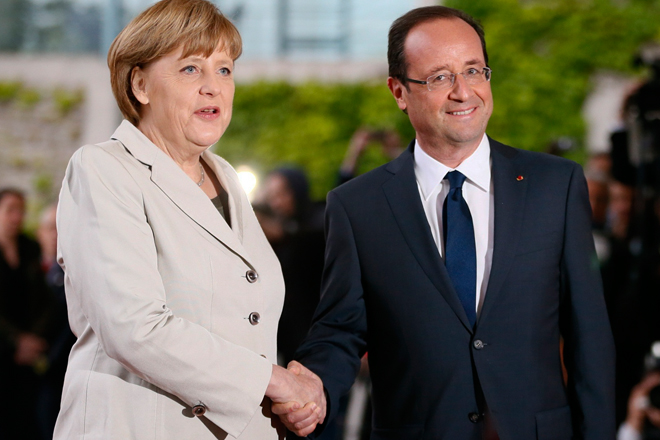
Angela Merkel and Francois Hollande in Berlin on Tuesday, (Credit: Reuters/Fabrizio Bensch)

BERLIN, Germany – It started with a handshake, not a kiss. When Chancellor Angela Merkel and new French President Francois Hollande finally met in person on Tuesday evening, there was little of the warmth that marked her meetings with Nicolas Sarkozy in recent years.

Aides had downplayed the rendezvous as simply aimed at getting to know one another rather than about hammering out any policy. Yet the future of Europe could hinge on whether these two leaders find a way to work well together.

Rarely have two people met for the first time with so much baggage. Merkel refused to meet with Hollande during his election campaign, and made the highly unusual step of publicly backing his rival, fellow conservative Sarkozy. Hollande for his part seemed to be campaigning as much against Merkel as the incumbent, pledging to renegotiate the fiscal pact that she had championed.

Now the two have finally met face-to-face and the encounter seemed cordial if hardly warm. Following the ceremonial reviewing of the guard of honor – during which Merkel had to gently nudge Hollande in the right direction on the red carpet – the two held an hour -long meeting. They then addressed the throng of international journalists in a joint press conference during which Merkel remained stony-faced during much of Hollande’s comments, interspersed with the odd smile.

The pair did seek to downplay their differences and strike a friendly tone with Merkel even joking that the lightning that had struck Hollande’s plane on his way to Berlin was perhaps a “good omen.”

“I’m not sure whether there is sometimes more divergence perceived in the public realm than there really is,” the chancellor told the press conference. “We are aware of our responsibility, as Germany and France, for a positive development in Europe. Carried by this spirit I believe we will of course find solutions for the different problems.”

Both tried to show a united front on Greece, which risks ejection from the euro zone if it backs anti-austerity parties in the fresh elections likely after the parties failed to form a government. “Just like Frau Merkel,” Hollande said, he wanted Greece to remain in the euro zone while insisting that Athens meet the terms of the bailout agreement.

Yet when it came to the crux of the differences between the two, on austerity versus growth, it was obvious that the only thing that had been agreed so far was that they disagree.

After all, it remains to be seen how Merkel’s strict stance on rapidly reducing budget deficits can be married with Hollande’s plea for some kind of stimulus package to boost growth.

Hollande reiterated his promise to reopen talks about the fiscal pact, the agreement on strict budget discipline which he has said France will not ratify unless a growth element is also adopted.

“I said in the campaign, and I repeat today, that I want to renegotiate what was established at a certain moment,” Hollande told reporters. “Everything that can contribute to growth must be put on the table. I don’t want growth to be just a word, but tangible measures.”

He mentioned boosting competitiveness, as well as Euro bonds – essentially pooling the debt of euro zone members – something Merkel has so far flatly rejected.

He did not, however, mention tinkering with the European Central Bank’s mandate, surely a red line if ever there was one in Berlin.

For all the inauspicious beginnings, observers predict that the two will eventually hit it off. Both play on their modest, down- to-earth style and exude an air of pragmatism rather than charisma. Hollande depicts himself as “Mr Normal” in contrast to the Bling Bling of his predecessor Sarkozy, while the unassuming Merkel is often seen doing her own grocery shopping. And both are said to have a wry sense of humor in private.

Furthermore, Hollande’s gesture of appointing Germanophile Jean-Marc Ayrault as his prime minister will have gone down well in Berlin.

Yet, it is hardly a meeting of equals. Merkel is an old hand in European politics now, in her seventh year in office, while Hollande’s previous executive experience has been confined to serving as mayor of the small town of Tulle.

Furthermore Germany is the EU’s economic powerhouse, with its export-driven economy keeping the rest of the euro zone out of recession, according to figures released on Tuesday. And Berlin has long been calling the political shots in Europe, with the fiscal compact being dreamed up by Merkel, as a way of preventing EU states from getting into deeper debt in the future.

At the same time Merkel is increasingly isolated in Europe, as there is a growing realization that austerity is choking off growth. Hollande knows that other leaders, including conservatives like Italy’s Mario Monti, also want Berlin to budge on its debt reduction fixation.

Hollande came to Berlin straight from his inauguration ceremony in Paris. After beating Sarkozy on May 6 he will feel he has a mandate from the French people to push for a change of direction in Europe. Yet he also faces a tough economic situation back home, with just 0.1 percent growth in the first quarter and growing unemployment, now at a 13-year high of 10 percent. If the economy were to contract even further, it could make it very difficult to fulfill many of his campaign pledges, such as reversing Sarkozy’s pension reforms.

Merkel has her own problems, despite the strong economy. Her party, the conservative CDU, has just suffered a bruising defeat in the state of North Rhine-Westphalia. Her coalition is increasingly fractious, with Bavaria’s CSU leader Horst Seehofer publicly slamming the CDU candidate in North Rhine-Westphalia Norbert Roettgen on TV for his campaign, while the FDP is unpredictable due to an ongoing leadership crisis.

The fact that she needs a two-thirds majority in the Bundestag to ratify the fiscal compact means she is dependent on the opposition SPD. And while the party has broadly backed her euro policy, it has been emboldened by Hollande’s victory and the strong showing in NRW. On Tuesday the party’s leaders said that they would delay the vote on the fiscal pact, originally scheduled for late May, saying it wanted to see concrete growth measures as well as austerity.

That would leave time for Merkel and Hollande to agree to some sort of compromise solution.

The pair said they will seek an agreement ahead of the next big summit of EU leaders in June. “It will be very important that Germany and France present their ideas together at this summit, and we have talked about the preparation,” Merkel said.

They will see each other before that, meeting at an informal dinner of EU leaders on May 23, as well as at the forthcoming NATO and G8 summits.

However, Hollande is unlikely to show much willingness for compromise with Berlin just yet. After all his party is facing legislative elections in mid June and he will want to make sure he is not seen to be backsliding on campaign pledges.

Hollande wants his five-year term to start with his Socialist Party securing control of the National Assembly so that he can push through his agenda. Otherwise he faces a frustrating period of “cohabitation” with a prime minister from the opposing camp, such as occurred when conservative Jacques Chirac’s presidency coincided with the premiership of Socialist Lionel Jospin from 1997 to 2002.

As such Merkel cannot expect Hollande to veer from his insistence on growth measures. And for all his unassuming manner, he could well prove to be a more difficult partner than Sarkozy in the long run.

Nevertheless Merkel is also likely to stand firm on many issues. Asked on Tuesday night if she feared Hollande’s campaign promises she replied coolly: “I am seldom afraid, as fear is not a good counselor in politics.”

Merkel’s new vulnerability

After a disastrous showing in a regional election, the German leader's party is at risk -- and so is Euro stability

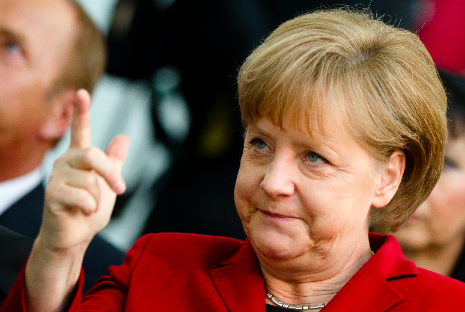
German Chancellor Angela Merkel (Credit: AP Photo)
This article originally appeared on GlobalPost.

BERLIN, Germany – It is a paradox of German politics that Chancellor Angela Merkel remains overwhelming popular, while the parties that make up her governing coalition lurch from one defeat to the next in a string of regional votes.

Global PostThat was made evident yet again on Sunday when her conservative Christian Democrats (CDU) suffered their worst ever result in Germany’s most populous state of North-Rhine Westphalia. The party only managed to get just over 26 percent of the vote in the snap election, shedding almost 9 points since securing 35 percent in the last vote there in 2010.

Her junior coalition partners the Free Democrats did manage an impressive comeback, securing a surprise 8 percent and managing to return to the state parliament thanks to its dynamic leader in the state, Christian Lindner. However, the disastrous performance by the CDU will allow the Social Democrats and Greens to form a stable coalition, after operating as a minority government for the past two years.

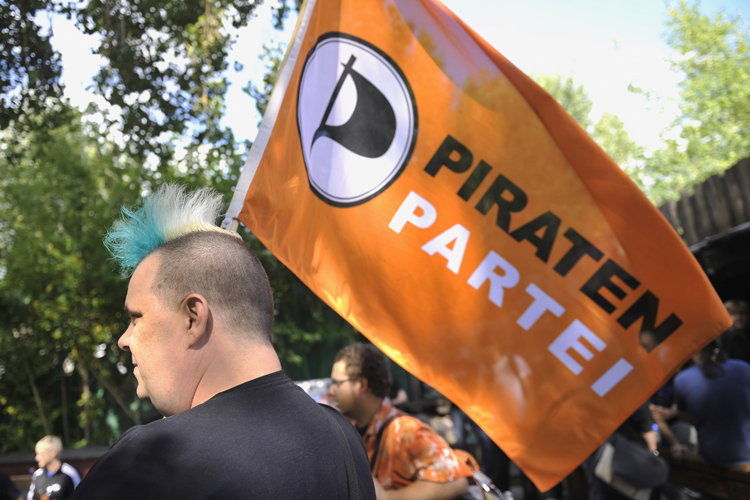
The SPD won 39 percent of the vote in what had been its traditional heartland, largely thanks to the huge popularity of its leading candidate, state governor Hannelore Kraft. The Greens only fell back slightly, down from 12 to 11 percent, a relief given the strong showing of the Pirates who stormed into their fourth regional parliament after securing almost 8 percent. The post-communist Left Party only attracted just over 2 percent, compared to over 5 percent in 2010, and thus failing to enter parliament.

North Rhine-Westphalia is often a strong indicator of the national mood. When former SPD Chancellor Gerhard Schroeder suffered a defeat there in a state vote in 2005 he called an immediate snap general election, which paved the way for Merkel’s rise to power.

Now, seven years later, could the bruising defeat in that state again be a harbinger of change at the federal level?

Even though the CDU had been braced for defeat on Sunday, the extent of the drubbing left the party reeling. “We have been bludgeoned,” said Peter Altmaier, the CDU’s chief whip in the Bundestag, on Sunday.

Their campaign had been a disaster, with their leading candidate Norbert Roettgen infuriating voters by failing to commit to giving up his current job as federal environment minister to lead the state opposition if the CDU were defeated. As such yet another possible internal rival to Merkel has been eliminated. Yet this also signals a defeat for a man who represented the moderate center of the party, and particularly for a possible coalition with the Greens.

While the CDU in North Rhine-Westphalia are left to lick their wounds, Merkel and the party strategists in Berlin will have to assess the vote’s significance for the party’s chances of holding onto power after next year’s federal election.

The party had been working on the assumption that the FDP would continue to implode and that the CDU would need to form a new alliance either with the SPD or with the Greens, who it was assumed would fail to muster enough support for a coalition of their own.

Now the victory in a state that is home to one in four Germans points to a possible resurgence of the SPD and Green alliance. However, it might be unwise to assume that the parties could achieve a similar result on a national level and revive their coalition of 1998-2005.

After all much of the victory on Sunday is being attributed to the successful duo of the SPD’s Kraft and the Green party leader and deputy governor Sylvia Loehrmann. The two women worked extremely well together, managing to form alliances with the other parties on a range of issues, and seemed to present a less harsh, more socially oriented governing style. “We put people at the heart of this election campaign,” Kraft said on Sunday.

The SPD at a national level is far less popular, and it has still not decided who will challenge Merkel at the next federal election. The current troika of leaders, Peer Steinbrueck, Frank-Walter Steinmeier and Sigmar Gabriel lack the common touch and warmth displayed by Kraft. They are also more associated with the severe welfare cuts and labor market reforms of the previous SPD-led government, which alienated much of the party’s traditional base.

While Kraft is increasingly being touted as a possible rival to Merkel in 2013 based on her triumph on Sunday, she has so far insisted that she has no desire to switch to federal politics.

Nevertheless the North Rhine-Westphalia election has given both the SPD and Greens a much needed boost. The SPD suffered its worst ever election defeat in the federal election of 2009, attracting only 23 percent of the vote and it has struggled to make headway against the ever popular Merkel.

Their strong performances both in North Rhine-Westphalia and in Schleswig-Holstein the previous week could encourage the opposition to be more forthright in demanding more concessions from Merkel when it comes to her austerity policy in Europe.

Merkel needs a two-thirds majority in the Bundestag in order to ratify the so-called “fiscal compact” which would see EU states commit to strict budget discipline.

The SPD and Greens, already emboldened by the victory of Socialist Francois Hollande, are demanding that the vote be delayed until the French and German leaders agree to some form of growth package to complement the fiscal rectitude ordained by the pact. While the SPD and Greens have largely backed Merkel’s euro policies, they are increasingly complaining that concentrating on austerity alone is not only failing to cure the euro zone’s ills but proving to be counter-productive.

While Merkel has insisted that no more debt can be taken on as part of any growth package, Hollande’s victory and the defeat in North Rhine-Westphalia may prompt her to show more flexibility on going beyond strict austerity in Europe. However, she has insisted that any growth strategy cannot be achieved by taking on more debt and she will not see the pact itself renegotiated, considering that it has already been ratified by a number of countries as is up for a public vote in the Irish referendum on May 31.

What remains to be seen is whether Merkel’s clout in Europe will be affected by her party’s election debacle back home.

After all, the austerity versus growth debate was very much a part of the North Rhine-Westphalia campaign, with the CDU campaigning on the merits of belt-tightening and budget consolidation, while the SPD and Greens advocated a looser approach to state finances.

Kraft’s government had fallen over its budget, which envisaged taking on more debt in order to help out cash-strapped cities dealing with the long-term effects of post-industrialization in a state which has a long tradition of steel production and mining. Roettgen had sought to portray the SPD and Greens as profligate spenders, not unlike the much maligned southern Europeans. In North Rhine-Westphalia at least, it seems German voters were happy to see the purse strings eased.

Nevertheless, polls still show that over 60 percent of Germans do not want growth policies in Europe to involve taking on more debt. And around the same number approves of Merkel’s firm handling of the euro crisis.

Yet, that popularity it seems is not translating into support for her party, despite a relatively strong economy and the lowest unemployment levels in 20 years. And if the euro crisis starts to really impact the German economy, then Merkel’s own popularity, never mind that of her party, could rapidly evaporate.

Continue Reading Close

German unions to the rescue?

The nation's mass manufacturing strike could benefit workers across the EU

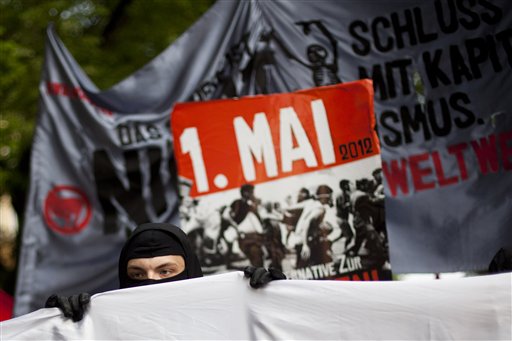
A masked left-wing protester holds a poster as he walks with other demonstrators at a rally to mark May Day in Berlin's district Kreuzberg, Tuesday, May 1, 2012. (Credit: AP Photo/Markus Schreiber)
This article originally appeared on GlobalPost.

BERLIN — Germany’s engineering sector has been hit by an industrial action this week. That’s a sign of just what an island of prosperity Germany has become within the ocean of troubles that is the euro zone.

Global PostWhile workers in many other countries fear for their jobs as their economies tumble into recession, here newly confident labor unions are demanding massive pay rises — and going on strike to get them.

On Wednesday around 30,000 workers in Germany’s vital manufacturing sector downed tools in a coordinated action that affected over 100 companies, including Daimler and Bosch. The strikes continued on Thursday with an estimated 115,000 workers staging a walk out in around 400 companies, including Porsche and Audi, as part of industrial action to secure a hefty 6.5 percent pay rise forGermany’s 3.6 million metalworkers.

Yet, while some workers in troubled countries may look with envy at their German comrades’ brazenness, in fact the action taking place from Berlin to Bavaria could end up being to the benefit of workers in Madrid, Athens or Lisbon.

After all, the stagnating wages of the past 10 years have served to tip the scales decidedly in German companies’ favor, allowing them to boost their competitiveness at a time when wages were soaring in many other euro zone countries.

That, along with actually producing high-quality goods that the rest of the world wants, has been partly to blame for some of the massive disparities within the euro zone, and to the indebtedness of countries that imported all those German goods.

“This has contributed to the imbalances in Europe, and means that Germany is also partly responsible for the current economic crisis in the euro zone,” argues Alexander Herzog-Stein, an economist with the Macroeconomic Policy Institute, a think-tank with links to Germany’s trade unions.

Now, organized labor in Germany could be riding to their fellow Europeans’ rescue, albeit largely out of self interest.

If wage hikes boost domestic consumption back home, it could go some way to correcting the imbalances that have been a hallmark of the monetary union, as German workers spend their wage increases on more products, including imports from other euro-zone states. As such, decent wages in Germany could even help generate much-needed growth elsewhere.

That could be an alternative to brutally slashing jobs and wages in troubled euro-zone countries.

What is certain is that unions here are adamant that wages have not risen fast enough, given Germany’s position as Europe’s industrial powerhouse.

Even in the engineering sector, vital to its export-led economy, wages have stagnated.

Leaders of the metalworkers union, IG Metall say the current employers’ offer of 3 percent is a “farce” and “provocation” and are hoping their action gets them their 6.5 percent. They are also demanding that employers hire apprentices at the end of their training, and that worker representatives have more say over the employment of temporary workers.

Joerg Hoffmann, regional union leader for the wealthy state of Baden-Württemberg, home to Porsche, said that a deal had to be reached by 15 May. “Otherwise we’ll show them the red card.”

The workers in the engineering sector are hoping to emulate other recent successes. Service union Ver.di secured a 6.3 percent pay increase for its 2 million members, following a series of strike actions. And just last weekend Deutsche Telekom agreed to pay its 17,000 employees an overall 6.5 percent increase over two years.

It’s a mark of the revival of confidence among the German trade unions. Now that unemployment has shrunk to its lowest rate in two decades, and with particular industries even complaining of skills shortages, this is a good time to flex their muscles.

It’s a welcome change from their relative weakness over the past decade. Their leverage had already been dented by the mass unemployment that came in the wake of reunification of East and West Germany and the subsequent collapse of East German industry. That was only compounded by the subsequent dot.com crash and the labor-market reforms that made it easier to hire temporary and part-time workers.

The upshot was that in real wage terms, German wages actually decreased over the past decade. Between 2000 and 2007, before the financial crisis even hit, nominal wages only grew by 1 percent, compared to 2.7 percent in the euro zone, and well below the rate of inflation.

At the same time productivity soared. Data released by Germany’s Federal Statistics Office on Monday showed that while average productivity in the European Union had risen by 3.4 percent between 2005 and 2010, in Germany it was 4 percent, compared to 3 percent in France and virtually zero in Italy.

And whereas overall unit labor costs had increased by 6.2 percent in that period, the rise was only 3.6 percent in Germany, and if had not been for the crisis years in 2008 and 2009 when workers were kept on even when orders were slack, those costs would have actually have decreased over the period.

During the crisis the government and companies introduced a short-work scheme that saved many jobs. However, it is also true that during that difficult period, the unions cooperated with employers to keep companies going. Many skilled workers accepted wage cuts or took unpaid leave to help companies get through the slump in demand.

Now it’s payback time. Workers know that Germany’s export sector has been booming and that many of Germany’s industrial giants are raking in the profits. Just last week Volkswagen, Europe’s biggest carmaker, announced a 10 percent increase on its first quarter operating profit to 3.2 billion euros ($4.2 billion) after seeing a record operating profit of 11.3 billion euros in 2011.

“Naturally the workers also read the newspapers, and they read how well the German economy is doing and how it is being praised,” says Herzog-Stein. “And they are asking for their share.”

On Tuesday, the unions were out in force to celebrate May Day, the traditional day of organized labor, and to reiterate their position. “After years of pay cuts in real terms, after years of efforts to help the country through the crisis and helping save many companies and jobs, it’s our turn now,” Michael Sommer, head of the DGB trade union federation said in a speech.

That sentiment was echoed in the banners held up by many union members who took part in the traditional May Day marches. One in Berlin declared, “It’s time to cough up the money.”

Unions are also demanding a general minimum wage of around 8.50 euros ($11) an hour, something that the center-right coalition has so far resisted. However, as Chancellor Angela Merkel moves to the center, hoping to poach voters from the center-left SPD and Greens, she has indicated in recent weeks that she would now back such a move.

There are some economists who worry that the trend toward higher wages, coupled with the ECB’s low interest rates, could lead to Germany’s greatest fear: inflation. However, others argue that in fact a wage hike is long overdue and should not push prices up. “Wages are rising, but this follows a prolonged period of restraint,” Andreas Rees, chief economist at Unicredit in Munich, told Reuters.

And while it could help the rest of Europe if German consumption picked up even further, it could be of benefit to the German economy. For one, it might help offset any slump in demand in recession-hit Europe. After all, even though German exporters have been able to rely on continued demand outside of the continent, particularly from China, the euro zone still accounts for 40 percent of its market.

“If there is not also a boost in domestic demand then Germany will not remain untouched by the euro crisis,” Herzog-Stein argues. “That is why, out of self interest, we need a stronger and more dynamic domestic market.”

Continue Reading Close

The EU austerity disaster

Draconian spending measures are plunging the euro zone deeper into a double-dip recession

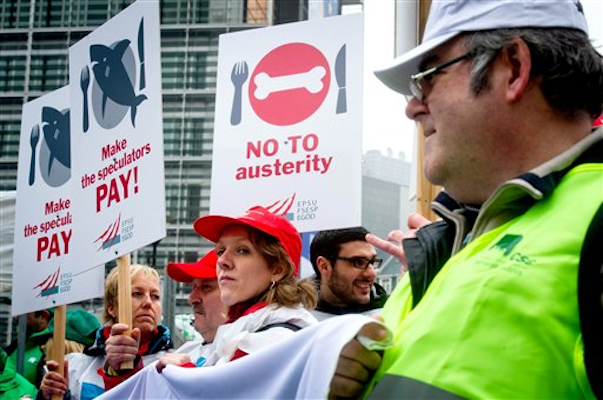
European Trade Union members demonstrate for employment and social justice in front of the EU Council in Brussels, Wednesday Feb. 29, 2012 (Credit: AP Photo/Geert Vanden Wijngaert)
This article originally appeared on GlobalPost.

BERLIN, Germany — Europe is on the hunt for growth, but has little idea where to find it.

Global Post

Many EU countries are being forced to follow a strict austerity path to slash their debts, but these measures seem to be sapping their ability to grow their economies and create jobs.

Some analysts warn that in the absence of measures to boost growth, more bailouts and debt write-downs could be in the cards.

The latest figures are certainly worrying.

The euro-zone economy contracted by 0.3 percent in the fourth quarter of 2011, the EU’s statistics office Eurostat confirmed on Tuesday, and unemployment reached an average of 10.7 percent in January, the highest since the euro was introduced in 1999.

That figure masks the huge discrepancies within the bloc. For example, while Spain’s unemployment is now at 22.9 percent, Austria’s is only 4 percent.

Most attention recently has focused on the drama in Greece, which has required a second bailout in two years to keep from defaulting on its debts.

The embattled country has been prescribed severe austerity in recent years to tackle its alarming public debt mountain, yet the medicine seems to be killing the patient. The Greek economy shrank by 6.8 percent in 2011. The bulk of the new 130 billion euro ($172 billion) bailout will go to lenders rather than being used for any measures to boost growth.

The Greeks are not alone. Ireland and Portugal, the other two recipients of bailouts from the troika of the European Central Bank, the European Union and the International Monetary Fund, have also had to sign up to reforms and punishing public-spending cuts as a condition for the funding.

Portugal in particular is struggling to find growth prospects. Last week, Finance Minister Vitor Gaspar announced that the economy is now expected to contract by 3.3 percent this year, instead of the previous forecast of 3 percent. Unemployment has soared to over 14 percent and the government is even encouraging people to emigrate. Last week President Anibal Cavaco Silva called on the government not to impose yet more austerity on the country’s “new poor.”

And even the austerity drive may not be achieving the government’s aims. Borrowing costs are still prohibitive at 13.07 percent, and Standard & Poor’s recently reduced the country’s rating to junk. “Portugal is doing the best it can to spread the message that we are not Greece, that we are implementing reforms,” said Luis Faria, director of the Lisbon-based Contraditorio think-tank. “But the market is still waiting for credible signals.”

Although Lisbon has managed to cut the deficit from 9.1 percent in 2010 to 5.6 percent last year, that is largely on the back of one-off measures such as transferring banks’ pension funds to the state, says Faria.

He argues that Lisbon will not be able to return to the bond markets any time soon. “It seems obvious now that either another bailout will be negotiated or orderly default will be the solution.”

Meanwhile, Ireland may be the poster boy for European austerity, even managing to see a slight growth of 0.9 percent last year after three years of contraction.

Yet it too is suffering from the negative consequences of austerity. Businesses are struggling and the unemployment figure has soared to over 14 percent, and would probably be higher if it were not for emigration. And while exports have driven the recovery, the rest of the economy is extremely sluggish.

“The prospects are quite poor for Ireland,” said Tom O’Donnell of the TASC think-tank, based in Dublin. “I don’t think it’s accurate to say that we are a successful example of austerity. Austerity has been very damaging, in terms of growth and demand.”

Particularly galling for the Irish is that the punishing cuts and tax hikes are required in large part to pay off the colossal debts of reckless banks who bet on the country’s massive property bubble. The Irish government is currently committed to paying 3 billion euros a year for the next 15 years to the unsecured bondholders of the worst offender, Anglo Irish Bank — a massive burden on such a small country.

With the economy only expected to grow by 0.5 percent this year, the prospects of returning to the bond markets in 2013 are fragile, something acknowledged by the IMF only last week.

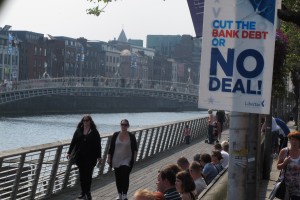
O’Donnell says that many economists believe that Ireland will probably require a second bailout, which would be under the auspices of the European Safety Mechanism, the new rescue fund. That may well be a consideration for Irish voters who face a referendum on the fiscal pact, as its ratification is a precondition for the rescue fund’s support.

Continue Reading Close

Can Greece thwart a complete meltdown?

The government's austerity measures sparked violent protests -- and still aren't enough to guarantee an EU bailout

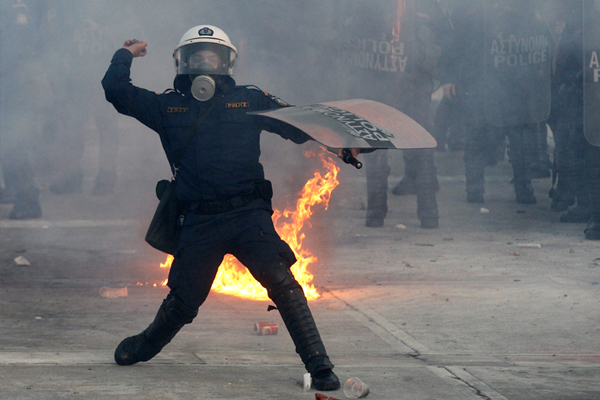
A riot police officer throws a stone at demonstrators during violent protests in Athens' Syntagma (Constitution) square February 12, 2012 (Credit: Reuters/Yiorgos Karahalis)
This article originally appeared on GlobalPost.

BERLIN, Germany — Amid growing unrest, Greece’s government has finally approved tough austerity measures, yet it is far from certain if the deal will be enough to avert disaster.

Global Post

As lawmakers in Athens debated a bill Sunday that would impose yet-more severe austerity on the country, outside the parliament building tens of thousands of people gathered to voice their opposition to the deal. Violence flared, as buildings were set on fire, and the police engaged in running battles with rioters.

Around 150 shops were looted and over 40 buildings, including the Attikon, a 19th-century theater-turned cinema, were torched. Unrest also flared in the second largest city of Thessaloniki, and on the islands of Corfu and Crete.

The violence may have been perpetrated by a minority, but there is little doubt that the onslaught of yet more cuts to wages, spending and public jobs is massively unpopular in Greece.

And the crisis is far from over. The Greek government will be under pressure to deliver on the promises it has made to the international troika of lenders — the European Central Bank, European Union and International Monetary Fund — if it is to secure the 130 billion euro ($172 billion) bailout it needs to evade default.

The next hurdle for Greece is the meeting of euro zone finance ministers on Wednesday. The government, headed by Prime Minister Lucas Papademos, will have to convince the Eurogroup that Athens can come up with yet another 325 million euros in budget savings after political leaders refused to cut pensions. The troika is also demanding written commitments from politicians to implement the deal after April elections.

Athens is also expected to inform the euro zone ministers of a planned debt swap deal with private lenders, which should slash 100 billion euros from Greece’s massive debt burden.

Europe’s Economic Affairs Commissioner Olli Rehn welcomed the parliamentary vote as a “crucial step” on Monday, adding that he was confident that the Greeks would identify the concrete measures for the further 325 million in cuts before Wednesday’s meeting.

German Economics Minister Philipp Roesler cautiously welcomed the Greek parliament’s move but made it clear that German approval of the bailout was not inevitable. “Now we need to wait and see what comes after the legislation,” Roesler told public broadcaster ARD.

“We have taken one step in the right direction but we are still far from the goal,” he said.

Berlin is waiting until the troika release a report on Greece’s debt sustainability before the Bundestag votes on whether to back the bailout on February 27.

Many countries in the euro zone, particularly Germany, are wary of ploughing more money into Greece based on the latest pledges, considering the commitments it made in May 2010 for the first bailout of 110 billion have not been kept.

Greece has struggled to stick to the troika’s targets to cut the deficit while it continues to grapple with the affects of five years of recession.

Now it is being forced to implement even fiercer cuts, which critics say will just push Greece further into a downward spiral. On Sunday the Greek parliament backed the package, including a 22 percent reduction in the minimum wage and 150,000 job cuts in the public sector by 2015.

Despite the refusal of 43 members of the coalition parties to back the deal, the legislation still passed comfortably with 199 votes in favor and 74 against. The two biggest parties – the socialist PASOK, and conservative New Democracy – backed the deal, while the right-wing populist LAOS party refused to do so, and withdrew its support for the technocratic government.

“The full, timely and effective implementation of the program won’t be easy,” Papademos told parliament on Sunday. “We are fully aware that the economic program means short-term sacrifices for the Greek people.”

With a 14.5 billion euro bond repayment due on March 20 the pressure has been on to get a deal in place to avoid a Greek bankruptcy.

However, the austerity measures that are a pre-condition of the bailout money, leave little prospect of Greece returning to a path of growth any time soon.

“Yesterday’s vote in the parliament may have saved the country temporarily from default, but the Greek economy is going bankrupt and the country’s political system is failing,” the head of the Greek Commerce Confederation, Vassilis Korkidis, said in a statement.

Continue Reading Close

Why Germany opposes a powerful euro solution

Despite rising international pressure, Merkel refuses to allow the ECB to act as the lender of last resort

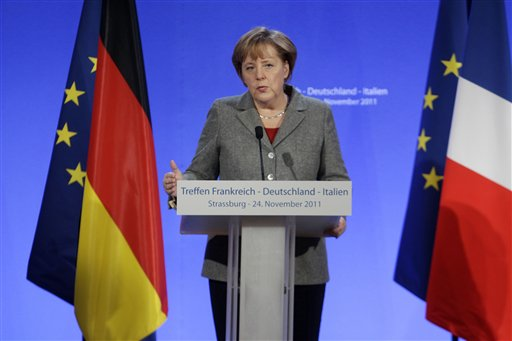
German Chancellor Angela Merkel(Credit: AP Photo/Michel Euler)

BERLIN, Germany — With the debt conflagration now blazing across Europe’s borders, the world is urging the euro zone’s leaders to staunch it by unleashing the powers of the European Central Bank.

Global Post

Many European leaders are advocating this as well. The problem: Germany is resolutely opposed to this.

The stakes could hardly be much higher. Forget about tiny Greece, Portugal and Ireland. Italy, the zone’s third largest economy, owes $2.55 trillion. It will have to refinance a staggering $530 billion next year alone, and investors are currently demanding unsustainable rates, in excess of 7 percent. Meanwhile, France’s interest rates are rising, and ratings agencies are threatening its AAA status. Even Germany — the continent’s economic powerhouse — is having trouble financing itself.

Fear is mounting that Europe’s debt crisis could rage out of control, ultimately causing the breakup of the currency union or worse.

The most surefire solution would be for the ECB to declare that it would act as a lender of last resort. That option would require a change in the bank’s charter, but it wouldn’t even demand taxpayer money, given that the central bank can simply print it.

In a dramatic speech, Polish Foreign Minister Radosław Sikorski virtually implored Chancellor Angela Merkel to act. “I fear German power less than I am beginning to fear German inactivity,” he said in Berlin on Monday. “You have become Europe’s indispensable nation. You must not fail to lead.”

A New York Times editorial characterized Germany’s stubborness more succinctly, calling it “absurd.”

Despite this rising chorus of pleas, Germany still says “nein” to using the ECB. (The country is also rejecting another powerful option, of issuing euro bonds that would pool the zone’s credit rating, reducing costs for the highly-indebted nations that are straining the continent, but increasing the cost for more fiscally-disciplined countries.)

So is Germany’s refusal really absurd, as The Times suggests? What exactly are its leaders thinking?

Analysts say that firing up the ECB’s printing presses to solve the crisis is something that goes deeply against the grain here. Instead Germany has been pushing austerity on indebted countries and calling for closer coordination of the euro zone’s spending and budget policies and tough sanctions on those who break the rules.

Some experts say Chancellor Angela Merkel is simply playing hardball, holding out on the issues of the ECB and eurobonds in exchange for concessions.

“Mrs. Merkel’s position has been to use the pressure that is exerted by the markets to help push countries that have budget or generally public finance problems towards a much stronger reform drive,” said Timo Klein, senior economist with IHS Global Insight. He adds that she is using that same pressure to try to make changes in the EU treaties to allow for greater budget supervision. “Obviously this is a high risk strategy,” he adds.

But Berlin also disagrees with its foreign detractors regarding the wisdom of using the ECB as a lender of last resort. “If this were to be seen as a standard procedure in future — that the ECB would be obliged to buy up large quantities of government bonds — then that is nothing else than monetizing that debt, and then before long you will have noticeable increases in inflation,” Klein said. (Printing currency essentially means that more money is chasing the same goods, which drives up prices.)

Inflation is profoundly worrying to Germans, due to the traumatic experience of hyperinflation in the early 1920s, when the personal assets of the majority of the population were wiped out. “That fear is so deeply ingrained, almost 90 years on, this is still very much present on people’s minds,” Klein said.

“Germans are probably more inflation averse then people in other countries,” said Sebastian Dullien, professor of international economics at Berlin’s HTW University. But he adds that they have become more concerned with inflation recently than they were between World War II and reunification, even though inflation was actually higher then. One possible explanation, he says, is that wages have stagnated in Germany, meaning that even slight inflation eats into people’s spending power more.

Moreover, where other see a necessary bailout, Germans see a handout to countries that are living beyond their means. They regard this as letting them off the hook for their profligate ways. Berlin is convinced that only by imposing stringent sanctions on these debt sinners will they enact reforms. It also sees this as the best way to win back market confidence.

This is a view many German economists share. “In Germany there is this feeling that if you just cut spending strongly enough then confidence will return and you will have more investment,” Dullien said. He points out, however, that market panics show that financial markets are not always efficient and don’t always process information adequately.

Nevertheless the thinking in Germany is that inflationary policies are wrong-headed in that they might cover up the cracks but don’t address the real issues.

“The use of the ECB will not solve this problem in the long term,” said Matthias Kullas, of the Center for European Policy, a conservative think tank based in Freiburg. “It can only buy time. The basic problem is that the euro zone is a suboptimal currency union, in which the states’ competiveness differs so widely.” That breeds imbalances that inevitably lead some countries to become indebted.

The German government, Kullas argues, wants to make sure that Europe gains the power to supervise budgets before it resorts to the ECB or eurobonds. “If the ECB is used before that is agreed, then many states would quickly give up their efforts to reform.”

The government also knows that it will have to wrest concessions at the forthcoming December 9 summit in order to placate voters back home. The bailouts have been deeply unpopular among Germans, who see their taxes flowing to others less disciplined than themselves. Indeed, at times Merkel has seemed paralyzed by the prospect that the electorate will punish her for throwing German taxpayers money at the problem.

“Merkel [has] always acted tactically in this crisis,” said Dullien. “She always tried to do what was most popular but she didn’t have a strategy and didn’t know where she actually wanted to end up.”

It is certainly true that Merkel has not effectively explained to her citizens what is at stake. “The story might have been different,” Dullien argued, “if she had stepped up and said: ‘The euro is vital to German national economic interest. It’s not out of altruism that we are doing it. It’s just because we are [heavily] export-dependent — this is what we need to do.’”

In fact German businesses are becoming increasingly uneasy at the way the crisis is dragging on. “It is important that the euro crisis be solved as quickly as possible,” says Anton Börner, president of BGA, Germany’s leading exporters association. “Not just for Germany but for the whole world. This uncertainty is very difficult to cope with and cannot be allowed to continue. Uncertainty is always bad for business.”

Nevertheless, while from the outside Merkel seems to be dragging her feet in the crisis, for many in Germany she has already gone too far. “She is clearly caught in a dilemma between domestic political demands and foreign calls on her,” Klein added. “That is a very difficult position, and she’s trying to muddle her way through.”

Analysts are convinced that in the end Merkel and the other leaders will come to some kind of compromise agreement. “I think the fear of a euro zone break up is simply too great,” Kullas says. “No one will want to be responsible for that.”

Continue Reading Close

Page 1 of 2 in Siobhan Dowling