
Steve Kornacki

Chris Christie picked the wrong guy to call a liar

Bret Schundler, the man New Jersey's governor insulted and fired, is fighting back -- and he's got e-mails

  • more
    • All Share Services

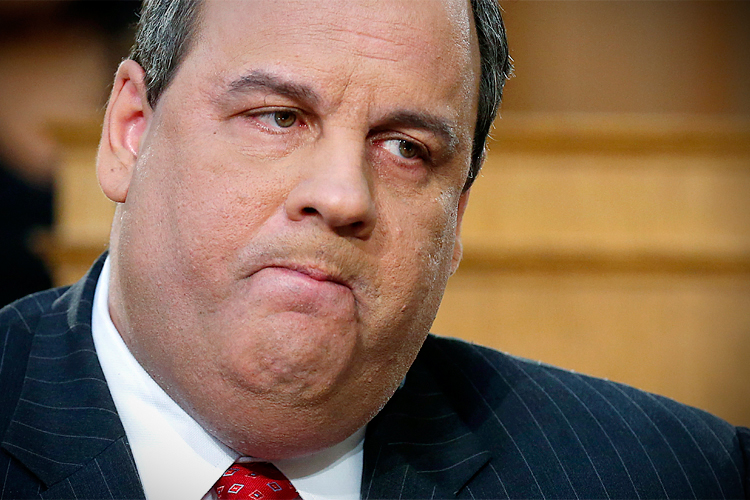
Chris Christie picked the wrong guy to call a liarNew Jersey Gov. Chris Christie leaves the new Meadowlands football stadium after news conference on Wednesday, July 21, 2010, in East Rutherford, N.J. Christie announced the findings of a panel that reviewed the state's gambling, entertainment and sports industries. The recommendations include a nearly complete state takeover of Atlantic City's casino district, closing the Meadowlands Racetrack and selling the Izod Center. (AP Photo/ Mel Evans)(Credit: Mel Evans)

You can certainly understand why Chris Christie threw his education commissioner, Bret Schundler, under the bus last week. After all, it was Schundler’s department that botched the state’s “Race to the Top” application, costing New Jersey five points on its application — the difference between $400 million in federal money and nothing.

But Christie, the state’s first-year governor, didn’t just fire Schundler for incompetence: He called him a liar. Loudly and repeatedly. He felt this necessary because when the news of the botched application first broke last Wednesday, Christie publicly blamed the Obama administration, claiming that Schundler had supplied the data that was missing from the application — budget numbers for the years 2008 and 2009 — in advance of his formal hearing with the federal Department of Education. The real blame, Christie insisted, was with Obama’s army of inflexible bureaucrats.

“That’s the stuff the Obama administration should answer for,” he thundered. “Are you guys just down there checking boxes like mindless drones, or are you thinking? When the president comes back to New Jersey, he’s going to have to explain to the people of the state of New Jersey why he’s depriving them of $400 million that this application earned.”

This argument quickly unraveled when a videotape of Schundler’s hearing was released, showing that the education commissioner and his team were blindsided by the error and unable to provide the missing data. When that tape emerged, Christie changed gears, branded Schundler a liar and fired him.

“Don’t lie to the governor. That’s the message,” he declared.

But there’s a problem with that version, too: Schundler didn’t lie to Christie, and now he’s going public with e-mails that prove it. The e-mails, between Schundler and Christie’s communications director, show that Schundler was upfront with the governor’s team about his failure to provide the feds with the correct data. And in a separate personal account of last week’s events released with the e-mails, Schundler describes a phone conversation with Christie on the morning that Christie blasted the Obama administration:

The Governor said he was angry about the missing information in our grant application, but that no one was going to lose their job over it. He said he was about to do a press conference about the matter, and that he believed it is always better to be on offense than defense, so he would accept responsibility for the error, and then go on offense against the Obama Administration. He was going to try to make the story about their picayune rules. He was going to say that I gave the reviewers the missing information, but the Obama Administration refused to give us the points we deserved, and that this showed they put bureaucratic rules above meaningful education reform.

It’s pretty obvious what happened here. Christie, in his first seven months in office, has racked up plenty of favorable press coverage with his blunt, plain-spoken style. He’s crafted a powerful image as a common-sense governor at war with the bureaucrats and special interests that have ruined his state. 

But there’s no room in this narrative for clerical mistakes that cost the state $400 million. So from the minute the story broke, the search was on for a scapegoat — and the Obama administration made for a perfect target. And it might have worked, too, had Schundler’s hearing with the feds not been videotaped. If that had been the case, then it would have been Christie’s word against Obama’s, a winning bet right now for the governor. But it was taped — something Christie didn’t realize. As Schundler himself puts it now: 

I have thought about the possibility that beyond my being a scapegoat for his misstatement, the Governor might be angry at me for not telling him the interview was videotaped. In my defense, I never believed I needed to say, “Governor, stick to the truth, there’s a videotape.” Perhaps I should have.


The GOP’s new fake racial history

A Southern Republican with designs on challenging Barack Obama in 2012 offers a phony version of history

  • more
    • All Share Services

The GOP's new fake racial historyHaley Barbour

Almost 50 years ago, the Republican Party made a decision to embrace the backlash generated by civil rights among white Southerners.

Traditionally, they had been staunch Democrats, but they were also culturally conservative, and as Lyndon Johnson and the Democratic Party embraced civil rights once and for all, they were up for grabs. The Republican Party offered them a home, a steady, decades-long realignment ensued, and today conservative Southern whites comprise the heart of the GOP — just as culturally liberal Northerners, who called the GOP home before civil rights, have migrated to the Democratic Party.

There’s nothing new about this story. In fact, it’s the story LBJ himself predicted when he signed the Civil Rights Act in 1964 and supposedly mused, “There goes the South for a generation.”

But it’s an inconvenient story for today’s Republican Party, which still relies on cultural, racial and ethnic wedge issues to keep its base in line — but which also needs to win over less conservative suburbanites across the country to compete in national elections. And it’s a particularly inconvenient story for Haley Barbour, the 62-year-old Mississippi governor who aspires to run as the Republican nominee against the nation’s first black president.

So Barbour has invented his own sanitized, suburb-friendly version of history — an account that paints the South’s shift to the GOP as the product of young, racially inclusive conservatives who had reasons completely separate and apart from racial politics for abandoning their forebears’ partisan allegiances. In an interview with Human Events that was posted on Wednesday, Barbour insists that “the people who led the change of parties in the South … was my generation. My generation who went to integrated schools. I went to integrated college — never thought twice about it.” Segregationists in the South, in his telling, were “old Democrats,” but “by my time, people realized that was the past, it was indefensible, it wasn’t gonna be that way anymore. So the people who really changed the South from Democrat to Republican was a different generation from those who fought integration.”

This is utter nonsense.

For a century after the Civil War, the South was deeply and overwhelmingly Democratic, a consequence of the “humiliation” visited upon white Southerners by the Republican-initiated Reconstruction that followed the Civil War. The level of support enjoyed by Democratic candidates in the region is almost too astronomical to fathom now. In 1912, Woodrow Wilson took 42 percent of the vote nationally in a four-way presidential contest. But in South Carolina, he snared 95 percent. In Mississippi, 88 percent. While he was grabbing 60 percent nationally in 1936, Franklin Roosevelt scored 97 percent in Mississippi and nearly 99 percent in South Carolina. The region’s congressional delegation was uniformly Democratic — and, thanks to the South’s one-party status, disproportionately influential, with lifelong incumbents taking advantage of the congressional seniority system to secure the most powerful committee gavels.

For decades, they comfortably coexisted in the national Democratic Party’s other major source of support, the machine-folk of the urban North. But as civil rights became a national issue — and as the Great Migration of Southern blacks to the cities of the North and West turned civil rights into a priority for Democrats outside the South — the coalition began to splinter. When the party ratified a civil rights plank at its 1948 convention, Southern Democrats staged a walkout and lined up behind Strom Thurmond, South Carolina’s governor and (like all Southern Democrats of the time) an arch-segregationist. Running under the Dixiecrat banner, Thurmond won four Deep South states that fall.

Throughout the ’50s and early ’60s, Southern Democrats sat in political limbo. Their national brethren were inching their way toward a full-on embrace of civil rights, but the GOP wasn’t much of an alternative, not with Dwight Eisenhower endorsing integration and not with the party’s Northern-dominated congressional ranks strongly backing civil rights legislation.

1964, though, is what changed everything. In signing the Civil Rights Act, LBJ cemented the Democrats as a civil rights party. And in nominating anti-civil rights Barry Goldwater for president (instead of pro-civil rights Nelson Rockefeller) the GOP cast its future fortunes with the white electorate of the South. LBJ trounced Goldwater nationally that fall, winning more than 60 percent of the popular vote. But in the South, voters flocked to the Republican nominee, with Goldwater carrying five states in the region. Mississippi, the same state that had given FDR 97 percent of its votes 28 years earlier, now gave Goldwater 87 percent. That fall, Thurmond, now a senator, renounced his Democratic affiliation once and for all and signed up for Goldwater’s GOP. The realignment was well underway, and it had everything to do with race.

All of this, mind you, happened before Barbour — who claims that his generation led the South’s migration to the GOP for non-racial reasons — was old enough to vote. And while it did take a few decades to solidify the South as a top-to-bottom GOP stronghold, you can draw a straight line from the GOP’s embrace of Goldwater and his segregationist allies in ’64 through Richard Nixon’s Thurmond-aided Southern Strategy and Ronald Reagan’s 1980 embrace of “states’ rights” in Philadelphia, Miss., and to the present day, when Republican candidates routinely win 85 percent of the white vote in statewide elections in the Deep South.

Actually, Barbour’s account of his own civil rights-era political coming of age, which he relates in a different part of the Human Events interview, tells the story of the South’s partisan transformation very well. His father and grandfather, he notes, were both Democrats — “Eastland Democrats,” to be precise.

That would be James Eastland, an ardent segregationist senator who represented Mississippi from 1943 to 1978. Dubbed “the voice of the white South,” Eastland declared that Brown v. Board of Education “destroyed” the Constitution and that segregation was the “correct, self-evident truth” and “the law of nature.” When three civil rights workers in Mississippi disappeared in the Freedom Summer of ’64 (they were murdered, it turned out), Eastland privately told LBJ that no one had really disappeared — that it was all “a publicity stunt.”

Eastland, like many Southern segregationists, remained in the Democratic Party even after civil rights. But he aligned himself with the Nixon administration — there’s that Southern Strategy again — and regularly voted with the GOP.

Barbour, too, aligned himself with Nixon, signing up with the Republican’s 1968 presidential campaign, when he was just 20 years old. In the Human Events interview, he casts this as a risky, against-the-grain decision, since there were so few Republicans in the South back then, but it really wasn’t; remember, Mississippi had just given 87 percent of its votes to the Republican presidential candidate in ’64.

And why did Barbour join the GOP? “I don’t know what possessed me, other than my oldest brother came home from the Army a Goldwater Republican in 1965.” In other words, his brother — a member of Barbour’s generation, the generation that supposedly didn’t see race — left the Democratic Party just as LBJ signed the Civil Rights Act, just as the Republicans nominated a civil rights opponent for president, and just as almost every white Mississippi voter crossed party lines to vote for that civil rights foe and brought young Haley along with him. But race had nothing to do with it!

In Barbour’s revisionist history, old segregationist Democrats from the South stood in the way of integration in the ’50s and ’60s, but then a new, enlightened generation of post-racial conservatives came of age and transformed the region into a Republican bastion for … some other reason.

In reality, the Republicans’ domination of the South today is a direct result of the party’s rejection of civil rights in ’64 (and Nixon’s Southern Strategy, which called for coded appeals and behind-the-scenes assistance to Southern bigots). The partisan disparities in Southern elections speak to an enduring racial divide: While Barack Obama won nearly 45 percent of the white vote nationally in 2008, he got just 11 percent in Mississippi and 10 percent in Alabama.

It’s understandable why Barbour doesn’t like to talk about this — and why most national Republicans would rather ignore it. The South is critical to them, and their support in that region comes almost exclusively from white voters. But to be a national party — and to win the White House — requires votes from educated suburbanites outside the South who have a strong distaste for racial politics. Thus, the party takes pains every four years to showcase as many black Republicans as it can at its national convention — a message not so much to black voters but to white suburbanites who want reassurance that they’re not voting for a Goldwater party.

This balancing act is especially critical to Barbour, who knows the suspicions he’ll face from those suburban swing voters if he ends up challenging Obama in ’12. If he can get them to believe his whitewashed version of history, it’ll be a lot easier to win them over.

Continue Reading Close

Why Russ Feingold should really be worried

He's survived close calls before, but this year is starting to look different

  • more
    • All Share Services

Why Russ Feingold should really be worriedSen. Russ Feingold (D-Wis.)

The New York Times has a lengthy story today about Russ Feingold’s unexpected reelection struggle in Wisconsin, but it’s not exactly news. Polls have shown the three-term senator under 50 percent and in a dogfight with his likely GOP foe, businessman Ron Johnson, for a while now.

Nor is it the first time Feingold has faced a difficult fall race. In his three successful Senate campaigns, his winning margins have been seven, two and 12 points and he’s never secured more than 56 percent of the vote. It’s tempting to think that this battle-tested past will help Feingold survive this year, but there’s a big — and potentially decisive — difference between his previous campaigns and this year’s: the national climate. Never before has he run with swing voters so predisposed to vote against the Democratic Party, and with such an apparent enthusiasm gap between the two parties’ bases.

Here, the story of Feingold’s 1998 reelection victory — a two-point squeaker — is instructive. On paper, Feingold probably should have lost the race: ’98 was the sixth year of Bill Clinton’s presidency, and since 1822 every president’s party had suffered losses — sometimes significant — in “six-year itch” elections. The GOP recruited an up-and-coming congressman, Mark Neumann, to challenge Feingold and the national party marked the seat as one of its top takeover opportunities. Then, as now, Feingold was attracting less than 50 percent in polling around Labor Day, and by late October, Neumann actually charged into the lead in several polls.

But something funny happened on Election Day: The Republican base did not turn out in big numbers while the Democratic base — particularly union voters — did. Plus, moderate swing voters, who would typically vote against the White House party in a six-year itch election, were unexpectedly friends to Democrats. This was partly due to a massive national turnout effort from the AFL-CIO, but the bigger reason was the GOP Congress’ drive to impeach Clinton over the Monica Lewinsky saga. The House hadn’t yet taken formal action against Clinton, but its leaders spent the campaign steadfastly moving toward impeachment — even as poll after poll warned them not to. In the November election, self-identified moderate voters opted for Democrats by a 54-43 percent margin — with 60 percent of all voters saying they were upset by the GOP Congress’ Clinton/Lewinsky posture.

This backlash, coupled with the AFL-CIO’s outreach and the failure of Neumann’s partial-birth abortion message to motivate cultural conservatives, was just enough to rescue Feingold. Nationally, Clinton became the first president since James Monroe to see his party win seats in his sixth year. 1998 stands as one of political history’s great exceptions: a midterm election in which the normal rules didn’t apply.

But they do apply this year — more so than usual. Unemployment and economic anxiety are high, and economic growth is stalling. And with Democrats controlling the White House and both houses of Congress, swing voters — who possess little collective memory or foresight — are strongly inclined to latch onto the GOP as a protest vehicle. Feingold, whose other Senate victories came in 1992 (when Bill Clinton defeated George H.W. Bush) and 2004 (a tight presidential election in which John Kerry narrowly carried Wisconsin), has never faced this kind of headwind. Just as a backlash against the GOP Congress bailed him out at the last minute in ’98, it’s not hard to see the anti-Democratic tide taking him down at the end of this race.

Continue Reading Close

It’s official: Murkowski concedes Alaska vote

For the third time this year, a sitting senator fails to win renomination

  • more
    • All Share Services

It's official: Murkowski concedes Alaska voteU.S. Sen. Lisa Murkowski, R-Alaska, right, joins volunteers to wave to motorists on Monday, Aug. 23, 2010, in Anchorage, Alaska. Candidates are pulling no punches in their last minute push for voters in Tuesday's primary. The greatest proof of this is in the U.S. Senate race where Sarah Palin has re emerged months after first endorsing GOP challenger Joe Miller to urge Alaskans to support him and to oust Murkowski. Murkowski's not shying away, running a new radio spot of her own, called "Truth," in which she uses audio from a talk show host's tirade against Miller to show Miller as distorting her record. (AP Photo/Mark Thiessen)(Credit: AP)

Whatever suspense there was is now gone. After a day of absentee ballot-counting failed to significantly dent Joe Miller’s lead, incumbent Lisa Murkowski formally conceded the Alaska GOP Senate primary on Wednesday night.

With her decision, Murkowski is now seemingly out of options. It’s too late to mount an independent bid for the fall and the Libertarian Party, which has its own ballot line, has publicly rejected the idea of switching out its nominee in favor of Murkowski. The only other way Murkowski could retain her seat now would be through a write-in campaign, but that’s not going to happen.

Murkowski’s relatively quick concession (by the standards of Alaska, where it takes much longer to tally votes), can be viewed as a pragmatic move. Dragging out the process further with litigation and recount demands was unlikely to overturn the result — but it would have allowed Miller to further poison her reputation with the GOP base by continuing to accuse Murkowski of trying to “pull an Al Franken.” And that, in turn, would have made it far more difficult for the 53-year-old Murkowski to mount a comeback bid sometime in the future.

The question now is whether the right-wing Miller’s candidacy will give the Democrats an unexpected opportunity for a Senate pick-up this fall. The idea gained some steam with a PPP poll two days ago that showed Miller just eight points ahead of the Democratic nominee, Scott McAdams. But it’s hard to believe McAdams will put up much of a fight. Alaska is simply too conservative — and the climate of 2010 is simply too hostile to Democrats, especially in contests for federal office.

The only Democrats to score major wins in the state in the recent past both benefited from extenuating cirumstances: Tony Knowles eked into the governorship in 1994 when a right-wing independent candidate split the GOP vote, and Mark Begich edged out Ted Stevens in 2008 thanks primarily to Stevens’ conviction on federal corruption charges days before the election (it also helped Begich that the national climate was unusually favorable to Democrats in ’08). If Murkowski had managed to finagle the Libertarian nod, maybe there’d now be a theoretical victory scenario for McAdams. But in a two-way race in 2010, here’s guessing whatever swing voters there are in Alaska break pretty decisively to the candidate without a “D” after his name.

Continue Reading Close

We came so close to never meeting Sarah Palin

Two years ago this week, a 72-year-old man's arbitrary impulses made Sarah Palin a star

  • more
    • All Share Services

We came so close to never meeting Sarah PalinFormer Gov. Sarah Palin speaks at the Glenn Beck "Restoring Honor" rally in front of the Lincoln Memorial in Washington, Saturday, Aug. 28, 2010.(AP Photo/Alex Brandon)(Credit: AP)

Two years ago this week, John McCain woke up in a particular mood and changed American politics and culture. You remember how it happened: As Barack Obama prepared to deliver his acceptance speech at Denver’s Mile High Stadium On Aug. 28, 2008, word leaked that McCain, whose own convention would begin a few days later, had finally decided on a running mate. But who?

For once, the press was genuinely stumped. McCain had been unusually successful at shielding his deliberations. The consensus of the political class was that he would tap Tim Pawlenty — not because Pawlenty was a particularly compelling prospect, but only because the rest of the names supposedly in the mix made little sense. Joe Lieberman was anathema to the base, Tom Ridge was pro-choice, and Mitt Romney was on McCain’s enemies list, and so on. No one really made sense, so Pawlenty it was.

Only the next morning, as confusing early news reports that many observers initially disbelieved began to sink in, did it become clear that McCain had tapped the little-known first-term governor of Alaska. And almost immediately, it also became clear just how impetuous his selection of Sarah Palin was — how little McCain and his team had actually known about the 44-year-old, and how little she knew about the world.

Not that it mattered. Palin was an instant political and cultural sensation — and she’s proven to be an enduring one, too. But as we mark the second anniversary of her national debut, it’s worth remembering just how arbitrary the whole thing was. The only reason anyone knows Sarah Palin’s name today, the only reason she’s become a media and marketing powerhouse, the only reason she’s become the most sought-after endorser in Republican politics, the only reason she up and left as governor in the middle of her term, and the only reason she might run for president in two years is because of the gut call made by one 72-year-old man.

Every four years, when it comes time for a presidential nominee to pick his or her running mate, we are reminded — over and over — that the decision is important because the running mate may soon be a heartbeat away from the presidency. And the months leading up to the pick are filled with media commentary about the potential electoral implications of every person thought to be on the running-mate short list.

But Palin’s story shows how all of this can miss the mark. She and McCain never came particularly close to winning the White House, and for all of the attention she received, it’s doubtful her presence cost (or gained) the GOP ticket a single state in the ’08 election. But look at the role she’s playing in politics today. The real significance of a running-mate selection, then, is simply that it marks the introduction of a new force into the political/media mix — a force that could have a major and unanticipated impact on the country’s future.

Palin is the most extreme example of this, since she was so thoroughly unknown and because she generated such strong personal reactions from voters. If McCain had opted for Pawlenty instead, Palin’s presence in national conversation would probably be limited today to a handful of bloggers trying to draw attention to her — and being met with a wall of indifference.

But even a well-worn pol can morph into a new force if he or she is chosen as a No. 2. The example of Dick Cheney leaps to mind. Politically, Cheney was an afterthought in the summer of 2000, when he headed up George W. Bush’s V.P. search team. After his term as George H.W. Bush’s defense secretary ended in 1993, Cheney had set out to run for president in 1996, but his utter lack of charisma yielded poor reviews and he worried about the implications of his daughter’s sexuality, which wasn’t yet public knowledge. So Cheney took a pass, moved to Texas, and racked up a fortune as Halliburton’s CEO. His days as a candidate for office were over — until Bush put him in charge of the V.P. hunt.

Spying an opportunity to jump back in the game, Cheney recommended himself to Bush. Ultimately, Bush’s decision came down to Cheney and one other man: John Danforth, a former Missouri senator and ordained Episcopalian priest whose political moderation was fast becoming archaic within the GOP. At the time, it seemed as if Bush was picking between two boring white guys, and when he chose Cheney, he was saluted by the press for adding “gravitas” to the ticket by choosing a wise, seasoned party elder.

Of course, Cheney proved to be something far different as V.P., amassing and exercising extraordinary influence, especially during Bush’s first term. In essence, Cheney seized on the vacuum created by Bush’s inexperience and hands-off style. It’s pretty much unimaginable that Danforth would have shared Cheney’s obsessions with executive power and Middle East militarism, much less the backroom savvy that Cheney demonstrated in pushing his agenda.

Indeed, the most consequential foreign policy and national security voices in the Bush administration  belonged to Cheney loyalists, many of whom owed their slots to him: Donald Rumsfeld, Paul Wolfowitz, Scooter Libby, Doug Feith and John Bolton, to name a few. How different would Bush’s brain trust have been with a different vice-president? And how differently might that brain trust have responded to 9/11? It’s all the consequence of one midsummer decision by Bush in 2000.

Other recent running-mate picks have proven momentous. Take Michael Dukakis’ decision to team up with Lloyd Bentsen in 1988. A conservative Democrat from Texas, Bentsen had briefly — and disastrously — sought his party’s presidential nod in 1976. But by ’88, at the age of 68, his White House ambitions seemed a thing of the past — and they would have stayed that way had Dukakis instead chosen John Glenn, his other V.P. finalist.

But on the national stage in the fall of ’88, Bentsen delivered one of the most memorable lines in American political history, his “you’re no Jack Kennedy” rebuke of Dan Quayle. Bentsen’s presence did nothing to help Dukakis in November, but he emerged from the race as something of a Democratic folk hero, his stature elevated in the same way Mario Cuomo’s had been by his electrifying convention address in 1984. That, in turn, made Bentsen an unlikely White House prospect for 1992 — especially when every other big name Democrat refused to enter the race, scared off by George H.W. Bush’s post-Gulf War popularity. Had Bentsen wanted it, he very likely could have secured the ’92 nomination, though he too passed on the chance to run. Still, he wouldn’t have even been an afterthought had Dukakis not picked him, of all people, to join the ’88 ticket.

To be sure, not every running mate turns into a star or assumes a mighty policy-making perch. Jack Kemp’s stint as Bob Dole’s No. 2 in 1996, for instance, was utterly unremarkable: Dole plucked him from the political sidelines that August, and Kemp promptly returned to the sidelines when the election ended, his reputation neither enhanced nor ruined. It was as if he’d never run at all.

Still, as Bentsen showed in ’88, Kemp could have emerged as a new force in politics. The unparalleled visibility that comes with running on a national ticket gave him the opportunity. He just did nothing with it. Not so with Sarah Palin, though. She’s been a phenomenon from the moment she and McCain held their first rally in Dayton two years ago. And she didn’t need to run in any primaries to make it to that stage, nor did she need national name recognition or money: All it took was McCain waking up one day in just the right mood. In our quirky system, that can be worth more than a lifetime of work. 

Continue Reading Close

Tea Party out for fresh blood in Delaware, N.H.

Is Rep. Mike Castle about to become the next Lisa Murkowski?

  • more
    • All Share Services

Tea Party out for fresh blood in Delaware, N.H.Ovide Lamontagne

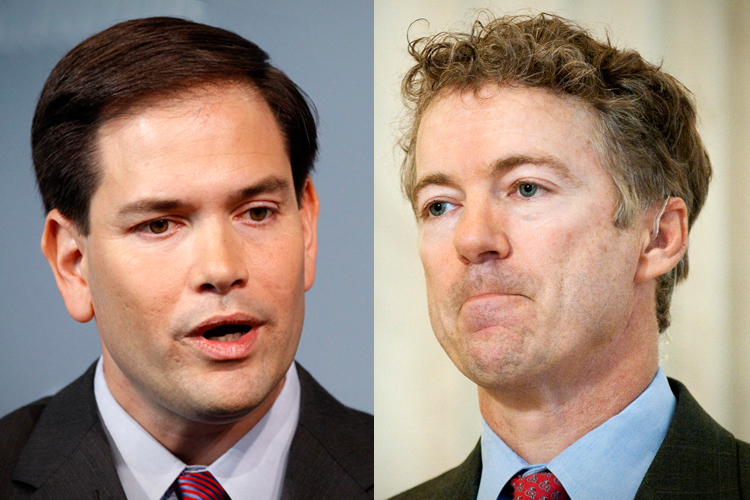
The Tea Party may not be quite done complicating the GOP ‘s chances of winning back the Senate this fall. In primaries in several states this year, the party’s restive base — a.k.a. the Tea Party — has united to knock off establishment-backed candidates, nominating insurgents with dicey fall prospects. Sharron Angle in Nevada and Rand Paul in Kentucky are prime examples.

And the past two days have brought two fresh reminders that more insurgents could still sneak through.

In Delaware, the news is that the Tea Party Express — whose $600,000 ad campaign helped key Joe Miller’s apparent upset of Sen. Lisa Murkowski in last week’s Alaska GOP primary — is set to launch a TV and radio campaign on behalf of little-known Christine O’Donnell, who is running against longtime Rep. Mike Castle in a September 14 Senate primary. To date, the contest has attracted scant media attention (and polling), and it’s been widelt assumed that Castle, who served eight years as governor before claiming the state’s lone House seat in 1992, would prevail with ease.

But as last week’s Alaska jolt demonstrated, it’s not always easy to see these Tea Party upsets coming, and in Delaware the rough formula exists: an establishment favorite — Castle is among the most moderate Republicans in the House — who currently holds statewide office facing a right-wing outsider with some impressive conservative credentials (and now, thanks to the Tea Party Express, with some valuable outside help). 

The small size of the GOP primary universe in Delaware could help O’Donnell, too, and if she does somehow win, it would severely complicate the GOP’s Senate math. It has been assumed all year that Castle would be the state’s next senator: The Democrats’ biggest name, Beau Biden, backed out, and polls have consistently shown Castle comfortably ahead of the Democrat who did run, Chris Coons.  But O’Donnell would be a different matter. The same Republican-friendly (this year, at least) independent voters who are so comfortable with Castle might think diffrently of an right-wing insurgent with impeaccable Tea Party credentials. Just as Angle’s extremism has given Harry Reid his only chance at surviving in Nevada, O’Donnell would present Democrats with their best — and probably only — bet in Delaware.

The rough formula also exists in New Hampshire, where on Sunday the state’s largest newspaper, the Union Leader, endorsed insurgent Ovide Lamontagne, one of four Republicans running in the September 14 primary for the seat now held by Judd Gregg. Lamontagne’s bid has seemed hopeless for months, with polls showing him running far behind state Attorney General Kelly Ayotte, the state and national GOP establishment’s preferred candidate.

But the Union Leader’s decision could provide Lamontagne with a spark. The fiercely conservative paper is unusually influential in right-wing circles and it tends to promote its chosen candidates more aggressively than other newspapers do. Plus, Lamontagne has been in this same position before. Back in 1996, he waged an insurgent bid for governor, running far to the right of Bill Zeliff, a moderate three-term congressman with strong establishment credentials. At this point in that campaign — three weeks before the primary — Zeliff led Lamontagne 46 to 19 percent. But as voters focused  on the race after Labor Day, Lamontagne surged, boosted by the Union Leader’s loud support (and its equally loud condemnations of Zeliff). In the primary, Lamontagne prevailed, 48 to 43 percent.

That example is instructive because of what happened in November. Running against a Republican nominee who could easily be caricatured as an extremist, Democrat Jeanne Shaheen positioned herself as a tax-phobic moderate and won over the state’s culturally moderate independent voters. She led wire to wire and posted a comfortable winning margin. Granted, the circumstances were ripe for a Democratic win in New Hampshire that year, with Bill Clinton cruising past Bob Dole by ten points at the top of the ticket. Shaheen may well have beaten Zeliff, too — but the task wouldn’t have been nearly as simple.

If Lamontagne were to knock off Ayotte on September 14, Democrats would have a similar opportunity. Polls have consistently shown Ayotte leading Rep. Paul Hodes, the presumptive Democratic nominee. With Ayotte as their candidate, the GOP is very likely to hold onto the seat, given the national climate. But a Hodes-Lamontagne race would be a far different proportion. Like Harry Reid in Nevada and Jack Conway in Kentucky, Hodes would have an opening to make the race, at least in part, a referendum on his opponent’s extremism. The culturally moderate independents who are ready to swing back to the GOP in New Hampshire this year might get cold feet. The national implications are serious for Republicans: A loss in New Hampshire, which would cost them a seat they already have, would make the math of a Senate takeover nearly prohibitive

To be sure, it’s possible the Union Leader’s decision won’t have much of an impact — that the gesture was mainly an obligatory one and that fomenting a conservative backlash against Ayotte will be far more difficult than it was with Zeliff. For all of the paper’s success in shaping GOP primaries, it has has some real clunkers too, like its 1988 endorsement of Pierre S. duPont IV for president. Ayotte may still win easily on September 14.

Similarly, O’Donnell’s camapign against Castle may end up going nowhere. Not every moderate, establishment-backed Republican has faced primary drama this year: Mark Kirk in Illinois, for instance, had no trouble securing the GOP nod back in March. But in the wake of Miller’s out-of-nowhere (apparent) triumph, Delaware and New Hampshire are worth watching a little more closely these next few weeks.

Continue Reading Close

Page 134 of 158 in Steve Kornacki