
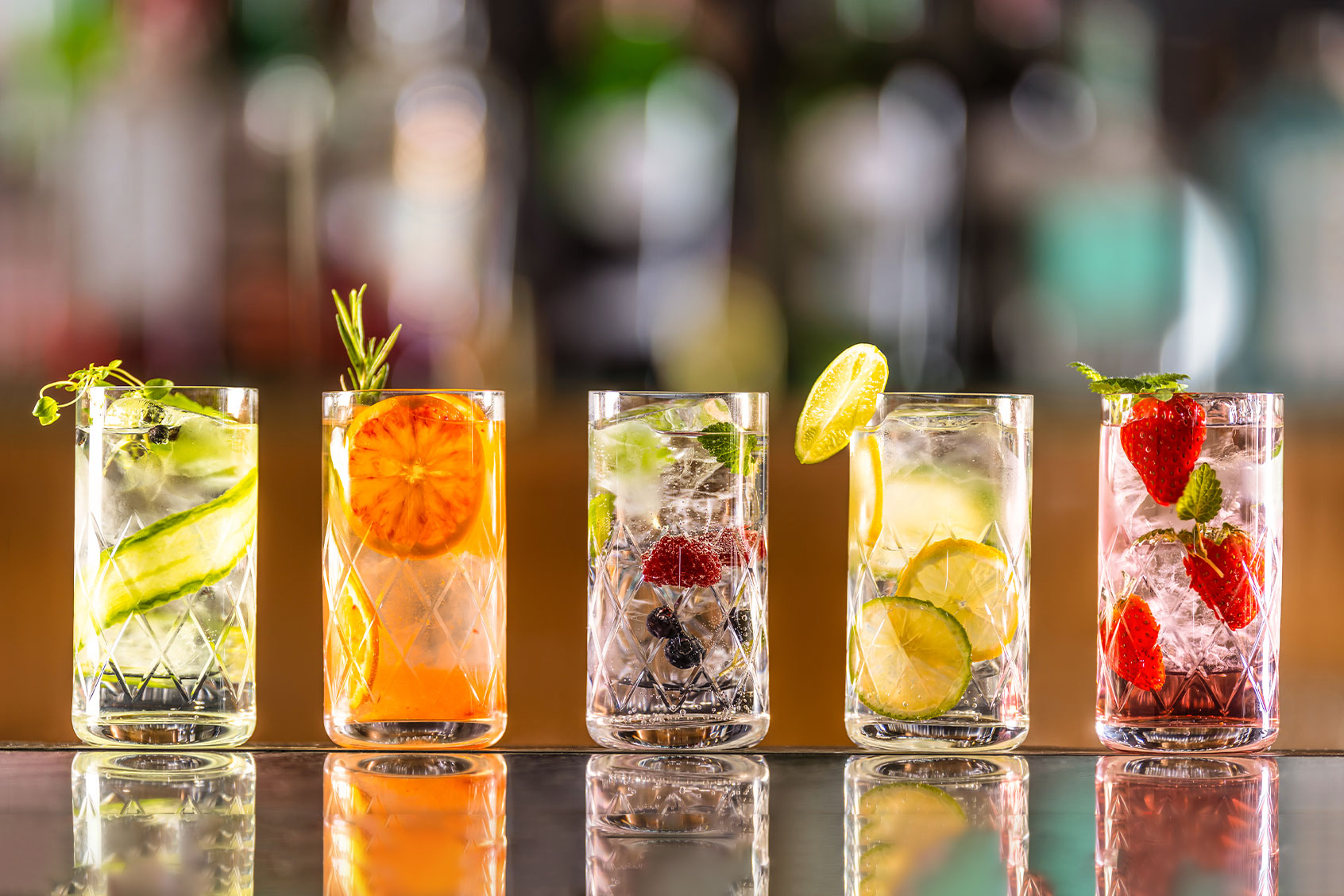

The first month of the year is often a time for fresh starts. For many, improving their health is a top priority. That could mean exercising more or eating healthier meals at home. It could also mean drinking less alcohol, a longstanding challenge commonly known as Dry January, or by its portmanteau Dryanuary.
Vowing to a period of sobriety isn’t a new concept — nor is it only reserved for the beginning of the year. But the concept of Dry January, as a global campaign, was introduced in 2013 by the independent organization Alcohol Change UK, which aims to reduce harm caused by alcohol consumption. Last year, 47 percent of individuals who drink alcohol at least once a month reported that they’ve participated in the initiative before, per a report from Oar Health. Millennials ages 29 to 44 were determined to be the highest demographic to attempt Dry January, with 51 percent of individuals saying they’ve tried it.
Alcohol consumption, as a whole, has been on the decline in recent years. According to Gallup’s annual Consumption Habits survey, conducted in July 2025, the percentage of U.S. adults who say they consume alcohol has gone down to 54%, which is the lowest statistic in nearly 90 years. This trend is especially prevalent amongst young adults, ages 18 to 34, who have been drinking less alcohol over the past two decades. A 2023 survey from Gallup found that the percentage of young adults who say they never drink has dropped 10 points over that same time period, from 72% in 2001-2003 to 62% in 2021-2023.
Perhaps a common misconception about non-alcoholic beverages, also known as mocktails, is that they are inherently boring, lacking the flavor complexities found in cocktails. Or, they are too juvenile, limited to sugary sodas, fruit juices and syrups. But that’s far from the truth. Salon Food recently spoke with Anthony Caporale, Director of Spirits Education at the Institute of Culinary Education, who shared his favorite ways to turn popular cocktails into elevated mocktails.
“If you want to master how to remove something from a drink, master how to use it first,” Caporale says. “You’ve got to understand cocktail chemistry before you can successfully remove the alcohol and make mocktails.”
Here are eight cocktails-turned-mocktails to enjoy this month:
Mojito
When it comes to making good mocktails, it’s important to follow the same formula for making good cocktails. “The reason cocktails exist is because alcohol is toxic and is not palatable on its own,” Caporale explains. “The point is to hide the flavor of a toxin. When you remove the toxin, you remove the need to make a mixed drink.”
“Keeping that in mind, where most people go wrong [when making mocktails] is they just put a bunch of things that taste good together in a glass,” he continues. “Then they don’t understand why it’s not interesting. What I always say is you’ve got to start with something that doesn’t taste good. I use the word ‘toxin,’ even though it sounds extreme, but from a chemical standpoint, that’s any acids and alkaloids — any of these things our bodies find toxic in large doses and unpleasant in small doses.”
A classic Mojito is made by muddling mint leaves with sugar and lime juice, then stirring in rum and club soda. To make its mocktail rendition, Caporale suggests making a simple limeade by muddling mint leaves with fresh lime juice and adding sugar along with soda water. Caporale also recommends experimenting with your citrus base. Try swapping lime for lemon, orange, yuzu, or even Buddha’s hand. You can also underscore the fruit’s bitterness by muddling its peel.
“If I were to make a lime orange Mojito, I would probably use a full lime and muddle that down with some sugar,” Caporale says. “I’d add a nice handful of mint on top of that and then a full orange peel or two. I’d top that with ice and probably use soda water instead of just plain water to bring up the volume. Soda is a little bit more interesting on the palate and adds some carbonic acid, which is something that we’re going to want because it’s going to balance that sugar back down.”
Margarita
Similar to the Mojito, a mocktail Margarita, without any tequila, is purely a limeade. Caporale suggests adding agave nectar to sweeten the lime juice base, along with orange juice or orange peel to compensate for the lack of triple sec. That mixture can then be blended or shaken and served on the rocks.
“The last thing that I normally do, though, is add a little bit of seltzer water,” Caporale says. “That just gives it a bit of volume and a bit more interest on the palette, those sparkly bubbles.”
“Believe it or not, you can also use tonic water because it has quinine,” he continues. “ Quinine is another alkaloid — another plant toxin, like tannin. We always want to double down on those with mocktails. So if you want to really get the interest up, use tonic water instead of seltzer.”
Piña Colada
A Piña Colada is “designed to taste like a mocktail without being a mocktail,” Caporale says. The easiest way to make a non-boozy Piña Colada is to take out the rum. Just combine coconut cream and pineapple juice and serve the finished drink either blended with or over ice.
If you want to spice up your mocktail, try doubling down on the drink’s acid content by pairing pineapple juice with your favorite citrus juice. Caporale recommends lemon, lime, orange and grapefruit. You can even omit the pineapple juice and simply mix citrus juice with coconut cream.
Caporale also suggests swapping the traditional maraschino cherry garnish for something more elevated, like a braided twist of citrus peels.
“I’ll do a long twist of lemon, lime and either orange or grapefruit and braid them together, like you’re braiding hair,” Caporale says. “That provides some zest and additional bitterness that will provide a bit more interest to that mocktail.”
Aperol Spritz
Caporale explains that making a non-alcoholic version of an Aperol Spritz, sans any non-alcoholic spirits (which he advises against using due to their sheer expense and poor taste), can be a bit challenging. That’s because of how alcohol-heavy the cocktail is — a classic Aperol Spritz calls for three parts Prosecco to two parts Aperol. When you remove them entirely, all that’s left is club soda and an orange slice to garnish.
“If you dig deeper into the chemistry, what you find is Aperol is a type of amaro [an Italian herbal liqueur] and that’s a bitter spirit,” Caporale says. “There are a lot of things out there that are bitter that don’t have alcohol.”
Caporale’s go-to base when crafting an Aperol Spritz mocktail is a “good dash” of cocktail bitters, specifically Angostura bitters. He also recommends Peychaud’s bitters, which adds a bright, red hue to the mocktail. The bitters are then added to club soda and served over ice.
“You have to be careful, because technically, it’s not a mocktail. Cocktail bitters are 50% alcohol on average,” Caporale clarifies. “But you’re talking about less than a quarter ounce — anywhere from two dashes to maybe 10 on the higher side.”
“Bitters and soda is a classic drink that goes back as long as we’ve been making bitters,” he adds. “It’s actually quite possible that the Aperol Spritz evolved from this. So again, there’s alcohol in this drink, but it’s trace amounts — so trace that you can actually buy cocktail bitters in supermarkets. It’s not considered consumable alcohol.”
Old Fashioned
Staying on the topic of bitters, the Old Fashioned is yet another cocktail that’s a bit difficult to transform into an almost identical mocktail. It’s an infamously potent cocktail that consists entirely of whiskey.
“What I tell people to do when they’re trying to recreate an Old Fashioned, quite honestly, is don’t. You’re probably not going to be able to do it,” Caporale says. “Look for something that’s an analog. Look for something that kind of evokes an Old Fashioned. I go to tea.”
It’s important to start with “a beverage that is inherently unpleasant on its own” in the same vein as whiskey, Caporale explains. He makes it a point to use overbrewed tea: “The key is to really get that tea to be something that I say, ‘If a five-year-old would spit it out, you’ve got it right.’” From there, mix in your choice of sweetener (like honey, maple syrup, or jam) and cocktail bitters. In addition to Peychaud’s and Angostura, Caporale recommends using Regan’s Orange bitters.
What does the finished mocktail look and sound like? Caporale offers one recipe: “A green tea Old Fashioned, sweetened with honey and flavored with lemon bitters, is spectacular.”
Moscow Mule
A Moscow Mule is easy to turn into a mocktail, considering that much of the cocktail’s flavor comes from both the ginger beer and fresh lime juice. By removing the vodka, you’ve created not only a non-alcoholic beverage, but one that tastes very similar to the real deal, Caporale says.
To spice up your dry Moscow Mule, try combining ginger beer and lime juice with a non-alcoholic sparkling cider. You can also change up your choice of citrus.
Caporale even recommends trying your hand at making homemade ginger beer or ginger soda. “If I were to do this at a craft level, I would suggest muddling fresh ginger, fresh lime juice and sugar,” he says. “Muddle them in the bottom of a glass and add soda water. You’ve basically constructed your own Moscow Mule with fresh ingredients that’ll blow you away.”
You can also try muddling in fresh basil or citrus peel to amp up the mocktail’s bitterness. Muddled jalapenos, hot peppers, or wasabi are other great options if you prefer a drink with extra heat.
Espresso Martini
Made with freshly brewed espresso, coffee liqueur and vodka, a classic Espresso Martini can be transformed into a mocktail by shaking together espresso, sugar, cream, chocolate sauce and black walnut bitters. Serve that in an espresso glass, adorned with a cocoa rim, topped with a few espresso beans.
If you want to get extra creative, Caporale suggests making an Espresso Romano, which is a shot of espresso combined with lemon juice or peel. You can also infuse your espresso with star anise to make a non-alcoholic Sambuca or amp up the sweetness by scraping in a whole vanilla bean.
Caporale’s recipe is as follows: “Start with espresso and add in a bit of sugar, a dash of cream, and an entire vanilla bean (scraped). Shake everything together. Top the poured drink with three espresso beans and a few dashes of black walnut bitters.”
“I think most people are going to be pretty happy with that,” he says.
Bloody Mary
A popular savory cocktail, the Bloody Mary turned into a mocktail is essentially just a mix of spices and hot sauces. “Double down on your spices and citrus,” says Caporale. You’ll want to mix garlic, pepper, Tabasco, soy sauce, and lemon and lime juice all together.
“I look at making a Bloody Mary the same way my Italian grandmother used to look at making Sunday sauce,” Caporale explains. “The more stuff you put in it, the better.”
A Bloody Mary is also extravagant, especially when it comes to garnishing. Top your mocktail with fried bacon, cheese on skewers and pepperoni. You can even make the drink an entire meal by adding mini sliders on skewers.
“The Bloody Mary, to me, should really be a meal in a glass,” Caporale says.
Read more
about Dry January:
