
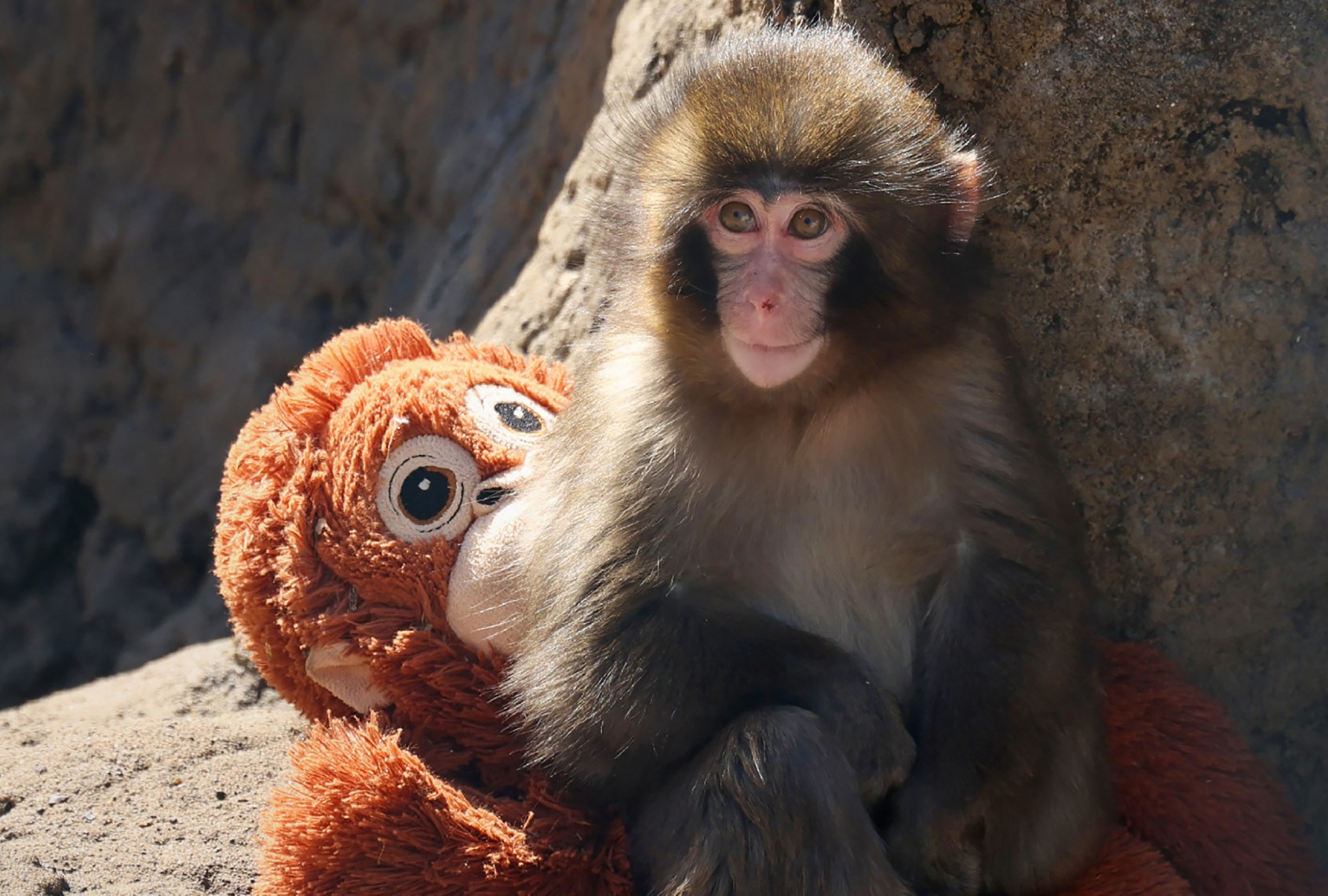

If you’ve been on the internet in the past week, you know about Punch, the 7-month old Japanese macaque whose sad tale of abandonment and loneliness has spread around the world via video clips and still photos of the baby snow monkey being roughed up by other macaques and turning to his surrogate parent, a stuffed orangutan, for comfort. Punch’s mother rejected him shortly after he was born last July at Japan’s Ichikawa City Zoo, and he was hand-reared by keepers. Baby macaques generally clutch tightly to their mother’s body to build muscle strength, zookeeper Kosuke Shikano told The Guardian, and the fuzzy IKEA orangutan eventually did the trick.
Punch’s reintroduction to the zoo’s troop of macaques has been rocky and very public. When videos of Punch curling up with the toy on the concrete floor of the zoo enclosure went viral, well, people had feelings — most of which can be summed up by the phrase “I WOULD DIE FOR PUNCH,” which has pervaded social platforms in varying degrees of sincerity and satire in recent days. We are all, forgive the phrase, Punch-drunk.
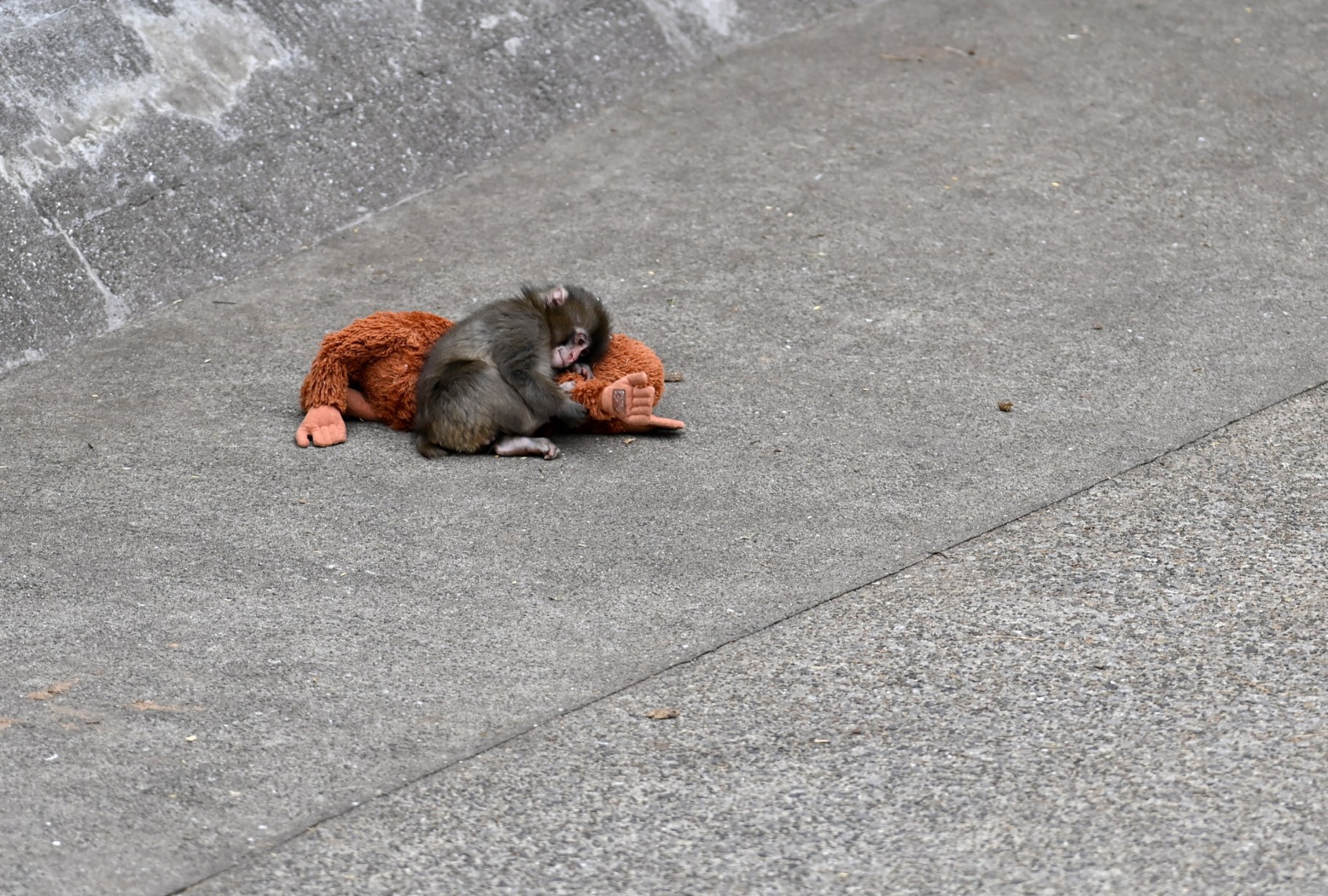
(David Mareuil/Anadolu via Getty Images) Baby monkey named Punch finds comfort with a stuffed animal
Typing “Punch the monkey” into search engines triggers a shower of animated hearts featuring Punch’s face cuddled up against his fuzzy friend. The zoo has been swarmed with visitors clamoring to see Punch, and IKEA outposts worldwide have sold out of the plush orangutan. Jon Stewart roasted the baby monkey, to mixed reviews; Punch’s mother is being read to filth in YouTube comments; and a notorious duo of d-bags tried to buy him as a pet. Every aspect of Punch’s ordeal and the viral fame that has followed is a reminder that the times we live in are uniquely dystopian, venal and disheartening — and that a majority of us think we have no choice but to accept it. For Punch’s sake, and our own, we might want to reconsider.
We don’t have to relate quite so hard
“My mental state is currently 50% staring at the horizon like a Werner Herzog penguin and 50% Punch the Monkey defending his stuffed toy against the world. There is no in-between,” wrote a commenter on one clip of Punch, in hyperbole both performative and familiar. For almost as long as there’s been an internet, it has been ruled and animated and possibly held together by a shared need to look at cute animals several times a day at minimum. Even in increasingly divisive times, cute animals are our common language, offering points of connection and escape routes for disagreements. (Your friend’s dating a MAGA chud and hanging out with them is excruciating? Bummer — but until they break up, your friendship can survive on Moo Deng memes.)
Every aspect of Punch’s ordeal and the viral fame that has followed is a reminder that the times we live in are uniquely dystopian, venal and disheartening — and that a majority of us think we have no choice but to accept it. For Punch’s sake, and our own, we might want to reconsider.
It’s not just that we love the LOLcats and the good dogs and the self-involved birbs and the octopuses who are too smart for this nonsense: They are avatars that let people connect, empathize, flirt and vent while avoiding vulnerability. Remember the viral fame of the IKEA monkey? In the 2012 photo that kicked everyone’s heart in the shins, the little guy in a shearling coat was framed staring balefully into the middle distance out the window of the Toronto-area IKEA where he’d been abandoned. The undeniable intersection of cute, sad and stylish launched a thousand reaction memes. (Darwin now resides at a primate sanctuary in Canada where he lives a peaceful, camera-avoidant life.)
But keep in mind, when your/my eyes fill with tears watching little Punch rush to his orangutan for comfort, what might look to us like bullying is how primates establish their societal hierarchies. “All troop dynamics are complicated, and macaques’ can be especially intense,” says Colleen Reed, one of the primate keepers at the Oregon Zoo. “When we’re watching [Punch clips], we project human emotions onto [him]. It’s challenging not to because primates are so closely related to us. There’s a reason why people are having visceral feelings watching him get pushed around, compared to watching hyenas fighting.”
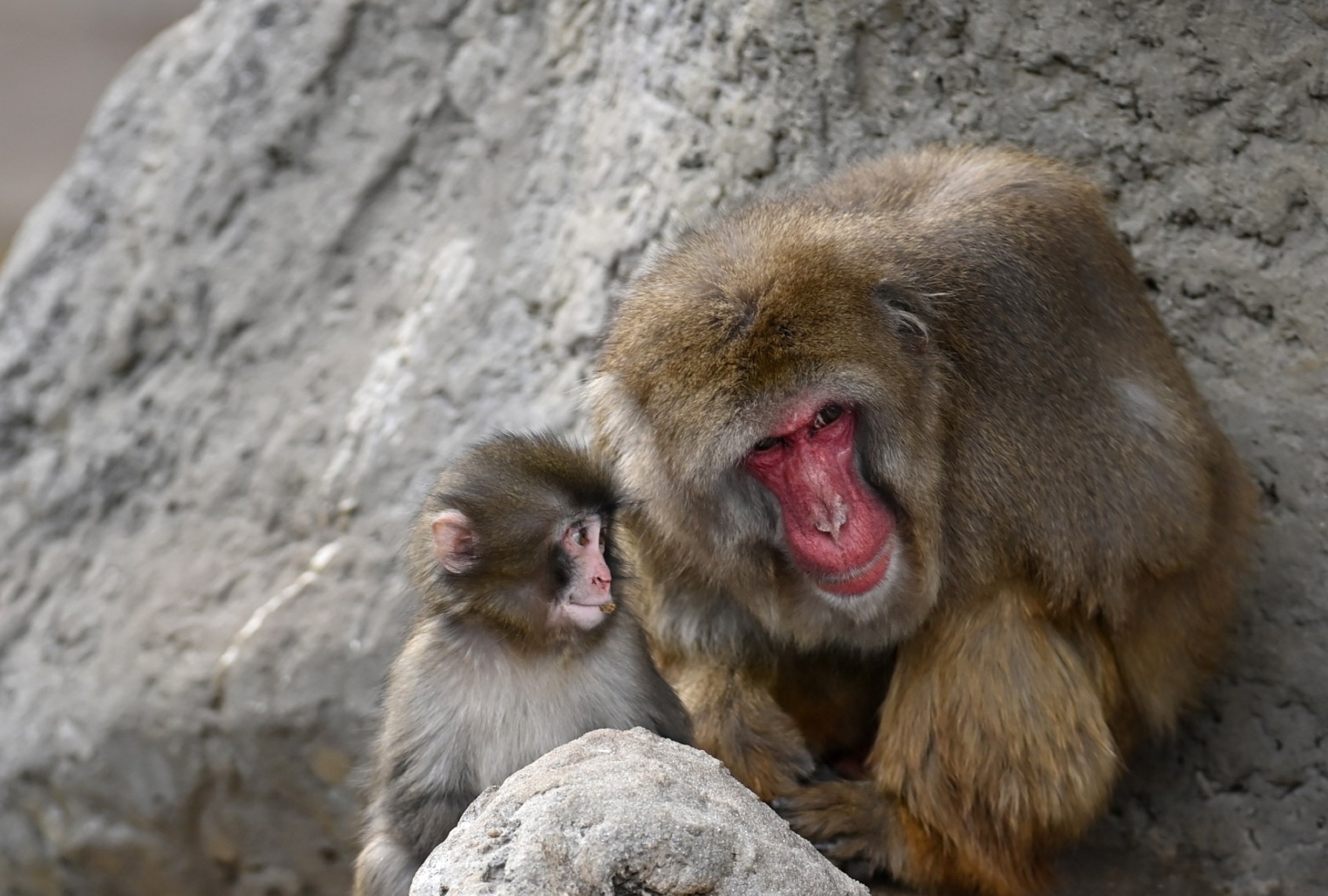
(David Mareuil/Anadolu via Getty Images) Baby monkey named Punch with a companion
We don’t have to have monkeys as pets
It’s been a good few months of not having to know what Andrew Tate is up to. Unfortunately, the manosphere’s favorite sex pest didn’t want to miss a chance to exploit another living being, and after Tate and his brother Tristan saw Punch, the latter hopped onto X to write, “Which Zoo owns this monkey. @Cobratate and I will buy it. 250,000 dollars. I am NOT kidding.” Though the post prompted a collective Nah, bro, even writing it says a lot about the Tates’ unwavering confidence that the world is as mercenary as they are, and that everything has a price.
Unfortunately, in the case of the exotic-animal trade, it’s often true. Trafficking exotic animals, from tigers to reptiles to birds and beyond, underpins a staggering amount of organized crime globally. The United States alone is one of the world’s largest markets for them: Lack of regulation makes exact numbers difficult, but a December 2025 report from the Center for Biological Diversity estimates that “more than 248 million animals were captured from the wild and imported into the United States to be kept as pets from 2016 to 2024.” They are sold at exotic-pet shows, on the dark web, through shady roadside zoos like “Tiger King” Joe Exotic’s, and by wildlife traffickers.
Want more from culture than just the latest trend? The Swell highlights art made to last.
Sign up here
They are often sold to people who are unequipped to take care of them: Recall Justin Bieber’s pet capuchin monkey, Mally, who was confiscated by German customs officials in 2013 after the 21-year-old brought him to the country on a private plane, with no documentation. (“People are always like, ‘Why did you get a monkey?’ If you could get a monkey, well, you would get a f**king monkey, too! Monkeys are awesome,” said Bieber in 2016, when he began talking about getting another monkey.)
U.S. laws on owning exotic animals vary from state to state, with patchy oversight, and smaller primates — “because they’re so cute and so tiny and they seem like they’re going to be very easy”— are regularly sought as pets, says Reed. “What’s frustrating for people in the sanctuary and zoo world is that these animals are social individuals; they live in groups. When you see a human with one monkey, that is not good for that monkey.” (Looking at you, Man in the Yellow Hat.) The federal Captive Primate Safety Act, which was introduced in Congress this year, would put a stop to the breeding and selling of monkeys as pets, so call your reps. Tell them Punch sent you.
We don’t have to erase birth mothers
Why Punch’s mother abandoned him isn’t clear, though the zoo’s staff acknowledged that she was a first-time mother who gave birth during a heat wave, both high-stress situations. The little guy’s plight is heartbreaking. But it’s likely his mother’s was too, and her absence is particularly resonant in the United States of 2026, where erasure of birth mothers is a key tenet of forced-birth enthusiasts and the current nominee for Surgeon General thinks contraception is “disrespect of life.” During oral arguments in Dobbs v. Jackson, Supreme Court Justice Amy Coney Barrett suggested that safe-haven laws have effectively made the need for abortion access obsolete, insinuating that there’s little difference “between, say, the ability to get an abortion at 23 weeks, or the state requiring the woman to go 15, 16 weeks more and then terminate parental rights at the conclusion.” (It’s only 15, 16 more weeks, after all; it’s only the state controlling your body.) Like her fellow justice Samuel Alito, Barrett wants nothing more than to increase “the domestic supply of infants” mentioned in a footnote in Alito’s leaked draft opinion.
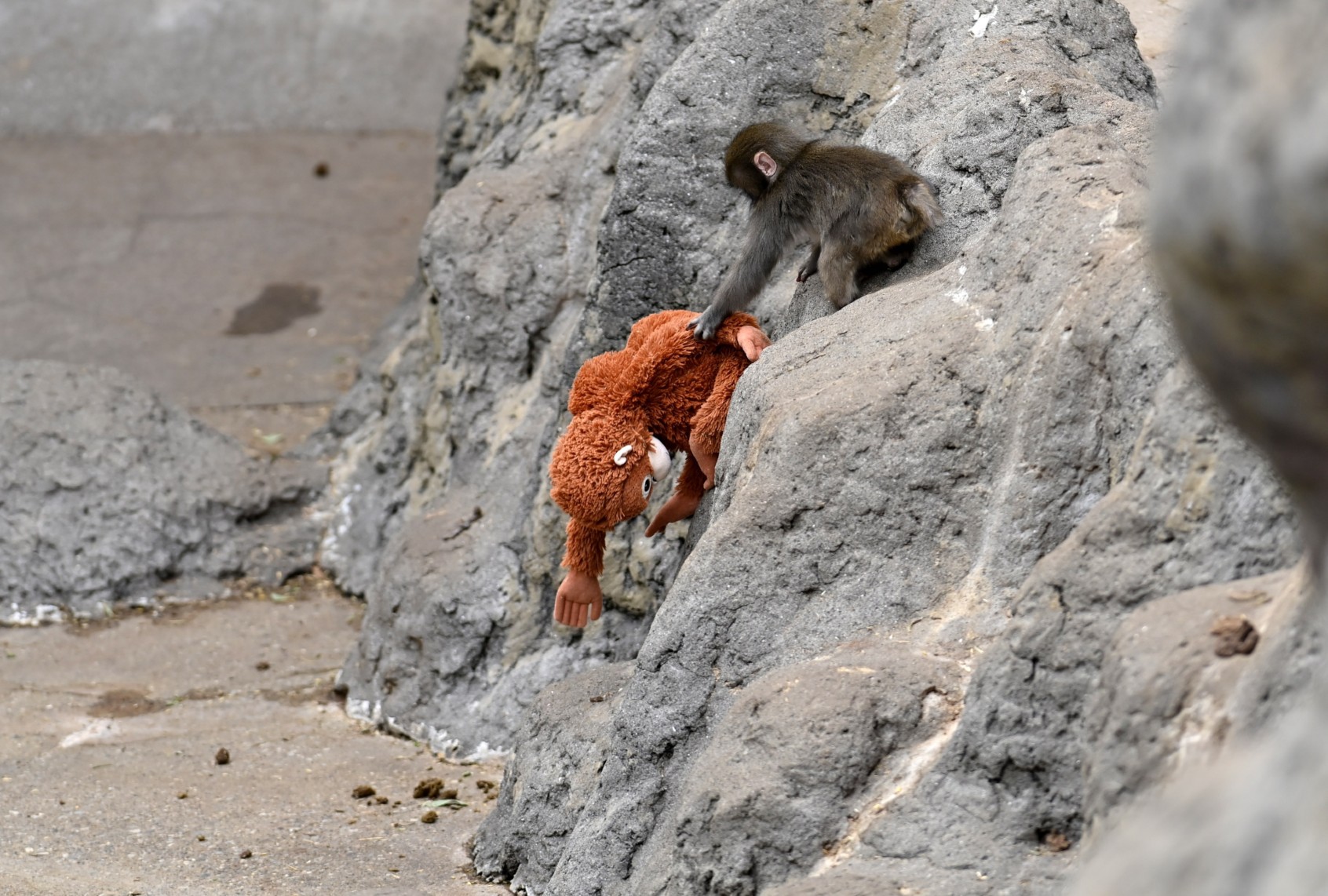
(David Mareuil/Anadolu via Getty Images) Baby monkey named Punch with his stuffed monkey friend
The little guy’s plight is heartbreaking. But it’s likely his mother’s was too, and her absence is particularly resonant in the United States of 2026, where erasure of birth mothers is a key tenet of forced-birth enthusiasts and the current nominee for Surgeon General thinks contraception is “disrespect of life.”
In her 2024 book “Relinquished: The Politics of Adoption and The Privilege of American Motherhood,” Dr. Gretchen Sisson examines the coercive, monetized private-adoption industry that continues to perpetuate Baby Scoop–era tactics that paint birth mothers as callous and irresponsible. It’s flourishing under a powerful Christian Right that has since added baby boxes to its list of why abortion is no longer necessary; their logic, per Sisson, is, “If we just take the babies from these families and move them to these other families, then we don’t need to provide insurance coverage for infertility treatments. We don’t need to invest in vulnerable and young families. We don’t need to make abortion accessible or affordable. We just introduce adoption, and the ‘problem’ is solved.”
We need your help to stay independent
Punch’s birth wasn’t a political hot potato, but the same narrative that erases birth mothers pervades expressions of sympathy for him — what kind of awful, cruel mother could spurn little Punch! “When you see a quick clip online, you’re not getting context about the whole group” of macaques, says Reed. Punch’s mother remains with the troop, but she may or may not accept Punch as he’s re-integrated. “Reasons for rejection depend on the type of primate, but also the individual,” says Reed. “This could have been a very low-ranking female who was trying to protect herself. Without knowing the group dynamics, we can’t say.”
We don’t have to profit from misery
The pathos of Punch and his orangutan, of course, is what’s had so many people glued to their screens. In his landmark 1950s-era experiments on attachment, primate researcher Harry Harlow found that the baby rhesus monkeys he separated from their mothers at birth sought more comfort from the inanimate mother covered in soft toweling than the wire one that dispensed food. Seeing Punch run to seek comfort from a plush animal with no capacity to actively nurture him is likely the thing that we’re most viscerally responding to. And it’s what makes the misery profiteering that has followed Punch’s viral fame seem especially tasteless.
IKEA hasn’t been able to keep up with the demand for its $19 Djungelskog stuffie, which began flying off the shelves after Punch went viral. The number of them that have since popped up on eBay and Etsy in the past few days — some prices above $100 — suggests that many were snapped up by opportunistic stuffie scalpers. In the meantime, the company launched a new ad that features the sold-out toy being cuddled by a Punch-like plush monkey with the copy “Sometimes, family is who we find along the way” and the social-media tagline “We’re ALL Punch’s family now.”
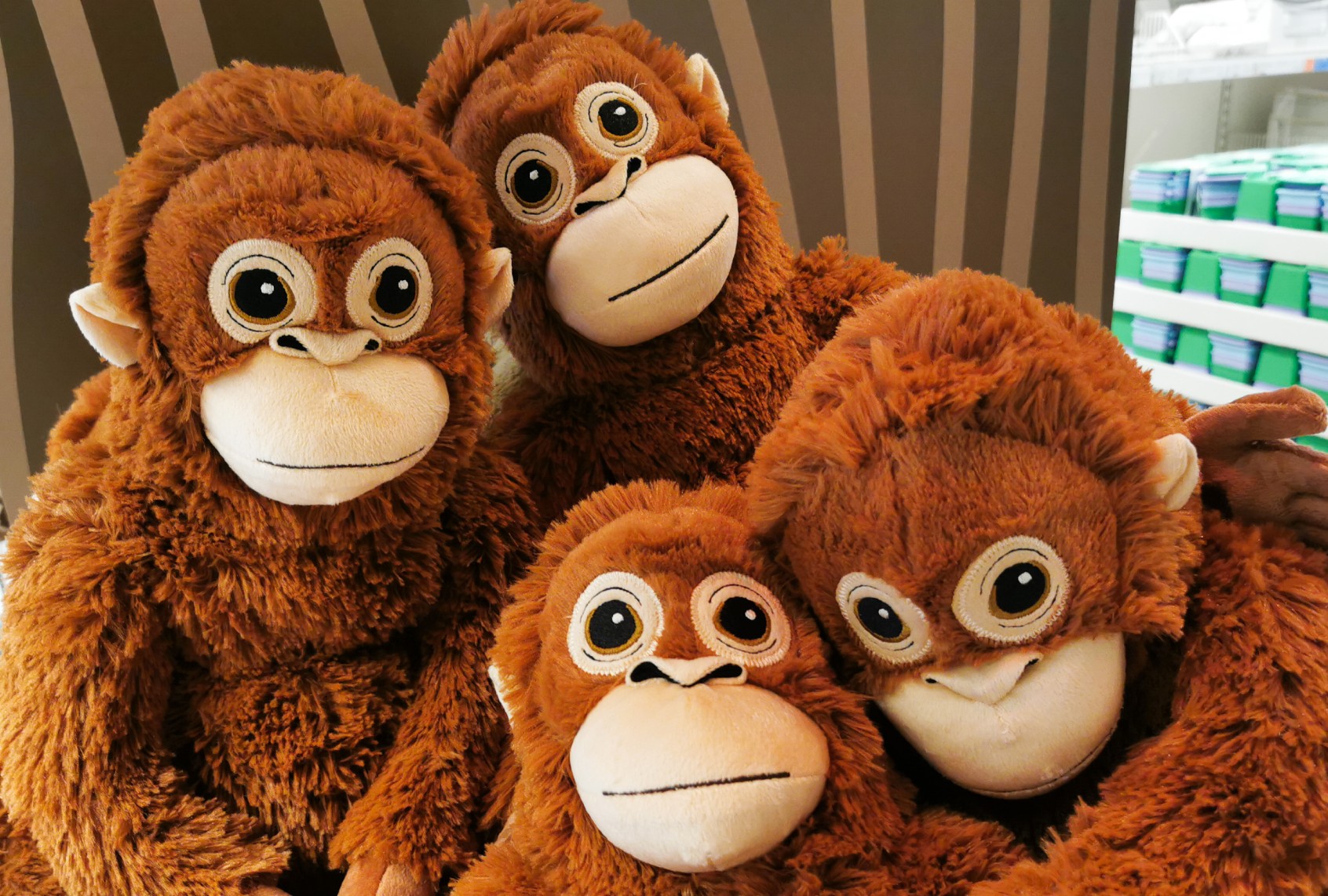
(Beata Zawrzel/NurPhoto via Getty Images) ‘Djungelskog’ orangutan plush toys seen in IKEA
Elsewhere, a chintzy drop-shipping site that calls itself the “official” Punch Monkey retailer is selling “Team Punch” t-shirts, mugs, stickers and more. A children’s book with a title that reeks of AI (“The Baby Monkey PUNCH: How One Tiny Monkey Showed the World Bravery and Resilience — Picture Book About Making New Friends and Overcoming Loneliness for Kids”) is now on Amazon, and more slapped-together merch. Fast Company reported on Thursday that “Savvy e-commerce sellers are capitalizing on the viral video of the moment. Can we blame them?”
We can. And we should: Capitalizing on Punch’s distress, exploiting his vulnerability and commodifying a situation that might not end the way people want it to would be ghoulish even if the proceeds were going to wildlife conservation. (That’s not what these drop-ship hucksters appear to be doing — though, from a look at IKEA’s Instagram account, the retailer might well be shamed into doing so.) Meanwhile, the marketing industry currently high-fiving IKEA’s quick pivot to misery commodification are equally culpable, like the Instagram Reel from a company called MarketingMentor enthusing that “Punch just gave IKEA millions of dollars in free marketing, making it one of the smartest PR moves of 2026.” (First of all: Calm down, it’s still February.)
There is an opportunity to harness the energy of the millions of people anxiously waiting for the latest developments in Punch’s saga to drop, and it can be about more than profit: meeting this moment can involve advocating for better habitats, joining advocacy initiatives for macaques and other primates and even just learning more about wildlife conservation. The past week has shown that there’s a little bit of Punch in all of us, so let’s help ensure that the future holds fewer stories like his.
Read more
about conservation
