
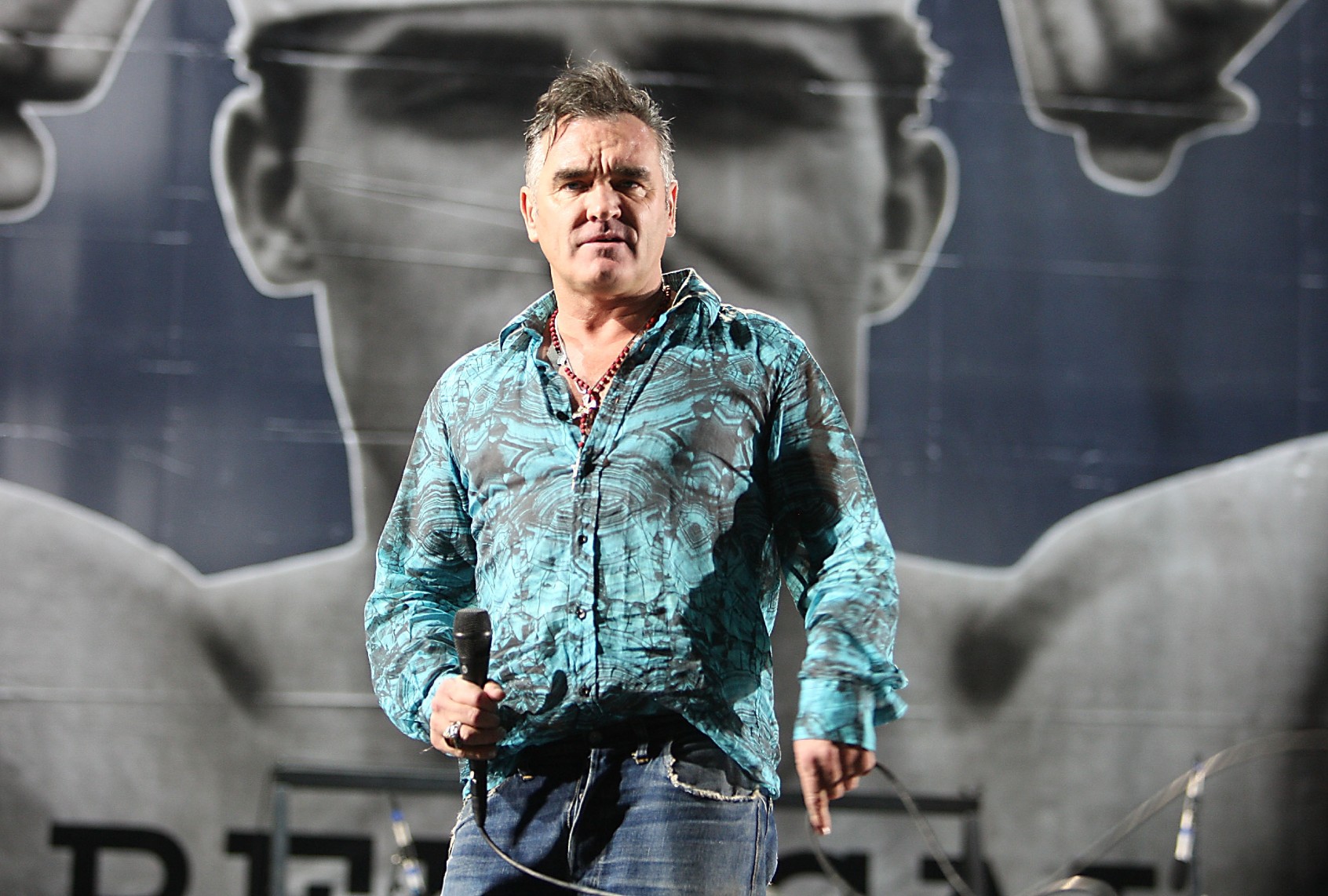

At his recent show at London’s O2 arena, Morrissey did the thing.
By “the thing,” I don’t mean that he wore a shirt unbuttoned almost to the waist and stuffed a small floral arrangement into his pants, though he did do that. No, the thing Morrissey did was complain — into a microphone, from an enormous stage, to a sold-out crowd — about how unfair it is that he has been silenced. “The fact that I’m on this stage is an incredible accomplishment in itself,” he said. “Because, as you know, the jealous bit*hes tried to get rid of me.”
“Never meet your heroes” isn’t the shibboleth of Morrissey fans, since the 66-year-old singer is known for unfailing kindness to fans. The warning is more along the lines of “Never read your hero’s political opinions, but also good luck trying to avoid hearing about them.”
The crowd roared; the band members directly behind Morrissey tried very hard not to smirk. “But thanks to you [crowd whoops] and thanks to me [crowd screams] I’m still here.” Then the drummer counted them in and god’s favorite messy bit*h clambered down off the cross for “Now My Heart Is Full.” The crowd continued to go wild for the remainder of his set, which ended with a full arena singing along with the closing number, The Smiths’ “There Is a Light That Never Goes Out.”
2026 is, on paper, a big year for Morrissey. “Make-Up Is a Lie,” his 14th solo album, dropped on Friday; his tour in support of it, despite a predictable flurry of cancelled shows, is underway; and it’s the 40th anniversary of The Smiths’ breakthrough album, “The Queen Is Dead.” But as his lament to the O2 arena’s sold-out crowd made clear, it’s simply another year in which Moz will revel in victimhood and rail against his legion of music-business enemies: The thought-police punters, the overwoke music press and a record industry so united in thwarting his genius that simply being onstage is an accomplishment.
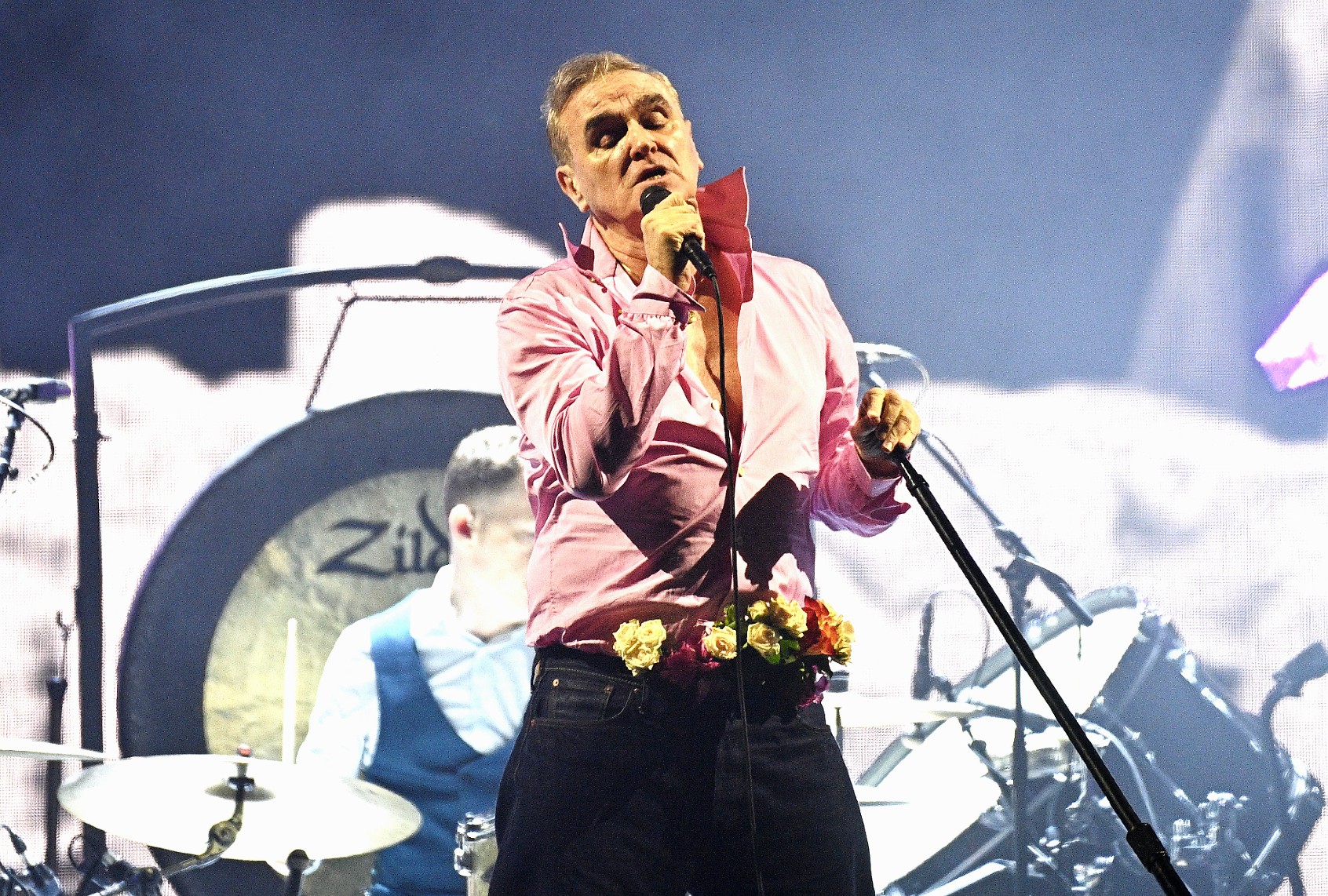
(Gus Stewart/Redferns/Getty Images) Morrissey performs at the O2 Arena in London, England
“Being a former Morrissey fan is like being trapped in an abusive relationship with your first great love. No matter what he does or says, you somehow dust yourself down and immediately hark back to the bliss of early discovery,” wrote Kevin Maher in a recent Times of London essay. Within the piece itself, Maher makes it clear that the only way to tell the difference between a former Morrissey fan and a current Morrissey fan is to be caught in the act of a jangly reverie that slingshots us back to simpler days, when Steven Patrick Morrissey was the wordy, literate, excruciatingly sincere Pope of Mope.
We all know better, of course. “Never meet your heroes” isn’t the shibboleth of Morrissey fans, since the 66-year-old singer is known for unfailing kindness to fans. The warning is more along the lines of “Never read your hero’s political opinions, but also good luck trying to avoid hearing about them.”
“Make-Up Is a Lie” underscores perfectly the widening gulf between being a fan of Morrissey and rooting for the man himself. It is a collection of tracks that underachieves in every category other than self-obsessed bellyaching. A Paste review pulls no punches: “Morrissey really has outdone himself with this one, shattering all preconceived notions of his modern mediocrity. We expected something anodyne and forgettable, but what we received was far worse: an actively terrible album. Do not listen to it.”
In other words, the album isn’t bad because of its creator’s political views; it’s bad because it’s bad. The title track is a tinny synth beat over which he sings the phrase with varying levels of dramatic fillips. The cover of Roxy Music’s “Amazona” strips out all the edge from the original’s jagged freak-out. The single “Notre-Dame” is a conspiracy theory whose scant lyrics are so repetitive that it’s tempting to think that they’re a comment on the hamster-wheel mind of an obsessed truther, in this case, one convinced that the 2019 Paris cathedral fire was the work of Islamic terrorists. Would the inherent anti-Islam sentiment be less offensive if “Notre-Dame” were a banger? Not to me. But the whole production is hackneyed enough to suggest that Morrissey had nothing in the chamber beyond a not-at-all-cryptic assertion of “We know who killed you.”
Want more from culture than just the latest trend? The Swell highlights art made to last.
Sign up here
It’s notable that the few people who have applauded both “Make-Up Is a Lie” and Moz’s onstage pity parties seem to be flying the flag in hopes of — say it with me — triggering the woke mob. “Morrissey really is the last rock rebel,” swooned Brendan O’Neill in The Spectator. “Being at The O2 felt electrifying. We knew we were in the presence of a man frowned upon by the self-righteous. A man who through sheer bloody-mindedness managed to escape the clutches of that most ravenous of beasts: cancel culture.”
But apart from a few conservative-is-the-new-punk dorks, most of Morrissey’s fans aren’t interested in using his enduring popularity as a cudgel against their ideological foes. They know he leans towards racist and has a martyr complex, but they also reject the notion that continuing to listen to him is tantamount to co-signing his histrionics. They’ve been separating the art from the artist since they first realized that Morrissey was a jerk, years ago.
It’s notable that the few people who have applauded both “Make-Up Is a Lie” and Moz’s onstage pity parties seem to be flying the flag in hopes of — say it with me — triggering the woke mob.
Corey, 54, recalls that, in his middle school, “people I hung out with loved The Cure, and part of that was because Robert Smith was lovable — he was the cuddly goth. We loved The Smiths, but were we like, ‘Oh, that Morrissey, he’s so endearing?’ I don’t think so. He was a charming as*hole.” My friend Rose confirms, without hesitating, over text: “I do not like him. I never did. But I love the music of The Smiths. His B.S. won’t stop me listening.”
I recently revisited the letters sent by Morrissey to U.K. music papers like NME and Melody Maker in the late 1970s, which I recall reading as a teen when they were printed in Spin, or maybe Details. More than a decade before Nick Hornby wrote “High Fidelity,” Steven Morrissey was pure, uncut record-shop guy: supercilious, brimming with confidence in the superiority of his own taste — and also, mortifyingly, too much of a fan to be cool about it, a reminder that fan is an abbreviation of a longer word.
In these letters, Morrissey is spoiling for a fight, needlessly combative in platforming his faves and scorning everyone from Aerosmith to The Ramones to The Police for the crime of not being the New York Dolls. One of his rare raves, for The Buzzcocks, closed with a bit*hy flounce: “Both this letter and The Buzzcocks themselves will probably be filed and forgotten. But for now, they are the best kick-ass rock band in the country. Go and see them first and then you may have the audacity to contradict me, you stupid sluts.”
These writings are Morrissey’s Rosetta Stone: More than any snotty interview or self-flagellating lyric, they are proof that Morrissey did not “become” anything. He was always the guy who wanted to poke at people and pick petty fights and stick a hand right next to your face and insist I’m not touching you! I’m not touching you! An edgelord. A proto-troll. But doctor, I am Bigmouth.
We need your help to stay independent
Rose asks if I saw a thing on Threads: The daughter-in-law of a Boomer actress posted that, during COVID, Morrissey left a note at her mother-in-law’s house. This combination of phrases — “a letter,” “COVID,” “mother-in-law” — brings several possibilities to mind, none of them good. Was Morrissey going door-to-door with vaccine-denial talking points? Was the note an anti-immigrant rant? Was the mother-in-law a woke culture crusader in league with Morrissey’s many industry foes?
The thread was written on March 3 by Mindy Stern, a Los Angeles writer whose mother-in-law was British actress Samantha Eggar. “On the evening of January 13th, 2021, still in high COVID, I dropped off food at [Eggar’s] doorstep and went home,” she wrote. “About 15 minutes later, she texted us this picture and asked if I had also left this at her door as a joke.” There’s a CD of Morrissey’s 2020 album, “I Am Not a Dog on a Chain,” with a handwritten, all-caps note that reads “Hello Samantha, Would you be agreeable to tea — with me? Morrissey.”
“WTF, had Morrissey actually been at her house??” Stern wrote. She and her husband asked to check the Ring footage and sure enough, there he was, wearing a blue sweater and a mask that appeared to have cats printed on it. His body language wasn’t Stage Morrissey, but the anxious, boyish hovering of someone who’s spent years wanting to ask one of his movie-star faves to tea and just realized it was now or never. (Eggar died in 2025 at 86).
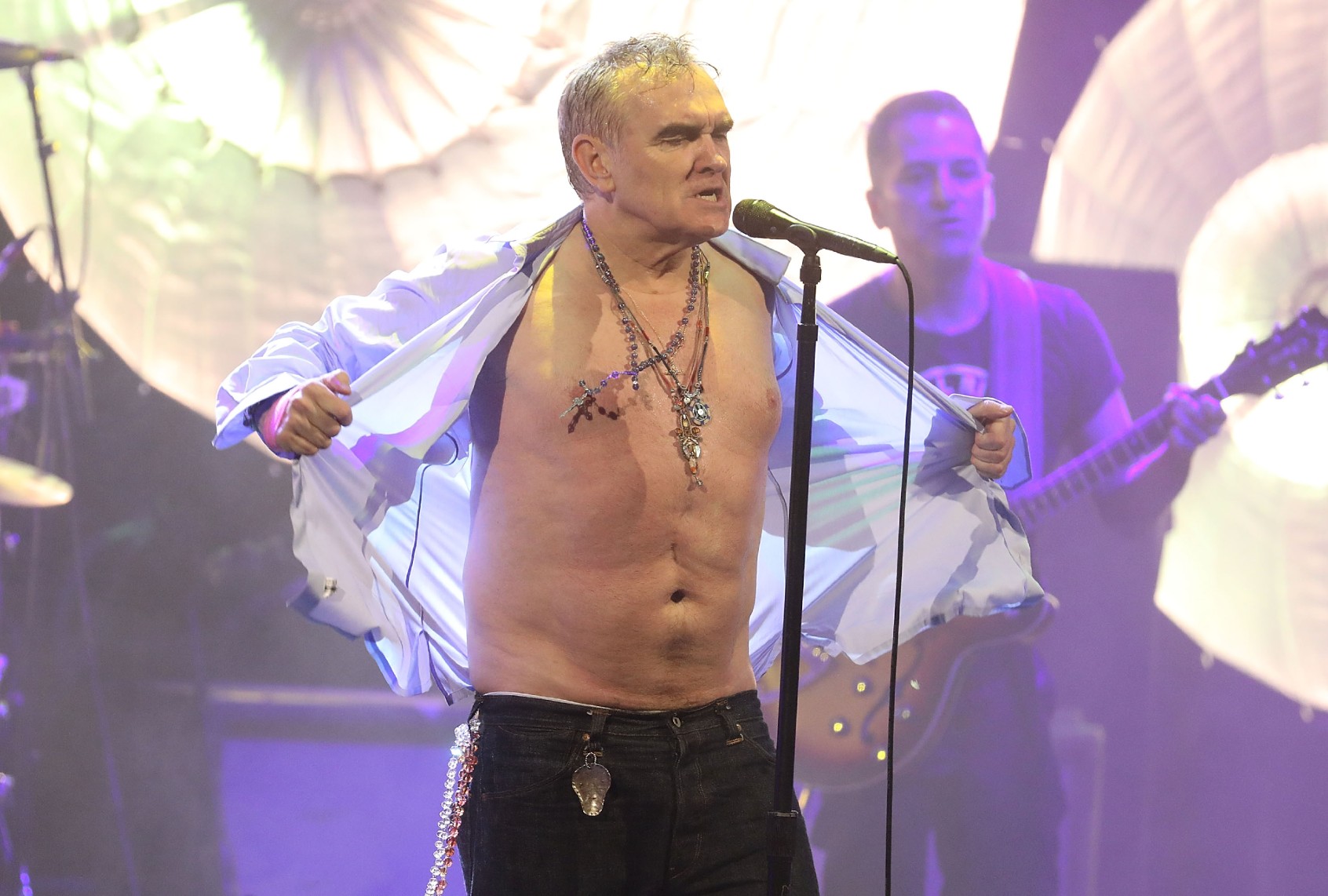
(Taylor Hill/Getty Images for Morrissey) Morrissey
“As you can imagine, we were out of our minds,” Stern continued. “Screaming, singing, imagining their meet up . . . I mean, f*ck yes. For context, my MIL had boyfriends with names like Kris Kristofferson and Ed Ruscha. She was less impressed [and] actually annoyed he had the gumption to show up unannounced. Announced shmannouneced! It’s Morrissey! She agreed to listen to his music, so we sent her a “best of” in the hopes she’d meet him.”
And then, the kicker: “An hour or so passed, she texted us: if he’s so miserable, why doesn’t he just kill himself already?”
It’s a perfect Morrissey story. It’s got mystery, surprise and humor. Most importantly, it’s got rejection. Morrissey probably did long to have tea with Eggar. But the pathos of not getting to do so, of asking and being turned down, is so much truer to his indelible self-conception — a bit more proof that though he has gotten so much already (fame, adoration, legacy) he can’t get what he wants this time.
It’s also a clue to why people who thoroughly loathe the person Morrissey is now — and, arguably, the person he’s always been — aren’t waiting around for him to do better. For all of his narcissism and tiresome bluster and woe-is-me wallowing, he’s always known exactly what it is to have the fevered, irrational devotion of a fan. His whinging and lashing out have made for diminishing returns, creatively, but damn if he isn’t consistent.
And I’d argue that people don’t continue to be fans because they suspect he’s going to ever do anything as good as “The Queen Is Dead” or “Your Arsenal.” They don’t think he deserves endless chances to prove that he’s not as big a Boomer cliché as Eric Clapton or Van Morrison. Figuring out what musical icons are worth holding on to comes down to maintaining an equilibrium of brilliance and bulls*t. The man who once sang “I’d rather be famous than righteous or holy” always knew what he was about, even if the rest of us didn’t.
Read more
about music media
