

There’s an Earth, Wind & Fire song to suit every mood and memory. Hip-hop artist and producer Anderson .Paak associates their music with childhood road trips. R&B singer-songwriter H.E.R. says her dad taught her to play the bass line of “Shining Star.”
Mine marks a turning point for the band explored midway through “Earth, Wind & Fire (To Be Celestial vs. That’s The Weight Of The World),” the new two-hour documentary from Ahmir “Questlove” Thompson. Shortly after “Shining Star” was released in 1975, it became the band’s first No. 1 hit, evidence of their audience diversifying in a way few other R&B bands of their time could claim. The band’s founder, Maurice White, and the rest of its members were ready to record their next hit.
Then their main producer and White’s mentor, Charles Stepney, suddenly died in 1976.
Blindsides are mainstays in films like this, just as in life, and tend to be followed by emotional fractures or wobbles of faith. But where other artists might have spiraled, White and his compatriots transcended, turning inward while also looking to the stars. This is how “Fantasy,” my sonic comfort blanket since I was a preschooler, came to be.
“Fantasy” resulted from his meditations within the pyramids of Giza and his claimed communications with aliens. Whether that happened is debatable; what is not is that “Close Encounters of the Third Kind” also influenced him, manifesting in the lyrics’ repeated invitation to “Take a ride in the sky/On our ship, fantasize.” That message sang me to sleep on many nights, and that story explains why it’s stayed with me all this time — it is a masterpiece of melodic sorcery and science, as one.
Questlove embeds such lessons throughout “Earth, Wind & Fire (To Be Celestial vs. That’s The Weight Of The World)” to explain precisely why EW&F’s most popular hits have also achieved an expansive timelessness. Some of them are genealogical, the best being moments when the founder of The Roots discovers musical connections right along with us, such as Stevie Wonder revealing that “Shining Star” influenced his composition of “I Wish.”
“That’s mind-blowing,” Questlove says. “I didn’t see it coming.” But now, thanks to this movie, we can hear the link.
Questlove’s newest documentary is a rare instance of an artist capturing lightning in a bottle twice. His universally acclaimed “Summer of Soul” dropped in June 2021, offering deep refreshment to thirsty concertgoers marooned in a barren season for live music.
In telling the little-known story of the Harlem Cultural Festival held in 1969, “Summer of Soul” presents it as a revolutionary act of Black joy, standing in contrast to the political turmoil. Over its six Sundays, one of which overlapped with Woodstock, legends such as Sly and the Family Stone, Nina Simone, Mahalia Jackson and Wonder performed live for mostly Black audiences at a time when America still reeled from the assassinations of Martin Luther King, Jr. and Robert F. Kennedy a year earlier. Later in 1969, Black Panthers leader Fred Hampton was assassinated in Chicago, the city where White came of age, honing his artistic talent under the guidance of jazz icon Ramsey Lewis and deepening his connection to Afrocentrism.
“Earth, Wind & Fire (To Be Celestial vs. That’s The Weight Of The World)” complements “Summer of Soul” in that way by framing that year as a moment when Black empowerment met musical revolution. But White consciously took his message global.
White’s vision intended for his music to reach a universal audience, evolve consciousness and change the world, using positivity as his North Star.
The result is both a story of an uplifting genius constantly reaching for the stars, and of a man who was hard to know and contradictory when it came to squaring his spiritual and artistic philosophy with his actions.
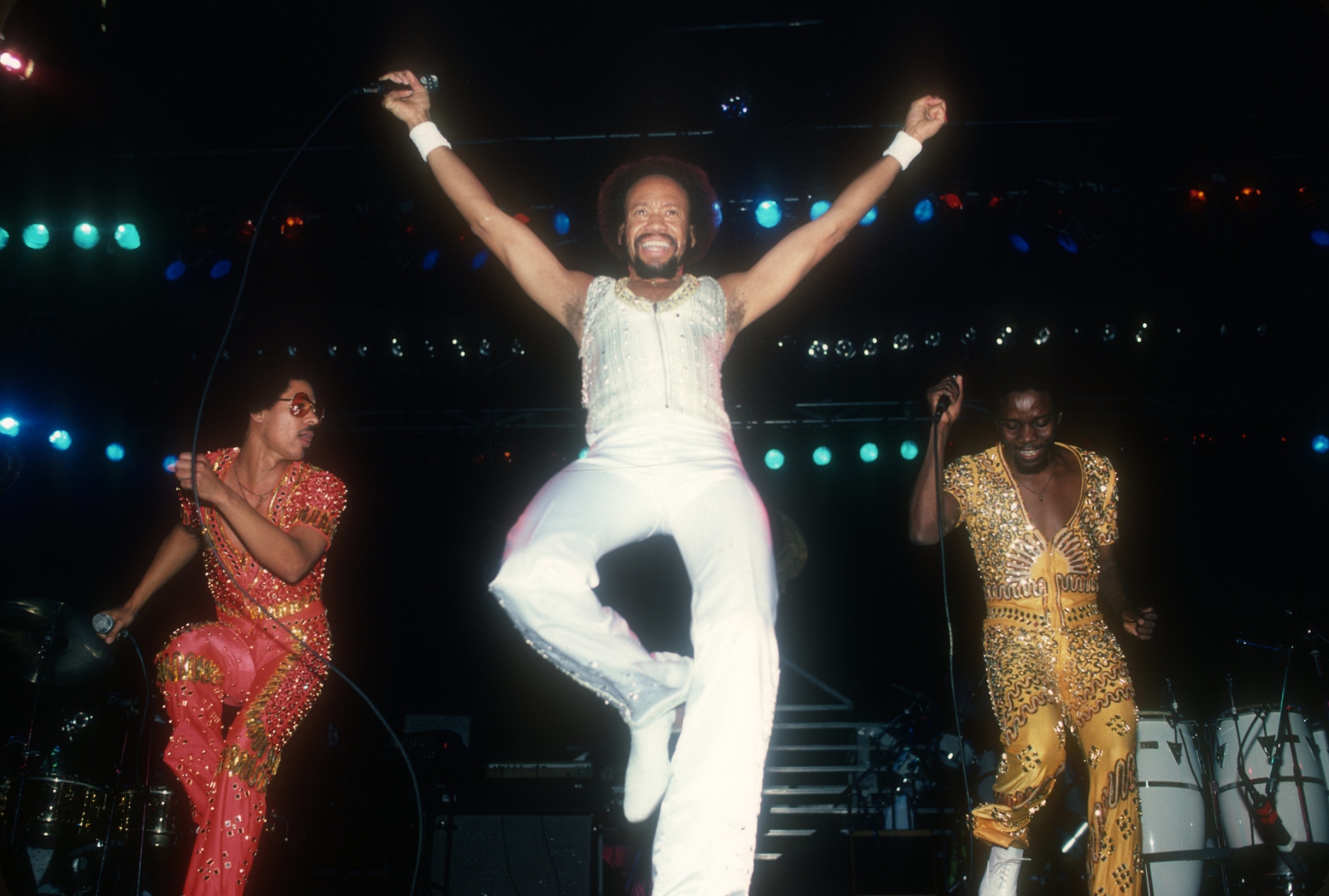
To most, though, Earth, Wind & Fire is synonymous with “September” memes, maximalist performance and magic onstage and in their music. White’s original ensemble consisted of 10 members, eventually expanding to incorporate The Phenix Horns. It was among the first bands to hire Bill Whitten to create costumes mixing the iconography of ancient Egypt with Afrofuturism. (Aside from their space-age regalia, Whitten’s most famous creation is Michael Jackson’s Swarovski crystal-encrusted gloves, one of which Drake reportedly bought for about $120,000 to feature on his album cover for “Iceman.”)
For their 1978 tour, they employed George Faison, who choreographed “The Wiz,” to teach them how to dance and superstar magician Doug Henning to design visual stunts that included bassist Verdine White levitating during a furious solo.
Even if you never bore witness to that outrageous performance, its elemental alchemy vibrates in the band’s most popular songs, each of them calling to us with purpose.
“When ‘September’ comes on, you go dancing,” as former President Barack Obama says, while former first lady Michelle Obama joked about the length of slow jam “Reasons” as being risky for high school girls asked to dance. If you say yes to a sweaty, stinky boy, “you were stuck.”
As for “That’s the Way of the World,” writer Herb Powell says lovingly, “I can listen to it and just feel my heart chakra just open up.”
The Earth, Wind & Fire documentary is also landing exactly when we need it most. The remaining members of EW&F, including original members Philip Bailey, White’s half-brother Verdine, and Ralph Johnson, form one of the few nostalgia acts that can still draw people to arenas. This summer, they’re on the road with Lionel Richie, who joins Flea, Jimmy Jam and others in discussing White’s lasting influence.
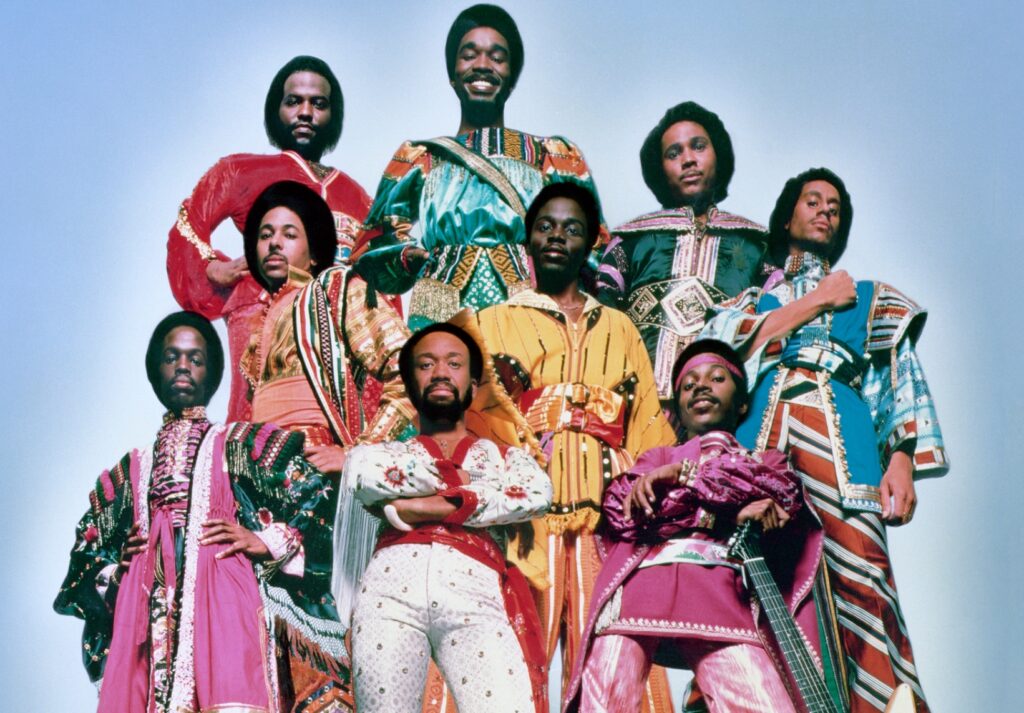
(Photograph by Bruce W. Talamon/HBO) Earth, Wind & Fire
But the doc linking up with the EW&F tour schedule isn’t the timeliness I’m talking about. Half the documentary’s parenthetical title — “The Weight of the World” — speaks to a common leaden feeling of gloom hovering over America’s semiquincentennial summer. Our malaise wasn’t helped by the White House’s announced concert lineup at the Great American State Fair, scheduled to run in Washington, D.C., from June 25 to July 10.
Some of the listed performers, including Bret Michaels, Milli Vanilli and Vanilla Ice, weren’t all that shocking given Trump’s retrograde pop music taste. But others cited in the press release, including Young MC and Morris Day and the Time, made plenty of Black folks recoil before laughing with relief when Day, in signature fashion, quickly refuted claims of his participation. “It’s A No For Me,” he tersely posted on social media, accompanied by a smiley face emoji wearing shades. The lineup quickly emptied out from there, leading the White House to cancel the promised shows it couldn’t deliver.
We need your help to stay independent.
The thought of Day performing “Jungle Love” for the MAGA crowd certainly turned my stomach, although seeing The Commodores on that list also let a little air out of my already deflated soul. The remaining members of the band have posted their decline RSVP to Trump’s fair in a banner topping their site’s homepage, thank goodness.
The insinuation that they would agree to it at all doesn’t make sense, especially after watching this documentary. Eclipsing that idea, though, is how much more alive and hopeful this documentary makes us feel.
EW&F is emblematic of Black identity, uplifting Black joy through a message of infinite possibility and affirmation, “feeding into little souls like mine,” says Michelle Obama. The Commodores, though a different band, rode that same wave and still serve that purpose.
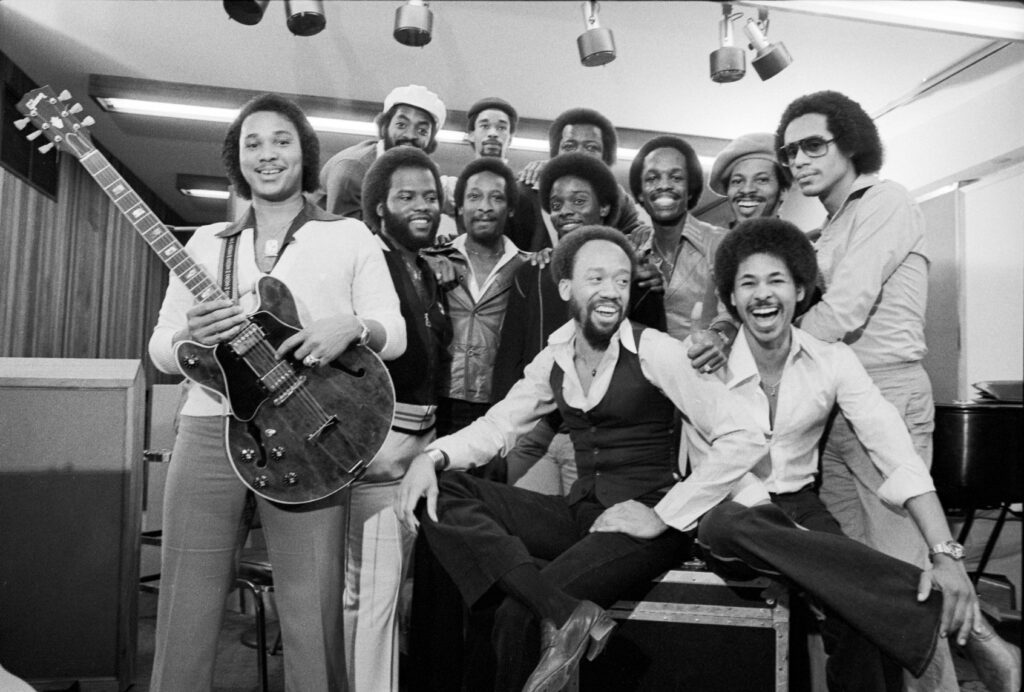
(Photograph by Bruce W. Talamon/HBO) Earth, Wind & Fire in a 1978 recording session.
But White, who died in 2016, wanted to bring his transformative art to all people. Bailey, Johnson and Verdine White, along with White’s longtime partner Marilyn and their son K.B. (who has a producer credit), thoughtfully lay out the band’s hearts afire philosophy by sharing their personal and professional bond with the band’s founder.
The result is both a story of an uplifting genius constantly reaching for the stars, and of a man who was hard to know and contradictory when it came to squaring his spiritual and artistic philosophy with his actions. Marilyn White speaks of Maurice with great affection while eventually admitting that his philandering ended their relationship. K.B. is upfront about his father’s emotional distance and absenteeism during his childhood.
Yet all of them convey an understanding, even an appreciation, for their close connection to an artist whose influence rippled across popular music.
“Maurice is like those beings from the pyramids,” says Verdine White. “They only come along once in a lifetime.” Movies like this one reassure us that their spirit is timeless, and here to stay for all time. The music wins eventually.
“Earth, Wind & Fire (To Be Celestial vs. That’s The Weight Of The World)” premieres at 9 p.m. Sunday, June 7, on HBO and HBO Max.
Read more
about Earth, Wind & Fire’s influence
