
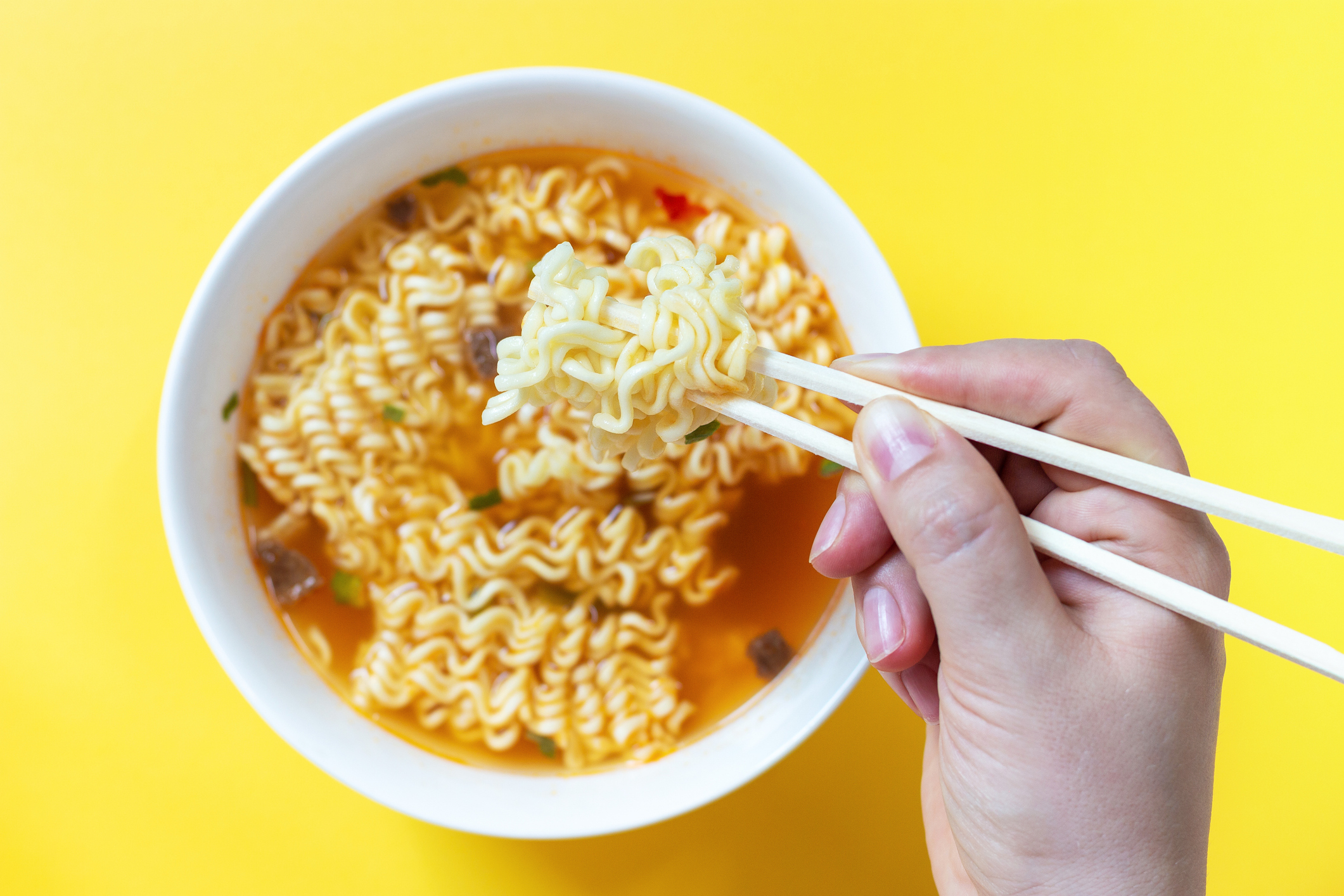

I’ve been on a mission to transform a handful of my go-to “struggle meals” into something that feels and tastes more elevated — without breaking the bank, of course. Thus far, I’ve conquered the humble, often-overlooked canned soup, along with dinosaur chicken nuggets (a playful addition to any plate) and slabs of frozen pizza (the ultimate weeknight shortcut). My latest target is instant ramen, which remains a beloved pantry staple.
My earliest memories of slurping those warm, squiggly noodles are from sick days spent nestled under the sheets in my childhood bedroom. A warm bowl of my mother’s homemade soup, complete with a pack of instant noodles bathed in a gingery collagen-rich bone broth and topped with fresh corn, bok choy and a soft-boiled egg, was medicine. It had the power to soothe the roughest of sore throats and quiet the phlegmiest of coughs. It was also nourishing and deliciously comforting.
Throughout college, packs of instant ramen and cup noodles provided sustenance for long nights spent with the textbooks. Wet noodles and seasoned water were quick and satisfying. It was also cheap and pretty darn reliable. If I felt like putting in a bit of effort, I’d throw in a fried egg, edamame and a few dashes of hot sauce.
I’ve since upgraded my instant ramen game, playing around with different proteins, fresh vegetables, seasonings and toppings. It doesn’t take much to zhuzh up instant ramen into a genuinely good meal. My no-fail formula is as follows: noodles + your choice of protein(s) + your choice of veggies + seasoning packet + dry toppings. I’d also argue that loading up your ramen with as many vegetables as possible, namely leafy greens, is a great way to enjoy your favorite fresh produce, stress-free. What you’re left with is a colorful and hearty meal born from something so simple and nostalgic.
We need your help to stay independent.
This is just one of many recipes I like to make when I’m craving a big bowl of noodles. I like to enjoy my noods in soup form, but you can also follow this step-by-step process for stir-fried noodles. Just drain any liquid, then cook your favorite ingredients and sauce with your choice of noodles.
The texture of your noodles is key
Arguably, the most important part of making instant ramen is choosing your noodles. Do you prefer your noodles long and thin? Or are you craving something thicker and chewier?
I grew up on Maruchan’s chicken flavor ramen noodles, which are my go-to for making soups. I also love the shrimp flavor. Open my pantry and you’ll see a glorious sight of orange and pink packets lining the middle shelf.
Nongshim Shin Ramyun is another one of my favorites, as the noodles are made to be enjoyed in a spicy soup. The noodles are springy and dense, meaning they hold their shape nicely when soaked in broth and have a nice chew.
Maruchan’s noodles, while chewy, are softer and more delicate. Cook them for longer than three minutes and they become mushy and clumpy. It’s not incredibly worrisome, just something to be mindful about when making your soup.
There are truly so many ramen brands to choose from. Sapporo Ichiban’s Tonkotsu Ramen, Nissin’s Top Ramen and Buldak’s line of spicy ramen are also stellar.
Know your flavor packet
That foil packet tucked neatly with your dry noodles is meant to be used, not discarded. I don’t care if it contains added MSG and holds a laundry list of seasonings you can’t pronounce. It’s a necessity. So please, familiarize yourself with it and use it. All of it.
Maruchan noodles come with one flavor packet. Whether your team chicken, shrimp, or beef, the individual packets are highly concentrated and on the saltier side. That strong flavor coats the noodles and produces a delicious, equally concentrated broth.
Nongshim Shin Ramyun, on the other hand, contains two flavor packets, including a dry seasoning powder (the soup base) and a packet of dehydrated vegetable flakes. The dry powder is more umami-heavy with notes of garlic and shiitake mushrooms and spicy, courtesy of gochugaru, or Korean red chili pepper.
Knowing your flavor packets will help you determine what complementary spices and condiments to add. For a hint of brightness, throw in lemon juice or dried citrus peel. For more heat, add a spoon of chili crisp and finely chopped green chilis. For an earthy, curry-inspired bowl of soup, sprinkle in a pinch of cumin and coriander or add in a few drops of toasted sesame oil.
Set your noodles aside
To prevent your noodles from overcooking and clumping, I prefer cooking them al dente (which is usually one minute less than the cooking time on the packet), removing them from the stove and then rinsing them under cold water for a few seconds. Set the boiled noodles aside in a clean bowl. They’ll be warm and brought back to life shortly when rich, warm broth is poured.
Ditch the starchy water and use chicken or vegetable stock
Yes, you can build your soup base from the water used to cook your noodles, but I prefer starting from scratch with chicken or vegetable stock, which adds richness and depth. Since I like to use all of my seasoning packets, I opt for unsalted or low-sodium stock.
Don’t skip the aromatics
Garlic, ginger and green onions — ingredients that will transform a bowl of ramen from simple to restaurant-quality. Sauté your choice of aromatics in oil until fragrant before adding the stock.
Umami is essential
Pour in a dash of soy sauce or fish sauce. Add a tablespoon of miso paste. Simmer dried shiitake mushrooms.
For a simpler option, sprinkle in a pre-made umami spice blend. My favorite is TJ’s Mushroom & Company Multipurpose Umami Seasoning Blend.
Throw in all the toppings…even if it’s not authentic
I like sprucing up my ramen with fresh bok choy, baby corn, spinach and pickled red onions. Go crazy with your leafy greens. Add in any veggies that need to be used up. Make things tangy and controversial with pickles. For dry toppings, I like nori sheets.
Finish with a jammy egg
Need I say more? Once the broth has been poured over the noodles and the toppings have been added, complete your glorious bowl with a soft-boiled egg. A fried egg is also great if you’re not a fan of a runny yolk.
Read more
ramen recipes:
