Alan Berlow
Ardor in the court, Part 3
A Texas court affirms the right of a judge and a prosecutor who slept together to condemn a man to death
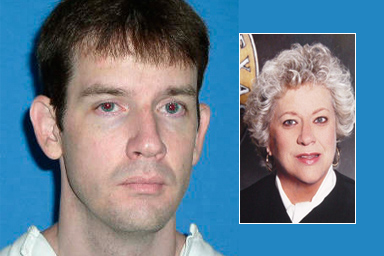
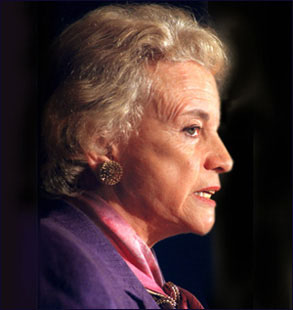
Charles Dean Hood, inset: Judge Verla Sue Holland If anyone had any doubt that the Texas justice system operates in a parallel universe, look no further than the latest decision by the state’s highest court in the case of death-row inmate Charles Dean Hood. On Wednesday the Court of Criminal Appeals (CCA) said it wasn’t interested in examining whether there was a conflict of interest in Hood’s 1990 trial simply because District Attorney Thomas S. O’Connell Jr., Hood’s prosecutor, had had a long-term sexual relationship with presiding Judge Verla Sue Holland, an affair the two tried to hide for 20 years.
In 1989, Hood was convicted of murdering Ronald Williamson and Tracie Lynn Wallace. The Holland-O’Connell affair was first reported by Salon in 2005, quoting anonymous sources. Judge Holland refused to either confirm or deny the affair at the time. A year ago this month, Holland and D.A. O’Connell, both since retired, acknowledged under oath that they had had a long-term sexual relationship, which was never revealed during more than a decade of appeals by Hood’s lawyers. In her defense, Judge Holland said the affair ended more than two years before Hood’s trial. But O’Connell also testified that the two had discussed marriage, and recalled that the affair continued as late as mid-1989 — just before Hood’s trial. He said the two continued to have a “good relationship,” sans sex, during and after the trial. He said the two took a trip together in 1991.
Rather than address the affair directly, the CCA ruled 6-3 on a technical question, concluding that Hood should have raised the issue at his original trial. But Hood’s lawyers couldn’t prove the widespread rumors of the affair before Hood’s trial. The CCA had earlier criticized Hood for failing to present any “personal knowledge” of the affair, a virtually impossible hurdle given that, as far as we know, there were no witnesses to the lovemaking other than the two principals, no Paris Hilton-style video, and the judge and her boyfriend weren’t talking. The CCA also said Hood’s claims were based on “rumor,” not fact. But when Hood’s lawyers were able to present the detailed facts of the affair, based on the confessions of the principals, the CCA said it was not interested in these facts.
Needless to say, some people have found the behavior of the since-retired judge and prosecutor, and that of the CCA, since Judge Holland was once a member of the very panel weighing her actions, more than a little unsavory. A score of legal ethicists concluded that the participation of the two at Hood’s trial was unethical, unprofessional and unconstitutional, and the legal basis for a new trial self-evident. Hood’s lawyers insist the affair rendered the conviction and death sentence invalid. Now they will have to convince a federal court that Hood has a right to a new trial.
Andrea Keilen, executive director of the Texas Defender Service, which represents Hood, said, “No one would want to be prosecuted for a parking violation — let alone for capital murder — by a district attorney who is sleeping with the judge. Yet the Court of Criminal Appeals is unmoved. We are outraged by this breakdown in the integrity of the justice system.” John Rolater, an assistant district attorney for Collin County, which is pursuing the case against Hood, called the CCA ruling “a significant procedural victory.”
Given the failure of a majority of the CCA to see any conflict of interest in the Hood case, it should come as no surprise that not one of the court’s justices saw fit to recuse him- or herself from hearing arguments about Hood, despite the fact that eight of the nine justices had served with Judge Holland. Holland served on the CCA for nearly four years after leaving the district court where she presided over Hood’s death sentence. Hood’s lawyers presented evidence suggesting that some of the justices might have been aware of the affair.
In addition, the CCA’s presiding judge, Sharon Keller, who has described herself as a “prosecution-oriented person,” was tried in August before the State Commission on Judicial Conduct on five counts of judicial misconduct, including violations of due process in another death case in 2007. Advised by her staff that lawyers for death-row inmate Michael Richard — scheduled to be executed that night — needed an extra 15 minutes to file a final appeal, Keller had replied, “We close at 5.” Richard was executed that night without having his appeal heard by the CCA. The outcome of Keller’s misconduct proceeding should be announced soon.
Sadly, the conflicts of interest in the Hood case don’t end with Judge Holland, D.A. O’Connell and the CCA. Before the Hood case reached the CCA, the case was briefly assigned to District Judge Robert T. Dry who presided over Judge Holland’s divorce, and was a defendant with Holland’s former husband in a million-dollar lawsuit. Dry issued several rulings unfavorable to Hood, including one that infamously scheduled a hearing for two days after Hood was set to die. Dry recused himself the day after I inquired whether his relationship with the Hollands created a conflict of interest.
The state’s ongoing effort to see that Hood is executed is spearheaded by Collin County District Attorney John Roach, who succeeded O’Connell. Roach and Holland both crossed party lines in 1982 to urge voters to reelect O’Connell, a Democrat. Roach and Holland had overlapping terms as Collin County judges for 15 years, and for most of that time O’Connell was the county D.A. Roach told the CCA that Hood’s lawyers had been gaming the system to delay the execution, and that they “possessed a more than adequate factual basis upon which to raise his claim” about the affair long before Holland and O’Connell came clean. Among the evidence Roach cited were a series of motions and letters Hood filed — without a lawyer — which Roach acknowledged were based on nothing more than rumors, and various news reports about the alleged affair that quoted anonymous sources.
But if Hood had a “factual basis” to raise the claim, why didn’t Roach — who had access to the same information and an obligation to find the truth and not just win a conviction — use those facts to investigate whether the conviction of Hood obtained by his predecessor as D.A. had been compromised, and whether other attorneys in his office had knowledge of the affair?
He might start by asking his Assistant D.A. John Schomburger, who was O’Connell’s co-counsel at Hood’s trial, and who now heads Roach’s felony trial division and continues to be actively involved in efforts to execute Hood. Given his decades-long association with the judge and former D.A., it is not entirely surprising that Roach opposed efforts by Hood’s attorneys to ascertain whether rumors of their affair were true. Hood’s lawyers asked that Roach be disqualified from any further participation in the case. Naturally, that motion was denied by the CCA.
Roach had several reasons for preventing the truth about the affair from coming out. In addition to his friendship with O’Connell and Holland, Roach no doubt realizes that a ruling that the relationship deprived Hood of a fair trial could mean that scores of cases O’Connell brought before Judge Holland were also tainted and could be reversed.
In 2008, Roach was named the state’s top prosecutor by the Texas District and County Attorneys Association. Accepting the award, Roach said: “Recognition by my fellow Texas prosecutors as Lone Star Prosecutor of the Year is a great honor — and doubly so because of our shared dedication to truth, justice and the rule of law.”
Like many D.A.’s, Roach has campaigned on his office’s high conviction rates, taking special note of murder convictions. Similarly, Judge Holland undoubtedly knew that winning convictions and death sentences in Texas was a career booster for her good friend O’Connell. Even if Holland were able to treat both parties fairly in every case she heard, the courts have ruled that the appearance of such bias is enough to compromise a judge. In the Hood case, Holland was obliged to recuse herself with or without a request from the defense. But she didn’t. Certainly, no defendant in his right mind would have elected to have a case tried by this pair of sometime lovers.
Roach’s resistance to any investigation of the affair brought Hood within minutes of execution on June 17, 2008, with Roach rejecting a 30-day postponement so Hood’s lawyers could investigate the affair rumors. Hood, who had eaten his “last meal,” was spared when his execution warrant expired. The execution was rescheduled for Sept. 10. Roach next rejected an appeal from Texas Attorney General Greg Abbott, who filed a highly unusual friend of the court brief on the defendant’s behalf, asking the court to investigate the affair allegations, even if it meant delaying the execution. In a personal letter to Roach, Abbott argued that, “if the execution proceeds as scheduled, before questions about the fairness of his trial are legally resolved, neither the victims nor justice will be served.”
Hood would almost certainly be dead had it not been for two people: Matthew Goeller, a former assistant district attorney under O’Connell, signed an affidavit in June 2008, stating that it was “common knowledge in the district Attorney’s Office, and the Collin County Bar, in general,” that O’Connell and Holland had a “romantic relationship.” Taking note of this affidavit, District Court Judge Greg Brewer ruled in a highly unusual civil action that the failure of Hood’s lawyers to develop hard facts about the affair was “squarely attributable to Judge Holland and Mr. O’Connell’s deception and non-disclosure, rather than the lack of reasonable diligence on Hood’s part.”
Judge Brewer said that Holland and O’Connell failed in their “duty to disclose the fundamental conflict caused by their relationship,” and that, “State officials prevented him [Hood] from obtaining concrete evidence of the Holland-O’Connell affair.” Three of the CCA judges agreed with Brewer’s analysis, concluding that the unsuccessful efforts of Hood’s lawyers to obtain concrete evidence of the affair were due entirely to “the principal’s longstanding efforts to keep the affair hidden.” But they were outnumbered by the six members of the panel who decided to endorse the state’s questionable prosecution of Charles Dean Hood, and write another episode in the lamentable saga of Texas justice.
Ardor in the court, Part 2
Salon reported on an alleged affair between judge and prosecutor in a Texas murder trial. Now, days before Charles Hood's scheduled execution, his lawyers make the allegation in court papers.
Rarely in the annals of criminal justice does a conflict of interest get more sordid or have greater consequences than this. Charles Dean Hood is scheduled to be executed in Texas on Tuesday morning. In 1990, when he was on trial for capital murder in the Dallas suburbs, the presiding judge who imposed that death sentence and the local prosecutor who was trying to have Hood put to death had been involved in a “long-term intimate relationship.”
That’s according to papers filed by Hood’s attorneys in two Texas courts Thursday. Hood’s lawyers allege that Texas state court Judge Verla Sue Holland had a “personal and direct interest in the outcome of the case,” and was disqualified from trying the case under the Texas Constitution because of her ongoing affair with Collin County District Attorney Tom O’Connell. Hood’s lawyers are seeking a stay of execution and the reversal of his conviction and death sentence.
Continue Reading CloseWho would Antonin Scalia torture?
Next week, when the Supreme Court hears a case challenging the use of lethal injections, we may learn more about the legal limits to state-sanctioned pain.
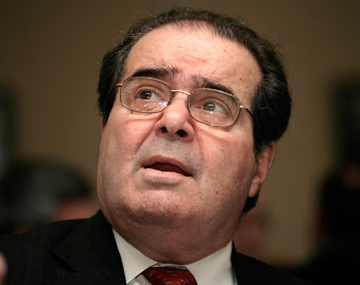
Last June during a panel discussion in Ottawa about terrorism and the use of torture, Supreme Court Justice Antonin Scalia stood up for the TV torturer extraordinaire and hero of Fox Broadcasting’s “24.” Scalia insisted that the fictional spy had “saved hundreds of thousands of lives” using tough interrogation tactics to stop a terrorist from nuking Los Angeles.
“Is any jury going to convict Jack Bauer?” Scalia scoffed. He went on to argue that when it comes to torture, “the question is really whether we believe in these absolutes. And ought we believe in these absolutes.”
Continue Reading CloseThe politics of injustice
The testimony of one bogus witness put Larry Fowlkes away on murder charges for 45 years. Will presidential hopeful Gov. Mark Warner set him free?
With his decision in late November to spare the life of condemned killer Robin Lovitt, Virginia Gov. Mark R. Warner avoided the dubious distinction of presiding over the nation’s 1,000th execution in the modern era of capital punishment. Instead, it fell to his neighbors in North Carolina, who put Kenneth Lee Boyd to death on Dec. 2.
Warner, a moderate Democrat, is expected to devote himself full-time to a run for the White House in 2008. But with a month left in his term as governor, the 51-year-old presidential hopeful is not out of the woods when it comes to messy questions of murder and justice in the American legal system. While the media focus on the pending execution of Stanley “Tookie” Williams, the notorious Crips gang leader seeking clemency in California for rehabilitating himself in prison, Warner finds himself embroiled in a struggle over the blatant miscarriage of justice. Before departing office, he must address no fewer than three major cases involving possible wrongful convictions in the Virginia courts.
Continue Reading CloseArdor in the court
When the judge and prosecutor involved in a capital case are sleeping together, can the defendant possibly get a fair trial? Meet Charles Dean Hood, on Texas' death row.
Here’s a not very tough question of legal ethics to ponder over the morning coffee: Let’s say you’re on trial for murder, and the judge and the prosecutor in your case have been having an affair. Is it possible for you to get a fair trial?
In the case of Charles Dean Hood, the short answer is, “Don’t bet your life on it.”
Hood, who was sentenced to death for a 1989 double murder, is scheduled to be executed by the state of Texas on June 30. Unfortunately for Hood, in the 15 years since he arrived on death row, the issue of the strange and not-so-secret relationship of State District Court Judge Verla Sue Holland and Collin County District Attorney Tom O’Connell has never been raised in a single state or federal court.
Continue Reading CloseDeath knell for the death penalty?
Texas legislators -- yes, Texas -- are on the verge of approving a law that could result in a decline in executions nationwide.
In January 2001, Texas Gov. Rick Perry concluded that it was time for the Texas Legislature to “take a good hard look” at allowing juries to sentence capital defendants to prison for the rest of their lives, with no chance for parole, instead of executing them. Three years later, Perry himself still had not made up his own mind on whether to give Texas juries the authority that jurors in 36 of the 38 death penalty states have. And that was too bad for Kelsey Patterson, a psychotic death-row inmate who believed his actions were controlled by implants in his brain. On May 18, 2004, Perry said he was compelled to deny Patterson clemency, despite an unprecedented 5-1 recommendation by the Texas parole board that the sentence be commuted to life in prison.
Continue Reading ClosePage 1 of 3 in Alan Berlow