David Thomson

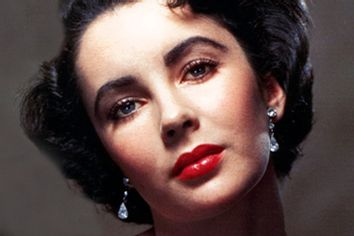
Elizabeth Taylor, from beauty icon to punchline

"Cat on a Hot Tin Roof," "Virginia Woolf," "Cleopatra": Elizabeth Taylor's film roles chart her rise -- and decline

Elizabeth Taylor, b. London, 1932

It is years now since Elizabeth Taylor made a proper movie. Yet we know she’s there, still: her face blooms for perfume promotions, and she’s always likely to be standing up for AIDS victims or Michael Jackson. Are we meant to think she has the same sincerity for all three? Or is she resting? That would be sad — for at one time, she seemed uncommonly engaged, in movies and scandal alike.

Though her love life and the soap opera of her health seem to have been with us as long as the H-bomb, Liz was younger than, say, Audrey Hepburn or Rock Hudson. When they made “Giant” (56, George Stevens), she was actually a year younger than James Dean. Brought up at a time when sexuality on the screen was still creatively suppressed by censorship, her private life was paraded by the press as that of a love goddess. That now looks like the last flare of classic star charisma, the last time the public could read any imagined voluptuousness into a decorous, sulky princess of “House & Garden.” Image and reality clashed like cymbals in “Cleopatra” (63, Joseph L. Mankiewicz). But though the chaos of that film’s making included Liz dangerously ill and Liz exchanging a fourth husband (Eddie Fisher) for a fifth (Richard Burton), her Queen of the Nile emerged a plump, complacent clotheshorse.

She may have been apprehensive about the lurid extreme of public attention; intrigued by the label of “acting” that trailed from Burton; and she was surely perplexed by the way fashion accelerated away from the sexual mode of 1958-62. In “Cat on a Hot Tin Roof” (58, Richard Brooks), as Maggie the Cat, she seemed aggressively candid about sex. But by 1970, she was a throwback to elaborate hairdos, fussy clothes, and earnest emoting. She had not matured, but regressed into that vague eligible debutante — or her mother — that she once infused with indolent wantonness, half asleep from being stared at. Even her good films were prominently signaled as “serious acting,” whereas there was once a poignant osmosis of young Hollywood doll and the parts she played. It is the difference between her two Oscar films — “Who’s Afraid of Virginia Woolf?” (66, Mike Nichols) and “Butterfield 8″ (60, Daniel Mann) — the first based on a clever stage play, the second on a hack novel. Martha in the first is a “character,” far deeper and more demanding. You can hear Taylor thinking out all her complexities as she plays. In “Butterfield 8,” however, she serenely inhabits the melodrama in exactly the way that cinema encourages audiences to live through its stars. Like the audience, Liz had a superstitious preoccupation with glamour.

The marriage to Burton may have unsettled her, showing her how simple her own dramatic taste was. Once a presence, she became an actress. Not a bad actress, but one unable to regain the shallow clarity of “Butterfield 8.” In the event, she reduced the brittle respectability in Burton to her level — that of boasting of diamonds. Martha in “Virginia Woolf” was an “ugly” woman, something the Taylor of the 1950s would never have been allowed to take on, and a part fundamentally offensive to her view of herself. Later, she tried to look like her former self, as witness the neurotic wealth of costume in “Divorce His, Divorce Hers” (73, Waris Hussein), the TV film released ghoulishly as she and Burton broke up. She was evacuated to America during the war and made her debut in “There’s One Born Every Minute” (42, Harold Young) before finding her place at MGM as a rapturous face in a collie’s mane: “Lassie Come Home” (43, Fred M. Wilcox). In her next film, “Jane Eyre” (44, Robert Steven- son), she was like a young Lizzie Siddall as the child who dies. She was a child still in “The White Cliffs of Dover” (44, Clarence Brown), a big hit in “National Velvet” (44, Brown), and “Life with Father” (47, Michael Curtiz). Her teenage period was happily brief: “A Date with Judy” (48, Richard Thorpe); “Julia Misbehaves” (48, Jack Conway); “Little Women” (49, Mervyn Le Roy); “Conspirator” (49, Victor Saville); and “The Big Hangover” (50, Norman Krasna).

It was Vincente Minnelli and the parental guidance of Spencer Tracy and Joan Bennett that ushered in her maturity in “Father of the Bride” (50) and “Father’s Little Dividend” (51). But her first really striking part was away from MGM as the rich girl in love with Montgomery Clift in “A Place in the Sun” (51, Stevens). That film not only established her own black-haired beauty, but set a popular standard for a decade. In the fifty years since, has any movie actress been so blatant about extraordinary beauty? Julia Roberts in “Pretty Woman” is the only case that I can think of. It also showed how unlucky she was to be the property of MGM, still dealing in Thalberg’s innocuous glamour. In the next few years she was wasted on insubstantial romances and genteel adventure pictures: indeed, her Rebecca in “Ivanhoe” (52, Thorpe) had something of the splendor of the silent screen. Otherwise she tended to sigh and dilate her violet eyes: “Love Is Better Than Ever” (51, Stanley Donen); “The Girl Who Had Everything” (53, Thorpe); “Rhapsody” (54, Charles Vidor); replacing Vivien Leigh in “Elephant Walk” (54, William Dieterle); “Beau Brummel” (54, Curtis Bernhardt); and “The Last Time I Saw Paris” (54, Brooks). But “Giant” was an improvement and signaled a special responsiveness to the naturalistic care of George Stevens. As if to prove her aptitude for saga romance, she was as atmospheric as a fading camellia in “Raintree County” (57, Edward Dmytryk), as a Southern girl who goes mad with love. These were her best years, leading to the Oscar for “Butterfield 8″ and the brimming explicitness of her beach bait for young men in “Suddenly, Last Summer” (59, Mankiewicz).

After “Cleopatra,” she clung to Burton to prove fidelity and professionalism: The “VIPs” (63, Anthony Asquith); the risible “The Sandpiper” (65, Minnelli); “The Taming of the Shrew” (67, Franco Zeffirelli); as Helen of Troy in “Doctor Faustus” (67, Neville Coghill and Burton); “The Comedians” (67, Peter Glenville); “Boom!” (68, Joseph Losey); and “Hammersmith Is Out” (72, Peter Ustinov). She was much more deeply stirred in “Secret Ceremony” (68, Losey), where she seems to catch the sense of sexual instability, and in “Reflections in a Golden Eye” (67, John Huston). But she was restored to former melodrama in “The Only Game in Town” (69, Stevens), “Zee & Co” (71, Brian G. Hutton), “Night Watch” (73, Hutton), and “Ash Wednesday”(73, Larry Peerce), shameless movies, but enough to reprise her brooding self-belief. She rediscovered dignity in “A Little Night Music” (78, Harold Prince). Fifteen years later, the update could list the continuing marital career — but no one cares now. It should mention “The Mirror Crack’d” (80, Guy Hamilton) and “Young Toscanini” (88, Zeffirelli) in theatres, as well as several TV movies: “Between Friends” (83, Lou Antonio); a juicy Louella Parsons in “Malice in Wonderland” (85, Gus Trikonis); as a star who comes out of a mental hospital to make a comeback in “There Must Be a Pony” (86, Joseph Sargent); running a Western brothel in “Poker Alice” (87, Arthur Allan Seidelman); and with Mark Harmon in “Sweet Bird of Youth” (89, Nicolas Roeg).

Yet the work of which she is probably most proud is her feisty, eloquent, and quite implacable resolve to have people talk and know about AIDS. It is somehow fitting that her astonishing strength and durability should now be given so generously to the vulnerable, and in 1993 she received the Jean Hersholt Humanitarian Award for this service.

Over the years, there have been jokes about Elizabeth Taylor — more than that, she was for a decade or so a roaring comedy of disaster. Yet at the tender age of seventy, she is one of those stars whose mere look or voice brings back so many memories. Her worthless movies of the seventies and eighties are not really held against her. It is to be hoped that she may yet give us a few sensational old ladies — something better than her role in “The Flintstones” (94, Brian Levant).

Nothing yet, except for “These Old Broads” (01, Matthew Diamond).

Excerpted from “The New Biographical Dictionary of Film” by David Thomson Copyright © 2010 by David Thomson. Excerpted by permission of Knopf, a division of Random House, Inc. All rights reserved. No part of this excerpt may be reproduced or reprinted without permission in writing from the publisher.

The lower depths

The images from the London bombings awakened an elemental fear that we all do our best to keep buried.

The horror began a long time ago, and it has its roots in more ancient or basic things than terrorism. Yet the terrorists understand, I think, and their subtlest reach is into that cavern in ourselves where dread has always lived, and waited. Anyway, I had to give up the Tube (no Londoner has any other word for it) in the late 1960s, at just the time when London was swinging — and that swing was taken to be an altogether good thing. I had a commute to work that involved the Tube — the Piccadilly line, as it happens — and gradually over a few months when I was under mounting pressures in life I discovered, in the gap between South Kensington and Knightsbridge, that I had claustrophobia.

That stretch of line was winding and longer than usual, and sometimes in the rush hour my packed train came to an absolute halt. I felt panic inside me, no matter that I was in my 20s, strong, not inclined to the irrational and, as I thought, happy. I had to leave London, and one way or another I ended up in America.

What has that got to do with anything, let alone the terrorist attack on London? Just that the fear was always there in that the absolutely necessary and for a while amazingly efficient transportation system that was the Tube — the system that has made London workable — was always close to terrible fears. And for me, at least, the greatest record of what happened in London on 7/7 was the cellphone video of a lens held up high to record the tramping heads and figures of some passengers who had had to leave their train and walk forward to the nearest station and safety. It was the most amateur image and yet the most accurate and acute: You could say, I suppose, that it was the perfect marriage of new technology and old anxiety. And it certainly revived my nightmares and daymares of the late ’60s, that fear that if the system — the mass of tubes passaging the mass, the flow, the life of London, and its shit — ever stopped then the shit would have to get out and walk in the tunnels possessed by dirt and dark and rats.

Talking of those tunnels, they seem to have been cleared, at last, five days after the incident. But think of what the clearing has meant. The tunnel between King’s Cross and Russell Square (this is beneath the British Museum and Bloomsbury) is 70 feet deep and 12 feet in diameter. That’s where one of the trains exploded, and it was the “trickiest” cleanup task — that’s the brave language of those who carried it out. It is July in London, and the temperature on the working Tube is 80 degrees as a rule, with the draft of trains bringing the only wind. After an hour, I daresay, any wind is a memory. The heat then will increase. The tunnel was at risk of further collapse. And ordinary people in heavy protective suits that only raised the temperature went down into those tunnels to find and recover the human softness that must have been turning to slime by the weekend. And, of course, with every modern diligence, it was their task to separate the slime from any hard things that might be clues to the nature or mind of the bomb. We name the dead in papers, and so we should, and I believe there may be a case for not naming the recovery agents — for fear of targeting them another time — but what else is courage and duty but what they did?

What I am trying to say, I think, is that everyone has claustrophobia. Everyone who rides on the Tube. I have two daughters now who live in London, and I know they try to organize their lives to avoid the Tube — for all the obvious reasons, and for another, too, which you may not know, but which is a glum orthodoxy for most Londoners: that the Tube in London is too old, too short of investment, too close to breakdown and fire. It’s an accident waiting to happen, one daughter said recently, fingers crossed when she had to go down, long before the terrorists put two and two together — I mean human nature and the natural aging of a once splendid system in a country that cannot afford to look after its people in the ways that idealism still recommends.

During World War II, some Tube stations were used as air-raid shelters. The people tried to sleep on the platforms. And Henry Moore the sculptor did a series of drawings of those bodies, curled up — in safety, yet so like death. I was reminded of those profound drawings when I saw the piercing amateur video of unknown figures marching toward some light or air or breeze, and the tomorrow when they would have to go back down into the Tube.

The media could not go there, but these silly little toys were drawing with light and telling us what we have always known: that to be buried is to be close to death.

Continue Reading Close

A fine touch

Veteran film editor Margaret Booth cut up the dreams and hopes of all the tough-guy directors and reassembled them the way she liked.

Have you ever seen a scruffy little picture called “Fat City,” released in 1972? No, I’m not talking about an anniversary (though I see no reason why some smart theater shouldn’t put “Fat City” back up on a screen). I’m thinking of what is still one of John Huston’s best pictures, and the most authentic portrait of the drab business of boxing you are likely to see. Taken from a very good novel (by Leonard Gardner), it’s the story of a beaten-up veteran (Stacy Keach) and a kid who knows no better (Jeff Bridges). It was shot in a fabulous, dusty, drained color by the great Conrad Hall, as befitted the real locations in the area of Stockton and Fresno, the part of California where no one wants to be, especially in summer. There are terrific eccentric performances from two actresses, Susan Tyrrell and Candy Clark, who could pass for tattered extras picked up in a flyblown bar. The more I remember it, the more I want to see it again.

And it was edited by a lady named Margaret Booth. She was an expert by then, working for John Huston, her hands as full of strips of film as a dressmaker holding scissors and pins. She cut to the deadbeat twang of the girls’ talk and the weary tattoo of tired sluggers in a stained ring. To look at the picture, you could have believed that the timing was in the wise, knowing blood of some awesome fight veteran, like Archie Moore or Jersey Joe Walcott. But Margaret Booth had never thrown a left hook in her life, and she was 74 by then.

Margaret Booth died this Nov. 1, at the age of 104. She was never married; she used to say that she was married to film, and to her studio — in the old days, Metro-Goldwyn-Mayer. But truth to tell, some years before she joined the Metro studio, in 1921, she had been what was then called “a joiner” for D.W. Griffith himself. A joiner was someone who took the shots, trimmed them so that the actions fit together nicely, and made the splice — you see where “marrying” came in — scraping off the emulsion, laying down a light brush stroke of glue or film cement and making the join, or the cut.

This is no place to take off on an essay on the theory of film. Still, I think you can see that just as the movies have their origin in the capacity of a machine to record life and passing time on a film strip, so cutting or joining or editing those shots is the beginning of order, narrative or even art. It’s very nice, today, to see a book like “The Conversations,” where poet and novelist Michael Ondaatje talks at length to one of film’s most inspired editors, Walter Murch. And I know that Murch would offer a prayer and a tribute to Margaret Booth, just as I think we should all note that she was a woman.

You may have heard the old Hollywood superstition about not letting a woman look through the lens of a camera. You can hear some people muse over how that was the great secret of the art and the magic, a sacred trust, forbidden to women. And you may laugh it off and say, what nonsense. In which case, make me a list of the women in American film who are camera operators or directors of photography in 2002. There are women running the studios. But very few who gaze on the rite as it is shot.

On the other hand, when it comes to handling the scissors (I speak metaphorically — to make the hint of castration as broad as possible), there are plenty of great female editors: Thelma Schoonmaker has cut most of Martin Scorsese’s recent pictures; it was Verna Fields who was in charge of the razor-sharp incisions, and winning an Oscar, on “Jaws”; Dede Allen cut “Bonnie and Clyde,” “Dog Day Afternoon,” “The Missouri Breaks” and “Reds”; Carol Littleton edited “Body Heat,” “E.T.” and “Wyatt Earp.” And there are plenty of others.

Margaret Booth was in charge of countless silent films; she did Garbo pictures, along with the 1935 “Mutiny on the Bounty.” From 1939 onward, she was in charge of all editing at MGM, which is to say that she (under orders from Louis B. Mayer) might cut up the dreams and hopes of all the tough-guy directors and reassemble them the way she liked. And in her 70s, she did not just “Fat City,” but “The Way We Were,” “Funny Lady” and “The Goodbye Girl.” In 1977, she was given an honorary Oscar for a lifetime’s work.

And to this day she stands for the most intriguing question: If men need to look, do women shape the story that they see?

Continue Reading Close

Sublime depravity

James Toback's cult classic "Fingers" is like the screen treatment of a comic book written and illustrated by the Freud boys -- Sigmund and Lucian.

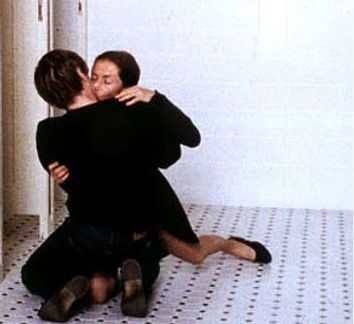
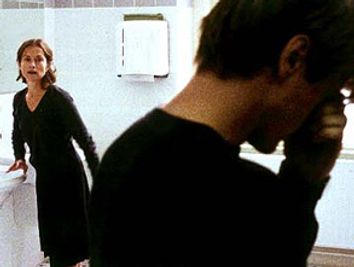
Not so long ago, I spent two weeks talking about Michael Haneke’s remarkable yet not quite satisfactory film “The Piano Teacher” — the one with Isabelle Huppert. Well, it was all part of a cunning scheme in which I could eventually say, “So, you want to see a real film about a piano player? Try ‘Fingers’!”

Made 24 years ago, “Fingers” is still the best thing writer-director James Toback has ever done, and one of the most startling debuts in American film. Long before people had the idea of making movies from graphic novels, “Fingers” is like the screen treatment of a comic book that might have been written by Sigmund Freud and illustrated by Lucian Freud. It is pulp raised to the level of the rarest brie cheese, which is to say that it hovers over the boundary between gourmandise and pure nausea. It is a great film, made by a brilliant young man who was taking “movie” then as if it were the most dangerous drug in the pharmacy.

Let me try to describe the scary outline of this psychic melodrama. Jimmy Fingers (Harvey Keitel) is a virtuoso concert pianist, on the edge of a classical career. Nothing holds him back except his own ruinous neurosis, his preoccupation with sex, and the rest of his life. For between practice sessions and auditions at Carnegie Hall, he is a debt collector for the mob, likely to apply whatever nasty form of violence comes into his wicked, inventive head.

This is far-fetched? Well, of course, but would you not say that our society jostles together unwholesome competing strains? Is it not true that people who have just listened in rapture to Mahler at the symphony hurry home to catch “The Sopranos,” without any sign of shame or ill-adjustment? Is it not the case that as we aspire to higher and higher things, in reality we submit to ever harsher realities of compromise, graft and violence? Or, to adopt the bold, assertive ways of “Fingers” — suppose you had Marian Seldes as a mother, and Michael V. Gazzo as your father.

Impossible? Outrageous? Surreal? Yes, all of those things, side by side like the fashion photographs and the pictures of dying refugees in the magazines heavy with perfume. And, if you can’t credit so twisted a family tree on paper, just watch the contortions of body and soul that affect Keitel’s Jimmy Fingers. In other words, Toback says, “Suppose these are your parents,” and then drives on remorselessly until the mismatch is your DNA.

“Fingers” was a debut. It is sometimes wildly pretentious. But it knew it had grasped a profound truth — the marriage of intellect and instinct — in the parentage that Jimmy suffers from. And it knows how possible it is, right there in Manhattan, to have Jimmy undergoing a desperate search for psychosexual maturity. The film is very violent, deeply imbued with racist paranoia, and so conceived and made that virtually every glance and interaction is sexual.

Jimmy dreams of love and sex with a pale, angelic blonde, the spirit of refinement (embodied by Tisa Farrow). But she is under the power and control of an immense black chieftain of the underworld (played by football great Jim Brown). So the scuttling insect that is Jimmy also takes sex on the run with the standard moll-whore type (Tanya Roberts). Yes, you’ll recognize these actors, because Toback, way back in 1978, knew he had to cast his pulp fiction with intimidating life forces and instantly graspable types. So the rest of the cast includes Zack Norman, Danny Aiello, Lenny Montana, Morris Carnovsky and Tony Sirico.

“Fingers” has had a checkered career. Opening and closing fast in 1978, it has now reached cult or legendary status. Briefly available on VHS, it now appears for the first time on DVD, with a fascinating audio commentary by Toback, and a lengthy conversation between Keitel and Toback. It only flirts with the obvious to say that the picture is autobiographical. No, Toback is not a concert pianist or a collector. But his head is full of great music, and he has sometimes been on the run as a gambler who owed too much. But “Fingers” is most valuable as the lurid yet beautiful imaginings of a kind of infant savage, torn between sublimity and depravity, and knowing that in the American way you owe one foot, one hand and one ball to the swamp and another to the magic mountain. That Toback has never since matched “Fingers” attests to the passion and exultation, the shame and the triumph, that compete in this delirious confessional movie.

Continue Reading Close

All about Nina

She's the hottest woman still alive on "24" and I hope they use her as the sultry center of the second season.

I don’t think it’s too soon to start worrying over “24,” which returns Oct. 29. For just as every fan of the show was always going to say, yes, of course, go for the second series, still there are great dangers in trying to repeat so crazed or hysterical a format. Assuming they use the same format, one overfull day can leave Jack Bauer (Kiefer Sutherland) seeming cruelly overloaded. Two in a row might begin to reveal him as an addict. The desperate lack of sleep on-screen could provoke it on the sofa. At its best in its first season, “24″ had the pathos of true drama — for which there are no second helpings. Lear and Hamlet don’t come back for another season.

Not that the promos are unpromising, by any means. Dennis Haysbert would seem to be president by now (and wearing a deep pink shirt, which is promising), and Jack may be the one person in the security apparatus whom this president will trust. Moreover, the flashes of our hectic future indicate the kind of world disaster (are we talking biological agents?) for which every daily paper prepares us. There are shots of people wrapped up in plastic suiting, a haunting image to be sure, but not good for dialogue.

And there is Kim, Kim Bauer (Elisha Cuthbert), who seems to have had a pretty thorough makeover. Well, why not? She’s a year older now, and for most of the first series she was on the run, hounded, terrorized, cut off from cosmetics as well as sleep. It would be no wonder if Cuthbert’s agent insisted on a new look, and it is promising enough material if Kim begins by being a little hostile toward Jack. “How could you let mother die?” You will remember that Teri Bauer (Leslie Hope) was offed at the end of the first series. I still meet some people who wonder, “Was she really dead?” But I don’t see how the first series had all those kicks in its ending if she was just resting. No, I think Teri’s gone.

Does that leave anyone?

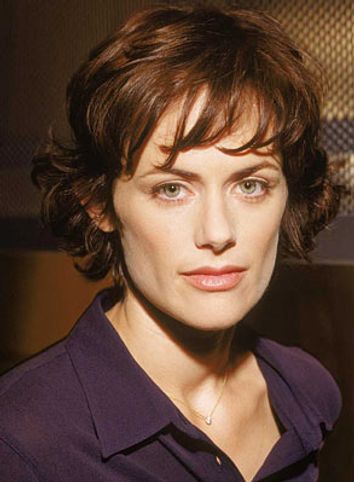
Readers of this column, who know and try to tolerate its extreme proneness to Nina (Sarah Clarke), may sigh. But any way you look at it, the first series of “24″ took its most agonizing turns in the revealed treachery of that tall, dark right-hand girl to Jack, and the poignant inevitability with which she offed Teri. After all, even if Nina was a spy and a traitor from the start, she had had her affair with Jack, and I think it was always evident in her eyes how far that poison had turned into love. So she didn’t like Teri, or want her around.

I have no idea where “24″ is going, but I tremble for the show and the realization six or seven weeks into the second series that, really, they shouldn’t have gone for the repeat. Unless …

Suppose that in this new amazing crisis that threatens Los Angeles and why not the world, suppose that around Episode 3 or 4 Jack begins to realize that the only person who may know the secret evil (or the secret to the secret evil) is Nina. Nina, I surmise, is in deep custody somewhere, still in her black garb, still pretty expertly made up and maybe with one last cellphone hidden in some private part — I know, it’s crazy, but “24″ always was.

And Jack thinks to himself, do I go in and ask that heinous bitch for help? Kim goes berserk when she hears about that prospect. “You’re betraying Mom again!”

But the president tells Jack that the safety of the world “as we know it” may rest on your decision. So Jack goes into Nina’s cell. He’s got 21 hours to get her to cave in, to talk. “Hello, Jack,” she murmurs. “I wondered when I’d be seeing you.”

This is impure speculation — still, the show needs a personal hook. Jack interrogates Nina. This can be ultra-third degree, if you like, and Nina “cracks.” She breaks down. She weeps. She tells him how she was compelled to act as she did because her triplets are back in wherever threatened with a terrible slow death. Nina thinks she may have the secret, without knowing it. Jack sees the woman he once loved beneath the veneer of traitor. He begins to weaken.

He’s on TV so he can’t hear the screams from us, the audience, “You idiot! You helpless prick! She’ll betray you again!”

Oh, you don’t think it’s possible? You don’t think television would ever be that crass? Well, maybe. On the other hand, wouldn’t you like to have “24″ (second series) leaving you in tatters by the time it gets to its own Episode 20 or so? And when it comes to tatters, and getting you there, Hollywood has a way of using the tricks that have worked before.

I hope I’m wrong — because I’d like to be surprised. But I think the second series will hang on the return of Nina.

Continue Reading Close

Isabelle in the bath

The personal sexuality of actors and stars may be the only mystery they are actually allowed.

As I sketched last week in my outline of Michael Haneke’s film “The Piano Teacher,” I wondered over the precise nature of actress Isabelle Huppert’s beauty in the lead role, and whether her masochistic character was happy or unhappy. And I tried to suggest that the fate or predicament of Erika was significantly affected by the hiring in of Huppert. After all, in the scene where Huppert steps into her bath, clad in just a loose robe, and, with mirror and razor, cuts at Erika’s sexual parts, it’s hard not to take on the question of who is hurting whom? And why? And yes, she might be shaving herself, or trimming Erika’s pubic hair, but there is blood in the bath.

No, it’s not Huppert’s blood, I’m sure; and Erika is what you might call a bloodless creation — though not necessarily “anemic.” The blood is just red, there in the bath, or poured in by some out-of-sight props person so that it may be discovered eventually, as evidence of self-inflicted damage.

Still, it’s a tricky moment to judge. Huppert won the acting prize at Cannes for “The Piano Teacher,” and there was a lot of talk about how brave the performance was. No, the suggestion of courage isn’t because Huppert had to cut herself to get at Erika’s pudenda. I think it’s more on account of a kind of self-revelation — the willingness of the actress to play in such nakedly emotional scenes. But “nakedly emotional” makes you think you can actually see what is happening. Whereas in that bath scene, no matter that Erika uses a mirror to see exactly, we don’t see what she is doing. The camera does not track and tilt and squirm like a male member, to get a better view, to gain access. There is not even a cutaway close-up of the erogenous zone, so that we can know exactly where the blade bites.

Why not? It’s not, really, that too much about Haneke encourages notions of tact or taste. I suspect it’s rather more that, having cast Isabelle Huppert — a kind of icon, after all — he flinched from asking that much of her. If you recall, on “Last Tango in Paris,” Bernardo Bertolucci admitted that he had taken a few shots in which Marlon Brando’s private parts were visible. But in the event, he had felt such awe of Marlon, such childlike respect, that he could not actually reveal the great Nebraskan penis of the Marlon (it is said to be uncircumcised). Not that he ever mustered the same reverence for Maria Schneider, who — you may recall — is stark naked for much of the film. But Maria Schneider was an unknown then. She didn’t have the status — just a great body.

That sort of sexual discrimination should always be stressed, and it always disfigures the making of frank, artistic and important films as much as it does trash. Yet it is not quite my main point here. On “Last Tango,” Brando himself winced at Bertolucci’s early suggestion that he and Schneider should really “do it” for the camera. Brando was old-fashioned enough to reckon that actors didn’t, shouldn’t, could not do such things. Because, if they did, then every film would suddenly become a creepy, voyeuristic documentary instead of a profound, far-reaching fiction.

Now it’s easy to understand what Brando felt, I think. But it’s a great mystery as to why a terrible confusion of actor and character occurs with fucking, say, but not with kissing, breathing, walking, thinking or just standing there and letting yourself be photographed. In other words, the ultimate secret — the personal sexuality — of actors and stars may be the only mystery they are actually allowed. Which would help account for the extraordinary inflation in their sexual legend — or our passionate need for a kind of privacy, or mystique, to cloak the act.

I was talking the other day to someone whose mother had just died. My friend had helped nurse the mother toward that death for several months. And my friend — a filmgoer, an enthusiast — said quietly and simply that it would be a long time before she could take a death in a fictional movie again. Why? Because death is of a height and depth that imitation shames or degrades. And I have sometimes wondered myself whether there might not be a series of events, so profound to life, that simulation could not help but cheapen them — sexual climax, death, helpless laughter, uncontrollable rage … breathing.

I know: Once you start, it doesn’t leave a lot for acting. And, surely, most of us are moved regularly by great acting, without plunging into that abyss of not knowing actor from character. Well, we hope so, for the sake of acting and fiction. But sometimes a film comes along that asks those questions, and leaves us perched awkwardly on the lip of ultimate decency. “The Piano Teacher” is like that. Not great. Not even good maybe. But possessed by a shocking question.

Continue Reading Close

Page 1 of 19 in David Thomson