Maxwell Strachan

WikiLeaks: The four most extreme calls for retribution

Details be damned! Let's shut down Julian Assange -- before it's too late!

  • more
    • All Share Services

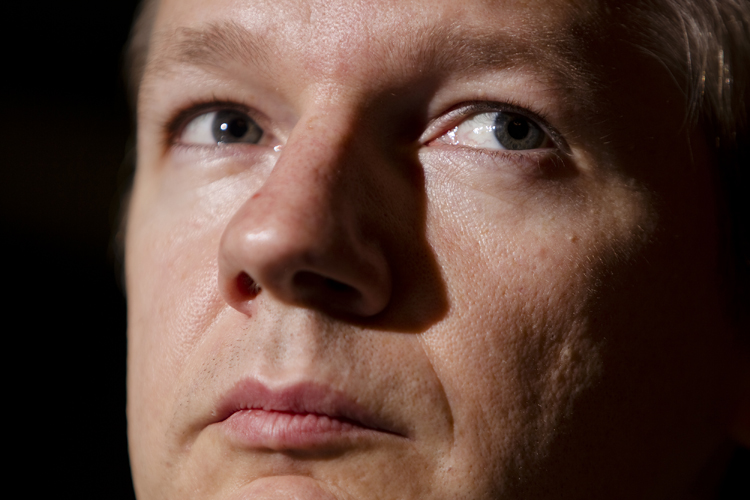
WikiLeaks: The four most extreme calls for retributionJulian Assange, founder of WikiLeaks, which has made public about 500,000 classified U.S. files on the wars in Iraq and Afghanistan, holds a news conference at the Geneva Press Club in Geneva, November 4, 2010, the day before the United Nation's Human Rights Council examines the U.S. human rights record in its universal periodic review programme. REUTERS/Valentin Flauraud (SWITZERLAND - Tags: MEDIA POLITICS HEADSHOT)(Credit: © Valentin Flauraud / Reuters)

Calls for retribution against Julian Assange, the Australian activist whose WikiLeaks organization released 250,000 sensitive State Department cables over the weekend, are nothing new. In October, after a previous document dump, The National Review’s Jonah Goldberg actually wondered aloud why the Assange was not yet, well… dead. This time around, Assange’s critics still can’t agree on the means or the end — but they do hold one belief in common: WikiLeaks must be permanently silenced.

Here are four of the most extreme suggestions — so far — for how the U.S. government should handle Assange:

1. Even before the latest document leak, Rep. Peter King, R-N.Y., was on television claiming WikiLeaks presents “a clear and present danger to America” and touting the necessity of classifying it as an official terrorist operation under the Espionage Act. That declaration would allow the government to “seize their funds” and eventually shut the organization down. Fair to say, King wants that declaration.

2. Dana Perino, the former Bush White House press secretary, echoed King’s sentiments on “Fox and Friends” on Monday — and argued that the U.S. should also “go after his [Assange’s] personal and financial assets,” not just those of the organization, so as to “put the squeeze on him.”

3. Bing West at The National Review wasn’t content to simply bring the WikiLeakers into custody. “Whoever provided the material to WikiLeaks,” West says, “should be prosecuted under the death sentence, regardless of his of her alleged motivations or mental worries.”

4. Calling Assange an “anti-American operative with blood on his hands,” Sarah Palin wrote on her Facebook today that the WikiLeaks founder should be “pursued with the same urgency we pursue al Qaeda.” Whether that means dead or alive is unknown, but, for what it’s worth, there is no proof Assange’s actions have led to violence. Details, who needs ‘em?

The 12 most absurdly leading “Ed Show” poll questions

Who says there aren't any 98-2 issues in American politics?

  • more
    • All Share Services

The 12 most absurdly leading Ed Schultz

When Ed Schultz, the exuberant progressive cheerleader who hosts a nightly MSNBC show, exhorts his viewers to “Get your cell phones out,” brace yourself — chances are a comically slanted question is coming.

Since its debut more than a year ago, “The Ed Show” has featured a text message poll. After a lengthy, often impassioned monologue from the host, viewers are asked to text their replies, with the results announced at the end of the hour. It’s a harmless gimmick and “Ed” is hardly the first show to use it. But Ed’s poll has a unique twist: More often than not, 85 percent or more of the audience will come down on the same side — Ed’s side.

That’s what happens when you ask questions like Friday night’s: “Do you think it’s a good thing that President Obama is fighting harder against the Republicans?” Not surprisingly, 95 percent of the show’s liberal audience — which has been subject to countless hours of Ed pleading with the president to adopt a more assertive posture — thought it was a good thing. The “Ed” show polls have all the suspense of a sham third-world election. It’s enough to make us wonder: Why does anyone even bother replying?

Here are our 12 favorite ridiculously leading “Ed Show” poll questions of the last few months:

  1. “Do you trust Republicans to play by the rules with election money?” 5 percent yes; 95 percent no (Oct. 19).
  2. “Should reporters face arrest for asking tough questions?” 4 percent yes; 96 percent no (Oct. 18).
  3. “Are you in favor of abolishing the public school system?” 4 percent yes; 96 percent no (Oct. 14).
  4. “Do you think profitable U.S. companies have a patriotic responsibility to create American jobs?” 93 percent yes; 7 percent no (Oct. 7).
  5. “Do you think Republicans care more about saving money than educating kids?” 92 percent yes; 8 percent no (Sept. 29).
  6. “Do you believe Republican leadership has solutions for anything?” 11 percent yes; 89 percent no (Sept. 27).
  7. “Do you think the GOP and the righty talk show hosts are destroying the American dream?” 93 percent yes; 7 percent no (Sept. 21).
  8. “Do you think kids should need a parental permission slip to watch President Obama’s speech?” 4 percent yes; 96 percent no (Sept. 14).
  9. “If Republicans win back the majority, do you believe that they would try to shut down the government and impeach President Obama?” 93 percent yes; 7 percent no (Sept. 2).
  10. “Do you think political candidates should be on the Fox News payroll?” 8 percent yes; 92  percent no (Aug. 17).
  11. “Do you think John Boehner cares more about playing golf or helping Americans?” 89 percent golf; 11 percent helping Americans (Aug. 9).
  12. “Do you believe big business wants to see President Obama fail?” 98 percent  yes; 2 percent no (Aug. 3).


Continue Reading Close

Tragic moments in political bribery

A Maryland politician tries the old "cash in the brassiere" trick. Don't they ever learn?

  • more
    • All Share Services

Tragic moments in political bribery

Upon learning last week that federal agents were at his door, Jack Johnson, the Prince Georges County (Md.) executive, allegedly gave his wife some odd instructions: “Put it in your bra and walk out or something.” The “it” was $79,600 of cold, corrupt cash, which the FBI says it ultimately recovered from Mrs. Johnson’s underwear. (It’s also not counting a $100,000 check that authorities suspect Johnson’s wife flushed down the toilet.)

Johnson, interestingly, is not the first politician to see undergarments as a means of hiding his crimes. His case is a reminder of some of the comical complications that can result when politicians take bribes.

Bill Jefferson’s freezer: William Jefferson, a nine-term congressman from Louisiana, became a laughingstock when it was revealed he had stuffed $90,000 into his freezer in a feeble attempt to hide the money from authorities. Unfortunately, even below-freezing temperatures couldn’t scare authorities away. The money was found, and Jefferson became, in the words of his defense attorney, “a national joke.”

Paul Powell’s boxes and briefcases: Paul Powell, who served as Illinois’ secretary of state from 1965 until his death in 1970, famously believed that “there’s only one thing worse than a defeated politician, and that’s a broke one.” Broke, he wasn’t. In the months after his death, authorities discovered $800,000 of cash stuffed into boxes and briefcases (his annual salary never exceeded $30,000). That’s what happens when your secretary of state demands all checks be written to him personally.

Ed DiPrete’s dumpster dive: When former Rhode Island Gov. Edward DiPrete was confronted with charges of extortion and racketeering in the 1990s, it seemed like your run-of-the-mill corruption story. Boring! Then details emerged of the then-governor jumping into a back-alley dumpster to retrieve a $10,000 bribe that he had accidentally thrown out. He later admitted to illegally obtaining as much as $250,000, but the cash-in-the-trash episode forever cemented his reputation for fiscal responsibility — at least when it came to his own cash.

Dianne Wilkerson’s bra: Longtime Massachusetts state Sen. Dianne Wilkerson, once considered a rising star in state (and maybe national) politics, was videotaped in the fall of 2008 taking a bribe from undercover agents and hiding it inside her brassiere. Over 18 months, Wilkerson took eight bribes, totaling $23,500 — although that alone didn’t meet the $70,000 she was trying to raise for an election recount after losing the September ’08 Democratic primary. So maybe she was strapped for cash — not that that’s an excuse for this very literal cash-strapping.

Continue Reading Close

12 takeaways from the Bush memoir

The former president's book is about to hit shelves, but details have been leaking out

  • more
    • All Share Services

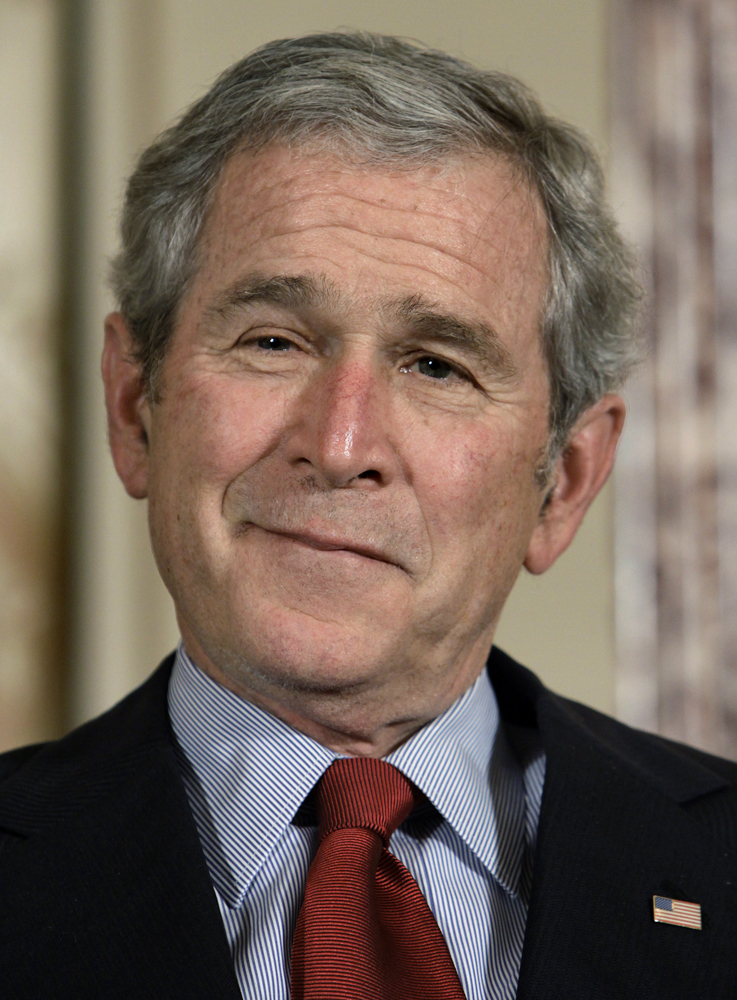
12 takeaways from the Bush memoirU.S. President George W. Bush attends the ceremony to commemorate foreign policy achievements at the State Department in Washington January 15, 2009. REUTERS/Yuri Gripas (UNITED STATES)(Credit: © Yuri Gripas / Reuters)

George W. Bush’s memoir, “Decision Points,” is due to be released Tuesday (with the obligatory national TV interview, conducted by Matt Lauer to air tonight), but most of the good stuff is already circulating on the Web. What have we learned so far?

  • Bush is still linking Saddam to WMD: Sure, he no longer tries to prove Saddam had weapons of mass destruction, but as David Corn points out, that hasn’t stopped him from subtly implying that the “homicidal dictator” (correct) was still in the process of “pursuing WMD” (wrong).
  • He “did consider” replacing Cheney in 2003: Because the vice-president was a “lightning rod of criticism,” Bush admits he contemplated taking Cheney up on his offer to leave the administration after the 2004 elections. It was, he wrote, a chance to demonstrate to Americans who was really “in charge.”
  • Kanye West’s post-Katrina comments hit hard: George Bush’s presidency covered all corners of controversy, but what was the “all-time low”? Seven words uttered in a state of panic by a hip-hop star: “George Bush doesn’t care about black people.”
  • Cheney’s friendship factored into the Scooter Libby decision: After Libby was found guilty of lying under oath during the Valerie Plame trial, Cheney believed Bush owed it to the vice-president’s chief of staff to offer him a full pardon. Bush, of course,  ultimately commuted Libby’s sentence — but now admits that he was worried this compromise might complicate his friendship with an “angry” Cheney.
  • His mother showed him the fetus of his would-be sibling: Barbara Bush suffered a miscarriage when her son was a teenager, and afterward opted to show the fetus, which she was storing in a jar, to her then teenage son. Bush considers the incident key to his pro-life stance, telling Lauer “there’s no question that affected me, a philosophy that we should respect life.”
  • He explicitly permitted waterboarding:  Bush’s presidency was marked by a prolonged legal and ethical debate over whether waterboarding is a legitimate interrogation technique or a form of torture. Bush himself wasn’t so conflicted. When the CIA asked permission to use the tactic during the questioning  of Khalid Sheikh Mohammed, an alleged 9/11 attacker, his reply was painfully terse: ”Damn right.”
  • He thinks his Texas governorship prepared him for 9/11: In the moments after he first heard about 9/11, the president famously sat silent. But that was anger, not shock, he now says. So why did he sit motionless? He knew “people were going to be watching my reaction. And I’d had enough experience as governor of Texas …  to know that the reaction of the leader is essential in the first stage of any crisis.”
  • A bioterror scare in 2001 prompted fears that Bush had been infected: On a trip to China shortly after 9/11, Cheney asked Bush to enter a tent, along with Colin Powell and Condoleezza Rice. The issue? The toxin botulism had been detected inside the White House. Cheney told Bush that he might be infected (although he wasn’t.) And why the tent? “Because Chinese listeners cannot penetrate the tent.”
  • He takes a shot at his old political foe, John McCain: Bush says McCain, who “suspended” his presidential campaign during the Wall Street meltdown, missed an opportunity to wield the financial collapse to his advantage during his presidential campaign. “In periods of crisis,” Bush writes, “voters value experience and judgment over youth and charisma.” But, Bush concludes, McCain didn’t handle “the challenge in a statesmanlike way.”
  • Putin’s got a big dog: As Maureen Dowd noted in her Sunday column, Vladimir Putin once bragged to Bush that his dog was “bigger, stronger, and faster” than Bush’s beloved Barney.  “[You're] lucky he only showed you [the] dog,” Stephen Harper, Canada’s prime minister, later told Bush.
  • He was a “dissenting voice” on Iraq: Despite the rushed resolutions in Congress and the U.N., Bush  maintains he was reluctant to go to war and that he “didn’t want to use force” unless entirely necessary. That said …
  • He also will not issue an apology for the Iraq war: “Apologizing would basically say the decision was a wrong decision,” he tells Lauer.

The Year in Sanity: Ron Artest

The often unstable NBA player has decided to battle the stigma of mental illness among inner-city youth

  • more
    • All Share Services

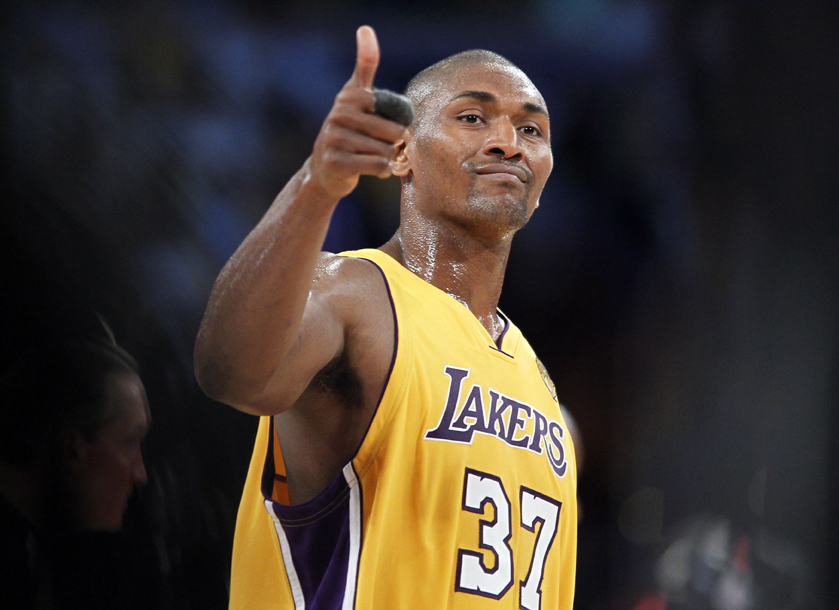
The Year in Sanity: Ron ArtestLos Angeles Lakers Ron Artest gives the thumbs up after the Lakers defeated the Boston Celtics in Game 1 of the 2010 NBA Finals basketball series in Los Angeles, California June 3, 2010 . The Lakers won the game 102-89 to lead the series 1-0. REUTERS/Mike Blake (UNITED STATES - Tags: SPORT BASKETBALL)(Credit: © Mike Blake / Reuters)

Ron Artest may seem like an odd choice for a series about sanity. After all, “sane” is just about the last word many would use to describe the Los Angeles Lakers forward whose career has been marred by controversy after self-imposed controversy. From brawling with fans to boozing at halftime to requesting time off to pursue a rap career, Artest has long established himself as one of basketball’s more bizarre figures.

So, it was perfectly in line with his oddball persona when, moments after the Lakers secured their second consecutive championship in June, Artest thanked his psychiatrist for helping him to calm down. Few people saw significance in the remark apart from its obvious viral potential.

But in the months that followed, it became clear that this was not another instance of the forward providing amusing YouTube fodder. Artest’s comments were made in earnest; therapy had allowed him to confront lifelong issues, and the newly-anointed champion had decided to battle the stigma of mental illness among inner-city youths — a stigma that had long prevented him from seeking the help he needed.

Artest has teamed up with Rep. Grace F. Napolitano to promote the Mental Health in Schools Act and plans to auction off his only championship ring to raise money and awareness for the cause. As Artest recently told middle school students in East L.A., “When you think about mental health, you don’t have to be afraid.”

Ron Artest’s decision to advocate for mental health speaks to the power of redemption. Six years ago, Artest was considered the NBA’s resident thug, a talent few teams considered worth the risk. But he has turned it all around. Today, he is fighting to help people who are struggling the way he did for so long. Yes, it’s crazy, but Ron Artest is finally sane.

Continue Reading Close

Fox host apologizes for anti-Muslim comment

Brian Kilmeade is sorry if anyone was offended by his remark that "all terrorists are Muslim"

  • more
    • All Share Services

Fox host apologizes for anti-Muslim commentBrian Kilmeade

On Friday, Fox & Friends co-host Brian Kilmeade defended Bill O’Reilly’s recent Whoopi-walkout-inducing comments on “The View” (“Muslims killed us on 9/11″) by explaining that “not all Muslims are terrorists, but all terrorists are Muslim.” The remark generated enough uproar that Kilmeade felt it necessary to make this terse apology today:

On the show on Friday, I was talking about Bill O’Reilly appearance on “The View” and I said this: “Not all Muslims are terrorists but all terrorists are Muslims.” Well, I misspoke. I don’t believe all terrorists are Muslims. I’m sorry about that, if I offended or hurt anybody’s feelings. But that’s it.

Here’s the video via Media Matters

Maxwell Strachan is an editorial intern at Salon.com. Email him at mstrachan@salon.com.

Continue Reading Close

Page 1 of 2 in Maxwell Strachan