Scott Rosenberg

WSJ, NYT push opposing campaign finance narratives

Thanks to Citizens United, we don't have the information to figure out which one is right

  • more
    • All Share Services

WSJ, NYT push opposing campaign finance narratives

I still get both the New York Times and the Wall Street Journal on paper, and every morning I have the opportunity to compare their front pages, and thereby, their world views. Increasingly, it looks like the US’s two weightiest national papers are presenting fundamentally different pictures of the world to their readers.

Friday offered a particularly striking contrast: Both papers led with stories about campaign finance.

If you read the Times, you came away with the impression that the US Chamber of Commerce, a business lobby, was blowing out the gaskets this cycle. The chart accompanying the Times’ lead story identified the Chamber as “the top non-party spender” in the election, having spent $21.1 million, an amount raised largely from “a relatively small collection of big corporate donors” who have been able to remain anonymous.

Meanwhile, over at the Wall Street Journal, the lead story painted a vastly different picture: “Public-Employees Union Now Leads All Groups in Independent Election Outlays,” the headline reads. “The American Federation of State, County and Municipal Employees is now the biggest outside spender of the 2010 elections,” according to the Journal, with a war chest of $87.5 million. The Times chart, by contrast, has AFSCME spending only $7.9 million.

There are any number of possible explanations for this discrepancy. I’m no campaign finance expert, but I assume it has to do with different sourcing; different definitions of “outside group” and “independent” or “non-party” status; different timespans aggregated in the totals; and no doubt other factors.

Observant readers will note that each paper’s version of this story neatly maps to the ideological positions their critics have assigned them. Blue-state liberals are outraged that the Supreme Court has allowed business to pour anonymous millions into this election cycle; red-state conservatives have long believed that business cash is only a necessary counterweight to the mighty electoral power of union dollars. The Times and the Journal are both playing the roles their opponents have cast them for in this partisan drama.

Still, campaign spending is one of those matters of fact that we ought to be able to nail. Somebody is the biggest “outside spender” in this cycle — either it’s a union, or it’s some conservative lobby like the Chamber of Commerce. Or it’s some anonymous group. Which raises the question of how either paper can make a claim to knowing who the top outside spender is in the elections, since it seems pretty clear that astroturf groups flush with unmarked bills are flooding these elections with unprecedentedly huge sums that no one has been able even to begin to count.

In order to argue about this picture with any confidence, you need data. You need to know who is spending what. And of course that is the problem with this election cycle: Thanks to the Supreme Court’s decision to overturn our already highly inadequate campaign finance rules, we voters don’t have even the most basic information about who is spending how much on the elections.

You can argue that “money is speech” from now till doomsday. We aren’t anywhere close to the stage of having the important discussion of how we actually restrict this kind of spending. All we’re saying is: surely the American people have a right to know who is buying its lawmakers.

Right now this demand comes from the left, but I have a feeling we might hear a little more of it from the Tea Party types after this election, when they see how effectively all that corporate cash deep-sixes their hopes of dynamiting the status quo.

As Frank Rich pointed out in his column this weekend, the Tea Party’s angry populists are in for a rude surprise when they discover just how completely the candidates they aim to elect are owned by deep-pocketed contributors:

Even as the G.O.P. benefits from unlimited corporate campaign money, it’s pulling off the remarkable feat of persuading a large swath of anxious voters that it will lead a populist charge against the rulers of our economic pyramid — the banks, energy companies, insurance giants and other special interests underwriting its own candidates.

Those candidates were bought with unmarked bills. This campaign money is now as hard to trace as the mortgage dollars that two years ago blew up the economy and that are now jamming the works of the foreclosure machine.

How can you even begin to claim to have fair elections or an honest government without transparency in political spending? Why should the right to free political speech also cover the right to anonymous political speech by the million-dollar-load? Until we repair this colossal breakdown of our system, we’ll be stuck in the 2010 cycle’s banana-republic mode.

Journalists prefer to voice their opinions

Many are leaving traditional news organizations for "bloggier" alternatives. Does this mean objectivity is dead?

  • more
    • All Share Services

As the beleaguring of traditional news organizations continues, newsrooms are actually growing elsewhere. You may have noticed that places like Yahoo, AOL and the Huffington Post are all hiring these days — and they’re hiring, um, actual journalists.

Yesterday we learned that New York Times economics correspondent Peter Goodman was decamping for HuffPo. “For me it’s a chance to write with a point of view,” Goodman told Howard Kurtz. He described fitting into the Times voice as “almost a process of laundering my own views, through the tried-and-true technique of dinging someone at some think tank to say what you want to tell the reader.”

Jay Rosen commented on Twitter:

You get what this means, right? The View from Nowhere has become a liability in keeping newsroom talent

And again:

It’s not so much that @petersgoodman wants to be a pundit. He wants to report what’s really going on. In his own voice.

Yahoo has been building a bloggy news organization, too. But today we learned from Andrew Golis that one of his high-profile hires, former Gawker writer John Cook, was leaving Yahoo and returning to Gawker. Golis explained: “He decided that he prefers the license Gawker gave him to add his opinions into his reporting to the scale and credibility Yahoo! News could offer.”

So Yahoo, theoretically a “new” news organization, also finds itself losing talent because of its house rules about mixing “opinion” and reporting. The story isn’t as simple as “journalists flee old media for new so they can write in their own voices.”

Consider that the most consistently and determinedly enforced code of neutrality in today’s media world can be found not in an old-school newsroom but on Wikipedia, where “neutral point of view” is a sacred first principle. We need a better framework for talking about these issues than the crude formula of “Traditionalists prefer objectivity, new media goes for personal voice.”

I’m sympathetic to Rosen’s “View from Nowhere” argument, which neatly inverts the “fair and balanced” rhetoric of traditional objectivity to underscore its downside, and proposes “where I’m coming from” as a more tenable basis for trust in media. I think the “sacred cloak of objectivity,” to use the term recently invoked by the Times’ new public editor, is tattered beyond repair. But I also sympathize with the folks at the Times and Yahoo who just lost some talented employees by policing institutional boundaries for individual writers’ voices.

To understand today’s newsroom musical-chairs moves, I’d point you back to my post on the blog-broadcast barrier and the reach-reliability ratio. The stewards of a Yahoo News, with its phenomenal-sized audience, or a New York Times, with its blue-chip reputation, need to perform a balancing act: They can’t pretend that the world isn’t changing around them, and that their readers really do expect and demand less faux objectivity and more transparency and interpretive honesty today. But they also understand that their reach and influence demand extra protocols of responsibility and care. I think they’re right to do so, even if it means that they move a little more cautiously into the future.

The challenge for their managers is a subtle one: How to infuse their coverage with the distinctive human voices of journalistic observers who no longer wish to suppress their personal perspectives, while also insuring that the big megaphones they own do not turn into amplifiers of treacherous rumors, personal vendettas, or partisan lies. (Fox News provides a handy negative exemplar here.)

I think the answer will turn out to have a lot to do with really smart editors who are willing to experiment with new forms — editors who actively encourage writers who show “where I’m coming from” but guide them away from the worst excesses of unfiltered personal journalism.

Editing is a behind-the-scenes role, and it’s threatened by both the bruising economics of the current media biz and by the publish-first-ask-questions-later logic of the digital age. But editorial entrepreneurship is how the most creative institutions will begin to square the circle they face — finding a home for writers who expect to have strong voices while also responsibly serving their mass audiences.

Continue Reading Close

Forbes and the disappearing line between politics and the media

A baseless cover story decries Obama as a deranged anti-colonialist. This has been a long time coming

  • more
    • All Share Services

Forbes and the disappearing line between politics and the media

“Don’t they fact-check this stuff?”

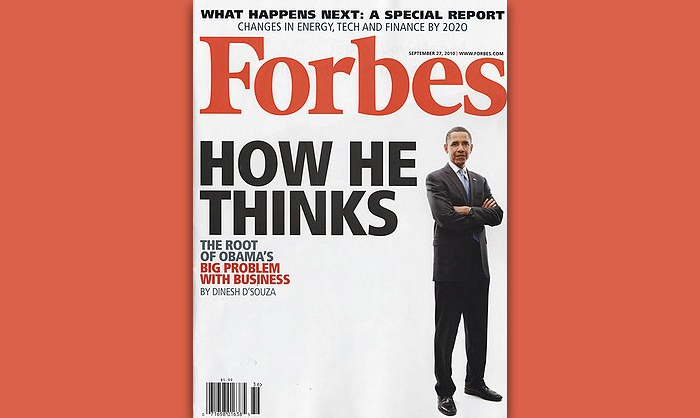
This is the perennial cry of the outraged reader and the wronged article subject. The latest party to raise the fact-checking howl is the White House, which yesterday went public with its discontent over Forbes’ ludicrously poisonous new cover story.

The article depicts President Obama as a deranged anti-colonialist whose ideology of business-hatred was somehow implanted, “Manchurian Candidate”-style, by the estranged father who abandoned him when he was 2. (Imagine, if you will, a leftist critique of George W. Bush that attributed his torture policies to secret indoctrination in his father’s CIA dungeons. I know, I remember reading that cover story too…)

I’ll let others do the actual point-by-point refutations of the Forbes article. I want to come at this story from two other angles.

First, that question about fact-checking: four times out of five, the answer to it is “No, they don’t.” Much of the public still believes that “fact-checking” is actually a routine part of news journalism, and most journalists aren’t in any rush to bust the myth, but myth it is.

There are two types of “fact-checking”: One is a formal procedure of the news work-flow, where somebody with the title of “fact checker” actually attempts to verify every single fact in a piece. This is the sort of thing the New Yorker is famous for. It used to be the norm at glossy magazines, but the norm is decaying in this era of media-business meltdown. I did fact-checking work at the start of my career, as many journalists did, and it’s a good discipline, but an increasingly rare one.

The other sort of fact-checking is the more informal spot-checking that has always taken place in daily newsrooms and today is common in the better online operations. This is fact-checking by smell-check, for the most part — story editors and copy editors (where they still exist) backstopping beat reporters, looking up stuff that sounds wrong or that’s in some sensitive area. Informal spot-checking is vital but necessarily spotty. Stuff slips through. That’s why we have corrections. (We need more.)

The fact-checking picture is further muddied by the divide between reporting and analysis or commentary, a theological line that many editors still believe it’s both possible and necessary to draw. This gives some old-school editors heart in today’s overheated partisan landscape. The news reporting is where they’ll continue to fight the battle for fact; the opinion stuff can sell the product with fact-mauling innuendo.

Readers don’t care about this line. If you put the story on your cover, it’s your publication’s reputation that’s at stake. And Forbes’ has taken a serious hit.

Forbes’ defense of its work has been a classic circle-the-wagons move. Here’s the magazine’s statement in its entirety:

“Dinesh D’Souza’s cover story was presented as an analysis of how the president thinks. No facts are in contention. Forbes stands by the story.”

In fact, the statement “no facts are in contention” is itself counter-factual. You can’t say “no facts are in contention” when the staid Columbia Journalism Review has described your article as “a fact-twisting, error-laden piece of paranoia.”

The second point I want to make is about the changing cast of characters in this media drama. The Forbes piece is written by Dinesh D’Souza; it’s a trailer for a new book. (Books are another media type that’s far less “fact-checked” than most readers understand. That’s ironic, since magazine fact-checkers treat books as authoritative sources.) D’Souza’s career was hatched in right-wing think tanks and funded by conservative foundations. That in itself is nothing new; today, for instance, the Wall Street Journal’s op-ed pages serve as a full-employment act for Heritage Foundation and American Enterprise Institute hacks.

But if you read just five paragraphs into Howard Kurtz’s piece on the Forbes flap, you notice this line: “The magazine would not make Editor in Chief Steve Forbes, who sought the Republican presidential nomination in 1996 and 2000, available for comment.” That’s right: In case you forgot, Forbes is edited by a, pardon me, politician — a conservative GOP presidential candidate.

Perhaps this has some bearing on its willingness to launch brazenly absurd and inaccurate assaults on a Democratic president. Ya think?

So we’ve moved beyond putting the commentariat on the partisan payroll. Now, more and more of your political commentary, particularly on cable, is being delivered by actual politicians. Not people who might someday consider a career in politics, but rather, people who — like Sarah Palin — are presumed active candidates. This phenomenon cuts across parties (now we’ve got New York’s former Democratic governor hosting on CNN), but plainly it’s the Republicans who have made the most of this new revolving door. Fox News has become their shadow-cabinet government. And the pols are laughing all the way to the bank: Used to be, the broadcasters got their footage for free, but now, the politicians are collecting checks.

In this new world, the public is forced to look at news coverage with the same jaundiced eye it has long turned on stump speeches and candidate debates. Forbes’ cover story isn’t journalism; it’s essentially a campaign attack ad. Its technique is to introduce outrageous lies into the discourse so that public figures can parrot them and spread the misinformation before the truth squad can arrive on the scene.

We shouldn’t be surprised. But neither should we expect the practitioners of this dark art to care when we wonder why they’re abandoning journalistic norms.

I do feel sorry for those self-respecting journalists laboring on Forbes’ payroll who have to carry this albatross around their professional necks. Or those employees of the Web operation who landed at Forbes when it recently acquired the blogging network True/Slant. Their predicament is likely to be one that more and more journalists face over the next couple of years.

Continue Reading Close

Apple as a news censor: No way to run an app store

The company's vague guidelines give it an enormous amount of control over what content the iPad will provide

  • more
    • All Share Services

Apple as a news censor: No way to run an app store

For all of you out there in media-land who still think that the iPad represents salvation for old business models and who welcome the App Store as a new platform for distributing content, I recommend a reading of Apple’s new App Store Review Guidelines as helpfully summarized by Daring Fireball’s John Gruber. (It seems you have to be a registered Apple developer before you can actually read the guidelines in full, but they’re available at Gizmodo.)

Discussion of these guidelines in the tech press initially framed the move as a “relaxation” of Apple’s policies, because the company will now allow developers to use third-party frameworks and toolkits. But view the guidelines from the perspective of content publishing and “relaxation” is not the word that will spring to mind.

This item stands out:

We will reject Apps for any content or behavior that we believe is over the line. What line, you ask? Well, as a Supreme Court Justice once said, “I’ll know it when I see it.” And we think that you will also know it when you cross it.

(Gruber speculates that the my-way-or-the-highway tone of this and other passages suggests direct authorship by Steve Jobs here, and that sounds plausible, but who knows?)

Now, the App Store guidelines are designed by software developers for other software developers. The thinking is, this is our device, we want to protect our users, this ain’t no free-for-all, we’re going to police the hell out of this environment. And Apple plainly has a right to do that. It’s not the only approach to structuring a software ecosystem, but it’s certainly a defensible one.

Trouble is, the App Store is also being framed as the New Newsstand. The idea of Apple as the keeper of such a newsstand never sat right with me: I just don’t like the idea of my information diet being regulated by any company, let alone a company as tightly wound as Apple. Now Apple has made my unease explicit. In these high-handed words, the company is saying: We will ban whoever we want. And we won’t tell you what the exact standards are. You can guess; then we’ll decide.

The immediate retort here from Apple supporters — hey, I’m one, I love my Mac and my i-devices! — will be that I’m misunderstanding the purpose of the rules, they’re meant to bar wayward code, not wayward ideas.

But how, exactly, can anyone draw a line between code and ideas today? Who says where a software tool ends and a piece of “content” begins? We’re supposed to “know” this line “when we see it,” but I don’t see it at all.

Here are some quotes from the guidelines that Engadget highlighted:

“We have lots of serious developers who don’t want their quality Apps to be surrounded by amateur hour.”


“If your app is rejected, we have a Review Board that you can appeal to. If you run to the press and trash us, it never helps.”


“This is a living document, and new apps presenting new questions may result in new rules at any time. Perhaps your app will trigger this.”


”If it sounds like we’re control freaks, well, maybe it’s because we’re so committed to our users and making sure they have a quality experience with our products.”

Now read these questions from the perspective of a writer or journalist or publisher, not a software developer, and tell me they don’t give you the willies.

It’s always seemed to me that Apple seriously underestimates how impossible it will be to sit as censor and nanny over a thriving content marketplace, if that is what the App Store is going to become. Look at the trouble it had with political cartoonist Mark Fiore: He had to win a Pulitzer before Apple would let him use its platform to practice his art, which happened to involve poking fun at public figures, something the App Store didn’t like. Such controversies will only multiply if the App Store becomes more popular as a content mart.

Now Apple is saying, explicitly, that it intends to draw lines, and those lines won’t be drawn beforehand — but hey, don’t worry, because we’ll just know it when we cross them!

Apple loves to maintain tight control of things. That’s been a hugely successful approach for its hardware business. It’s even a defensible position applied to software. But it’s a lousy model for a newsstand.

Continue Reading Close

“Delinkification” is bunk: Linking is good for you

The "links rot our brains" contingent is wrong. Hypertext enhances our understanding and holds writers accountable

  • more
    • All Share Services

Nick Carr, hypertext and delinkification

For 15 years, I’ve been doing most of my writing — aside from my two books — on the Web. When I do switch back to writing an article for print, I find myself feeling stymied. I can’t link!

Links have become an essential part of how I write, and also part of how I read. Given a choice between reading something on paper and reading it online, I much prefer reading online: I can follow up on an article’s links to explore source material, gain a deeper understanding of a complex point, or just look up some term of art with which I’m unfamiliar.

There is, I think, nothing unusual about this today. So I was flummoxed earlier this year when Nicholas Carr started a campaign against the humble link, and found at least partial support from some other estimable writers (among them Laura Miller, Marshall Kirkpatrick, Jason Fry and Ryan Chittum). Carr’s “delinkification” critique is part of a larger argument contained in his book “The Shallows.” I read the book this summer and plan to write about it more. But for now let’s zero in on Carr’s case against links, on pages 126-129 of his book as well as in his “delinkification” post.

The nub of Carr’s argument is that every link in a text imposes “a little cognitive load” that makes reading less efficient. Each link forces us to ask, “Should I click?” As a result, Carr wrote in the “delinkification” post, “People who read hypertext comprehend and learn less, studies show, than those who read the same material in printed form.”

This appearance of the word “hypertext” is a tipoff to one of the big problems with Carr’s argument: it mixes up two quite different visions of linking.

“Hypertext” is the term invented by Ted Nelson in 1965 to describe text that, unlike traditional linear writing, spreads out in a network of nodes and links. Nelson’s idea hearkened back to Vannevar Bush’s celebrated “As We May Think,” paralleled Douglas Engelbart’s pioneering work on networked knowledge systems, and looked forward to today’s Web.

This original conception of hypertext fathered two lines of descent. One adopted hypertext as a practical tool for organizing and cross-associating information; the other embraced it as an experimental art form, which might transform the essentially linear nature of our reading into a branching game, puzzle or poem, in which the reader collaborates with the author. The pragmatists use links to try to enhance comprehension or add context, to say “here’s where I got this” or “here’s where you can learn more”; the hypertext artists deploy them as part of a larger experiment in expanding (or blowing up) the structure of traditional narrative.

These are fundamentally different endeavors. The pragmatic linkers have thrived in the Web era; the literary linkers have so far largely failed to reach anyone outside the academy. The Web has given us a hypertext world in which links providing useful pointers outnumber links with artistic intent a million to one. If we are going to study the impact of hypertext on our brains and our culture, surely we should look at the reality of the Web, not the dream of the hypertext artists and theorists.

The other big problem with Carr’s case against links lies in that ever-suspect phrase, “studies show.” Any time you hear those words your brain-alarm should sound: What studies? By whom? What do they show? What were they actually studying? How’d they design the study? Who paid for it?

To my surprise, as far as I can tell, not one of the many other writers who weighed in on delinkification earlier this year took the time to do so. I did, and here’s what I found.

You recall Carr’s statement that “people who read hypertext comprehend and learn less, studies show, than those who read the same material in printed form.” Yet the studies he cites show nothing of the sort. Carr’s critique of links employs a bait-and-switch dodge: He sets out to persuade us that Web links — practical, informational links — are brain-sucking attention scourges robbing us of the clarity of print. But he does so by citing a bunch of studies that actually examined the other kind of link, the “hypertext will change how we read” kind. Also, the studies almost completely exclude print.

If you’re still with me, come a little deeper into these linky weeds. In “The Shallows,” here is how Carr describes the study that is the linchpin of his argument:

In a 2001 study, two Canadian scholars asked seventy people to read “The Demon Lover,” a short story by the modernist writer Elizabeth Bowen. One group read the story in a traditional linear-text format; a second group read a version with links, as you’d find on a Web page. The hypertext readers took longer to read the story ,yet in subsequent interviews they also reported more confusion and uncertainty about what they had read. Three-quarters of them said that they had difficulty following the text, while only one in ten of the linear-text readers reported such problems. One hypertext reader complained, “The story was very jumpy…”

Sounds reasonable. Then you look at the study, and realize how misleadingly Carr has summarized it — and how little it actually proves.

The researchers Carr cites divided a group of readers into two groups. Both were provided with the text of Bowen’s story split into paragraph-sized chunks on a computer screen. (There’s no paper, no print, anywhere.) For the first group, each chunk concluded with a single link reading “next” that took them to the next paragraph. For the other group, the researchers took each of Bowen’s paragraphs and embedded three different links in each section — which seemed to branch in some meaningful way but actually all led the reader on to the same next paragraph. (The researchers didn’t provide readers with a “back” button, so they had no opportunity to explore the hypertext space — or discover that their links all pointed to the same destination.)

Here’s an illustration from the study:

Bowen’s story was written as reasonably traditional linear fiction, so the idea of rewriting it as literary hypertext is dubious to begin with. But that’s not what the researchers did. They didn’t turn the story into a genuine literary hypertext fiction, a maze of story chunks that demands you assemble your own meaning. Nor did they transform it into something resembling a piece of contemporary Web writing, with an occasional link thrown in to provide context or offer depth.

No, what the researchers did was to muck up a perfectly good story with meaningless links. Of course the readers of this version had a rougher time than the control group, who got to read a much more sensibly organized version. All this study proved was something we already knew: that badly executed hypertext can indeed ruin the process of reading. So, of course, can badly executed narrative structure, or grammar, or punctuation.

In both “The Shallows” and his blog post, Carr also makes reference to a meta-analysis (or “study of studies”) on hypertext reading studies, a paper that examined 40 other studies and concluded that “the increased demands of decision-making and visual processing in hypertext impaired reading performance.” But a closer look at this paper reveals another apples-and-oranges problem.

Carr is saying that Web links slow down our brains. But none of the studies the meta-analysis compiles looked at Web-style links. They all drew comparisons between linear hypertexts (screens with “next” links, not printed articles) on one side, and on the other, literary-style hypertexts broken up into multiple nodes where “participants had many choices in sequencing their reading.”

Every other study that I’ve looked into in this area shares these same problems; I’ll spare you the detail. These studies may help explain why there’s never been a literary-hypertext bestseller, but they don’t do much to illuminate reading on the Web. Carr talks about links having “propulsive force,” but does anyone really experience them that way today? Maybe in the early days of the Web, when they were newfangled, people felt compelled to click — like primitives suddenly encountering TV and jabbing their fingers at the channel selector, wondering what will magically appear next.

I think we all passed through that phase quickly. If your experience matches mine, then today, your eyes pass over a link. Most often you ignore it. Sometimes, you hover your mouse pointer to see where it goes. Every now and then, you click the link open in a new tab to read when you’re done. And very rarely, you might actually stop what you’re reading and read the linked text. If you do, it’s usually a sign that you’ve lost interest in the original article anyway. Which can happen just as easily in a magazine or newspaper — where, instead of clicking a link, we just turn the page.

Yes, a paragraph larded up with too many links can be distracting. Links, like words, need to be used judiciously. This is a long post and I have included only a modest number of links — all that I needed to point you to my sources and references, and most of which most of you won’t ever click. Overuse of links is usually a sign that the writer does not know how to link, which on the Web means he does not know how to write. But such abuse hardly discredits linking itself. Many writers still don’t understand that comma-splicing is bad grammar, but does that get us talking about the “de-comma-fication” of our prose?

For Carr and his sympathizers, links impede understanding; I believe that they deepen it. Back in 1997 Steven Johnson (in his book “Interface Culture”) made the case for links as a tool for synthesis — “a way of drawing connections between things,” a device that creates “threads of association,” a means to bring coherence to our overflowing cornucopia of information. The Web’s links don’t make it a vast wasteland or a murky shallows; they organize and enrich it.

“Channel surfing,” Johnson wrote, “is all about the thrill of surfaces. Web surfing is about depth, about wanting to know more.” As the Web has grown vast, that desire has grown with it. To swear off links is to abandon curiosity. To be tired of links is to be tired of life.

Money changes everything

The Web is deep in many directions, yet it is also, undeniably, full of distractions. These distractions do not lie at the root of the Web’s nature. They’re out on its branches, where we find desperate businesses perched, struggling to eke out one more click of your mouse, one more view of their page.

Yesterday I distinguished the “informational linking” most of us use on today’s Web from the “artistic linking” of literary hypertext avant-gardists. The latter, it turns out, is what researchers were examining when they produced the studies that Nick Carr dragooned into service in his campaign to prove that the Web is dulling our brains.

Today I want to talk about another kind of linking: call it “corporate linking.” (Individuals and little-guy companies do it, too, but not on the same scale.) These are links placed on pages because they provide some tangible business value to the linker: they cookie a user for an affiliate program, or boost a target page’s Google rank, or aim to increase a site’s “stickiness” by getting the reader to click through to another page.

I think Nick Carr is wrong in arguing that linked text is in itself harder to read than unlinked text. But when he maintains that reading on the Web is too often an assault of blinking distractions, well, that’s hard to deny. The evidence is all around us. The question is, why? How did the Web, a tool to forge connections and deepen understanding, become, in the eyes of so many intelligent people, an attention-mangling machine?

Practices like splitting articles into multiple pages or delivering lists via pageview-mongering slideshows have been with us since the early Web. I figured they’d die out quickly, but they’ve shown great resilience — despite being crude, annoying, ineffective, hostile to users, and harmful to the long-term interests of their practitioners. There seems to be an inexhaustible supply of media executives who misunderstand how the Web works and think that they can somehow beat it into submission. Their tactics have produced an onslaught of distractions that are neither native to the Web’s technology nor inevitable byproducts of its design. The blinking, buzzing parade is, rather, a side-effect of business failure, a desperation move on the part of flailing commercial publishers.

For instance, Monday morning I was reading Howard Kurtz’s paean to the survival of Time magazine when the Washington Post decided that I might not be sufficiently engaged with its writer’s words. A black prompt box helpfully hovered in from the right page margin with a come-hither look and a “related story” link. How mean to Howie, I thought. (Over at the New York Times, at least they save these little fly-in suggestion boxes till you’ve reached the end of a story.)

If you’re on a web page that’s weighted down with cross-promotional hand-waving, revenue-squeezing ad overload and interstitial interruptions, odds are you’re on a newspaper or magazine site. For an egregiously awful example of how business linking can ruin the experience of reading on the Web, take a look at the current version of Time.com.

For some people perhaps Time really is, as editor Richard Stengel told Kurtz, “the nirvana that people are looking for.” I find it more like purgatory. Some time ago, the website of the venerable news weekly began peppering its articles with red-colored links inserted into the crevices between paragraphs. Here’s a random example:

So you’re reading this little piece about local news startups online, you finish a paragraph, and some person or program at Time waves in front of your eyes and yells, “Go read our review of netbook computers!” What, in the name of Tim Berners-Lee, is that all about? Is it “related reading”? An advertisement? Who exactly is it at Time that has so little respect for the work of its own staff, or the attention of its readers?

In the meantime, note that Time is conspicuously not providing the link that might have been useful in this passage — to the Block by Block conference the story refers to (which, coincidentally, I’ll be attending).

This kind of irrelevance is the norm for Time’s little red paragraph busters. Sometimes they’re worse than irrelevant: For instance, you could be reading an account of how Colombia drug gangs are terrorizing a small town in Colombia (and, incidentially, intimidating victims using Facebook messages) and then get offered a chance to “See pictures from inside Facebook headquarters.”

Other news organizations do this kind of SEO-driven linking a bit more elegantly. Over at the New York Times, for instance, there are tons of links to the Times’ topic pages. Although these are occasionally useful, they’re there primarily to serve the Times’ business interests: they boost these topic pages’ prominence in Google. But they have a perverse side-effect. When I read Times stories I tend to ignore the links because I’ve learned that most of them will be generic –machine-generated rather than hand-crafted. In other words, the Times has made me link-blind — which is too bad in those cases where its writers (Frank Rich comes to mind) make a point of linking well and often.

In most newsrooms, business and editorial realms are ostensibly separated by an ethical wall. But Web links often exist in a no man’s land instead. Sometimes links are imposed by the business side; sometimes they are inserted by editorial staff; sometimes they’re fought over. In my days at Salon we tried to establish a clear line: Navigation, ads and peripheral space might be up for grabs, but links within stories were — like the words and images — under the control of writers and editors. Plenty of publications today still adhere to this rough policy. But it’s a hard one to enforce unless your editors and writers are composing their links as they prepare their articles.

I think that practice remains the exception. Consider this sad fact: 15 years into the era of Web publishing, most print publications still don’t link at all from inside the text of their articles posted online. They began shoveling their print stories, sans links, into the content-management system way back when; today, they’re shoveling still.

How did we get here? Partly it’s because too many editors and reporters waited too long to learn Web basics, and many of the more enthusiastic early adopters fled the newsroom and took their expertise with them. Partly the problem is generational, and thus gradually being solved.

But a big part of it is Google’s responsibility. Google is a great tool because it draws meaning from links. And it is a profitable company because it has placed a tiny but real financial value on many links. But by making links a business, Google also made it harder for editors and writers to defend responsible linking. Links became the province of the publisher, not the editor. Even so, Google — and the Web itself — works best when links are made freely, motivated by passion or professional dedication or fun. When the links are made for a fractional cent or buck, we get spam and malware and wastelands of zombie splogs.

Rich Skrenta has been arguing for years that Google’s “PageRank wrecked the Web,” and it’s a fascinating notion. (Do note that Skrenta now runs a company that aims to compete with Google.) I don’t believe the Web is wrecked, but I do think the monetization of links has warped it.

Of course, it’s possible for links to make meaning and money at the same time; one doesn’t have to exclude the other. But when driven by the prospect of profit, bad links can begin to swamp good ones. Every link that’s motivated by some affiliate kickback, screen-scraped by a spam blog, or nail-gunned into the body of a news story perverts the original value of linking — and dilutes the Web itself.

Can we resist this? Can we change it? Corporate linking says, “Go home! Sit back, get cynical. This medium is as corrupt as every other one you’ve experienced. What else did you expect?”

But we do expect more from the Web, and we can still get it. Careful, creative linking — dare I say conscious linking? — can build trust and authority in ways the corporate linkers can’t even imagine.

In links we trust

Nick Carr, like the rest of the “Web rots our brains” contingent, views links as primarily subtractive and destructive. Links direct us away from where we are to somewhere else on the Web. They impede our concentration, degrade our comprehension, and erode our attention spans.

It’s important, first, to understand that every single one of these criticisms of links has been raised against every single new media form for the past 2500 years. (Rather than rehash this hoary tale, I’ll point you to Vaughan Bell’s excellent summary in Slate. For a full and fascinating account of the earliest episode in this saga — Socrates’ denunciation of the written word — I recommend the elaboration of it in Maryanne Wolf’s “Proust and the Squid.”)

Throughout history, the info-panic critique has been one size fits all. The media being criticized may change, but the indictments are remarkably similar. That tells us we’re in the presence of some ancestral predilection or prejudice. We involuntarily defend the media forms we grew up with as bastions of civilization, and denounce newcomers as barbaric threats to our children and our way of life.

That’s a lot to hang on the humble link, which — in today’s Flash-addled, widget-laden, real-time-streaming environment — seems more like an anchor of stability than a force for subversion. But even if we grant Carr his premise that links slow reading and hamper understanding (which I don’t believe his evidence proves at all), I’ll still take the linked version of an article over the unlinked.

I do so because I see links as primarily additive and creative. Even if it took me a little longer to read the text-with-links, even if I had to work a bit harder to get through it, I’d come out the other side with more meat and more juice.

Links, you see, do so much more than just whisk us from one Web page to another. They are not just textual tunnel-hops or narrative chutes-and-ladders. Links, properly used, don’t just pile one “And now this!” upon another. They tell us, “This relates to this, which relates to that.”

Links announce our presence. They show a writer’s work. They are badges of honesty, inviting readers to check that work. They demonstrate fairness. They can be simple gestures of communication; they can be complex signifiers of meaning. They make connections between things. They add coherence. They build context.

If I can get all that in return, why would I begrudge the link-wielding writer a few more seconds of my time, a little more of my mental effort?

Let’s take these positive aspects of linking in ascending order of importance.

Links say “hello.”

A link to another site can serve as a way of telling that site, “I just said something about you.” This invites spammy abuse, of course. But it remains an elegantly simple device. Many bloggers still check their referrers today as they did a decade ago in the early days of weblogging. High-traffic sites can’t and won’t bother paying much attention to this, but out in the middle and nether reaches of the Web-traffic curve, this kind of link remains a valid and valuable social gesture.

Links show a writer’s work.

Any post or page with hand-selected links provides a record of the writer’s research, reading and sourcing. Some people are happier with this stuff collected at the end, as we did for centuries in print. But linking in situ gives the reader the information right where it’s needed. (If reading a link adds to “cognitive load,” surely the effort of scanning down to a footnote or, even worse, flipping back to an endnote piles on even heftier brain-freight.)

Links keep us honest and fair.

If you’re quoting someone and you link to the original, you’re saying to the reader, “Check my work — see if I’ve presented the other person’s point of view accurately and fairly.” This provides a powerful check on bullying and misrepresentation. It’s the rant without links, the disconnected diatribe, that’s suspect.

In a media environment where a dwindling number of participants believes that objectivity is either possible or desirable, the best yardstick for fairness we have is this: does a writer present the perspectives of those he disagrees with in a way that they feel is fair? Linking to those perspectives is a way for a writer to say: Go ahead — see if I got you right.

Links enhance trust.

Let me quote Web usability expert Jakob Nielsen, from 1999 (in a text I reread thanks to a link I followed from a discussion of my argument at Crooked Timber):

Not being afraid to link to other sites is a sign of confidence, and third-party sites are much more credible than anything you can say yourself. Isolated sites feel like they have something to hide.

Links knit context into the Web.

Most Web critiques includes ritual denunciation of the medium’s disconnected, fragmentary nature. And certainly there are plenty of fragments out there in HTTP-land. But the disconnected ones, by definition, don’t get read much. We read the posts and pages that get widely linked to.

A fragment that gets connected is no longer a fragment. It becomes a working part, a piece of a mosaic, a strand in a web. (There’s a reason these words are embedded in Internet history.)

It always amazes me to hear the complaint that the Web doesn’t provide readers with enough context. Then I realize that this criticism is usually made by print journalists. They are accustomed to having their words acquire a bountiful context on paper. Then, typically, their work is spat onto the Web by an automated content-management system — and served up without a link in sight.

Theirs is an experience of loss of context. But for the rest of us, writing for the Web offers more frequent and potent opportunities to give our words context than we’ve ever had before.

What pages shall we connect our words to? We have the entire rest of the Web to choose from! And the choices we make say worlds about our writing.

The context that links provide comes in two flavors: explicit and implicit. Explicit context is the actual information you need to understand what you’re reading. Here’s what I mean, if I can go all recursive on you for a moment: Let’s say you landed on this article out of nowhere. Someone sent you a link. (Now, right there Carr and the link-skeptics might say, “There’s the problem! If you were reading a magazine or a book, that would never happen.” To which I can only say, if the opportunity to receive pointers to interesting reading from a network of friends is a problem, it’s one I am very happy to have.)

So you land on my page and you might well have no idea what I’m talking about, since this was originally part three of a series. Links make it easy for me to show you where to catch up. If you don’t have time for that, links let me orient you more quickly in my first paragraph with reference to Carr’s post. I can do all this without having to slow down those readers who’ve been following from the start with summaries and synopses. Again, even if the links that achieve this do demand a small fee from your working brain (which remains an unproven hypothesis), I’d say that’s a fair price.

By implicit context, I mean something a little more elusive: The links you put into a piece of writing tell a story (or, if you will, a meta-story) about you and what you’ve written. They say things like: What sort of company does this writer keep? Who does she read? What kind of stuff do her links point to — New Yorker articles? Personal blogs? Scholarly papers? Are the choices diverse or narrow? Are they obvious or surprising? Are they illuminating or puzzling? Generous or self-promotional?

Links, in other words, transmit meaning, but they also communicate mindset and style. By this, I don’t mean “stylish linking.” There have been fads in linking — the first and best-known was probably the playfully ironic, self-deprecating style pioneered by Suck.com in 1995 (I wrote about it in Salon a long time ago). They come and go, just as catch-phrases and tics in casual writing do. As with other link mannerisms, remnants of the Suck style survive in a few places; but mostly, Web users have rejected the practice of links that obscure or misdirect or joke. We prefer links that clarify.

The history of Web linking has been a long chronicle of controversies we didn’t need to have: irrelevant debates over issues like so-called deep linking (if you really don’t want to be linked to, why are you on the public Web?) or the notion of a power-law-driven A-list in blogging (if you want to become a celebrity, other media are far more efficient). To this list, we can now add the “delinkification” dustup.

It’s hard to imagine the benefit for ourselves, or for the Web, of a general retreat from linking. Writing on the Web without linking is like making a movie without cutting. Sure, it can be done; there might even be a few situations where it makes sense. But most of the time, it’s just head-scratchingly self-limiting. To choose not to link is to abandon the medium’s most powerful tool — the thing that makes the Web a web.

A long time ago, I wrote a column titled Fear of Links about the then-burgeoning movement of webloggers. I urged professional writers to stop looking down their noses at links and those who make them: “A journalist who today disdains the very notion of providing links to readers may tomorrow find himself without a job.”

That was 1999. Today, we live in that piece’s “tomorrow.”

Continue Reading Close

Google News gets gamed by a crappy content farm

On a search about Dr. Laura, Associated Content comes up first. Is the age of the bot coming to an end?

  • more
    • All Share Services

Google News gets gamed by a crappy content farm

I was on vacation for much of the last couple of weeks, so I missed a lot — including the self-immolation of Dr. Laura Schlessinger. Apparently Schlessinger was the last public figure in the U.S. who does not understand the simple rules of courtesy around racial/religious/ethnic slurs. (As an outsider you don’t get a free pass to use them — no matter how many times you hear them uttered by their targets.) She browbeat a caller with a self-righteous barrage of the “N-word” — and wrote her talk-show-host epitaph.

I shed no tears for Dr. Laura — why do we give so much airtime to browbeaters, anyway? — and I don’t care much about this story. But after reading a post over at TPM about Sarah Palin’s hilariously syntax-challenged tweets defending Schlessinger, I wanted to learn just a bit more about what had happened. So of course I turned to Google.

Now, it may have been my choice of search term, or it may have been that the event is already more than a week old, but I was amazed to see, at the top of the Google News results, a story from Associated Content. A.C., of course, is the “content farm” recently acquired by Yahoo; it pays writers a pittance to crank out brief items that are — as I’ve written — crafted not to beguile human readers but to charm Google’s algorithm.

A.C.’s appearance in the Google lead position surprised me. I’d always assumed that, inundated by content-farm-grown dross, Google would figure out how to keep the quality stuff at the top of its index. And this wasn’t Google’s general search index recommending A.C., but the more rarefied Google News — which prides itself on maintaining a fairly narrow set of sources, qualified by some level of editorial scrutiny.

Gee, maybe Associated Content is getting better, I thought. Maybe it’s producing some decent stuff. Then I clicked through and began reading:

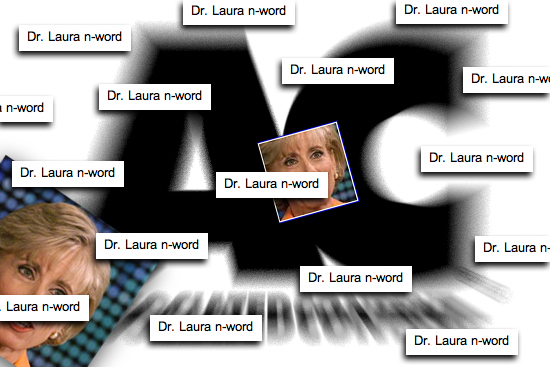
The Dr. Laura n-word backlash made her quit her radio show. It seems the Dr. Laura n-word controversy has made her pay the price, as the consequences of herbrought down her long-running program. But even if it ended her show, it may not end her career. Despite being labeled as a racist, and despite allegedly being tired of radio, the embattled doctor still seems set to fight on after she leaves. In fact, the Dr. Laura n-word scandal has made her more defiant than ever, despite quitting.

I have cut-and-pasted this quote to preserve all its multi-layered infelicities. The piece goes on in this vein, cobbled together with no care beyond an effortful — and, I guess, successful — determination to catch Google’s eye by repeating the phrase “Dr. Laura n-word” as many times as possible.

The tech press endlessly diverts itself with commentary about Google’s standing vis-à-vis Facebook, Google’s stock price, Google’s legal predicament vis-à-vis Oracle, and so forth — standard corporate who’s-up-who’s-down stuff. But this is different; this is consequential for all of us.

I was a fairly early endorser of Google back in 1998, when the company was a wee babe of a start-up. Larry Page impatiently explained to me how PageRank worked, and I sang its deserved praises in my Salon column. For over a decade Google built its glittering empire on this simple reliability: It would always return the best links. You could count on it. You could even click on “I’m feeling lucky.”

I still feel lucky to be able to use Google a zillion times a day, and no, Bing is not much use as an alternative (Microsoft’s search engine kindly recommends two Associated Content stories in the first three results!). But when Google tells me that this drivel is the most relevant result, I can’t help thinking, the game’s up. The Wagner tubas are tuning up for Googledammerung: It’s the twilight of the bots.

As for Associated Content, it argues — as does its competition, like the IPO-bound Demand Media — that its articles are edited and its writers are paid and therefore its pages should be viewed as more professional than your average run-of-the-mill blogger-in-pajamas. I think they’ve got it backward. I’ll take Pajama Boy or Girl any day. Whatever their limitations, they are usually writing out of some passion. They say something because it matters to them — not because some formula told them that in order to top the index heap, they must jab hot search phrases into their prose until it becomes a bloody pulp.

Let me quote longtime digital-culture observer Mark Dery, from his scorcher of a farewell to the late True/Slant:

The mark of a real writer is that she cares deeply about literary joinery, about keeping the lines of her prose plumb. That’s what makes writers writers: to them, prose isn’t just some Platonic vessel for serving up content; they care about words.

The best bloggers know a thing or two about this “literary joinery.” And even bad bloggers “care about words.” But the writer of Associated Content’s Dr. Laura post is bypassing such unprofitable concerns. He chooses his words to please neither himself nor his readers. They’re strictly for Google’s algorithm. The algorithm is supposed to be able to see through this sort of manipulation, to spit out the worthless gruel so it can serve its human users something more savory. But it looks like the algorithm has lost its sense of taste.

[I should state for the record that in the course of my business work for Salon.com I had occasion to meet with folks from Associated Content. They were upright and sharp and understood things about the Web that we didn't, then. They've built a successful business out of "content" seasoned to suit the Googlebot's appetite. It's just not what we think of when we think of "writing." And if this piece is any indication, there isn't an editor in sight.]

BONUS LINK: If you want to understand more fully the process by which “news” publishers watch Google for trending topics and then crank out crud to catch Google’s eye, you cannot do better than this post by Danny Sullivan of SearchEngineLand. Sullivan calls it “The Google Sewage Factory”:

The pollution within Google News is ridiculous. This is Google, where we’re supposed to have the gold standard of search quality. Instead, we get “news” sites that have been admitted — after meeting specific editorial criteria — just jumping on the Google Trends bandwagon…

Continue Reading Close

Page 2 of 51 in Scott Rosenberg