
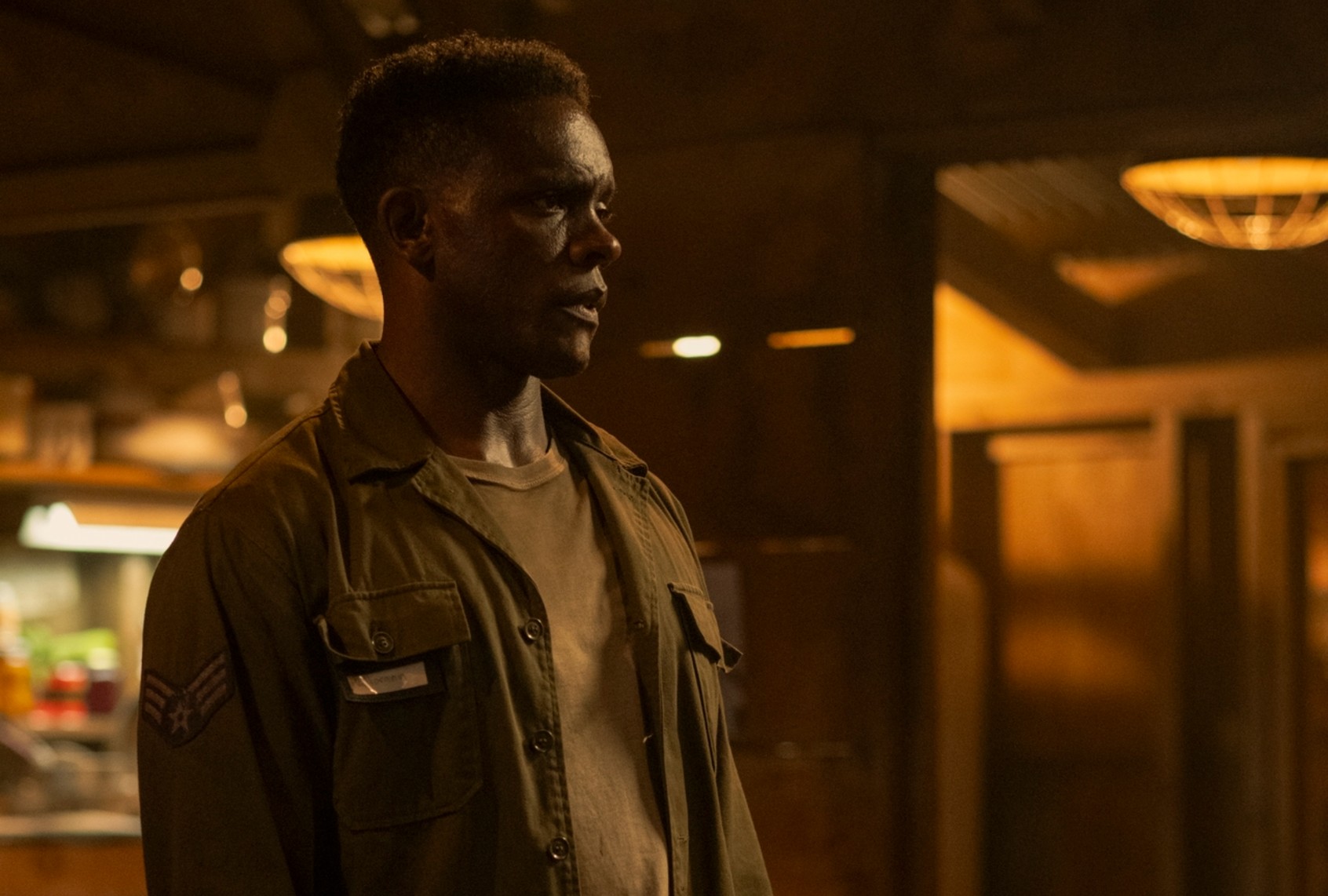

No origin story concerning Derry, Maine, would be honest without appraising one of the most savage moments of its history: the racist arson that burned down the speakeasy known as The Black Spot. “It: Welcome to Derry” saves that brutal crime for the first season’s penultimate episode, although showrunners Jason Fuchs and Brad Caleb Kane methodically build toward it throughout the season.
Stephen King’s readers had to know that the show would get there eventually, regardless of the prequel’s time shift to 1962. Most of the contextualizing interludes in King’s 1986 novel come from Mike Hanlon, the sole Black member in the group of kids known as the Losers Club, who confront and eventually defeat the demonic entity known as Pennywise (Bill Skarsgård).
Mike hears about the raging fire at The Black Spot from his father, Will, on his deathbed. Since “Welcome to Derry” follows Will (Blake Cameron James) as a child who recently moved to Derry with his parents, Leroy (Jovan Adepo) and Charlotte (Taylour Paige), we’re placed right in the middle of that terror.
A local lynch mob hunting an innocent Black man throws Molotov cocktails that start the fire. What they refrain from hurling in that moment, or at any point throughout “Welcome to Derry,” is a dehumanizing slur splashed all over the pages of the original “It.”
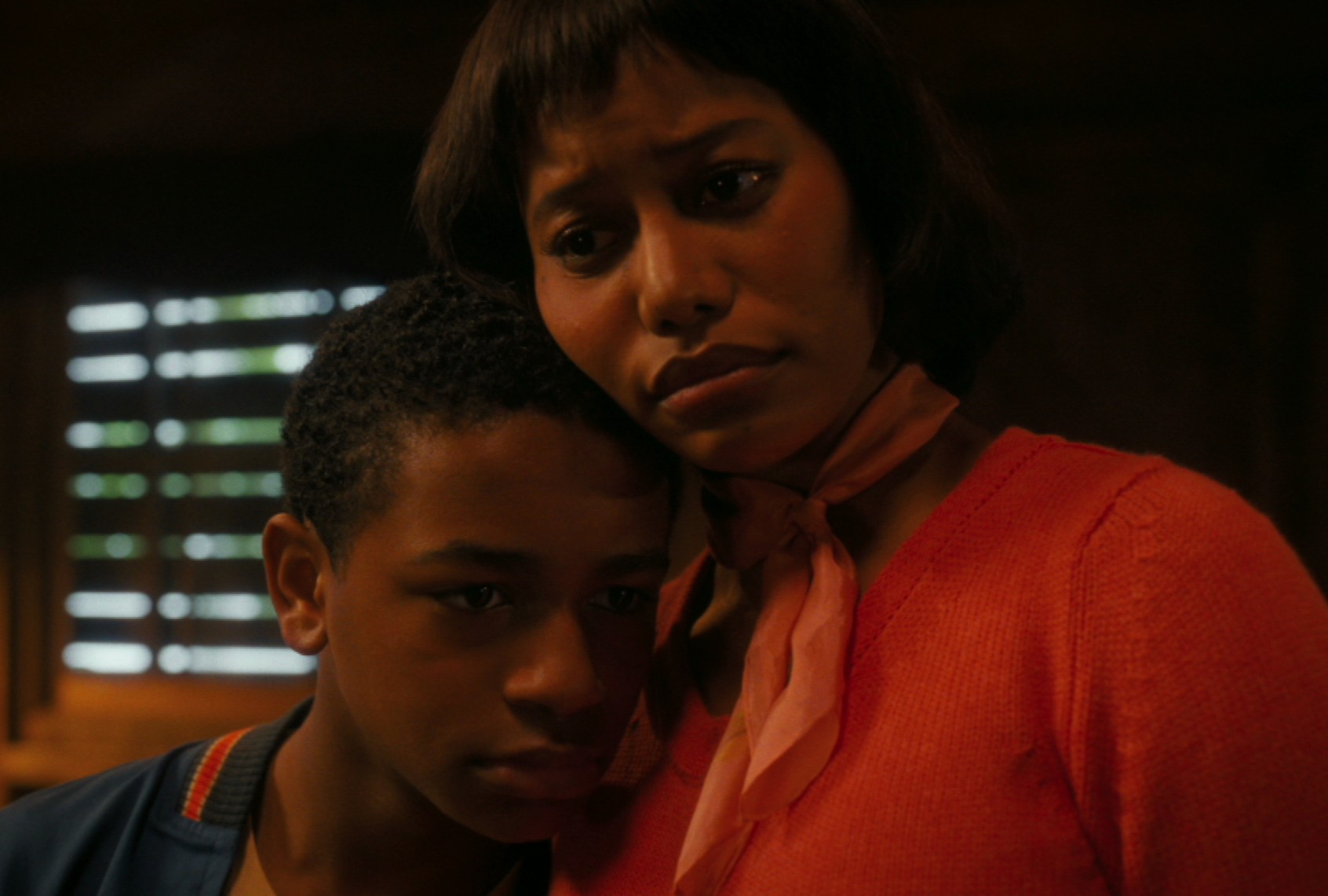
(Brooke Palmer/HBO) Blake Cameron James and Taylour Paige in “IT: Welcome to Derry”
Loving genre fiction as a non-white fan often means forgiving a popular author’s shortcomings regarding their depictions of other people’s experiences. King’s readers know this, even acknowledge it to a degree. That doesn’t necessarily stop them from enjoying his work, as the series’ co-stars Chris Chalk and Stephen Rider said during a recent conversation.
Both leapt at the chance to contribute to the canon, with Rider as Hank Grogan, the local projectionist created expressly for the series, who is framed for three child murders that launch Pennywise’s killing spree. Chalk, meanwhile, takes up the mantle of Dick Hallorann, one of King’s most iconic and in some ways problematic characters.
“What was funny about coming to this, a genre show that’s already kind of established its tone, is we were like, ‘Where the N-words at?'” Chalk recalled. “Like, we wanted racism to be at the forefront. And it took a while for us to realize, it’s a different kind of show.”
Chalk is a huge fan of King’s books. “After Shel Silverstein, Stephen King was the most I read as a kid,” he said. He and Rider said they watched the movies based on King’s work with enthusiasm, just as many of us did, including the series’ executive producers, Andy Muschietti and Barbara Muschietti.
And Chalk said he wasn’t aware of the critiques about Dick Hallorann’s association with one of the most aggravating tropes in film and TV, that of the noble Black character who mentors and often sacrifices himself for a white hero. “And I probably don’t care, just because opinions are opinions,” he said with a laugh. If we look at the history of Black people being written anywhere, it’s a little subpar. So, you know, apply to all.”
One aspect of the show that the actor questioned, however, was Fuchs and Kane’s decision to omit that incendiary epithet from the scripts.
“What was funny about coming to this, a genre show that’s already kind of established its tone, is we were like, ‘Where the N-words at?’” Chalk recalled. “Like, we wanted racism to be at the forefront. And it took a while for us to realize, it’s a different kind of show. They have to be a little bit cleverer in how they manifest racism, because I’ll tell you in the book, man, there’s no shortage of N-words.”
The first season of “Welcome to Derry” opened with a mixed response from King fanatics, especially those who see Pennywise, the child-eating clown immortalized in “It,” as the main star.
But the series’ showrunners have won over viewers by presenting Derry as an evocation of supposedly simpler times. Their restraint with peppering the dialogue with blatant evil effectively allows the version of fear hiding behind the surface politeness of America’s nicest small towns to seep into our consciousness. Hence, “Welcome to Derry” may not be the scariest show you’ve ever seen, but if you find it disturbing, the writers are doing their job.
As for Chalk brushing off critiques of Dick’s previous depictions, an actor shouldn’t have to care about his character’s reputation. Establishing and maintaining the legacy of figures like Dick is up to the people writing it, and Fuchs and Kane know that. They told Salon they were very aware of the dialogue about King’s frequent dives into the Magical Negro stereotype.
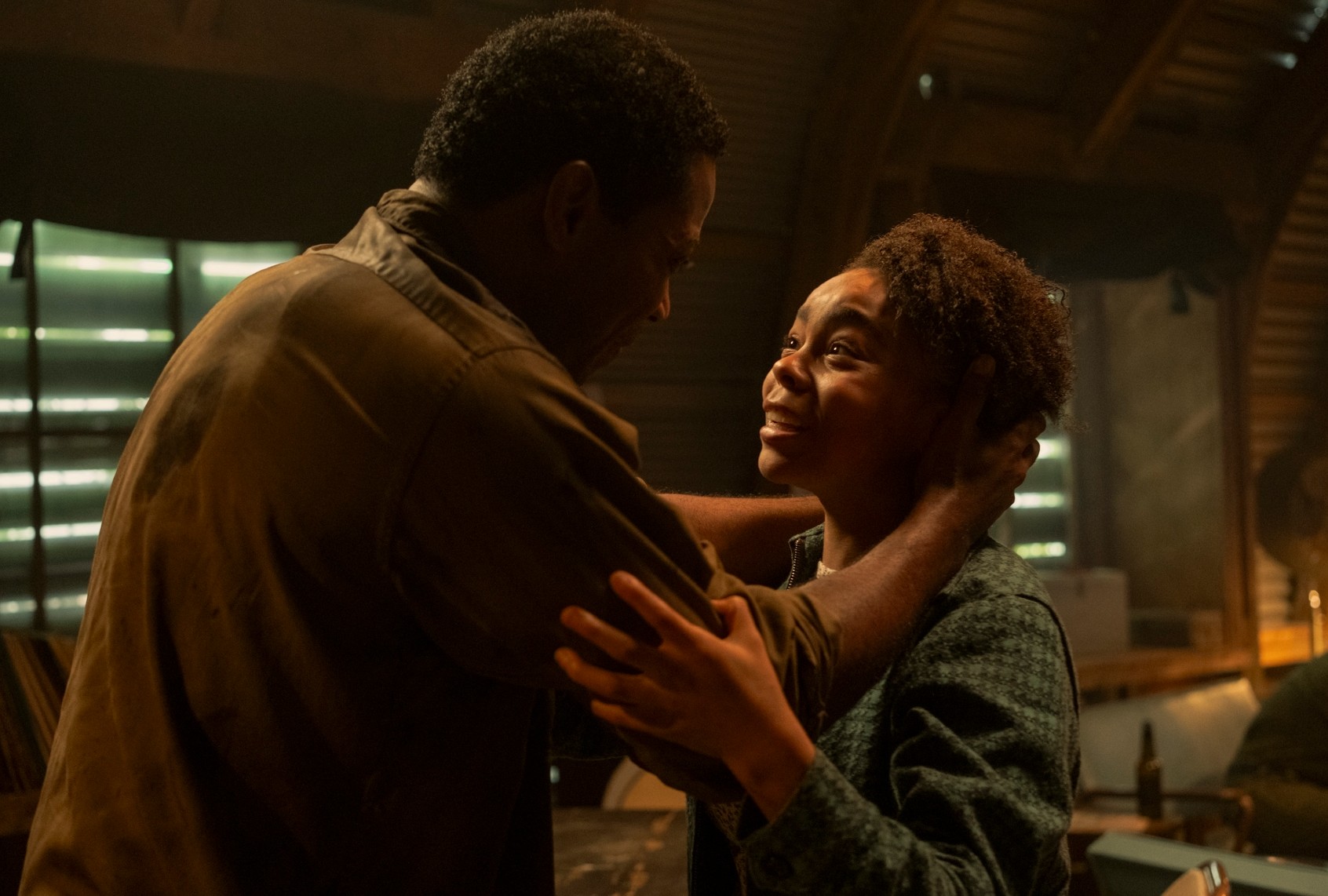
(Brooke Palmer/HBO ) Stephen Rider and Amanda Christine in “IT: Welcome to Derry”
“I appreciate all the criticisms that have come before,” Kane said. “I love Stephen King’s writing. I think he’s one of the master storytellers. He himself has admitted in the past that he had blind spots early on in his career, and he’s done everything he could over the last couple of decades to correct those.”
The production continued that effort, Kane added, by attempting to make all its characters fully rounded, achieved in part by staffing the show with a diverse writers’ room that included “Watchmen” and “American Fiction” writer Cord Jefferson, who co-wrote Episode 6.
Out of all the homegrown horrors keeping the demon that lives beneath Derry well-fed, its racism may be the most renewable power supply.
And Chalk’s complex portrayal of Dick’s tortured relationship with his abilities goes a long way toward course-correcting his depiction in, say, “The Shining,” especially Stanley Kubrick’s version, of which King did not approve.
“In our show, Dick Halloran exists to be of assistance to nobody but Dick Halloran,” Kane stresses. “He has his own inner life. Dick Halloran is not really looking to be a benefactor of anybody, or to be beneficent to anybody. He is a man with his own agency and his own demons, and he’s wrestling with those things. But he’s also out to have himself a really good time in the face of the reality of life in the military for a Black man in 1962.”
We need your help to stay independent
Out of all the homegrown horrors keeping the demon that lives beneath Derry well-fed, its racism may be the most renewable power supply. In the book, Mike is an overt target of racist attacks from Henry Bowers, a fountain of noxious slurs. But when any epithet shows up in a TV episode or a movie, its invasive power simultaneously assaults the viewer’s sensibilities.
“Welcome to Derry” depicts the racist violence simmering underneath the town’s veneer of niceness in quieter ways that still effectively highlight its corrosiveness. It bares its fangs early in the season when Charlotte tries to stop a group of teen bullies from beating up a weaker kid while other adults turn a blind eye to the assault. Those same neighbors don’t back up Charlotte either when the aggressive kids train their savage glares on her.
“The Black Spot,” which Fuchs and Kane co-wrote, displays the fruit of Derry’s bigotry in all its nastiness, a harvest so ripe and bountiful that Pennywise feasts to satiety.
It’s in the air when Leroy, an Air Force major, must pull rank on a white airman who refuses to salute him, and when Will finds himself in detention despite being the victim of a schoolmate’s stink bomb prank.
In a separate chat, Paige notes that the fear feeding Pennywise in “Welcome to Derry” may be especially uncomfortable because of its complicit nature. “We’re almost all in cahoots, or unconsciously have agreed to society being this way . . . and we’ve been born into it,” she said. “And I think each generation is kind of at odds with what we’ve been born into, or what we’ve accepted or not accepted, and how these non-truths warp a reality, warp the ability to properly critique what exactly went wrong.”
This observation proved prescient, since she made it weeks before viewers saw the first episodes. Online discourse about any show ignites an array of interpretations concerning the producers’ choices, along with revealing who comprehended King’s overarching messages concerning fear.
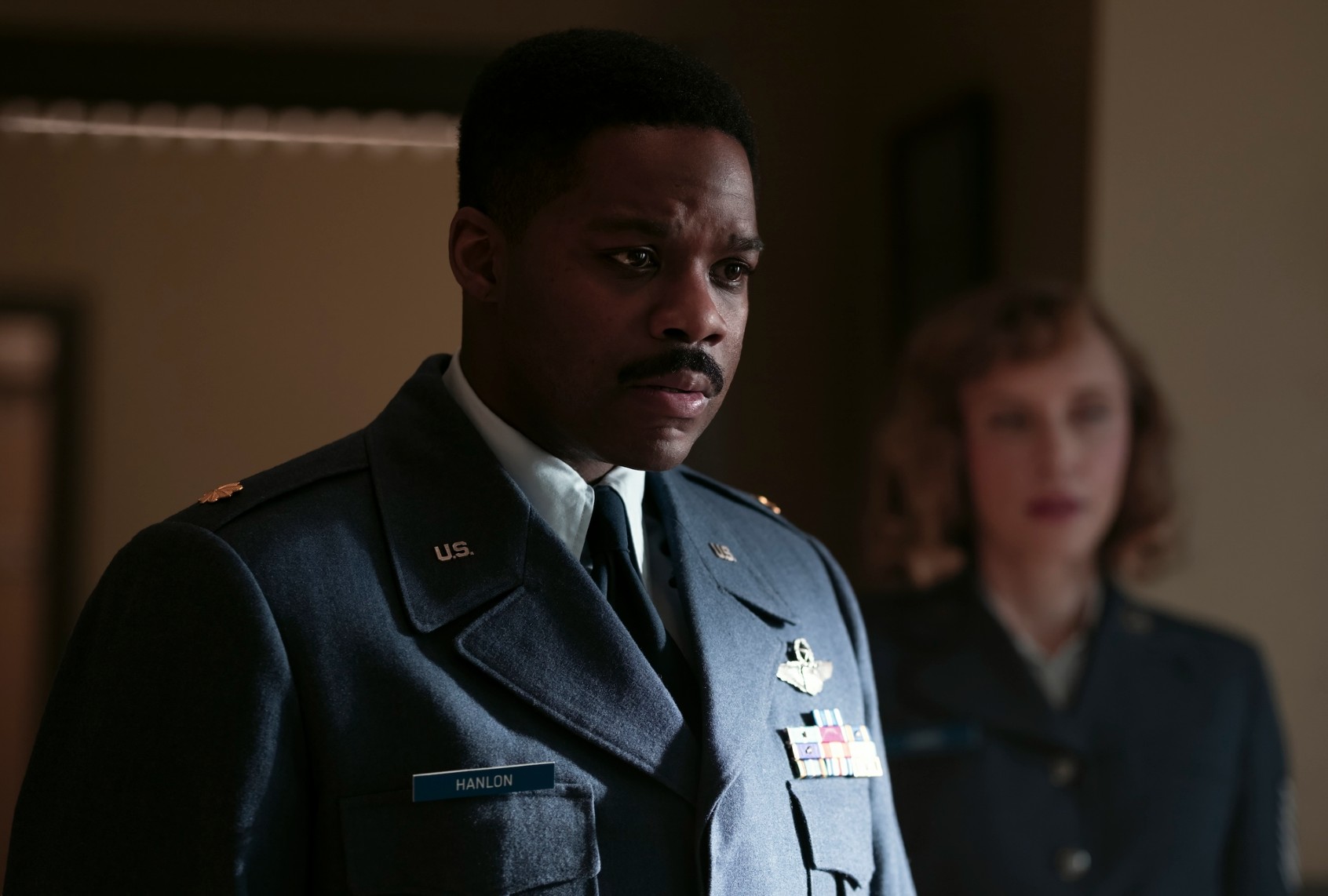
(Brooke Palmer/HBO) Jovan Adepo in “IT: Welcome to Derry”
Reddit appears to be split between posters rolling their eyes about the extent to which the series focuses on Derry’s pervasive intolerance and those who think the showrunners’ choice to omit the N-word from their scripts soft-pedals Derry’s racism.
“It reminds you of when Spike Lee, on ‘Do the Right Thing’ — remember how he got criticized for how he depicted Brooklyn, and he was like, ‘But this is my Brooklyn’? — This is the ‘Welcome to Derry’ [version of] 1962, not 1962, like, in Delaware,” Rider offered. “Certain things might not be said, but it doesn’t mean that we can’t bring all of that to the fore and respond to that organically.”
“The Black Spot,” which Fuchs and Kane co-wrote, displays the fruit of Derry’s bigotry in all its nastiness, a harvest so ripe and bountiful that Pennywise feasts to satiety.
Equally if not more indelibly depicted is the tragedy of what the fire erased from the world. The Black Spot was originally built by Black servicemen from the nearby Air Force base who simply wanted a safe space to enjoy themselves since white patrons at the bars in town menaced them. Unlike Derry’s pubs, it welcomed everybody and also secretly provided a safe refuge for Hank as he hid from the cops intent on railroading him.
Want more from culture than just the latest trend? The Swell highlights art made to last.
Sign up here
Before masked men in trucks arrive with loaded guns and murderous intent, we’re treated to a gig where a white jazz singer performs along with Black musicians, and even Will’s pal Rich Santos (Arian S. Cartaya) has a chance to show off his skills as a percussionist. Even uptight Marge Truman (Matilda Lawler) cuts loose when the bartender serves her and Richie a soda that, wink-wink, isn’t really a soda.
Then the lynch mob floods through the front door, demanding that the crowd hand over Hank. A brief standoff between the military men, who are also armed, ends with the locals appearing to withdraw before setting the place aflame, murdering 23 people, including women and poor, sweet Richie.
This is also a defining moment for Dick, whose psychic visions enable him to guide Will, Hank and his daughter Veronica (Amanda Christine) to safety. But it also cripples his sanity since the fire creates more vengeful spirits that only he can see.
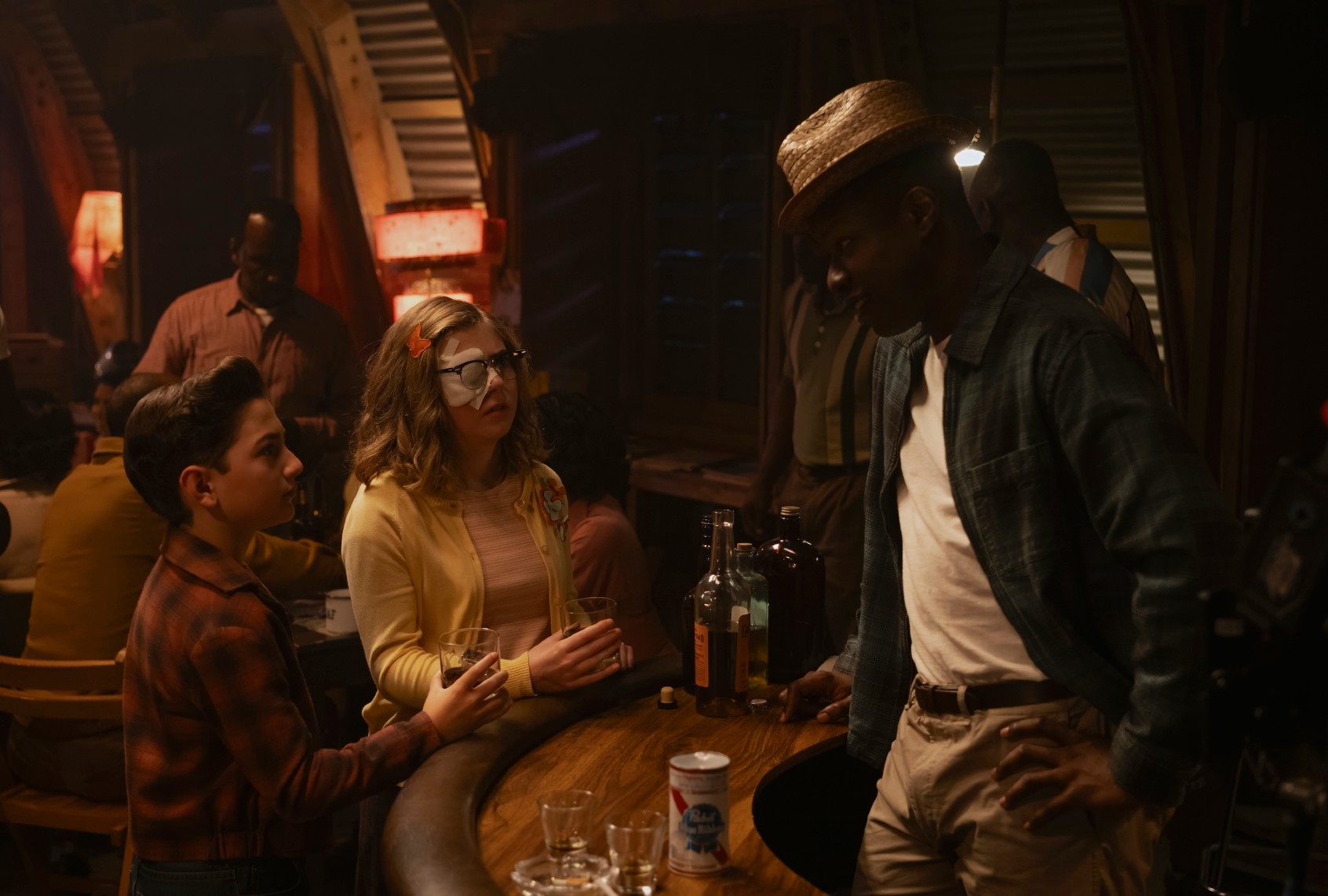
(Brooke Palmer/HBO) Arian S. Cartaya, Matilda Lawler and Richard Walters in “IT: Welcome to Derry”
“The Black Spot” spells out the stakes for Derry and America explicitly in its closing moments, with Leroy’s superior, Lt. General Shaw (James Remar), dropping the final veil to reveal the true goal of the military’s secret project, which is to control America by allowing fear to run rampant.
Putting a finer point on that is Shaw’s declaration that the greatest threat to this nation is not from without, it’s from within, concluding that only fear really makes people fall into line.
He says this without uttering a single base insult to Leroy or Dick, in the same way the butcher who engaged in polite conversation with Charlotte earlier in the season was among the men in the racist posse who burned members of her community to death.
“This town is the monster,” Charlotte proclaims, arriving at that conclusion without requiring any nasty insult to confirm her suspicion. Instead, “Welcome to Derry” allows the place’s homegrown villainy to speak for itself. And as Chalk put it, “Anyone who is, well, human understands racism or marginalism to some degree. So I honored that [decision]. It makes sense, watching the kind of show it is.”
The season finale of “It: Welcome to Derry” airs at 9 p.m. Sunday on HBO and streams on HBO Max.
Read more
about Stephen King and Derry
