

I was born the same year the Food Network debuted, which sometimes makes me feel as if I cut my teeth on “The Barefoot Contessa” and its particular arrangement of fantasies: a perfected roast chicken, always somehow at the ready; a devoted husband, probably named Jeffrey; and, before all that, the original fantasy — owning a specialty food store like Ina Garten’s beloved shop at 46 Newtown Lane, the one that gave the show its name.
There is an early photograph of Garten that I return to often. She is standing in front of The Barefoot Contessa with her dark hair coaxed into perky curls, wearing a matching aubergine button-down and skirt. Around her are patio tables displaying the kind of food the shop carried: pies and cakes, what appear to be stuffed tomatoes, baguettes, sophisticated deli salads, gorgeous hunks of cheese. In the window behind her, my food-obsessive eye tries to make sense of the blurs of shape and color, or at least to make its best guesses: bottles of sparkling wine, tubs of jam and mustard, boxes of pasta, buckets of yellow lilies.
Somewhere along the way, as food television — and food culture more broadly — slipped beyond special interest and into lifestyle gospel, it became desirable to have a personal pantry that did not look so different from that shop window.
Part of this, I think, can be attributed to social media and its relentless invitation to aestheticize even the most mundane corners of domestic life, kitchen cabinets included. Part of it has to do with the simultaneous leaps in quality, availability and marketing of certain shelf-stable standards: good tinned fish, squeeze-bottle olive oil, dried beans with their very own fan clubs.
And part of it, surely, comes from the pandemic, when supply-chain snarls and the sudden complication of ordinary grocery shopping made many of us newly aware of how much good staples could rescue, or at least meaningfully improve, a weeknight dinner. (I find it mildly noteworthy, too, that so many of Alison Roman’s pantry-smart recipes found their viral footing during this period — and that Roman now has a delightful shoppy-shop of her own, First Bloom, which sells many of the ingredients on which those dishes depend.)
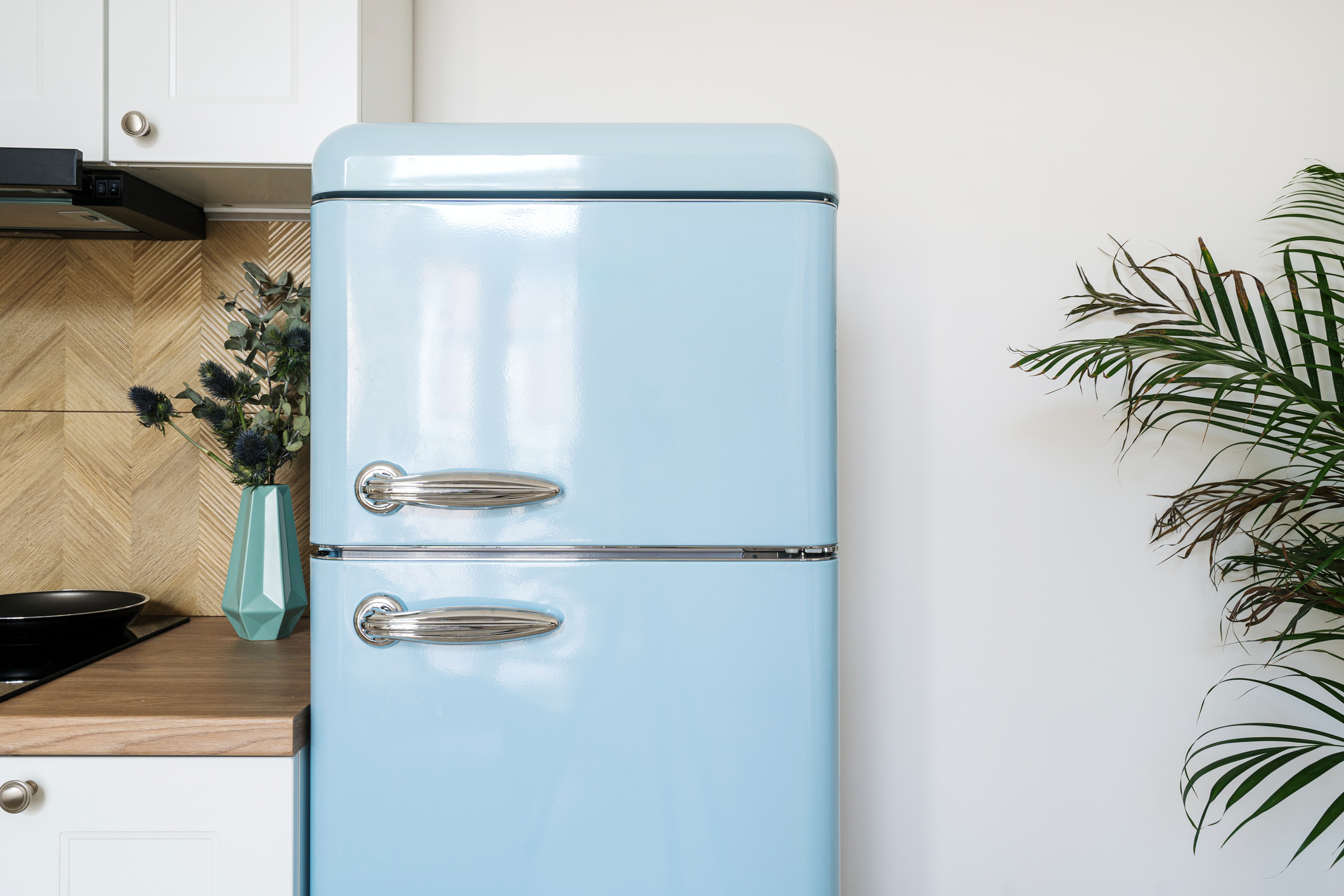
But lately, I’ve been thinking about something: Everybody wants to romanticize the pantry. Nobody wants to flirt with the freezer.
And, hey, I get it. Food people love a shelf. A shelf says taste. A shelf says curation. A shelf says: I buy my tuna packed in olive oil, not water, and I know what to do with preserved lemons.
We need your help to stay independent.
The freezer, meanwhile, sits there humming in the corner like a practical aunt with a Costco card and an unusually good memory. The freezer aisle, from whence many of its contents originate, does not do much to help the case. There are fluorescent lights, sweated-out windows, pizzas stacked like evidence, and the unshakable feeling that every other shopper is experiencing their first day on earth while glitching gently in front of the popsicles. It is cold little chaos, packaged in cardboard and frost.
Trader Joe’s, of course, has done its part to thaw people’s feelings toward the freezer aisle: the orange chicken, the soup dumplings, the cheese-filled fiocchetti with pink sauce. There is a whole genre of person now for whom the freezer section is not a compromise, but a destination.
Even so, for a long time, I still thought of my own freezer as something more sensible than sensual — a bastion of meal prep and backup plans, the place where good intentions went to wait in Ziploc bags.
Fittingly, it was love that changed my mind. Or, at least, love adjacent to a very good Italian deli.
I don’t want to overstate the story, though I’m probably about to. We were moving to Chicago in shifts and had not yet acquired a kitchen table, chairs or even a bed frame for the apartment. That first week, we had a TV and a kind of makeshift conversation pit: a quilt, a mattress, some pillows. It was snowing. It was inconvenient, half-furnished and somehow still felt oddly cinematic, the way schlepping your lives to a new city can feel cinematic, but only with the right person.
One day, we drove to Little Italy — what’s left of it — in my rattly gray Honda and found a shop that felt sufficiently old-school. This was my third time living in Chicago, twice as a child, but my first time as an adult, and I felt nostalgic for a past I frankly had not experienced. I wanted a little culinary tether, some proof of belonging, the opportunity to say, “Oh, yeah, I know a place, too.”
Up front, it was the ideal dry-goods shop: good boxes of fussy pasta and cavatappi, sleeves of biscotti, plastic-wrapped anise pizzelle, a counter where you could order hulking sandwiches and tiny cups of coffee.
Then I turned the corner: Freezers lined with beautiful tubbed sauces and pastas. Herbaceous pestos, hearty ragùs, alluring vodka sauces. Cubes of delicately folded fettuccine, stuffed shells, slabs of lasagna. I bought a tub of amatriciana, flecked with visible hunks of guanciale and red pepper flakes, and a box of rigatoni.
We cooked it in the cherry-colored Dutch oven that had made it to the apartment and ate it while sitting on pillows as “Bob’s Burgers” played on my tiny kitchen TV, surely satisfying some rom-com fantasy I had packed away in my subconscious. And yes, it was just as satisfying as any pantry pasta — equally chic, if you care about that kind of thing.
Which, I suppose, I do. Because since then, I’ve found myself thinking about all the other frozen things that can elicit the same feeling: not resignation, not emergency, not the sad little archaeology of dinners past, but anticipation.
A hot freezer, I think, is not simply a full freezer. It is not a place crowded with abandoned good intentions, freezer-burned stock bones or half-used bags of vegetables slowly turning into gravel. It is a freezer with a point of view.
Want more great food writing and recipes? Sign up for Salon’s free food newsletter, The Bite.
It has pastry sheets, because being twenty-five minutes away from something golden and flaky is one of the great arguments for staying alive. It has pesto, not because you are pretending it is August, but because some part of August was worth saving. It has tubs of brown butter, frozen flat or portioned into little pucks, ready to make a weeknight bowl of noodles taste as if someone planned better than you did. It has freezer jam, bright and almost indecently cheerful, a small rebellion against the end of fruit season. It has cookie dough, because sometimes hospitality means baking twelve cookies for friends, and sometimes it means baking two for yourself while standing barefoot in the kitchen.
This is not the freezer as bunker, or the freezer as punishment, or the freezer as the place where leftovers go to await their eventual quiet disposal. This is the freezer as a larder of little luxuries.
Maybe the pantry has an easier time earning our affection because it sits there so beautifully, all jars and tins and labels facing forward. Its romance is visible. The freezer asks for a little more imagination. You have to believe in what is under the lid, behind the frost, wrapped in parchment, waiting to become itself again.
But that, I think, is part of the appeal. A hot freezer is not about scarcity or emergency. It is about appetite deferred, pleasure protected, a small kindness sent ahead to a future version of yourself.
It is future pleasure, stored cold.
Read more
about this topic

:max_bytes(150000):strip_icc():focal(399x0:401x2)/ina-garten-store-anniversary-1-052724-8f0447cdb82142c8adb6126ae16e4921.jpg)