

Bad movies are a low-key passion of mine. This is no secret to my forbearing friends who slouched in theater seats next to me during, say, every Paul W. S. Anderson-directed disaster in the “Resident Evil” series. If I had been living in Britain in 2009, when Uma Thurman’s “Motherhood” grossed a piddly £88 during its opening weekend, I can guarantee some of my pocket money would have contributed to that teacup kitty.
My reaction to “The Black Dahlia,” though, was different.
Like millions of others, I expected it to be superb because of its provenance. “The Black Dahlia” is Brian De Palma’s adaptation of James Ellroy’s 1987 novel, the first in the author’s famed L.A. Quartet. In 2006, De Palma was still considered a top director, having hit his apex with 1987’s “The Untouchables” – a period crime thriller about a supposedly more glamorous era, though not as swish as 1940s Hollywood. Ellroy’s work set the bar for modern neo-noir interpretations, both literary and cinematic.
Now consider the timing. “The Black Dahlia” exists because of the runaway success of Curtis Hanson’s 1997 opus “L.A. Confidential,” which earned multiple Oscar nominations and two Academy Awards, and is still viewed as one of that decade’s definitive cinematic achievements. De Palma’s follow-up opened nine years later with a cast stacked with rising Hollywood stars, including Scarlett Johansson, Josh Hartnett, Aaron Eckhart and Hilary Swank.
But the “L.A. Confidential” shadow is long, and the artlessly edited “The Black Dahlia” wilted quickly in it.
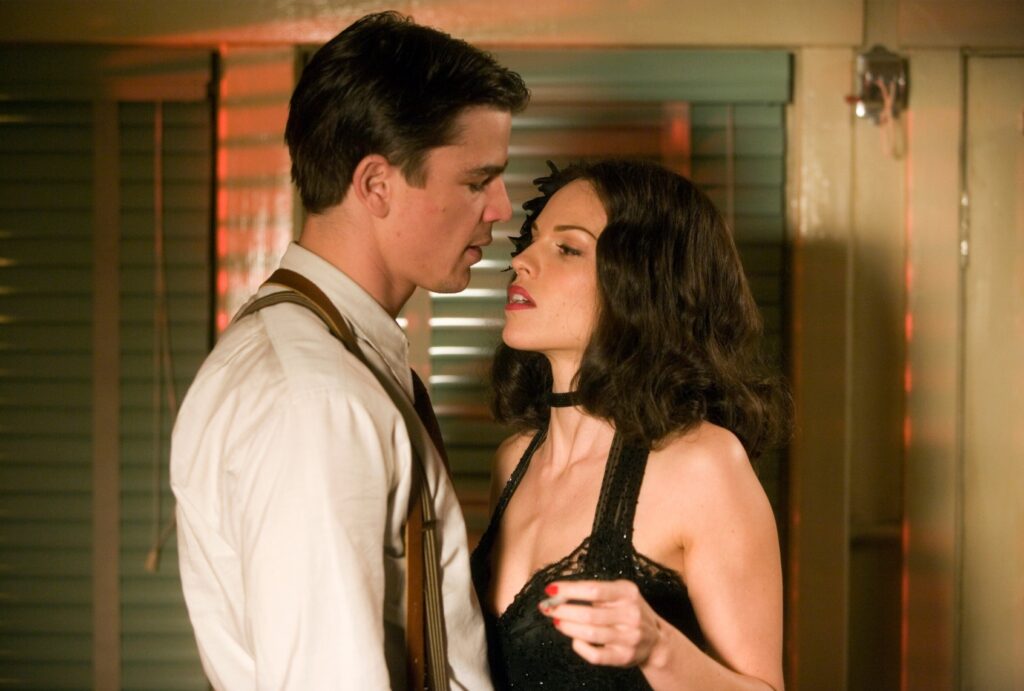
(Rolf Konow/Sygma/Sygma via Getty Images) Hilary Swank and Josh Hartnett in Brian De Palma’s “The Black Dahlia”
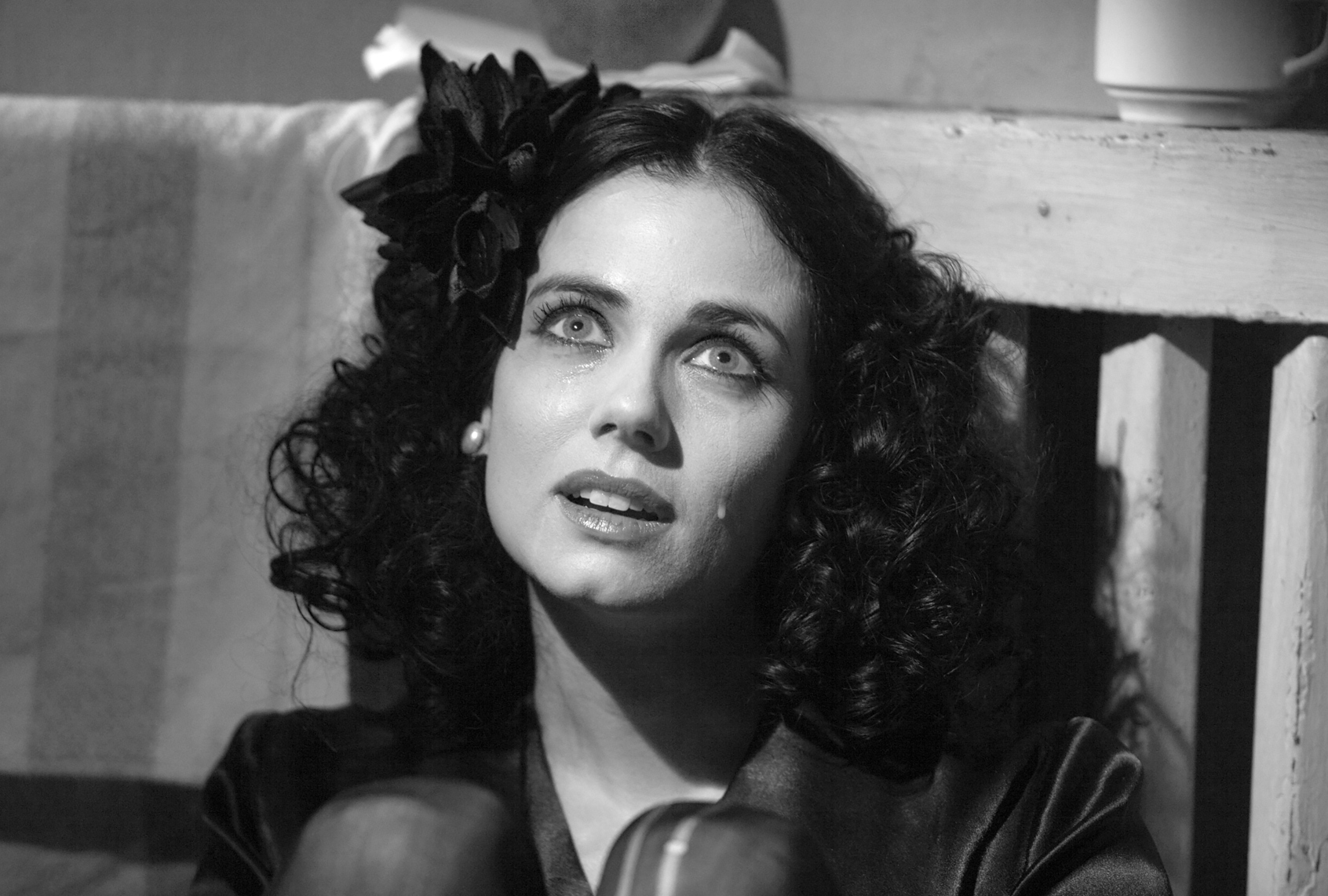
That’s putting it kindly. Critics took pleasure in savaging the film; the only actor who came away with some dignity intact was Mia Kirshner, who played Elizabeth Short, the titular victim, in black-and-white audition reels and a blue film. Whereas Stephanie Zacharek, Salon’s movie critic at that time, said the movie turned Harnett into “the Roach Motel of actors: Feelings get in, but they don’t get out.” Ouch.
My husband and I went to see it anyway, and when the house lights came up we immediately vowed to stop others from making our mistake. Reader, we made good on that promise. Once, we interrupted a couple of strangers at the video store to let them know the DVD case they were clutching held a flat circle of ruin for what could have been a perfectly good evening.
Twenty years later, I have no regrets about any of that, but plenty of hindsight. For one, it was a blast of cold coffee to the face to realize that what qualifies as a career-derailing flop in 2006 meets or beats the quality of most made-for-Netflix features. Rewatch it and tell me I’m wrong.
The production’s legend has expanded, too. Allegedly, somewhere out there De Palma’s original three-hour cut exists, one that so impressed Ellroy that he devoted an entire essay to singing its praises called “The Hillikers.” If that version is ever unearthed, it may perhaps vindicate the director.
Weightier than any of that is the ever-more involuted mystery enveloping the real Elizabeth Short, whose murder has inspired fictionalized homages before De Palma’s movie and since, but has yet to be satisfactorily rendered onscreen.
Many people know at least the outlines of the case given its gruesomeness. In 1947, soon after she disappeared, the 22-year-old Short’s body was found naked, bisected and displayed in a nightmarish arrangement of visceral horror, the corners of her mouth slashed to each ear in a Glasgow grin. From that moment onward, she became an object, a true crime symbol, a warning to wayward women as opposed to a person whose whole life was swallowed by her murder.
Perhaps if Short weren’t associated with a detective noir masterpiece, she would never have become a useful metaphor for the corruption and rot associated with Hollywood and Los Angeles, or an eternal enigma.
Her sobriquet is a journalistic creation thought to have been inspired by a celebrated 1946 movie, “The Blue Dahlia,” written by crime novelist Raymond Chandler. The timing of her murder also coincides with an era we associate with a level of everyday elegance swept away by a culture-wide evolution toward comfort and convenience.
When Transportation Secretary Sean Duffy ludicrously urged Americans to dress up for travel, he was referencing this imaginary age of girdles and silk-stockinged women dolled up like Veronica Lake. Short came to embody the inverse of that picture, the shaded gloom lurking in places that escape sunshiny illumination.
We need your help to stay independent.
Almost eight decades after her death, the mere mention of Short’s nickname conjures up an outline of horrendous gender violence. Before Ellroy delivered his fictional spin, which veers far afield from the case’s facts, a 1975 made-for-TV movie, “Who Is the Black Dahlia?” attempted to fill in the blanks in Short’s biography with a performance by Lucille Ball and Desi Arnaz’s daughter, Lucie.
But it’s the posthumous myth enveloping the Dahlia, not a woman, that inspired Mena Suvari’s take in Ryan Murphy’s “American Horror Story” franchise and other made-up murder victims in other TV shows, earning its dubious status as one of 20th century pop culture’s most famous crimes.
It’s as if the world tacitly acknowledges that getting this tale truly right is a futile pursuit.
Want more from culture than just the latest trend? The Swell highlights art made to last.
Sign up here
That could change. “Tinseltown” author William J. Mann’s “Black Dahlia: Murder, Monsters, and Madness in Midcentury Hollywood,” released earlier this year, revisits Short’s story with the type of journalistic meticulousness that, for better or worse, inspires today’s true crime filmmakers. It arrives as audiences and filmmakers signal an openness to revisiting stories about women long shaped by men accustomed to processing female identity through a saint-sinner binary. Lingering assumptions that Short was a sex worker are outgrowths of that, but likely fictitious. Ellroy went with that story, as did John Gregory Dunne before him in his 1977 novel “True Confessions,” which features a character inspired by Short.
If Hollywood shies away from trying to correct the myths inspired by this tale, maybe the reason is that Short’s murder was never definitively solved, making it unlikely we’ll ever get a universally acceptable form of closure.
I use that term intentionally, by the way, because Ellroy hates it. In his 1996 memoir “My Dark Places,” he wrote, “I wanted to find the fool who invented closure and shove a big closure plaque up his a**.” He was expressing his persisting grief over the murder of his mother, Geneva, which perhaps inspired him to point to a culprit in “The Black Dahlia.” Every great movie needs an ending that makes sense. Plenty of bad ones wrap up neatly too. De Palma’s movie finale never quite got us there, but maybe for a mystery we’ll never quite get over, that would have been impossible.
Read more
from Salon’s Culture newsletter, The Swell
