

When I was a kid, I was delighted by the brazenness of generic groceries. There was Dr. Thunder, a soda whose name made its ambitions extremely clear. There were chocolate sandwich cookies called Twist and Shout. Somewhere in the cereal aisle were frosted flakes fronted not by Tony the Tiger but, as I remember it, a polar bear: a perfectly respectable mascot, just not the famous one.
That was part of the charm of generic food. It was forever making a little sideways gesture toward something else. The cookie was an Oreo in community theater; the cereal was performing Kellogg’s in a cheap wig. Whether we bought the understudy depended, in my family, on whether the ingredient “mattered.” For peanut butter cookies, my mom might spring for Jif and Kerrygold, then grab store-brand flour and brown sugar. Lasagna meant Rao’s sauce and Breakstone cottage cheese layered with Kroger ricotta and noodles. Grocery shopping involved a constantly shifting private calculus of where quality lived, where branding mattered and where an extra two dollars seemed frankly ridiculous.
Lately, though, I’ve had the sense that Mariano’s is cosplaying as Trader Joe’s.
It happened gradually enough that I missed the costume change. Then, over a few trips, I started noticing things: bulgogi and birria in the freezer case; grilled mushroom and truffle-oil thin-crust pizza; bronze-cut pasta; baby potatoes with brown butter and herbs; mascarpone vodka sauce. Products that once might have seemed oddly ambitious for a supermarket house brand were simply there, scattered around the store, as though they had always belonged.
The packaging had changed its posture, too: deep, muted colors and big, self-aware type. One jar of Kroger Private Selection preserves lets the raspberry seeds show through the glass beneath a black label announcing RASP-BERRY in enormous pink letters. This is not packaging designed to disappear discreetly beside Smucker’s.
That is increasingly the odd thing about calling any of this “generic.” The word once aptly described products whose chief proposition was resemblance: essentially the same cracker, cereal or can of tomatoes, minus the famous name and a little money at checkout. Now private-label goods account for nearly a quarter of U.S. consumer packaged-goods sales, and 92% of grocery shoppers say they have private-brand products in their homes.
Nearly half say they bought more of them over the past year, but the more revealing number may be that 94% say they would keep buying them even if grocery prices declined.
Inflation accelerated the shift, but it didn’t invent it. Retailers had already begun turning their house brands into something more particular: not just substitutes, but products with identities, aesthetics and increasingly their own little fandoms. The old question was whether the name brand mattered. Now, in some aisles, the store brand is the name that matters.
Trader Joe’s understood this early. Shopping there has always felt slightly less like provisioning a household than visiting a restaurant whose menu happens to be arranged on shelves. You enter beside buckets of colorful flowers. Products come and go with the seasons. The Fearless Flyer turns new arrivals into minor events. A cashier notices, with the attention of a veteran waiter, the frozen dumplings in your cart and tells you they are her favorite, too.
Even the freezer cases seem to anticipate the question What am I supposed to do with this? The orange chicken is near the frozen rice, which is near the vegetables with stir-fry sauce. Dinner assembles itself spatially. And the products that cannot reasonably be called dinner (Scandinavian swimmers, those ridiculous Inside Out Carrot Cookies, whatever confection has recently been enrobed in dark chocolate) seem to be there largely because someone thought they might be fun.
I rarely leave Trader Joe’s congratulating myself for having economized, although I usually have. Instead, I text my partner some variation of: “I got new stuff for cheap.” Novelty without financial self-reproach is a powerful drug, and it has helped produce a truly astonishing secondary culture of Trader Joe’s blogs, Instagram accounts, rankings and podcasts devoted to the contents of a grocery store.
Other chains have developed their own versions of the phenomenon.
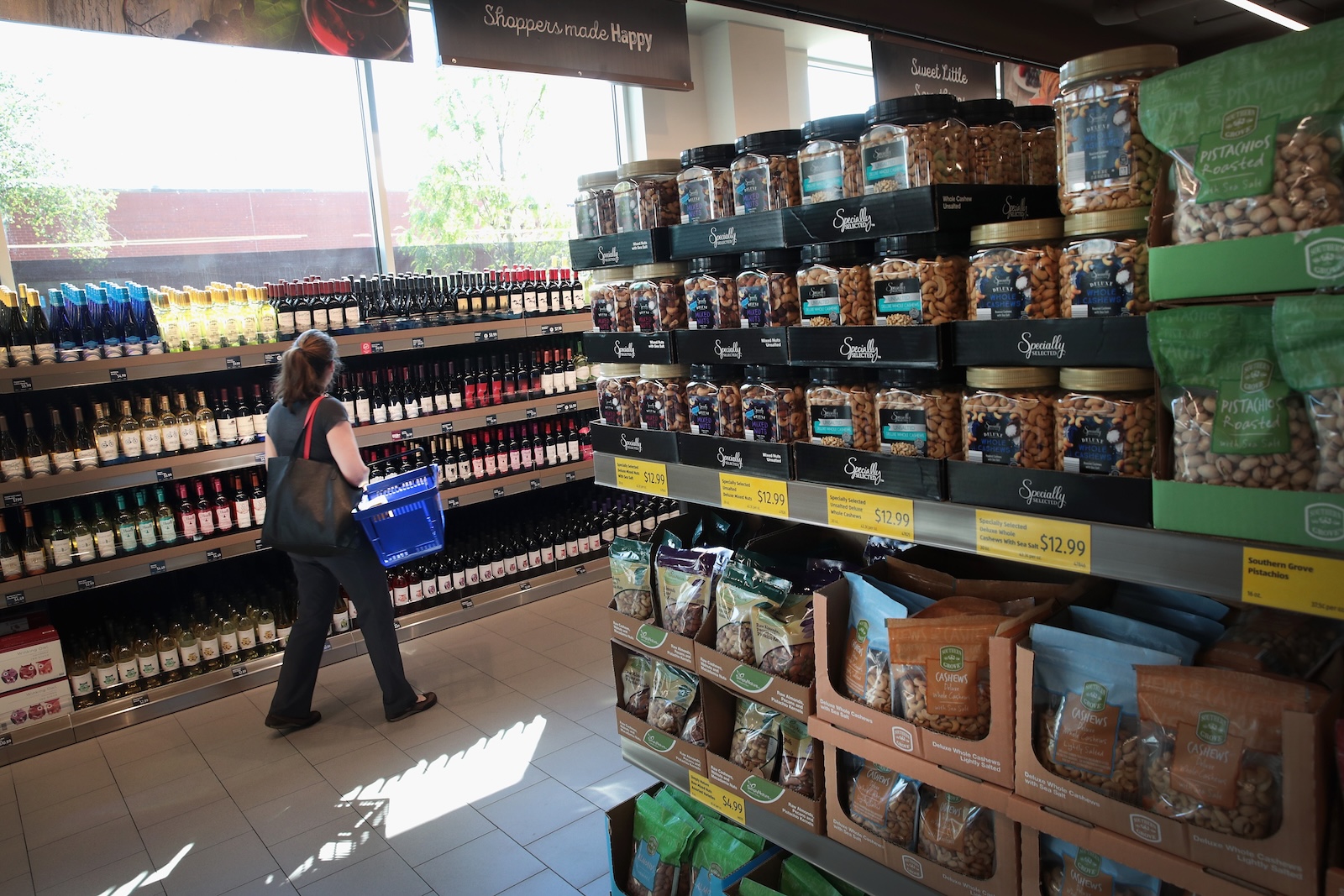
Aldi has what shoppers affectionately call the “aisle of shame,” a rotating stretch of seasonal housewares and oddities that can make a trip for eggs end with an inflatable ottoman in the trunk. It shares Trader Joe’s combination of affordability and discovery, although perhaps with slightly more treasure hunt in its DNA: the Trader Joe’s cult in a German sweater.
The company’s advertising still suggests that not everyone has joined. One recent commercial features a woman attempting to coax her husband out of the car and into Aldi, eventually tempting him with a bag of grass-fed beef sticks. The joke isn’t really that the food is bad. It’s that Aldi is different: unfamiliar labels, quarter-operated carts, its own little set of rules — a place that can inspire evangelical loyalty among regulars and still require explaining to everyone else.
Costco offers a sturdier version of the same intimacy. My parents became Costco people years ago. They enjoy speculating about who really manufactures Kirkland products as though they are solving minor corporate mysteries. My dad owns Kirkland slides. Last Christmas, my mom bought a 500-piece Costco puzzle for us to assemble over the holiday. At a certain point, the private label has escaped the pantry entirely and begun appearing on your feet and your coffee table.
Want more great food writing and recipes? Sign up for Salon’s free food newsletter, The Bite.
Whole Foods, meanwhile, is still gently arguing with the ghost of the phrase “Whole Paycheck.” Its 365 line helps make the case that the store can belong to an ordinary grocery routine rather than merely a place to buy $9 yogurt. It works: I have, on multiple occasions, gone there specifically because I wanted the 365 Lemon Tahini Crunch salad.
What these stores have in common is a way of turning the supermarket itself into a brand. More than half of shoppers now say a retailer’s private-brand selection is very or extremely important when deciding where to shop. You don’t merely prefer a certain frozen pizza. You become a person who knows which frozen pizza is worth buying at which store.
Conventional supermarkets have spent years trying to manufacture some version of that attachment. Before the mascarpone vodka sauce came the Starbucks counters, sushi stations, prepared-food bars and, in some Kroger locations, literal bars — all attempts to turn grocery shopping from an errand into somewhere one might willingly linger. Private label gives them another lever. Kroger says its own-brand sales are now growing faster than national brands, with sales of its premium Private Selection line recently up more than 14%.
Perhaps that is why Private Selection suddenly looks so much less interested in resembling anything else. Generic packaging used to practice a kind of visual ventriloquism, borrowing enough from the famous package to make the reference obvious without kicking off a lawsuit. Today, the raspberry preserves would rather be remembered for themselves. You can tell someone, “Get the jar with the black label,” instead of “Get the jar that looks like, but isn’t, Smucker’s.”
We need your help to stay independent.
That change also suits the way a growing number of people actually eat. We have become a nation of pantry anthropologists, increasingly comfortable locating pleasure at both ends of the grocery spectrum. American cheese has its place, perhaps melted over instant noodles slicked with black-garlic oil. There are people who can rank sparkling waters with the gravity once reserved for Burgundy. Loving food does not necessarily mean buying the most expensive version of everything. Increasingly, it means knowing where the good stuff is — however you happen to define good.
My mother understood this long before grocery marketers gave it a strategy deck. For years, once it fit comfortably into the budget, she bought Horizon Organic whole milk. At night, she would pour herself a small glass and eat it with a handful of Kettle Brand chips. Those were her things. Elsewhere in the cart, she was perfectly happy to save a dollar.
I have my own version of the list now. I will buy store-brand flour without thinking twice. I will happily eat supermarket frozen dinners, private-label salad kits and whatever peculiar seasonal snack has wandered into Aldi that week. But unless money is especially tight, I get strangely stubborn about butter, jam and coffee. Those still feel like places where I want the thing I want.
Maybe that is what has changed most about the old divide between name brand and generic. The point was never that every expensive thing was better, or that every cheaper thing was a compromise. You have to know what matters to you.
My mother had her milk and kettle chips. I have my butter, jam and coffee. The rest is up for negotiation.
Read more
about this topic
