Editor: Mark Schone
Updated: Today
Topic:

Healthcare Reform

How to pass healthcare reform

The way to fight Republicans is to make them think you like them. It'll scare them into passing the thing

There are some things we will never understand. Death, for one. I overheard a woman in the drugstore say, "He went into the hospital yesterday and he was eating his supper and then he fell asleep and then he died. I don't get it." She didn't seem grief-stricken, just uncomprehending. (Why did it have to happen now?) The paranoia that has seized the Republican Party is beyond my understanding. So is the physics of cord entanglement: how two power cords set separately in a briefcase become so complexly intertwined in only a few hours. And why do you find the rudest people in first class? Passengers in steerage accept their misery with stoical grace, while the privileged sit in luxury in a cold rage.

And then there is Washington. I maintain that Congress would do better work if it moved to Buffalo, N.Y., and the Honorables had to experience blizzards and snow shoveling and cold weather, which stimulate intelligence -- SAT scores rise as you approach the Canadian border. Nothing in the U.S. Constitution says that Congress could not convene in Buffalo.

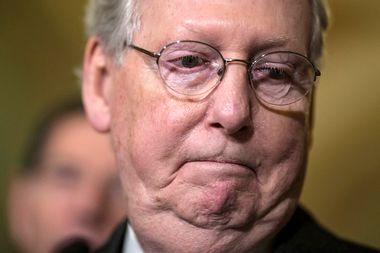
The Founding Fathers intended the Senate to be a fount of wisdom flowing, but when you consider Saxby Chambliss and Jim Bunning, John Ensign, Jim DeMint, James Inhofe, who look as if they've been banged on the head too many times, and the moon-faced Mitch McConnell, your faith in democracy is challenged severely. Any legislative body in which 41 senators from rural states that together represent 10 percent of the population can filibuster you to death is going to be flat-footed, on the verge of paralysis, no matter what. Any time 10 percent of the people can stop 90 percent, it's like driving a bus with a brake pedal for each passenger. That's why Congress has a public approval rating of 25 percent.

Healthcare is much too complicated for Congress. The whole issue should've been handed over to a blue-ribbon commission of living, breathing economists -- let them draw up a plan and defend it and stand up to the ranters and rug-chewers -- and let Congress do what it does best, which is to uphold virtue and decency and to denounce narrow self-interest and partisanship, and then go to lunch.

The Republican bulls remind me of an old coot who used to sit in my row in the Lutheran church, a guy who favored plaid dress shirts and a string tie with a turquoise clasp and who had an elaborate comb-over, a real piece of hair architecture. He muttered to himself through the sermon and never put more than $1 in the collection plate. I guessed that he attended for the sake of his wife, a plump lady who sat between him and me. What he truly dreaded every Sunday morning was the exchange of peace. To shake hands with people nearby and say "The peace of the Lord" did not come naturally to him.

I didn't like it either. I was young and idealistic and thought those Lutherans had more than enough peace, what they needed was some slapping around, not hand shaking. But I was amused by how wary the guy got when the peace was exchanged and ladies went gallivanting around the sanctuary, hugging, having meaningful moments. He stood facing straight forward and wished everyone would keep their peace to themselves. I always leaned over to shake hands with his missus, and he turned away, avoiding eye contact.

One morning, during the exchange, the lady in front of me, turning to embrace me, lost her corsage. It fell at my feet and I looked down for it and accidentally kicked it and then went to retrieve it and stepped past the plump lady, and the old coot turned, horror-stricken, to see me coming. He tried to retreat but was blocked by other worshippers. My hair was a little long at the time and maybe he expected me to plant a major peace on him -- and then he saw me bend down and pick up the flower. He looked disgusted. It was what they call a transforming moment. I had always looked down on the guy and here he was, upset, because he thought I was going to love him up. He stuck out his hand to fend me off and I shook it.

The way to pass healthcare is for the president to praise Republicans for their courage and foresight and compassion until he scares them to death and they let the thing pass. The way to fight these guys is to make them think you might like them.

(Garrison Keillor is the author of "77 Love Sonnets," published by Common Good Books.)

© 2009 by Garrison Keillor. All rights reserved. Distributed by Tribune Media Services, Inc.

In the Senate, a Christmas Eve miracle

The final vote on healthcare reform gets moved up so everyone can get home for the holiday

This week, and last, the Senate had been facing the rather unpleasant prospect of having to hold its final vote on Senate Democrats' healthcare reform bill at 7 p.m. EST -- maybe even later -- on Christmas Eve. And though no one really wanted that to happen, due to the combined force of Republican stalling tactics and Majority Leader Harry Reid's determination to get the bill passed before Christmas, it looked inevitable.

On Tuesday afternoon, though, Reid announced that his chamber has gotten a reprieve. Senate Republicans, who know that the result is bound to go against them no matter what at this point, have agreed to give up some of the time the body's rules allow them for debate, thus speeding up the process appreciably.

The vote will still be held on Dec. 24, but is now scheduled for 8 a.m. EST, hopefully allowing members and their staffs -- not to mention everyone else who makes the Capitol run, plus the reporters who have to cover the vote -- time enough to travel, if need be, in order to join their families for the holiday.

Obama: "I didn't campaign on the public option"

Responding to criticism from the left, the president makes a dubious claim about his record

In an interview with the Washington Post that hit the Internet Tuesday afternoon, President Obama sought to defend himself from the criticism he's faced from the left over the way the healthcare reform debate has ended up. While doing so, though, he may have only succeeded in further alienating and angering liberals.

"Nowhere has there been a bigger gap between the perceptions of compromise and the realities of compromise than in the health-care bill," Obama told the Post. "Every single criteria for reform I put forward is in this bill."

By itself, that's basically true, though it's not what many progressives want to hear right now. But Obama may have really stepped in it when he went to the real sticking point for a fair number of liberals right now, the lack of a public option in the Senate bill and the perception that the White House did little, if anything, to fight for it.

The idea has "become a source of ideological contention between the left," Obama said, adding, "I didn't campaign on the public option."

The president's claim that he "didn't campaign on the public option" is at best on shaky ground, factually speaking. It's unmistakably true that during the campaign his plan for reform included a public option.

A summary of Obama's proposal -- still up on BarackObama.com -- says it "Offers a public health insurance option to provide the uninsured and those who can’t find affordable coverage with a real choice." And a document his campaign put together, "Barack Obama's Plan for a Healthy America," says:

The Obama plan both builds upon and improves our current insurance system, upon which most Americans continue to rely, and leaves Medicare intact for older and disabled Americans. The Obama plan also addresses the large gaps in coverage that leave 45 million Americans uninsured. Specifically, the Obama plan will: (1) establish a new public insurance program available to Americans who neither qualify for Medicaid or SCHIP nor have access to insurance through their employers, as well as to small businesses that want to offer insurance to their employees

On the other hand, the words "campaign on" have a fairly specific meaning -- they imply making some issue or message a particular focus of your campaign, as in, "In 2004, President Bush campaigned on terrorism." And while it was indeed a pretty weaselly thing for him to say, Obama's comment was, on that score, accurate.

Yes, the public option was included in his plan for healthcare reform, but he never really ran on it and barely even pushed it during 2008. As NBC's Chuck Todd noted in September, Obama "never uttered the words 'public option' or 'public plan' in his big campaign speeches on health care."

A search of Lexis-Nexis' database of news coverage for the words "Barack Obama" and "public option" returns only 46 results from the period between Jan. 1, 2008, and Oct. 31, 2008. Similarly, a search for "Barack Obama" and "public plan" comes up with only 362 results for the same time frame, and most of those don't bolster the case that Obama did campaign on the idea -- the results are dominated by media outlets' comparisons of the candidate's published plans. And when the formulations used on Obama's Web site and in his campaign document, "public health insurance option" and "public insurance program" are swapped into the search, there are only three results and 51 results, respectively.

At the same time, one result from that last search, a candidate questionnaire sent out by Newsday, does show again that this really is a question of Obama trying to get cute with semantics.. Asked to keep each of his answers to 50 words or less, Obama's summary of his healthcare plan was, "I have pledged to sign a universal health bill into law by the end of my first term in office. My plan will ensure that all Americans have health care coverage through their employers, private health plans, the federal government or the states. For those without health insurance I will establish a new public insurance program."

Palin's still talking about death panels

The former Alaska governor worries that the fictional entities might be added "back" to health bill

If you haven't seen it yet, check out the list we here at Salon put together of the year's most bogus stories. Our top pick was "death panels," the entirely fictitious things supposedly contained in the Democrats' healthcare reform bills that former Alaska Gov. Sarah Palin made famous when she wrote, on her Facebook page, "my parents or my baby with Down Syndrome will have to stand in front of Obama’s 'death panel' so his bureaucrats can decide, based on a subjective judgment of their 'level of productivity in society,' whether they are worthy of health care."

Coincidentally, on Tuesday Palin took to Twitter to comment on the Senate healthcare deal. And when she did so, she went back to a familiar topic.

"NOW w/the Prez "threatening" &Congress "rushing" is when we MUST pay more attention than ever 2what this HealthCare Takeover is all about," Palin wrote in one tweet. "[M]erged bill may b unrecognizable from what assumed was a done deal:R death panels back in?"

You almost have to admire the chutzpah it takes to write something like that for tens of thousands of people to see. The "death panels" were never even in the bill in the first place, so they were never taken out -- and it's not like Palin would have seen news reports that they had been removed from the legislation. But they are gone now (because of the former governor's intervention, no doubt), apparently; however, we have to watch out, because Democrats are just dying to sneak in a provision that would allow them to kill your loved ones. It's vintage Palin.

Criticizing Obama is pragmatic

The president's liberal foes aren't just dreamy moonbats -- they're fighting for what they want
This column originally appeared at the blog Dissenting Justice.

President Obama's defenders in the media often describe him as a "pragmatist." Although these journalists usually do not define the term, it seems that they wish to imply that Obama can set aside his ideological commitments in order to deliver concrete results to his constituents. By contrast, many commentators portray Obama's progressive critics as people who place ideology above tangible results and who refuse to compromise and accept the incremental advancement of their overall political agenda.

Mainstream media outlets barely do a decent job reporting the news. Their attempt at political science is absolutely atrocious.

The assumption that Obama is a progressive

When commentators describe Obama as a pragmatist, they assume that he is a progressive who compromises to achieve practical benefits. It is unclear, however, that Obama is actually a progressive.

Although Obama became the darling of the political left during the Democratic primaries, he never really embraced policies that were more progressive than other mainstream Democratic presidential contenders. Nevertheless, the left was so desperate to replace President Bush and to avoid the "triangulation" of the Clinton era that it easily accepted Obama's progressive narrative. Obama also benefited from an adoring media, which failed to raise tough questions about his progressive credentials and which often rushed to denounce his critics.

After he secured the Democratic nomination, President Obama started moving more overtly to the center. Many progressives accepted this "transformation" as a necessary element of a national political campaign. But long before he won the election or even the Democratic nomination, progressives had enough reasons to question Obama's liberal credentials. Obama, for example, criticized a Supreme Court ruling that reaffirmed prior case law forbidding the death penalty in rape cases. He also praised a conservative Court ruling that found an individual right to bear arms and that invalidated a Washington, D.C., gun law. Obama also voted to renew the Patriot Act and, betraying a campaign promise, to extend immunity to telecoms that conducted unlawful surveillance on behalf of the Bush administration. Citing his own religious views, Obama stated that he did not agree with same-sex marriage. And while the antiwar left certainly preferred Obama to Hillary Clinton, Obama, like Clinton, said that he viewed the war in Afghanistan as a "just" war.

Although journalists often portray Obama as a pragmatic progressive who can prioritize concrete outcomes over his own ideological commitments, another narrative is also highly plausible. Obama is a political centrist who is in fact pursuing his own ideological commitments -- even if this means discarding the interests of liberals who were instrumental to his political success. This narrative, however, does not sound nearly as laudatory and self-sacrificing as the pragmatism rhetoric. It is, however, a perfectly logical take on Obama's political orientation.

Even if Obama is a progressive, he could compromise his ideological values in order to maximize his opportunity for reelection. If this is the reason for Obama's "pragmatism," then it is unclear that voters -- and certainly liberal voters -- should laud his careful effort to tread the center and to compromise with conservatives.

The assumption that Obama's progressive critics are not pragmatic

Commentators who laud Obama as a pragmatist almost uniformly condemn his progressive critics as ideological and impractical. Unlike Obama, who is a good, pragmatic progressive, liberals who criticize the president are politically inflexible ideologues whose rigidity, if widely followed, would preclude the implementation of helpful policies.

This juxtaposition of Obama (good, pragmatic) and his progressive critics (impractical, ideologues) has occurred most recently in debates surrounding healthcare reform. After the White House instructed Senate Majority Leader Harry Reid to delete the public plan and Medicare buy-in from the healthcare bill, liberals criticized Obama for betraying his campaign promises and for watering down the measure. The White House responded by calling Obama's liberal critics "irrational" and "insane." Ronald Brownstein argued in the Atlantic that they are privileged white college graduates who need not worry about the practical implications of their positions. These arguments are deeply flawed.

Brownstein's racial analysis is simply another bizarre manifestation of the notion that criticizing Obama -- even from a progressive perspective -- inevitably comes from a racial place. This argument is old, tired and should be retired.

With respect to the point about pragmatism, depending upon the goals of progressives, criticizing Obama could operate as a highly pragmatic political tactic. President Obama has several items on his agenda -- including reelection. These goals, however, might cause him to act in a way that is inconsistent with progressive political agendas. Progressives can only influence Obama and other elected Democrats if they express their discontent. If they can also reveal that Obama is betraying his liberal base, then they can possibly make him more vulnerable from a political perspective. In order to cure or avoid this vulnerability, Obama may have to act in a way that addresses the concerns of progressives. If progressives never complain or engage in advocacy or mobilization, then politicians will have very few incentives to address their concerns.

By criticizing Obama, progressives are modeling the behavior of social movement participants as diverse as the abolitionists, suffragists, civil rights advocates, feminists and proponents of GLBT rights. Progressive movements have never achieved their goals by peacefully acquiescing to the will of politicians. While successful progressive movements have undoubtedly made and accepted compromises, they have also condemned politicians -- even sympathetic politicians -- when doing so was appropriate. The election of Obama does not provide a reasonable basis for abandoning this tried and tested historical approach to social change.

Senate starts early morning votes on healthcare

Just a few roll-calls left for healthcare reform

The Senate is at work unusually early and voting on healthcare as Democrats zero in on their goal of passing President Barack Obama's signature issue by Christmas.

Three votes were scheduled early Tuesday morning, starting with a procedural motion. The Senate then planned to vote on a nearly 400 page amendment to the healthcare bill, reflecting the deals Democrats made to shore up support within their ranks for the legislation.

The third vote, requiring 60 senators to pass, would shut off debate on Senate Majority Leader Harry Reid's version of the bill. That still leaves one more 60-vote hurdle before final passage, expected to come on Christmas Eve.

With partisan feelings running high, Reid appealed to senators to forgo personal attacks so they can go home for the holidays "in a peaceful nature."

THIS IS A BREAKING NEWS UPDATE. Check back soon for further information. AP's earlier story is below.

WASHINGTON (AP) -- A Republican senator who has opposed President Barack Obama's health overhaul effort says the deals Democratic leaders have cut to round up the votes they need to push the measure through the Senate have been "sleazy."

Speaking Tuesday on NBC's "Today" show, GOP Sen. Lindsey Graham of South Carolina cited concessions won by Nebraska Democratic Sen. Ben Nelson, whose support gave Democrats the 60th and final vote they need. Among other things, Nelson won an agreement that the federal government will pay to expand Medicaid services in Nebraska.

Said Graham: "That's not change you can believe in. That's sleazy."

The Senate had procedural votes Tuesday morning on the overhaul bill and Democrats are pushing for final passage before Christmas.


Healthcare industry stocks explode as bill progresses

(updated below - Update II - Update III)

The Senate passed its health care bill "by standing up to the special interests who prevented reform for decades and who are furiously lobbying against it now" -- Barack Obama, December 21, 2009.

____________

"'Healthcare shares rose on Monday as a bill to reform healthcare passed the first critical test in the Senate . . . Shares of Cigna rose 5.3 percent to $37.69. Shares of Aetna Inc rose 5.84 percent to $34.41. Humana Inc rose 3.79 percent to $45.17 and United Health Group Inc rose 5 percent to $33.14. Shares of Wellpoint Inc rose 3.8 percent to $60.51" -- Reuters, yesterday, with this ironic headline:  "Healthcare shares rise as reform bill progresses".

____________

"Investors are seeing the Senate's version of health care reform as a massive public subsidy for insurance companies -- and as a result, are sending the sector's stock prices shooting up, up, up. . . . Stripped of a government-run insurance plan, the bill would give tens of millions of Americans no option but to start paying hefty premiums to private companies.

The rise in stock prices has been particularly striking in the period since Sen. Joe Lieberman (I-Conn.) said on October 27 that he would filibuster a Senate health care reform bill if it included a public option . . . Here's a quick breakdown of major health insurance company stock performance from Oct. 27 to Friday's market close:

* Coventry Health Care, Inc. is up 31.6 percent;

* CIGNA Corp. is up 29.1 percent;

* Aetna Inc. is up 27.1 percent;

* WellPoint, Inc. is up 26.6 percent;

* UnitedHealth Group Inc. is up 20.5 percent;

* And Humana Inc. is up 13.6 percent" -- Shahien Nasiripour, The Huffington Post's business reporter, yesterday.

_____________________

Just to put this boon to health insurance stocks in perspective:  according an Indianapolis Star article from June, Evan Bayh's wife, Susan, "owns from $500,001 to $1 million in employee stock in WellPoint, the Indianapolis-based insurance giant on whose board she sits."  That would mean that the value of her personal holdings in that one health insurance company alone, in the last six weeks alone (since Lieberman and her husband began menacing the public option), would have increased by a value of between $125,000 and $250,000.  As part of the bonanza of health care industry board positions she magically received since her husband became a Senator, Susan Bayh is given a quarter-million dollars each year in stocks and stock options from Wellpoint.  That's just a microcosm for considering how well Obama's so-called "special interests" have done as a result of this health care bill.

One should acknowledge:  the mere fact that the health insurance industry and the market generally sees this "reform" bill as a huge boost to the industry's profitability does not prove, by itself, that this is a bad bill.  Contrary to what I've seen said in various places, I haven't advocated for the defeat of this bill.  I've said from the start that there are reasonable arguments on both sides and that one must weigh (a) the corrupt, mandate-based strengthening of the private insurance industry, the major advancement of the corporatism model of government, the harm this is likely to do to some who are now covered and some who cannot afford the forced premiums, and the chances for a better bill if this one is defeated, versus (b) the various substantial benefits to many people who do not now have and cannot obtain health insurance and the risk that defeat of this bill will ensure preservation of the status quo.  Weighing those factors is difficult and, at least for me, produces ambivalence. 

That said, I've been fairly repulsed by the 2003-like swarming, bullying efforts of the President's loyal supporters (both in the White House and from Beltway journalists and their partially cloned liberal bloggers) not merely to dispute, but to demonize and personally discredit, the bill's progressive critics as insane, crazy, childish, idiotic and drugged-out, Naderite, purist liars who -- we now learn today -- are the equivalent of "global warming denialists."  Whatever else is true, progressive opponents of the Senate bill (virtually all of whom offer strategic arguments for improving it, not for preserving the status quo), have been making well-informed and substantive critiques.  I don't want to overstate this:  there has been some very responsible and informative debate among these various factions, the insults have flown in both directions, and it's understandable that passions run high on an issue of this significance among adversaries, particularly as the process mercifully draws to a close.  Still, it seems clear that campaigns by White House loyalists in government and the media to destroy the personal credibility and malign the character of the President's critics -- and to depict "the Left" as shrill, unSerious losers -- obviously aren't confined to the Bush years or to Bush supporters.

But whatever else one might want to say in favor of this health care bill -- and there are compelling arguments to make in its favor -- the notion that Democrats have "stood up to the special interests who prevented reform for decades" is too blatantly false, insultingly so, to tolerate.  As even the bill's most vocal supporters acknowledge, the White House's strategy from the start was to negotiate in secret with those very special interests in order to craft a bill that they liked and that benefits them.  If one wants to invoke the Obama-era religious mantra of "pragmatism" to argue that this was a shrewd strategic decision necessary for getting a bill passed, that at least is coherent (though not, in my view, persuasive).  But this bill is unquestionably one of the greatest boons in recent history for the private health insurance industry and other "special interests" that have long been opposing "reform."  It's a major advancement for the corporatist model on which both parties rely.  It should lead a rational person to want to buy large amounts of stock in Goldman Sachs and Citigroup in anticipation of the upcoming "reform" of that industry.  Whatever this bill is, "standing up to special interests" is not it; quite the opposite.


UPDATE:  Speaking of coordinated efforts by the President's loyal supporters to attack the credibility and character (rather than the arguments) of Obama critics, one saw this in full force after Matt Taibbi's last article, which directly criticized the President for being captive to Wall Street.  As a result, numerous progressive Obama loyalists sought to transform a couple of small, ancillary factual errors into broad attacks on Taibbi's credibility and reliability as a journalist (attacks which Taibbi discussed here [see first paragraph] and here).  Those efforts are quite similar to what has been directed at Howard Dean, the "purposefully misleadingJane Hamsher and other progressive critics of the health care reform bill.

Yesterday, I was on Democracy Now discussing the health care bill.  The video and transcript are here.


UPDATE II:  Andrew Sullivan writes:

Why is so much hostility to the bill wrapped up in the horror that private insurance companies might actually make some money off this? That's what private companies are supposed to do. They're constrained from many of their worst and cruelest tactics in this reform, but remain the primary vehicle for it, as was well advertized from the very beginning.

I think this expresses the exactly backwards conception of "what private companies are supposed to do."  Yes, they're "supposed to" earn profits -- but they're supposed to do so by competing for customers, not by having the federal government enact laws forcing people to purchase their products under penalty of having part of their income seized by the IRS.  Moreover, the claim that this is what "was well advertized from the very beginning" is simply not true.  This is what Obama said during the campaign about health care reform:

Barack Obama and Joe Biden’s new National Health Insurance Exchange will also help increase competition by insurers. . . . Through the Exchange, any American will have the opportunity to enroll in the new public plan or an approved private plan… The Exchange will require that all the plans offered are at least as generous as the new public plan and meet the same standards for quality and efficiency.

What was "advertized" -- a choice of a public plan to compete with private insurers and thus keep them honest -- is the opposite of what is being done.  And what was "advertized" about how the bill would be written -- no secret negotiations with industry representatives, everything done publicly and out in the open -- is also the exact opposite of how the bill was shaped.  Finally, nobody I've seen objects to private health care companies earning a profit per se; the objection is to the claim (voiced by Obama and others) that "special interests" have been somehow thwarted by this bill when it is clear that the bill was negotiated with them, in part written by and for them, and will result in a massive increase in their profitability.  


UPDATE III:  Obama today told The Washington Post:  "I didn't campaign on the public option."  In addition to what I quoted above, everyone interested should review the evidence here and here, and decide for themselves if that's the truth.

Page 1 of 108 in Healthcare Reform Earliest ⇒

Healthcare Reform in the news

Loading...

Recommended Reads

Currently in Salon

Other News