The New York Times
We don’t need truth vigilantes
But we do need good political reporting, and the media's rote repetition of Santorum's JFK lies fell short
Rick Santorum and John F. Kennedy (Credit: AP/Wikipedia) New York Times public editor Arthur Brisbane got a lot of grief last month for a blog post in which he asked readers whether the Times ought to be “a truth vigilante.” I didn’t join the pile-on, because truth be told, I kind of understood what he was getting at. Sure, “truth vigilante” is a shrill, easily mocked term: It doesn’t take “vigilantism” to get at the truth, only good reporting. But there can be questions for editors and reporters about how far is too far – what’s good reporting, and what’s hectoring? What’s debunking, and what’s partisan water-carrying? (Also, I don’t like the practice of mocking people for asking questions, even when we think the answer should be obvious. Better that Brisbane ask than to ignore the issue entirely.) I can understand why some cases aren’t clear.
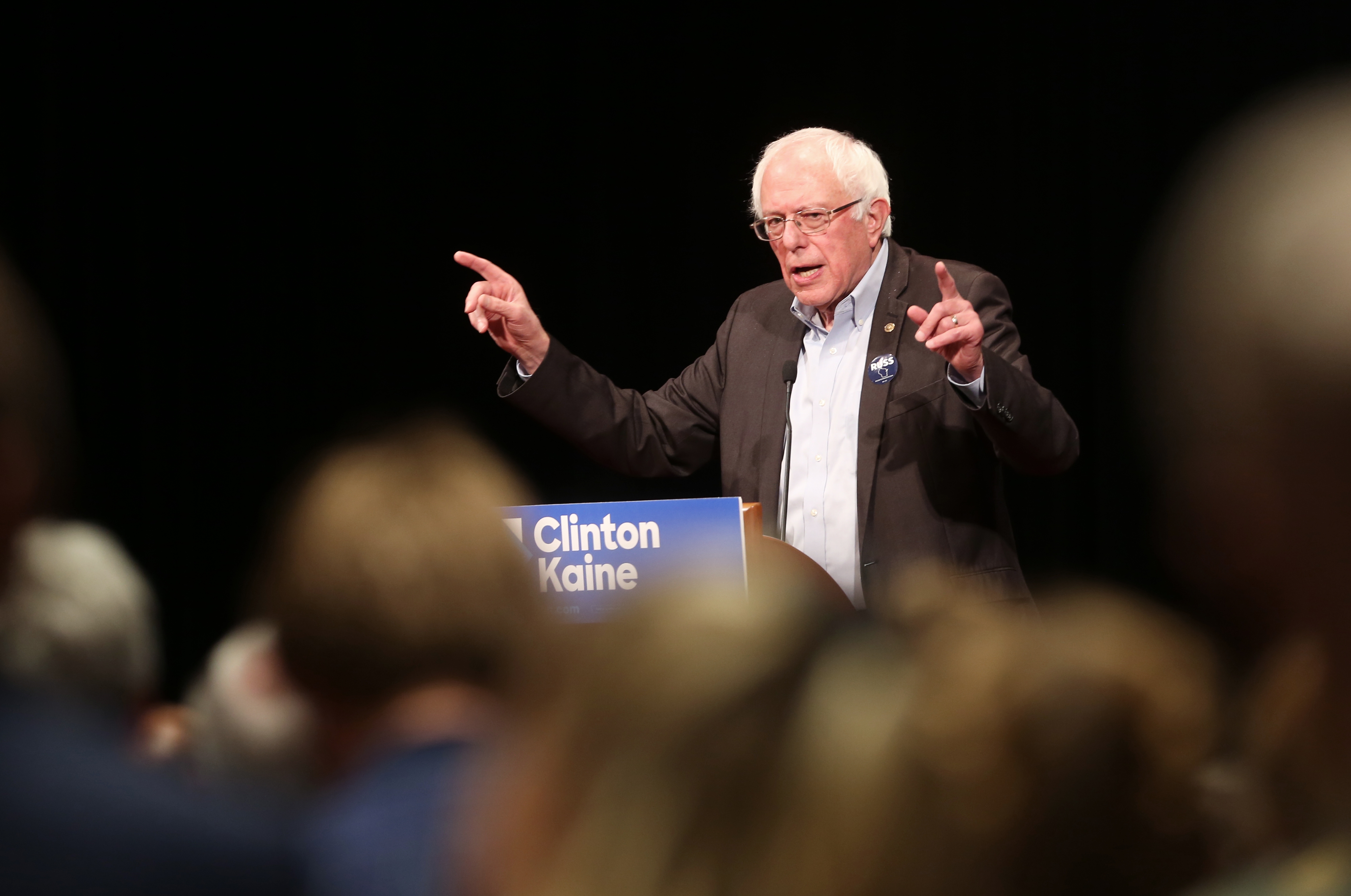
But now I have a case that’s very clear for Mr. Brisbane: the Times’ story on Rick Santorum’s lies (yes, I call them lies) about John F. Kennedy’s 1960 religion speech, headlined “Santorum Makes Case for Religion in Public Square.” Since it’s the New York Times and all, I don’t expect the paper to call it a “lie.” But the story contains not one word suggesting that Santorum might be, I don’t know, misrepresenting, misremembering, distorting or otherwise being completely wrong about what JFK actually said.
I’m getting a lot of credit on Twitter and Facebook today for my piece, but this is one of those rare times when I’d rather not be recognized, because – don’t tell my editors – what I did was easy. It took me exactly 10 seconds to Google JFK’s speech and another few minutes to read it. Then I cut and pasted Santorum’s comments next to JFK’s and voila, kids, I had a story. The Washington Post’s Jonathan Capehart credited me with a “deep-dive,” and I appreciate the praise, but really, I barely got my feet wet. (The Post’s own news story wasn’t any better than the Times’; Capehart was the first person on staff to note Santorum’s distortion more than 24 hours after it aired on ABC’s “This Week.”)
I assumed I’d be late to the Santorum story because I was sick yesterday and didn’t even watch him live, I just heard about his remarks online. But I’m writing a book about the Democratic Party and Irish Catholics, and as you’d expect, there’s a little bit about Kennedy in there, and so I thought I’d take a moment to explain what Kennedy said – and how rabid anti-Catholicism, as late as 1960, made it necessary.
I made a comment last week in passing that I’d like to elaborate on here: I’ve spent a lot of time, in the book as well as on Salon, pointing out the anti-Catholic Nativism that hobbled my people and that accounts for some of our pugilism, shall we say, in the public square. But Santorum makes me realize I haven’t said enough about why some people were and still are suspicious of Catholics. His disrespectful comments about mainline Protestant churches somehow being agents of Satan is just one example of the contempt for other faiths that has gotten us in trouble over the years. I came of age after Vatican II; my parents were devout Catholic ecumenicists, attending seders at our local Jewish temple and telling the neighbors, no, we’re not supposed to blame Jews for killing Jesus anymore, and Protestants love Jesus, too. Santorum is an example of the mind-set that liberal Catholics and lapsed Catholics have been fighting in my lifetime, and he’s really a disgrace.
I don’t expect the New York Times to call him a disgrace in its news pages, but I do expect the paper to do a minimum of fact-checking, to see whether our first and only Catholic president actually said what Santorum attributes to him. There was a reserved, respectful, Timesian way to do it, and the paper missed an opportunity to reassure its readers that the paper is all about the truth, and that it’s not cowed into printing untruths by the GOP culture warriors who’ve spent decades now insisting the Times has a raging liberal bias.
I don’t mean to single out Michael Barbaro, either, who does good work, or the team of writers the Times lists as providing additional reporting at the end of the piece. Or Kit Seelye, who wrote the earlier Caucus post, on a tighter deadline, about Santorum’s remarks without fact-checking the JFK claim. I’ve always loved the singular way the paper almost always attributes mistakes, in its Corrections column, to “editing errors.” This was an editing error. Someone at some point should have said, “Hey, I know you’re on deadline – but what did JFK actually say?” It’s not vigilantism. It’s journalism.
You’re welcome, Mr. Brisbane.
Joan Walsh is Salon's editor at large. More Joan Walsh.
Anthony Shadid, the best of his generation
The NYT reporter, acclaimed for his unparalleled coverage of the Middle East, died in Syria on Thursday
Anthony Shadid, winner of the 2010 Pulitzer Prize for International Reporting with The Washington Post (Credit: AP) WARSAW, Poland — I woke up this morning to the news that Anthony Shadid has died — apparently of an asthma attack — while on assignment in Syria. Whether you knew his byline or not, the loss is incalculable.
I can speak in absolutes about the quality of his work. No one reported the Middle East with greater clarity and nuance than Shadid. No one brought the humanity of the people of the region, people who live in a perpetual state of stress even when they are living in the comparative comfort of Beirut and Tel Aviv, to the wider world with a surer touch than Anthony.
Continue Reading CloseWhat David Brooks gets right about the left
Relying on a mic check to make strategy is a big mistake
David Brooks, philosophe As he often does, in his column Friday New York Times columnist David Brooks offered what looks like a “nonpartisan” analysis. Social movements, he warned, are suffering because everyone thinks they should make up their own belief system. Unless you’re Nietzsche, Brooks advises, this is a guarantee of failure. Every man is not a political genius.
It’s not a hard task to figure out whom Brooks is really criticizing: Occupy Wall Street. But it’s not alone. The democratization of ideology is vastly more tempting to the self-inventing liberal left than to the authoritarian right. Nobody does emotionally consistent talking points like the conservative right. Nobody does “whatever floats your boat” like the liberal left. The belief that every man is a philosopher makes progressives vastly more vulnerable to the destructive dynamic Brooks describes. It is an irony Brooks would appreciate that the left acts more like the right believes (and vice versa).
Continue Reading CloseLinda Hirshman is the author of “Victory: The Triumphant Gay Revolution,” forthcoming in June 2012. Follow her on Twitter @LindaHirshman1 More Linda Hirshman.
The “education crisis” myth
Ignore the media spin. Wages and working conditions -- not skills -- are the real reasons jobs get outsourced
A production line in Suzhou Etron Electronics Co. Ltd's factory in Suzhou, China on June 8, 2010 (Credit: Reuters) Has the term “education” become a code word? And if so, a code word for what?
These are the major unasked — but resoundingly answered — questions to emerge from two much-discussed articles about the future of American manufacturing. One is a cover story in the Atlantic Monthly about why jobs are being shipped overseas. It concludes that “to solve all the problems that keep people from acquiring skills would require tackling the toughest issues our country faces” — the first of those being “a broken educational system.” The second and even more talked about article comes from the New York Times. It looked at why Apple Computer has moved its production facilities overseas, concluding in sensationalistic fashion that “it isn’t just that workers are cheaper abroad” but that America “has stopped training enough people in the mid-level skills that factories need.”
Continue Reading Close
David Sirota is a best-selling author of the new book "Back to Our Future: How the 1980s Explain the World We Live In Now." He hosts the morning show on AM760 in Colorado. E-mail him at ds@davidsirota.com, follow him on Twitter @davidsirota or visit his website at www.davidsirota.com. More David Sirota.
Newspapers, “truth vigilantes” no more
The NYT's fact-checking question was absurd, but the real problem is that the press has lost its credibility
(Credit: Library of Congress/U.S. Farm Security Administration) Time was when newspaper journalists prided themselves on being working stiffs: skeptical, cynical and worldly-wise. “If your mother says she loves you, check it out.” I’ve always preferred the unofficial motto of my native New Jersey: “Oh yeah, who says?”
Fact-check politicians? Here’s how H.L. Mencken saw things in 1924: “If any genuinely honest and altruistic politician had come to the surface in my time I’d have heard of him, for I have always frequented newspaper offices, and in a newspaper office the news of such a marvel would cause a dreadful tumult.”
Continue Reading CloseArkansas Times columnist Gene Lyons is a National Magazine Award winner and co-author of "The Hunting of the President" (St. Martin's Press, 2000). You can e-mail Lyons at eugenelyons2@yahoo.com. More Gene Lyons.
A Romney showdown: Krugman versus Brooks
Will Mitt's CEO experience make him a good president? The New York Times Op-Ed columnists go to war
David Brooks and Paul Krugman (Credit: Miller_Center / CC BY 3.0/Reuters) Let no one say that the New York Times Op-Ed page isn’t a festival of diversity. On Friday, two esteemed regular columnists, Paul Krugman and David Brooks, tackled the same question — will Mitt Romney’s business experience position him to be a successful president? — and delivered remarkably different answers.
Wait, no, that’s not quite right. Shockingly, on at least a superficial level, Krugman and Brooks agree: Mitt’s business experience as a private equity wheeler and dealer tells us nothing about whether he’d be a good president.
Continue Reading Close
Andrew Leonard is a staff writer at Salon. On Twitter, @koxinga21. More Andrew Leonard.
Page 1 of 70 in The New York Times