Alicia Montgomery

Sex, lies and congressmen

A professional Washington escort says Gary Condit might have had a better summer if he had emulated his colleagues who pay women for their ... company.

  • more
    • All Share Services

Sex, lies and congressmen

Regardless of whether you think he’s a killer or just another adulterer, it’s clear that Rep. Gary Condit, D-Calif., got himself into a great deal of trouble because the women he was involved with, from missing intern Chandra Levy to flight attendant Anne Marie Smith, talked about their intimate relationship.

Condit might have turned instead to Jane (not her real name), an entrepreneurial professional escort working in Washington. Jane’s doing plenty of business, earning a six-figure income by providing “engaging conversation and inspiring social companionship” to area gentlemen for $250 per hour.

Though hers is a risky business, Jane says she’s never been busted, thanks in part to helpful hints supplied to her by clients in law enforcement: never discuss sex and money, never take cash from a client’s hand, always make the client undress before you do. Ever on the lookout for a new opportunity, Jane sells this advice as part of her side business as a consultant to other area escorts.

It’s part of Jane’s appeal that she doesn’t look like the near-naked, silicone-enhanced young women whose pictures appear in a handful of Washington adult Web sites. Politicians and businessmen feel that they can be seen with Jane without raising suspicion, precisely because she doesn’t look anything like a escort, high-priced or otherwise.

Just as her Web site promises, Jane is a short, size 10 redhead, with a quick and engaging smile. If you look closely at her face, you can see freckles on her cheeks under her tastefully subtle make up. She dresses in black, wears silver jewelry, and has a happily unhurried manner rare in a Washingtonian. Jane’s also a perpetual student who is too busy dabbling in a series of part-time professions — gemology, Web development, massage therapy — to set a final graduation date.

She’s not looking to get a degree so she can escape from her current line of work, however. She says she’s perfectly happy in her job, and her business is always booming.

Jane won’t discuss the political affiliations of the five senators she counts as regular clients. Nor is she willing to share specifics about the dozens of men — and handful of women – with whom she has sexual relations in the course of her work. Jane places a high premium on discretion as part of her overall focus on customer service.

But she will admit it’s tougher to get business from Democrats, since the liberal party’s greater openness about sexual matters makes it easier for its membership to find “social companionship” from willing women, even on their staff. Republicans are better patrons, though she sometimes has to put up with warnings about going to “hell” from Christian conservatives who enjoy her company, and then promise to go home and “repent.”

Jane doesn’t concern herself much with what happens when her clients go home, but takes pride in providing those extra touches that make them crave her service. Regular clients who are willing to pay her monthly retainers get special attention — last-minute appointments, home cooked dinners, and sessions that are allowed to drift passed their allotted time without increasing the size of the bill. And then there’s the “anal egg.”

Anything to keep the customers happy.

How did you get started in this business?

I was a swinger, and I had a husband who offered to meet with me without his wife there and offered to pay me. And it was truly for my time. I thought, “Sure, I like you. I’ve been with you before. You want to pay me? Sure. No problem.” I didn’t know at the time that he was a politician.

A Washington politician, or a local politician?

He was a senator.

How many senators do you have as regular clients?

Wait, let me count. Six. No, it’s five. One I haven’t seen in a while. I guess they have to go home once in a while.

Do politicians and other Washington clients prefer out-call [where you meet them somewhere] or in-call [where they visit one of your locations]?

They prefer in-call. I think it’s the way things work here; most people are their own bosses, and they don’t have to explain things to management. So the best time for them to [see me] is during the day instead of at night when they would have to explain things to their family. Plus out-call can be expensive. You have to go to a hotel or maybe go to their house, and God knows who’s there or who’ll arrive.

Does working in Washington, where people’s identities are so much tied up in their work, make you any more uncomfortable with what you do for a living?

No, because I thoroughly enjoy it. I do also work as a business consultant, so I really don’t have a lot to hide. I truly think that escorting and prostitution are two separate things. I am paid for my time. I’m not paid for any particular acts.

I never discuss sex with anybody — not by cellphone, or by e-mail — nothing. If it happens, it happens. It’s not expected. If you go to a prostitute, they say “$75 for a blow job.” And I never go along those lines.

Have you ever been busted?

No.

Why do you think you’ve avoided arrest?

I don’t talk about sex. I’ve had people who I thought were trying [to arrest me], but they’d been fairly obvious about it. I also have clients who are in law enforcement, so I know when something’s getting ready to happen. I had a gentleman come in and he was quite blunt — [how much] is it for this, [how much] is it for that. And I said, “What are you talking about? There’s no sexual reference on my Web site. Why would you ever believe that? Get out.”

Are there escorts who have come to you, asking for your help as a business consultant, and you turn them down?

Oh, yeah. There are a lot of them. Scummy wenches, people who cannot spell the word “escort.” People who are just twits. My favorite thing is that I ask them these little questions like, “Who is Alan Greenspan?” or “Who is the vice president?” and they just say, “I don’t know.” OK, well you know what? I won’t make any money off of them because they’re idiots. Of course I don’t tell them that. I tell them, just for their benefit, that they need to read the Washington Post everyday.

But let’s say that an escort doesn’t develop as high end a clientele as yours. Does she really need that type of help?

It really depends on the situation. I have had one client tell me, “I’ve seen this escort, and I think she needs help, and I think you could give it to her.” I asked why and he told me she’s working in a situation that’s not healthy for her. He asked, “Can you empower her rather than enslave her?”

She was working for men. [That's] bad, because if men have any part of the business, they’re going to screw women over. The best agencies in this area are run by women, because women know what women need. Women need healthcare, women need day-care vouchers, and men don’t think about that. Men just think about the bucks. And there have been cases where [the escorts I have helped] weren’t the type of people who I wanted to deal with, maybe their trustworthiness was a little shaky. But you know what? What if this escort is just a nice girl? What if she just wants to feed her babies? Sometimes I can help and sometimes I can’t.

What’s the difference between women who become escorts as opposed to those who become prostitutes and work on the street?

A lot of [escorts] quite honestly are originally off the street; they’re hookers. Nothing wrong with that. I haven’t got the guts to do that. I’d be scared to death. And they think that by calling themselves escorts and advertising that they’ll make more money. But the etiquette and the attitude are still the same. That doesn’t [work] very frequently. It is hard to dress up and put heels on a person like that. I’m sure it’s a possibility. But just in general, I don’t come into contact with lots of people like that.

A lot of agencies, particularly the ones run by men, guys just go down to the streets and say “Hey, I’m starting an agency. Would you like to learn?” I’ve helped to set up agencies, and I go to the college students. That way you’re going to get someone who’s relatively intelligent.

There are a lot of colleges around Washington. Which schools in this area are the best to find new escorts?

Well first you need to think about where the agency is and what they’re advertising. If it is an agency that will be based in Baltimore and will specialize in black women: Towson [State] University. If you want snotty white women in Washington: Georgetown. But in this area, that’s sometimes what politicians want: snotty eye candy.

That’s not necessarily true all the time. It depends on what they want her for. If it’s for just for eye candy, or they just … then they want the blonde bombshell. But maybe that’s not what they want, because those women stand out, and people might wonder.

I do very well at political parties because I can look like the niece. I don’t stand out in a crowd.

What is it that you can do for a guy in one hour that he’s willing to pay $250 for?

You’d be surprised. Most men in this world, what they really want is just to be touched, just to be held. As much as society says that they have to be strong or whatever, most men are not, and they want someone who can give them that. I also have skills that I’ve learned. I practice, I study, I teach. I help with couples.

I do have a certain knack. If you’re talking about the intimacy aspect of it, there is a certain art to it. Most people think that you find the hole and start pumping. Kiss every once in a while, and you’re good to go. And that’s the way most people approach it, but that’s not really the case.

You said you don’t always have sex with your clients. How often does it not happen?

I would say about 30, 40 percent of the time.

Then what do they come for?

We go out shopping, we go to dinner, we go to political events, I give them a massage. I’m a very good therapist. We’re very good friends. All of my clients are very good friends. And for some people, that’s the line they draw. “I can’t have sex with her. I love her. She’s attractive; she’s great. But I can’t have sex with her. I’m married.” And they don’t.

Then why? If you’re a married man and you don’t want to be unfaithful to your wife, why are you paying an escort at all?

I don’t know. I’m not a guy. They’re twisted little creatures.

What is your specialty?

Oh my! I have toys that I play with. And I love toys; they’re wonderful objects. It’s something that a lot of my clients haven’t tried because they think that there’s not a lot of passion to it. It’s something new that they might not think of.

But I have this wonderful little gadget that I call an anal egg, and you insert it anally and you turn it on. For a man, that area contains the prostate glands. Most men don’t play with that area unless they’re gay, because you know, for society’s reasons or whatever. Well once they do, I just love it when I turn it on, because their eyes, they boggle.

But the thing about this is — [giggles] I’m sorry, I’m blushing. I tease them relentlessly, because what I’m trying to teach them is that pain and pleasure are the same thing. It’s simply the way you perceive it. So I turn it on, and then I turn it off. And what happens is they get addicted to it basically, and they want it on. And I’ll give them the little remote control, and they will crank it up as far as they can get it. And what happens is the pleasure is so outrageous that the mere stroking of their penis is going to do nothing for them. They can’t get off after that point. They’re so electrified. And I’ll have clients call me days later and say “My fingers are still tingling.”

But this all takes about an hour or so, and for them it has been an eye opening experience. And it’s really bad because I spoil them. They’ll go to somebody else or maybe return to their spouse or their significant other and [the clients] just like, “You got an anal egg?”

How often do you get clients who think they’re in love with you and want to run off with you, and how do you handle it?

I’m very professional in what I do. And my clients are [my] very good friends, but there’s always that line, and I always keep an emotional wall up. People say that you can’t tell when you’re falling in love, but you can tell. You know when it’s coming. The heart starts to flutter, you get excited, and so I back away. And they do, too. And I’ll have to sit down and say, “I love your letters. They’re wonderful. I love hearing about your fantasies, but I don’t date.” And I don’t date, and so I start with that premise.

You don’t date or you don’t date your clients?

I don’t date anybody. I have no reason to. Men don’t make me happy; I do.

Do you ever indulge clients in having affection for you, something that you think might be approaching the line or about to cross it because they would be the most reliable clients?

Well, it is good for business, and you don’t want to be bitchy about it. You don’t want to say, “Oh, I can’t take those flowers.” And there are ways that you can turn them off. Keep your phone on during the session. Mention that you have another session right after that, which I never do. Remove the focus of attention from them. Men hate it. They want to be the center of attention at all times. And we all do, and if you’re paying that much, you need to be. But there are ways around it.

Most men that I see are in wonderful, happy relationships and they are just not satisfied. They’re not going to leave these women. They’re great, and they’ve been with them for 20 or 40 years, and there’s no reason. This is just a minor setback. It’s not worth leaving their relationship over.

Do you ever get a client who says “Oh, you’re a wonderful girl. Why are you doing this? Can I help you get out of this?” How do you handle that?

I say, “I’m perfectly happy. Thank you very much.”

Do you get the warnings about hell from politicians at all?

Republicans, yeah. Because they believe that they are conservative and they always just want to take a chance. Business is always better when the Republicans are in office.

I love the ones who say I’m going to hell. They end up being my best clients, because they’re trying to justify it all. I say, “Uh huh. Why don’t you come play with me?” [And they say] “OK.”

But for most of the time you’ve been working as an escort, Clinton has been in office.

You’re still dealing with people who are either Republicans or Democrats. They’re just completely different. If you talk to a Republican about it, they’re like, “I have to go home and repent.” But they’ll do it anyway. This is why I’m not a Christian. I don’t have a lot of hang ups about it.

The Democrats don’t really care.

You can make $250 an hour. Perhaps it’s the same for a lawyer, but do you find it difficult to give yourself enough time off, when you know you could be making so much money?

I make enough money that it doesn’t really matter to me. I have a set schedule. I have every other weekend off. We were talking before about lifestylers [Jane's term for escorts who squander their earnings on luxury items]. They’re the ones who are on call 24/7. I’ll be damned if someone’s calling me at 2 in the morning wanting a session in 15 minutes.

For a lot of young women being an escort is sort of a fantasy, but in the fantasy, the young men all look like Brad Pitt, the old men all look like Cary Grant or Sean Connery, and you never get headaches. That fantasy is a lot more idealized than a regular — even a happy — sex life. Have you ever been disappointed with how the reality of your job compares to what you thought it would be?

I never conceived the fantasy as the reality. When I saw “Pretty Woman,” I knew that didn’t occur. I never have any idea of what the client is going to look like. Anyway, I’m not attracted to people based on looks, so that’s not really a factor. I have clients who are severely obese. But they are wonderful human beings and I love being with them.

That’s one of the ways — and some people might disagree with me — that’s one of the ways you can tell a true professional from someone who isn’t, someone who does what they do based on what their customer looks like. My theory is your doctor doesn’t care what you look like. He’ll take your money. A lawyer doesn’t care what you look like. They’ll take your money. Your accountant doesn’t care what you look like, so why should I care?

Does your work affect your friendships with men or the way you view men?

No, I always viewed them as toys. [Laughs]. To be honest with you, I don’t have a lot of friends in general. I don’t have enough time or energy to spend on them, and I’ve had people approach me and say, “I don’t want to be your client; I just want to be your friend.” And so I just lay it on the line. I tell them, “This is my schedule. If you want to plan something, you have to call three or four days in advance.” And they’re like, “Huh? You mean I just can’t call you up to have a beer or a pizza or something?” I say no. They have to work around my schedule, and, for most people, that’s not very doable.

I have very close friends that understand what I’m doing. Some people are a little iffy about it, but I generally don’t have a lot of friends. I don’t need them. Friends take 20 years to create. Associates, people who want to call themselves your friends are not your friends.

Do you think that what you do for a living has fostered your attitude about friendship, or do you think that your attitude about friendship and relationships has helped you in your work?

I think the second. I’ve always felt that way. Someone calls you a friend, and then they do this and that to you. There will always be friends, associates, clients, and you have to keep a certain mind-frame when you deal with them.

I would think that your attitude about friendships and relationships could make your job more difficult, because you have an affectionate relationship with so few people. Because, at some point, you have to at least pretend to have affection for your clients, do you feel that the integrity of your real relationships is threatened, like when you say something to a client and then say something similar to a guy you’re romantically involved with?

You say the same thing to both.

Does that bother you at all?

Oh no. It’s not like I tell them. Essentially you’re an actress.

Aside from your very close friends, who have you told about your job?

Some people, it’s important that they know [I'm an escort]. My accountant, my doctor. My lawyer. I also tell some people who I’ll never meet again.

Why?

Why not? Like the guy who was moving my furniture.

“Oh, what do you do for a living?”

“I’m an escort.”

“OK.”

It’s the first thing on my mind. I don’t want to think up a lie.

Do you ever outright lie about what you do for a living?

I tell people I’m a business consultant. It’s not a lie. There’s just some people you can’t tell anything to. If I told my grandmother, she’d just die.

Why Hastert played hardball

The folksy GOP speaker shored up his right flank by killing campaign finance reform, but Christopher Shays promises he'll pay for it.

  • more
    • All Share Services

Why Hastert played hardball

Reps. Christopher Shays, R-Conn., and Marty Meehan, D-Mass., seemed quite recovered the day after Republican leaders in the House sent the duo’s campaign finance reform bill into legislative limbo with a parliamentary maneuver. In contrast to their weary, bitter performance in a post mortem press conference the previous night, the two relaxed in leather chairs in Shays’ office Friday morning, answering questions from a handful of reporters about the bill’s fate.

Shays was surprisingly calm, considering the slow-motion mugging that his bill received at the hands of Republican leaders. He said that he wasn’t surprised by the glee displayed by Majority Whip Tom DeLay, R-Texas, at the bill’s defeat, crediting DeLay with always stabbing from the front instead of the back. Shays also took the harsh words of Majority Leader Dick Armey, R-Texas, in stride, claiming that he still regarded Armey as a friend, despite the tirade he directed against Shays from the House floor on Thursday.

As for Speaker of the House Dennis Hastert, R-Ill., the man behind the sinking of Shays-Meehan on a procedural vote on Thursday, Shays had the kindest words of all for him. Shays said, “There’s no one I respect more than Denny Hastert.”

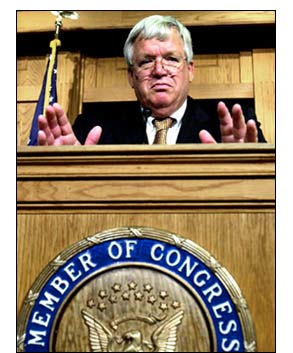
Whether a House speaker thrives on respect or fear, Hastert earned both as a Republican leader on Thursday with his maneuver on Shays-Meehan. He protected the president from what most of the party considered a poisonous choice between a veto and a fundraising nightmare, while playing the kind of hardball politics against Democrats and moderates that many conservatives had whispered he was incapable of. On Thursday, the New York Times attacked his villainy, deriding the procedural hardball he used to defeat Shays-Meehan as “thuggish.” Harsh words from the national paper of record, but a badge of honor for a conservative pol.

It was two short weeks ago that rumors were floating through Washington that Hastert might be quitting the House entirely. At the time, the speaker accepted the blame himself for fueling the speculation by making a careless remark in a television interview. Hastert had compared his political philosophy with the coaching philosophy he developed during his years teaching high school wrestling. The coaching experience, Hastert had asserted, taught him that it’s best to quit at the top of his game.

“Well, I’m not at the top of my game yet,” Hastert said, quashing the retirement rumor. With Thursday’s “success,” that might have changed.

While he’s earned high-fives from conservative colleagues for his handling of Shays-Meehan, there are still political risks associated with Hastert’s tactics. For one, by preempting an up or down vote on the bill, Hastert may have cheated Republicans of a greater victory. With the exception of reform hawk Sen. John McCain, R-Ariz., none of the bill’s primary backers had expressed certainty on Thursday that they had enough votes to prevail. Efforts to steel the nerves of Republican reform backers and placate the concerns of Democrats in the Congressional Black Caucus had achieved only mixed results.

That means that the bill could’ve failed, with at least a handful of Democrats jumping their own party’s ship to kill the legislation, enough to call the bill’s defeat “bipartisan” with a semi-straight face. But the procedural measure was strictly the handiwork of Republicans, and so the GOP may have handed its opponents a freebie in the 2002 elections.

Another risk for Hastert is that his move radicalized reformers in both parties. That was evident in the new tough talk delivered by the normally low-key Shays during his Friday gab with reporters. While Shays refused to strike back for being called “small,” “arrogant,” “naive,” “embarrassing” and “unreasonable” by Armey during Thursday’s debate, he did promise to start fighting fire with fire on the floor.

After a period during which members on both sides of the issue can “take a nice deep breath or two and let cooler heads prevail,” Shays said, he was prepared to play hardball. “I’m going to be more active on my side of the aisle,” he said. “Those of us on the Republican side of the aisle will do anything and everything to ensure that we have a fair debate.”

That means that if Hastert and the GOP leadership continue to stall the bill’s progress, Shays says, he’ll tell anyone who’s listening about just how much money has poisoned politics, drawing from his own experience handling the fundraising demands of Republican Party bosses. While Shays resisted providing details on Friday, he hinted that continued leadership resistance to reform would leave him little choice.

“I am going to be very blunt about what we’re being asked to do,” he said. “I am going to make sure that when we walk over to the [Republican National Committee] to have a big meeting, and they give us a big stack of papers of people to call [for donations], you will have copies of those papers.”

And Shays said that he was willing to embarrass House leaders equally in the chamber and in the press. Citing the 19 Republicans who voted against their party on the Shays-Meehan debate as a potent force in a potentially multi-issue reform coalition, Shays suggested that those representatives and the Democrats could block debate on some other legislation, until GOP leaders gave reform a fair hearing. “This may be more distasteful, but it is certainly a possibility,” Shays said simply.

He might want to talk that strategy over a bit more with some of those rebel Republicans, because they seem less ready than Shays for an inter-GOP battle. Spokespeople for several congressional GOP members who voted with Democrats on the Shays-Meehan rule said that the representatives had no knowledge of a plan to block future votes.

A spokesman for Rep. Sherwood Boehlert, R-N.Y., said that all the backers of Shays-Meehan want a fair debate, but that Boehlert had not considered using vote blocks as a means to achieve that end. “He wants a straight up or down vote on Shays-Meehan,” said Boehlert spokesman Jim Philipps. “He would prefer not to play games.”

And Boehlert was not at all angry with Speaker Hastert over the bill, Philipps said. “He met with the speaker on this very issue, and he told him that on this issue, he would be voting against [Republican leaders],” said Philipps. “There wasn’t undo pressure.”

Likewise, Rep. Michael Castle, R-Del., who also voted down the rule, was satisfied with Hastert’s performance. “Mr. Castle has a very good working relationship with the speaker,” said Castle spokeswoman Elizabeth Brealey.

But the love-in might end for Hastert if Shays and other Republican reform backers go ahead with plans to pry Shays-Meehan loose from the Rules Committee with a discharge motion. Shays insisted that he preferred to aim for a quiet resolution to move the debate forward, one that didn’t humiliate Republican leaders, “so no one’s nose gets out of joint.”

At the same time, however, Shays seemed remarkably cavalier about the prospects of doing battle with party bigwigs. When asked whether he was afraid that his tough talk on campaign finance reform would provoke retaliation from the speaker or any other Republican leaders, Shays didn’t hesitate to respond.

“I don’t care,” he said. “I simply don’t care.”

Continue Reading Close

Processed to death

House GOP leaders lose a procedural battle to block campaign finance reform, but win the war. R.I.P. Shays-Meehan.

  • more
    • All Share Services

Connecticut Republican Rep. Christopher Shays woke up with a bad feeling about the prospects for passing his campaign finance reform bill in the House on Thursday. Despite his low-key assertion that “I have a lot of hope” about the bill during a morning press conference, he hesitated when asked whether he was satisfied that Republican leaders would deal fairly with the legislation.

As campaign finance reform’s godfather, Sen. John McCain, R-Ariz., smiled wryly in the background, Shays paused for a long time before responding. “I had a distinguished senator say we were going to get screwed,” he deadpanned.

And the distinguished senator turned out to be right. By day’s end, House Republican leaders had succeeded in killing — or at least rendering comatose — the campaign finance bill offered by Shays and Massachusetts Democrat Marty Meehan. There’s almost zero chance the bill will be reconsidered before the fall, and it could be as late as next year.

The Shays-Meehan bill would virtually ban soft money, the unlimited donations that unions, corporations and individuals make to political parties. It would also ban certain types of political advertising in the final 60 days of a campaign. Its Senate version, McCain-Feingold, passed in early April, but the House has been a much tougher sell, even though roughly the same bill passed the House in 1998 and 1999.

This year, though, with McCain-Feingold passing the Senate, bipartisan campaign finance reform skeptics have begun to coalesce around a rival House bill, sponsored by Rep. Bob Ney, R-Ohio, and Rep. Albert Wynn, D-Md., head of the campaign finance reform task force for the Congressional Black Caucus. But even Ney-Wynn supporters blasted the Republican leadership’s tactics Thursday.

Congressional GOP leaders began the assault on Shays-Meehan in the dead of night, with the House Rules Committee announcing before 2 a.m. that it wanted to break Shays’ adjustments to the bill into 12 separate sections for debate, instead of letting them go to the floor as a single package.

Given that the chamber had scheduled just one day of debate on the measure, Democrats and moderate Republican backers of the bill balked, and voted 228 to 203 against the rule. With that, the GOP leadership declared that — because of the intransigence of the bill’s supporters and sponsors — Shays-Meehan would go back to the Rules Committee, and not emerge again until the grown-up Republican majority damn well felt like it.

“Right now I have no plans to bring this bill up,” said House Speaker Dennis Hastert. Other Republicans merrily announced that they wouldn’t have to deal with Shays-Meehan again until the fall.

That’s the short story of the Shays-Meehan defeat. But this was a long-story day, with the eventual victors climbing the crooked path to their winners’ circle, and the losers getting a chance to cover their mistakes and paint their defeat in righteous indignation.

Republican leaders seemed entirely unprepared for the level of resistance provoked by their midnight chop suey treatment of Shays-Meehan. Rather than finding a willing coalition of anti-reformers and loyal Republicans willing to support the piecemeal debate structure, the maneuver earned the opposition of 19 Republicans and all but one Democrat. Even some of the Shays-Meehan bill’s sworn opponents believed that the Republican leaders had gone too far.

“This is the stupidest rule I have seen in 23 years,” said Rep. Martin Frost, a Texas Democrat who had lobbied his colleagues to defeat Shays-Meehan. On Wednesday, Frost had circulated a letter declaring, “If Shays-Meehan becomes law in its current form, Members of Congress will be divorced from local political activities in their home districts in a way that harms the democratic process, rather than helping it, as many reform proponents would suggest.” On Thursday, he voted with the bill’s supporters to quash the rule.

The bill’s Republican opponents apparently figured out that they had a problem on their hands before the vote, and if they hadn’t come to that conclusion on their own, Shays-Meehan supporters let them know. Early in the afternoon, Shays himself delivered a message to Hastert from the reform squad that the rule would go down to defeat and that the GOP had better back down and let the debate go forward.

Hastert said something like “OK” to Shays’ demand that the bill’s 12 parts be put back together again. But there was a catch. In exchange for repairing the Shays-Meehan fracture, the GOP wanted the bill’s supporters to allow Ney to propose an amendment to their legislation. The catch’s catch: The Shays-Meehan team wouldn’t know what was in the amendment before it hit the floor.

That didn’t fly. House Minority Leader Richard Gephardt said he couldn’t possibly prepare Democrats to debate an amendment sight-unseen, and insisted that the Republicans give him two hours to look over any new measure from Ney. “I don’t know what’s going to happen,” he said as he left the House floor at about 4 in the afternoon, saying that he couldn’t guess what the Republicans would do next. Gephardt saw a basic choice available to the GOP: allow their doomed rule to get defeated on the floor, and then regroup; or go ahead with the compromise, giving the Democrats two hours to get a look at the amendment, and proceed from there.

Meanwhile, congressional Republican supporters of Shays-Meehan threw their weight behind the blind-amendment compromise. “It seems acceptable,” said Rep. Fred Upton, R-Mich., of the deal. McCain ally Rep. Lindsey Graham, R-S.C., told reporters that he believed that the details would be ironed out, and that debate would go forward on Shays-Meehan. “I think it looks pretty good,” he said.

It didn’t look good for long. About an hour later, Republicans flooded back into the chamber with Reynolds thundering that if Shays-Meehan supporters wanted to defeat the 14-section debate proposal, they’d be putting their own beloved bill to sleep for the foreseeable future. But the coalition didn’t back down, and voted down the rule anyway.

After the vote, GOP leaders accused Democrats of intentionally sinking their own bill to avoid an embarrassing defeat, and to preserve the issue for future campaigns. “I know a political day when I see one,” said New York Republican Rep. Thomas Reynolds, accusing the Democrats of turning the vote into “an opportunity to make mischief in the House.” Majority Leader Dick Armey was even more damning, sneering that the Shays-Meehan coalition was “not willing to do the hard work on the legislation” and “obviously not capable of taking [the process] seriously.” Ney suggested that the Democrats defeated the rule in order to escape competition from his bill. “This is a smoke screen to stop campaign finance reform,” he said.

“That’s ludicrous,” Gephardt said after the vote defeating the rule. “Does he really expect anybody to believe that?”

Shays-Meehan supporters in both parties gathered at a late press conference to grimly lick their wounds, shaking their fists at culprits named or unnamed. “This was hardball politics today,” Graham said. “I don’t know who’s to blame.” While Shays himself said that both parties were responsible for the defeat, he saved the harshest words for his fellow Republicans. “The fix was on,” Shays said, adding that the House leaders never intended to deal with the issue fairly. “There was no real dialogue.”

Perhaps because the wreck didn’t happen on his turf, Sen. Russ Feingold, a Wisconsin Democrat and McCain’s reform partner in the Senate, was determined to be sunny in defeat. “It was a great day,” he proclaimed, proudly pointing to the 19 Republicans who jumped ship on the rule vote as evidence that the reform tide was growing. Feingold suggested that he and the other reformers would soon be back, perhaps using their own parliamentary move, a discharge motion, to force the Rules Committee to let Shays-Meehan go.

McCain himself joined Feingold’s call for continued battle, but declined to put a smiley face on the vote. “This is not a happy day,” he said.

Lost in much of the mourning over Shays-Meehan was the question of whether the bill could have survived the up or down vote that its proponents had been begging for. At the funereal press conference, none of the supporters said unequivocally that they had garnered enough votes to ultimately prevail. Gephardt, responding to Republican accusations that he would have preferred a showy defeat to a win on campaign finance reform, said only, “I’ve worked for days to get Democrats prepared to vote for this bill.”

But it wasn’t clear how much that work would have panned out, specifically the minority leader’s aggressive lobbying of the Congressional Black Caucus. Early Thursday afternoon, Gephardt had emerged from a more than hourlong meeting with African-American lawmakers with a pained expression, lowered shoulders and a determined march away from reporters. Caucus member and Shays-Meehan backer Rep. Harold Ford, D-Tenn., conceded that not a single member had switched sides after the discussion.

McCain apparently had more luck on his side of the aisle, spending much of Thursday on the phone, warming the cold feet of Republican members who had supported Shays-Meehan in previous years but were showing signs of wavering. While McCain believes that a discharge motion to move the bill to the floor may yet revive the legislation in the coming weeks, spokeswoman Nancy Ives said that the Arizona senator didn’t want to talk deadlines. “We need to take things one step at a time,” she said, adding that McCain, a visitor to the House, would prefer to stand back from decisions about a possible discharge motion. “Our first choice would be to have the House leadership to bring [it] up,” she said.

As the Republican co-sponsor, Shays would naturally take the lead on the bill’s resurrection, but he seemed near despair over the ugliness surrounding the bill’s tumble. After the vote to stop the Republican rule change — and ultimately stop his bill — Shays walked away from the House floor, arm in arm with his wife, resting his head on her shoulder. His press secretary waved off reporters, asking that Shays be allowed some time alone.

Continue Reading Close

Could just anyone get a pacemaker like Cheney’s?

Not necessarily, HMO critics say. And Bush has already promised to veto a bill that would help patients get care as good as the vice president's.

  • more
    • All Share Services

Could just anyone get a pacemaker like Cheney's?

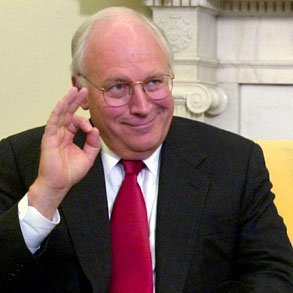
Vice President Dick Cheney never had to worry that his Blue Cross/Blue Shield federal employee health insurance policy would fail to cover the cost of the $25,000 to $30,000 implantable cardioverter defibrillator (ICD) installed Saturday, along with the other expenses of his recent hospital stay. While he hasn’t yet received confirmation from Blue Cross/Blue Shield that the bill will be paid, Cheney spokeswoman Juleanna Glover Weiss tells Salon that Cheney assumes his policy will cover it, simply because he’s a patient whose doctors decided he needed the treatment.

But according to some healthcare watchdogs, the procedure Cheney had could be denied by many HMOs. And in a strange coincidence, the major piece of legislation moving through the Capitol’s corridors right now — a patients’ bill of rights — would make it easier for patients to demand such coverage should their insurance carriers try to block it. It passed the Senate the day before Cheney entered the hospital, but President Bush has vowed to veto it.

Several critics of managed care say that, had Cheney been an ordinary cardiac patient enrolled in an HMO, he would have had to wait or fight or both to receive the ICD that now regulates his cardiac arrhythmia. Cheney has insisted at press conferences that the implant wasn’t a life-or-death matter, but merely “an insurance policy,” an assertion supported by his own doctors.

“I was kind of struck with the fact that Cheney needed it, they approved it, and then he got the implant,” says Dr. Linda Peeno. Once an HMO claims reviewer, Peeno now serves on the ethics committee at the University of Louisville teaching hospital and has testified before Congress about methods some HMOs use to stand between their clients and necessary medical treatment.

“This is exactly the type of technique that the HMOs would treat as not medically necessary because he could live without it,” says Jamie Court, executive director of the Foundation of Taxpayer and Consumer Rights and author of “Making a Killing: HMOs and the Threat to Your Health.”

And Ron Pollack, executive director of the nonprofit healthcare watchdog group Families USA, agrees, insisting that ordinary managed care clients would be encouraged to make do with a course of treatment like medication to correct the irregular heartbeat that Cheney suffers from: “You could bet that regular HMO patients are not likely to receive this procedure because it is expensive.”

Even Dan Stryer, a medical officer at the Agency for Health Care Research and Quality — an agency within the Department of Health and Human Services responsible for providing the federal government with research about treatment outcomes — says it isn’t clear whether the care Cheney received for his condition, non-acute arrhythmia, could be reasonably expected by the average HMO patient.

“There is not a solid standard on this,” Stryer said. “Given Cheney’s symptoms, you’d have a tough time convincing a lot of cardiologists that it was time for a defibrillator.” Not every doctor would call Cheney’s ICD a medical necessity, Stryer said, and that’s what would be necessary for many HMOs to cover it.

Many patients do undergo the procedure, of course. “About 150,000 Americans are walking around with an ICD right now,” points out Dr. Douglas Zipes, president of the American College of Cardiology, who adds that, as director of the cardiology department at Indiana University School of Medicine, he has rarely had problems with reimbursement regardless of the patients’ conditions.

And Mohit Ghose, spokesman for the American Association of Health Plans, an umbrella group for over 1,000 managed care providers, claims that there are both ethical and financial incentives for providers to allow patients to receive the ICD in most cases where their doctors recommended it. “If you can keep people out of the hospital and living their normal lives, that is providing the best care for the best price,” he says.

But there’s enough disagreement about the medical necessity of the ICD that many cardiac patients could end up on the wrong side of the “best care/best price” equation.

Ghose acknowledges that there are standards that could prevent a cardiac arrhythmia patient from receiving an ICD. “Not everyone with a heart condition should have this kind of implant,” Ghose said. He does say that the ICD is within “established parameters of care” for a “high-risk pool” of cardiac patients who could get approval relatively quickly for such a treatment from most health plans (he also says he doesn’t know whether Cheney fits that category or not).

A split decision among doctors often forces patients to enter an HMO’s dispute resolution system, a procedure that Ghose claimed puts the patient’s health, and not profit, first.

It’s this dispute resolution system that the patients’ bill of rights — the one that passed the Senate, and the dueling versions introduced in the House — deals with. And the difference between those bills and the bill the White House supports is whether HMOs should have a role in the resolution, or an independent board should decide if a patient gets a procedure. In the House bill Bush supports, the HMO would play a major role in deciding.

Ghose says patient protection laws in 40 states insure a review of care denials within a 30 to 45 day period. According to Ghose, treatment is denied or delayed in many cases not because of cost, but because “There might be a doctor reviewing the case who thinks that there is a better course of care.”

Critics of the process believe that managed care denial review procedures are frequently used to discourage patients from getting the care they need. “So much of getting care from an HMO is dependent on overcoming a hassle factor,” Pollack said. Peeno recalls that the HMOs she worked under would deny initial claims for major medical equipment for patients because “maybe next year, they’d switch medical plans, and it would be the expense of another provider.”

This problem is addressed by both the Patients’ Bill of Rights approved by the Senate on Friday, and also by the competing legislation currently being offered by House Republicans allied with the White House. While both bills call for rapid review of denials of care by independent review boards, the bill sponsored by Republicans allows for the HMOs themselves to select who would sit on such a board, which critics claim would undermine the integrity of the review.

And sometimes the patients don’t even know that a certain procedure is available. Frequently, Peeno says, HMOs manage to discourage expensive procedures early in the process. She argues that some managed care officials will set caps on how much they will reimburse doctors for patient care regardless of the severity of the conditions of individual patients.

As a consequence, doctors would lose money on patients who require greater supervision, a problem that would be compounded by referrals to specialists, like the cardiologists who recommended Cheney’s procedure. Consequently, Peeno asserts, doctors might refrain from even informing a patient of an expensive treatment option unless the patient’s life depended on it.

So patients who don’t have independent knowledge of their range of treatment options could be missing out on the advanced medical technology that Cheney has benefited from without ever knowing it, though Pollack believes that ordinary HMO clients have begun to get wise. “People have gotten used to the fact that they have to be the squeaky wheel to get the grease,” he says.

But for now, Pollack thinks that the vice president’s belief that he’s not getting special treatment is just a fantasy: “While everybody wishes the vice president well, you know that ordinary Americans would not be able to receive this kind of care.”

Continue Reading Close

Is the White House spinning Cheney’s condition?

Perhaps, say some cardiologists, but not as furiously as in the past.

  • more
    • All Share Services

Another four months, another Cheney heart problem. In November, the vice president had a heart attack; in March, he underwent surgery to expand a narrowed artery. And on Friday, the vice president told reporters that he would be heading into the hospital within the following 24 hours to have an electrophysiology study to determine whether he was developing what his cardiologist called “a persistent, abnormal heart rhythm.”

If the test revealed that — and Cheney said that it likely would — he would be admitted to George Washington University hospital to have an implantable cardioverter defibrillator (ICD) inserted in his chest.

But Cheney is famous for understatement. His two previous episodes were marked by White House spin and subterfuge. So is Cheney being upfront about his treatment and prospects for recovery?

For the most part, yes. But he may have underplayed the seriousness of the surgery by saying, “It is basically an outpatient procedure.”

When asked if the ICD implant was normally an outpatient procedure, Dr. J. Thomas Bigger, a Columbia University cardiologist, flatly replied no. “It’s not the procedure that’s big, it’s the disease that’s big,” said Bigger, who served as a spokesman for Democratic presidential candidate Bill Bradley last year when it was revealed that the former New Jersey senator suffered from heart palpitations.

While Bigger acknowledged that “different [medical] centers have different ways of doing it,” he said that he would never send a patient home the same day he performed an implant because he would want to make sure that the heart rhythm stayed stable after the procedure was completed. “It mainly has to do with being sure that everything is secure,” he said. “There’s no point in taking any chances with it.”

Dr. Richard Stein, chief of cardiology at the Brooklyn Hospital Center and a spokesman for the American Heart Association, also claimed that an ICD implant would normally require a patient to stay in the hospital for the night. “Sure, you could go home if you had a doctor and nurse going with you, someone who could stay up and monitor whether anything went wrong,” Stein said.

With White House physicians available around the clock, a doctor probably wouldn’t demand that Cheney spend the night in a hospital. “It’s kind of like the pope,” Stein said. “If he says he wants to go home, you can’t really stop him.”

However, Douglas Zipes, president of the American College of Cardiology, allowed that the procedure “could be outpatient or inpatient,” depending on a patient’s health.

Otherwise, the information coming from the White House appears generally solid. Though he emphasized that he was not privy to details of Cheney’s condition, Stein said that the chances of something going wrong with the procedure or of the vice president’s being incapacitated were very, very small. “It’s really a low-risk procedure,” Stein said.

And Bigger couldn’t stop praising the effectiveness of the ICD. “It’s 99.9 percent perfect,” he said. “It’s good as gold.”

At Friday’s press conference, Cheney assured reporters that the problem was medically minor, but said that he wanted the press and public to be well informed, largely to guard against the confusion that has surrounded his previous cardiovascular issues. “We’ve had enough experience now that sometimes misinformation does arise, and there’s intense speculation, and everybody sort of goes into a high hover,” he said.

Cheney’s concern about the speculation is well grounded, but he neatly stepped around the fact that much of the misinformation surrounding his past heart trouble has come from the Bush team itself. Starting with Cheney’s selection as the vice presidential nominee, the Bush campaign gave only a well-edited version of his medical status, a considerable cause for concern given that Cheney had suffered three heart attacks before turning 50.

Then, amid November’s Florida recount skirmishes, Cheney checked himself in to George Washington University Hospital complaining of chest pains. On the morning of Nov. 22, everyone from the GWU doctors to then-candidate Bush himself insisted that Cheney had not had a heart attack. “He was feeling chest pains, and turns out that subsequent tests, blood tests and the initial EKG showed that he had no heart attack,” Bush said. By the end of the day, Cheney’s doctor had revised his earlier statement, and acknowledged that Cheney had suffered a “very slight heart attack.”

The cardiac spin team apparently stayed on the job, and in March, when the vice president underwent a heart catheterization as a “precautionary measure,” Zipes told Salon that the White House’s explanation didn’t jibe with his experience. “No, you’re not going to do [a heart catheterization] on a precautionary basis,” he said, explaining that it would be incorrect to use that term to describe an invasive surgical procedure employed to help prevent a heart attack in a patient. At that time, Zipes also faulted the Bush team for failing to tell the whole story, and said, “I am concerned that they weren’t forthright about what was going on.”

Continue Reading Close

To Bork or not to Bork

Democrats give notice that ideology will play a role when the Senate considers Bush's judicial nominees.

  • more
    • All Share Services

To Bork or not to Bork

Everyone knew that when the Democrats took over the Senate, the road for President Bush’s judicial appointments became much rougher. But to make sure that message was clear to the administration — and perhaps to create some political cover for when the time comes to oppose would-be judges — Democrats decided to publicly explore the reasons why judicial nominees should be grilled about their political leanings.

In a hearing Tuesday, it was the job of Sen. Charles Schumer, D-N.Y., a member of the Senate Judiciary Committee, to run the proceedings with the high-minded title “Should Ideology Matter? Judicial Nominations 2001.” Schumer had already given a preview of his own answer to the question in an Op-Ed piece in Tuesday’s New York Times, in which he wrote, “Pretending that ideology doesn’t matter — or, even worse, doesn’t exist — is exactly the opposite of what the Senate should do.”

He reiterated that point during the hearing, saying that ignoring ideology has led to more “gotcha politics” in the confirmation process, with senators and interest groups digging for dirt in nominees’ writings, financial records and personal lives to camouflage differences over issues like abortion and gun control. He argued that such practices increase public cynicism about the nomination process. “Let’s make our confirmation process more honest, more clear and hopefully more legitimate in the eye of the American people,” he said.

But Republicans at the hearing made it known that they believed fairness was the last thing Schumer and other Democrats were looking for in the confirmation process, and that Democrats were instead laying the groundwork for a full-bodied “Borking” of Bush’s nominees.

When Schumer said “ideology,” Republicans heard “litmus test,” and Sen. Mitch McConnell, R-Ky., helpfully offered what he feared were some of the liberal tenets that nominees would have to accept in order to win confirmation. In McConnell’s view, Bush nominees would have to support “partial-birth abortion,” “judicial activism” and “racial preferences.” Nominees would also be required, he said, to promise to “restrict First Amendment rights of political speech and association” — code for supporting campaign reform limits.

With 107 judgeships needing to be filled by the Bush administration, Republicans are warily watching the Democrats’ positioning. A GOP source close to the Judiciary Committee said that three of the president’s first batch of nominees are likely to be targeted by Democrats:

  • Michael McConnell, a legal scholar who has advocated greater government support of religious institutions and publicly funded school vouchers, and who has voiced support for the Boy Scouts of America’s ban on gays.

  • Jeffrey Sutton, another school voucher fan, who is a member of the conservative Federalist Society, and who donated $1,000 to Bush’s presidential campaign in 1999.

  • Deborah Cook, an Ohio state Supreme Court justice who opposed a lawsuit against gun makers and supported limits on jury damage awards, and who — with her husband — has donated over $13,000 to the Republican Party and GOP candidates in the past four years.

    A Democratic source close to the Judiciary Committee said that the party was reserving judgment on all of the Bush nominees, but agreed that McConnell could be in danger.

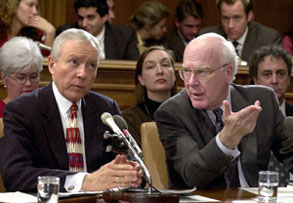
    Republicans are indignant at the prospect that Bush’s nominees could be subjected to an ideological third degree. They claim that former President Clinton’s judicial nominees were never subjected to the Republican equivalent of such testing. And they say that Schumer was trying to change the ground rules of confirmation at Tuesday’s hearing. “What’s being suggested here is a significant departure from the way that nominees have traditionally been treated,” said Sen. Jon Kyl, R-Ariz. “Have there been exceptions? Quite. But they prove the rule because they are exceptions to the general deference that’s always been given to the president’s nominees.”

    Schumer, of course, disputed this, saying that Republicans’ method of avoiding appearances of partisanship against Clinton nominees was to put the former president on notice that all judicial liberals would be dead on arrival.

    The witnesses at the hearing tilted slightly against Schumer’s argument. While the second panel, made up of law professors and activists, split evenly on whether explicit questions of ideology are proper in the nomination process, the first panel was a wash for Schumer. C. Boyden Gray, White House counsel in the first Bush administration, got to the point early in his statement. “If the goal of today’s hearing is to answer the question, ‘Should ideology matter?’ I can answer in one word: No,” Gray declared. Carter administration counselor Lloyd Cutler echoed Gray’s sentiments. “To make ideology an issue in the confirmation process is to suggest that the legal process is and should be a political one,” Cutler offered. “That is not only wrong as a matter of political science; it also serves to weaken public confidence in the courts.”

    Schumer finally found a like-minded partisan with Laurence Tribe, a Harvard law professor and one of former Vice President Gore’s attorneys in the Florida recount battle. Tribe prompted frequent smiles and affirming nods from Schumer throughout his testimony, which found him frequently leaving aside his prepared remarks and speaking off the cuff. He said that the current fashion of staying away from ideological questions in the confirmation process forced senators to forgo tough questions, and instead substitute “ludicrous platitudes” and legal softballs at nominees.

    Tribe gave his impression of a typical exchange. “‘Would you follow the law?’” he asked, before answering himself: “Duh.”

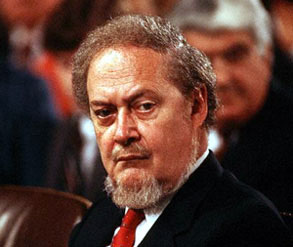
    But Tribe wandered dangerously far into partisan minefields. He accused Republicans of “revising history” on the 1987 defeat of Supreme Court nominee Robert Bork, claiming that the Senate’s rejection was based on legitimate concerns about his narrow vision of rights implied by the Constitution, not on Democratic scapegoating.

    In another example, Tribe reserved his most heated words for the current Supreme Court. Tribe described it as “utterly contemptuous” of Congress, mentioned its verdict in Bush vs. Gore as an example of its “disdain for democracy” and worried aloud that Bush’s stated preferences for more justices like Antonin Scalia and Clarence Thomas would pull the court hopelessly out of step with the American mainstream.

    These remarks went largely unchallenged during the hearing itself, mostly because there weren’t many Republicans around to say anything. Only Alabama’s Sen. Jeff Sessions, the committee’s ranking minority member, stuck around for the second panel, and he spent as much effort tangling with Marcia Greenberger, co-president of the National Women’s Law Center. She criticized Sessions’ concern about ideology, saying he had quizzed liberal judicial nominees on everything from welfare issues to civil rights law. He suggested that Greenberger’s criticism of the Supreme Court was an overreaction to valid decisions that her group merely disagreed with.

    Greenberger claimed that the opinions authored by Reagan and Bush Supreme Court appointees — with the exception of David Souter — should upset “anyone who is concerned with civil rights.” She cited the court’s reversals in the past several years of provisions in acts like the Violence Against Women Act and the Americans With Disabilities Act as proof the Republican justices are bent on narrowing ordinary citizens’ means to fight discrimination.

    But a Republican Senate staffer who witnessed the hearing said that the Democrats seemed more interested in getting fodder for the next election season than in protecting citizens from a renegade Supreme Court. He singled out Greenberger as playing “Chicken Little of the hard left” in a Democratic drive to capitalize on unfounded fears about Bush’s judicial nominees. “They’ll keep saying, ‘The sky is falling, the sky is falling,’ and that will help them raise some more money.”

    And there’s more to come. Schumer promised at least three more panels discussing how the Senate should handle touchy questions about judicial nominees. But as the senator reminded Sessions during the hearing, there isn’t much else to do until the parties hammer out rules for the new Senate. Confirmation hearings to fill the empty slots in the federal judiciary can’t begin until Senate Republicans and Democrats agree about whether senators will be able to put anonymous holds or “blue slips” on nominees they don’t like, and whether the president’s Supreme Court picks will be guaranteed a Senate floor vote, regardless of the Judiciary Committee’s disposition.

  • Continue Reading Close

    Page 1 of 40 in Alicia Montgomery