Kerry Lauerman

Even more David Sirota — in Salon

Our man in Denver brings his political and pop culture obsessions to us now, daily

  • more
    • All Share Services

David Sirota’s been writing so much for Salon recently that we thought we’d just go ahead and make it official: He’s a contributing writer now, and will be updating his blog here throughout the week.

We’re thrilled. David patrols a distinct — and classic Salon — intersection of politcs and culture; for those of us who obsess as mightily about movies as we do the great political debates, he’s a trusted voice. I like to think his Denver outpost gives him a better view of the whole country, without the distractions of the West Coast cause du jour or the myopia of the East Coast chattering class. It lets him see issues that other blinkered peers miss, as when he raised  questions about the wild — and wildly hyped — response to the death of Osama bin Laden (a monster post, which many are still talking about).

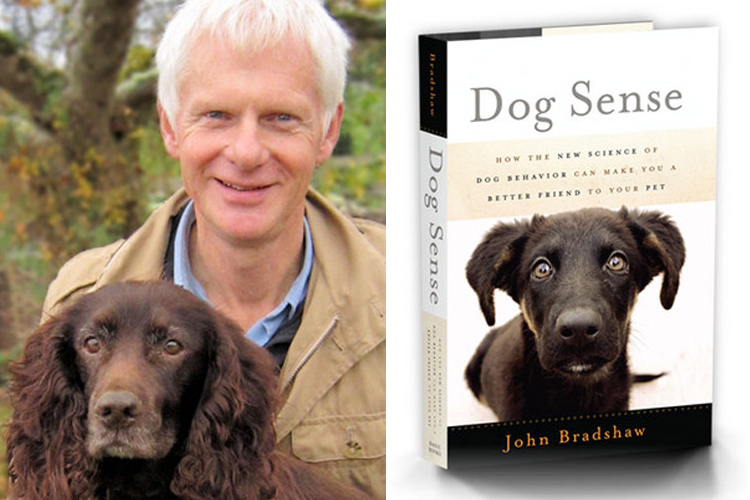
Read him here. Follow him on Twitter. Listen to his radio show. Buy his great new book. You won’t be disappointed.

So, Gilbert Gottfried, about those tsunami jokes …

Gilbert Gottfried talks about the jokes that cooked his goose with Aflac, and the great virtue in a good shock

  • more
    • All Share Services

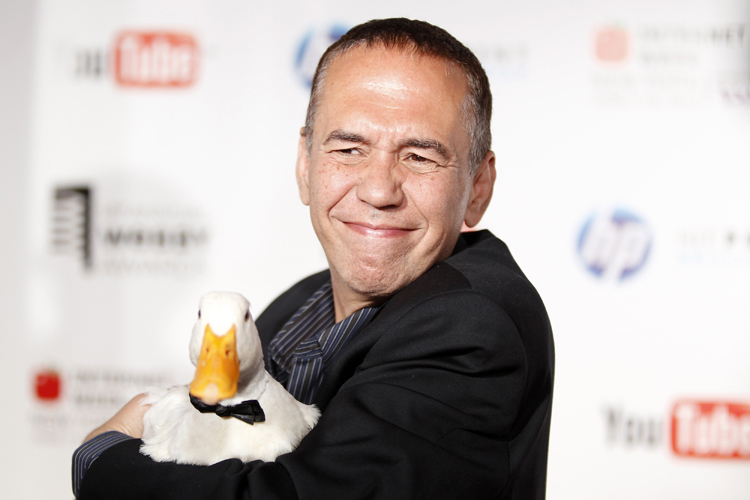
So, Gilbert Gottfried, about those tsunami jokes ...Comedian Gilbert Gottfried arrives with a duck at the Webby Awards in New York June 14, 2010. REUTERS/Lucas Jackson (UNITED STATES - Tags: ENTERTAINMENT ANIMALS)(Credit: © Lucas Jackson / Reuters)

It had been about a month since Gilbert Gottfried lobbed those brutally crude jokes about the Japanese tsunami when I met him earlier this week. He still seemed a little stunned by the reaction, which included a public drubbing by the morality police, and being fired as the voice of the Aflac spokesduck. Still, he couldn’t quite make himself grovel for forgiveness. “You start to feel sorry, and then you wonder what you’re feeling sorry for,” he says. “That I made jokes?”

Sure, they weren’t just any jokes. (Buzzfeed has ranked the most jaw-dropping of them.) But in many ways, they are typical ones for Gottfried, 56, who has paved a long career with the shock and awe of the taboo. He is famous for his version of the notorious “Aristocrats” joke, delivered a mere three weeks after Sept. 11, at a New York Friars Club roast for Hugh Hefner, which has somewhat romantically been christened (by Frank Rich, the New York Observer and the film made in honor of the joke) as the moment it was OK to laugh again. That epic release was made possible, though, only by the World Trade Center joke Gottfried detonated right before, which drew boos, hisses and the refrain that could wind end up as Gottfried’s epitaph: “Too soon!”

Everything about Gottfried’s comedy is intended to grate, from his shrieking delivery (in person, he speaks softly and thoughtfully) to his material, which is in rich display in his new comedic memoir “Rubber Balls and Liquor,” where the Brooklyn-born Gottfried manages to squeeze a warmly remembered childhood and sometimes perilous career (he was an “SNL” cast member for the much-derided 1980 season, the year after all the originals left) in between a succession of generously filthy stories and jokes. We spoke over a lunch picked up by Salon at a Midtown Manhattan steak restaurant, during which Gottfried carefully ordered three courses — including a New York strip, with a side of baked potato and a side of broccoli — most of which he barely touched and had wrapped to go. An edited transcript of the lunch follows.

So about those tsunami jokes…

It’s amazing. I think millions of years from now when aliens land here and are digging up our civilization, they’re probably going to be looking at all the reports and say, “This guy must have caused the tsunami.”

When I look at how the media just went nuts with it, there were so many tricks they had. Number one, they didn’t say “his jokes,” they said, “his comments and remarks,” because if you say jokes, it just lets the air out of the sails. If you say “jokes,” people say, “Well, yeah, he’s a comedian, he makes jokes.” And then you say, “Yeah, but these were bad-taste jokes.” And then people go, “Kind of like the bad-taste jokes I heard at work today.” And then they go, “Well, this is a guy who starred in ‘The Aristocrats,’ and is on every roast and was on ‘The Howard Stern Show,’ so we were of course shocked that he would do something in bad taste.”

Then they pick out some of the jokes, and they go, “We’re warning you ahead of time that this is shocking and offensive.” So they present it, and it’s what I’ve always thought about the media, they [warn that something] is shocking and offensive, like, “We’re good, we’re watching out for you,” but it’s really their way of saying, “Here, we got you now, you gotta watch this.” And it’s OK for them to say it, because they have a stern look on their face. The people most outraged in the beginning were TMZ and Perez Hilton, Dr. Laura. Oh, [CNN's] “Showbiz Tonight” picked me as the most provocative celebrity, beating out Charlie Sheen.

Who doesn’t want to be provocative?

Yes. But then to talk about how offensive and how wrong it was, they brought out Kelsey Grammer’s ex-wife Camille, and she was…

She was the voice of reason?

Yes!

TMZ and Perez Hilton have built their brands having it both ways.

Right, Perez Hilton, who outs gay stars and draws penises on their faces, was very shocked and offended. And the best part is that they always say, “Too soon,” and “Too soon” meant that if I had waited like three more days, the tsunami was forgotten about. And what I remember was turning on the TV one day, and all of a sudden I noticed there’s not one mention of the tsunami, and the big news item all over the place — all over the Internet, all over TV — was that Chris Brown got angry backstage on “Good Morning America” and threw a chair. And the tsunami was lucky to get mentioned after funny sports bloopers.

Did you regret the jokes? Because you did delete the tweets.

Oh, yeah. I deleted it. And then they dug [them] up.

Right, which always makes it look like there’s been a coverup.

Yes. With the Internet, if you erase something it just means you have to spend another half-minute to find it. It’s just like when they go “so-and-so did not comment.” If you’re avoiding their news show or their paper, then you’ve got something to hide. I actually did have cars parked outside my building, with these different news crews and people hiding in hallways.

Were you shocked when Aflac reacted the way it did?

I remember I was away in Philadelphia working; I came back and then the whole world blew up. When people say, “Are you sorry you did it?” I’m kind of mixed on the whole thing because it’s my character. You start to feel sorry and then you wonder what you’re feeling sorry for. That I made jokes?

Those particular jokes are exactly what you do.

The funny thing was, any comedian who heard it didn’t understand what the big deal was about, and usually started their emails to me with, “Hey, did you hear about the Japanese so-and-so,” and then they’d go into a joke. And my fans, in the very beginning when it first happened there were the psychos’ emails, the ones who I think live on the Internet and are shocked; I think they’re the people who send hate mail to Jennifer Aniston for calling Brad Pitt…

Right, right. They take it all very personally.

Yes! But then there was just an overflow — pardon the pun — of people going, “Hey, what’s the big deal? You made jokes.”

Did anyone you know say, “Too soon”?

No.

The other part that really got me was when they’d report how much these things hurt the Japanese people. And I’m thinking, so what this means is that when the tsunami was taking place, their top priority was [going to] Gilbert Gottfried’s Twitter account, translating the jokes, and being offended. I’m thinking, they really need to get their priorities straight.

And the crazy people in the press were saying, “Imagine if it was your loved ones,” and I’m thinking, so? If it were my loved ones I [wouldn't be] going, “Let me get onto some Japanese comedian’s Twitter account, and see what he’s saying…”

Did Aflac contact you immediately?

I really can’t say much about that.

Was that the extent of the fallout?

Well, it’s hard to say what may or may not have happened. At times like this I get a better understanding of things like the House Un-American Activities [Committee]; you know, maybe no one was out-and-out saying, “We’re not hiring you because we’re scared of this,” but they just weren’t hiring you.

So you’re left to your own paranoia.

Sure.

At the same time you’ve got your book coming out, so there’s that. Has it all helped your comedy?

Nothing can help my comedy. [Laughs] But what I did notice was that the thing that started all this — my Twitter account — was at this certain level, and it wasn’t going much higher, and then all of a sudden it just exploded. Like 50 times as many people were following it.

And I did a thing on “Funny or Die” called “Too Soon” that’s me throughout history telling bad-taste jokes. I’m convinced that when Christ was on the cross there were people around there telling jokes to each other, making sarcastic remarks.

What is Twitter like for a comedian?

I find the whole Internet, number one, how quickly everything moves … like, I feel like if tomorrow I say I have a Twitter account, they’ll go, “You’re still on Twitter? We stopped using that years ago.” I feel like this line has been erased between people who do stuff and everybody else. So, like, columnists and writers who you used to buy a paper to read what they had to say, or watch their news shows … it’s like the line is erased, now everybody is commenting on things, with some people … much like with cellphones, when you hear somebody on a cellphone going, “I’m about three doors from your house now, OK, now I’m two doors, OK, now I’m in front of your building, I’m about to press the button.” It’s like they narrate their entire life.

Everyone wants the stage now.

Yeah.

You were sort of a prodigy; you were performing live in the Village when you were 15. How different are you now from then?

I remember when I started out I was doing mainly impressions, and I remember I would do Bela Lugosi, and you know, back then, as I said in the book, growing up the greatest film school in the world was in your living room, because you’d turn on the TV and there’s all these movies coming on constantly. So I remember part of my act I would do Groucho Marx and Bela Lugosi, and the funny thing is, even back then, it was pretty dated with my references. And then somewhere along the way I started more kidding around in between the impressions, and it developed into whatever I developed into.

Do you think that’s changed a lot? Is that how young comedians do it now?

That’s a scary thing, that I find very worrying. Now, if someone wants to be a comic, they just film themselves and put it on YouTube. And they haven’t learned anything, they haven’t learned to develop anything or how to experience working in front of an audience. When I see people doing stuff on YouTube, or even if they’re just writing things, I always think, Wow, thank God this wasn’t around when I was that age.

You think you wouldn’t have developed your chops?

Yeah. I think I would have terribly undeveloped, unfunny bits that I’d be doing on YouTube.

There’s this new kind of celebrity comic, Kathy Griffin being an example, who isn’t crafting jokes, but just trying to create a sort of amusing persona, maybe getting a reality show.

Yeah, there are the people who just have a certain quirky personality and get famous. That’s another thing now. Reality TV has totally destroyed soap operas. They’re gone. They used to be the biggest thing in the world, they’re gone. Sitcoms are pretty much dead. There used to be billions of those on, now they’re dead. It’s just so much cheaper to make reality TV.

Which spawns stars like the Situation, who bombed thoroughly recently during the roast for Donald Trump. Is it satisfying to see something like that?

What I thought about that was, he did bomb. But it’s like, so now because he’s bombing on TV, he’ll still be making a fortune from the TV show, and he’ll get paid a few hundred thousand to show up at a restaurant opening.

To bomb.

Yeah.

I envy like crazy those people who get money to show up at events, where they just walk down the red carpet and then sneak out a side door.

You’ve never been paid an appearance fee?

No.

Do you get a lot of requests to just tell the “Aristocrats” joke?

Oh yeah.

Do you?

I tell jokes from my dirty jokes DVD, but the “Aristocrats” one I don’t tell that much. I’m almost like rebelling against people who want it, and that was a funny thing too as far as people being offended. It started with the Sept. 11 joke. And they’re booing and gasping and yelling, “Too soon!”

I think a lot of people forget the first part, the World Trade Center joke that really upset people. They just remember the “Aristocrats” joke — and that Gilbert made it possible for us to laugh again.

Yes!

What I love about that, they were all offended and shocked and outraged, and then I win them back by talking about incest and bestiality. And they go, “That’s OK. Now we can relax.”

You had to know the World Trade Center joke was going to be risky.

Yeah. I definitely wanted a reaction. There was the case of people walking around putting flags on their cars and flags on their lapel like, “Look, I’m doing something,” just like the red ribbon that cured AIDS. Scientists saw those red ribbons and suddenly realized they had to cure AIDS. And what I remember, too, about that time, they were thinking of canceling the Emmys, and then they decided to run the Emmys because there’s just too much money in the Emmys not to run, but people would be dressing down. So Pam Anderson showed up and she was not showing as much cleavage — that makes the people who died in the World Trade Center feel that much better.

The funny thing is, a couple of days after the whole Japan thing, I attended a funeral. And you know, of course, at the funeral people were going up speaking and they were telling funny stories about the person, and you’d see people whisper something to another person and they’d laugh nervously, and I had people come up to me and say, “I know I’m going to hell for this but I laughed at some of those jokes.”

I put up on Twitter a line from George Carlin. He said it’s the duty of a comedian to find where the line is and cross it. And I thought that put it much better than I ever could.

There is no bigger laugh than when you’ve just crossed the line, is there?

Yeah, and there’s that laugh where people laugh extra hard because they don’t want to laugh.

Have there been times when you think, that was too far?

Sometimes when I say it. But then afterward I think, What is going too far? When people first learned to communicate there were people laughing at bad things that happened, as some kind of release. As long as civilization is around that’s going to happen.

Your book is coming out, while Tina Fey’s book will be at the top of the bestseller list. Are you going to topple her?

Oh, naturally. [Laughs]

Are you a fan of hers?

Yeah, I guess. I did a voice on an episode of “30 Rock,” so I guess I’ll be a fan.

What was the episode?

Oh, it was peculiar. It was an episode of the show where they’re auditioning people for their “Saturday Night Live”-type show that they do, and there’s a guy who does impressions, and he does a dinner party impression of me, Martin Scorsese and Christopher Walken, [and] they actually got all of us to do our own voices. There’s also a scene too where they get voice messages saying, “Hire this guy, he’s great,” from me, Scorsese and Walken. And they believe it’s the real people. And Tina Fey says, “This guy is really impressive, he did a film with Martin Scorsese, he was in an off-Broadway show with Christopher Walken, and he studied the Meisner technique with Sir Gilbert Gottfried.” [Laughs]

Continue Reading Close

Our new partners: Imprint

Print magazine's online design community begins contributing to Salon. Color us delighted!

  • more
    • All Share Services

I’m pleased to announce that we’re launching a new partnership with Print magazine — the 70-year-old standard-bearer for the world of graphic arts. Beginning today, we’ll be posting daily from Imprint, the magazine’s online design community, which will offer posts on all varieties of visual culture. It’s a great site — we’re thrilled to run some of its fine work.

Check out today’s first post — a Tax Day romp through the world’s currencies — and tell us what you think.


A disturbing threat against one of our own

UPDATED: An alleged plot to destroy WikiLeaks targets Glenn Greenwald. We want to know who is responsible

  • more
    • All Share Services

A disturbing threat against one of our own

(Updated below)

We take threats against our own very seriously.

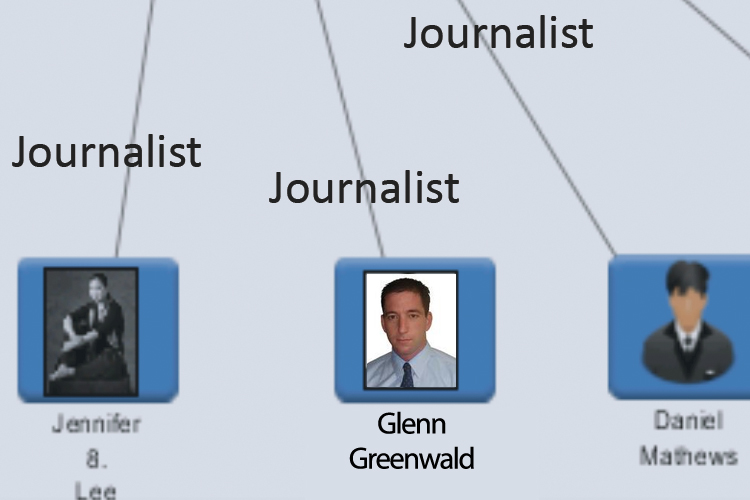
A bizarre plan for an attack on the whistle-blowing site WikiLeaks and journalists construed as sympathetic to it — first reported by the Tech Herald — clearly targets Salon’s Glenn Greenwald, saying that his “level of support” for WikiLeaks “needs to be disrupted.” The report (you can download the purported final draft here) is listed as an “overview by Palantir Technologies, HBGary Federal and Berico Technologies,” and according to a string of e-mails also leaked, was developed following a request from Hunton and Williams, a law firm that represents, among others, Bank of America.

Bank of America is the presumed next target of WikiLeaks, and has reportedly been bracing for what’s to come.

The leaked report singles out other journalists, as well, and suggests that “these are established professionals that have a liberal bent, but ultimately most of them if pushed will choose professional preservation over cause …” And goes on: “Without the support of people like Glenn wikileaks would fold.”

For a complete breakdown of what it all means, Glenn has a thorough, illuminating report. But what the authors of the report meant when they plotted how Glenn and the others could be “disrupted” or “pushed” is as unclear as it is ominous — and has us deeply concerned. The report was exposed by Anonymous, the pro-WikiLeaks hackers who went after the companies that dropped services to the whistle-blowing organization last year. Anonymous was apparently acting in retaliation to HBGary, whose head of security services, Aaron Barr, had earlier claimed to have infiltrated the Anonymous network. HBGary has since responded, claiming that “information currently in the public domain” from the leak “is not reliable because the perpetrators of this offense, or people working closely with them, have intentionally falsified certain data.”

But the security firm Palantir wasted little time severing all relations with HBGary, with Palantir CEO Alex Karp issuing a statement saying that “I want to publicly apologize to progressive organizations in general, and Mr. Greenwald in particular, for any involvement that we may have had in these matters.” Karp also reached out and apologized directly to Glenn.

We have no reason not to take the report seriously. As a result, I’ve asked both Hunton and Williams and Bank of America to explain any role they played and address whether HB Gary (or any of the firms) were being paid, or promised payment, for its development. I’ll update this post when we hear their responses.

As bumbling as this whole saga sounds — Internet security firm can’t keep its shadowy dirty tricks campaign from being hacked — what’s outlined in these sets of proposals, as Glenn points out, “quite possibly constitutes serious crimes.” And as it relates to Glenn and the others, it constitutes an unconscionable attempt to silence journalists doing their jobs. We’ll continue to stay on this story until we get some real answers.

Update I (4:05 p.m. ET): Berico CEO Guy Filippelli and COO Nick Hallam have now formally severed ties with HBGary, saying in a statement:

Our leadership does not condone or support any effort that proactively targets American firms, organizations or individuals. We find such actions reprehensible and are deeply committed to partnering with the best companies in our industry that share our core values. Therefore, we have discontinued all ties with HBGary Federal. We are conducting a thorough internal investigation to better understand the details of how this situation unfolded and we will take the appropriate actions within our company.

Late last year, we were asked to develop a proposal to support a law firm. Our corporate understanding was that Berico would support the firm’s efforts on behalf of American companies to help them analyze potential internal information security and public relations challenges. Consistent with industry standards for this type of work, we proposed analyzing publicly available information and identifying patterns and data flows relevant to our client’s information needs. Any subsequent discussions or proposals that attempted to extend the initial scope of work run counter to our organization’s values. 

Update 2 (5:11 p.m. ET): A reader sent me this post on USA Today’s technology blog, which went up as I was first preparing this post. In it, BofA spokesman Scott Silvestri says, “We’ve never seen the presentation, never evaluated it, and have no interest in it.” When asked specifically about the PowerPoint display, Silvestri is quoted: “Neither Bank of America, nor any of its vendors, have engaged HBGary Federal in this matter. We have not engaged in, nor do we have any plans to, the practices discussed in recent press reports involving HBGary Federal.”

I have a call and an email in to Silvestri and still hope to hear back from him. We have, naturally, more questions. Did BofA or Hunton and Williams solicit the report from HBGary? Were they, or any of the security firms, paid for their efforts?

We hope to have more answers soon.

Update 3 (6:45 p.m. ET): Silvestri emailed back, providing the same quotes as he had given USA Today, above. We replied with the same followups as outlined above. We hope to hear back soon. 

Continue Reading Close

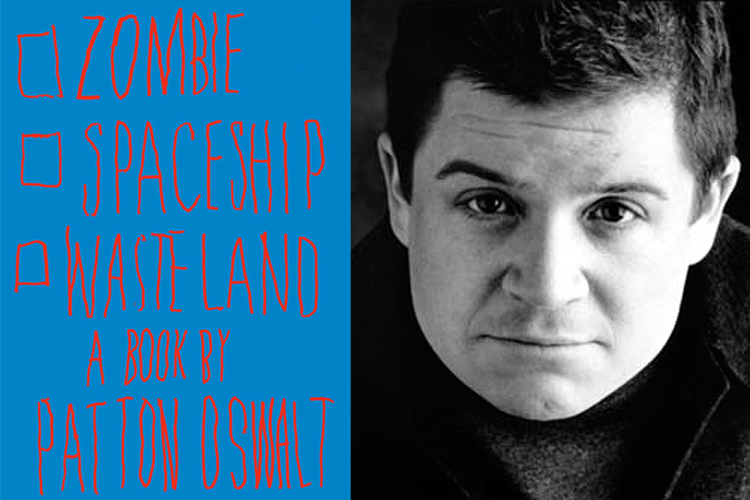
Patton Oswalt battles his demons (and zombies)

The comedian talks about his very funny new book, '80s nerd nostalgia and what makes a terrible stand-up comic

  • more
    • All Share Services

Patton Oswalt battles his demons (and zombies)

You know Patton Oswalt. As I prepared to talk to the comedian about his terrific, Gen X-era cultural memoir “Zombie, Spaceship, Wasteland,” nearly everyone I mentioned him to had an immediate, very specific response. They were, in order:

“I loved ‘Big Fan.’ “

“I wish ‘Comedians of Comedy’ would come back.”

“The voice of ‘Ratatouille‘!”

“Spence, from ‘King of Queens!”

“He was the best thing about ‘The Hangover.’ “

Actually, he never appeared in “The Hangover.” My friend had confused him with fellow “Comedians of Comedy” member and charmingly gnomish funnyman Zach Galifianakis. But it’s a testament to how ubiquitous Oswalt is that, after nearly a decade of seeing him on stage, on TV and in films, you can have a vivid recollection of one particular performance yet have a hard time pinning down who he actually is.

His new book goes a long way toward doing that. In a hilarious series of stories and vignettes (and a really wicked series of greeting cards), Oswalt captures the hyper-imaginative id of an ’80s suburban boy who grew up desperately battling boredom through the peculiar adventures of his time only to eventually outgrow them. He closes one essay about his addiction to “Dungeons & Dragons” with:

Then I went to a pool party — the first one I was skinny enough to swim at without my shirt. I made out with a girl, and the curve of her hip and the soft jut of her shoulder blades in a bikini forever trumped the imagined sensation of a sword pommel or spell book.

I spoke to Oswalt recently as he continued his comedy tour, and “Zombies” began to hit bookstores.

You have a line in your book about how writing has always taken a backseat to your “ambition to craft a perfect dick joke.”

Oh yeah, oh definitely.

So was this hard to pull off? Was it produced in fits and starts?

It was written pretty much in a sustained fashion over about nine months. I mean I was doing other things while I did it, I was doing movies and doing stand-up, but I was really focusing on doing the thing in a thematic way — even though it jumps around a lot in terms of chronology and subject matter. That is how my memory works, and I tried to sort of embrace that.

You have a chapter that spoofs classic stand-up comedy types: Blazer, the guy who goes for the cheap, ripped-from-the-headlines laughs, and another guy, “Topical” Tommy, who is really political and dour, but not very funny. I wondered reading, what type of comedian do you think you are?

God that’s a good question, because I don’t [pause] I just talk my way around an idea, and the way into the core of what I’m trying to talk about is through jokes, and through a million different punch lines hidden within the sentences rather than having the thing just end with the punch line. I’m giving a really, really garbled answer right now. I think I wrote that chapter because, whether I like it or not, all of those guys are a part of me. They all have come up, even if it was [me thinking] “I never want to be like that.”

The Blazer character is the sort of guy who comes up with, in 1988, a stunt song called “Nazi Boys,” sung to the tune of Janet Jackson’s “Nasty Boys,” about Kurt Waldheim. Blazer is  hilarious because he’s exactly that wince-inducing,  shticky kind of comedian, always going for the easy laughs.

Although that can be a bit of a misnomer, because, you know, laughs are not easy to get. But, you don’t want to get laughs that are just based on the things that you don’t care at all about, and that’s what I want to avoid. That’s like when people put down bands for like, you know, “they just write these hit songs.” Writing a hit song is really hard to do. But when you’re writing a hit song from just a mechanical kind of way then, yeah, that’s pretty horrible.

I read an interview where you were talking about Bill Hicks, and how sad you were that Hicks left before he could weigh in on certain current events. I wonder how consciously you try to integrate big ideas or social commentary into what you do?

It’s certainly not a premeditated thing that I’m like, I want to address this, it has to be something that affects me personally and comes out of it organically. So if I’m talking about stuff like gay marriage or the war in Iraq, it’s because it’s really affected me on a personal level and the personality of somebody that’s against it has kind of activated me on some level, but I don’t sit down and make a list, like, I’m gonna cover this topic. I’m not really conscious of it. It’s whatever is bothering me at the moment, so you know, fast food items that disgust me or people that are freaked about gay marriage that also disgust me.

But the danger is not to be Topical Tommy.

Yeah, yeah. He’s [got that problem of] having preconceptions and assumptions about the audience before he even gets to see the audience. That’s how Topical Tommy is and that’s how a lot of bad comedians are. And you know, comedians who have expectations about audiences are just as bad as audiences who have expectations about the comedians, and you can’t have either of those or you’ll get a bad show.

Your essay on your Uncle Pete, who struggled  intensely with mental illness, was really moving. How influential was he on your career or your comedy?

He was more influential on my life view and the way that I kind of look at life and my place. He had a much bigger impact on that than he had on my career.

You write about how you understood the desire he felt to isolate himself, to live in his own world …

Well, you know, I’ve definitely spotted where that was in me, where those tendencies lie in me as much as I don’t want to admit I have them, but I do.

Don’t you think that’s true with a lot of creative people? That they have to resist the temptation of drawing inward and into their own private creative world?

Yeah. Or maybe what they have to learn to live with is the push and pull of wanting to be out there and be kind of extroverted, but then also needing, in order to help the work, to be introverted for a while and go live a regular life and be quiet and just observe. There has to be that balance back and forth.

And it would seem to be easier to choose and do one or the other.

But I don’t think you have to choose one or the other. You have to balance between them.

Do you think that you’ve found a balance?

I think what I’m going to do is spend my life looking for the balance, but I just don’t think I’ll ever find it. But I think the search will yield some good stuff.

You have a really funny aside, in a chapter you write about your childhood obsession with Dungeons & Dragons, mentioning that you’d revisited it later in life in what you called “perhaps the most gentle, sedentary midlife crisis ever on record.”

It happened for a few months, and it was just that thing like, I’m wallowing in nostalgia right now. And then I had a baby, and I didn’t have time to play it anymore so it didn’t really go as deep as I thought it would. It was just an amusing thing that happened for a little bit.

How old were you and how did you find people to play with?

They found me. It was a lot of my friends that started doing it and I said, hey that sounds cool, so  boom — I just did it. They kind of started it without me, and I fell into it.

You were mid- or late-thirties at the time?

Yeah, late thirties I would say.

And did you think you would somehow recapture the magic?

I don’t know what I was thinking. But there wasn’t really any magic in there. It just wasn’t there, and basically mostly we would sit around and gossip. It was like a ladies sewing circle with guys rolling dice and playing wizards.

Continue Reading Close

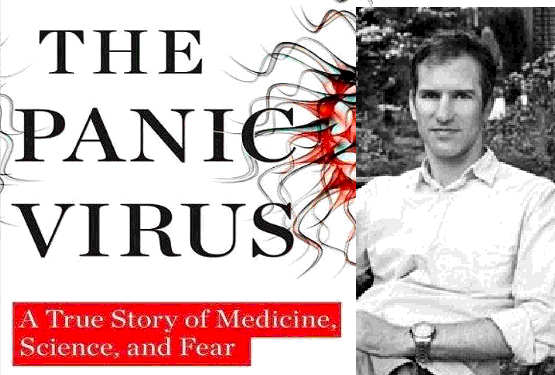
Behind the vaccine panic

Salon talks to "Panic Virus" author Seth Mnookin about America's problem with autism conspiracies -- and our own

  • more
    • All Share Services

Behind the vaccine panic

The anti-vaccine crusade remains one of the enduring, heart-rending mysteries of our young century. Despite all reasonable evidence showing that failing to vaccinate children puts them at enormous risk, an astonishing number of parents hold off anyway because of scientifically unproven fears that it could lead to the onset of autism or other conditions. More mystifying still: The parents susceptible to vaccine conspiracy theories often are well-educated, liberal-minded denizens — people just like Salon readers — in upscale areas like Marin County, Calif., which has the fifth-highest average-per-capita income in the U.S., but whose parents bypass vaccines at three times the rate of the rest of the state; or in Ashland, Ore., where the exemption rate is an astounding 30 percent.

In “The Panic Virus,” journalist Seth Mnookin gives a gripping, authoritative account of how the anti-vaccine crusades caught on, shining a bright light on Andrew Wakefield, the now disgraced British researcher whose early work claiming a link between vaccines and autism created a global stir, and authors like David Kirby (“Evidence of Harm”) and celebrities like Jenny McCarthy, who hyped the shocking connection long after it had been debunked and Wakefield denounced. (The denouncements continue; this month, the British Medical Journal accused Wakefield of an elaborate fraud.).

Mnookin, a Vanity Fair writer and a longtime media reporter, shines a particularly blinding light on journalists, who have often been too eager to uncritically repeat frightening vaccine conspiracies and, in some cases, publish their own gotcha coverage, exacerbating the panic without the evidence to back it up.

I should disclose here that Mnookin is a friend, and I consider him a friend of this publication, one who wrote for us during his early days as a writer. But that didn’t stop him from taking a searing look at the role Salon played in hyping the danger of vaccines. In 2005, we published a report, “Deadly Immunity,” by Robert F. Kennedy Jr. that appeared in Rolling Stone magazine (Salon had a co-publishing arrangement with the magazine at the time), in which Kennedy wrote that he “became convinced that the link between thimerosal [a mercury-based compound once used in vaccines] and the epidemic of childhood neurological disorders is real” and set out to make his case that “our public-health authorities knowingly allowed the pharmaceutical industry to poison an entire generation of American children, their actions arguably constitute one of the biggest scandals in the annals of American medicine.” In the days after publishing Kennedy’s story Salon was forced to run a slate of corrections to errors in his piece. Mnookin effectively describes Kennedy’s “egregious … slicing and dicing” of statements and data in the article. We’ve come to believe that keeping even the corrected story up on our site is a disservice to the public, and have removed the story from our archives (you can read more about that decision here).

We spoke to Mnookin about how vaccines have become such a persistent, politicized issue, the fraught history of inoculation in this country, and what it’s like, as a new father, facing the vaccine question. 

You document how the anti-vaccine movement in this country has taken on particular energy with affluent people, in intelligent, liberal communities. Why do they seem the most susceptible to believing the myths about vaccines? 

I think it sort of hits a lot of issues that make instinctive sense to more liberal, well-educated people. It’s not difficult for me to imagine that pharmaceutical companies do not always have my best interests at heart. Similarly, that big businesses are able to manipulate the governmental profits, manipulate lawmakers in order to effect policies that may not be in my best interest. So I think those are two things that come into play here a lot. And the narrative of parents and children being taken advantage of and being harmed by big business, by big corporations, is a very compelling one. You don’t see a lot of movies about the sympathetic drug company. 

But your book also documents the long, historic anti-vaccine or anti-inoculation fervor in our history, going back to the 18th century and Cotton Mather, who was ironically a great proponent of early inoculation treatments. Is there a natural American skepticism of anything that government tries to mandate? 

I think that what you saw in the early days of the smallpox vaccine and what you’ve seen since then are slightly different. Because what happened, initially, when the smallpox vaccine was first introduced was …. something that no one had any experience or history with. Or reason, really, to trust. So I think that came into play a lot, and a sort of interplay between that and this American sense of liberty and personal freedom. 

Religion too, right? 

Well, definitely, at the time, yeah. You don’t think of Cotton Mather as being a free thinker, you think of him as being involved in the Salem witch trials. But he was very much in favor of these early inoculation attempts, and he was accused of asking people to side with the devil. And at the time, one of the arguments was that if God wants you to be sick, you should be sick. But since then, it’s been a little bit more cyclical in that when you’re surrounded by people who are dying or are made incredibly ill by a given disease, people tend to be in favor of that vaccine. 

One of the interesting stories in your book, that I didn’t know that much about, was the Cutter Labs incident involving the polio vaccine. 

It wasn’t something I knew anything about either, before I started looking into this. It’s a remarkable incident in our history. The Jonas Salk vaccine trials were the biggest medical trials in the country’s history. And then, within days [of the early vaccine being released to the public], it turned out that one of the labs had been producing faulty batches, and kids were being paralyzed and in some cases were dying. 

And yet it didn’t stop people from eventually getting vaccinated. 

The fact that the polio eradication effort and polio was eradicated in this country was a sign how pervasive fears over polio were at the time. 

People just knew people who were suffering from polio, they had this constant reminder, in their neighborhoods or in their communities, of people who were just in horrible shape or in some cases dying. 

It’s horrific; you don’t need to know a lot of people living in an iron lung to understand how horrific that is. 

Do you think that’s part of the reason that people today can even consider being anti-vaccine? Because they’re not confronted with the possible ramifications? 

There are two different answers to that question. One is that obviously, one of the most vocal groups about this has been and is parents who believe that their children have been harmed by vaccines. I think that their outspokenness about this is very understandable, and I do not know what my reaction would be if my child was incredibly sick, and I think our natural inclination is to look for answers. Autism is a really scary disease, all the more so because we don’t know its causes, we don’t have effective treatments. I think the reaction on the part of those parents is really understandable. 

Another thing that makes this so interesting is that this belief that vaccines are harmful is not something that is present in communities that have been personally affected by this. In this instance I think that part of it has to do with children. It can be really difficult to be rational when it comes to children. Especially your own children. I think part of it has to do with a basic misunderstanding of how science functions and what risk means; you know, a real sticking point over this has been scientists’ insistence on saying that vaccines are safe “according to everything we know.” And the implication there is that tomorrow we might know something else … 

They’re really penalized by using careful language. 

Yes. Exactly. But it’s not good; the reality is that all I can say is that I will not be able to run faster than the speed of light, according to everything we know. 

It’s the limitation of science. 

Exactly. I can say with an enormous amount of confidence that I won’t be able to in the future. However, I might be able to in the future. I can’t predict everything that could ever happen. You get scientists on TV, they’re used to talking in front of a conference or graduate seminars and you contrast that with someone who’s more comfortable speaking in absolutes — even when they’re not necessarily supported by evidence — and as a parent, one of them sounds a lot more compelling than the other. I think that the public health community has some degree of responsibility. I think that there’s an assumption early on in this current series of scares that the public would accept the vaccine just because they said so. And that clearly wasn’t true. There’s no question that we’re not in an age in which people are comfortable accepting things just because a so-called expert says that they should. That was something that public health officials didn’t realize until far too late. I think that they bear some responsibility for that. 

The other entity that you indict pretty strongly is the media and journalists for playing a huge role in propagating a lot of false myths. I should say at this point that you have a really tough chapter devoted to a 2006  article written by Robert F. Kennedy Jr., and which Rolling Stone and Salon co-published. That was a specific case in which the story tried to link autism to the thimerosal. That has been thoroughly debunked by every serious inquiry. Was that report typical of the sort of journalistic problem you saw? 

I do think that the media has more — we have more responsibility for this than really any other single entity. There are a number of reasons for that. One is this false sense of equivalence. If there’s a disagreement, then you need to present both sides as being equally valid. You saw with the coverage of the Birther movement; it’s preposterous that that was an actual topic of debate. The fact that Lou Dobbs addressed that on his show on CNN is an embarrassment. It’s not a subject for debate just because there are some people who said it was. I think you see that a lot in science and medicine, for a number of different reasons including the ways in which it can be hard to explain basic fundamental issues — so I think that is a huge, huge issue and that’s the huge issue that doesn’t come into play in the story. And I think it’s an absolute cop-out for reporters to say, “I’ve fulfilled my responsibility by presenting two sides.” Sometimes there aren’t two sides. 

The false equivalency comes into play, really, in the situation of the MMR [measles-mumps-rubella] vaccine with Andrew Wakefield; you had him and a handful of researchers versus millions of doctors and researchers. I’m not talking about initially when his study first came out, but several years later when there had been all of these follow-ups. And obviously, you can’t quote millions of doctors in one story; on the one hand this person thinks this, and this person thinks this. You’re not talking about one person versus another. If I said that, oh, I have a report that Derek Jeter’s going to quit baseball, no one would run that because it would be embarrassing. Because there’s no information to support it. If I said that I have good information that Boeing is about to buy IBM, you know, people wouldn’t run that. But for some reason when it comes to health and science, you don’t get that. Instead of feeling embarrassed by running stories that people agree aren’t true, it’s kind of like, oh, we want to get out ahead of this controversy. 

Then there’s the other type of reporting in which (and this is true of a lot of journalists) they’re looking for a really good story, and maybe they have preconceived notions about the way government works and you know corporations tend to be out for their own interest, not the public’s interest.  That’s a different kind of journalism that created problems on the story. 

Definitely. And I think that gets to another issue that comes into play with science and medicine. I’m not entirely sure why this is, but more so than in other areas there is a willingness to have people write about and cover these issues who don’t have any background in them. You wouldn’t ask me to go write about hockey, because I don’t know anything about hockey. But if something came in over the wire about a cancer study, often times, especially now with the cutting of science sections, that assignment could end up on a general reporter’s desk. You wouldn’t ask me to cover business or the movie industry without knowing something basic about it. I don’t know how this happened, but I think there has to be some sort of movement away from, oh, like, we’re going be the first ones with this juicy story. And then in the days and weeks to come, we’ll figure out what the reality is as to, you know, what it would be really embarrassing if we were the first ones on a story that ends up being completely ridiculous. And ultimately, that’s going to hurt our credibility with viewers, readers, whatever. 

If you go on the Web and really spend much time going on Google news, for example, on autism, though, most respectable publications that immediately pop up quickly dispute any kind of link with vaccines. And yet, people still are drawn to this conspiracy. 

Today, most of them do. It’s sort of like putting the genie back in the bottle. For years that wasn’t the case. For years you had stories saying that computers lead to brain cancer. Even if now most outlets said, no, you know what, computers actually don’t lead to brain cancer, I think it would be much harder to sort of dispel that. It’s the same thing with Obama and the Birther movement. Most outlets now certainly say that he was born in the United States. But once it’s introduced as a topic of discussion it’s really hard to un-introduce it. 

I was surprised when, while you were on CNN recently, you were asked whether or not there were any peer-reviewed articles that linked autism with vaccines. It was kind of shocking seeing that on TV at this point, because of course there hasn’t been. It’s interesting that media figures still don’t seem comfortable just saying, “This isn’t true,” that they need a guest on their show to reiterate that it’s not true. 

That whole segment, and in fact all of the coverage last week, is a really good example of what happens. The coverage has been that this study that linked the MMR vaccine and autism was fraudulent. But if you look at the story arc, especially on TV, most of it has been OK, so, is there anything to this? Well, no, we’ve known for years there’s nothing to this. Wakefield lost his right to practice medicine over a year ago. 

It’s a weird déjà vu. It’s almost as though the latest report debunking the conspiracy almost gave credence it, just by giving Wakefield another chance to make his case. 

Well, and not only that, understandably, if a year ago, you saw “autism and vaccines, the link is disproved” and a year later if you see the same story, you’d feel like, wait a minute, was not this true last year? Next year they tell me this again, and what does that mean about what they’re telling me now? 

When things seem always in play, there’s always a question of what the truth is. So how should this most recent story have been played? 

I think a way would have been something like, “The researcher who promoted a link between the MMR vaccine and autism that was disproven years ago is now under further fire for a new series of problems with his initial work.” Not, “Now, this study is shown to be fraudulent.” The study was shown not to be accurate years ago. It could not be accurate because of shitty data, because of bad research practices, any number of things, because he’s a fraud. It was shown not to be valid years ago. 

You spent a lot of time with these anti-vaccine groups. And you know the science, you know the logic, you know what’s true in this story. Was it frustrating interviewing them; were you constantly fighting the urge to shake them and argue with them? 

When I went into this, I actually didn’t know — which I think is sort of emblematic of part of the problem. I consider myself fairly well-educated. But I started researching it because I actually had no idea and was surprised that there was so much disagreement about something that there had to be factual evidence on. It wasn’t like people were saying there was a middle ground. 

During a lot of my research, I didn’t feel like I had this certainty that I do now. Because it takes a long time to read through years of scientific reports. But I found it very frustrating at times to talk to people like Andrew Wakefield. There was this certain whack-a-mole quality to his arguments. Parents, especially parents of children who were either autistic or children who are ill for some other reason, I didn’t get frustrated with because I think that they are coming from a genuine place, and they want to protect their kids. They believe that there is a connection between vaccines and what happened to their children. 

One example that I thought was fascinating and, for me, was very telling, was there were these enormous omnibus court trials in what’s called vaccine court. It involved thousands of families who were suing, and the [alleged] crime was that their children had been made ill by vaccines. And there was one family that was kind of a test case for the omnibus hearings and the mother testified about what had happened when her daughter was a year old and 9 months old, and 15 months old. And in this case, there actually were videotapes and contemporaneous records of that child, and the mother’s recollections didn’t match up with the videos. I don’t think that she was being dishonest at all. I think that’s what human beings do: We order things in our brains in ways that make sense. I’m not immune to that; I do things like that, too. I didn’t find that frustrating. I found it upsetting, a lot of times. And I found that the sort of overall tenor and viciousness of the debate to be upsetting. But I didn’t get frustrated talking to the parents in that same way. You said that I was really hard on people in the media, and some very specific people, and I think that’s because I did get frustrated in those instances. And I thought that was irresponsible. 

Your son is now over a year old. Have you had any hesitation about getting his vaccines? 

No. You know, that said, obviously you can’t tell a 3-month-old or a 6-month-old that this is all going to be fine, and that you’re not trying to hurt him. I found it excruciatingly painful. I definitely wanted to grab him and run. 

Explain that — why? 

Not because I thought that he was going get sick, just because here’s this tiny creature that it’s my job to protect him, and something’s going to happen to him that’s going to hurt. That was horrible. I hated it. I found that to be very difficult. I wasn’t worried about the potential side effects. And I am worried about what the side effects would be if he wasn’t vaccinated. But I did find the whole experience of bringing him so someone could stick a needle in him, to be a difficult one.

Continue Reading Close

Page 2 of 38 in Kerry Lauerman