Matt Zoller Seitz

Movies for a desert island

What if you could only watch the same 10 films and TV shows forever? Compare your list to these classics SLIDE SHOW

View the slide show

You don’t need much of a setup for this one: It’s a Desert Island List of visual media that I’d like to have with me if I were shipwrecked.

Here are the rules:

1. This list is composed solely of motion pictures and TV shows. Music, books, paintings and other media are not included. It is assumed that you’ll have an indestructible DVD player with a solar-recharging power source, so let’s not get bogged down in refrigerator logic, mm’kay?

2. You can list 10 feature films, one short and a single, self-contained season of a TV series.

3. NO CHEATING. Every slot on the list must be claimed by a self-contained unit of media. You can put all 15 hours of “Berlin Alexanderplatz” on the list because it’s considered one long film (or if you saw it in Germany, a TV miniseries), but you can’t put “The Godfather” and “The Godfather, Part II” in the same slot because “it counts as one long film” (it doesn’t!). You can’t put 10 seasons of “I Love Lucy” on their, either, or “‘Twin Peaks’ up through the part in Season 2 where we finally find out who killed Laura Palmer.” Part of the fun of this exercise is figuring out what you think you can watch over and over, and what you can live without. Stick to the parameters, otherwise we’ll have human sacrifice, dogs and cats living together, and mass hysteria.

I’ve listed my short film pick and my TV season first, followed by a list of 10 theatrical features in alphabetical order. Please add your own picks to the Letters section; I want to see what you’d put in your suitcase.

View the slide show

2011′s best TV episodes

It's easy to rank the year's best shows. But what were the individual episodes you need to see? SLIDE SHOW

(Credit: Monkik via Shutterstock/Salon)

View the slide show

This is the top half of my year-end list of the 20 best individual episodes of scripted TV dramas and comedies. This slide show covers items 10 through 1. To read 20 through 11, which ran last week, click here.

View the slide show

Nostalgic for everything

From "Midnight in Paris" to "The Artist" to "Mildred Pierce," in 2011 we wanted to be anywhere but 2011 VIDEO

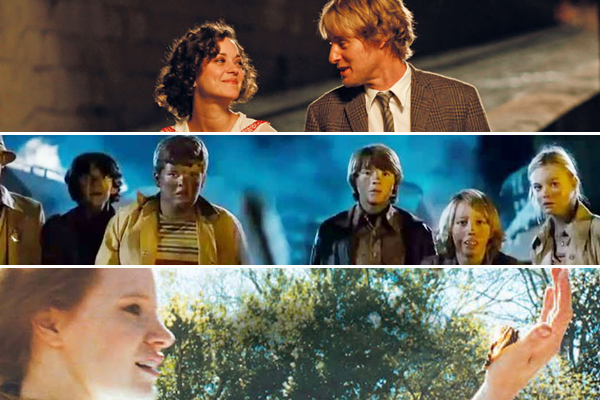
Stills from "Midnight in Paris," "Super 8" and "The Tree of Life"

“Nostalgia is denial — denial of the painful present,” says a philosopher (Michael Sheen) in Woody Allen’s surprise hit “Midnight in Paris.” “The name for this denial is Golden Age thinking: the erroneous notion that a different time period is better than the one [that] one’s living in. It’s a flaw in the romantic imagination of those people who find it difficult to cope with the present.”

If nostalgia is indeed a flaw, it’s one that many 2011 films and TV programs shared. Some of the year’s most talked-about movies and shows gave themselves over to some form of nostalgia — unabashedly reveling in, and idealizing, not just an earlier time, but the artists and artistic styles that we associate with that time, and the rush of emotion that accompanies our fantasies of same. Allen’s “Midnight in Paris” — his top grossing movie ever — is Exhibit A. It’s an immensely likable reworking of his short story “A Twenties Memory” in which an Allen stand-in, screenwriter Gil (Owen Wilson), magically gets to travel back to the time of Ernest Hemingway and Gertrude Stein. But it’s merely the keynote address in a year of budget-busting, production-design-showcasing, time-tripping cinema and television, a year that invited viewers not merely to experience stories from another time but to slip into them with deep pleasure and savor their restorative power.

“Midnight in Paris,” “The Tree of Life,” “Super 8,” “The Artist,” “Tinker Tailor Soldier Spy,” “Hugo” and “The War Horse” were all, to some extent, about nostalgia — about wrapping oneself in the texture of some glorious past, be it an earlier period in a character’s own life or an earlier era in filmmaking. Some of the highest-profile TV — successful and unsuccessful — had nostalgia on the brain, wallowing in luxurious sets, costumes, hairstyles, music and slang from the early- and mid-20th century — even as they repeatedly told and showed us that things weren’t so great Back Then, whenever Back Then was. The short list includes the glossy but unsuccessful network series “The Playboy Club” and “Pan Am,” HBO’s “Mildred Pierce” and “Boardwalk Empire,” ReelzChannel’s “The Kennedys,” PBS’ “Downton Abbey” and “Brideshead Revisited” and “The Hours.” That “Midnight in Paris” quote sums then all up rather nicely. Superficially they’re all so different that it seems crazy to group them together — they vary in setting from the very early 20th century to the early ’60s, and their tones are all over the map: dramatic, melodramatic, droll, shticky, tragic, horrific, you name it.

But there’s something basic and significant connecting all of them, and I think the connection is more aesthetic than historical. It is, as Paul said, about the need to escape the present, and not so much about the particular of the past that’s being escaped into. It’s about tactility — a fear that the virtual world is displacing the real one, and a corresponding conviction that a cinematic or televised re-creation of the past — however stylized or “unreal” — can feel somehow more real than whatever we’re living through now.

To borrow a literary analogy, the texts of these productions were often overwhelmed by the illustrations; even as the plotlines showed us how cruel life could be, and how ignorant and venal the characters were, the viewer’s eye still feasted on those dresses! Those hats! Those cars! Those hissing vinyl records spinning on those elegant Victrolas! And of course the white beams of light slicing through cigarette-befogged darkness in movie theaters and casting black-and-white images up on big screens, images shots on honest-to-God film.

Martin Scorsese’s “Hugo” and Michel Hazanavicius’s “The Artist” both worshiped, even fetishized silent cinema, or more accurately, the idea of silent cinema, and the era that spawned it: a time of steam engines and big black automobiles and stony-faced men in hats and long coats. Like the boozy, smoky, wood-and-wool-and-brass tableaux of “Mildred Pierce” and “Boardwalk Empire” and ABC’s intriguing if ultimately unsuccessful “Pan Am,” these films were not so much about the historical particulars of a time or place as the re-created, fantasized texture of it. Anything prior to the 1990s could still be considered a remnant of the Industrial or Machine Age, an epoch in which things were physical and present — when they were indisputably and obviously there, and not some incredible digital simulation; when some person, or some machine run by people, made things, and when even popular culture was something you could touch, or that you at least knew you could touch: a book, a film, a record. Until as recently as 10 years ago, even television was shot on tape, and could (in a pinch) be cut on tape, with a razor blade and tape — just like film, or a construction paper collage.

That’s all gone now, or going away soon: This was the year that major camera manufacturers announced that they would no longer make new motion picture film cameras. This same year we learned that the days of film itself were numbered. Some sources claim it will be extinct by 2015. Major distributors just don’t see the point of producing it any longer, now that everything is being shot, edited and shown digitally. Major studios announced that they would begin phasing out rentals of actual film prints, because it was too expensive and bothersome to store, maintain and ship them — and besides, now that everything has been converted to ones and zeroes, what’s the point?

This was also the year that we started to hear very serious rumblings about the end of media as a physical object that one could hold in one’s hand: not just the vinyl records and 35mm film prints that old timers like yours truly love to blather on about, but the supposedly more cold and forbidding late 20th century versions, such as videotapes and CDs and DVDs. Those are on their way out, too, if reports — and the maneuverings of industry giants such as Netflix — are to be believed. It’ll all be virtual soon, an endless stream of data held on gigantic servers in undisclosed locations and “licensed” to us for private use on our computers and mobile devices and perhaps soon in the chips that will be installed on the brain stem of every American newborn, along with the port that allows them to jack into the Matrix.

“All men fear death,” says Ernest Hemingway in “Midnight in Paris.” “It’s a natural fear that consumes us all. We fear death because we feel that we haven’t loved well enough or loved at all, which ultimately are one and the same.” The film’s tone is rather jokey as he says this, but from the intensity in his eyes you can tell he’s not kidding — and if you read the words in plain black-and-white, divested of lush celluloid images and piquant music, it sure does feel like a line from a manifesto, or a lament.

Allen ultimately deflates the very nostalgia that his movie indulges; the film’s comic climax takes Gil and his girlfriend Adriana, a ’20s Frenchwoman, back to Paris during the Belle Epoque era, the period that she worships as brazenly as Gil worships the Paris of her own time. “I’m from the ’20s, and I’m telling you the golden age is la Belle Epoque,” she insists. But really: “Midnight in Paris” is not a hit because of the director’s clear-headed attitude about the blind worship of earlier, supposedly more interesting times. It’s a hit because of the clothes, the music, the cultural references and the comic star power of the Paris writers and artists we’ve read about in school. It’s a hit because it’s a warm bath in another era, and a blessed escape from this one.

J.J. Abrams’ Steven Spielberg pastiche “Super 8″ was not merely a paean to the filmmaker’s adolescence in the late ’70s and early ’80s — an era that spawned such early Spielberg classics as “Jaws” and “Close Encounters” and “Raiders of the Lost Ark” and “E.T.” — but a valentine to the last great age of analog media, the Carter-Reagan-Bush I era, when records were on vinyl and films were shot on film, and both could be looked at, lifted, touched. Abrams went so crazy re-creating Spielbergian, late’70s lens flares that there were times when the actors’ faces were partly obscured by horizontal bands of blue light. A telling moment at a drugstore showed the teenage hero waiting to get his Super 8mm film back; in the days — days!! — leading up to that glorious moment, he looked as anxious as a young father in some mid-20th century sitcom, pacing around in a hospital waiting room and smoking cigarette after cigarette until the doctor arrived with the good news. And while Abrams’ “Super 8″ was playing in multiplexes this past summer, Spielberg himself was finishing his epic “War Horse,” which is set during World War I but strains to evoke the shots, camera moves, music, pacing and tone of a 1940s Hollywood prestige picture. (During a recent New York preview screening, Spielberg said he was hugely influenced by 1940s John Ford films, particularly “She Wore a Yellow Ribbon” and “How Green Was My Valley.”)

“You’ll never be a great writer if you fear dying,” Hemingway tells Gil in “Midnight in Paris.” “Do you?”

“Yeah, I do,” Gil replies. “I would say it’s my greatest fear.”

A more ruminative, searching, open-ended take could be found in Terrence Malick’s “The Tree of Life,” a Proustian reverie by way of suburban Texas in the 1950s and ’60s. To watch this movie is to be completely immersed in the mind of another person: ostensibly the narrator, Jack (Sean Penn), but really Malick himself, a generous filmmaker who seems to be remembering his own past because he can’t remember anyone else’s. It’s a tough movie in some ways, filled with confusion, pain, regret and messy Oedipal resentments and desires. But ultimately the look and sound of the film eclipses all of that. What predominates is an overwhelming, at times helpless-seeming urge to escape this horrible, sterile modern prison of virtual being-and-nothingness, and go back to a more casually physical time, a time when you could stay outside all day and all night without your parents worrying about your being raped or doped up or kidnapped by sex slavers or organ thieves or converted to Shariah Law or whatever bugaboo is obsessing modern parents at this very moment; a time when you could fall down and scab your knees, tear-ass through woods and vacant lots, roll around in grass, even strap a poor frog to a rocket and then feel horrible about it later, then come home and clean the dirt out from under your fingernails and sit down to supper with Mom and Dad, who maybe didn’t know quite what to do with you, and perhaps even resented you at times, but loved you unconditionally.

Well, maybe not your parents, but somebody’s.

“The Tree of Life” ends on a beach that might represent the afterlife or that might simply be a metaphorical or figurative space — a place where all Jack’s most beloved fellow beings can gather in one place and just be loved, admired, embraced. It’s a place where the virtual becomes real and the dead return to us, if only for a moment. A place where everything is beautiful and nothing hurts.

“That’s what the present is,” Gil says in “Paris,” responding to the quote that opens this article. “It’s a little unsatisfying because life is unsatisfying.”

Continue Reading Close

TV’s best episodes in 2011

Set your DVR: In the first of a two-part slide show, we count down the top 20 specific shows of the last year SLIDE SHOW

(Credit: Monkik via Shutterstock/Salon)

View the slide show

If most sports is a game of inches, most TV is a game of episodes. That’s why, at year’s end, I always feel a bit weird compiling a list of the year’s best series: Even a great series can have a bad episode, or a string of them, and even inconsistent or mostly mediocre series can produce memorable, even great installments.

Back in 2005, when I was a TV critic for the Newark Star-Ledger, I started publishing a yearly list of the best individual episodes of scripted TV shows. I’m continuing that tradition here at Salon with a citation of my 20 favorite episodes of scripted comedies and dramas.

For suspense’s sake, we’re breaking my 2011 list into two installments. This week’s covers items 20 through 11 on my list; next Friday we’ll count down the top 10.

View the slide show

The best nonfiction TV of 2011

Forget "Real Housewives." From portraits of cultural masters to scary Occupy tales, these shows captured reality VIDEO

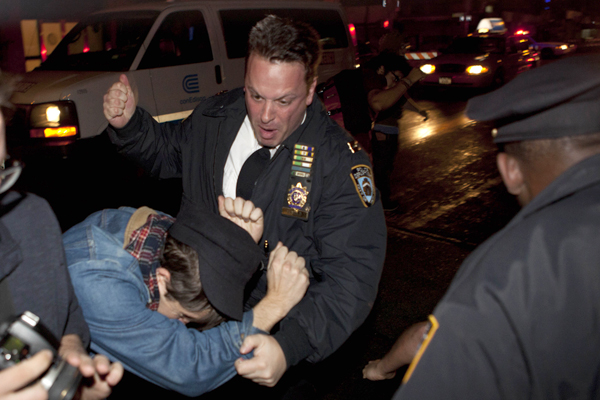
An Occupy Wall Street protester draws contact from a police officer near Zuccotti Park after being ordered to leave the longtime encampment in New York, Nov. 15, 2011 (Credit: AP/John Minchillo)

10. “Deadliest Catch” (Discovery)

The only so-called reality program to make my list, this Discovery Channel program is really a documentary series about the toll taken by relentless physical labor. The Cornelia Marie and its rivals fish icy waters for crab, hoping to up their totals, but the show itself really doesn’t care all that much about who’s ahead and who’s behind. It’s always more interested in the human stories — the most central of which found the Cornelia Marie’s crew struggling to muddle on after the death of Capt. Phil Harris last season. Cable is currently filled with series that desperately want to be “Deadliest Catch” — see “Ice Road Truckers,” “Swamp People,” etc. — but they tend to miss the atmosphere and deep attention to psychology that make this series so special.

9. “George Harrison: Living in the Material World” (HBO)

Martin Scorsese’s documentary about the quiet Beatle wasn’t on the level of his Bob Dylan documentary, “No Direction Home,” but then, very few documentaries are. This was fascinating stuff, though — an honest attempt to capture an unusually enigmatic pop artist without oversimplifying or misrepresenting him. Harrison’s second wife, Olivia, provided Scorsese with rarely seen photos and film footage, and perhaps as a result, there were parts where it seemed as though the director was treading lightly (the documentary was somewhat light on details about Harrison’s first marriage to Patti Boyd, though her affair with Eric Clapton was the subject of a long, piercing segment). But the depiction of Harrison’s spiritual and musical striving, his political activism, his second career as a film producer, and his somewhat prickly relationship with his fellow Beatles were all expertly handled. And Scorsese found an unusual storytelling rhythm that suited his subject, immersing the audience in long stretches of musical-visual reverie — basically long, uninterrupted, narration-free music videos — and then abruptly cutting them off, sometimes in mid-lyric, and cutting to an interview. The effect was like being in a blissful trance only to have it suddenly and cruelly shattered.

8.Prohibition” (PBS)

Watch Roots of PROHIBITION A Nation of Drunkards on PBS. See more from Ken Burns.

Documentarian Ken Burns is slowly but surely working his way through America’s defining historical subjects and pivotal eras, but damned if his tortoiselike doggedness doesn’t pay off more often than not. “Prohibition,” about the impact of the 18th Amendment on American life, was one of his best works, right up there with “The Civil War” and “Baseball.” It had everything one could possibly want from an epic historical work — big themes, great characters, period detail, and plenty of violence, sex, intoxication and modern-day resonance (without putting too fine a point on it, Burns showed how the hypocrisies of the anti-booze crusade presaged the war on drugs). Plus, the series was drily funny, pun intended.

7.The Education of Dee Dee Ricks” (HBO)

Personal portraits of cancer patients rise or fall for the same reasons as other stories: Either the characters and themes and execution are compelling, or they aren’t. This film by Perri Peltz is aces in every department. But while it gives the physical and emotional impact of cancer the attention it deserves, it’s ultimately about more than one woman’s determination to battle illness. The title character, a rich and conventionally attractive woman who finds out she has cancer, is moved to wonder what happens to women who don’t have her advantages. “It’s not only a medical challenge; it’s a moral challenge,” a doctor tells her. The short version: They suffer. Her casual narcissism punctured for good, Ricks remakes herself as an activist and philanthropist and radically revamps her life to match her own health challenges and the mission she’s embarked upon. This is not just a powerfully affecting personal story; it’s a parable of the 1 percent being forced to learn that other people exist, and that their lives matter, too.

6. “Harry Belafonte: Sing Your Song” (HBO)

An extraordinary portrait of an extraordinary man, “Harry Belafonte: Sing Your Song” is a smart, loving profile of the singer-actor-activist that stresses the last part of that hyphenate. Belafonte’s racial and political consciousness drove every significant decision in his career as both artist and public figure, and his convictions continued to evolve to meet new realities; he segued from anti-Jim Crow activism in the ’60s to anti-apartheid activism in the ’80s to a kind of border-shattering, ethnicity-transcending One World-ism in the 21st century. This documentary by Susan Rostock shows how much that decision cost him, turning him into an absent father even as it marked him as a great and influential person.

5. “Woody Allen: A Documentary” (PBS)

This documentary by Robert Weide is one of the sharpest, funniest, most revelatory installments of “American Masters.” It helps that the director, frequent Larry David collaborator Robert Weide, not only knows Woody Allen’s life and filmography but has thought about what they have meant in the greater scheme. The movie works as both a general survey of Woody Allen’s long and and prolific career as a writer-director-actor-comedian and as a knowing portrait of how comedy changed during the second half of the 20th century. Allen himself is unexpectedly forthcoming and available, speaking frankly about his neuroses, his romantic relationships (including the Soon-Yi scandal), his artistic obsessions, and his quantity-over-quality strategy (the natural evolution of his early carer as a joke writer and stand-up comic). At one point Allen shows the director a drawer full of scraps of paper on which he’s scrawled fragments of ideas for films — a modest trove of inspiration, like this documentary.

4. “If a Tree Falls” (PBS)

Director Marshall Curry’s look at arson-inclined members of the Earth Liberation Front is a troubling and troublesome documentary, intelligent and impassioned but obviously deeply conflicted. It’s been a long time since I’ve seen a movie about violent response to perceived injustice that seemed to be working out its own feelings right there on the screen while you watched it. The closest equivalent to “If a Tree Falls” might be Tony Kaye’s underrated and epically long documentary about the antiabortion fringe, “Lake of Fire.” It’s alternately enthralled and horrified by the actions of the ELF, a mostly young bunch of activists who decided — not without reason — that nonviolent protest against the wanton destruction of forests was getting them nowhere, and that they had to torch logging facilities and other offending structures to force the machine to grind to a halt.

3. “Where Soldiers Come From” (PBS)

Watch Where Soldiers Come From – Trailer on PBS. See more from POV.

This is a low-key and concise yet brilliant “P.O.V.” documentary by Heather Courtney, about a group of small-town friends who join the National Guard and get shipped off to fight in the war on terror. As I wrote in my review: “What makes ‘Where Soldiers Come From’ so unusual is the relaxed and intelligent way that it connects the private and public experience of war. Deftly switching back and forth between a tiny town in Michigan’s Upper Peninsula and the chaos of Afghanistan, the movie plays like an elegant real-life answer to ‘The Best Years of Our Lives’ and ‘The Deer Hunter.’ … These soldiers, their girlfriends and their families aren’t rhetorical abstractions to the filmmaker. They’re ordinary young people who viewed service during wartime as a career option and were forever changed by their experience.”

2. “Last Train Home” (PBS)

This Chinese documentary, which aired last September on “POV,” is one of the best movies of any kind that I’ve ever seen. I am convinced that if every working filmmaker or aspiring filmmaker would just set aside 90 minutes to watch and really absorb it, film and television would improve overnight. It’s that good. As I wrote in a Sept. 27 review, the movie is “about a Chinese family joining 130 million migrant workers as they journey from the city to their home in the country to reunite with their families at New Year’s. Directed by Lixin Fan, “Last Train Home” is not a travelogue, a polemic or a history lesson, but simply a story of people, told with elegance and care. It’s also a rare recent documentary that avoids every modern nonfiction cliché. It features no narration by moonlighting movie stars, no bouncy hand-held camerawork, no fast cutting, no clever graphics, no reenactments, no archival photos, no razzle-dazzle montages with ironic pop songs or Philip Glass music, no horrifying family revelations, and no competitions ending with a teary-eyed champion hoisting a trophy. All it does is point a camera and capture life as it happens.”

1. Occupy Wall Street videos of police brutality

I struggled with whether to even include this on my list, since technically none of the videos of police abusing Occupy Wall Street protesters really qualify as “movies” or “programs” in any conventional sense. Some of the most revealing (and often horrifying) images were captured on the fly with the tiny built-in lenses of camera phones, with rough sound that dropped out regularly and grainy images that bounced all over the place, usually because the camerapeople were being jostled by protesters or hauling ass down the street to avoid getting their skulls cracked open. For the first time since the Vietnam era, a mostly young group of Americans was out there risking injury and imprisonment to say what millions more people know in their bones to be true but couldn’t or wouldn’t articulate themselves: that the very rich are legally bribing our elected officials, distorting our tax code and our regulatory laws, and otherwise rigging the game, such as it is, to make more money flow into their pockets, year after year, oblivious to the fact that their greed is shrinking the middle class and turning the daily lives of increasing millions of Americans into a blandly degrading and endless slog, a smiley-faced American version of a Third World sweatshop. For daring to even begin to articulate these shapeless and protean but real resentments — to very, very briefly force cities to stop whatever mundane daily business they were doing, and think about this madness for a few days, or weeks — the protesters were subjected to the full force and might of the nation’s municipal police departments (and in some cases, pathetic campus rent-a-cops playing soldier dress-up). The message was crystal clear. This is what happens when you question the so-called natural order of things: You will be beaten, kicked, pepper-sprayed, shot with rubber bullets. Open your mouth and you get a boot in it. Offend the people who own this country, inconvenience the worker-bees during their daily commutes, and you’ll get stomped into pulp like grapes in a bin.

“It does not make you tough to hurt these people!” shouted a real soldier in a much-viewed viral video, chastising the toy soldiers of the NYPD who beat and pepper-sprayed unarmed protesters. But the powers that be are largely immune to shame; overwhelming, sadistic force is the whole point of the exercise, shock and awe in the streets of America. These images are not going away. They will exist forever in cyberspace. I’m deeply glad that everyone had to see them, however briefly, because now we’re all on notice about what sort of country we live in, if by chance any of us were ignorant or stupid enough to doubt it.

Continue Reading Close

Should “Homeland” have quit while it was ahead?

It's hard to imagine the Showtime series topping its debut season -- but a second is in the works anyway. VIDEO

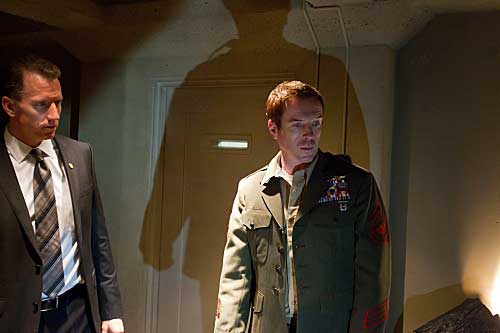
Moment of truth: Nick Brody (Damian Lewis) wrestles with destiny on the season finale of "Homeland." (Credit: Showtime)
The following article contains spoilers for the season finale of "Homeland," season one. Read at your own risk.

Bugs Bunny and Daffy Duck might not seem to belong in a review of a searing cable drama about terrorism, but bear with me, OK? In the climax of “Show Biz Bugs” (1957), in which Bugs and Daffy compete for the right to claim top billing in a show, Daffy decides he’s had enough of being bested by the rabbit and hauls out his trump card, self-immolation. “I must warn those with weak constitutions to leave the theater for this performance,” the duck says, then swallows gasoline, nitroglycerine, gunpowder, uranium and a lit match, and explodes. “That’s terrific, Daffy!” Bugs exclaims from the wings, over thunderous applause. “They loved it! They want more!” “I know, I know,” says Daffy’s ghost, floating toward the rafters. “But I can only do it once!”

Season one of “Homeland” was great, but are executive producers Howard Gordon and Alex Gansa about to try to do it twice — even though it’s a trick that can only be done once? I worry that the only major tactical error that “Homeland” made in its 90-minute season-ender was letting Marine Sgt. Nick Brody come out of his weird odyssey free and unharmed. If the producers had let Brody swallow the match, so to speak — and complete his suicidal terrorist attack, or get shot or otherwise neutralized in the State Department bunker, or be talked down by Carrie or his teenage daughter, Dana, or his wife, Jessica, and then sent to prison — the series would have still dazzled as a stand-alone while leaving us lots of questions to chew over. Brody’s statement on the phone to Abu Nazir — about how it might be more advantageous to have a fifth column influencing U.S. foreign policy rather than a sleeper agent plotting a bloodbath — makes dramatic sense, and it works as a setup for a second season, one set in the heart of executive-branch power rather than on the military-intelligence fringes. But it’s damned hard to imagine how a scenario like the one that Brody laid out to Nazir could produce TV more exciting than the season that we just finished watching.

I could be wrong, of course — and I hope I am wrong, because this was a mostly terrific debut season, maybe the most unpredictable single year of a drama that I’ve seen since the first season of “Breaking Bad.” And there were enough plot threads left dangling to give “Homeland” somewhere to go next year: not just major developments such as Brody’s intimate access to power and the effect of electroshock treatment on Carrie’s sleuthing abilities, but questions such as, “Who took the chip containing Brody’s suicide statement?” and “Who is the mole in Saul and Carrie’s department?” I feel pretty sure that the answer to that second question isn’t “Saul” — but if it’s not Saul, then who could it be? Not David Estes, surely — that would just be dumb, in a “24″ way. Maybe they’ll add more characters next year to widen the list of suspects.

The stories of Carrie and Brody complemented each other in ways that only become clear in retrospect. Because Carrie has been “home” much longer than Brody, it’s easy to think of her as somehow being better adapted, more settled, than the suspect she’s been pursuing, but she really isn’t, or wasn’t. Her mental illness and Brody’s wartime trauma and brainwashing aren’t exactly alike, but for dramatic purposes they line up nicely. Both characters are loners who have seen and done and survived things that most of us can barely imagine, and both wrestled with alienation and fears of fraudulence and worthlessness, impotence and maladjustment. They are both passing for normal and living in fear of being found out. It was only a matter of time before they found each other.

One of the many compelling aspects of their relationship, such as it was, is the question of how intentional Brody’s actions were with regard to Carrie and her feelings. I’m pretty sure that Carrie was a wild card in Abu Nazir’s diabolically clever Marine One/Marine Two terrorist attack plan, and Brody dealt with her very effectively, both in the moment (following her out into the parking lot when she showed up at that group meeting, for example) and long-term (at the end of last week’s episode, I was shocked that he ratted her out rather than coming over as he told her he would, even though I should have seen the twist coming). Ultimately I think it’s right to say that the core of their relationship was authentic, even though both of them were ultimately using the other.

Also: I hereby belatedly and officially retract my worrying that by having Brody turn out to be a big faker who really was in with the terrorists, “Homeland” was going to turn into a higher-toned cousin of “The Killing.” Everything that happened after that big twist was justified — although of course that’s not the same thing as calling it plausible. But these terms are relative anyway. I find the details of the terrorist attack quite plausible — including the way Tom Walker carjacked a woman who lived a couple of blocks away from the attack site, in a sniper-friendly high-rise apartment, and who just happened to have bingo that night — but I still have trouble buying that a man as emotionally fragile as Brody could have sustained so great a deception and made so many spontaneous, just-right choices that helped preserve it. (Dana’s list of her dad’s outrages — shooting a deer, “stepping out on mom,” beating up his best friend — was hilarious, practically an auto-critique of the show you were watching.) And I don’t think the vice president’s cozying up to Brody quite passes the narrative smell test. The master plan doesn’t work unless Brody can get right inside the veep’s inner circle, close enough that Marine Two can drive his entourage inside a bunker where Marine One (Brody) can blow him up. But first, the veep has to instantly love Brody.

But no matter: from start to finish, the cast of “Homeland” made me believe what I was inclined to doubt, which is ultimately the highest complement that one can pay to actors. Damian Lewis, Claire Danes, Mandy Patinkin, Monica Baccarin, and stealth-best-in-show candidate Morgan Saylor deserve the armloads of awards they’re sure to get for their performances. And whether the series tops itself, becomes an embarrassment, or just sort of runs in place until everyone forgets it’s on, we’ll always have this magnificent first year to marvel over and revisit.

Continue Reading Close

Page 1 of 63 in Matt Zoller Seitz