A man poses with his sign as he marches around the Capitol while protesters gather to demonstrate against a proposed bill by Governor Scott Walker in Madison, Wisconsin February 21, 2011 (Credit: Reuters/Darren Hauck)
Last year’s labor protests across the Midwest rattled the country. They shook Republican politicians who thought they’d have an easy time erasing union workers’ rights. They spurred thousands of rank-and-filers into action. They rejuvenated a beaten-down progressive movement and forced middle-class progressives to rediscover the language of class and workers’ rights. They inspired talk of tactics and ideologies that haven’t been tried since the 1930s. They laid the groundwork for the emergence of a new and vibrant protest movement that spread nationwide.
And they reminded Americans of the value of organized labor. People who’d never been part of a union stood and marched, rallied and voted, knocked on their neighbors’ doors to gather signatures on petitions for recall elections and a ballot referendum.
“For all its faults, the National Labor Relations Act established that it is the policy of the U.S. government to encourage collective bargaining,” Jacob Remes, assistant professor of public affairs and history at SUNY Empire State College, told AlterNet. “The New Deal established collective bargaining as a fundamental part of democracy–what they called industrial democracy. We talk about how the New Deal era has ended, but I think one of the great things about these fights is that they reminded people–politicians, pundits, the populace–that despite the decline of the rest of the New Deal, we still believe in at least this element of industrial democracy.”
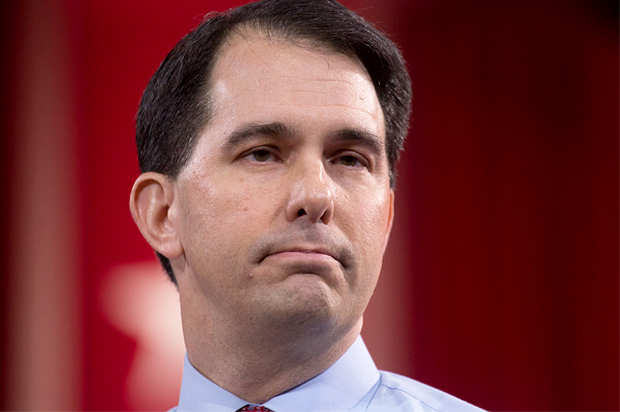
In Wisconsin, despite over 100,000 protesting in the streets of Madison and a weeks-long occupation of the Capitol, Governor Scott Walker signed Act 10 into law, stripping around 175,000 public workers of their right to bargain collectively with their bosses over anything but wages. Wisconsinites turned to recall elections to express their anger; they recalled two Republican state senators and are now working on getting rid of Gov. Walker.
“One of the things people we represent now see is the value of their collective bargaining agreements,” Marty Beil of AFSCME Council 24 told AlterNet. “Workers come in and they take for granted all the protections and benefits and processes. Now that there’s no collective bargaining agreement and management can do what they want with you, folks are getting a better understanding of the value of their union.”
In Ohio, state law allowed workers to get SB5, the anti-union bill, on the ballot as a referendum in 2011 and overturn it by a substantial margin. While that hasn’t stifled Governor John Kasich’s attacks on workers, it has certainly limited his ability to directly crack down on union power. The anti-labor right hasn’t rested, though, and it is still pushing other bills—and even a constitutional amendment—that would undermine unions in other ways.
It’s obvious that the conditions on the ground for working people in Wisconsin and Ohio are very different. AlterNet took a look at the struggles of public workers in both states—what it’s like to have lost collective bargaining rights, the endless string of new attacks on workers, and what people in both states are doing to fight back.
Missing Collective Bargaining in Wisconsin
For those watching Wisconsin after last year’s protests, most of the news has been of recall elections—last year, the recalls of two Republican state senators and this year’s recall of Scott Walker, his lieutenant governor and four more state senators, launched with a petition signed by over one million people.
But in the meantime, Walker’s Act 10 went into effect June 29, 2011, instantly stripping collective bargaining rights from some 175,000 Wisconsin public employees, and the recalls have yet to produce changes in the law.
According to information gathered by the Institute for Wisconsin’s Future, a state worker who earns $40,000 a year, under Act 10, has lost an average of $3,668 from her paycheck. “That’s $70 a week cut from a family budget, $70 weekly which cannot be spent at local stores,” they point out. They also estimate the loss to local economies caused by the pay cuts and hikes in the workers’ side contributions to health insurance premiums will be over $700 million—and that taking that money out of Wisconsin’s economy will lead to the loss of nearly 7,000 private-sector jobs in the first year of the governor’s austerity budget.
And it’s not just wages that have been lost. “Regardless of what happens with the recall, we’re probably not going to be able to completely roll back the increases in contributions on health insurance and pensions,” Jenni Dye, an attorney and candidate for Dane County Board, told AlterNet.
Meanwhile, under Act 10, unions are now required to recertify each year, holding an election that requires 51 percent support of all employees in the bargaining unit—even if some of them choose not to vote. This means that, unlike political elections in this country, any non-vote is counted as a “no.” In large bargaining units, made up of thousands of workers, Beil said, that makes recertification nearly impossible, and many of the unions didn’t try.
For those that did go through the recertification process, Act 10 placed extreme limits on what they can bargain over—wages only, up to a capped increase at the consumer price index. (The AFL-CIO noted that there is no such cap on non-union workers’ wage increases.) Vacations, benefits, working conditions, sick days, overtime—bargaining for any of that is expressly forbidden.
Now Walker has even refused to negotiate with the unions willing to jump through all these hoops to comply with his law. The Milwaukee Journal-Sentinel reports that two of the unions, the State Professional Education and Information Council #1 and the Wisconsin State Attorneys Association, have filed unfair labor practice complaints against Walker’s administration because it has refused to set a date for negotiations–and as many as four other unions might also file suit. These unions have gone through elections, finishing, according to Beil, in December of last year, and have been trying to get Walker to come to the bargaining table ever since. Dye said that Walker’s refusal to negotiate proves that his goal was always “to see an end to collective bargaining, period, in Wisconsin.”
Beil represents, among others, workers at the state’s correctional institutions, who are openly being told by their bosses that they simply have no union anymore. Yet the unions keep fighting for the workers, even without official recognition. AFSCME and others have to use the courts or administrative hearings to fight for the workers. Beil called it “a campaign of suppression and intimidation.”
Beil told a story of guards at a women’s correctional facility, who get sent along with inmates when they have to go to the hospital to hold a “vigil.” If one of the guards has to use the bathroom while waiting, they are now required to call the prison, get a replacement sent out, and not use the bathroom until they have returned to their post at the prison. “Workers are every day subject to this kind of abuse and degradation. There’s absolutely no dignity in the workplace anymore,” he said.
Wisconsin’s teachers, are also feeling the loss of their protections at work, with new handbooks replacing their old union contracts, containing strict and arbitrary rules on dress code and restrictions on their outside-of-work activities. In New Berlin, teachers reported [PDF] that not only were workdays for teachers getting longer with no pay increases, but that teachers must adhere to a dress code that includes skirts below the knee, no jeans, no open shirts, and that they can be dismissed for the crime of having students as “friends” on Facebook. They are also required to report any traffic incidents or tickets to their school district.
“’Moral turpitude’ is a standard [officials] are trying to now use in very vague ways,” Dye said.
And because Act 10 expressly forbids collective bargaining, Dye noted, some districts are worried that if they collaborate with teachers to design an employee handbook that is fair to all, they could actually be in violation of the law.
But workers haven’t given up, and are finding new ways to fight despite the loss of their union protections. “The decertified unions in Wisconsin are in some ways a return to a world before collective bargaining was the sine qua non of a union. This is scary, certainly, but some unions might find it liberating. It allows them the opportunity to experiment with new ways of building power,” Remes pointed out.
In Madison, the teachers’ union, Madison Teachers Incorporated, is playing a large role in school board elections, because those school board officials once in office have the ability to write rules for the teachers. Dye, who decided to run for office after being deeply involved in last year’s Capitol protests and occupation, noted, “It’s even more important that we have strong candidates and strong elected officials on school boards, county boards, because now those officials have so much more power and control over our public employees.”
Dye and others like her, running for office around the state or joining up with insurgent campaigns as organizers, are part of a movement that is determined to bring some rights and respect back to Wisconsin’s working people. “It’s actually kind of difficult to have a sense of the real movement spirit that is part of the day-to-day life here on the ground,” Peter Rickman, a union organizer and former leader of Wisconsin’s Teaching Assistants Association, told AlterNet. “We’ve gone from feeling like the right-wing is ascendant, to now–not only have we staged a dramatic fight-back at the Capitol, but collective action is a part of everyone’s day-to-day lives.”
Rickman pointed out that the organizing happening now is bringing together community groups, political organizations and unions, building new organizations (many under the umbrella of We Are Wisconsin) that can last beyond one protest or one election cycle. “We do rallies and we do protests and we do direct action in addiction to voter contact. We have strength in numbers, the 1 percent has the money,” he said.
The logo that became ubiquitous during last spring’s protests, the state of Wisconsin redesigned as a blue clenched fist, is still everywhere, Rickman said, a sort of talisman for those involved in the movement. “When you have the blue fist button folks will come up to you and say ‘Here’s what I’ve been doing, what are you up to?’ We have a real social movement on the ground, and it involves everyday people.”
Beating Back Mini-SB5s in Ohio
In Ohio, state law allows for a “Citizens’ Veto“ of a law passed by the legislature and signed by the governor—and the citizens took advantage, first gathering 1.3 million signatures on a petition to overturn Senate Bill 5, the anti-union law, 6,000 volunteers dancing them in a parade down to the Secretary of State’s office, and then resoundingly defeating the law in an off-year ballot referendum that saw record voter turnout.
“It got people to start thinking about the role of labor in Ohio,” Brian Rothenberg, executive director of ProgressOhio, told AlterNet. “You can almost thank John Kasich and the Republicans because it woke up a lot of Ohioans who had been bombarded by talk radio and had forgotten what labor meant to them.”
But Kasich and Ohio Republicans—and even some Democrats—aren’t done trying to eliminate union power just yet. Jason Perlman of the Ohio AFL-CIO told AlterNet that they’re seeing attempts around the state to revive bits and pieces of SB5 in local legislation, attacking workers’ rights by dribs and drabs.
One development is a new plan to overhaul Cleveland’s schools—and like the emergency manager provisions in Michigan, give officials the power to break existing contracts with workers. “Really, if this happens, they can do what they want, no contract has meaning, the school board has no more power of authority. It’s a little authoritarian in its concept,” Perlman said.
Workers are still facing pressure to take pay cuts (the same rhetoric around “shared sacrifice” hasn’t gone away) and many have faced cuts to their benefits as well. Perlman noted, “I think people are still unfortunately confused as to what they perceive a public employee actually making. The other side did a very good job of portraying public workers as overpaid and underworked.”
The Dayton Daily News reported that five local governments stopped paying 100 percent of their employees’ insurance premiums in 2011, requiring employees to contribute part of the costs. In the city of Moraine, unions have agreed to pay freezes, job cuts, and the city has doubled the deductible on its employees’ healthcare plans. Public employees have been making concessions on their contracts for years, Perlman noted, but they understand that right now they still may have to give up a bit more to show good faith. “I’m hoping and believing that this is a one step back, two steps forward process,” he said.
But Rothenberg pointed out that in Ohio, at least, the employees still have a seat at the bargaining table, and that has an impact on the entire economy; when union workers get better wages, it helps set the standard for non-union workers’ pay as well.
Meanwhile, while union workers are giving up hard-won wages and benefits, others in the state are pushing for a misleadingly named “Right-To-Work” law—they’re working to get the provision, which defunds unions by allowing employees represented by a union not to pay the costs of representation, passed as a constitutional amendment. To get an amendment on the ballot this year, they need around 381,000 signatures by July 4—which Perlman said seems unlikely. And, he noted, even many Republicans have distanced themselves from the proposal, which is being pushed by Tea Party groups and the Associated Builders and Contractors of Ohio.
While the anti-union crowd might be having trouble getting signatures together for their no-rights-at-work agenda, Rothenberg said that the progressive and pro-labor coalition that overturned SB5 is in great shape, having just collected signatures to redo how redistricting is done in Ohio. And Perlman appreciates the help from community groups. It’s nice to see people who aren’t union leaders discussing the benefits of unions, he noted. “When people see the head of a labor union talking about the good things they do, of course he’s going to say that.”
Beyond the benefits of unions in the workplace, though, Rothenberg argued that part of the reason Ohio is in a better place right now is that it is not reliant on politicians—the citizens had to find other means by which to fight their governor’s regressive agenda. “The lesson of Wisconsin and Ohio is that those citizens can be organized and they can make a difference regardless of who’s in power.”
In both Wisconsin and Ohio, what started as an attack on public employee unions that a couple of Tea Party governors thought they could sneak past the public has turned into a vibrant people’s movement. Perlman pointed out that for a long time, workers had grown used to a middle-class lifestyle and were distanced from the fights of the labor movement that had won them decent wages and benefits in the first place. The attacks they’ve faced in the past year, and particularly in Wisconsin, the struggles workers face every day now that they have lost collective bargaining, have woken them up to the reality that the other side wants to eliminate all their rights.
“For a long time the American worker has had it good enough, they’ve had something to lose,” Perlman said. “I think people are finally starting to realize that we no longer have it good enough.”
Not content to let Wisconsin Gov. Scott Walker and Ohio’s John Kasich get all the fame (and recall elections, and ballot referenda) for their attempts to curtail union workers’ rights, a new crop of GOP governors and state legislators have jumped into the fray and proposed their own anti-union bills in recent weeks.
Along with South Carolina’s Nikki Haley and Indiana’s Mitch Daniels, Arizona’s Jan Brewer, not content with making her state the least friendly to immigrants and people of color, has decided to get in on the union-busting action as well, introducing a bill that makes Walker’s and Kasich’s attacks on public workers look mild.
Brewer, the Republican left in charge of the state after President Obama tapped Janet Napolitano to be his secretary of Homeland Security, has been planning anti-union moves since last spring with the backing of the Goldwater Institute. (Named for Barry Goldwater, the think tank pushes for “freedom” and “prosperity” — as long as it’s not the freedom or prosperity of state workers.)
It’s not just Arizona’s right-wingers who are pushing Brewer to beat up on unions – John Nichols at the Nation notes that Walker may have had a hand in helping push an anti-labor agenda, and the American Legislative Exchange Council (ALEC) is involved. In a speech to the right-wing policy shop behind many of these anti-union bills last year, Brewer complained about her inability to fire government employees and supervisors’ difficulty “disciplining” workers.
This week, the Republicans in the state Legislature introduced moves that would make collective bargaining for public workers completely illegal. Here, we break down what you need to know about Brewer and the GOP’s anti-worker agenda.
1. The bill would go further than Wisconsin’s, making collective bargaining completely illegal for government workers.
SB 1485, the first of the bills to take on union rights, declares that no state agency can recognize any union as a bargaining agent for any public officer or worker, collectively bargain with any union, or meet and confer with any union for the purpose of discussing bargaining.
While Wisconsin’s law bans public employees from bargaining over everything but very small wage increases, Arizona’s bill bans collective bargaining outright and refuses to recognize any union as a bargaining unit. Existing contracts with unions will be honored, but not be renewed if this bill passes.
2. Arizona includes police and firefighters in its ban.
Scott Walker famously exempted public safety workers — police officers and firefighters — from his attacks on union workers, but many of them joined the protests anyway. In Ohio, John Kasich’s bill, overturned by his constituents this past November, included the police and firefighters in its elimination of bargaining rights. Now Brewer and her legislative compatriots have decided that police and firefighters should lose their bargaining rights as well.
Arizona, as Dave Dayen at FireDogLake noted, “is changing to a purple state because of an extreme legislature which first demonized immigrants, in what could start a backlash among the Hispanic community. Now, flush with that success, the legislature will demonize police and firefighters. It’s not exactly a textbook strategy for a lasting majority.”
Walker’s attempt to divide and conquer public sector unions by attacking some and not others didn’t work; perhaps that’s why later attempts at similar bills didn’t bother giving special treatment to public safety workers. But as we saw in Ohio, the support of the traditionally conservative police and firefighters’ unions helped unite the state’s voters and bring out record numbers to vote down the bill. Arizona seems to be asking for trouble by targeting police and firefighters with this bill.
3. The state would ban government employers from deducting union dues automatically from a worker’s paycheck.
Not content with banning bargaining, the Arizona legislature is also out to make sure unions can’t collect any money for the work they do. SB 1487 inserts language into existing law that says “This state and any county, municipality, school district or other political subdivision of this state may not withhold or divert any portion of an employee’s wages to pay for labor organization dues.”
This move obviously is aimed to hit unions right in their wallets — taking away the funding they need in order to do more organizing, and carry out political activity.
4. Arizona would ban the government from allowing employees to do union work on company time.
Laura Clawson at Daily Kos notes that in addition to the other measures, Arizona’s Republicans also want to eliminate “release time,” a practice “in which union stewards and other representatives are allowed to spend work time on certain union functions, such as contract negotiations or handling grievances.”
Union stewards and representatives are full-time employees who take on additional responsibilities on top of their jobs—a move like this makes it harder for them to carry out those responsibilities to their fellow workers without fear of facing sanctions from their bosses. Specifically banned by the bill, SB 1486, are “activities that are performed by a union, union members or representatives that relate to advocating the interests of member employees in wages, benefits, terms and conditions of employment.”
5. Brewer also wants to eliminate any job protections for workers, buying them off with pay raises.
Brewer plans to offer public workers their first pay raise in years, a 5 percent increase. The tradeoff? They have to opt out of job protections some of them currently enjoy, including the right to appeal demotions and protection from being fired without cause – they have to become at-will employees.
Like most “merit pay” arrangements, this one sounds good at first — hard-working people will get raises! — but workers see right through it. Odalys Hinds, who works in the state health lab, told the Arizona Republic, “No way will I do it. I won’t take it — it basically would take away our rights. My retirement’s gone up. My insurance has gone up. There’s going to come a day when I’m going to have to pay the state to work.”
6. Arizona is already a “right-to-work” state
The kicker to all this? Arizona workers already enjoy fewer protections than those in Ohio and Wisconsin. Arizona is a so-called right-to-work state, where unions cannot collect a fair share of the direct costs of representation from workers who opt out of joining the union — even though the union is compelled to represent all workers.
This means that unlike the Midwestern states, Arizona has few union members already and that means there are fewer people who are likely to be outraged and moved to protest by attacks on collective bargaining. Yet Brewer, the Goldwater Institute and the Republicans in the Legislature aren’t content with what they have and are moving to make public sector unions all but irrelevant, by making it nearly impossible for them to do their jobs.
Arizona now has a strong Republican majority in the Legislature, and so barring a change of heart by a handful of GOPers, the anti-union measures are likely to pass. But if Brewer continues to antagonize working people in her state, John Nichols notes, Arizona does have something else in common with Wisconsin — provisions that allow for the recall of the governor and state legislators, provisions that were used just last year to remove Russell Pearce, the state senator responsible for the state’s hideous anti-immigrant law, from office.
Underneath the now-iconic red sculpture at Liberty Plaza, now cleared of tents and ringed by barricades plastic-cuffed together, several “students” stood draped in fake chains over their caps and gowns, brandishing debt bills instead of diplomas.
They might have been performing, as part of a press conference unveiling a national student debt refusal pledge, but the dramatization of what happens upon graduation to many of America’s students was spot-on. Despite a few moves by the Obama administration in past years and even recent months to lessen the burden of student loans, many graduates are still saddled with more debt than they can conceivably pay back and have little hope of finding a good job in the current economy.
Monday saw protests against tuition hikes on either end of the country; at New York’s Baruch College of the City University of New York, the Board of Trustees voted for another tuition hike and according to reports, a student kicked off the day’s actions by burning his Sallie Mae student loan bill. University of Californis, Davis, responding to the brutal pepper-spraying of students last week, also kept its focus on economic issues, chanting, “No cuts, no fees, education must be free,” and reportedly shutting down the financial aid building.
The talk of debt refusal or debt strikes, as I reported just recently, has ratcheted up along with the momentum of the Occupy Wall Street movement, as the occupiers made the connection between Wall Street bankers and student debt — right down to the bailouts, as student lenders received a bailout of their own from the federal government, which handed over billions in taxpayer dollars to the banks and lenders in exchange for loans that could no longer be sold on the secondary market.
Recent grads with mountains of debt know that without their tax dollars, these big lenders wouldn’t continue to exist. They want their loans forgiven or at least written down, and they think the lenders should pay. The principles laid out on the OccupyStudentDebtCampaign site call for free tuition at public universities, an end to interest on student loans, and for private and for-profit institutions to open their books so that students know how their money is being spent.
As of 2010, the government directly lends up to $31,000 to students for their undergraduate years. Yet that total isn’t even a year’s tuition at many schools, let alone enough to cover living expenses and textbooks for four full years. As the economic crisis continues to stifle the economy and strangle state budgets, even public universities are seeing tuition hikes — the students pepper-sprayed at U.C. Davis were protesting a proposed hike in their tuition a full 81 percent in four years. So many students turn to private lenders to fill the gap between what the government will provide and what they realistically need to pay for school. Though those private lenders no longer get direct government subsidies, many of them still have billions on the books in federally subsidized debt, and even the private loans (often at variable interest rates, vulnerable to hikes when borrowers can least afford them) still have protections unlike almost any other type of debt, as student loans cannot be discharged in bankruptcy.
Jon Walker at FireDogLake described the now-defunct federally subsidized private lending system thus:
“The Federal Family Education Loan Program (FFEL) was a classic lemon socialism program. It provided a nearly total government guarantee for ’private’ student loans. If the loans did well, the large financial companies got the profit, if they didn’t preform, the government socialized the loses. These broken incentives spurred risky behavior from the companies.”
“Student loans are among the most lucrative you can make because the borrower has no protections and the creditor is afforded extraordinary powers,” noted Andrew Ross, New York University professor and labor expert, at the student debt press conference. Ross spoke, too, of the need for professors to work in solidarity with the students on this issue since their salaries are paid through the debt of their students.
“Our public universities, once the democratic gold standard worldwide, are increasingly and ruinously dependent on debt financing from the people they are supposed to serve,” he said.
So just who are the lenders profiting from the massive student debt load?
You already know some of the names: JPMorgan Chase, U.S Bank, Citi, Bank of America. Others are non-bank student lenders. What all of them have in common, though, is that their practices are shrouded in secrecy. A recent release from the Consumer Financial Protection Bureau, the brainchild of now-Senate candidate Elizabeth Warren, called for an investigation into the industry:
“It has been operating in the shadows for too long,” Raj Date, the Treasury Department adviser who is running the Consumer Financial Protection Bureau, said in a release. “Shedding light on this industry will benefit students, lenders, and the market as a whole.”
Here, we take a look at five of the lenders raking in the cash off the backs of the U.S.’s students.
1. Sallie Mae
The SLM Corp., better known as Sallie Mae (and originally called the Student Loan Marketing Association), is the largest student lender in the United States. It was created in 1972 as a government-sponsored enterprise, but fully privatized in 2004. It also services loans provided by the federal government, and holds, services and collects loans made under the now-discontinued Federal Family Education Loan Program (FFELP), the federally subsidized private lending program that was recently replaced with direct federal loans. These loans were, up until the end of the program, Sallie Mae’s main source of income.
And just like in the mortgage market, Sallie Mae has been accused of making “subprime” loans to borrowers who will be attending for-profit or trade schools that have low graduation rates, making the loans a bad risk. Stephen Burd at the New America Foundation’s Higher Ed Watch wrote in 2008, “Still, Sallie Mae won’t overtly admit fault and poor management. Instead, the company and its promoters on Wall Street have been testing another explanation for its difficulties. An analyst with CreditSights Inc., in New York, recently tried it out when he told Bloomberg.com that the loan giant had been ‘blind-sided’ by the rising default and delinquency rates on the subprime private loans it had made to low-income and working-class students attending trade school of dubious quality.”
Like all of the student lenders, in 2008, Sallie Mae got what amounted to a sizable government bailout from the Ensuring Continued Access to Student Loans Act (ECASLA), which the Campaign for America’s Future described in a report as one that “allowed lenders like Sallie Mae to sell loans back to the Department of Education through a number of loan-purchase programs.” On the strength of that government bailout, the company’s profits surged to $324 million.
The CEO of Sallie Mae, Albert Lord, according to CAP “has reaped more than $225 million from the student loan businessover the course of his career. In 2008, even as profits declined, Lord received $4.7 million in total compensation. He has used a portion of the proceeds to build himself a private golf course.”
Sallie Mae has spent millions lobbying against student loan reform, including lobbying the nonpartisan Congressional Budget Office, which made recommendations on the cost savings of the government’s switch to direct lending. Over the last three campaign cycles (2012, 2010 and 2008) Sallie Mae’s PAC has spent $1,583,557, favoring Democrats in ’08 and ’10 but so far this year favoring the GOP.
In 2010, when Citigroup decided to get out of the student loan business, Sallie Mae paid $1.2 billion for the rights to collect payments and service $28 billion in federally backed loans.
2. Wells Fargo
Wachovia and Wells Fargo were the third- and fourth-largest originators of federally subsidized private loans under FFELP in 2009, with $5.54 billion and $5.14 billion, respectively. After their merger, the resultant behemoth is the country’s second-largest private student lender.
As we reported recently at AlterNet, Wells Fargo reported profits of $12.36 billion in 2010, and is No. 23 on the Fortune 500, just above Procter & Gamble. Headquartered in California, the bank has $1.26 trillion in assets and $93 billion in revenues. And, of course, it got $25 billion in TARP funds from the government and borrowed another $300 billion through the Federal Reserve during the financial crisis, which it helped create — Wells Fargo is the country’s largest consumer lender and is the only one of the nation’s big banks that offers payday advance loans, which it calls “Direct Deposit Advance” and has direct financial connections to six of the top seven payday lenders.
The company has faced allegations of racial bias in its mortgage lending processes, though there’s no information about similar allegations of its student lending. Salon reported:
“Wells Fargo has a history of targeting vulnerable communities for risky financial products. At the height of the subprime lending mania in 2006, the bank was more likely to loan subprime mortgages to Latinos and African-Americans than whites, according to a September 2009 report by the Center for American Progress, a process known as “reverse red-lining.” For financially stable borrowers, the targeting was even starker: Middle-class blacks were four times more likely than middle-class whites to get a dangerous mortgage. Middle-class Latinos were nearly three times more likely.”
Wells Fargo is now offering a new fixed-rate private student loan, which would allow borrowers to lock in one rate for the life of their loan; however, the rates can be high — up to 14 percent for those attending community colleges or trade schools, or in other words, for lower-income borrowers.
In Minnesota recently, a group of Occupy-affiliated activists “mic-checked” Wells Fargo CEO John Stumpf, calling him out for his bank’s foreclosure and student debt policies.
3. Discover
After buying the remains of Citi’s Student Loan Corp., Discover Financial Services became the third-largest provider of private student loans. Best known for the Discover Card, of course, the company’s website proclaims:
“The company operates the Discover card, America’s cash rewards pioneer, and offers personal and student loans, online savings products, certificates of deposit and money market accounts through its Discover Bank subsidiary.”
According to Canadian Business magazine, of Discover’s $52.51 billion in total loans (as of May 31, 2011) $4.57 billion was student loans, up from $820 million the previous year — which reflects the buyout of Citi’s loans.
Harit Talwar, the company’s vice president for US Cards, said of student lending at a conference in May, “We really like this business. In the U.S., as you know, education costs are increasing much faster than income. And therefore, students need funding for tuition fees.”
Discover’s PAC has spent $2,221,136 over the last three election cycles on candidates, mostly to Republicans.
4. NelNet
Based in Lincoln, Neb., NelNet was founded in 1978 as the UNIPAC Loan Service Corp. and renamed NelNet in 1996. It reported net income of $165.5 million for three quarters of 2011, and has net student loan assets of $24.6 billion. Its press release states:
“In September 2009, Nelnet began servicing student loans for the Department of Education (Department) under a contract that will increase the company’s fee-based revenue as the servicing volume increases. At September 30, 2011, the company was servicing $44.6 billion of loans for 3 million borrowers on behalf of the Department, compared with $21.8 billion of loans for 2.5 million borrowers on September 30, 2010. Revenue from this contract increased to $12.8 million for the third quarter of 2011, up from $8.7 million for the same period a year ago.”
That’s $12.8 million in a quarter for servicing federal loans.
The lender has been riddled with controversy; in 2006, Inside Higher Ed reported that NelNet had overcharged the government about a billion dollars. (They settled in 2010 for $55 million to resolve a whistle-blower lawsuit — which also targeted Sallie Mae.) And Higher Ed Watch reported in 2007, in a piece called “NelNet’s Friend with Benefits”:
“Amidst revelations this spring of industry wide kickbacks, improper inducements, and gifts from student loan providers to colleges and universities, Nelnet quickly shut down a Nebraska investigation into its activities by agreeing to provide $1 million to the state in support of a national financial aid awareness campaign.
….
As we reported two weeks ago, seeking higher office in Nebraska with Nelnet’s support can be a lucrative endeavor. Democratic Sen. Ben Nelson received almost $65,000 in the 2005-2006 election cycle alone from Nelnet and Union Bank executives and officials. This June, Nelson co-sponsored an amendment that would have sent $4 billion in financial aid earmarked for students instead to for-profit student loan companies like Nelnet. Nelson’s amendment lost 61-36.”
NelNet’s PAC has spent $398,731 on campaign donations since 2008, and it’s spent $2,780,000 on lobbying since 2007; its lobbyists have included Clark Lytle Gelduldig & Cranford, the firm recently outed by Chris Hayes on MSNBC as doing opposition research on the Occupy Wall Street movement.
In 2009, Chase held $11.1 billion in FFELP loans, not a huge amount when you consider its $2.29 trillion in current assets. Still, the giant has been accused of some shady lending practices.
“The House Education and Labor Committee says it has evidence that JPMorgan Chase paid five student aid officials to do work for the bank while they were still on their school’s payroll. JPMorgan Chase confirmed it did pay school officials to do work related to student loans, but the bank says it doesn’t do that kind of thing anymore.
The company says it has also stopped throwing lavish parties for university officials, like the $70,000 cruise in New York Harbor that student aid officers enjoyed in 2005.”
JPMorgan Chase spends lavishly on campaigns and lobbying as well, dropping $5.8 million in just the last year on lobbyists and having given $109,750 to Mitt Romney, $79,150 to Virginia Sen. Mark Warner, $55,750 to Tennessee Sen. Bob Corker, and $37,439 to Barack Obama.
And just recently, the bank was pushed to reinstate a deferment program for active duty military servicepeople, after NBC News reported on a family that “received a letter alerting them the bank decided to end the program and would no longer allow active-duty troops to delay paying their student loans, even if they were away at war.”