Sarah Karnasiewicz

No more gin and tonics!

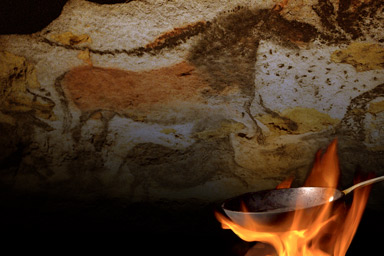
Labor Day is still weeks away and our summer cocktail repertoire is getting tired. Only you can help! Send us your favorite summer drink recipes -- and we'll pick a winner.

  • more
    • All Share Services

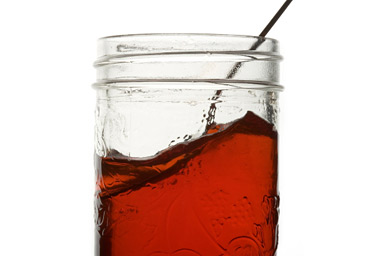
Sometimes an icy alcoholic beverage is the only remedy for the sticky, sweaty, late-summer blues. But what to pour? Rum and cokes? They’re so freshman year. Gin and tonics? Sophisticated, but a snooze. Summertime needs some new classics — and we need your help. Send Salon your favorite warm-weather drink recipes by cocktail hour on Friday, Aug. 10, and next week we’ll select the top contenders, assemble a panel of discerning drinkers to sample them, and declare the winners.

To enter: Submissions must be sent to skarnasiewicz@salon.com and should include both a recipe and an introductory paragraph describing the drink’s origins or inspirations, suggested food pairings, and most important, how many is too many. All cocktails will be evaluated within the following four categories: gin, vodka, rum and other. (Go wild!)

Recipes and photos of the winning cocktails in each category will be featured on Salon, and one grand prize winner will also receive a copy of “The Backyard Bartender: 55 Cool Summer Cocktails,” by Nicole Aloni.

So, readers, start mixing — and cheers!

Life beyond the lens

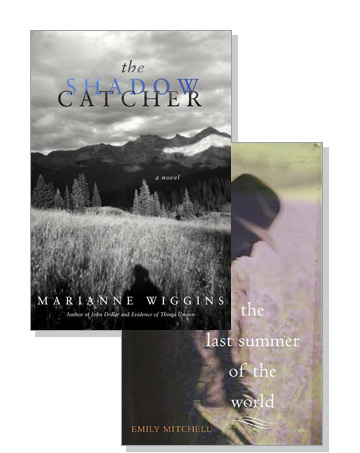
New novels frame two of photography's most compelling legends, Edward Curtis and Edward Steichen.

  • more
    • All Share Services

Life beyond the lens

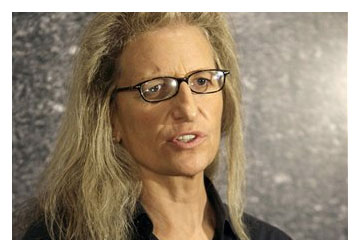
The most fascinating person in any given photograph is usually the one whose face is cut off, out of focus or turned away. We can smile and say cheese all we like, but it’s these mistakes, the shots snapped a half-second too late, that truly reveal, hinting at the unguarded lives beyond the frame. Two new novels — “The Shadow Catcher,” by Marianne Wiggins, and “The Last Summer of the World,” a debut by Emily Mitchell — zoom in on this periphery to explain and expand on the lives and loves of two of photographic history’s most complicated and compelling characters, Edward Curtis and Edward Steichen.

Like photographers, both Wiggins and Mitchell have chosen their subjects deliberately and staged their dramas with care, embroidering known history by promoting wives, lovers, mothers, sisters, colleagues and other walk-on characters to leading roles. But at the center of each of their tales is a solitary man, a cipher of sorts, who expresses himself most sensitively through the images he produces. Perhaps unsurprisingly, then, both “The Last Summer” and “The Shadow Catcher” are also cluttered with the clichéd debris of masculine creativity — the abandoned children and aggrieved wives, the epic visions, egos and doubts.

We have long since given up on the idea that photographs serve up impartial truths and embraced them as art. But is it any less naive to believe we can glean a glimpse of the men behind the lens by looking at what they placed in front of it? Of the two novelists, Wiggins makes the most impassioned case for trying. In “The Shadow Catcher,” when Clara, the young woman who will become Edward Curtis’ wife, first happens upon his photographs hidden away in a barn darkroom, she shudders with sudden insight: “The photographer was acting for you with his eyes, acting as your own eyes would. It was a contract between the artist and the viewer that few painters could make, and it was deeply personal, she saw, because she could not look at any photograph of Edward’s without thinking about Edward, himself, about the man behind the camera, about how and why he had positioned himself where he had.”

Still, readers who come to “The Shadow Catcher” expecting a linear biography of the “man behind the camera” will be sorely disappointed. Instead, the author weaves vignettes from Clara and Edward Curtis’ stormy courtship and divorce with a magical-realism-tinged meta-narration told by “Marianne Wiggins,” a Los Angeles screenwriter with some lost-daddy issues of her own, who is trying to sell — you guessed it — a script based on her novel about Edward Curtis.

As a plot device, Wiggins’ fictive alter ego teeters between inspiration and affectation, but it works most nimbly when the author uses (the fictive) Wiggins to challenge the romanticized myth of Curtis’ life, and draw out a thornier, more authentic truth. No one is off limits from Wiggins’ skepticism, including the Hollywood film industry, which comes in for a memorable bit of skewering in an opening scene between Wiggins, her agent and a producer, in which the first, and most vital, questions asked about Curtis (now, the potential movie hero) are: How tall was he and did he have blue eyes? (The answers: 6 feet; yes.)

Most people know Curtis (1868-1952) as the visionary behind “The North American Indian,” a 20-volume photographic chronicle of what he dubbed the “vanishing races” of the cowboys-and-Indians-era West; even today, his images are a staple of the Americana poster and postcard trade, praised earnestly for the melancholy “dignity” of their subjects’ deeply lined native faces. But “The Shadow Catcher” does not concern itself with that Curtis. Wiggins is fond of the John Ford line, “When the legend becomes fact, print the legend” — but her instincts seem quite the opposite. Instead (both as author and meta-narrator), Wiggins stalks the character behind the camera, chasing after the facts Curtis has left out of his frame.

“The Shadow Catcher” is no biography; it is a quest, across years and state lines, and through her own meta-narrator’s life, for the real Curtis and the manifest-destined, road-wandering, lost fathers like him, who have been obscured beneath a sentimentalized and shellacked American myth.

Luckily for all of us, that story is richer than any Oscar-hungry Hollywood biopic, and reveals as much about the flawed nature of photography as it does about the fallible hearts of men. The secret truth behind Curtis’ photographs is that despite their grave beauty, they are essentially fictions: born out of a rebellious spirit of frontier adventure, yes, but also funded by J.P. Morgan and other titans of big business. And though they purport to capture the “last days” of America’s great wandering clans, Curtis’ images were not shot in the mid-19th century as they might appear, but early in the 20th, years after the railroads and the government had forced Native Americans onto reservations, when their tribes were not so much “vanishing” as atrophying. To service this theatrical vision, Curtis was not above dressing his subjects in apocryphal costumes or staging his scenes so that cars, clocks, waistcoats — and any other giveaway of modernity — were obscured or eliminated just outside the frame.

Wiggins’ assessment is blunt: “[Curtis' photos] are beautiful to look at. But they’re lies. They’re propaganda.” And ultimately, the mythos they fuel is not just the lie of the elusive American West, but also the fiction of the photographer as the sympathetic romantic visionary, that perfect marriage of modern technology and soul.

Though he did not shoot the great West, Edward Steichen, the photographer at the center of Emily Mitchell’s debut novel, “The Last Summer of the World,” was equally influenced, and ultimately defined, by the era in which he lived and worked. Like a European, lost-generation equivalent of Curtis, Steichen was a prodigious image maker and precocious success story — as well as a rumored philanderer and absent father.

The bullet points of his story are well known: Steichen climbed the ranks of the early 20th century art world alongside luminaries like Auguste Rodin and Gertrude Stein, along the way founding the photo-secessionist movement with Alfred Stieglitz, and becoming a curator of photography for the Museum of Modern Art, where he staged the immense and groundbreaking exhibit “The Family of Man” in 1955.

While Steichen’s life offers a full catalog of characters and dramas, Mitchell wisely chooses to focus in on some of his biography’s richest, and least traveled, terrain: the summer of 1918, in the thick of the First World War, when Steichen was stationed in France, serving as a reconnaissance photographer. Indeed, the grim routine of the Great War provides Mitchell’s story with a precise, sober backdrop that makes Wiggins’ expressionistic wanderings feel downright hyperactive.

Mitchell’s readers first encounter Steichen after he has been accused of adultery, stripped of his home and children, and watched his wife (also, coincidentally, named Clara) sue his alleged mistress for alienation of affection. Like Wiggins, Mitchell employs her protagonist’s photographs as a stylistic device, heading alternate chapters with titles from his real body of work and using those photographs as the Rorschach tests from which she spins speculative narratives. Though some of those scenes feel a bit calculated and pat (must we really witness Auguste Rodin humping his mistress on a studio floor and hear him expound on the “needs of the body”?), for the most part, Mitchell exhibits admirable restraint as she interweaves contemporary scenes from Steichen’s soldier life with his awakening as an artist and his romance and unraveling marriage to Clara.

When their story begins, Clara has fled their idyllic home in the French countryside and returned to America. Longing for escape and desperate to make his craft have meaning in an upside-down world, Steichen has joined the war effort — but any hope for escape from his troubled past becomes plainly impossible as soon he finds out that his accused mistress is also on the front, having returned to work as a nurse.

Despite the careful mythology built up around these not exactly fictional heroes, it is once again the peripheral characters — the wives, the war and, especially, the photographs themselves — that deliver the most persuasive insights and emotional wallops in both novels. How is it that two men of such penetrating vision can remain so elusive themselves? It may be that, when working with photography, the real, everyday present of artists’ lives is eclipsed by the allure of the frozen past.

Mitchell hints at that possibility through a frequent and dramatic use of flashbacks, each of which unfolds like a photograph enchanted into life. In “The Last Summer of the World,” Steichen’s present is peopled with broken soldiers and broken hearts, but in the past world of his photographs, his friends are vital, his country is peaceful, and his family is intact. The characters of Edward and Clara are increasingly constructed out of the flickers we see of their former selves. Who is more real, the happy maiden behind the piano, eyes still filled with flirtatious admiration for her ambitious young love, or the wife who stands in a disarrayed room in an old farmhouse, looking at her husband’s photographs, cursing that their lives could not be so graced?

It is a mournful Clara Steichen who perhaps puts it best, when, toward the end of “The Last Summer of the World,” she says of her husband’s work: “Here is his vision, elaborated in hundreds of discrete moments, plucked from time and fixed on paper; here are the things he chooses to tell the world about itself. It is a beautiful vision, one in which nothing is ugly and broken, nothing dull and repetitive; the pictures he makes are of a world that can be understood and can therefore be loved without reservation. But she knows there is another version; there are things his vision omits to show.”

Both Mitchell and Wiggins pay homage to works of genius, beautifully rendered, even while they (and we) remain fascinated by the men behind the memories and the lives behind the art.

Continue Reading Close

What else we’re reading

Rosie O'Donnell, stillborn birth certificates and one mother's expensive summer vacation.

  • more
    • All Share Services

Rosie O’Donnell, radical hero? In the years since leaving her Emmy Award-winning talk show, Rosie O’Donnell has become the “most visible lesbian in the country” and single-handedly opened up daytime television to candid dissent, writes Kera Bolonik in the Nation. But until she stops cracking Chinamen jokes and cleaving to 9/11 conspiracy theories, says Bolonik, she won’t be the public critic the left needs.

“Fetal personhood” and abortion rights: An Arizona woman has “mounted a grassroots campaign … to get the government to give parents who deliver stillborn fetuses the option of receiving a ‘certificate for stillborn birth’” — but abortion rights advocates fear those efforts “could aid anti-choice groups as they attempt to chip away at or eliminate abortion rights,” reports Allison Stevens in the American Prospect.

The $16,000 summer vacation: On the Huffington Post, writer Stephanie Losee, who is paying $1,390 a week in childcare so that she can work while her three children are on summer vacation, makes a case for revising the academic calendar.

The “smoke and mirror science” of gender testing: USA Today reports that a new crop of mail-order blood and urine tests, including one called “Tell Me Pink or Blue,” promise expectant mothers answers about the gender of their children just eight weeks into pregnancy.

Continue Reading Close

Summer reading, summer eating

Elizabeth David's classic "Summer Cooking" is as fresh and enchanting today as it was 50 years ago, when seasonal food was still a subversive idea.

  • more
    • All Share Services

Summer reading, summer eating

There’s nothing like midsummer in New York to make a person acutely aware of the deprivations of city life. Does anyone grow up and move away, only to yearn for swarms of roaches and sweltering subway stations? For this country-mouse transplant, summer and the city are a cocktail that provokes the sincerest kind of longing; campfires, salty corn on the cob, fried clams and cans of beer sipped while dangling your toes in a dark lake — these are the fabric of my summer fantasies. But short of a fairy godmother with a shore house, I’ve found only a few quotidian treats capable of breaking the humid gloom: a midnight thunderstorm, maybe, a mound of lemon ice in a paper cup — and a little yellow cookbook by Elizabeth David.

Decorated with a portrait of twin cherries, yellow runner beans, and the sweet, petite wild strawberries known as frais de bois, to urban eyes starved of July’s sensual delights, the sunny cover of “Summer Cooking” seems to promise a storybook world, an alternate dimension composed of clean linen and overflowing European market baskets. Before her death in 1992, David was Britain’s preeminent postwar “cookery” writer and the prescient precursor to today’s high priestesses of seasonal cooking — Alice Waters has called David her “greatest influence.” In 1955 she released the slim volume of warm-weather buffet and picnic dishes, after her first three books, “A Book of Mediterranean Food” (1950), “French Country Kitchen” (1951) and “Italian Food” (1954), had made pine nuts and polenta part of the modern cook’s pantry and had single-handedly shaken British kitchens to their flavorless foundations. Written in her signature spare style but unencumbered by the exacting research and scholarly tone that marked her previous books, “Summer Cooking” was itself a kind of holiday, a light exercise regarded by David and her audience as a departure from the author’s “serious” work as a Mediterranean culinary missionary.

But don’t let the unsophisticated subject fool you into expecting only cheese sandwiches and potato salads. For all its simplicity, “Summer Cooking” is a wonderfully subversive volume — every bit as unexpected and enchanting to read today as it must have been 50 years ago, when England was just stirring from its wartime fast and garlic was an ingredient still capable of provoking controversy. David elevates the adequate to the artful; when potatoes make an appearance on David’s page, they may be plainly dressed, but they are also liberally accessorized with Middle Eastern spices or just-laid eggs and the European herbs of the season. A daughter of privilege who put her inheritance in hock when she was barely grown to buy a boat and sail the Mediterranean with her older lover, and later lived in Greece, Egypt and India as an employee of the British Ministry of Information, David earned her place in gastronomic history by being one of the first writers to suggest that thoughtful food and cooking itself could be a means of escape.

Now, 15 years after her death, that voice remains a singular note in the chorus of her contemporaries and acolytes, neither frankly amiable like Julia Child, nor seductively literate like M.F.K. Fisher, nor playfully mod like Nigella Lawson. No matter how trivial the point, David speaks her mind. (On rosemary, for instance, this decree: “It is disagreeable to find those spiky little leaves in one’s mouth.”) And as a leader she expects no less assurance from her audience. David does not baby-sit; her recipes — if those impressionistic paragraphs can even be called such — speak to a capable reader and cook who is less interested in instruction than in inspiration (and, in fact, would bristle at any author’s attempts at coddling). Hers are books for and by a capable and confident cook, dispatched with the color, authority and the ever-so-slightly chilly air of a rebellious blueblood. I never read David and wish I could have been friends with her; I read David and wish I could have been her.

But the purest thrill of “Summer Cooking,” as in all of David’s volumes, is the nearly pugilistic punch of pleasure her food delivers, and the graceful way her bright, well-mannered prose captures the artist’s fleeting delight. I may never make a cockle soup or taste the floral harmonies of strawberries laced with geranium cream, but as a summer city dweller who can sometimes hardly find the energy to peel the wrapper off a popsicle, I find it immeasurably entertaining to imagine the way David’s revolt against the tyranny of frozen peas and “cold over-congealed lifeless food” must have stirred a shell-shocked populace still hard-wired to reach for the familiar and the safe and the convenient. Her humor, undiminished all these years later, still provokes (“The grotesque prudishness and archness with which garlic is treated … has led to the superstition that rubbing the bowl with it before putting the salad in gives sufficient flavor. It rather depends on whether you are going to eat the bowl or the salad”); and her conviction that some meals — like perfectly composed pictures — could freeze a life’s season in a decisive moment, still invigorates my heart.

I may not be charmed enough to possess an Edwardian picnic hamper of the sort that David details lovingly — and I would certainly rather be on a hike in Wales than here in a sweaty room, shackled to my desk, sipping a lukewarm cup of coffee. But in the meantime, in this life in this summer in this city, I’m simply grateful that David did these things — and wrote so gracefully about them. Whether read in bed in a baking tenement or at the breezy desk of a lolling barge, her words still ring like hypnotic prayers: “You are on holiday. You are in company of your own choosing. The air is clear. You can smell wild fennel and thyme, dry resinous pine needles, the sea. For my part, I ask no greater luxury. Indeed, I can think of none.”

- – - – - – - – - – - -

Gnocchi alla Genovese
Adapted from “Summer Cooking”
By Elizabeth David
Serves 2-4

This is the recipe that cemented my ardor for Elizabeth David and seems to perfectly encapsulate both her insouciant humor and her insistence that simple dishes often result in the most amazing tastes. By way of introduction, David admits this dish is mainly “an excuse for eating pesto” — and it has indeed proven a delicious way to dispose of the bushels of basil I have managed to harvest from plastic pots on my fire escape. Summer in this city may be full of shortcuts and deprivations but, thankfully, this meal isn’t one of them.

Gnocchi

3/4 cup semolina flour
A pint of whole milk
A pinch of nutmeg, salt and pepper
1/4 cup grated Parmesan or Pecorino Romano
2 eggs

Season the milk with salt, pepper and grated nutmeg and bring to a boil. Pour in the semolina and stir until the mix becomes thick and smooth. Take pan off the heat. Stir in the cheese and eggs, then pour the batter onto a rimmed baking sheet, in a layer about 1/2 inch deep. Let cool in the refrigerator for at least 3 hours. Cut dough into small squares, and with floured hands, roll each square into a rounded shape. Lay the rounds on a floured board until all are prepared.

Pesto

1 big bunch of fresh basil
2 cloves of garlic
1/2 cup of pine nuts
1/2 cup grated Parmesan or Pecorino Romano
1/4 cup olive oil

Shred the basil leaves in a mortar and pestle or food processor, adding all the ingredients except the olive oil. As the pesto forms a chunky puree, add the oil a little at a time until the mix has the consistency of a smooth spread.

To combine

Bring a pot of water to a boil and drop in the gnocchi. Set aside an ovenproof dish. The gnocchi are done when they rise to the top of the pot (after three or four minutes). Drain and pour the gnocchi into the buttered ovenproof dish, mix in pesto and add a bit more butter and cheese to the top. Bake the dish in a 350 degree oven for about 10 minutes, until the gnocchi is bubbly and slightly crisp.

Allow to cool to warm room temperature. Pour a glass of wine. Turn on a fan. Eat.

Continue Reading Close

Finale wrap-up: “The King of Queens”

The long-running sitcom ends its reign with a flurry of bickering, boxers and babies -- and, yes, a few misty eyes.

  • more
    • All Share Services

Finale wrap-up:

Monday night, after more than 200 episodes and nine seasons on CBS, “The King of Queens” stepped down from its sitcom throne. A scrappy outer-borough survivor, somehow “King,” despite chronically lackluster reviews and musical chairs time slots, outlived both its dumpy cousins, like “Yes, Dear” and “Still Standing,” and its overshadowing elder sibling, “Everybody Loves Raymond,” to be the last live-action comedy of the 1990s still on the air. The exterior of Doug and Carrie Heffernan’s modest brick Rego Park town house remained unchanged until the series’ final scene — and inside, our two protagonists were still going at it — but the door won’t be opening for us again.

At least, not until Wednesday night at 5. TBS currently runs reruns of the show in syndication, with back-to-back episodes filling up the early after-work hours. Millions of Americans come home each night, and in sync with Doug Heffernan (played by Kevin James), that luggish IPS deliveryman with a beer belly of gold, plop themselves on the couch and veg out. I feel some honesty is in order here: I’m one of them. And if I have some doubt about my qualifications to write a wrap-up of the series finale, it is because I have never paid much attention to the prime-time incarnation of “The King of Queens,” and certainly haven’t been following closely during this ultimate season. In my experience, “The King of Queens” has never been something to make time for: It is something that finds you — on weekends or after a long day slinging paper, when you are bored or burned out or depressed. It’s reliable, and for better or worse, things in Queens, N.Y., don’t change much. Doug and Carrie just sneak up next to you, distract you with some fat jokes and some good old-fashioned marital bickering, punch you in the gut, and then smile and hand you a brew.

So that’s my confession. Although I don’t know who decided, I get the sense that smart people aren’t supposed to like “The King of Queens.” (They should stick to “Seinfeld” reruns, maybe?) But there’s a flaw in that logic. From the start, the subversive comedic power of the “King of Queens” — that gut punch before the comforting beer — has been the way it sneakily overlays a cookie-cutter sitcom formula with a full cast of less than lovable characters and some deeply dark humor.

Its patently innocuous formula may be modeled partly on such golden-age classics as “The Honeymooners” and “I Love Lucy,” but it has been in its moments of deviant behavior that “King” really shined. Doug might be the immature and lazy one, and Carrie (played by Leah Remini) an ambitious, upwardly mobile sophisticate: There’s nothing unusual about that, especially given the fat schlub/sexy wife sitcom era during which “King” was conceived. But the disorienting curveball the show threw was that though he may have been lazy and full of harebrained ideas, Doug also happened to be surprisingly patient. And Carrie might have been a go-getter, but she was also selfish and shrill. Put plainly, Doug and Carrie were all wrong in just the right ways. They never had kids. They lied, got fed up with their in-laws, called each other terrible names. (In fact, one of my favorite episodes, “Window Pain,” involves Doug and Carrie worrying that the neighbors overheard a fight in which Carrie called Doug an elephant and then threatened to burn down the house.) For nine seasons, no matter how petty and cheap and dysfunctional you felt, Doug and Carrie were reliably just as bad. Actually, they were worse. And that was “normal.” Talk about feel-good comedy!

Still, even the darkest comedy can, in the hazy twilight of its run, grow susceptible to the temptation of neat ribbons and closure. So when I tuned in for the series’ final episode on Monday night, my deepest fear was that the immature Doug and selfish Carrie and lunatic Arthur whom I’ve come to know and love would suddenly be replaced by functional cyborg selves, who’d get misty-eyed and rattle off sentimental speeches. Mercifully, that was only half of it.

Some background: The final episodes of the season have revolved around the question of whether Doug and Carrie will finally leave Queens and make Carrie’s dream move into a Manhattan apartment. A fight over that apartment — with Carrie wanting to go to “the city” and Doug stubbornly wanting to stay put — eventually leads to the improbable decision to stay in Queens and adopt a Chinese baby. (If you think that’s quite an extreme result — well, you’re right. But remember what I said about ribbons?) And what about Arthur, Carrie’s crazy father (played by a scenery-chewing Jerry Stiller) who lives in their basement? He’s getting married to a Liza Minnelli-esque lounge singer of course!

And so it happened that the final episode opened with Doug and Carrie dressing for Arthur’s wedding. The first twist came quickly: Turns out that despite their reconciliation and her promises to the contrary, Carrie held onto the Manhattan apartment. Doug, predictably, sees it as a betrayal — and after Carrie leaves to help her father prepare, Doug decides he must confront her and ask for a divorce. But first he has to take off his pants and sit around in his tux jacket and boxers and drink multiple six-packs. Believe it or not, it’s funny.

The rest of the plot unfolds at breakneck speed. Arthur’s bride leaves him at the altar, but he picks a new bride and gets hitched anyway. Doug gets even drunker and wrestles his friend Spence in the alleyway of the banquet hall. Then he gets still drunker and wrestles Holly, the dog walker they hired to baby-sit Arthur. Did I mention that Holly is now very, very pregnant? There are rabbi jokes, and gay jokes, and race jokes. The adoption agency text-messages Carrie to tell her that their baby — “Ming May Heffernan” — is ready for pickup. (Can that really be how it happens?) She goes to tell Doug the good news and he confronts her about her deception and suggests divorce. They have one last classic fight. (Doug: “Getting married, you think it’s going to be great. But then 10 years down the line, you say, well, he’s still fat. And she ain’t getting any nicer, is she? Until it’s just the two of us standing there fat, mean and naked.” Carrie: “I forgive you for everything. You damn well better forgive me for this!”)

And then it gets even uglier. A childish fight over who’ll get Ming May — the baby they don’t even have and who we’re not even really sure they want — leads to an airport race for a flight to China, and it looks as if Doug and Carrie might really go out spitting and swinging.

But no. Well, not really. The bones of “King of Queens” may be brittle, but the heart is still soft, so, in the final 10 minutes, the creators of the series can’t help offering some hope and sweetness amid the bile. There are some sentimental, revealing speeches, and a final plot twist (remember that old wives’ tale about women getting pregnant as soon as they stop trying?).

The run closes, fittingly, with the sound of babies screaming — and though the wails are not Doug and Carrie’s, the looks on their faces promise that there is plenty more hilarious misery in their future. And those misty eyes? Well, it’s up to you to decide whether they are a sign of love or just the sting of a sucker punch.

* * * * For more coverage of the season finales of your favorite TV shows, click here.

Continue Reading Close

Going whole hog

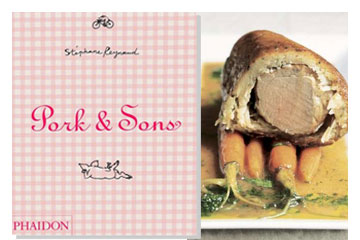
Is the impressive new cookbook "Pork and Sons" a contemporary charcuterie classic or just piggy porn? I cooked a swine-inspired feast to find out.

  • more
    • All Share Services

Going whole hog

“You want a heart? We got them every day. Every part of the pig. We got the ears — I keep ‘em in the freezer — we got the head …” The butcher continued rattling off his inventory on the other end of the receiver, but I’d heard all I needed to hear.

I’d had swine on the brain for days, ever since “Pork and Sons,” chef Stephane Reynaud’s homage to all things hog, landed on my desk. Part cookbook and part memoir of his upbringing in the mountains of France among a community of butchers and farmers, “Pork and Sons” details the life and times of some very pampered pigs from youth to slaughter and sausage to saucier. The volume is already a bestseller in Reynaud’s native country — in 2005, it won the Grand Prix de la Gastronomie Française — but the release of the U.S. edition feels right on cue, too: timed to coincide with both the lunar “Year of the Pig” and the porcine renaissance that has been sweeping the American culinary community. (Here in New York, a local chef was recently celebrated in the paper for serving a pork cocktail. Can we really still call it the “other white meat”?)

When they spotted Reynaud’s book on my shelf, my colleagues groped it as if it were a Playboy bunny — or rather a Playboy bunny bearing a box of glazed doughnuts. There was salivating; there was groaning; there were oohs, aahs and oh my Gods. Indeed, “Pork and Sons” is a perfect hybrid: slow food gone slick. For readers who get giddy over details of animal husbandry, Reynaud chronicles the ritual of pig killing with reverence and clear-eyed charm, tossing off bits of country wisdom like, “An animal is an animal and we don’t shed tears over its fate” and “Business can’t be done without a glass of wine.” But for the casual bedside cookbook peruser, “Pork and Sons” offers plenty of other, less gruesome, delights. The publisher, Phaidon — best known for its art books — has produced a masterpiece of design, from the oversize pale pink gingham cover, gently padded like the flesh of a fatted hog, to the hundreds of full-color photos and the playful pig doodles that dot the pages. Still, I wondered, even as I admired it: Is “Pork and Sons” just porcine porn? Would the recipes — so alluring to look at — hold up in an ordinary kitchen? There was only one responsible way to determine the answer.

I would have to pig out.

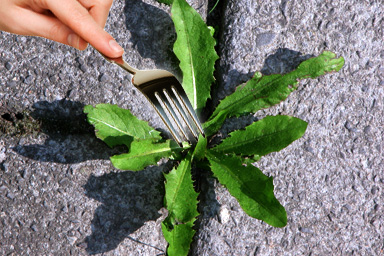
Fashioning a representative test menu from “Pig and Sons” proved a greedy challenge: Should we start with an andouille and dandelion salad or pig’s head and parsley pâté? Pork tenderloin or pork butt? And what about “Grandmother’s pig’s cheek bourguignon”? Back in Saint-Agrève, Reynaud has Eric and Aimé to fatten and flay his nest of trotters. But here in Brooklyn, N.Y., while we may adore the pig (just four blocks from my home, there is a very fine “pork store” whose door is guarded by a human-size hog in an apron), we tend to buy ours already bled and butchered. Would I have access to such bounty? Without knit-capped, ruddy-nosed Frenchmen to wake up at dawn and drink wine with me, would the true tastes be lost in translation?

My fears were unfounded; I may not have had knit-capped Frenchmen, but the white-coated fellas behind the counter at Los Paisanos, the local butcher, ably stepped into the breach. (Soapbox time: If you haven’t already, go out today and find your local independent meat purveyor. There are still some out there; they need your business; and trust me, they will teach you more about your food than any schmuck at the supermarket.) Given the earlier phone conversation, I knew it would have an assortment of innards ready and waiting — and sure enough, after a brief exchange (“I need 2 pounds of pig liver.” “So … you want 2 pounds of pork liver?” “Yeah, 2 pounds of pig liver.” Semantics!), I was out the door with enough hog parts to feed a family of 10. I cleared my schedule, called up five friends and told them to set aside Saturday afternoon for some serious eating. I then barricaded myself in the kitchen, hereafter known as “the pigpen.”

The final menu read:

Nibbles
Chorizo and lemon-cured olives
Ham, Appenzeller cheese and dried apricot crostini

Supper
Parfait of pig’s liver and muscatel
Warm sausage and Puy lentil salad with herb marinade
Pork tenderloin with porcini stuffing and baby peas

Dessert
Pineapple upside-down cake with homemade olive oil ice cream and candied bacon
(A dish inspired by, though not included in, “Pork and Sons”)

Anticipating pork-induced exhaustion, I started at dessert and worked my way up the menu, slicing the pineapple and stirring the custard base for the ice cream before bedtime on a Friday, and waking up on Saturday to trim the tenderloin and set out my mise en place. Readers, I won’t lie. I’m about as unflappable as an eater gets — and my omnivorous parents made sure I acquired a taste for the quinto quarto in early childhood — but those enormous pig livers were not a sight (not to mention, smell) I welcomed before my coffee.

Once I steeled myself, though, I was pleasantly surprised by the ease with which I proceeded through Reynaud’s recipes. Many charcuterie-heavy cookbooks are intimidating, laden with advice about gadgets and grinders, and it’s easy for a sometimes-impatient cook (like me) to lose her excitement navigating the intricacies of weights and measures. But Reynaud’s ingredient lists are simple, and his instructions commands, not narrations. If you substitute a sage sausage for a sweet Italian, no one’s going to scold you.

Of course, there are downsides to the impressionistic approach too, as any cook who has ever had to toss out a whole dinner course can tell you. When disaster comes, it’s hard to know whom to blame: Is it that you failed to follow along, or was there too little to follow in the first place? All I know is that I have had liver — well, duck and calf’s liver — many times, and I can make a mean chicken liver pâté. But the liver and wine-gelatin parfait I produced using “Pork and Sons” was one of the saddest, scariest things ever to emerge from my kitchen. My guests, loyal friends to the last, choked it down with wan smiles, but while one spoonful was intriguing, the second was retch-inducing. From the page of the cookbook, the photo had beckoned, an herb-flecked trifle, a glossy and iridescent mahogany. On the table, however, even the festive wine goblets in which I served it couldn’t make it look appetizing. Remember the color you’d get in kindergarten when you mixed all the paints together? Now imagine that, but covered with some “Ghost Busters” ectoplasm. The only course of action was to cut short our suffering and send the whole thing swiftly back to the pigpen’s slop bucket.

Thankfully, the parfait incident was the only blot on an otherwise perfectly lovely meal. The lentils were springy and the sausages herby, the tenderloin rosy and the mushrooms juicy and as fragrant as wet wood. And so, since Stephane Reynaud has three generations of piggy know-how and an acclaimed Parisian restaurant to his name, and I have only an endless appetite and enthusiasm, I’m willing to defer to his expertise. (However, a note to Reynaud: Holy cow, that pineapple upside-down cake was good. Maybe a book of desserts next?) In the kitchen and on the tongue, “Pork and Sons” proves itself more than just porcine porn — and alongside other classics of the genre, like Fergus Henderson’s “The Whole Beast: Nose to Tail Eating” and Michael Ruhlman’s “Charcuterie,” more than earned itself a soft, pink place in my heart.

Continue Reading Close

Page 2 of 21 in Sarah Karnasiewicz