
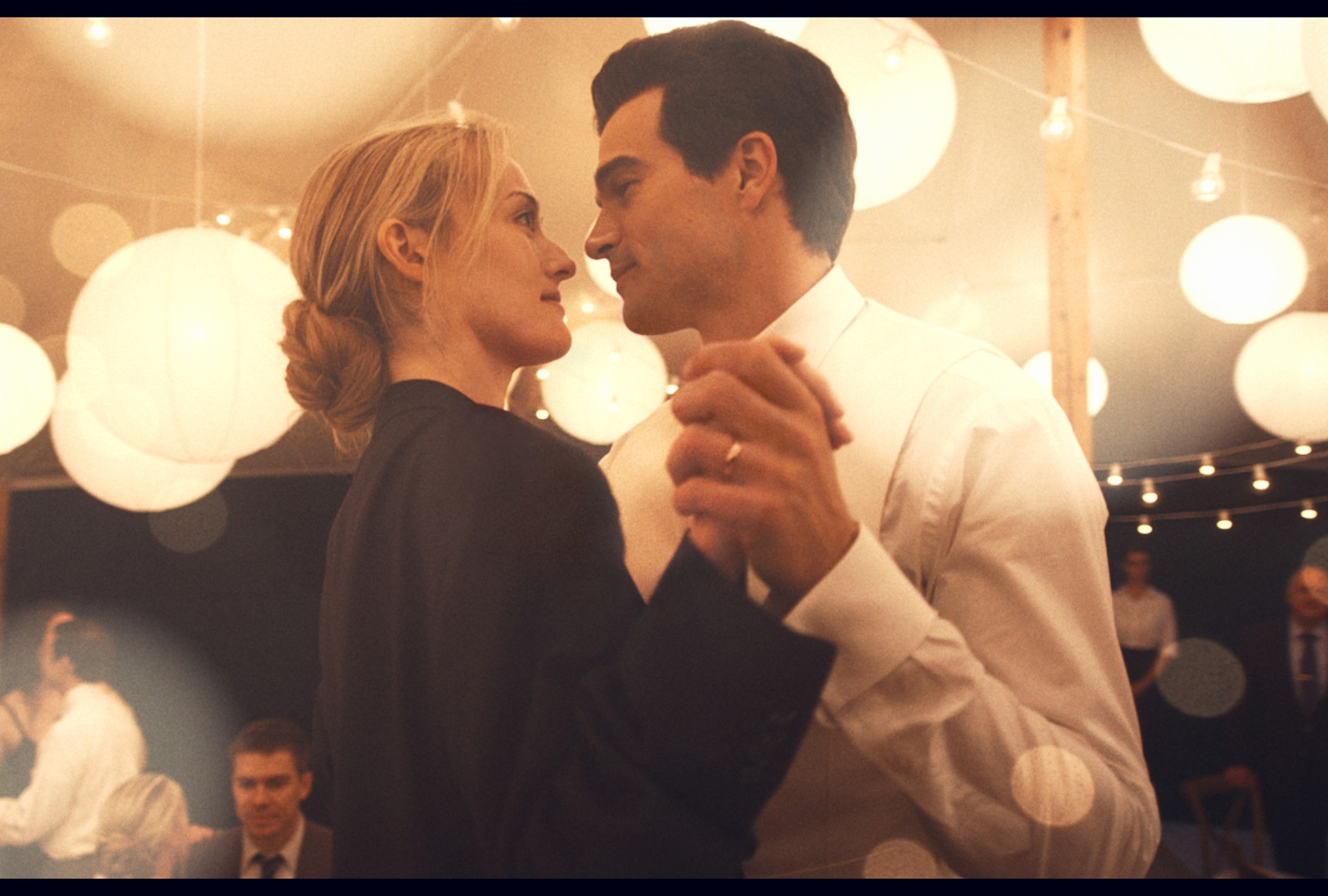

For a time, John F. Kennedy Jr. was one of the most famous boys in America. He was three years old when a photographer captured him saluting his father’s casket, and for many years, that was how most of America pictured him. Until the 1990s, that is, when relentless tabloid coverage reinvented him as New York City’s Adonis.
“Love Story: John F. Kennedy Jr. & Carolyn Bessette,” which stars newcomer Paul Anthony Kelly as JFK Jr. and Sarah Pidgeon as Carolyn, hangs its justification on that faint memory and his Cinderella-style courtship with Bessette. Next to exes like Madonna and Daryl Hannah, she was a commoner, a Calvin Klein stylist who somehow snared the heart of an American prince.
After a courtship that unfurled in fits and starts, they married in 1996. Three years later, they died together in a plane crash. Given that these details are the extent of what most people know about the couple, one assumes “Love Story” has so much more to give.
Since this is another Ryan Murphy product — this one created by Connor Hines — we should not be surprised to discover that most of the blanks are filled in with squabbling, private anguish and stretches of scenery that could double as feature-length ads for a designer perfume. CK One, perhaps?
As long as Robert F. Kennedy Jr. retains his starring role in the current administration, “Love Story” won’t be the worst thing to happen to the Kennedy clan or America. This first installment of Murphy’s latest anthology franchise is a serviceable romance in a time when such stories rarely receive even modest studio budgets, let alone wide theatrical release. Remember those? Some were better than others; a few defined for a generation what true love could look like, albeit inaccurately.
But this one stretches a basic courtship that could be covered in about 90 minutes, tops, over nine episodes and a total runtime landing between seven and eight hours. In comparison, “Ghost,” one of the genre’s standard-bearers, got it done in two hours and seven minutes. And neither of those characters is a Kennedy.
However, the “Love Story” forebear that matters most in this discussion is not John F. Kennedy or Jacqueline Kennedy Onassis, played here by “Feud” star Naomi Watts. It’s O.J. Simpson.
Ten years ago this month, “The People v. O.J. Simpson: American Crime Story” became the first and still best entry of a Murphy-produced franchise to seriously engage with the anesthetizing myth Americans like to tell themselves about themselves.
The first “American Crime Story” arrived at an inflection point for race relations in the United States, debuting in the waning months of Barack Obama’s second term and the heat of the presidential race that pitted Hillary Clinton against Donald Trump. When it premiered, we’d already heard Trump vilify Mexican immigrants and the Movement for Black Lives, in addition to calling for a “total and complete shutdown of Muslims entering the United States.”
Recreating the theatricality of Simpson’s eight-month-long murder trial using extremely famous actors as bait — John Travolta, Cuba Gooding Jr., David Schwimmer and Courtney B. Vance, among them — persuaded us to sit with one of the most famous and broadly televised examples of the unresolved racism baked into our supposedly liberal society.
That it came to TV more than two decades after the fact aided in our understanding of the phenomenon less as a murder trial than an unscripted soap opera playing out in front of our eyes, casting otherwise anonymous prosecutors Christopher Darden and Marcia Clark as either heroes or villains.
Some people wanted to see Simpson punished, while others viewed his acquittal as vindication, however meager, for decades’ worth of societal abuse. Either way, the limited series catapulted the careers of Sterling K. Brown, who played Darden, and Sarah Paulson, already a repeat Murphy trouper via “American Horror Story,” to stratospheric heights thanks to their Emmy-winning performances.
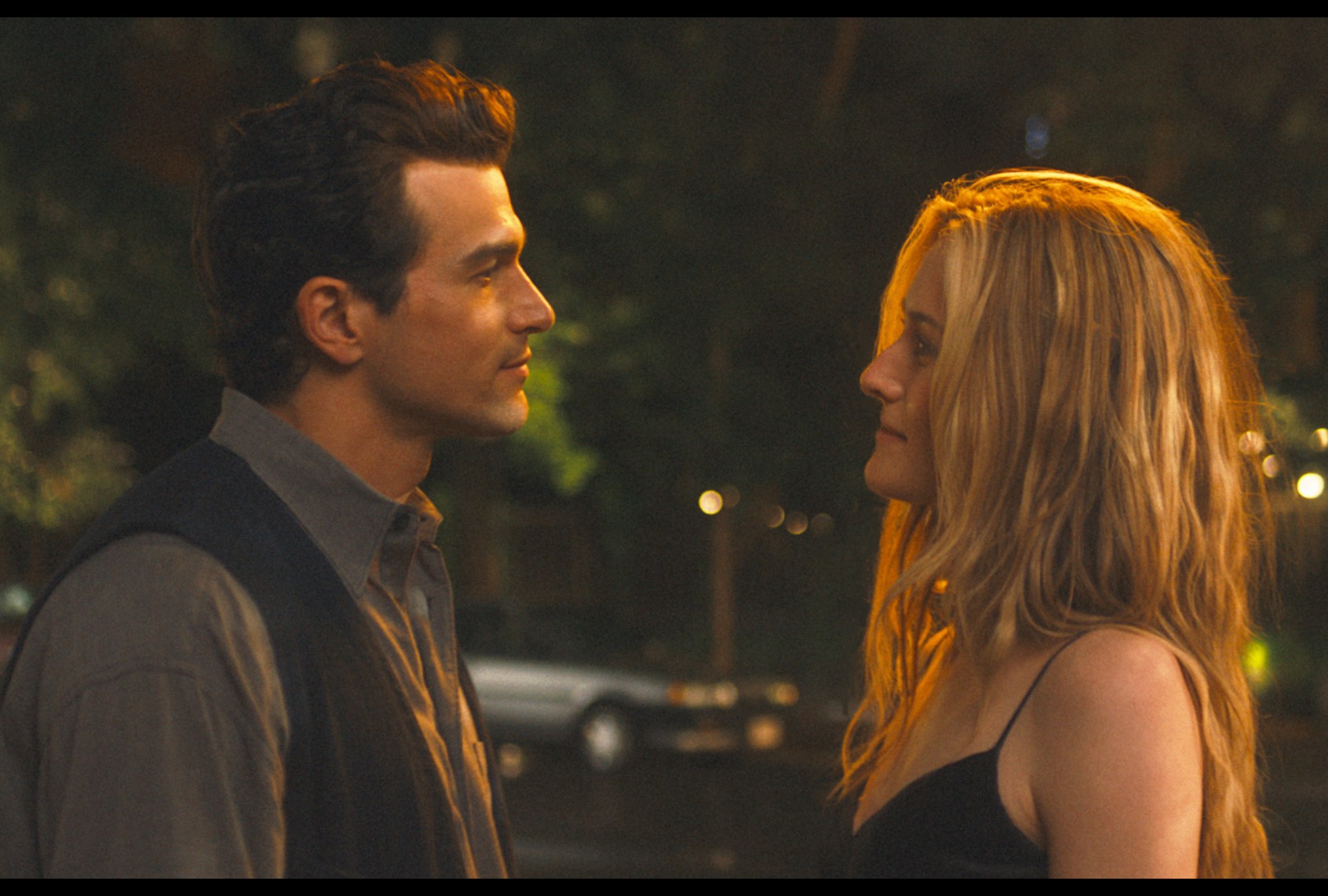
(FX) Paul Kelly as John F. Kennedy Jr. and Sarah Pidgeon as Carolyn Bessette Kennedy in “Love Story”
The “Love Story” forebear that matters most in this discussion is not John F. Kennedy or Jacqueline Kennedy Onassis. It’s O.J. Simpson.
It also proved Murphy’s glossy approach could coax viewers into considerate contemplation about systemic ills by wrapping them in celebrity skin.
But eventually, style overwhelmed substance. “The Assassination of Gianni Versace” tried to examine institutionalized homophobia by following the trails of missed opportunities to halt Andrew Cunanan’s escalating malevolence until he appeared on the fashion designer’s doorstep with a loaded gun in 1997. Only this time, its star power (by way of a cast toplined by Oscar Ramirez, Penelope Cruz and Ricky Martin) distracted from the narrative critique.
“Impeachment” was a step-by-step drill-down on the Clinton-Lewinsky scandal that strayed wildly from its original intent. Murphy meant this third “American Crime Story” to be a clear-eyed analysis of abusive power differentials in politics and the workplace. Instead, its parade of latex prosthetics and wigs pulled the spotlight, especially the Linda Tripp fat suit that wore Paulson instead of the other way around.
Murphy had better success in creating a more obvious political parable with the “Cult” season of “American Horror Story” in 2017. But in matters of conversation-shifting achievement, “Pose” represents his post-O.J. apex.
Not only was “Pose” a celebratory masterpiece told from the perspective of trans and queer people at the center of the 1980s ballroom scene, but it also provided a keenly intimate view of life on the margins during the AIDS epidemic while never forgetting its dedication to beauty and joy.
For each of those successes, there are several messy misfires: The wan camp of “The Politician.” The bland, if inclusive, speculative history of “Hollywood.” The mucky end-of-days morass that was “Grotesquerie.” The missed opportunity of the Jeffrey Dahmer chapter of “Monster.”
Many of these high-profile attempts to foster serious conversation through art drowned it in vanity. Think of “Ratched,” the pretty and pointless “Halston” and his recent ludicrous, gorgeous disaster “All’s Fair.” (As for “The Beauty,” the jury’s still out on its lasting effects.) Others are frustratingly inconsistent — “Feud: Bette and Joan” wasn’t perfect, but Jessica Lange and Susan Sarandon’s work boosted its excellence more than the superstar cast of “Feud: Capote vs. The Swans” could for that project.
Great performances hide within even the worst of Murphy’s shows, nevertheless. Murphy gave Niecy Nash-Betts enough space and material in “Monster: The Jeffrey Dahmer Story” for her to deliver an award-winning performance that muscled to the fore.
We need your help to stay independent
Watts’ take on Jackie O doesn’t hit such heights, but the actor does, in some scenes, achieve a gracious splendor that does justice to her subject’s memory.
And this returns us to “Love Story.” If Murphy’s work can be divided between pulp like “American Horror Story” and prestige, “John F. Kennedy Jr. & Carolyn Bessette” aspires to the latter.
Is there an urgent lesson in their story for us to ponder? Not really, but even lacking that, the series fails its obligation to entertain.
Regardless of how promising the conceit may seem — it’s based on a book titled “Once Upon a Time: The Captivating Life of Carolyn Bessette-Kennedy,” after all — this is American history for fashion influencers. There isn’t much holding it together, but the looks are on point. Kelly closely resembles JFK Jr., while Pidgeon has Bessette’s fragile, elven bearing. Both photograph well.
But the story reminds me less of any supposed fairy tale than the memory that Murphy once intended to devote a limited series treatment to Prince Charles and Princess Diana of Wales’ bad romance under his “Feud” umbrella. “The Crown” beat him to it, so we got “Capote vs. The Swans” along with its greatest accomplishment: Bowen Yang’s Truman Capote impersonation on “Saturday Night Live.”
Theoretically, the romantic journey of JFK Jr. and Bessette should hold an equivalent pull on us as Charles and Di once did. JKF Jr. was the scion of American political royalty, and Bessette was the commoner who won his heart by side-eyeing his fame. But when two of her Calvin Klein coworkers gush, “You’re going to be the American people’s princess!” my inner narrator countered, “No. Not so much.”
Want more from culture than just the latest trend? The Swell highlights art made to last.
Sign up here
The difference between what Charles and Diana — or Diana, specifically — meant to the world and the legacy that JFK Jr. left behind is vaster than the span of ocean between Britain and New York. Prince Charles is now England’s king, and Diana devoted herself to a life of service that helped her triumph in the international court of opinion before her untimely death.
America’s “royal” couple didn’t live long enough to make such a definitive mark. The iconic president’s son failed the New York bar exam twice and co-founded George magazine, a glossy devoted to waltzing at the intersection of politics and popular people.
Bessette was lovely and statuesque. For the public’s purposes, she was a cipher onto which we were urged to project our romantic fantasies. Beyond that, the main point of similarity between Bessette and Diana is that the paparazzi hounded both – Diana to death, and Bessette to resentful exhaustion. Is there an urgent lesson in their story for us to ponder? Not really, but even lacking that, the series fails its obligation to entertain. Watts’ Jackie delivers a moving speech or two about what families like the Kennedys owe to the public, but beyond that, the only turn that took me by surprise within the first two episodes is the unexpected death of a pet.
Every producer wants to achieve ubiquity, and Murphy is one of the few that’s done it. But while his influence has certainly grown mightier over the decade since “The People v. O.J. Simpson” conquered the 2016 TV season, the quality and memorability of most of his work since has fallen. This does not mean he isn’t still a reliable viewership magnet; he’s one of the few auteurs whose work commands conversation regardless of its quality. But to paraphrase Norma Desmond, it’s his ambition to say something meaningful that’s gotten small.
“Love Story: John F. Kennedy Jr. & Carolyn Bessette” premieres with three episodes at 9 p.m. ET/ 6 p.m. PT Thursday, Feb. 12 on FX, Hulu and Disney+.
Read more
about the world of Ryan Murphy
