Body Image

Old ladies who didn’t love me

I thought a gym class with elderly women would ease my aging anxiety, but it made me miserable in new ways

  • more
    • All Share Services

Old ladies who didn't love me

“Isn’t it soon for me to be getting arthritis?” I asked my orthopedist. I assumed I had a young person’s pain: an injury, or maybe a cyst.

“No,” he said, then checked my chart again for my age. “No, not at all.”

At 36, I had been preoccupied by my age, and this didn’t help. I’d been looking at every woman’s neck to see when the accordion stretch of the chin would kick in. Could I stave it off a few more years? Had I blown it by not being skinny, so that I couldn’t later gain five pounds to smooth out my wrinkles?

But it wasn’t just about my appearance. With each passing year, I counted all the things I could no longer do: be an athlete, be a model, be a ballerina. It didn’t matter that I never aspired to these things. The things I had aspired to do, like write a novel and be a young mother, were also undone. (I am a mother, but not a young one.) The world and its opportunities were closing like a window. I felt like I was choking.

And even as I thought of this, I knew the basic existential dilemma: Thinking about age wouldn’t make me young. And worse, I would never be younger than I was now. I was fairly accomplished for my age: I’d traveled and known many interesting people. I’d been in love with the wrong guy. I’d been in love with the right guy. Everything seemed right on schedule. But I was weighed down by the truth of time, that it’s coming for all of us.

The orthopedist, who was close to my age (another bad sign: The doctors were my age now), recommended I swim until the swelling went down, then start physical therapy. I’m bored by regular swimming. And that’s what brought me to this — that bastion of aged flesh, this hotbed of liver spots and teased hair, my YMCA’s aqua aerobics class.

I knew the class was populated by old women; I had a view of them from my treadmill, where I’d exercised back when I was young and could run for my health, bounding like a deer toward a television that only played shows about the Kardashians. Beyond that TV were the old ladies, splashing and working out.  I would take water aerobics and emerge feeling young, grateful for the plump of my skin, the relative tightness of my jowls. We’d all be buoyant in the water, but only I would remain so as we dried off. The older women would love me. Bonds would be forged.

My grandmother, a Russian immigrant, had taken these kinds of classes when she had been alive. She had a whole social group around the class, women who were kind and joyful, who played Rummikub and made honey cakes for each other at the Jewish new year. I had joined her once, in Brooklyn, N.Y., for the class. The poolies, as we called her chlorinated friends, were always so interested in hearing about my life, my boyfriends, my classes. My grandmother, slick with water, gleamed with pride.

And so it would be this time. I’d remind the old ladies of their daughters. They’d pass on wisdom. I would confide that I didn’t think I could wear a miniskirt anymore, at my age. They would snort and hoot and tell me what a child I am. I’d realize how silly I’ve been. I would learn that I had plenty of time.

- – - – - – - – - -

My poolies, the ones at my gym, had necks that had long since defied definition. Massive freckled cleavage became neck became chin became face and so on. They wore bathing caps with plastic flowers and swim suits with pointy foam bra cups. Underneath, their hair was teased and thinning in shades of copper and yellow.

I wore a tankini — the illusion of the self-confidence requisite for a bikini but none of the skin reveal — and I immersed myself in the water. It was warm, and it would have been easy to mistake the high concentration of chlorine for a urine scent. I walked over to where the action was. The women were all friends. I waited shyly for someone to say hello to me, to ask me what the hell a youngster like me was doing in a place like this. No one did.

“You need a noodle,” said the instructor, a 40-something man in shorts and a T-shirt who stayed on the deck of the pool to give instructions.

I retrieved a foam noodle and was descending the ladder into the pool in silence when I heard a large woman in a red, skirted bathing suit, probably around 70, say to her friends, “The girls with the leg hair. No one shaves anymore.” There was no way she was talking about me. Right?

“I wax,” said another in a pink bathing suit, maybe mid-60s. Then to me, “You should wax.”

She was talking about me.

“Oh, I, uh, I shave my legs,” I stammered. “I’m just … I just had a baby. It’s a miracle I can get here, right?”

“Oooooh, when did you have a baby?” asked the first one, with a smile.

“He’s 14 months old,” I said.

Two others cackled.

“Yes, I just had a baby, too,” said one with a rubber swim cap with flowers, mid-60s, grabbing her stomach in her fists. Red bathing suit snorted. “She’s 47!”

I rushed as quickly as the water would let me to the back of the class. I thought of my yoga class, where people applauded when you just showed up. The class started, and we jogged for 10 minutes. By minute five, I couldn’t do it anymore. The others looked barely winded. When it was time to stop, the instructor said to me, “It gets easier with time.”

All the ladies — the next youngest to me was perhaps 55 — turned around. When they saw me, they squealed with laughter.

“Leave her alone!” said one in a black suit with a back so low that you could see folds of fat. I thought she was an ally until: “She just had a baby, don’t forget!” Then they laughed and laughed and splashed.

We did kicking and push-ups against the wall. We brought our knees to our chins while we floated on noodles. At the end of class, the instructor made an announcement.

“I’ll be out next week, but class is still going on.”

The ladies collectively cooed and oohed their suspicion. “Do you have a hot date?” asked one.

“Yeah, with his mother!” came one answer. Again, hysterics.

I tried to make eye contact with the instructor — both of us victims, after all — but he closed his eyes and took a breath. He was used to this. He hadn’t always been this meek. The poolies had brought him to this. They were old people and they were tired of being called cute by young people. They had become mean.

No one was safe here. My grandmother’s friends had seemed so much kinder, so much more, I don’t know, grandmotherly. Had it all been a show? Had it been a front for grandmothers everywhere? I had come here to seek the gratuitous validation that only grandmothers can provide, and learned it was only my grandmother who would provide it.

I missed my grandmother. I missed her kindness, her forgiveness. I missed how I looked through her eyes. I missed how her love made me feel perfect. Maybe that’s what was upsetting me: That in addition to not being a ballerina or a model, I would also never be perfect. Or maybe what was bothering me was that I was just ganged up on by a bunch of nasty septuagenarians.

I was only 25 when my grandmother died. Back then, I hadn’t known yet that I’d get old. To me, the young were born young; the middle aged stayed that way. Her death promoted my parents to old people and me to someone who worried about death. We held her hand as she died; “Oh, Ima,” my mother whispered into her hair. We didn’t mourn gracefully. We wailed for days.

I kissed her forehead as it began to turn cold. How could her body turn cold so quickly? Shouldn’t her extraordinary warmth grant her body a few more minutes of heat than the average person gets once she passes?

Now, I looked around at these women in the pool, the ones who resembled my grandmother but certainly were not her. I wondered how they found the resolve to keep going. Didn’t they know how close to the end they were? Did they ever just want to give up? Were they ever obsessed with age like I was? Maybe that struggle had grown tiresome, like caring about the sexiness of your shoe wear. I had recently bought a pair of Danskos, big clunky things that make my Size 11 feet look like Size 12 feet. I had resigned to this because it no longer felt like it mattered what my feet looked like. It felt like I was old enough to not care anymore.

Maybe there was another way to look at them. These women didn’t fall into the role I assigned them, because they were busy being their own people. They were exercising. They were keeping their bodies strong. And they knew something I didn’t: That you’re alive until you’re not.

I floated on my back for the next minute, my ears under the water so I couldn’t hear anything. I remembered a time long ago when, at a pool party, a boy told me he’d heard that I thought he looked like Tom Cruise. I dunked under water then, like now because I was embarrassed, left alone in the eerie silence with my bubbles and with my shame. I left the pool and dried off.

On Wednesday, under the cover of late afternoon, I swam laps.

Taffy Brodesser-Akner has written for the New York Times, Los Angeles Times, Self, Redbook, and other publications.

The mainstream myth about eating disorders

A new awareness campaign once again ties eating disorders directly to body image. The reality is much more complex

  • more
    • All Share Services

The mainstream myth about eating disorders (Credit: The Renfrew Center)
A longer version of this piece originally appeared on Autumn Whitefield-Madrano's Open Salon blog.

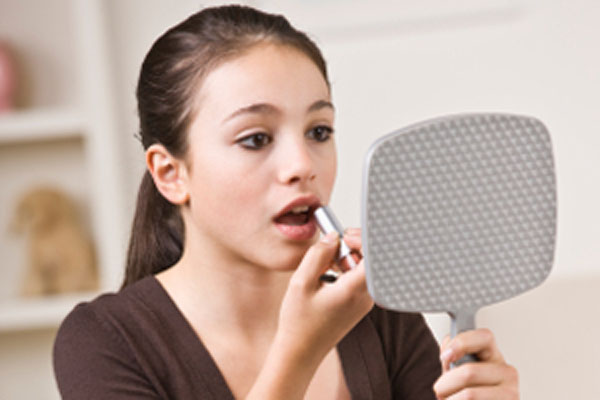
For National Eating Disorders Awareness Week—which starts today—the Renfrew Center, one of the best-known eating disorder treatment facilities in the United States,is sponsoring a new campaign. Called “Barefaced and Beautiful,” it’s encouraging women to post photos of themselves on various social media without any makeup. The point is to … well, they sort of lost me on that. I think the idea is to display pride in one’s natural, unadorned self, the idea being that … you don’t need to … adorn yourself … with an eating disorder?

I’m being intentionally dense here. Obviously the idea was to touch on the role of appearance dissatisfaction in eating disorders, using something plenty of people wear — makeup — as an entry point for talking about the larger issue. (Certainly it’s more on target than cryptically posting the color of your bra on Facebook for breast cancer awareness.) And for something like a week designed to raise awareness about eating disorders, you need a campaign that’s simple, accessible and attention-grabbing. But not only does the no-makeup rally willfully ignore the myriad reasons women wear makeup in favor of a one-dimensional shame-based explanation, it treats bodily dissatisfaction as the cause, not a symptom, of eating disorders. And if we keep the focus of eating disorder conversations on women’s bodies, we’re doing exactly what women with eating disorders do to themselves.

We should be wary of conflating body image and eating disorders, because they’re not nearly as connected as they’re made out to be. It’s not like she who has the worst body image develops the worst eating disorder, or that people whose body image is average are immune from eating disorders. (I have yet to meet a woman with an active eating disorder who has a good body image, but then again, I don’t know tons of women with a good body image to begin with.) I’m baffled that Renfrew chose the makeup hook for its NEDA campaign, unless the idea really was just to raise awareness of the existence of eating disorders. (“Anorexic” has been a coverline of enough celebrity magazines that I don’t think we need any more awareness of that elementary sort.) Yes, makeup is deeply tied to our ideas of self-presentation. It’s also a method of controlling the way you’re seen, and eating disorders are rooted in control. But none of that shows up in the Renfrew campaign; instead, it’s all about appearance dissatisfaction, as though that alone can set off a disease that ravages one’s life.

Eating disorders are complex beasts, with not-great recovery prospects and the highest mortality rate of any mental illness. We don’t entirely know what causes eating disorders, but last year when I interviewed Sunny Sea Gold, author of “Food, the Good Girl’s Drug and a recovered binge eater herself, she broke it down nicely:

Therapists pretty much agree that there are three main causes of eating disorders, and most of us who get them have a combination of the three. One is your genetics. Second is your physiology, like the biology of your actual brain — your personality…. The third thing is environment. Environment is broken into two parts: the environment of your home, what your mom and dad said to you, the behaviors they modeled. The other part of environment is culture. So about one-sixth of eating disorders can be blamed on cultural environment, like the pictures we’re shown… If we magically were able to suddenly change the images we see in order to be diverse in all ways, gradually that part of the pressure would relieve itself. But it wouldn’t relieve that need of a girl to control her food intake because she can’t control her life.

It’s that last part that continues to get short shrift in the popular media. I get why the press might latch onto the thin imperative as the root cause of eating disorders: Media outlets love nothing more than to generically critique themselves (what women’s magazine hasn’t covered the problem of unrealistic body ideals formed by… the media?). Less cynically, poor body image is something most of us have experienced at some point; using this as a hook for readers to empathize with eating disorder patients works beautifully. Plenty of people have dieted to lose weight for aesthetic reasons, and the disordered thought loop that makes a satisfying eating disorder story — I was obsessed with food! — is mimicked in the dieting mind-set. So the average reader may think she’s identifying with the subject, not realizing that what she’s identifying with are the symptoms of an eating disorder: the restriction of food, or the overconsumption of it, the vigilant attention paid. But the eating disorder doesn’t lie within its symptoms. It lies within its causes.

Listen, I’m not saying that there’s no connection between appearance and eating disorders. Of course there is. And body image is an essential topic to so many women’s lives — including women who have never exhibited a single eating disorder symptom in their life. Do I even need to point out the ways in which having poor body image is a drain of our reserves? Of enormous intellectual and psychic energy? Of time, of money, of already precious resources? Of emotion? Do I need to ask how many times women have asked “Do I look fat in this?” because we lack the words to ask for support and tenderness? As long as we have poor body image, we walk through this world ashamed. So, yes, we need body image work, and we’ve needed it for a long time. And a week devoted to eating disorder education is a good time to reinvigorate that conversation.

But eating disorders do not run parallel alongside a track of bodily dissatisfaction, and the more we conflate the two, the less we’re tackling the true complexity of eating disorders, and the less we’re looking at the threads that unite patients more deeply than hating their thighs. We’re not looking at perfectionism, or the twin sisters of compliance and rebellion, and how all of these play out in the lifetime of an eating disorder. We’re not looking at biology, or heredity, or giving proper diligence to plain old depression and anxiety. Hell, we’re not looking at stress. We’re not looking at choice, autonomy or modernity. We’re not looking at the role of trauma, or sex, or comorbidity with addiction. And it is impossible to treat eating disorders without treating all of these as seriously — no, more seriously than — body image.

It’s one thing for the media to treat body image with greater weight than, say, family dynamics in eating disorders. It’s quite another for a treatment clinic to do the same. The Renfrew Center certainly doesn’t take this approach in treating its patients. When I was treated at Renfrew for my own eating disorder a few years ago, I was repeatedly struck by how little body image came up as a topic, both from the counselors and my fellow patients. That’s not to say it wasn’t important; it was more that we’d all thought about our bodies so much by the time we landed in treatment that we were chomping at the bit to give voice to the things that we truly needed to be able to talk about. I could deconstruct body standards before treatment as fluently as I can now. But before entering Renfrew I had no words to tell you about the factors that took me 25 years deep into an eating disorder before I committed to getting help.

The link between appearance and eating disorders isn’t that one causes the other; it’s that they’re both partly rooted in expectations of properly gendered behavior. (It’s worth noting here that while plenty of straight men develop eating disorders, gay men are at higher risk.) To untangle the social angle of eating disorders, we need to look beyond the mere existence of the thin imperative and look at what it says about the role of women: that we are to be perfect, controlled, managed and compliant — themes that come up repeatedly with eating disorder patients, themes that get to the crux of the matter more directly, without taking the meandering detour through our bodies.

Makeup, too, can say a lot about those issues. It’s not the worst motif Renfrew could have chosen for its campaign. Nor is it the best. I’m no P.R. expert; I have no idea how the clinic could have better channeled its extraordinary work into a simple campaign for the public to engage with. I just know that by the time I was discharged from Renfrew, I’d finally begun to learn that my dissatisfaction with my body wasn’t causing my eating disorder; it was merely a symptom of my disease, like restricting my food intake or binge eating. I’d begun to take the focus off my body and put it into understanding the roots of my perfectionism, my people-pleasing, my family history, my silent shrieks of rebellion.

I’d begun to understand that loving my body wasn’t the point. The point wasn’t even to like it. The point was to learn how to eat.

Continue Reading Close

Autumn Whitefield-Madrano examines beauty at The Beheld. Her essays have appeared in Glamour, Marie Claire, and Jezebel, and she is a contributing editor at The New Inquiry.

Naked models offer a body image reality check

A plus-size campaign stumbles but makes a crucial point on our crazy beauty standards

  • more
    • All Share Services

Naked models offer a body image reality check (Credit: PLUS model magazine)

Nothing like the sight of two beautiful naked women in an embrace to get attention. And the message is powerful. In a pictorial for Plus Model magazine, the lushly gorgeous Katya Zharkova entwines with a far thinner female whose face is obscured. The caption reads, “Most runway models meet the body mass index physical criteria for anorexia.”

There’s more. As the magazine asks, “What’s wrong with our bodies anyway?” it flaunts some sobering statistics. “Twenty years ago the average fashion model weighed 8 percent less than the average woman. Today she weighs 23 percent less,” and “Ten years ago, plus sized models averaged between size 12 and 18. Today, the majority of plus-sized models on the agency boards are between a 6 and 14.” With figures like that — both the numeric and female kind — it’s not surprising the story became an instant meme.

Not to get all New York Times-y here, but it’d be nice if the magazine editors did a little journalism and actually cited the source for their statistics. You can find the same statements all over the Internet, dating back years — including the site the magazine’s editors obtained it from, the eating disorders program Rader. But Rader doesn’t reveal where it found them. And that’s unfortunate, as is the ploy of using vaguely Sapphic imagery to make a point, because the problem the Plus spread highlights is real and serious.

We are in the throes of a certifiable healthcare crisis in this country over our weight. One-third of us are now obese. And though a small percentage of us have eating disorders, there can be no denying that the standards for beauty have drastically changed over the past several years. As Americans have been getting bigger, our lingerie models have been going on wackadoo “no solids” diets to attain runway perfection. Thanks to the magic of photo editing technology, already slender models can be whittled down to near nonexistence. If it seems like resembling a model is getting harder and harder, consider that the lithe woman you see enticing you to purchase underpants isn’t a real woman at all but a computer-generated hottie. Forget about models dwindling down to eating-disorder sizes — they’re disappearing altogether.

When you think about the ways in which the fashion and publishing industries peddle increasingly impossible ideals of feminine perfection, the clumsy execution of the Plus Model magazine message doesn’t seem so bad.  It’d be more convincing without the rehashing of dubious statistics, and it’s important to remember that for all the talk about “our” bodies, Plus is still a magazine about models. Plus-size Katya Zharkova is still far more fit, beautiful and healthy than an enormous number of American women. But the eye-opening spread is nonetheless a powerful start in trying to bridge the ever-widening gap between who we really are and how we are depicted in magazines and the media. You might even call it a big deal.

Continue Reading Close
Mary Elizabeth Williams

Mary Elizabeth Williams is a staff writer for Salon and the author of "Gimme Shelter: My Three Years Searching for the American Dream." Follow her on Twitter: @embeedub.

Why women need fat

Evolution shows that women's dieting beliefs aren't just unrealistic -- they're unnatural. An expert explains

  • more
    • All Share Services

Why women need fat (Credit: iStockphoto/oonal)

On any given day, more than half of women in the U.S. are on a diet. In hopes of slimming their figures, millions take on Atkins, South Beach, Lean for Life or Hollywood 48. Some never eat after 5 p.m.; others only eat Subway sandwiches. While the diet industry has a less than noble reputation, it’s clear that American women, far more than men, remain obsessed with dieting. But what can evolutionary biology tell us about gender difference and eating habits?

In a new book called “Why Women Need Fat,”  Steven J.C. Gaulin, an evolutionary biologist, and William D. Lassek, a retired doctor of public health at the University of Pittsburgh, explain the science behind women’s unique relationship to their diet. In the book, Lassek and Gaulin make a surprising argument for a more positive outlook on fat and illustrate the differences between the ways women and men gain weight. Think of it as the evolutionary biology diet.

Salon spoke over the phone with Gaulin, who explained why one common ingredient in much of our food is making us fatter, why women are very different from men when it comes to weight and health, and how it really pays to think like an evolutionary biologist.

You and William Lassek co-authored the book. It’s surprising that two men would co-author a book on women’s health. How did each of you come to focus your research on this topic? 

When I was teaching at the University of Pittsburgh, they had a policy that if you were over 55 and you weren’t trying to accumulate credits for a degree, you could take any course you wanted. Will, who was retired, showed up in my introductory level course, Sex and Evolution. From the first day he started asking questions that were so far over the heads of the students. So I told him to come to my office hours instead of confusing all of my students with a Ph.D.-level dialogue. Something we began to discuss was this finding that men have a preference for women with a small waist and larger hips. No one had really explained why men should have such a strong preference for this shape, and it’s not immediately interpretable in terms of comparisons with our close relatives. For example female chimpanzees don’t have that shape and male chimpanzees don’t seem to care anything about female shape when they mate. So it was a bit of a puzzle. That was the question that got us started and eventually led us to work related to women’s body type and weight.

In the first chapter of the book, you talk about the “polyunsaturated explosion,” during the 1950s that led Americans to eat much differently than they had in the past. What changed and why did it happen?

I don’t know if I normally subscribe to the principle that history is driven by the actions of a few influential people, but in this particular case there were two people who did exert a very big influence on our national diet. One was coming from an economic perspective and the other was coming from (what he believed) was a nutritional perspective. After Dwight Eisenhower had a major heart attack, when the American public became much more focused on heart health and nutrition, a popular nutritionist by the name of Ansel Keys made a lot of impact. He was committed to the notion that saturated fat was the culprit in the heart disease epidemic in the U.S. He advised Americans to replace saturated fat with polyunsaturated fats, in particular corn and soybean oils. Meanwhile Earl Butz, Nixon’s secretary of agriculture, had been tasked to get food prices lower. He decided to heavily subsidize and commoditize corn and soybeans in order to make them really cheap. So corn and soybeans became the basis of our entire food production system. And it continues today. The amount of these oils in the American diet increases significantly every year.

And you point out in the book that corn and soybean oil are high in a compound called omega-6, which is detrimental to health, especially for women. What is omega-6 and why does it make people fatter?

Omega-6 is a category of fat. It is technically a fatty acid. Omega-6s are one category of polyunsaturated fats found in seeds and grains. Now, it’s not bad to eat grains, it’s not bad to eat corn, and it’s not bad to eat soybeans. What is bad is that food processors extract and concentrate these oils from plants. In an ear of corn there isn’t that much corn oil, but when you subject it to industrial processing and extract everything but the oil, now you’ve got a lot of omega-6. It’s this heavy industrial processing of seed crops that makes our diet so unnatural. Omega-6s make us fat in a variety of ways. They promote fat storage. Omega-6 is also the precursor for certain signaling molecules called endocannabinoids. Will likes to call them the body’s home-grown version of marijuana. Endocannabinoids give you the munchies just like cannabis does. So the omega-6s are telling the body, “Store the fat you have.” And they are also telling the body, “Eat more, I’m hungry!”

But later in the book, you also give some reasons why gaining weight is quite natural in women. You provide an evolutionary answer to the question: Why do women gain weight after having children? It’s not the typical reasons that many women tend to assume — being too busy to exercise, eating poorly because of stress, etc. 

Interestingly, human brain size plays a big role in why women need fat and why they tend to gain weight after having children. Humans have ridiculously big brains, which makes it more difficult to give birth to our infants. While chimps, orangutans and gorillas can literally sleep through a birth, human births, especially first births, are typically more than a day of very difficult labor. Women tend to weigh less before they have had their first baby because with a first infant, evolutionarily, it pays not to grow a baby that is too large. They can get stuck in the birth canal. It’s not so much of a problem for us in 21st-century North America because most women have fairly ready access to cesarean section. But for 99.99 percent of human evolution, it was a really big problem. The result of natural selection is that women tend to be lighter before they have a child because they need their first infant to be smaller in order to survive childbirth. Each infant that a woman has remodels the pelvis so that each subsequent infant can grow somewhat bigger. There is a positive correlation between birth order and birth weight. So the way to grow a bigger infant is for the mother to have more fat on her body.

American culture tends to vilify fat and fat people. You mention a particular instance in 2004 when the director of the Centers for Disease Control and Prevention appeared on national television claiming that obesity was approaching the No. 1 preventable cause of death. You think this crusade was misguided. Why?

Many M.D.s have bought this fallacious line that the optimal weight for women in terms of their health is what M.D.s call normal weight, a BMI between 18.5 and 25. And they have thought this to be true because women with higher BMIs exhibit a series of physiological measures that are indeed risk factors for disease in men. But they are not systematically risk factors for disease in women. If you actually look at the data from the National Health and Nutrition Examination Survey and data from studies done in other countries, the optimal weight for women who have had a kid is what doctors currently call “overweight.” I’m not saying that obesity is optimal, but all the findings show that overweight women survive better than normal weight women. We walk a fine line in the book because we argue that being overweight is not nearly as bad as your doctor has been telling you, but on the other hand, Americans are heavier than they need to be. There are diseases that still correlate with heavier weights, like diabetes. But if we ate a more natural diet, by that I simply mean the diet that we evolved to eat, we would all weigh less.

And we all seem to have a “set point” for weight. We have biological constraints that keep us from veering too far from our genetically determined “set weight.”

Yes, there are studies where they starve people and there are studies where they feed people huge amounts of food to see if they can fatten them up. In both kinds of cases, the body seems to have a lot of inertia in this regard. It does not want to lose weight and it does not want to gain weight regardless of where the person happens to fall on the BMI curve before the experiment. If you are starving the body, the metabolic rate slows down, the activity level goes down, a variety of mechanisms kick in to try to hold on to the weight that the body has. Likewise if we feed people twice as many calories as they normally eat, many are quite resistant to gaining weight. When we feed them three times as many calories, they finally gain weight, but the weight goes right away when they return to their normal calorie intake. The body knows where it wants to be. It’s interesting in that people differ greatly in what their set points are, but everyone seems to have a set point.

So what kinds of implications does this have for women who diet? Why do diets seem to fail women again and again? 

One thing that’s important for women to understand is that your set point can change. That’s what “yo-yo dieting” does. When humans were hunter-gatherers, they never could count on where their next meal was coming from. They didn’t have grocery stores or refrigerators. In cases of bad luck foraging for food, the only thing they had for backup was stored body fat. There is an optimal amount of fat to store, which depends on how frequent and how severe your food shortages are. That is the point; a diet tells your body that there is a food shortage. Your body doesn’t know that you’ve decided to lose weight. Instead, the body takes a diet and goes, “Oh damn, I live in a food insecure world. The next time I get some food I better up my set point so that I have more fat for next time!” It’s so natural and obvious isn’t it?

It’s kind of bitterly ironic when you think about the history and intensity of the relationship between women and dieting in this country. 

And it’s quite obvious once you start thinking like an evolutionist. But since barely half of the people in this country believe in evolution, a lot aren’t in a good position to think like one. Evolutionary biology isn’t just crazy theories about fossils from humans that are long gone, this is stuff that is highly relevant to decisions we make everyday in our lives.

In the book, you emphasize that instead of dieting to lose weight, women can change the way they eat in order to return to what you call a “more natural weight.” How do we determine what our natural weight might be and how do we get closer to it?

I think the best way to do that is just start eating the kind of diet that drastically reduces the amount of polyunsaturated omega-6s in the diet. The best way to do that is to stop eating processed food and to avoid commercially fried foods because they are always fried in these omega-6 fats. Potato and corn chips, for example, are a huge contributor of omega-6s in the diet. There is more than a gram of omega-6 in every single potato chip that a person eats. So that’s my solution. Many studies in the U.S. and other countries show that the single best predictor of how much a woman will weigh is how much omega-6 is in her diet.

Reading the book, I couldn’t help but consider how regional and socioeconomic factors might take influence over the different ways that women tend to eat. In the book, you advise women to eat wild (not farmed) fish, grass fed meat, as well as a diversity of organic fruits and vegetables. But is it possible for all women in the U.S. have access to this diet?  

I’m a big advocate of family farms. I don’t think there’s any reason why we can’t have family farms in virtually any part of the country. Because the U.S. has commoditized corn and soybeans, there’s been a progressive consolidation of farms into big industrial agribusinesses. But family farms, that raise animals on the land, are a really good alternative. And when animals are grass-fed it changes the fatty acid profile of their meat — how much omega-6 and how much omega-3 is in it, which makes it healthier meat to consume. I don’t think that grass-fed or free-range is an elitist kind of food, I think it’s the natural, normal kind of food that we could have anywhere if we patronized our local farmers.

Continue Reading Close

What I learned as a nude model

At 22, I couldn't find work or my way in life. But I found a way to hide -- it just included taking off my clothes

  • more
    • All Share Services

What I learned as a nude model

My naked pelvis was 3 feet away from an 80-year-old grandfather wearing a sweater vest. Men who attend art classes must be the world’s primary consumers of sweater vests; it’s like they’re in Joseph Gordon Levitt costumes all the time. The muscle in my leg twitched as the old man squinted at me, stared at his drawing and then turned to the instructor. “I can’t get it,” he said. “I just can’t quite do the lines of the elbow.”

No surprise there. These are the body parts 80-year-old men in life drawing sessions will admit they don’t know how to draw: elbows, noses, foreheads, earlobes, shoulders, collarbone.

These are anatomical parts 80-year-old men will not admit they don’t know how to draw: everything else.

After a few weeks, this man, or any number like him, would come up to me on a break and tell me, very tentatively, that I reminded him of his dead wife, or an old girlfriend, or a nurse in Korea. The art classes I modeled for were largely populated by retired seniors — probably because they spanned hours right in the middle of the workday — so this interaction happened enough times that you would think I’d have worked out a response. The response is that there is no right answer. My inclination was always to say, “I bet you saw her naked a lot, buddy!” and then elbow him jovially in the ribs. I did not do that – mostly because you don’t know how sturdy 80-year-olds’ ribs really are. Instead I tried to smile and be polite.

Though there were times when knowing what to say was tricky, like when one man shuffled over and informed me that I reminded him of a “good time girl named Samantha from the old Times Square.” I believe I replied that I was a fan of “Bewitched,” and we both agreed that was a pretty good show.

But that was as sexual as nude modeling for art classes ever got. People who have never modeled seem to think the moment you drop your robe on a podium, art students immediately decide you are their muse and just start sending you earlobes by the dozen. That’s obviously untrue – in the entire time I spent modeling, I received maybe three earlobes, tops. Most of the classes had been so thoroughly instructed not to make the model feel uncomfortable that they’d avoid even looking at you during the five-minute breaks between poses, which made little sense, as it was the only time I wore a robe.

It’s not that I particularly loved being naked. For one thing, it gets rather chilly in those studios. And I probably wouldn’t lounge around my apartment without clothes. When I’m alone, I wear a snuggie, just like everyone else. But I loved the way being in that art studio naked seemed to reinforce that this place was not like the world outside. If you strip on the street, I imagine you’ll get hauled away to jail. If you do it at a party, well, I guess people will assume it’s that kind of party. I liked that in here, if nowhere else, I could be naked without anyone saying or doing anything. I loved the way everyone in that room had somehow reached some tacit agreement that my lying around on a couch naked all day, pausing only to eat a peanut butter and jelly sandwich, was the most natural thing in the world.

I was happy to sit still and ignore reality, too. Which was why I was 22 and modeling for art classes to begin with.

I had moved to New York with a liberal arts degree and a closet jammed with Lily Pulitzer dresses. My résumé was filled with summer internships at law firms. I had absolutely no idea what I was supposed to be doing with my life. I’d been deemed inept at writing — for free — for a New York-based beauty news website. (I didn’t include enough pictures of popular celebrity wedding hairstyles, which was an aspect of the writing process I hear Faulkner also struggled with.) I reckoned any dreams I had in the literary world were over. Meanwhile, I couldn’t think of anything else I was remotely qualified to do.

I made calls. I networked. I applied to Craigslist jobs and stood in the lobbies of office buildings watching people running in with coffee cups, looking frazzled and unhappy. I was terrified that if I made one misstep, I would be trapped forever in some sort of café-mocha-latte-balancing purgatorial state that Dante just “forgot” to mention.

It felt like I’d been running on a treadmill my whole life — and then it just stopped. Maybe everyone feels this way during major life changes, but I floundered. I would stay up all night looking up facts about companies where I was applying only to forget every single one during my interview. I sent out letters and then discovered that I’d addressed them to the wrong person. Not only was I doing poorly, but I became convinced that, without a conga line of professors and family members pulling me along, I’d never be able to do anything well. I cried a lot. I always thought being a grown-up was going to be so easy – all Manolo Blahniks and ice cream for dinner, all the time. Looking back, that period was very brief, but it seemed like it could last forever.

One of the things that cheered me up, and also didn’t require leaving my apartment or spending any money, was looking at old art history books. I didn’t want to be an artist. I wanted to be inside a picture. In those paintings, everyone was so beautiful and so still. I loved Matisse’s “Luxe, Calme et Volupte” inspired by Baudelaire’s poem “L’Invitation au Voyage,” that says “there all is order and beauty, luxury, peace, and pleasure.” The people in that picture — all pink and indigo, basking in one of those Don DeLillo sunsets — they didn’t worry about whether they’d ever get health benefits. They didn’t panic over how to justify their existence to increasingly nervous parents. If there is a perfect opposite to “post-grad flailing panic,” it is that picture. It’s corny to say that I wanted to be a part of that world, but I did, I really did.

I loved Manet’s “Olympia,” too, the way the model in the painting looked at you as though she had things all figured out. She looked as though she never worried over where her life was heading. She just lay on that bed, propped on pillows, rather indifferently allowing people to bring her massive bouquets of flowers. I imagined that she was a courtesan and probably died of TB. (It turns out she became a successful and admired artist in her own right.)

I wished I could disappear inside those paintings. I wanted to be calm and voluptuous, like the women in them, instead of worried all the time. When everything seemed like it could be a misstep, opting to do nothing seemed only logical. And better, surely, to wear nothing rather than a potential future I didn’t want and couldn’t manage.

Besides, I already knew how to model. I’d done it for some casual classes in college. Twenty dollars an hour to sit and pose at one of the academies in New York might not have been a fortune, but the opportunity to duck out of the pressures of the real world and just be praised for reclining on a divan? Maybe with someone hovering behind me clutching a large bouquet of flowers? That seemed priceless.

So when, early into my first week of modeling, one of the instructors loudly intoned to the class, “This model — she has interests, and is a person, and not bowl of fruit!” I wanted to reply, “No, for the time being, I’m cool being a pomegranate.”

And I was a good little pomegranate. For a while, anyway.

When I first started modeling I was determined to put Lisa del Giocondo to shame. The Mona Lisa? Sitting there and smiling lightly with your hands crossed? Yeah, maybe that’s cool if you’re a loser.

When the class began, I broke out every yoga position I knew. When the time came for a single 20-minute long pose I threw up my arms like the angel of victory. And there is an immense peacefulness to that – it is incredibly meditative to focus only on holding your body in place. I felt purposeful again. I wasn’t doing anything, particularly, other than being there, but the students did need me to be there. And when the class ended, everyone said thank you. It felt amazing to be good at something, even if the something in question wasn’t all that much.

However, what I learned after a few weeks was that the angel of victory must have had absolutely no feeling in her limbs. Holding your arms up for 20-minute sessions over and over? That hurts. I cramped everywhere. One of the retirees in class wanted to talk about his bad back? Oh, I could commiserate about bad backs. I could win that discussion.

I opted for more and more reclining poses. I became demanding over pillows. I subtly nudged myself into positions where I had a book in front of me, turning the pages with one finger. I didn’t just want to lie there. I wanted to read.

“You like Fragonard?” I would ask the instructor, desperately clutching my copy of Sloane Crosley’s book “I Was Told There’d Be Cake,in what I approximated as the same pose as the girl in the artist’s portrait “The Reader.” “What’s that good Fragonard painting? You know, the one everyone wishes they could paint some variation of?” I managed to read my book for some poses — until one instructor thought I meant Fragonard’s more famous painting, “The Swing,” and wondered if I wanted a swing moved into the room.

When another instructor asked what music I’d like played — a very generous offer on his part — I initially tried to select tunes I thought would be fun for everyone. First I chose the Beatles. I didn’t want to offend. But over time, I became bolder. Frank Sinatra. Then, drunk on my own power: the Smiths. The Mountain Goats, but only the great songs. Choices got weird. Ruth Etting! Ivor Novello! The original 1961 cast recording of “Camelot”! (People were surprisingly OK with that one).

As time passed, I began to see models in art books not for their beauty, but for the poses they held. I flipped to a photo of “Olympia” and thought, “Oh, lady, way to choose a pose that is not as painful as it could be.” When I looked at “Luxe, Calme et Volupte,” all I could think was, “How long do you think that poor girl had to hold her arms over her head that way? I hope they had a phonograph.”

Being an art model began to feel less like getting to sleep in on a Saturday morning, and more like being sent to bed early as a punishment. It occurred to me that the paintings I loved seemed so peaceful because they captured only a moment in those subject’s lives. That a second afterward, Olympia got up and went to her lover or put her flowers in water or did whatever she did that day. The bathers in “Luxe, Calme et Volupte” got on their boat and sailed back to their real life. The moment captured in those pictures was beautiful, but fleeting. The day finally came when I thought, “Sitting here with my legs crossed for the next five hours is literally going to drive me insane.”

And so I branched out into jobs that required being mobile. Then ones that required a level of planning that would elude a pomegranate. And, eventually, I transitioned into a job I love, with health benefits, and an office I go to each morning, scurrying down the street, clutching a skinny caramel macchiato (they’re good).

But sometimes I miss those months when I seemed frozen in time. If they weren’t voluptuous, they were calm. Then I remember all the men who told me that I looked like whatever girl they had seen naked 50 years ago. These days, I think all they were really saying was they’d gone out into the world and lived. After a while, so did I.

Continue Reading Close

Jennifer Wright is the editor in chief of TheGloss.com. She has written for The New York Post, Maxim, Popular Mechanics, Time Out New York, Gourmet and The New York Observer. You can follow her on Twitter at JenAshleyWright.

Why bigger breasts eased my cancer recovery

After the mastectomy, I faced a dilemma: Should I reconstruct my body as it once was, or as I wish it had been?

  • more
    • All Share Services

“What size are you thinking?” the plastic surgeon asked.

I sat shirtless in the oversize, faux leather examining chair as he eyed the twin slits remaining on my chest four weeks after the mastectomy. I slipped a C-cup silicone breast prosthesis out of one side of the bra I’d worn into the office. “I used to be an A-cup. Can you match this?”

He palmed the three-dimensional, triangular blob and then pressed it against one of my incisions using the tips of his fingers to hold it in place. “I don’t see why not. You’re tall – you can carry any volume you want. Let’s go with a 350cc.”

He wheeled backward on his stool, opened a drawer and pulled out a crescent-shaped expander. I liked him immediately. He seemed practical, matter-of-fact in the wake of my cancer, the way I hoped in my best moments to be. He explained the surgery would involve placing two of these filled with saline in my chest to begin stretching the skin and muscle to shape mounds that would eventually house the implants.

After being diagnosed with early-stage breast cancer at age 43, I viewed my choice to have a mastectomy and then reconstruct my breasts as a privilege. My grandmother died of metastasized cancer in her 40s. My mom had a lumpectomy and radiation following her diagnosis of cancer in her 40s. I realized many women with more advanced breast cancer didn’t have a choice of treatment options. Still, I wondered about the function my new breasts would serve. I no longer needed them for any practical purpose, such as breast-feeding. I would no longer derive the same sexual satisfaction from them, since they would be numb and my nipples were gone. Would they be purely cosmetic, as the title on my doctor’s business card implied? If so, what was the right size for me?

A couple of weeks earlier, right after I’d had my post-mastectomy drainage tubes removed, I’d visited Mary Catherine’s, a boutique in Seattle that specialized in mastectomy wear, to try on prostheses and bras.

A woman in her 50s in polyester pants, pink lipstick and bright white bouffant hair that flipped up in a curl once it passed her shoulders asked if she could assist me. I wondered if she was a breast cancer survivor herself. She led me to one of the changing rooms. I winced when a twinge of pain spiked across my chest as she helped me slip my shirt and camisole off. She asked me what size I’d like to try on. “Let’s start with a C,” I said.

As I waited, I glanced in the mirror and saw the two strips of surgical tape that remained over the horizontal incisions on my chest, and the tan lines from my pre-surgery trip to Hawaii that started at my shoulders and led to nowhere. The tan was fading, and my skin was beginning to peel off in little white flecks.

She brought in the first bra and a couple of boxes with different types of prostheses. “Most insurance covers the standard silicone – see how heavy that is. If you want to pay extra, you can get this new, whipped silicone, which is in the same shape, but much lighter and more comfortable to wear. Since you’ll only be using yours for a couple of months, though, you probably just want to go with the standard.”

I nodded in agreement and she showed me how to fold the heavier prosthesis like a taco to fit it into the pocket in the bra. She gently slid the bra straps over my arms and up on my shoulders, and hooked it together in back, and I slipped my shirt on over it. They were too pointy and cone-like – more like what women wore in the 1950s. Next, please.

The next set I tried on felt more comfortable – I liked the way I looked in the mirror.

“Why don’t I try on a D just for the heck of it?” I asked the shop lady.

D felt too big on me – I thought it made me look wider in my chest than I would naturally be. I settled on the second prosthesis I had tried that was a full C cup – one or two cup sizes bigger than I’d been just before the mastectomy – and about the size I’d been in college, pre-kids.

As I thought about my ideal size in the dressing room, I tried to separate my own preference from the expectations of society, media and men. Wasn’t the purpose of reconstruction to replicate what you had lost? I knew what middle-aged women’s breasts were supposed to look like. I remembered sitting on my knees on shag carpet on sun-drenched afternoons thumbing through a stack of my parents’ National Geographic magazines. The image of flaccid, elongated tissue with a surprising turned-up nipple on the end stayed with me. After using my breasts to nourish my infant son for a year, I hadn’t expected them to pop back up to their pre-baby bounty. The replacements the surgeon could give me would not look natural in any real sense. They would be fuller and rounder than middle-aged women’s breasts, regardless of the size I chose.

Now I sat, bare-topped and scarred, glancing over the plastic surgeon’s shoulder at creamy brown walls holding strictly aligned, framed black-and-white photographs depicting nature’s perfection: sailboats thrusting through currents and mountain ranges piercing cloudless skies.

I asked, “Why is there this myth that mastectomy is such an emotionally devastating surgery?”

“Because it’s mutilating,” he replied. “It’s more like removing a hand than an appendix.”

Because of my family’s history of cancer, since my 20s I’d imagined what course I would take if I received the dreaded diagnosis one day. I knew early on that I would choose to have my breasts removed, and didn’t view the possibility as any more difficult than the issues my friends would deal with in their midlife. By the time we hit our 40s, we’ve all known pain – it’s been layered on us like so many coats of paint. Who’s to say which heartbreak is the greatest – losing a child or never having a romantic relationship? Surviving cancer or having a mentally ill son? All painful life events gouge deep furrows and cause emotions to bleed out of us – shock, sorrow and dismay. Through these tragedies, we are constantly rediscovering ourselves, peeling off the personas we’ve created to fit in socially and reaching for the unaltered seed of self within us. We’ll never completely know our raw core – never completely be able to separate the white of external influences from the yolk of our true selves. But we can ask the questions, keep on with the quest.

Why did I want new breasts and a larger cup size? For reasons of vanity. For my husband’s sexual pleasure (since he’d be able to feel them and I wouldn’t). And so I could deal with the emotional pain of removing my breasts privately by “passing” in society’s eyes. My new breasts would be more than cosmetic. They served a practical purpose. They would help me conceal the worst of this injury even from myself.

Continue Reading Close

Page 1 of 2 in Body Image