Earth Day

Interactive Earth Day site asks us to slow down, find “What Is Missing”

Vietnam Memorial creator Maya Lin's new project is an exercise in self-control in the hyper-frenetic world wide web

  • more
    • All Share Services

Interactive Earth Day site asks us to slow down, find This is not Christian the Lion.

The Internet is about quantity over quality, speed over content. I’m not saying everything on the web has to be Nyan the Poptart Cat, only that Cute Roulette is the hottest site this week precisely because it lets you click through adorable animal videos with amazing speed. Don’t like the raccoon taking a bath? Boom, you’re looking at a Great Dane trying to knock over a giant tortoise.

In comparison, Maya Lin’s Earth Day site, “What Is Missing” seems slow and creepy by comparison. You click on dots on a map — which read anything from “bats” to “bees” to “the natural sounds of the ocean” — and are immediately submerged in a sensory overload about the danger of its disappearance. The videos last a particularly long time as new information about the animals appear on the screen, during which you are forced to turn down the volume on your computer so your officemates don’t think you’re getting attacked by a jaguar.

Why would I want to go on a site like “What Is Missing,” which seems long, cumbersome, and uncomfortably submersible, when I could just as easily watch 10-second videos of kitties all day?

Maybe because Lin — whose design for the Vietnam Memorial back in 1981 initially received criticism for being too abstract, too odd, and too “weird” considering her ethnicity — doesn’t necessarily go for quick comforts in her projects. She makes you think about what you’re looking at: forcing you to slow down and consider the images and sounds as they dissolve out of focus on your screen.

In this way, watching a longer, abstract video about humpback whales and their “beautiful songs” serves as an important reminder that not every aspect of animal life happens in 50-second YouTube clips on your laptop, but is slowly disappearing from the real world as we click again and again on our tickling penguin video.

Drew Grant is a staff writer for Salon. Follow her on Twitter at @videodrew.

Earth Day protest: Clean up this mess

To residents of one predominantly black neighborhood, environmental issues mean how, and how long, they live

  • more
    • All Share Services

Earth Day may have devolved from a spontaneous outburst of benevolence toward nature to a green marketing opportunity in its 40-year history, but for a group of activists and residents of contaminated areas in San Francisco, the day has retained its value. Standing outside the Pacific Gas & Electric headquarters this week, residents of Bayview-Hunters Point, a predominantly African-American section in southeast San Francisco, and activists from the group Greenaction chanted for clean air.

For 25 years, residents of the area fought for the closure of a polluting PG&E power plant. They finally got what they wanted in 2006, but they say the damage had been done, the cleanup has been ineffective, and the effects have lingered.

Continue Reading Close

Axe’s Earth Day: Shower together!

A new ad suggests you save water by "showerpooling" -- but you'll smell worse

  • more
    • All Share Services

Axe's Earth Day: Shower together!Axe "showerpooling" commercial

Happy Earth Day! The nice gentlemen at Axe have a suggestion for saving our planet’s most precious resource: water. Just turn your hygiene habits into a group activity and “showerpool.” Get it? See, it’s funny because it’s about getting “friendly” with naked girls, under the guise of conservation. The Canadian Axe ad drives home the point by illustrating it with cute icons of one male showerpooling with several curvy females, “all over zee planet.” (Axe’s ambitious suggested ratio: four ladies per Axe man.)

The “shower with a friend” joke is probably older than you are and it’s a harmless riff on Axe’s typical enthusiasm for ladies by the dozen.  But Axe, we hate to tell you how impractical this idea is. First, men always want the water colder than their female shower buddies, which is no incentive. And second, if you think you’re going to get a bevy of dames to lather up with your super stinky grooming products, even for the good of the earth, we can only offer an au contraire.

Continue Reading Close
Mary Elizabeth Williams

Mary Elizabeth Williams is a staff writer for Salon and the author of "Gimme Shelter: My Three Years Searching for the American Dream." Follow her on Twitter: @embeedub.

The hypocrisy of the green-living bullies

Activists are guilt-tripping me about my food choices -- but the fact is, I'm just too poor to do what they say

  • more
    • All Share Services

The hypocrisy of the green-living bulliesYoung woman shouting at another woman through a megaphone(Credit: Mateusz Zagorski)

A version of this post initially appeared on Ann Nichols’ Open Salon blog.

As a lefty/crunchy granola/pop-culture influenced foodie type, I am well aware that “green is the word.” I read Michael Pollan, Russ Parsons and Barbara Kingsolver. I watch the network entirely devoted to all things green, from Ed Begley Jr. installing solar panels and a rain barrel to Emeril teaching the clueless how to cook entire meals using only the vegetable section of Whole Foods. I’ve seen “Food, Inc.” and “King Corn.” I recycle, I repurpose, I always try to buy local, I shop at the farmers market, I covet the Prius, I make my own non-toxic cleaning products, and I just started composting. I am a (good) home cook, and prepare meals from scratch seven nights out of seven. Conceptually I am in. Way, way in.

Here’s the thing, though. It is very, very expensive to be green. The only eco-friendly things that I do that actually save money are making my own cleaning products, using cloth rags and napkins instead of buying paper, and using energy-efficient light bulbs. It may be TMI, but I will tell you that money is very tight around here these days, as it is for many people. I have a grocery budget, it is fixed, and I have, for years, been using the weapons of sales circulars, meticulous list, menu planning and creative cooking to make the money stretch to feed a big carnivore and a growing boy.

We don’t have a Whole Foods in these parts, but I hear from my more urban friends that there is a high price to be paid for all of that fresh, organic wonderfulness. I know firsthand that the small selection of organic produce available at our grocery store, the local health food store and the food co-op is much more expensive than “regular” produce at my grocery store, and that I pay farmers at the market at least 10 percent more per item than I would pay at said grocery.

During the growing season here, as cash flow allows, I buy all of my weekly produce at the farmers market. I love everything about it, from the contact with the farmers to the knowledge that my family is supporting local agriculture. (Plus, the food tastes better.) When cash flow doesn’t allow (and in the eight or nine months during which there is no local produce), I buy my eggplants, zucchini, onions and peppers at the large grocery store where I buy everything else. Because we live in farm country, much of what I purchase at the grocery store in the summer is locally grown. I still feel guilty.

I continue to feel guilty when I do not buy the line of grass-fed beef or free-range chicken sold at our grocery store because it is TWICE AS MUCH as the chemical-fed, tortured, ill-used animal protein I feed my family. I would, left to my own devices, solve that problem by being a vegetarian (I used to be). Neither my husband nor my son is willing to give up meat, and I am forever playing chicken (no pun intended) to see how small a quantity of animal protein I can put in our meals before they notice and complain. We have at least one meatless meal a week, usually two. What I cannot do is spend $7 a pound on chicken instead of $3.69, thus diverting dollars that are needed to buy other things.

The nervous tic near my right eye starts to twitch when I read statements by food pundits about how we are not used to paying what food is really worth, and we have become used to a McDonald’s and Walmart pricing system that makes us shocked at the prices of food that is produced in ways that are humane and earth-friendly. It’s undoubtedly true, but the reality is that I am a person working to balance a tight budget and a perpetually starving, adolescent son. My first duty is to provide abundant, healthy food for my child. If, to quote the Barenaked Ladies, “I had a million dollars,” I would be all over the grass-fed beef, the locally grown produce and the hormone-free milk. Until then, I buy what I can afford. And feel guilty.

The point of this rant, I guess, is that it is very easy to preach about the value of the grass-fed, the solar, the phosphate-free and the organic when you are in a position to afford it all — or willing to decide for yourself that you can live without cars, meat or a washing machine. My mother has wisely reminded me that much of the preaching is not directed at me; I already know and understand ecological “best practices,” and implement them as often as possible. The fact that I feel guilty when I make the choices I have to make is really my own issue.

What about the people who have less money than I do, though? What about the people who buy food from the dollar menu at McDonald’s because they lack the time and skills to spend the same amount on a roasting chicken, new potatoes and fresh aspragaus? What about the people who might save money if they drove a Prius, or installed solar panels, but who lack the funds? Is “being green” realistically the province only of the well-heeled and the folks whose lifestyles allow them to leave the grid completely? Maybe, until such time as the economic playing field is equalled a bit, there should be less bully pulpit and more compassion and assistance. I don’t honestly know whether that leveling is the role of government, the market, or both.

It will be a beautiful day when green choices are similar in cost to less green choices. I am deadly, earnest serious that I would be proud and happy to live in such a world. Until then, I can live without affluent and/or single-minded greenazis looking down their noses at those of us who still shop at regular grocery stores, drive gas-burning vehicles and commit various other sins against the environment as if we were intentionally throttling Mother Nature with our bare (chemically tainted) hands. I’m betting that my IQ and social consciousness are a good match for the best of them; all they have that I don’t is enough money to make payments on a Prius and spend $7 on organic dishwasher soap.

Continue Reading Close

Earth Day: Rebellious roots, but mainstream now

After 40 years, the environmental holiday is a sophisticated institution, but some of the initial passion has faded

  • more
    • All Share Services

There was no “Green Movement” yet and little talk of global warming. Instead, the original Earth Day 40 years ago emphasized “ecology” and goals like cleaning up pollution and litter — along with a more anti-establishment vibe than today.

“Welcome, sulfur dioxide, hello, carbon monoxide,” a woman sang from the 1968 countercultural Broadway hit, “Hair,” at a rally in Philadelphia that day. Across the country, activists donned gas masks or spread out in grassy parks to hear speeches about overpopulation, smog and dirty rivers.

“It was brand new on the scene. We were basically using a new vocabulary,” recalled Denis Hayes, who was the 25-year-old national coordinator for that first Earth Day. “So it was all fresh.

“In 1969, most Americans couldn’t even define the word environment,” Hayes said. “By the end of 1970, a huge fraction of them thought of themselves as environmentalists.”

The movement capitalized on the experience and passion of activists who had organized anti-war, civil rights and feminist rallies in the 1960s. Today, the environmental cause is far more sophisticated, with thousands of environmental lawyers and advocates with advanced degrees and corporations rushing to advertise “green” products.

“But some of that passion that we had in 1970 has faded,” Hayes said.

The original Earth Day was the brainchild of the late Sen. Gaylord Nelson, D-Wis., who called for a nationwide teach-in on the environment in a speech in Seattle in September 1969. His daughter, Tia Nelson, said he decided to launch it after a major oil spill in California, and wrote the speech on airplane napkins.

Forty years ago Thursday, the youth-driven movement sparked participation of about 2,000 college campuses and 10,000 elementary and high schools. Congress adjourned so members could give speeches, tens of thousands of people filled Fifth Avenue in New York City — which was closed to traffic — and millions took part across the country in activities like trash removal and bicycle rides.

Many people used the word “ecology” to describe the cause — “a shorthand way to say we need to think more holistically,” said Adam Rome, an environmental historian at Penn State who is writing a book on the first Earth Day.

“A lot of people were beginning to question our affluence, the huge environmental costs of the way we lived, and technological progress,” he said.

“Ecology” went out of fashion later because it had a “a hippie-ish, countercultural” feel, Rome said, as the movement worked to cultivate an image of professionalism and legal expertise.

Although politicians took part in the first Earth Day, organizers stiff-armed the Nixon administration. Hayes declined a White House invitation for a meeting a few weeks before the event, and President Richard Nixon himself did not participate in any Earth Day activities. By contrast, the Obama administration is doing five days of events to mark the 40th anniversary.

Russell Train, who was the first chairman of the newly created White House Council on Environmental Quality in 1970, told a TV interviewer at the time that Earth Day organizers were anxious to “make it their own thing” and not have the government take it over.

“And we’ve been anxious to not give the impression that we’re trying to take anything away from them either — it is their thing, and that’s all to the good,” said Train, who later went on to serve as Environmental Protection Agency administrator.

Train, now chairman emeritus of the World Wildlife Fund, said in an interview this week that Nixon considered Earth Day “a bit of an irrelevance.”

“I don’t think the environment came very naturally to Richard Nixon as a high priority,” Train recalled. “But he very quickly latched on to it as an important thing for the administration to work on,” in part because of political considerations.

In fact, Nixon had devoted a good chunk of his State of the Union address in January 1970 to the environment, saying, “Through our years of past carelessness we incurred a debt to nature, and now that debt is being called.” The EPA was created later that year.

There was also a chasm between organizers and corporate America.

“In that first Earth Day, companies were not supportive of the cause,” Tia Nelson remembers. Now corporations including Wells Fargo, UPS and Procter & Gamble sponsor Earth Day events.

Despite the differences, there are some striking similarities to today’s debate — such as dire predictions about the planet’s future.

New York Mayor John Lindsey told a crowd on the first Earth Day that behind words like ecology, environment and pollution is a simple question: “Do we want to live or die?”

And Hayes, with a flop of hair dangling over his forehead and a deadly serious look on his face, told an audience, “Tens of thousands of people will soon die in Los Angeles in a thermal inversion that’s probably now inevitable.”

Hayes says today that he regrets using the word inevitable, adding that the environmental movement sometimes encounters a “self-undoing hypothesis” — warnings that cause corrective actions that keep the warnings from coming true.

Some discredited the Earth Day cause, as some do today. The Daughters of the American Revolution passed a resolution calling the issue “distorted and exaggerated by emotional declarations and by intensive propaganda.” One delegate called the environmental movement “one of the subversive element’s last steps.”

In Georgia, Comptroller General James L. Bentley warned that Earth Day might be a Communist plot — because it fell on Russian revolutionary Vladimir Lenin’s 100th birthday.

Continue Reading Close

Can technology cool the planet?

Why desperate scientists are considering outlandish ideas, from brightening clouds to dumping iron into the ocean

  • more
    • All Share Services

Can technology cool the planet?

These days, it’s hard not to feel disillusioned about the fight against global warming. The 2009 Copenhagen climate summit failed to create a binding agreement to reduce CO2 emissions, and predictions about the impact of climate change are growing increasingly dire (some are predicting an ice-free Arctic by the end of the decade). Recently, many scientists have begun to embrace the notion that, barring a massive policy change, we’re going to have to learn how to live with global warming. (It’s a sobering fact that even if emissions drop to zero today, existing CO2 will keep our planet warm for the next several centuries.)

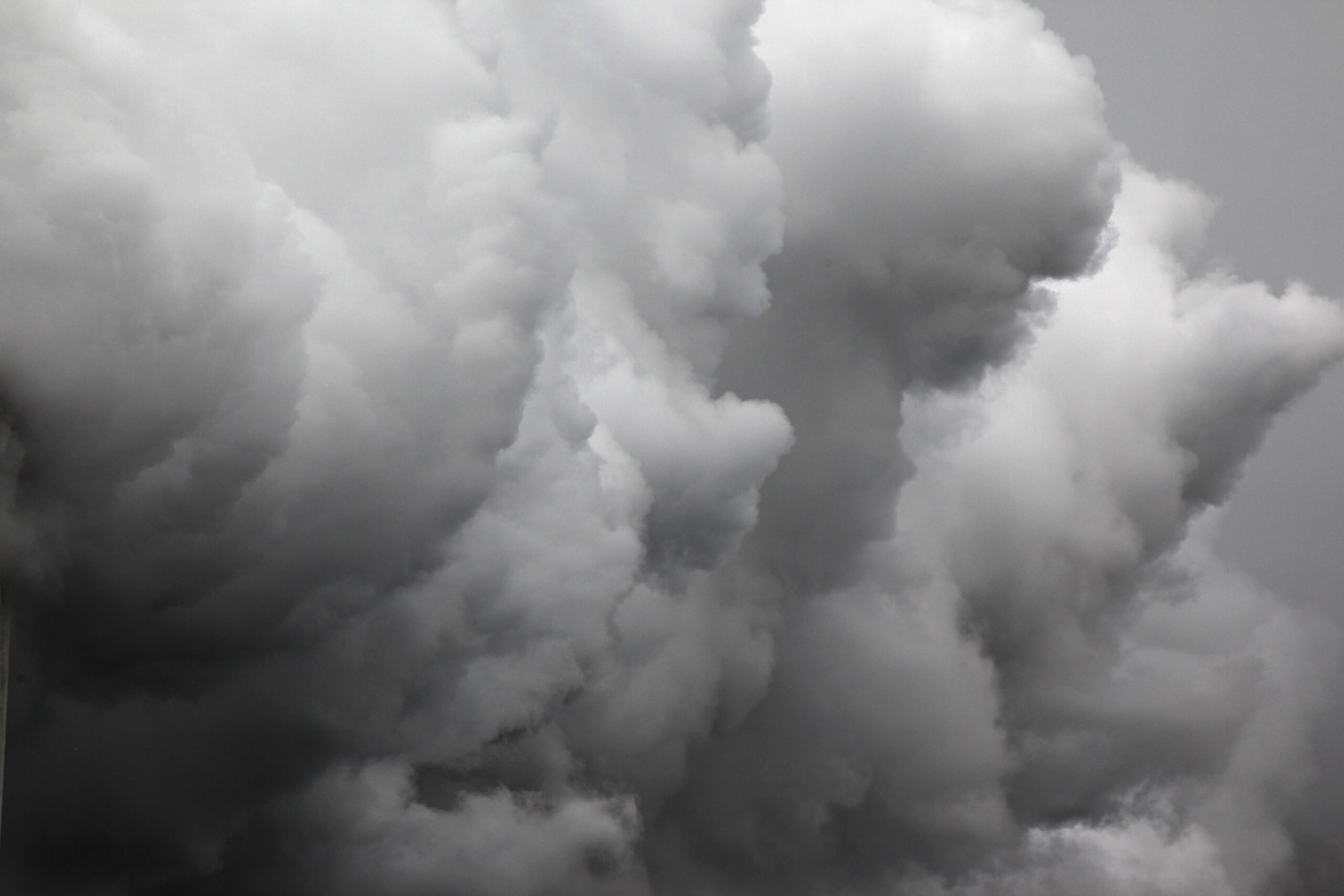
As Rolling Stone contributing editor and frequent New York Times contributor Jeff Goodell explains in his fascinating new book, “How to Cool the Planet,” this has led some members of the scientific establishment to reconsider the radical option of geoengineering — using technology to physically bring down the global temperature. The possibilities being considered include shielding the world from the sun’s rays by releasing particles into the stratosphere and using specially-built remote-controlled ships to increase the reflectivity of marine clouds. These notions may sound far-fetched, but in the case of an ever-worsening global calamity, Goodell argues, they could play a dramatic role in making the planet more habitable, quickly.

As he outlines in his book, each of these options comes with its own set of ethical, environmental and political questions. Who should pay the costs of an expensive cooling program? How do we keep terrorists from using geoengineering to ruin the planet? And how do you get world leaders to agree on the temperature of the planet, if they can’t even sign an agreement to cut CO2 emissions?

Salon spoke to Goodell over the phone about the cooling options at our disposal, the feasibility of CO2-sucking machines, and how geoengineering can teach us to appreciate nature.

For a long time these global cooling ideas were considered ludicrous, but in recent years they’re actually being seriously considered. What’s changed?

I think it’s political failure. There’s been lots of talk about how important climate change is — lots of magazine covers about green business — but we’re not getting together the political will to actually do anything in a serious way about reducing emissions. I think a lot of serious-minded people are beginning to think, What happens if we need to cool off the planet?

For climate scientists, for a long time geoengineering was like a porn habit — it wasn’t the kind of thing you’d want to talk about. It was seen as vaguely illegitimate. But when [Nobel Prize-winning atmospheric chemist] Paul Crutzen published a paper about geoengineering in 2006, it gave people the intellectual cover to talk about it. The Royal Society, which is one of the most respected and oldest scientific organizations in the world, released a report on the subject last fall. There have been statements from the American Meteorological Society and conferences at Harvard. There’s been a lot of talk recently.

In the book you visit David Keith, a Canadian scientist working on a machine to extract CO2 out of the atmosphere. How feasible is such a machine as a solution for climate change?

I think in the long term, the management of the planet is going to require CO2-removal devices of some sort. There are a lot of people working on it, but it boils down to a simple economic question: Can we capture CO2 at an economical price? Right now, the answer is no. David and others wouldn’t disclose exactly what it cost, but the ballpark figure is about $150 per ton removed from the air. That’s about two to three times more expensive — at least — than conventional kinds of CO2 removal. But we’re still at the Wright Brothers stage of exploring this. This is not something that were’ going to be doing for another 30 to 40 years.

How applicable is sun-blocking technology in the short term?

The two most plausible options for cooling off the planet immediately are cloud brightening and putting particles in the atmosphere. Cloud brightening would change the world’s albedo [or reflectivity] by spraying tiny particles, smaller than one micron, into marine clouds so they’re a lighter color and their tops reflect more sunlight. We know this works because we’ve seen ship tracks create clouds from the particles off their engines. There have been a lot of questions about how cloud brightening would impact precipitation patterns and ocean circulation.

The other option is to put particles into the stratosphere. You wouldn’t need very many, and, unlike the particles that come out of coal plants, they go way up high in the stratosphere, so we wouldn’t breathe them in. It would have a global effect by reflecting the sunlight away from the whole planet. This would be done by using a high-altitude aircraft that can get up to about 50,000 to 60,000 feet — though the National Academy of Science has talked about using artillery shells, and there’s also the possibility of using Kevlar tubes held aloft by hot air balloons, which I think is more implausible.

The sun-blocking technologies are much cheaper to deploy, and much more politically fraught than other kinds of geoengineering. They can be put up pretty quickly, work instantly, but they have all kinds of regulatory governance complications. One very rich person or one state can in theory put particles in the air, so the question becomes, how do you prevent an individual actor from doing something like that?

And then there’s the option of dumping iron in the ocean.

A couple of decades ago people discovered that there are deserts in the ocean. If you dump iron into these areas, you can very quickly stimulate the growth of plankton. The theory is that plankton sucks up the carbon off surface waters and when it dies and gets eaten and drifts down, the carbon is sequestered.

There’s a company called Planktos out in the Bay Area that made a lot of headlines a few years ago by trying to do this on their own. The idea was to sell carbon credits on the carbon market, so there was this essentially rogue ship dumping iron into the ocean. But it raises questions about how much carbon actually makes it down to the deep ocean and is sequestered — and how this is going to be regulated.

One of the reasons people might be skeptical about geoengineering is because, I think, in the wake of the Cold War, a lot of people have become disillusioned about the idea of using technology to save the world.

We have a long history of technological hubris and overreaching. [Cold War nuclear physicist] Edward Teller, for example, had the idea of using nuclear bombs to carve out harbors in Alaska. Geoengineering also goes against the reigning gestalt for how we solve the climate problem, which is individual action. It’s the opposite of “No Impact Man.” It’s big impact humanity. It seems like a crazy notion that humans would hope to control the climate, this enormous chaotic system that we have no hope of actually getting control over.

I think one of the most important things about geoengineering is that it forces us to have a conversation about our civilization’s impact on the planet and what kind of world we want to live in. That is, after all, what we’re doing when we decide how much carbon we want to cut. If we decide to cut 80 percent by 2050, for example, we’re deciding what kind of climate we want, and geoengineering makes that explicit.

Geoengineering, in some ways, runs counter to a deeper American philosophy — it’s not about self-betterment through individual action, it’s about big-picture thinking.

It doesn’t fit into this self-improvement every-man-can-change-the-world philosophy, but on the other hand it plays into a couple of undercurrents of American life: apathy and our love of a quick fix. We’ve shown no interest in giving up our comfortable lifestyle in dealing with this problem of the melting planet, and American popular culture shows our love of quick fixes like Viagra or diet pills. Geoengineering appeals to those ideas: We don’t really have to change our lives, we can just throw up some particles into the sky. And this is wrong, wrong, wrong!

A conversation about geoengineering only makes sense in the context of underscoring the need to cut emissions. One of the political problems of geoengineering is that it will be sold by people as a band-aid or a quick fix, and undercut whatever slight momentum there may be for cutting greenhouse gas emission.

Why isn’t it a quick fix?

Cooling the temperature is not the same as reducing the CO2 in the atmosphere. One of the problems of allowing CO2 to continue to accumulate is ocean acidification. The ocean is the biggest reservoir of CO2 and as we continue to add it to the atmosphere, more and more CO2 is being pushed into the ocean. We’re finding more and more that acidification has serious impact on ocean life — especially on the small shellfish and other creatures at the bottom of the food chain — and could trigger a potential collapse of the food chain.

When it comes to putting particles into the atmosphere, there’s also the Sword of Damocles problem. Those particles only last in the atmosphere for about a year before they naturally fall out, so you need to replenish them. If the CO2 has continued to accumulate and those particles aren’t replenished it would be like closing an umbrella on a hot day. Once we go down this road we’re really committing ourselves to it.

As you write in the book, however, there’s actually something quite noble and beautiful about the idea of using this technology to manipulate our climate.

The instinctive reaction to the idea of geoengineering is that we’re messing with nature — not only interfering with something we don’t understand, but messing up something really beautiful. Remember, putting sulfur particles in the sky will change its color. So you wonder, how would you feel about living under a slightly differently colored sky? Will you look up at a cloud and wonder if it was made by nature or some engineer? There’s this idea that we’re going to find ourselves living in a completely artificial environment, like a terrarium.

But I began to see there was something quite profound and beautiful in this kind of human partnership with nature. One of the things we have to grasp is that we mess with nature all the time, and it doesn’t necessarily take away at all from its mystery and beauty. A cloud can be just as beautiful and strange and interesting if it’s blown in by the wind or if an engineer had a hand in creating it. The biggest danger we face now is not ecological hubris, it’s apathy — the notion that nature is out there, beyond the human realm, is very damaging. We have no choice now but to have an active relationship with nature. There’s no other way. We’re doing it already, and we have to become better at it and more conscious of it.

Continue Reading Close
Thomas Rogers

Thomas Rogers is Salon's Arts Editor.

Page 1 of 2 in Earth Day