Jack Abramoff

A reformed Jack Abramoff?

The notorious lobbyist talks about how he justified his own crimes and whether D.C. can be saved from corruption

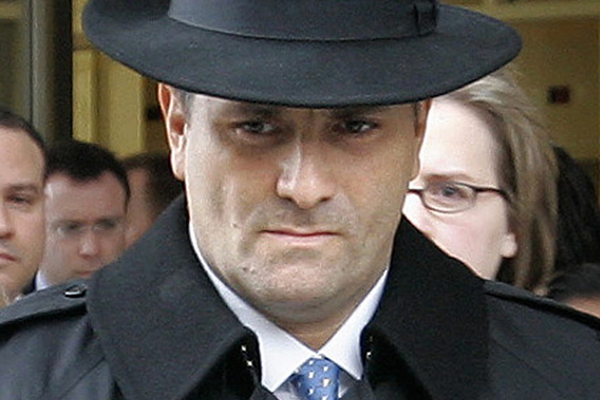
Jack Abramoff leaves the federal court in Washington on Jan. 3, 2006 (Credit: AP)

Before the late aughts, the term “lobbyist” evoked an image of thousands of pinstriped cowboys using sheaves of greenback-stuffed envelopes to corral cash-eating congressmen on the floor of the U.S. Capitol. Then came the sprawling Jack Abramoff scandals, and a single fedora-clad icon became the picture of Washington corruption — a political gunslinger whose flair and balls-out-ness made him stand out from his fellow ruffians on K Street.

Though there have been other well-known D.C. wranglers like Bob Livingston and Haley Barbour, the words “super-lobbyist” and “Abramoff” are basically synonyms. Eventually pleading guilty to felony charges of defrauding American Indian tribes and of public corruption, he went to prison for more than three years — and he brought more than a few politicians and professional influence-peddlers into the slammer with him. Released to a halfway house in 2010, Abramoff just published a book titled “Capitol Punishment: The Hard Truth About Washington Corruption From America’s Most Notorious Lobbyist.”

Abramoff recently agreed to an interview about his book with me on my daily drive-time radio program on KKZN-AM760 in Colorado. During our conversation (full audio podcast here), Abramoff discussed his crimes, but admitted that if he had not been caught, he would still likely be a criminal making bank in the nation’s capital. He also expounded on the psychology of Washington, describing how even the most corrupt lawmakers tell themselves that their vote selling is in pursuit of a higher goal. And he offered up his ideas to clean up the system.

Is Abramoff sincerely reformed? Or is this new Abramoff all just a P.R. façade to rehabilitate his image? Or is it a mix of the two? Read the edited transcript of our discussion below and decide for yourself.

Your book looks at a lot of, as the subtitle says, the hard truths about Washington corruption.  Are you saying that you’ve had a genuine “see the light” moment where you understand the corruption that you were a part of, or are you saying that this can be fixed and that once it’s fixed we can still have super-lobbyists like the next Jack Abramoff?

I don’t think we ought to have super-lobbyists of any kind, frankly. Lobbying is not a bad thing. I’m not trying to say that we shouldn’t have lobbyists or we shouldn’t have lobbying to petition our government. It’s in the Constitution, and it’s something that should be honorable and good. I think what happens is that, because money gets mixed into the play over there, we wind up viewing lobbyists and lobbying very negatively, including the stuff I was involved in. I guess what I’m trying to do is expose some light on (a) what I was involved in and (b) what is still going on to some degree and how lobbyists think and how they approach things and why things are messed up and maybe some remedies for what one can do about it.

You famously pleaded guilty to three criminal felony counts related to the defrauding of American Indian tribes and to the corruption of public officials. Is this kind of thing, in your estimation, still going on? How systemic is it? How many people like the person you once were are still operating in Washington? Is this something that’s the norm rather than the exception?

Well, I think what happened with my situation was that it was sort of the first time the media had an opportunity to peer inside the sausage factory and see what was going on, because of the way my emails were released publicly … I think they got a picture like they never got before there, and unfortunately for me, I was deeply involved in that world.

What happens that what’s legal is bigger in my view than what’s illegal. There aren’t a lot of people breaking the law. You don’t need to break the law. The laws are written in a way that, frankly, the lines are so skewed that you can operate very corruptly within the law for a very long time. I happened to break the law. I happened to be the type who pushed every envelope until I was well over the border of the envelope, but most lobbyists aren’t like that. They will operate happily within the law.

At some level, unfortunately, corruption has seeped its way into even honest dealings there, where you have the exchange of gratuities, you have the exchange of contributions and money, and it’s not viewed as it should be, as bribery; it’s viewed as a polite way that business is done.

If you hadn’t been caught, if it hadn’t been such a big scandal nationally, would you be saying these things in public today?

I’m embarrassed to tell you I probably wouldn’t be [saying these things] and not only that I’d probably still be in there doing it. It took, for me, for better or for worse, it really took my head getting caved in for me to sit back and say, “Wait a minute, what was I doing here?”

At first, when the scandal started, I kind of went, “Oh this will blow over. This is nonsense. These things come and go,” and I thought it would be over in a couple weeks and that would be it. Then when it didn’t look like it was going to be over, for a short period of time I kind of had that typical “Why me? What am I doing differently than anybody else around here? I didn’t do anything that I didn’t learn from somewhere else, so why are you picking on me?”

Then that morphed as I started honestly looking into what I did and what I was involved in and the system that I, frankly, played so well. That morphed into, “Goodness, how could I not have seen this? How could I not have had a clearer head in terms of what I was doing?”

Unfortunately it didn’t until my head caved in. I’d love to be able to tell you that in the middle of it I realized it was bad and I stopped, but I’m not going to be dishonest. I’m going to tell you the truth that it, unfortunately for me, just didn’t happen like that.

As somebody who has been in the business that you were in, give us a sense of the basics of how it really works.

So basically what you have is, 90 percent of the lobbyists have worked on Capitol Hill. They’ve come to Washington to do good and serve the public, ostensibly, and they’ve made the journey through the revolving door. And they have become lobbyists, and they have a lot more money, and they have all these connections. They have connections to people they used to work with and friends who are still up there. And that’s by the way why they are hired, because of those connections, initially. They are also the people who know the process pretty well because they have worked up there.

So now a lobbying firm hires them, and a lobbying firm like mine supplements those relationships by making available to those folks tickets to ball games and restaurants, meals and travel, all sorts of trinkets of the business to enhance those relationships and enhance their access, because at the end of the day a lobbyist is nothing if they can’t get in. If you can’t get in to the decision maker to discuss an issue, what good are you to your clients?

So access is everything, and that’s where a lot of the bribery unfortunately takes place, because also attendant to that are the campaign contributions, raising money for these members of Congress, being an indispensable part of their fundraising team. That’s where lobbyists try to go.

Once you’ve accumulated this access, and ostensibly the firm has clients already or you find clients who have issues, you then approach these congressmen and staff that you’ve developed these relationships with. You’ll get the time on their schedule because you are their buddy or you are somebody taking them to the ball game or you are somebody who is raising money for them, and that’s an advantage over the common man out there or woman out there who can’t necessarily get this kind of access. You take advantage of that — sit them down and go through your issue and try to get them to agree with you.

Now most of the time you are going to present them with something that they would naturally agree with anyway because you don’t want to have too heavy a lift here in terms of trying to change their mind. But getting them to do something that they might do anyway, ultimately, is still your job. And so the lobbyists’ job is on behalf of the client: to push forward their issues with the access that they have, for right or for wrong. And that’s sort of the business.

When you look back on your career as a lobbyist, now with a new perspective on it, what are some of the things you were involved in that most illustrate the corruption of our government?

Well, you know, it’s an interesting question, and I don’t usually look back and think of highlights in that regard because I think the whole thing is the problem. But I’ll give you a story.

I had a congressman. I wanted to get him to help an Indian tribe in Texas. He was congressman Bob Ney from Ohio, and he was chairman of a committee, the House Administration Committee. They were putting through a bill called the Help America Vote Act, and I wanted to slip onto that bill legislation that our staff worded in a very oblique manner — that was absolutely impossible to decipher what it meant — which would have helped this tribe in Texas get their casino legalized again. And so I basically plied him with every manner of bribe in terms of meals and tickets and golf. I put him on a private jet and flew him to Scotland to play at St. Andrews and stayed with him and on him throughout the whole process.

We didn’t get it at the end of the day because of some other thing that was irrelevant to him, not related to him, but that is a sadly kind of typical example of what went on and how business was done by me and is unfortunately still being done by others.

What do you think is the solution to all of this corruption?

Before I went to prison I started to go back and [think of] the kind of world I was in and realized that I shouldn’t have been doing it. It was a process for me. It took a while to come to these realizations, as we discussed earlier. But while in prison, I frankly was already there. I started to think, as a lobbyist, what would I fight if I saw it as a reform. Most of the reforms are jokes that they put forward. There’s silliness like you can’t eat sitting down, you can only eat standing up, and that kind of thing. So I came up with reforms in four areas.

No. 1: If you are a lobbyist, or you are a special interest, whoever that special interest is, you’re somebody who’s getting money or grants or whatever from the government — not Social Security and things that we all get. But if you’re going to get a contract and you’re going to get a government relationship that isn’t appropriate or you’re lobbying them, you shouldn’t be able to give one dollar politically. You basically should be prohibited from giving any contribution politically to any federal member or anybody who is running for federal office. And in addition to that, you also can’t give any gratuity: a meal, tickets to ball games, nothing indirectly, directly, not even a glass of water. Basically, cut out entirely the bribe. And that’s what it is. It’s not polite to say it, but that’s what it is. It’s a bribe. Whenever you’re giving money or you’re conveying some financial interest to a person who works for the government, and you are lobbying to get things from them or you’re trying to get something from them, you’re bribing them, that’s it.

No. 2: The revolving door. If you’ve taken a job on Capitol Hill or you’re a member of Congress or the Senate, it’s a worthy thing, coming to serve the people of America. Once you’re done, go home. Don’t cash in, don’t become a lobbyist, don’t become a strategic advisor, don’t become a history professor, don’t become whatever euphemism they use. Go home. Go get a real job. Don’t stay around and cash in. Americans are sick and tired of the people who come to serve our country, coming in worth $20,000 and leaving worth $20,000,000.

No. 3 is term limits. I was never in favor of them as a lobbyist. I used every argument that every lobbyist uses against them except the real argument, by the way, which is that if you buy a congressmen you don’t want to have to buy that office again. So term limits are very important.

And No. 4 finally, and this we see with this insider-trading scandal, any law that Congress makes has to be applied to them as well as to us. They can’t have exemptions like the insider-trading laws and things like that where they can become rich while they throw other people in jail for doing the same things.

So let’s just be practical about this: A lobbyist represents General Electric. No General Electric employee can give any money to any member of Congress?

If General Electric is choosing, as they do, to get government grants or have government relationships, then yeah, that’s exactly right.

Let’s turn to the psychology of the typical member of Congress. As somebody who has done such extensive lobbying with these people, give us some insight on whether the run-of-the-mill typical lawmaker is eager to be part of a corrupt system, or typically resistant.

For 90 percent of them there’s some cognitive dissonance going on where they don’t even believe that they are being bribed. When they show up, before they are sworn in, they meet with their leadership. What does their leadership tell them? You’ve got to pay off your campaign debt. Here’s a group of people who have checks for you. Guess who those people are? The lobbyists.

So right from the beginning, before they are even sworn in, they are introduced to the lobbyists. They are introduced by their leadership, and this is both sides, by the way.

Now, some of them resist it. But ultimately people have to raise money for the most part from somebody, and often the easiest way to raise money is people who are in Washington handing out checks. They convince themselves that they are not doing anything wrong, and that feeds into the lobbyists. They don’t have to sit there and convince lawmakers to take the money or convince them that they are moral or convince them that it’s not bribery. Nobody has to do that. Institutionally these guys all believe that everything is fine.

You are a devoted Jew, and Judaism has a very rich history of focusing on justice and a sense of fairness.You were somebody who became the avatar of an unjust system, a system that is not fair. While you were doing what you were doing before you went to jail, how did you square your actions with your own religious tradition?

We talked about members of Congress who felt they were doing the noble thing. Believe it or not, so did I. The money I made, 80 percent of it, my wife and I gave to charity. We were winning all the fights for clients that we loved, who had good causes. Our opponents were other lobbyists and folks that we didn’t like. So as I sat in the middle of that system, I didn’t see the forest for the trees, unfortunately, and so as a consequence I didn’t do the right thing. I regret it now. I look back and say, my goodness, what in the world was wrong with me? But the same intoxicating feeling that not only am I not doing bad, I’m doing good, I’m helping people, I’m helping others — that unfortunately infused my world as well.

David Sirota

David Sirota is a best-selling author of the new book "Back to Our Future: How the 1980s Explain the World We Live In Now." He hosts the morning show on AM760 in Colorado. E-mail him at ds@davidsirota.com, follow him on Twitter @davidsirota or visit his website at www.davidsirota.com.

Jack Abramoff plays the earnest reformer

In his new book and in a "60 Minutes" interview, the felon and former super-lobbyist poses as a changed man

Jack Abramoff (Credit: Reuters)

Jack Abramoff is back! He’s selling a book, naturally. (The movie was already made, limiting his cashing-in opportunities.) To celebrate, “60 Minutes” had him on to look sort of contrite while nostalgically reminiscing over his time as Washington’s top incredibly corrupt super-lobbyist.

Abramoff pleaded guilty to defrauding his lobbying clients through over-billing and double-dealing. He admitted to bribery and wire fraud. In his interview, Abramoff explained basically How He Did It, and it turns out that it’s really not that hard to “bribe” a member of Congress. Offer their staffers jobs and give the members lots of gifts and campaign donations. Then you can write whatever you want into pending legislation, more or less.

Why it works is pretty simple too. Members of Congress are mostly rich, but they spend a lot of time with people who are really rich, so they need a constant influx of free shit like concert tickets and vacations in order to “keep up” with the people they actually respect and care about. The staffers of members of Congress, though, are almost entirely not rich, at all, and they, too, spend a lot of their time around people with money (most of them went to school with people who went on to make a lot of money), so bribing them with job offers is potentially even more effective. Representatives and senators rely on their staffs to tell them how to vote, and their overworked and underpaid staffs frequently rely on lobbyists.

“60 Minutes” tries its hardest to be tough on Abramoff, but it’s impossible for a news outlet to give the guy this much airtime without basically enabling his rehabilitation effort. It certainly won’t hurt his book sales.

The new Abramoff scam

As the great Dan Froomkin pretty clearly reveals in one of his posts on the book, Abramoff is still deceiving, trying to implicate Democrats in what was an almost exclusively Republican scandal, and absolving his allies and co-conspirators of responsibility while accusing those who exposed Abramoff’s crimes of corruption. In his book, convicted criminal former Rep. Bob Ney is a naif led astray, while Byron Dorgan and Harry Reid knowingly took his dirty money.

Part of the new Abramoff scam is coming off as an earnest reformer, too. The whole system is corrupt, Abramoff says to “60 Minutes.” In his book, he rails against the corruption of the people whom … he worked very hard to corrupt:

“Most of these legislators had taken thousands of dollars from my clients and firms, and now they were sitting as impartial judges against me. Washington hypocrisy at its best,” he writes. “Members swim in a swamp of corruption, and thrive in it, but they are able — with a straight face no less — to accuse others at will and sanctimoniously punish what they see as malfeasance.”

“Everyone in Washington is a sanctimonious hypocrite” is a line that a lot of people will agree with. It has a bit more moral authority coming from literally anyone who isn’t Jack Abramoff.

But jail time, according to Abramoff, changed him. Now he even has a lobbying reform proposal! It has one real idea (permantly end the “revolving door” between congressional offices and lobbying firms) and a bunch of nonsense and unrelated stuff (term limits, repeal the 17th Amendment). It’s not a particularly serious attempt to deal with the issue of how money corrupts politics. (For that, try Lawrence Lessig?)

Washington forgives almost everyone, of course, no matter their crimes. Tucker Carlson is hosting Jack Abramoff’s book party, and I’m sure Carlson thinks that’s a delightfully wicked thing to do. (The book is published by the lunatic birthers of WorldNetDaily, the world’s silliest and least respectable source of wholly made-up news, which is why I am not naming or linking to it. Google if you’re curious.)

There’s no reason we should take Abramoff the contrite reformer seriously. He was a pious moralizer when he was buying off legislators with golf trips and he’s a pious moralizer now that he’s been humbled by some time in jail and a lower standard of living. Let’s not enable his comeback tour, lest he end up like Chuck Colson or something, permanently comfortably employed by the conservative pundit welfare system.

Continue Reading Close
Alex Pareene

Alex Pareene writes about politics for Salon and is the author of "The Rude Guide to Mitt." Email him at apareene@salon.com and follow him on Twitter @pareene

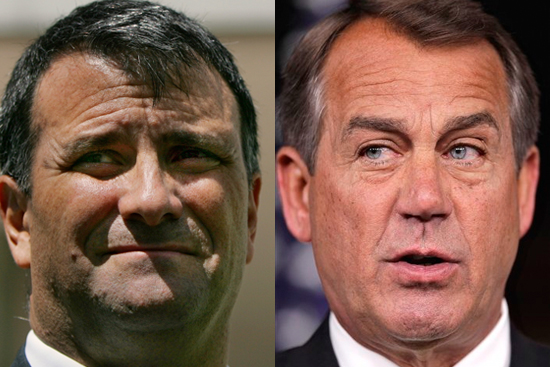
John Boehner’s policy director gave out Abramoff favor money

He greased the wheels for the symbol of GOP corruption, now he works for the leader of the new majority

Jack Abramoff and Sen. John Boehner

John Boehner is so obviously a favor-trading tool of monied interests — this is the man, it must never be forgotten, who literally handed out tobacco company checks on the floor of the House — that sometimes it hardly seems noteworthy when he again proves that he is nothing but a puppet of well-heeled lobbyists. But we must guard against cynicism and always take opportunities to remind the nation that Speaker Boehner is a corrupt tangerine.

So documentarian Alex Gibney writes today of Boehner’s recently hired policy director, Brett Loper. Before joining team Boehner, Loper was, naturally, a medical device lobbyist, whose job was to protect the profits of the medical device industry at the expense of, among other things, the federal deficit. And before that, he worked for the gloriously amoral Tom DeLay.

While working for Mr. DeLay, Loper took a trip to the Marianas Islands with Michael Scanlon, super-lobbyist Jack Abramoff’s co-conspirator. They went to the Marianas Islands to deliver favor money to two legislators in order to bribe them into switching their votes to support an Abramoff ally in his campaign to become speaker of the House. They switched their votes, Abramoff’s buddy got the job, and Abramoff was rehired and “resumed lobbying for the continuation of abusive labor practices in the islands.”

This guy, a bagman for a corrupt lobbyist before he became a corrupt lobbyist himself, is now in charge of policy, for the speaker.

Continue Reading Close
Alex Pareene

Alex Pareene writes about politics for Salon and is the author of "The Rude Guide to Mitt." Email him at apareene@salon.com and follow him on Twitter @pareene

No federal charges for Tom DeLay

The Justice Department decides not to charge the former House majority leader for his connections to Jack Abramoff

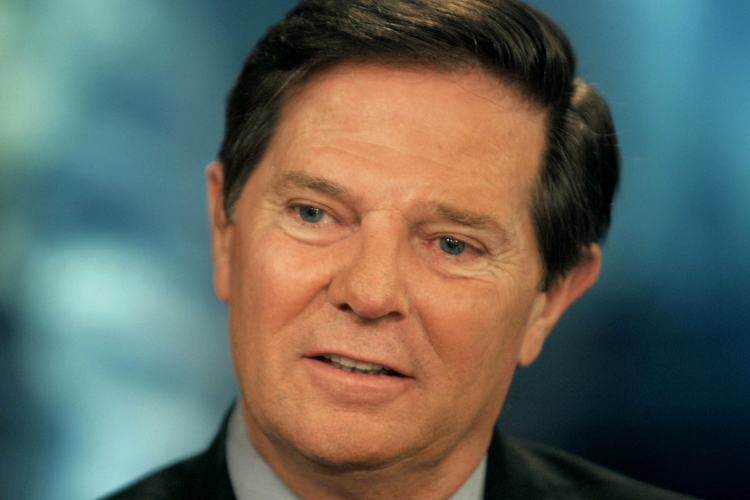
Tom DeLay

Tom DeLay has finally been completely vindicated. After a six-year investigation, the Justice Department has declined to press charges against DeLay for his connections to disgraced lobbyist Jack Abramoff.

Former top DeLay aides Michael Scanlon and Tony Rudy pleaded guilty years ago to corruption charges, but apparently DeLay himself did not violate any federal laws.

Which, of course, doesn’t mean that DeLay isn’t still an amoral, unethical scumbag. The details of DeLay’s relationship with Abramoff are a matter of public record, and while blocking legislation banning sweatshops in the Northern Mariana islands from reaching the floor of the House, as a favor to Abramoff, isn’t a crime, it is still probably not something you want to brag about.

DeLay still faces charges in Texas for conspiracy and being just as corrupt as everyone always knew he was.

Alex Pareene

Alex Pareene writes about politics for Salon and is the author of "The Rude Guide to Mitt." Email him at apareene@salon.com and follow him on Twitter @pareene

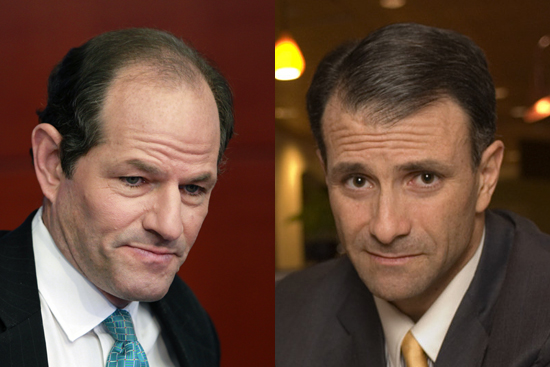
Jack Abramoff, Eliot Spitzer: A tale of two swindlers

What connects the disgraced N.Y. governor and the jailed D.C. lobbyist? Oscar-winner Alex Gibney explains

Former New York governor Eliot Spitzer speaks at the Reuters Global Financial Regulation Summit 2010 in New York April 28, 2010. REUTERS/Brendan McDermid (UNITED STATES - Tags: BUSINESS HEADSHOT)(Credit: © Brendan Mcdermid / Reuters)

What do the following have in common: Imprisoned Washington lobbyist Jack Abramoff, disgraced ex-New York Gov. Eliot Spitzer, the collapse of Enron, the Bush administration’s torture policies, the late gonzo journalist Hunter S. Thompson? Before we go chasing some thread of thematic continuity — and we could definitely do that — let’s observe the emotional connection. All of those people and things provoke or embody big, visceral reactions: shock, outrage, disgust, amazement.

The other thing they have in common, of course, is Alex Gibney, who has made movies about all those subjects, including the Oscar-winner “Taxi to the Dark Side,” the box-office breakthrough “Enron: The Smartest Guys in the Room” and “Gonzo: The Life and Work of Dr. Hunter S. Thompson,” which wasn’t a big hit but strikes me as a key work in understanding what Gibney is up to. He thrives on those oversize emotions mentioned above, channeling them into intentionally ambiguous pop documentaries that inhabit a nuanced middle ground between journalism and entertainment.

As he would be the first to admit, Gibney’s films depend on the work of old-school investigative journalists, those lumbering sauropods who take months or years to reach their destinations. His particular genius lies in taking their facts and figures, their reams of insider testimony, and spinning them into compelling on-screen yarns, loaded with archival news footage, goofy animations and special effects, dramatic re-creations and comic-relief moments. Yet if Gibney’s films are a long way from the purist cinema-vérité documentary tradition, they’re closer in spirit to old-fashioned muckraking than to the clown-prince pranksterism of Michael Moore. (Gibney’s voice can be heard in his films, both literally and figuratively, but he never appears as a character.)

Even by Gibney’s prolific standards, 2010 is shaping up as a bonanza, or perhaps an unmanageable pileup. When I met him recently at the New York offices of Magnolia Pictures, we were officially talking about his explosive, hilarious and eye-opening Abramoff film, “Casino Jack and the United States of Money,” which Magnolia releases in theaters this week. But Gibney also had — count ‘em — three other new movies premiering in the Tribeca Film Festival, at least if you count his section of the anthology documentary “Freakonomics,” adapted from Stephen Dubner and Steven Levitt’s bestselling books. (Other co-directors of that film are Seth Gordon, Eugene Jarecki, Morgan Spurlock and the “Jesus Camp” duo, Heidi Ewing and Rachel Grady.)

Gibney also unveiled a sneak preview of his as-yet-untitled Eliot Spitzer documentary at Tribeca, along with “My Trip to Al-Qaeda,” a film based on journalist and author Lawrence Wright’s solo theater piece about his quest to find the roots of Islamic terrorism. (That film will play on HBO, and perhaps also receive limited theatrical release. The commercial fate of the Spitzer film remains undecided.)

“Casino Jack” veritably revels in the rollicking, stranger-than-fiction details of the Abramoff scandal, in which a brilliant and charismatic lobbyist pimped out much of the United States Congress to big-money corporate clients, along the way defrauding Indian tribes, the territorial government of the Mariana Islands and other easy marks. Beyond that, though, Gibney is fascinated by the scandal’s larger implications — and it’s there that we begin to see the conceptual thread that ties his films together. Abramoff was no rogue out to enrich himself (although he did that too) but a committed right-wing ideologue who permanently changed the rules of the game in Washington. He embraced and embodied that old gag about the Golden Rule: Those who have the gold make the rules.

As always, Gibney was a cheerful, upbeat conversationalist in person. He’s a film buff who stays busy at festivals catching other people’s work, and in an interview context he delivers concise, on-message sound bites, not dark, philosophical jeremiads. Still, as I told him, I sense a pattern here, whether or not it’s entirely conscious: Gibney is documenting the not-so-slow and not-so-gradual demolition of the American dream, the interlinked vision of freedom, democracy and capitalism that has been so influential in the recent history of the world, and now seems to be in potentially terminal decay.

So, Alex, we’re here to talk about “Casino Jack and the United States of Money,” but you’ve got two other films that are either complete or almost complete. And then there’s “Freakonomics,” which you directed part of. I think you should write some kind of self-help book on how to get stuff done. Are you one of those people who’s incredibly organized?

Man, that would make everybody who knows me howl with laughter. I may be the world’s most disorganized person. But I do put in the hours. I should probably join Filmmakers Anonymous. Stop me before I say yes again!

You know, you could look at your films and describe them as miscellaneous. Generally you’re taking the work of journalists and adapting it for the screen. But when I look at them, I see a congressional corruption scandal, a major corporate scandal, a disgraced politician and a dead journalist who spent his life excoriating the stupidity and corruption he saw around him. Is there a pattern?

Maybe if you see it, you’ll let me know. [Laughter.] There are clearly certain things that interest me, and I seem to go there. But a pattern? I don’t know.

Well, if I were a graduate student trying to write a thesis about you, I might suggest that these are all aspects of the decline of America since 1980 — the legacy of the Reagan revolution and the triumph of conservatism in American politics.

Well, there’s a theme in that. I think that’s the big story. Now we’re seeing that the net result of the Reagan revolution was the Wall Street meltdown. Take away all the rules and regulations, and what do you get? Meltdown. So I think that’s a theme.

But the other thing that’s increasingly interesting for me is human behavior. What makes people do the strange things they do? How do good people go bad? How do people abuse power? Those are big things for me.

You’re showing your movie about Eliot Spitzer at Tribeca, but it has no title yet and we’ve all been asked not to write about it. So I take it you don’t think it’s ready to roll?

I’m taking my cue on the Spitzer film from what happened with “Casino Jack” at Sundance. We thought it was finished. But seeing it with an audience, who weren’t my friends or anything, you learn things about how it plays. So we made it a lot shorter, we took at some narration, we just shifted stuff around. I would say the Spitzer film is largely finished, and now we’ll see how people respond. We may make a few adjustments.

Your other new film is “My Trip to Al-Qaeda,” which — well, how would you describe it? Is it an adaptation of Lawrence Wright’s performance piece?

Yeah, in some ways it is. He did a one-man play called “My Trip to Al-Qaeda,” which is like “my summer vacation,” except in the Middle East. What intrigued me was that it was an everyman’s look at al-Qaida — why they attacked us, and why they came to be what they were. In making the film, we filmed the play, but then we enhanced it. The set of the play was Larry’s study, but it also included a TV screen. We made that TV screen significantly bigger on our set, and used it as a magic portal.

There’s a kind of time and space travel in the film, where we go to Cairo, to London. We also travel through space and time to the caves in Afghanistan, to Saudi Arabia, so that you can see and feel these places in addition to traveling on Larry’s personal journey, which is his play.

Getting back to “Casino Jack,” which is a movie about a scandal that was widely covered in the media when the story broke, five or six years ago. It seems as if you’re arguing that people may know Abramoff’s name, and maybe the general outlines of the story, but may not understand its importance.

In some ways, he assembled the tool kit that lobbyists are still using. Now, people will object to that: “Absolutely not! Jack Abramoff was one of a kind! He was completely outrageous.” Well, yes. He was outrageous, and he was way out of control. But he used the same tool kit everybody uses today: the rapacious use of not-for-profits to hide trips, to hide agendas, to hide money flows. The revolving door, where you get staffers from senators’ or congressmen’s offices and put them into your lobbying shops so you can influence votes, influence legislation. The use of entertainment and skyboxes — there are different rules now, but there are also ways to get around them. Biggest of all is the way you manage money to influence legislation, in a way that skirts the prohibitions on quid pro quo. It’s about going inside the kitchen in the world’s biggest restaurant and seeing how the sausage is made. Jack Abramoff was the master chef in the world’s biggest restaurant.

We wonder why Congress is dysfunctional, why they’re not doing the people’s bidding, why everyone seems to hate them. The reason is, the system is broken, because it’s all based on money. By looking at Jack’s story, you can see how that happened.

And Jack’s story — first of all, it’s hilarious and spectacular. It’s globe-girdling, there’s a murder in it, there are sweatshops in Saipan, dirty deals in Russia, arms whistling to the West Bank. But at its heart is the very stuff that is breaking our system of democracy.

This was the biggest congressional corruption scandal ever, at least at the time. But did the level of corruption that Abramoff represented become the new normal, in a sense? Because in the film you suggest that even more dramatic stuff has happened since his downfall.

The dispiriting thing is that Jack Abramoff, in the wake of the financial lobbying of the last few years, looks like a piker. I mean, he’s Podunk! The financial lobbyists, and the medical and pharmaceutical lobbyists, have taken what Abramoff did to a new level.

You mentioned the fact that the Abramoff story is highly entertaining, which it certainly is. And while it’s unlikely that your viewers will find him likable or sympathetic, let’s just say this: He makes one hell of a lead character.

There is another film, which is still called “Casino Jack.” I think they’re going to change the title. It’s a fictional version of this story, in which Kevin Spacey plays Jack Abramoff. I’ve seen the film, and Kevin Spacey is very good in it. But he’s no Jack Abramoff. [Laughter.]

Jack Abramoff is one of a kind. As Neal Volz, a former staffer for congressman Bob Ney who later worked for Jack, says, “Jack could talk a dog off a meat truck.” He was that persuasive. He was the ultimate salesman, but he was also a man of great imagination. He was a film buff, who saw his own life as an action film or a spy thriller. As a result, he imagined himself into situations that, you know, make for pretty good moviegoing.

Suddenly, we’re in Angola, in Africa, where Jack is holding a sort of right-wing Woodstock [in June 1985], shooting machine guns with a bloodthirsty character named Jonas Savimbi and a guy named Adolfo Calero, who used to run the Contras in Nicaragua. And they’re all holding hands after a lot of machine-gun shooting and singing a version of “Kumbaya” with this guy Lew Lehrman, who later ran for governor in New York state, and who gave George Washington’s bowl to Jonas Savimbi, this bloodthirsty dictator. You can’t make this stuff up!

Yeah, I literally couldn’t believe that entire sequence. It’s so amazing. It seems impossible, totally fictional. Was it difficult to find documentation of that event?

It sure was. We got lucky or we were good, one of the two. We tracked down a cameraman who had been there, and he still had 10 hours of footage. We also got Jack’s film, which was amazing. Jack was a film producer. He produced “Red Scorpion,” with Dolph Lundgren [released in 1989], and “Red Scorpion 2.” I think the Angola affair — it taught Jack that it wasn’t a big enough deal. That was his documentary version, and he was always going to make an action film. So he reinvents Savimbi into Red Scorpion, and has Dolph Lundgren as the action hero, shooting up everybody and performing weightlifting tricks. And that’s what Jack was as a young man, a weightlifter. So Dolph Lundgren is standing in for Jack.

I have a fun thing at the beginning of the film. There’s this thing that Jack said to somebody, which we transposed into an e-mail: “Documentary? You don’t want to make a documentary. Nobody watches documentaries. You want to make an action film.”

So to some extent, this film is an action film. That’s what I told Jack: “It’s an action film, man. People are going to be entertained.” I think it’s also a comedy, at least in parts. But unfortunately it’s a comedy in which the joke’s on us.

So you’ve had contact with Abramoff. What was that like?

Very interesting. I visited him in prison, and found him to be a very engaging character, very funny, good storyteller. He loves to quote movies.

Did he know who you were?

He did. I think — no, I know — that there was great reluctance to meeting with me. It wasn’t like I had a big record as a movement conservative, which was something we joked about. We agreed on one thing: I didn’t see him as a bad apple. I saw him as spectacular evidence of a rotten barrel.

He was at the center of things, not on the periphery. Everybody else was trying to make him the scapegoat: “Oh, we got rid of Jack Abramoff. Everything’s fine!” I told him, and I firmly believe, that he was at the center. He was doing stuff to the extreme, yes, over the top. But he was doing the same stuff everybody else was doing.

Well, you make a pretty strong case that Abramoff wasn’t in it for the money, or not entirely. He had an ideological motivation. He actually believed he was doing the right thing.

Right. I think he was a zealot. Unlike his partner, Mike Scanlon, who was in it for the money, Jack Abramoff was a zealot. He believed in the principles of the Reagan revolution. He was very anti-Soviet, but he also wanted to do what Grover Norquist has suggested: make government so small you can drown it in the bathtub. Denude it of its resources. Destroy the government, in effect.

Do you see any parallels between Abramoff and Eliot Spitzer? Here are these two brilliant, headstrong guys from opposite sides of the political spectrum, who appeared to be very idealistic, driven by ideology, but who allowed themselves to become corrupted.

I don’t know that Eliot was corrupted by his ideology, but I think he’s a character who did something that was wildly unexpected. If there is a parallel, it’s hubris. I think Jack became so entranced with his outsize reputation that he began to believe his own press releases. And I think Eliot Spitzer — he started seeing prostitutes at the moment of his greatest political influence. He was on his way to being governor, overwhelmingly popular among both Republicans and Democrats. And at that very moment, at the top of his game, he began to see prostitutes. Dudley Do-Right did wrong.

Of the two of them, maybe Spitzer was the real hypocrite. You can call Abramoff a lot of things, but not that.

I don’t think you could really accuse Jack of being a hypocrite. Jack was corrupt, and I don’t think you can say that Eliot Spitzer was corrupt. But he was hypocritical, there’s no doubt about that. Look, he had increased penalties for johns in New York, and he had prosecuted escort services. Now, I have rather politically incorrect liberal views about whether prostitution should be legal. [Laughter.] But the fact was that it was illegal, and he was the governor of New York, who had convinced people to elect him because he was Mr. Clean. So, yes, he was a hypocrite. And Jack wasn’t.

“Casino Jack and the United States of Money” opens May 7 in New York, Los Angeles and Washington; May 14 in Chicago, Phoenix, San Diego, San Francisco, San Jose, Calif., Santa Cruz, Calif., and Seattle; May 21 in Atlanta, Boston, Monterey, Calif., Nashville, Palm Springs, Calif., Philadelphia, Sacramento, Tucson, Ariz., and Austin, Texas; May 28 in Charlotte, N.C., Cleveland, Dallas, Kansas City, Miami, Minneapolis, Portland, Ore., Salt Lake City, San Antonio and Santa Fe, N.M.; and June 4 in Houston and Waterville, Maine, with more cities to follow.

Continue Reading Close

Best of Tribeca: “My Trip to Al-Qaeda”

"Inconvenient Truth" meets Osama in Lawrence Wright's laconic guided tour to the roots of Islamic terrorism

Lawrence Wright in "My Trip to Al-Qaeda."(Credit: Jojo Whilden)

Counting his unfinished film about disgraced ex-New York governor Eliot Spitzer and his section of the anthology documentary “Freakonomics,” Oscar-winning director Alex Gibney (“Taxi to the Dark Side,” “Enron: The Smartest Guys in the Room”) has four films en route to public consumption. “My Trip to Al-Qaeda,” a screen adaptation of author, screenwriter and journalist Lawrence Wright’s one-man play about his search for the roots of Islamic terrorism, might be the least showy of all, but it’s a spellbinding connect-the-dots tour through some little-understood recent history. (Wright’s 2007 Pulitzer winner, “The Looming Tower,” has been acclaimed as one of the best studies of the cultural climate that led to Islamic terrorism and the 9/11 attacks.)

A genial Oklahoman and natural-born tale-spinner, Wright is also an expert in his field, who befriended Osama bin Laden’s brother-in-law (since murdered) and understands the thinking of al-Qaida mastermind Ayman al-Zawahiri about as well as any Westerner could. None of his conclusions are all that surprising: Most ordinary Muslims around the world want nothing to do with bin Laden; the growth of terrorism has been fueled by the economic backwardness and political repression of the Arab nations, most notably Saudi Arabia; and the United States reacted to 9/11 almost exactly the way bin Laden hoped it would. In Wright’s cheerfully recounted, homespun version of the tale, there has been one winner so far in the “war on terror,” and it ain’t us. “My Trip to Al-Qaeda” will be broadcast by HBO later this year, and may also see limited theatrical release.

Continue Reading Close

Page 1 of 2 in Jack Abramoff