John F. Kennedy
We don’t need truth vigilantes
But we do need good political reporting, and the media's rote repetition of Santorum's JFK lies fell short
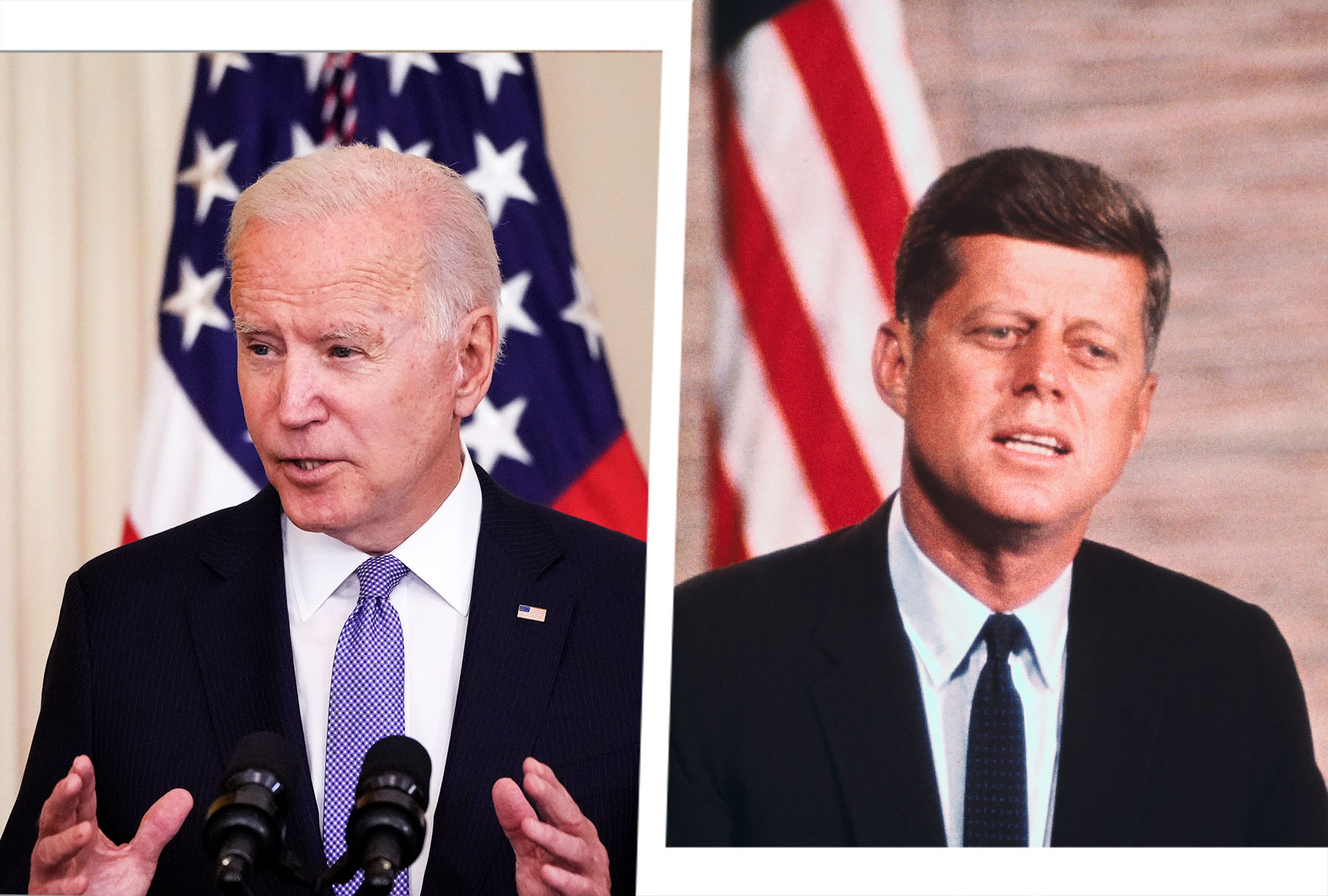
Rick Santorum and John F. Kennedy (Credit: AP/Wikipedia) New York Times public editor Arthur Brisbane got a lot of grief last month for a blog post in which he asked readers whether the Times ought to be “a truth vigilante.” I didn’t join the pile-on, because truth be told, I kind of understood what he was getting at. Sure, “truth vigilante” is a shrill, easily mocked term: It doesn’t take “vigilantism” to get at the truth, only good reporting. But there can be questions for editors and reporters about how far is too far – what’s good reporting, and what’s hectoring? What’s debunking, and what’s partisan water-carrying? (Also, I don’t like the practice of mocking people for asking questions, even when we think the answer should be obvious. Better that Brisbane ask than to ignore the issue entirely.) I can understand why some cases aren’t clear.
But now I have a case that’s very clear for Mr. Brisbane: the Times’ story on Rick Santorum’s lies (yes, I call them lies) about John F. Kennedy’s 1960 religion speech, headlined “Santorum Makes Case for Religion in Public Square.” Since it’s the New York Times and all, I don’t expect the paper to call it a “lie.” But the story contains not one word suggesting that Santorum might be, I don’t know, misrepresenting, misremembering, distorting or otherwise being completely wrong about what JFK actually said.
I’m getting a lot of credit on Twitter and Facebook today for my piece, but this is one of those rare times when I’d rather not be recognized, because – don’t tell my editors – what I did was easy. It took me exactly 10 seconds to Google JFK’s speech and another few minutes to read it. Then I cut and pasted Santorum’s comments next to JFK’s and voila, kids, I had a story. The Washington Post’s Jonathan Capehart credited me with a “deep-dive,” and I appreciate the praise, but really, I barely got my feet wet. (The Post’s own news story wasn’t any better than the Times’; Capehart was the first person on staff to note Santorum’s distortion more than 24 hours after it aired on ABC’s “This Week.”)
I assumed I’d be late to the Santorum story because I was sick yesterday and didn’t even watch him live, I just heard about his remarks online. But I’m writing a book about the Democratic Party and Irish Catholics, and as you’d expect, there’s a little bit about Kennedy in there, and so I thought I’d take a moment to explain what Kennedy said – and how rabid anti-Catholicism, as late as 1960, made it necessary.
I made a comment last week in passing that I’d like to elaborate on here: I’ve spent a lot of time, in the book as well as on Salon, pointing out the anti-Catholic Nativism that hobbled my people and that accounts for some of our pugilism, shall we say, in the public square. But Santorum makes me realize I haven’t said enough about why some people were and still are suspicious of Catholics. His disrespectful comments about mainline Protestant churches somehow being agents of Satan is just one example of the contempt for other faiths that has gotten us in trouble over the years. I came of age after Vatican II; my parents were devout Catholic ecumenicists, attending seders at our local Jewish temple and telling the neighbors, no, we’re not supposed to blame Jews for killing Jesus anymore, and Protestants love Jesus, too. Santorum is an example of the mind-set that liberal Catholics and lapsed Catholics have been fighting in my lifetime, and he’s really a disgrace.
I don’t expect the New York Times to call him a disgrace in its news pages, but I do expect the paper to do a minimum of fact-checking, to see whether our first and only Catholic president actually said what Santorum attributes to him. There was a reserved, respectful, Timesian way to do it, and the paper missed an opportunity to reassure its readers that the paper is all about the truth, and that it’s not cowed into printing untruths by the GOP culture warriors who’ve spent decades now insisting the Times has a raging liberal bias.
I don’t mean to single out Michael Barbaro, either, who does good work, or the team of writers the Times lists as providing additional reporting at the end of the piece. Or Kit Seelye, who wrote the earlier Caucus post, on a tighter deadline, about Santorum’s remarks without fact-checking the JFK claim. I’ve always loved the singular way the paper almost always attributes mistakes, in its Corrections column, to “editing errors.” This was an editing error. Someone at some point should have said, “Hey, I know you’re on deadline – but what did JFK actually say?” It’s not vigilantism. It’s journalism.
You’re welcome, Mr. Brisbane.
Joan Walsh is Salon's editor at large. More Joan Walsh.
Santorum’s JFK story makes me want to throw up
Kennedy never said anything like "people of faith have no role in the public square," and the GOP zealot knows that
Rick Santorum, speaks at the San Marino Club during Saturday in Troy, Mich. (Credit: (AP Photo/Eric Gay)) “We establish no religion in this country, we command no worship, we mandate no belief, nor will we ever. Church and state are, and must remain, separate. All are free to believe or not believe, all are free to practice a faith or not, and those who believe are free, and should be free, to speak of and act on their belief.”
Rick Santorum teed off on a venerated former president Sunday morning for telling America that the separation of church and state was “absolute..” Was it the guy responsible for the above quote? No, that was Ronald Reagan, running for reelection in 1984 (h/t BB).
Continue Reading CloseJoan Walsh is Salon's editor at large. More Joan Walsh.
New book shows another side to Jackie Kennedy
The former first lady's long-sealed 1964 conversations with Arthur M. Schlesinger Jr. will be published this week
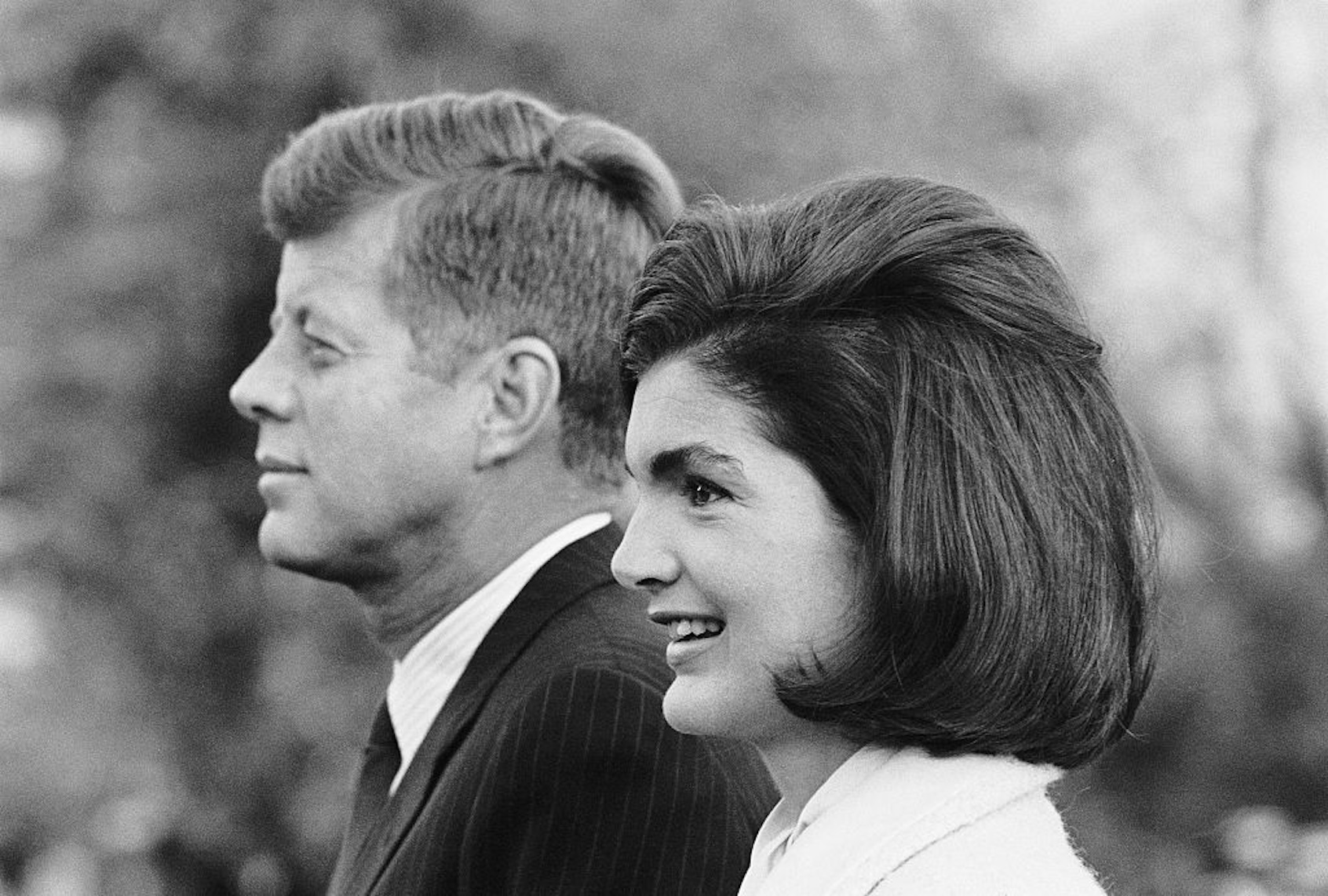
It’s a side of Jacqueline Kennedy only friends and family knew.
Funny and inquisitive, canny and cutting. In “Jacqueline Kennedy: Historic Conversations on Life with John F. Kennedy,” the former first lady was not yet the jet setting celebrity of the late 1960s or the literary editor of the 1970s and ’80s. But she was also nothing like the soft-spoken fashion icon of the three previous years. She was in her mid-30s, recently widowed, but dry-eyed and determined to set down her thoughts for history.
Continue Reading CloseA brief history of controversial presidential vacations
Barack Obama's not the first one to be criticized for taking some time off from running the country
George W. Bush on vacation at his ranch in 2002. Barack Obama is catching a lot of flak for planning a summer vacation. The president will spend 11 days in Martha’s Vineyard, and critics say that’s a bad idea when markets are skittish and millions of Americans are out of work or struggling to get by. Of course, Republicans criticizing Obama are just mirroring what Democrats said about President George W. Bush, who, at this point in his presidency, had taken 180 “days off” to Obama’s 61.
Continue Reading Close
Alex Pareene writes about politics for Salon and is the author of "The Rude Guide to Mitt." Email him at apareene@salon.com and follow him on Twitter @pareene More Alex Pareene.
The coverup continues: The Kennedys in Hollywood
The "Kennedys" miniseries is the latest proof tinseltown just can't handle the truth. I should know
President Kennedy with wife Jackie, daughter Caroline and son John Jr. in 1962 (left); Greg Kinnear and Katie Holmes in "The Kennedys" Although it lasted a mere 1,000 days, the Kennedy presidency has been entombed under 1,000 layers of junk history. Now — with the 50th anniversary of JFK’s brief reign upon us, and the half-century mark coming up on his 1963 assassination — we will soon be neck deep in Kennedy sludge. A flurry of Kennedy projects are in various stages of production in Hollywood, which has long been dazzled by the family’s glamour. But none of them promises to go beneath the surface and capture the deeper essence of their tragic story. When it comes to the Kennedys, Hollywood still can’t handle the truth.
Continue Reading Close
David Talbot is the founder and CEO of Salon. More David Talbot.
New video provides rare glimpse into John F. Kennedy’s final hours
A Dallas museum released the clip showing an animated President Kennedy on the last night of his life
The Sixth Floor Museum in Dallas recently released a video of John F. Kennedy filmed on Nov. 21, 1963 — the night before he was assassinated. The images were recorded at the Rice Hotel in Houston, where the President appeared at an event with local Hispanic leaders. The sadly audio-free clip shows an animated Kennedy with his wife, Jacqueline, as he approaches a podium to deliver remarks.
Continue Reading ClosePage 1 of 2 in John F. Kennedy