
There ought to be a law of literary thermodynamics describing the way text tends to provoke and inspire more text, like a rolling stone gathering moss. A great writer, or even a not-so-great one, produces his or her novels and poems and essays; then scholars publish his diaries and letters and notebooks; then critics add their analyses and deconstructions; then biographers set to work on the writer’s life. In the end, the original work seems like the mere nucleus of, or excuse for, a great textual organism, which ends up living its own life, indifferent to the desires of the person who inadvertently gave it birth.
“The Complete Poems of Philip Larkin” caps off a spectacular example of this process. When he died in 1985, at the age of 63, Larkin was famous and beloved on the strength of three short books of poems, which appeared at long intervals: “The Less Deceived” (1955), “The Whitsun Weddings” (1964), and “High Windows” (1974). The slimness of this body of work was partly responsible for its power. A garrulous poet, like W.H. Auden, suggests that the world is endlessly interesting, that many things deserve to be talked over. A costive one, like Larkin, suggests the opposite: that the world is a barren, difficult place, in which only the great and central questions are worthy of discussion.
For Larkin, the truly poetic subjects were the passage of time and the inevitability of death. Almost all of his great poems deal with mortality, under a variety of disguises. The last poem in his first collection, “At Grass,” considers retired racehorses in a pasture: “Do memories plague their ears like flies?/They shake their heads. Dusk brims the shadows./Summer by summer all stole away,/The starting gates, the crowds and cries….” “The Explosion,” the last poem in his last book, concludes with the widows of miners killed in an accident, imagining their heavenly reunions with their husbands:
for a second
Wives saw men of the explosion
Larger than in life they managed–
Gold as on a coin, or walking
Somehow from the sun towards them…
In between come poems like “The Old Fools,” a bitter depiction of senility; and “The Building,” about a hospital where “All know they are going to die./Not yet, perhaps not here, but in the end”; and “Church Going,” where an old cathedral’s only remaining power comes from the dead buried around it. Larkin’s summing-up on the subject of death comes in one of the few poems he wrote in his last years, “Aubade”:
The mind blanks at the glare. Not in remorse
–The good not done, the love not given, time
Torn off unused–nor wretchedly because
An only life can take so long to climb
Clear of its wrong beginnings, and may never;
But at the total emptiness for ever,
The sure extinction that we travel to
And shall be lost in always. Not to be here,
Not to be anywhere,
And soon; nothing more terrible, nothing more true.
This poem appeared in a magazine after Larkin’s last collection was published, and had to wait for book publication until the “Collected Poems” of 1988. That volume, edited by Larkin’s friend and fellow poet Anthony Thwaite, included a dozen or so excellent poems that were either uncollected or unpublished by Larkin. Less happily, it broke up the sequence of the poet’s own collections in order to present all his work in chronological order, which meant mixing up masterpieces with squibs. Aware of the problem, Thwaite produced a second “Collected Poems” in 2003, which restored the integrity of the original three books. It also included the poems of “The North Ship,” Larkin’s very first collection, which he published in his early 20s and considered juvenilia.
Already you can see the accumulative process at work, as Larkin’s small, nearly perfect body of work is churned and re-churned. But this was only the beginning. The publication of his wonderful “Selected Letters,” in 1992, was a welcome addition to the canon. Then came separate books of his correspondence with Kingsley Amis, his best friend, and Monica Jones, the closest he came to a lifelong romantic partner. In 2002 came a collection of fugitive essays, “Further Requirements”; in 2005 a collection of truly minor “Juvenilia.” Even a few quasi-pornographic stories set in a girls’ school, written as a diversion, appeared between hard covers as “Trouble in Willow Gables.”
Now comes the “Complete Poems,” a brick of a book in which the flowers of Larkin’s work lie pressed. The volume, edited with great industry and accuracy by Archie Burnett, is 729 pages long; of these, Larkin’s three major collections occupy exactly 68. Throw in the other finished poems of his mature period, and you might reach 100 pages of genuinely good poems. This category includes both published works like “Aubade” and poems that Larkin presumably judged unworthy of publication, but that certainly deserve to be read, such as “Best Society”:
Viciously, then, I lock my door.
The gas-fire breathes. The wind outside
Ushers in evening rain. Once more
Uncontradicting solitude
Supports me on its giant palm;
And like a sea-anemone
Or simple snail, there cautiously
Unfolds, emerges, what I am.
The other 629 pages will have little or no interest for the general reader, but they are a monument to the word “complete.” Burnett has assembled everything in the Collected Poems and the Juvenilia, plus verse extracts from Larkin’s letters, plus scraps from the workbooks. As near as possible, anything that flowed from Larkin’s pen in meter and rhyme is between these covers. Whether all of it deserves the name of “poems” is another matter. Take this quatrain:
And did you once see Russell plain?
And did he start at Condon’s nod,
Ten choruses of “Da-da Strain”?
You lucky fucking sod!
Readers of Larkin’s letters will probably guess that this profane squib about jazz musicians was originally written to Amis. Burnett’s note confirms this, and identifies the clarinetist Pee Wee Russell, and explains that Larkin is imitating a famous poem by Browning (“Ah, did you once see Shelley plain?”). The only way Burnett’s commentary could be improved, in fact, is if it were cross-referenced to the text by page number; as it is, finding the commentary to any particular poem is a laborious process. But the disproportion between the importance of the text and the amount of work that went into its annotation is striking, and a little comical. The “Complete Poems” gives the sense of having filed away Larkin’s oeuvre for good in some Platonic archive; it is ill suited for any reader who wants to encounter his poems as living works of art.
“Obama Begs U.S. Not to Embarrass Him in Front of French,” read the Onion headline during last year’s state visit by Nicholas Sarkozy. Once again, the fake newspaper got the real story: Americans tend to feel that whatever we do, the French do it better, or at least cooler. French women, a popular weight loss guide has it, don’t get fat. A recent Wall Street Journal article caused a sensation by explaining why French children are better behaved and more self-sufficient than American children. And of course, when it comes to love and sex, the French are our touchstone for sophistication: just compare the Lewinsky affair to the funeral of François Mitterand, where his wife and mistress stood side by side.
“The Paradox of Love,” the latest book-length essay by the prominent French intellectual Pascal Bruckner, confirms most of these American assumptions about France. Among the many subjects of Bruckner’s highly readable meditation is a section titled “Europe, the United States: Different Taboos,” in which he marvels at the parade of American sex scandals — Clarence Thomas, Bill Clinton, Eliot Spitzer. All this “strikes French people as grotesque,” Bruckner writes. “On the moral level… one can only urge Americans to learn from the Old World how to be temperate.”
Yet Bruckner also suggests that all is not entirely well with the French libido, either. It is not a coincidence that the most famous living French writer, Michel Houellebecq, got that way by writing novels full of sexual despair, in which unattractive men, edged out of sexual competition, patronize prostitutes or succumb to sheer nihilism. Bruckner confirms that there is indeed a “paradox” about today’s laissez-faire sexual mores in Europe: The freedom it offers is exactly the freedom of the market, in which there are always winners and losers. “Rejection is so terrible in democratic countries because it cannot be blamed on the wickedness of the state or ukases issued by a church. If I am not received with open arms, I have only myself to blame; I may be dying of desire, but it is my being as such that leaves the other person cold. The judgment is as final as one handed down by a court: no thanks, not you.”
What’s more, even as Bruckner embraces the ideology of romantic love — “a whole erotics, love that makes us as much as we make it” — he shows how the lifelong pursuit of passion exacts an awful toll on relationships. “In some Western European countries marriage has become pointless,” he writes. “Instead of the conjugal straitjacket,” people prefer “a light coat that one can change at will.” After all, if the delight of new love is the highest of human experiences, then a relationship of more than a year or two is simply a kind of martyrdom: “Our romances have never had such short lives.” This is a romantic “poverty that is more insidious than any other, because it arises from satiation, not from lack.” In the end, Bruckner’s urbane but unsparing portrait of the way the French love now suggests that sophistication has as many pitfalls as naiveté.
Continue Reading
Close
When we look at ourselves next to our closest evolutionary cousins — the chimpanzees, with whom we humans share some 99 percent of our DNA — what strikes us most are the enormous differences. Above all, we tend to celebrate the superiority of our minds, which are capable of discovering the Pythagorean theorem, building a spaceship, and painting the “Mona Lisa”; our minds are what take us out of the animal world and into the world of culture and history. But the contributors to “The Primate Mind,” a new collection that showcases cutting-edge thinking about primate psychology and neurology, urge us to put aside the differences for a moment, and think instead about the similarities. As primates, our brains share deep structures with those of chimps and baboons; if you go even further back on the evolutionary tree, we have things in common with dogs and birds. Do these animals, too, have minds in any meaningful sense? And if so, how would we know it?
These are the questions addressed by most of the contributions to “The Primate Mind,” which range from fairly accessible, wide-ranging essays to technical descriptions of experiments. They share what Frans de Waal and Pier Francesco Ferrari, the volume’s editors, call “a bottom-up approach to the primate mind.” Rather than focus on what separates humans from “lower” species of primates, or try to make primates do human tasks — such as gorillas painting pictures or learning language — these scientists ask what basic mental structures all primates share.
The answer turns out to be surprising: All primates, and many more primitive animals, are capable of empathy, cooperation, learning and deduction. Take an experiment described by Ludwig Huber, in his paper “What, Whom, and How: Selectivity in Social Learning.” Six species — marmosets, ravens, jackdaws, dogs, keas, and human children — were shown members of the same species searching for hidden food. It turns out that keas and marmosets are almost as good as humans at observing the search and figuring out how to replicate it. And there is reason to think that such animals are not simply copying the actions they see but actually thinking in goal-oriented terms. This is suggested by another experiment involving dogs: dogs who watched a dog use his paw to push a lever for food preferred to use their own mouths to push a similar lever, suggesting that they were not following blindly but understood the logic of the process.
The central concern of “The Primate Mind,” however, is empathy. Can we say that chimps truly enter into one another’s point of view, the way humans do? Here the exciting development has to do with the discovery of “mirror neurons” in the primate brain. These neurons are activated when an individual watches another individual perform an action or display an emotion, thus replicating the experience in its own brain. “Mirror neurons,” writes Marco Iacoboni, “gracefully solve the problem of other minds, which is fundamentally a problem of having access to the mind of other people.” Even for non-specialists, “The Primate Mind” offers the excitement of seeing science begin to offer concrete answers to such fundamental and ancient human questions.
Continue Reading
Close
One of the valuable, if unsung, roles of the university press is to publish local history, works about the state or city of their host institution. Often enough, these are staid books — diaries of pioneer women or biographies of little-known governors. But with Dmitry Samarov’s “Hack: Stories From a Chicago Cab,” the University of Chicago Press has produced a work about the Windy City that could not be grittier or more up-to-the-minute — so much so that it draws on material originally published by Samarov on Twitter and his blog. These vignettes, organized according to the schedule of a typical driver’s week — from the Monday doldrums to the bacchanal of Saturday night — constitute a work of ground-level urban sociology, showing parts of Chicago life that few novelists or academics could access.
The freedom of the cab driver, as Samarov describes it, is the freedom of the outcast, a result of invisibility. His peers, the cast of characters who feature in many of these stories, are prostitutes, drug dealers and the homeless — all people who live in public but are seldom genuinely seen. “With their makeup, voices and flamboyant clothes, none of the four could definitively be classified as either female or male; they are in that sweet spot calculated to appeal to the widest possible clientele,” Samarov writes about one group of passengers. Picking up these prostitutes at a doughnut shop parking lot, he observes how their singing and chatting suddenly dies down when they approach their destination, the “abandoned lot” where they’ll get to work. The cab driver, too, conceals his real personality when he’s with a customer: Samarov notes that drivers hate to have passengers sit next to them up front, which suggests too much familiarity.
A surprising number of Samarov’s passengers tell him quite openly that they’re going to buy drugs. “Ashland and Cortez. Take me there fast. There’s cocaine there,” one fare says “even before he sits down.” Others have legal cravings that are just as insistent: “A middle-aged run down woman with teeth missing offers to blow me in exchange for a ride” to a drive-thru fast food restaurant. McDonald’s is a popular late-night destination for drunk revelers, some of whom end up leaving food or vomit in the backseat for the driver to clean up.
Only very rarely in “Hack” does Samarov end up having some kind of human encounter with his passenger. One such occasion is when a woman pronounces the name of Goethe Street like the writer’s name, “Gertuh,” as well as the Chicago pronunciation, “Gothee”: this is an “instant conversation starter,” and it turns out that she is a teacher for whom “correct pronunciation is a point of pride.”
Of course, it’s not every driver who would identify so readily with the down-and-out. Samarov sees taxi driving as a kind of seated flâneuring, appropriate for a man who is “really” a painter, who only drives to support his art. (He graduated from the Art Institute of Chicago, and “Hack” is full of his sketches of passengers.) Most drivers are immigrants — many of them, Samarov notes, with professional qualifications that they can’t use in America — and they see driving as a route into the middle class, not a temporary escape from it. Still, after reading “Hack,” you’ll never again get into a taxi without imagining what the driver might write about you.
Continue Reading
Close
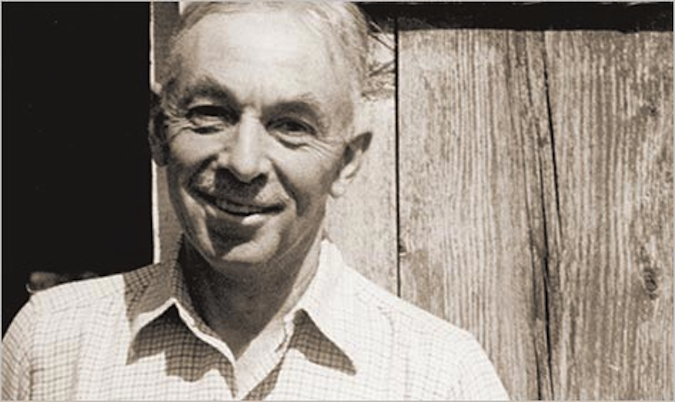
E.B. White is one of those writers you are liable to meet again and again in the course of a reading life, each time wearing a different expression. To children, he is the author of the classic animal tales “Charlotte’s Web” and “Stuart Little”; to college students, he is half of Strunk and White, the authoritative guides behind “The Elements of Style.” Later on, he may turn up as the urbane humorist who helped define the voice of the early New Yorker, or the Maine farmer who learned about enduring values from tending his chickens and pigs, or the earnest liberal who upheld free speech during the McCarthy period.
Now all those Whites have been brought together in the pages of “In the Words of E. B. White: Quotations From America’s Most Companionable of Writers,” an anthology of quotations edited by his granddaughter Martha White. Appropriately, the book is published by Cornell University Press: Cornell was White’s alma mater, the place where he got his first newspaper experience and picked up his lifelong nickname, Andy (after the university’s founder, Andrew Dickson White). In her introduction, Martha White offers an affectionate sketch of her grandfather’s career, including her own memories of the “lifelong sense of wonder” he brought to all his endeavors.
It’s not hard to see why she chose the word “companionable” to describe White’s writing. In person, he was famously shy — James Thurber, his fellow New Yorker writer, described the way White would slip out of his office by the fire escape rather than receive visitors. But on the page, White was indeed an easy companion, never intimidating the reader with erudition or experiment. He exemplified the virtues he tried to teach in “The Elements of Style”:
Young writers often suppose that style is a garnish for the meat of prose, a sauce by which a dull dish. Style has no such separate entity…. The beginner should approach style warily, realizing that it is himself he is approaching, no other; and he should begin by turning resolutely away from all devices that are popularly believed to indicate style — all mannerisms, tricks, adornments. The approach to style is by way of plainness, simplicity, orderliness, sincerity.
But unlike Ernest Hemingway, whom White famously parodied in “Across the Street and Into the Grill,” there is nothing austere about White’s plainness. It is, rather, a vehicle for straight-faced, self-deprecating humor. “Writers … who take their literary selves with great seriousness are at considerable pains never to associate their name with anything funny or flippant or nonsensical or ‘light,’” he writes. “They suspect it would hurt their reputation, and they are right.” White himself had no such fears, and he often appears in his own work as a comic figure, especially when he writes about his unlikely career as a farmer. “In the minds of my friends and neighbors who really know what they are about and whose clothes really fit them, much of my activity has the quality of a little girl playing house. My routine is that of a husbandman, but my demeanor is that of a high-school boy in a soft-drink parlor.”
But this smiling demeanor shouldn’t be mistaken for flippancy. Just underneath the surface, White writes as an earnest upholder of American values, a writer in the libertarian tradition of Thoreau. “Walden” was his favorite book — “the only book I own, although there are some others unclaimed on my shelves” — and he sees his own farm as a similar experiment in independence and authenticity. Like Thoreau, too, White stood up for the rights of the individual against the pressure to conform: “one of the noblest attributes of democracy is that it contains no one who can truthfully say, of two pots, which is the cracked, which is the whole.” In all these ways, “In the Words of E. B. White” offers a perfect introduction, or reintroduction, to a writer truly in the American grain.
Continue Reading
Close
The fall of the Roman Empire is traditionally dated to 476 CE, the year when the last emperor, Romulus Augustulus, was deposed. There is a pleasing symmetry in the fact that the last emperor’s name should pay homage to the founder of Rome and the founder of the Empire; but to those who lived through it, the fall of Romulus Augustulus would not have felt like much of a milestone. By then, the transformation of the Roman Empire had been going on for at least a century, as a series of radical changes put an end to its age-old identity: the official conversion to Christianity under Constantine, the splitting of the empire into Western and Eastern halves, and the unstoppable invasions of Germanic tribes, many of which carved out new kingdoms on imperial territory. This period of transition, beginning in the fourth century CE, can be seen as “late antiquity” or the early Middle Ages, and it has been the focus of some of the most exciting classical scholarship in recent years.
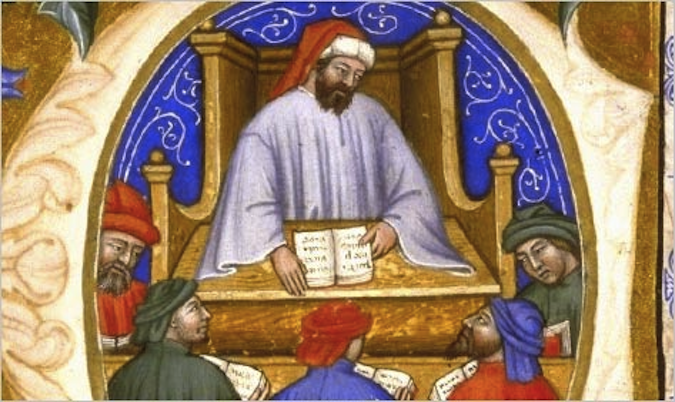
It’s fitting to close out my three-part appreciation of the Loeb Classical Library (here are parts one and two), then, by looking at two works from the sixth century CE, near the chronological end of the series. The lives of Boethius, author of “The Consolation of Philosophy,” and Procopius, author of “The Secret History,” overlapped, and between them they neatly embody the two halves of the imperial legacy. Procopius was born about 500 CE in Caesarea, in the Roman province of Palestine. He spent his life in the service of the Eastern Roman Empire, which continued intact after the Western Empire had disintegrated into a group of barbarian kingdoms. Anicius Manlius Boethius, born about 480 CE, was a servant of one of those kings: Theodoric, the Ostrogothic ruler who established control over much of Italy. Procopius wrote in Greek, Boethius, in Latin; the former was a historian, the latter a philosopher and theologian. Read together, their most famous works offer a powerful portrait of an age of violent transition, which even at the time looked like a decline and fall.
It’s doubly ironic that Procopius should be best known today for his “Anecdota,” a title that literally means “Unpublished Notes” and is usually translated as “The Secret History”. First, because this work was so scandalous and at times pornographic that it remained practically unknown for centuries after it was written in the 550s — the first Latin translation was not made until the seventeenth century. And second, because “The Secret History” constitutes a repudiation of the much longer historical works that made Procopius famous — the “Wars of Justinian” and the “Buildings of Justinian”.
Those books are our main source for one of the most important periods in Byzantine history, the reign of the Emperor Justinian from 527 to 565. Justinian is remembered for three hugely ambitious undertakings: building the Hagia Sophia cathedral in Constantinople; codifying the whole body of Roman law in the” Corpus Juris Civilis,” thus transmitting its legacy to the Middle Ages and beyond; and attempting a reconquest of the Western Roman Empire, under his great general Belisarius. All this sounds like enough to ensure his reputation, which Procopius’ own works did much to promote.
But “The Secret History” begins by confessing that those works were not the whole story. “It was not possible, as long as the actors were still alive, for these things to be recorded in the way they should have been,” Procopius writes. “Nay, more, in the case of many of the events described in the previous narrative I was compelled to conceal the causes which led up to them.” Only now will he reveal the whole truth — even though, he acknowledges, the stories he is about to tell are so grotesquely outrageous that “such things…will seem neither credible nor probable to men of a later generation.” (He was right about that. The editor of the Loeb edition, H. B. Dewing, says in the introduction that Procopius’ “testimony…falls to the ground through the weight of its own extravagance.”)
The central message of “The Secret History” is that Justinian and his wife, the Empress Theodora, were evil incarnate, the most depraved and cruel human beings who ever lived. That is, if they were even human:
And some of those who were present with the Emperor, at very late hours of the night presumably, and held conference with him…seemed to see a sort of phantom spirit unfamiliar to them in place of him…the head of Justinian would disappear suddenly, but the rest of his body seemed to keep making these same long circuits…. And another person said that he stood beside him when he sat and suddenly saw that his face had become like featureless flesh; for neither eyebrows nor eyes were in their proper place.”
If Justinian was a bodiless demon, Theodora was all too fleshly for Procopius’s liking. His sketch of her is a masterpiece of character assassination that even the National Enquirer would consider outré. Evidently, Theodora started life as a child prostitute and became a notorious sex maniac: “[S]he used to take Nature to task, complaining that it had not pierced her breasts with larger holes so that it might be possible for her to contrive another method of copulation there.” One of her specialties, Procopius writes, was a sex show in which geese would peck grains from her genitals — a pornographic version of Leda and the Swan.
Underneath all the lurid details and denunciatory rhetoric, however, it is possible to see Procopius as responding to real historical developments – though we might well draw different conclusions than he did. When he blames Justinian for handing over the wealth of the Empire to barbarian tribes, he is lamenting a shift in the balance of power that no single emperor could have caused or cured. And where he is suspicious of Justinian for staying up late at night or for changing so many traditional laws, we might glimpse an admirable ruler, one working hard to adapt his government to a changing world.
If Procopius responds to change with anger and recrimination, Boethius’ response was altogether more sublime. After a career in which he served Theodoric in high office and amassed great wealth, he was accused of plotting against the king in order to restore the old Roman Senate — charges that led to his execution in 524 CE. In the period between condemnation and death, while he was evidently under house arrest, Boethius composed “The Consolation of Philosophy,” setting down in alternating passages of verse and prose everything he had learned about stoicism in the face of adversity.
As the book opens, Boethius is lamenting his fallen condition in a poem: “Ah why, my friends, / Why did you boast so often of my happiness? / How faltering even then the step / Of one now fallen.” He is interrupted by the sudden appearance of Philosophy in the form of a woman: “Her look filled me with awe; her burning eyes penetrated more deeply than those of ordinary men; her complexion was fresh with an ever-lively bloom, yet she seemed so ancient that none would think her of our time.” Sternly, Philosophy shakes Boethius out of his self-pity and proceeds to explain, in the form of a Platonic or Ciceronian dialogue, all the reasons why men should not be downcast by bad fortune.
Remarkably, although Boethius was a Christian — indeed, the “Consolation” appears in a Loeb volume along with several of his theological tracts — he never employs Christian arguments or even mentions Jesus as a source of support. Instead, he allows Philosophy to set forth a classic stoic argument. Fortune is inherently fickle, always spinning her wheel; we should actually be grateful for bad luck, because it reveals the truth about the instability of fortune. The only true source of happiness lies within ourselves — not in riches, power, or fame, whose claims Philosophy considers and dismisses.
The book culminates in a vision of a divinely ordered cosmos in which everything is ordained for the best, no matter how unjust it may look from the human perspective: “There remains also as an observer from on high foreknowing all things, God, and the always present eternity of his sight runs along with the future quality of our actions, dispensing rewards for the good and punishments for the wicked.” In a time like Boethius’, when all the old verities were falling apart, this kind of certainty was desperately needed. But like all the best of classical literature, it is no less resonant today. As long as injustice and misfortune touch our lives, we can be grateful for the consolation of Boethius’ “Consolation.”
Continue Reading
Close