Dan Gillmor

Whitman and Fiorina: Silicon Valley’s shabby side

The top California Republican candidates are a reminder of the tech industry's less-admirable values

  • more
    • All Share Services

Whitman and Fiorina: Silicon Valley's shabby sideMeg Whitman and Carly Fiorina

Meg Whitman and Carly Fiorina, who won their primary races to become California’s Republican candidates for governor and U.S. senator, came to great public visibility — and wealth — in the technology world. They represent elements of a Silicon Valley culture that was most evident during the bubble years of the late 1990s.

The culture had evolved by then. Getting rich was always a motivation for people in the tech industry, but so was innovation and competition that could be fierce yet fair.

Whitman, at least, knew how to run a company. She was a strong leader at eBay, a company that innovated in many areas as it became by far the largest service of its kind.

Like some other big tech companies of the era, however, eBay also resorted to over-the-top tactics to stifle competition. In 2000, it persuaded a federal judge in California that Bidder’s Edge, a company that offered price comparisons across multiple auction sites, was “trespassing” on its servers — a ruling that threatened “the very foundations of the Web,” according to some of America’s top cyber-law experts. (An appeal was dropped in a settlement, and a California Supreme Court decision in a different case appeared to contradict the district judge’s ruling.)

But my chief recollection of Whitman was her participation in the culture of greed that overcame Silicon Valley. While she was CEO of eBay, her company sent lots of business to Goldman Sachs. Goldman put her on its board of directors, “paying her an estimated $475,000 for little more than a year of part-time service” and — in a practice known as “spinning” — it gave her “insider access to the initial public offerings of hot stocks worth millions,” according to California Watch’s recent round-up of the Whitman-Goldman ties. (Whitman has denied any connection between her eBay role and Goldman’s offering her IPO stocks at insider prices.)

Now, I agree with Whitman and her defenders who say it’s absurd to blame her for Wall Street’s hugely cynical, and in some cases probably illegal, manipulations during the housing bubble of the last decade; she was on Goldman’s board for only 15 months, after all, and that stint ended in 2002. It’s all the other stuff of that earlier era– especially the spinning — that speaks to her personal values.

One of her defenses has been that, well, the spinning didn’t bring her much money (about $1.8 million, which later went back to shareholders in a lawsuit settlement) in the context of the enormous personal wealth her eBay holdings had provided, as if it’s OK to do something unethical as long as the relative numbers are small. And in April, she told the AP that she wouldn’t do it again, but called the practice part of the “normal course of business” of the era.

That’s the point: Spinning was normal for all too many of Silicon Valley’s hotshots back then. It was also cynical and outrageous, part of the dismal value system of the time that went, roughly, “What’s acceptable is what you can get away with.”

Fiorina, for her part, was part of an ascendant valley culture of a different kind. She wasn’t as terrible a CEO of Hewlett-Packard as her critics maintained, but her pay certainly dwarfed her performance. The board had ample reason to force her out in 2005, and her platinum parachute of more than $20 million made more than a few admirers of the old HP gag even though it had become (and remains) a too-standard practice in corporate America.

For those who remembered the old HP, Fiorina’s tenure was marked most dismally by her  dismantling of something core to the valley. This was a vision and practice called the “HP Way” — a corporate culture created by the founders, William Hewlett and David Packard, who believed and acted as though employees and communities were as important as shareholders and executives. More than a few of the companies that rose in the valley in the wake of HP’s pathbreaking success held some or all of these notions as foundations, too.

Fiorina didn’t start the process of ending the HP Way, but she pretty much finished it. Even if she’d been a good CEO in other ways, that part of her tenure will remain her most lasting contribution — and not a positive one.

A longtime participant in the tech and media worlds, Dan Gillmor is director of the Knight Center for Digital Media Entrepreneurship at Arizona State University’s Walter Cronkite School of Journalism & Mass Communication. Follow Dan on Twitter. More about Dan here.

Apple’s control-freakery eclipses iPhone advances

Other, more open systems will catch up soon enough. Meanwhile, digital networks can't handle all the cool features

  • more
    • All Share Services

Apple's control-freakery eclipses iPhone advancesApple CEO Steve Jobs holds the new iPhone 4 at the Apple Worldwide Developers Conference in San Francisco on Monday.

It does look like a nice piece of gear, the new iPhone. The chances I’ll buy one: zero, at least in the near term.

Like Salon colleague Andrew Leonard, I’ve been watching from outside the Apple World Wide Developers Conference, feeding on live blogging, tweets and other coverage of Steve Jobs’ keynote this morning. (The best way to do so, by my reckoning, was following Gizmodo — you know, the site famously under investigation for having bought a pre-production unit of the device from someone who said he found it in a bar — which aggregated everyone else’s live coverage after Apple showed who’s boss by not issuing a press pass.)

And like Andrew, I’m somewhat agog at what he called “a pace of innovation in the smartphone sector that is blowing away previous examples of fast-forward technological innovation.” Of course, as a gadget hound I find this stuff more entertaining than daunting.

Improvements in cameras, display and video are welcome, as they’ve been on other devices — and Apple has upped the ante with its new display. I’m especially intrigued, however, by the addition of a gyroscope. This and other sensors built into the phone will enable fascinating new services, if Apple allows them, based on location, motion and other data the devices will be generating automatically as people use them. Journalists, among other people, should be thinking hard about what they might do with such capabilities.

But while there are some nifty new features in the hardware and software, I’ll stay away for the same reasons I’m not buying the first version of the iPad. AT&T’s less-than-stellar network isn’t the issue, as it is for some people. For me, as noted in last week’s piece about Apple, it’s about something more fundamental: I don’t care to support Apple’s increasing control-freakery over the ecosystem it’s creating around the iPhone and iPad.

Assume that every serious smartphone competitor will match the hardware features in a few months. Assume as well that software developers — especially in the more open Android ecosystem — will get close to parity, not to mention finding ways to do things that Apple won’t allow in its walled garden. Then those other ecosystems, which already offer great advantages, will be the firm leaders.

The race will continue, that is, only if the tech industry does better with its major flaw: Digital networks aren’t up to the job we’re demanding of them. It’s getting more difficult to put serious stress on the processor of even a low-end personal computer these days — only a few software programs are that demanding — but still too common for users to bring networks to their knees.

The carriers are imposing new constraints on their users, in mobile and what Americans laughingly call broadband (a pale imitation of what people in places like France enjoy). AT&T’s new mobile usage tiers are likely to be the start of a trend, so it’s not a coincidence that Apple’s “Face Time” video conferencing system is WiFi only for now. Bottom line: If you buy the new iPhone, don’t count on doing the most interesting things with it when you’re out and about.

A longtime participant in the tech and media worlds, Dan Gillmor is director of the Knight Center for Digital Media Entrepreneurship at Arizona State University’s Walter Cronkite School of Journalism & Mass Communication. Follow Dan on Twitter. More about Dan here.

Continue Reading Close

If social media had been widespread on 9/11

We would remember the terrorist attacks differently if we communicated then the way we do now

  • more
    • All Share Services

If social media had been widespread on 9/11Two beams of light represent the former Twin Towers of the World Trade Center during the 2004 memorial of the Sept. 11, 2001, attacks.

(Updated)

The Tweet scrolled by yesterday almost before I spotted it:

<em>@ruthannharnisch NYT’s Nick Bilton wonders what we would have learned from the inside of Sept 11 2001 events if social media had been widespread. #pdf10

Unpacking: Twitter user Ruth Ann Harnisch, attending the Personal Democracy Forum in New York, was quoting  the New York Times’ Nick Bilton, lead writer of the newspaper’s Bits Blog. In a panel discussion he’d speculated, if I understood the Tweet correctly, about how we’d remember the Sept. 11 attacks if social media had been more ubiquitous back then.

I’m not sure that the overall impact of the day would have been all that different, except in one hugely important way: Some of the victims would have told the world what was happening to them in the moments before their deaths, or for those who escaped the Twin Towers and Pentagon, their rescues.

Social media are more than online services. In big, visible events, mobile technology is an essential element.

Recall, passengers and flight attendants aboard the planes, and people in the Twin Towers, were using mobile phones that terrible day to make voice calls to their loved ones and colleagues. Today’s mobile phones come with cameras, still and video, and those cameras are connected to wireless digital networks that run at increasingly high speeds. (Here’s an exploration, from my old blog, of the  implications for photojournalism.)

At least some of the people in peril that day would have used social media tools — Twitter, video uploads, etc. — to show us their peril, and their last few moments on Earth. Those highly personal stories would have become not just a part of history, but would have spread fast that very day and given an even more viscerally human immediacy to the violence.

I wonder if America’s reaction would have been different. I was halfway around the world at the time, but just like most Americans I felt an instant bewilderment combined with blood lust. Would the personal images and videos — not just of planes exploding into towers but of some of the victims’ last seconds as the Twin Tower floors gave way underneath their feet, or the last seconds aboard Flight 93 or the planes heading for the towers or Pentagon — have heightened the blood lust? If so, then what?

Videos of these sorts would also become a part of a different kind of history: the forensic record. Take yourself back a bit further, to the 1963 assassination of John F. Kennedy in Dallas. In Dealey Plaza that day, one man, Abraham Zapruder, wielding a movie camera (using film; remember film?), captured the horrific sequence. Today, in such an event, we’d have dozens or hundreds of videos; tomorrow, they’d be high-definition. (As I wrote in my photojournalism piece, we would almost certainly know for sure whether someone was shooting from the grassy knoll, among other things.)

Social media in the more standard way we use it today would have been swamped on both of those days. We would not just be watching TV, though we’d all have the TV on in our homes and offices or wherever. We’d be talking with others online, with friends and others we follow whose perspective and wisdom we’ve come to value. On 9/11 and the days after, I went from blogs to news sites to mail lists and personal e-mails, looking for understanding. Today, I’d be following and joining conversations, seeking not just knowledge but community.

UPDATE 1: A number of commenters here and elsewhere, starting with Scott Rosenberg (a friend and a Salon co-founder), have correctly noted that there already was online community back in 2001. I certainly didn’t mean to imply otherwise; in fact, I’ve been participating in a variety of online communities since the early 1980s.

But online conversation had not permeated our culture anywhere near to the extent that they have now, and a number of the tools and services that we now take for granted — mobile phone video cameras; YouTube; Twitter and so many others — hadn’t yet arrived on the scene.

UPDATE 2: Several people are appalled by the my reference to “blood lust.” I’m certain most Americans felt some serious rage at first, and then took some deep breaths. My immediate fury was tempered by all kinds of other emotions, including the fear that America would make some horrible decisions — including a headlong abandonment of civil liberties — and said so in my newspaper column that ran the next morning. I wish I hadn’t been right.

A longtime participant in the tech and media worlds, Dan Gillmor is director of the Knight Center for Digital Media Entrepreneurship at Arizona State University’s Walter Cronkite School of Journalism & Mass Communication. Follow Dan on Twitter. More about Dan here.

Continue Reading Close

Facebook founder sweats it out

Zuckerberg's evasions about FB's evolving privacy policies raise new questions about the company's intentions

  • more
    • All Share Services

Facebook founder sweats it outFacebook CEO Mark Zuckerberg takes a question during a news conference at Facebook headquarters in Palo Alto, California May 26, 2010. REUTERS/Robert Galbraith (UNITED STATES - Tags: SCI TECH BUSINESS)(Credit: © Robert Galbraith / Reuters)

Some of the tech-world buzz today is about Facebook founder and CEO Mark Zuckerberg’s astonishingly poor showing onstage at this week’s Wall Street Journal conference, All Things Digital. Make no mistake: His fumbling, rapid-fire, sweat-drenched appearance was probably the most cringe-inducing at the D gathering since Jerry Yang and Sue Decker, then CEO and president of Yahoo, spent many minutes several years ago failing to explain what business Yahoo was in.

On Wednesday afternoon, Zuckerberg repeatedly ducked some fairly simple questions about Facebook and its notoriously evolving privacy policies — rules and default settings that have led many, including me, to mistrust the company and its intentions. In fact, his fast-talk evasions deepened my sense of unease.

What attracted much of the notice, especially from media covering the event, was his extreme perspiration, which more than a few commentators called Nixonian. (This is a reference to a TV debate Richard Nixon held with John F. Kennedy in 1960 when they were running for president; Nixon’s sweaty, shifty appearance in the first-ever event of its kind is widely seen as one of the reasons he lost the election.)

The Nixon comparison is, of course, a big stretch — and it distracts from the much more serious issues.

For one thing, Zuckerberg’s panic attack — which is the most charitable explanation I can come up with — raised more than a few questions about his fitness as CEO of one of the biggest companies on the Web and, increasingly, one of the most important companies on the planet.

The “he’s young, give him a break” folks have half of that right. He’s young, just 26 years old, and has the obvious smarts (and a solid senior team) to get his P.R. efforts in better shape. But give a break to someone who wields such influence? Not likely.

I don’t know Zuckerberg personally. Several people I know well, and who know him well, say he’s deeply thoughtful about what he and his talented team at Facebook are creating. And his admission of having said and done regrettable things when he was a much younger college student — Facebook was founded at Harvard, where he was an undergraduate — was at least a sign of some self-awareness.

But I absolutely do not trust him or his company’s intentions. Facebook’s P.R., and Zuckerberg’s recent statements on privacy, claim a deep concern for users’ privacy. Their actions tell a different story. Repeatedly, Facebook has expanded the user data and postings it makes public by default, as this compelling visualization by IBM’s Matt McKeon shows. The evidence suggests that the company’s policy is to push and push the boundaries, roll back when enough people complain, and then keep pushing.

This is worrisome enough. But consider, among many other Facebook aims, its goal to essentially own personal identity on the Web — identity that you use to sign into all kinds of other sites. If Facebook becomes the default user ID for the Internet, it will have a power that no single company should own, period.

Facebook’s legions of fans, and most of its users, plainly find this line of thought silly. They keep signing up and using the service for more and more of their activities. They may regret their info-promiscuity someday, but maybe Zuckerberg is right that people really don’t care, and maybe there will be no consequences for not caring. Although we all need to cut each other some slack about the foolish things we all say and do, especially when we’re young, I’m also convinced we need zones of genuine privacy, and that we should not turn over our Web presences to a single company, even one we might trust. (I’ll be writing more about this in an upcoming post.)

For now, when I watch Facebook, I hear echoes of Silicon Valley in the late 1990s, when the standard of behavior changed. What was acceptable was what you could get away with. That’s a corrosive way to do things.

A longtime participant in the tech and media worlds, Dan Gillmor is director of the Knight Center for Digital Media Entrepreneurship at Arizona State University’s Walter Cronkite School of Journalism & Mass Communication. More about Dan here.

Continue Reading Close

What you can expect from my blog

Media and technology coverage that looks beyond the gloom to ways we can create better, more trustworthy content

  • more
    • All Share Services

I’ve been a fan of Salon since the day it started, and a paying subscriber as long as the company has offered that option. If you visit this site often, you already know why.

So I’m delighted to be bringing some of my blogging here. In coming months I’ll be writing about topics I know well, such as media and technology — and especially the growing intersection of the two fields.

Thanks to the work of people in Silicon Valley and its offshoots around the world, media have become significantly more democratized in recent years. Democratization, in this sense, is about participation and access: Increasingly, we can all create media, and with digital networks we can find what people create.

The impact of this shift is in its early days. Traditional journalists, watching their monopoly and oligopoly business models crumble as a result of technology’s impact, see little but gloom. I worry about what we’ll miss in this devolution, at least in the short term, but I see little but opportunity.

I see opportunity partly because of the work I do at Arizona State University’s Walter Cronkite School of Journalism & Mass Communication. At the school’s Knight Center for Digital Media Entrepreneurship, we’re aiming to bring an entrepreneurial spirit to journalism education — and to help students realize they can (because they may have to) invent their own jobs.

I see opportunity in the countless experiments in media and journalism under way around the world. In company cubicles, labs, garages, dorm rooms, labs and so many other places, people are inventing the future by testing ideas about content, conversation and ways to pay for it. We will get this right in the end.

To get it right, however, we will need to go beyond the experiments. We need to persuade people to use media, not just consume it, in ways that many folks are not doing today. We need to persuade content creators of the advantages of doing things in ways that will be trusted; and we need to persuade the consumers-turned-users of media to demand better quality and trustworthiness than we’ve settled for in the past. Those are my goals in a new book, Mediactive, that will appear later this summer. I’ll be talking a great deal about these topics here.

My writing here comes with a complication. I have co-founded several companies, one of which flopped and another of which was sold last year to Nokia. I’ve invested in several others, and advise others. I’m on the board of two journalism-related nonprofits and co-founded another.

Salon’s editor in chief, Joan Walsh, and I have discussed this at length. I will avoid writing about any enterprise in which I have a financial stake, and disclose — in addition to my full disclosure page at my personal website — anything that we think might be relevant in this regard. This may get tricky at times, I realize. But my goal will be transparency.

I’m jazzed about working with the great people at Salon and the community it has created. I’ll always keep in mind what I learned well over a decade ago when I started writing for the San Jose Mercury News, Silicon Valley’s newspaper: My readers know more than I do.

So tell me what you know, and we’ll keep learning together.

Continue Reading Close

Steve Jobs defends his PG-rated walled garden

At the All Things Digital conference, the Apple CEO acts like closed-system critics are cheaters or porn peddlers

  • more
    • All Share Services

Steve Jobs defends his PG-rated walled garden

More than a decade ago, when Microsoft reigned supreme in the technology world and Apple seemed to be on its last legs, a fellow technology journalist and I pondered an alternate universe in which Apple and Steve Jobs were in the driver’s seat, not Microsoft and Bill Gates. We agreed: Given Jobs’ personality, the world would not be better off.

A few days ago, when Apple’s market capitalization — the value of all its shares — surpassed Microsoft’s, I thought back to that years-ago conversation with a mix of amazement and angst. While Apple isn’t likely to have the same level of domination that Microsoft achieved, Jobs and company are clearly aiming high. Their strategy for the next generation of personal technology is to control the ecosystem at every level, and to rake off a piece of all the financial transactions taking place there.

And Tuesday night, at the Wall Street Journal’s All Things Digital conference, Steve Jobs generated his trademark “reality distortion field,” demonstrating again one of the reasons he’s the premier CEO of recent times. More than any other company I can name, Apple reflects its CEO’s values and style — a breathtaking combination of arrogance and genius.

Jobs told the audience of tech, media and financial big shots that his values and goals haven’t changed at all in the past few years. The top of those, he said, was to make great products that people will pay for because they recognize the value. As Doc Searls, currently a fellow at Harvard’s Berkman Center for Internet & Society, explained so well back in 1997, not long after Jobs returned to Apple after more than a decade in exile from the company he co-founded, “Steve is an elitist and an innovator, and damn good at both. His greatest achievements are novel works of beauty and style.”

Apple products are among the finest examples of industrial design you’ll find in the technology world. They combine power and ease of use. I’ve been a happy Mac customer for many years.

With the Mac, as with Windows computers (and Linux, etc.), software developers can write programs using a variety of development tools. Then the developers can sell their programs to computer users, who find the software in a variety of marketplaces, increasingly online.

The Mac in Jobs’ regimes was a single-sourced machine; no clones allowed. This turned out to be a wise move, but Apple has taken the control to new heights.

Starting with the iPhone and iPod Touch series of products and continuing with the new iPad, Apple has officially permitted users to install software on the devices they’ve purchased only if they obtain the software through Apple’s online store. Apple requires developers to go through an approval process that is widely considered opaque and capricious — this developer’s blog post on Tuesday, titled “Sentence first — verdict afterwards,” gives you a flavor of what can happen. And Apple takes a cut of the sales price of the applications.

Jobs told the All Things Digital audience a different story. Even as he acknowledged flaws in the marketplace, he suggested that the 5 percent of application developers who don’t get approved in the first week are either cheaters or porn peddlers. What he resolutely didn’t acknowledge was that the closed market might itself be the problem; indeed, he insisted that his “curated” store is the nearest thing to Nirvana that we’ve seen to date in the software world.

The control has gotten sterner. Apple now requires developers to use only the tools Apple provides to create software; this has the effect of forcing developers to duplicate their time and efforts if they want to write apps for other platforms. Apple refuses to let anyone provide iPhone OS apps that use a variety of forbidden technologies including, most famously, Adobe’s Flash software for viewing animations and videos. When the upcoming in-app advertising system is running, it will likely also impose restrictions on what developers and content owners can do.

Now, Apple’s control hasn’t stopped thousands of developers from creating several hundred thousand apps. Even though many are obvious knockoffs of each other, as is the case in any OS environment, no one can suggest that there’s not a great deal of innovation going on in the iPhone OS world — in part because Apple, better than any other company, gets the foundation combining hardware and software so right.

But Apple’s restrictions have plainly kept some terrific work, or at least apps that are useful but annoy Apple for some reason, from appearing. A “jailbreak” community of people who have hacked their iPhones testifies to this.

The control-freakery extends to the content, as we’ve seen again and again. Apple’s idea of acceptable content is roughly what you’ll find at Disneyland. The company reserves the right to bar or later remove apps that contain information for any reason it chooses. This is how the brilliant Mark Fiore found his iPhone cartoon app disallowed due to its political content — until he won a Pulitzer Prize in April, at which point Apple decided to allow it. (Jobs says the rules changed after Fiore’s original rejection, by which time Apple realized it was making a mistake with political content, but the cartoonist didn’t realize this.)

I’m disappointed beyond words, meanwhile, that journalism organizations are racing to create apps for the iPad, even though they’re putting the final say over whether their journalism is acceptable into Apple’s hands. What does it say about their journalistic principles that they’d do this? Most won’t even respond to the question, and I’ve asked many. National Public Radio’s Kinsey Wilson, who heads up NPR’s online development, is one of the few to admit discomfort with the situation, saying that Apple holds the leverage at this point; he, and other news executives, are basically hoping Apple won’t jerk them around the way it’s done with others.

Steve Jobs’ explanation for all of this is downright Orwellian. Consider his recent late-night e-mail exchange with Gawker’s Ryan Tate. It started this way:

You should realize that Jobs’ view of porn — like his company’s view of forbidden political content (the latter policy has been amended in a more liberal way, Jobs said) — essentially means anything more adult than what in the movie business would get a PG rating. (Unless, of course, the Apple content police decide that, say, the Sports Illustrated swimsuit issue, reportedly as racy as some banned apps, should be allowed, which it is.)

Jobs will provide us a Disney-like, PG-rated walled garden — where he gets a cut of all of the action — ostensibly to protect us from a variety of things that we may or may not want to be protected from, all in the name of freedom. Truly, Orwell could not have said it better. (And Dylan, if he saw how his anthem had been abused this way, must surely have been amazed.)

Of course, as many others have noted, Jobs’ alleged freedom from porn is a joke, given that the iPhone and iPad have Web browsers that can quite easily be used to see plenty of X-rated material. Will Jobs ratchet down the part of his ecosystem he now insists will remain open? If not, why not, given his notion that freedom means someone else making the choices for you.

More telling is Jobs’ view that the p.c. world is “slipping away.” There’s a lot about the p.c. world we’d all like to see disappear, but freedom to make our own choices is not one of them. It’s at the core of the value, not something to dismiss as outmoded.

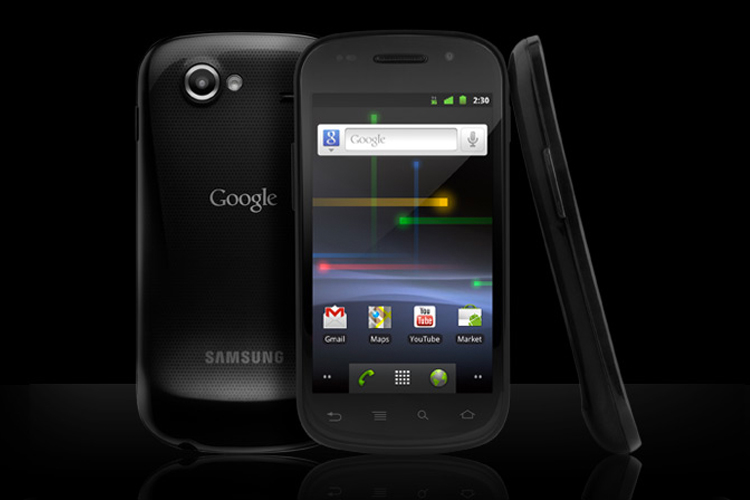
The competition in the mobile arena, notably Google’s Android operating system, is entirely about being open. It’s one reason I own a Nexus One phone, the Google device that mostly lets me decide what I choose to do with it.

There’s plenty of evidence that lots of people want to live in Steve’s Walled Garden. They want him and his minions to make their choices. They want to save time and trouble.

Which is why Apple and Jobs could resolve this issue in a heartbeat. They could encourage users to use only the Apple-approved apps and see only the Apple-approved content. Many, maybe most, would do that.

But Apple could then create a setting that does what the iPhone jailbreakers do unofficially: open the device for unapproved uses. It could come with a stern message like this: “By clicking here, you will be exposing yourself to risks we can’t control.”

Right. Just like my Mac. Just like real life.

A longtime participant in the tech and media worlds, Dan Gillmor is director of the Knight Center for Digital Media Entrepreneurship at Arizona State University’s Walter Cronkite School of Journalism & Mass Communication. More about Dan here.

Continue Reading Close

Page 17 of 17 in Dan Gillmor