The picture of Luther and Johnny Htoo, 12-year-old twin brothers who command a ragtag guerrilla army in the rain forest of Myanmar (formerly Burma), is the first classic photojournalistic image of the new millennium. In the Associated Press picture, they are side by side. Johnny’s the serene one with the angel eyes. Luther, forehead shaved, is the smirking devil sucking down a cigar. By early February, I couldn’t open a magazine without seeing that picture of the twins, without reading of their bizarre cult of soldiers called God’s Army, of their recent attack on a Thai hospital in which they held some 500 people hostage. And every time I saw the picture the first thing that popped into my head was this: I miss my sister.
I am a twin. And to be a twin child is to always have another person in the picture. My mother made a halfhearted stab at keeping separate photo albums for each of us. But the distinctions are arbitrary — Amys in most of the faded black-and-white snapshots in my album, and vice versa.
Once I saw Luther and Johnny sharing the same frame, it hit me how much they have in common with my sister and me. The similarities are uncanny. Luther and Johnny are illiterate, Baptist, messianic insurgents struggling against the government of Myanmar, and my sister Amy and I shared a locker all through junior high.
I have a few friends who can’t stop talking about the Htoo twins. They speak of them in a single breath — LutherandJohnny. “Did you see the photo of LutherandJohnny?” or “I’m obsessed with LutherandJohnny.” And I pine for that, that single name, especially now that my sister and I live so far apart. I miss the way I was never Sarah and my sister was never Amy, but we were together AmyandSarah. Unlike the identicals, who act as photocopies of each other, we’re fraternal. Which means that we’re not doubles so much as halves; we’re split down the middle.
I’m a single careerist with a master’s degree and walk-up apartment in New York; she’s a married, pregnant, dog-owning baker in Montana with a, swear to God, white picket fence. People love that about us, love that I can’t sew on a button but she makes quilts. That’s why people respond to the Luther and Johnny picture. They adore the contrast between the pretty, girlish Johnny and the hyena-faced Luther. Meet Joan of Arc and her brother, Genghis Khan.
Will Luther and Johnny’s memories meld? Up until around the age of 10, my sister and I often cannot remember who was doing what and who was watching, who got thrown from what horse, who got spanked for what trespass, who committed the trespass that led to the spanking. (Well, it was usually Amy, so ill-behaved. When I called her to talk about Luther and Johnny, she had seen the photo and knew what I was thinking. “Im Luther!” she screamed into the phone.) So years from now, when Luther and Johnny look back on this exciting terrorist period of their lives, will Johnny ask Luther, “Was it you who threw that hand grenade on the government sniper or was it me?” Maybe Luther will tell Johnny, “Help me out here, but I can’t remember which one of us shot the papaya off that dumb orphan’s head.”
In some ways, out there in the killing fields, Luther and Johnny have it easy twin-wise. In the bush, they don’t have to deal with the aftermath of those periodic cable TV documentaries on twins. They’ve probably never been cornered at some dinner party by a subscriber to HBO who needs to quiz them, in a single breath, on “like the weirdest show I’ve ever seen about these freaks, I mean twins, who were separated at birth and everything and still held their cigarettes at the same angle even though they didn’t meet until adulthood and I was just wondering if when your sister feels pain you feel it too?”
So Luther or Johnny will never have to hover over the lukewarm hummus and inform some only child that just because you’re a twin it doesn’t mean you’re some kind of life-sized voodoo doll and that if you have some kind of psychic powers at all they have nothing to do with your twin but rather peculiar celebrities like when you dreamed you said hi to Kevin Spacey on the street and the next morning he received an Oscar nomination or the fact that you happened to be talking about former Dallas Cowboys coach Tom Landry the night he died.
(Another dignified plus of being a twin without television is that Luther and Johnny have probably never watched the cartoon “Super Friends,” the one in which Aquaman and Superman and Wonder Woman teamed up to fight global crime. And thus, Luther and Johnny, unlike my sister and me, will never have to cringe at the memory of imitating the goody-goody, tights-wearing minor characters known as the Wonder Twins. Thus they’ll escape the embarrassment of having said the words, “Wonder Twin powers, activate! Form of … a straight-A student.”)
The advantage of being a 12-year-old guerrilla warrior in terms of twin self-esteem is not unlike the advantage of attending a private school — the uniforms. As American public school graduates, my sister and I know the trappings, the symbolism, of clothes. As toddlers, our mother dressed us alike. And if we weren’t wearing the same dress, we wore the same style in different colors. If she wore baby blue, I wore pink. If she wore navy blue, I wore red. Until the moment when we were maybe 5 and Amy informed our mother, “Mama, I don’t want my dress to be like Sarah’s.”
In high school, she wore blue, I wore black. She wore pink and I wore black. Luther and Johnny, in their makeshift camo, will never go through that, the stereotyping, never know what it’s like to be labeled the gloomy, plain Jane or the girly-girl blond. Then again, they won’t crack themselves up by being the gloomy plain Jane and buying a red satin dress in front of Mom, just to see the look on her face. On the other hand, AmyandSarah will never know the satisfaction of a job well done that comes with leading an army of children to certain death.
Someday, when Luther and Johnny are older — perhaps in exile — they’ll flip through their photo albums as my sister and I do at Christmas. Will they look fondly on the smoker/nonsmoker snapshot the way we giggle over the Polaroid from 1974 in which Amy has thrown up on me in bed but I slept right through it and she thought it so hilarious she woke up my parents to get the camera and there she is, in color with the light on, smiling and pointing as I lie there peacefully, my Snoopy pajamas soaked in puke?
Or the Sears portrait when we’re not yet 2 and I am blank and placid on the shag carpet fondling a plastic football and Amy’s fidgeting glare, the light bouncing weirdly off her hot tears? Or perhaps Luther and Johnny, who reportedly cannot read, have never seen the photo and never will and so they’ll be less inclined to stereotype each other the way everyone else does, the way I was the dark one and she was the blue-eyed blond, the way I was the smart one and she was the fun one even though she’s really sharp and I’m not a total drag.
Maybe, unlike someone who shall remain Amy, Luther is too caught up with training his blindfolded child followers in disassembling rifles to taunt Johnny with the fact that he was almost 8 and still had training wheels on his banana-seat pink bike even though he, Luther, had been riding in the driveway solo since he was 4.
At 12, Luther and Johnny probably already suspect twindoms secret lesson: Namely, that no matter what they accomplish — who they train, inspire or kill — their greatest allure might be the circumstances of their birth. That to be a twin and to distinguish oneself besides is a bit of overkill. My sister and I were about their age when our family moved north.
At our new school, we lived the pre-teen girl’s nightmare; we stuck out. We were not just new kids, and we were not just new kids with funny Okie accents. We were new kids with funny Okie accents and twins besides. It was more than our classmates could bear. The famous photo of Luther and Johnny catches them on the cusp of this twinly dread — of being too famous for too much too fast.
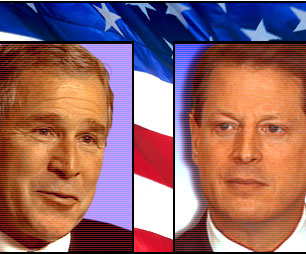
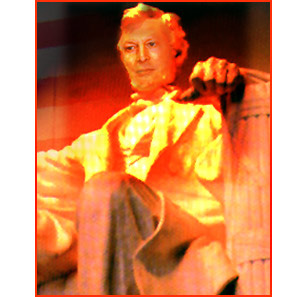
The program notes to the Feb. 7 performance of Aaron Copland’s “Lincoln Portrait” at Lincoln Centers Avery Fisher Hall point out that the folk tune “Camptown Races” is quoted in the score because it was one of Abraham Lincoln’s favorite songs. Coplands piece, which sets Lincoln’s writings to orchestral accompaniment (played here by the American Symphony Orchestra), was narrated during the Avery Fisher performance by Al Gore, who, as you may have heard, is running for president. This makes the “Camptown” moment all the more prescient. For what song, other than “We’re in the Money,” could a politician love more? It’s a song about a horse race, a gamble. And it never sounded more resonant than in this, the primary season. Place your bets, fellow citizens, for just as I might put my money on the bobtail nag, polls show that you have a thing for the bay.
The hall bristled with the kind of energy that only Secret Service agents provide. I couldn’t take my eyes off the boxes, which is a natural post-1865 American habit when someone whose title includes the word “president” attends a theater. Easily a third of the audience was there to have some fun at Gore’s expense. But there was something quaintly reassuring about the way the crowd clapped — some even stood — out of respect for his office, which, lest we forget, is only respect for the electorate and its judgment. Even in cool New York, Americans are not above a little “He’s here!” excitement over the vice president, a man who once joked about himself that he is so boring his Secret Service name is Al Gore.
The “Lincoln Portrait” has a long instrumental introduction, which provided ample opportunity to watch Gore wait and wait and wait for his turn to speak. It was like watching the institution of the vice presidency in action. This must be what it’s been like for him all these patient years, listening to someone else’s noise until it’s finally his cue.
Gore, who sat in profile next to conductor Leon Botstein, looked like the head on a coin. Which is to say he never looked more presidential. It’s an easy trick to come off dignified while wearing a nice blue suit in front of tuxedo-clad violinists and orating the words of Lincoln. Then again, orating the words of Lincoln is itself a gamble. Who could begin to compare? The music on the stage wasn’t coming from the woodwinds. It was coming from the page, from the grave, from the rhythm of “new birth of freedom” and the melody that “we cannot escape history.”
Hearing words like that spoken by a presidential candidate was especially striking in the current climate of mind-numbing practicality among the campaigners for the job, who seem to think of the American people as a bunch of penny-pinching misers who are hoarding our precious votes for the candidate who might save us 40 bucks a year on the 1040EZ. I was delighted to take a brief, poetic break from the subject of tax breaks to sit there in Lincoln Center and ask, What is a president supposed to say? What should he sound like?
Should he sound like Lincoln? We think we think so, forgetting that Lincoln’s voice was reportedly as squeaky as a 6-year-old girl’s. Because of the eloquence of his words, documentary film producers hire narrators with stentorian timbres to deliver the Second Inaugural Address, all the while forgetting that Lincoln himself probably sounded more like David Sedaris than Gregory Peck — a thing Gore supporters might want to remember considering that the vice president was not born with his boss’s oratorical gift. President Clinton was always a better artist than governor, and who knows what he might have stirred within me whispering Lincoln’s call for us to “save our country.” I would have been seduced by that voice — yet again.
But just as Clinton appealed to the rock ‘n’ roller in me, Gore’s pencil neck tugs at my nerdy heart. I think the most endearing thing he has ever said can be found in a sentence in his book “Earth in the Balance: Ecology and the Human Spirit.” In it, he asks, “What happened to the climate in Yucatan around 950?” Something about the specifics of that query lit me up. For the first time, I could see casting my ballot for a man who would pose such a question. It was just so boldly arcane. The kind of mind that would wonder about temperature variations on a Caribbean peninsula a thousand years ago suggests that its owner has the stomach to look into any number of Americans’ peculiar concerns. Paradoxically, this fervor for scientific facts — the thing that supposedly alienates him from voters because they see him as cold — requires no small amount of passion. You don’t write a 400-page book about ecology unless you have the heart.
Maybe it was the Yucatan Gore who came to life at the end of “Lincoln Portrait.” The piece ends grandly with the conclusion of the Gettysburg Address. Lincoln hoped “that these dead shall not have died in vain; that this nation, under God, shall have a new birth of freedom; and that government of the people, by the people, for the people, shall not perish from the Earth.” At that last word “Earth,” I did not think of Lincoln or Copland or you or me. I thought of Gore, because he owns that word more than any of us, and should trademark it, earn dividends and rewards. For what other candidate has thought more, read more, written more about the issue of whether we will have an Earth not to perish from?
After that he sang along with the New York City Gay Men’s Chorus in the “Battle Hymn of the Republic” and during the stirring quiet parts the rest of us exercised our greatest concert-hall freedom: the freedom to cough.
Continue Reading
Close
If all the hot young characters on the current WB network lineup invited their mothers and fathers to some sort of parents weekend, let’s just say that it would not be a boon to the innkeepers of Television City. That is because an astonishing percentage of these characters’ parents are dead. If they are not dead, they are gone, having skipped town years ago leaving their deserted progeny with only a photo to emote over and enough abandonment issues to keep them in guidance counselors forever. Or they are in prison or, worse, Palo Alto. Or, as in the case of the missing parents of the trio of extraterrestrial kids stuck in “Roswell,” they’re literally lost in the stars, assuming that the word and concept of “parent” even means anything on their home planet.
It’s just as well that the parents weekend never happens anyway, as it would probably be lorded over by the squeaky clean preacher and wife from “7th Heaven,” who would ruin all the cocktail hours by saying grace over their club sodas, causing all the mothers and fathers who had managed to escape cancer and incarceration to kill themselves, slitting their wrists with swizzle sticks.
Call it the “Party of Five” effect. Because the Fox show about the Salinger orphans proved that attractive youngsters who aren’t particularly smart, funny or lovable could win a viewer’s sympathy just by plopping themselves occasionally in the graveyard and telling their parents’ tombstones about the latest in their jinxed little lives. A dead parent makes otherwise well-adjusted lookers seem exotic because they have actual concerns.
And so the WB, which has cultivated some of the most charming characters on network television, provides the three witchy Halliwell sisters of “Charmed” (dead mother, father abandoned them); Joey of “Dawson’s Creek” (dead mother, father in jail for the second time after her supposed best friend Dawson turned him in for dealing drugs); and the two dueling stepsisters on “Popular” (Brooke’s mom left, Sam’s dad’s dead).
The bad rap on the WB is that it hires only sexy teens to be sexy together, but I think that caricature comes from people who haven’t watched it. The heroine of “Buffy the Vampire Slayer” has had sex twice in four years — once with good vampire Angel, who was cursed to turn evil because of their night of love, and a one-night stand with a college boy who dumped her the next day. “Felicity,” forever choosing between her crushes Ben and Noel, only did it once, with a relative stranger, and never got over the guilt. The kids on “Popular” set out en masse to lose their virginity in a single week and were so traumatized they ended up joining the cultish celibacy movement. If anything, sex on the WB, when it happens at all, has almost laughingly dire consequences. Family, on the other hand, is handled quite poetically.
I am often impressed by the WB’s shows’ depiction of the longing for family. That’s how I noticed all the parents who had been disappeared. The “Roswell” aliens, for example, are surprisingly moving when they speak of their yearning to find out where they come from, displaying an un-teen zeal for family history unknown outside of Utah. Two of the kids, Max and Isabel, were adopted into a loving family and agonize over keeping their alien past from their adoptive parents. The other one, Michael, wasn’t so lucky. He lives, Huck Finn-like, in a trailer park with a mean drunk father who, when Michael complains there’s no milk for his cereal supper, screams, “Use beer!” During a recent episode, there was a heartbreaking moment: Michael looks hopefully at the kindly old Indian who’s been helping the aliens decipher what few clues they have, and the Indian knows what Michael’s thinking, having heard the beer comment, and has to crush the boy’s hope and tell him that no, he’s not his father.
It just so happens that Liz, who goes to high school with the aliens and carries a torch for Max, has no mother. But the show’s treatment of her father proves a theorem about parents on television: If a parent is around and concerned, that equals comedy. Dead and gone equals tragedy. All the current family sitcoms, from “The Simpsons” to “Everybody Loves Raymond,” find the yucks in proximity (Dad’s a dolt, Mom’s a nosy nag, ha ha ha ha ha).
While the aliens are haunting as they imagine their familial origins, Liz is stuck with one silly “Oh, Dad” moment after another, made all the more hilarious by the actor playing Dad — John Doe of the legendary L.A. punk band X. There’s a typical, even hackneyed scene when Liz’s dad thinks she’s buying drugs, and really her friend just gave her some echinacea to fight a cold. It’s a nice twist that the man making such a square mistake is the sexy bass player who used to yowl the early-’80s nihilist rave-up “Johnny Hit and Run Paulene.”
Series television, more than any other form, is perfect to explore family dynamics. Novels, even long ones, end. Movies are great at moments — love at first sight, murder, that time Lassie came home. But family life unfolds over time. And the seeming monotony of TV is inherently equipped to deal with ongoing stories, not to mention ongoing quibbles — Frasier’s campaign against his father’s ugly chair, Lisa Simpson’s doomed attempts to enlighten her anarchic brood. To get the true story of a family, it has to be done over the long haul.
If there’s a dead parent, his or her corpse can be trotted out in show after show to inject the dialogue of otherwise wisecracking teenagers with a dose of pathos. Nowhere is this more apparent than on “Dawson’s Creek.” Josephine “Joey” Potter, played by the luminous Katie Holmes, lives with her older sister now that, as mentioned, Mom is dead and Dad’s in jail. Joey’s appeal is that she is a true beauty trapped in a teenage girl’s fidgeting skin. The restrained yet constant allusions to the way she mourns her mother offset the rest of her personality, which is smart and funny and a little too sarcastic for her own good. She is, like so many of the motherless children of the WB, straight out of 19th century literature. (Perhaps they should change the network’s name to CD, for Charles Dickens. Please, sir, may I have a mother?)
I thought Joey’s 19th century air was just coincidence, but the writers must think of her that way with purpose. In a recent episode, Joey was on a date with a pretentious college boy who took her to an astronomy party. Previously he’d already asked her what her favorite book was and she’d said “Little Women,” because it was her mother’s favorite. (She’s named after Jo.) The boy made fun of her. Who knows why she went out with him after that — especially since that adorable Pacey is obviously over the moon for her — but this time they’re walking on a beach and she tells him she’s so hard-working and ambitious because she’s afraid to fail. The college boy, with all the wisdom of his 19 years, muses, “I think sometimes that happens to girls who lose their mothers when they’re really young — they’re really driven to succeed.” She responds, “Like Madonna?” He looks down at her, sighing, “Well, I was thinking more along the lines of the Brontk sisters.“
Continue Reading
Close
During the three-plus hours I sat in the dark watching Paul Thomas Anderson’s ensemble epic “Magnolia,” I found myself wanting something I’d never wanted before. More Tom Cruise. As a white, middle-class American moviegoer who went to high school during the Reagan years and subscribes to more than one cable film channel, I’ve seen every film Tom Cruise ever made, some many more than once, without even trying. Like a Tom Petty or a Jim Lehrer, Cruise falls into that category of competent if ubiquitous public figures who have never won my love or hate and therefore never truly caught my eye. Except for his memorably baroque turn as Lestat in “Interview with the Vampire,” which I, like the rest of the country, blame mostly on his curdled blond hair. But somehow, Cruise’s work in “Magnolia,” as male prowess guru Frank T.J. Mackey, so seized my curiosity that I walked straight out of the theater to go rent his 1983 film “Risky Business.” Has he always been that — whatever he is?
Tom Cruise is a mystery in plain sight. If one sets out to explain his appeal, all the normal movie-star reasons melt away. For starters, his looks. Cruise has never been a breathtaking beauty. The shock of “Risky Business,” especially if your head’s full of the dreamy teens currently steaming up the WB, is how ordinary Cruise looks. He’s a regular, awkward kid, to the extent that I doubt he’d be cast in the lead now, what with pretty boy Ryan Philippe’s head shots on a casting director’s desk.
Cruise’s face is too angular to be sensual. Whoever said that there are no straight lines in nature never bought a ticket to “The Firm.” His face reminds me more of a math problem than a love poem, the nose and chin right out of high school geometry, hard vectors of flesh. Picasso might have liked to paint him, though it would have been too easy — turning breasts and lips into rectangles is more of a challenge than making a box like Cruise boxier. Even his hair is drawn on with a ruler. Check out his short and sporty coif in “Mission: Impossible”; every individual strand is a line parallel to the Y axis. Which might explain a little of the “Magnolia” draw. Cruise’s longer locks in that picture do make his face look a little softer, or as soft as it’s possible for a man to look while he’s swaggering around a stage inciting other men to date rape by proclaiming, “Respect the cock!”
I’d never given Tom Cruise’s cock much thought before. I’d thought about the members of his contemporaries Nicolas Cage and Johnny Depp and, as long as we’re on the subject, Steve Martin. But if you’d asked me to draw a nude Tom Cruise before seeing the bulge protruding out of his white underwear as he strips in “Magnolia,” I probably would have given him the smooth anatomy of a Ken doll. Of course, where Tom Cruise sticks his privates is the speculation of the is-he-or-isn’t-he homosexuality rumors that pervade his persona, but I never gave Cruise’s sexuality much truck one way or the other. Because, watching his movies over the past couple of weeks, I am constantly surprised when Cruise is in the same room with another person, much less the same bed.
He strikes me as utterly, quintessentially, fundamentally alone. Of course Stanley Kubrick wanted Cruise to play the doctor in his “Eyes Wide Shut.” Much of the movie requires the doctor to walk the streets of New York by himself at night, and when a director needs an alone-in-a-crowd, he calls Tom Cruise. The running gag about his title character in “Jerry Maguire” was that Jerry hated to be alone, but he also couldn’t connect with anyone. In that sense, “Jerry Maguire” is the perfect fable of America’s relationship with Tom Cruise. Basically, we think he’s a stuck-up phony and we want to see him hit bottom, have his love interest notice for once that he isn’t paying any attention to her and then we want to see him humanized, i.e., cry.
Cruise’s two Oscar nominations — for “Jerry Maguire” and “Born on the Fourth of July” — display the public’s deep desire to see Cruise put through a wringer. We want him to get his legs cut off (“July”) and we want to see him lose for a while to the even slicker, if that’s possible, Jay Mohr (“Maguire”) because we want to punish him. Because I think the only reason that seemingly every man, woman and child in America goes to see his movies is not that he blinds us with beauty or talent or emotion. We can’t take our eyes off him because he makes us a little nervous. Not too nervous — that’s why we invented Dennis Hopper. Cruise makes us stealth nervous, just jittery enough to keep us awake.
Watch Barry Levinson’s “Rain Man” again and I guarantee you that the discomfort of Dustin Hoffman’s shticky autism does not compare to the heebie-jeebies of Cruise’s performance. Hoffman can dodder on about missing “Jeopardy” every 13 seconds and he’s fresh air, but Cruise, closed off and angry, is a twitch fest. When Hoffman’s Raymond throws a fit as Cruise tries to give him a hug, the viewer more than understands. While autism is the most natural thing in the world, an embrace from Cruise defies the laws of nature.
When the cute little kid in “Jerry Maguire” gave Cruise a hug, my first reaction was parental. I wanted to grab the child away, scolding, “We don’t do that. We don’t touch burning stoves, strangers’ candy, and we do not touch Tom Cruise.” Because Cruise is not, as the French say, good in his skin. Even in his most flawless, most affable performance, as Lt. Daniel Kaffee in “A Few Good Men,” Cruise seems most comfortable on the softball field, having conversations with Demi Moore through a fence. Because Tom Cruise is the most talented actor of all time at keeping his distance.
Like most screen icons, Tom Cruise is not of us. Us, with our faces lumped together out of concentric circles versus his straight-edge mug. Us with our nerves and fears and him with his lieutenant-lawyer cockiness. Him with his choreographed cocktails and us dripping gin on our carpets as olives splash on the floor. But that’s where Tom Cruise stops — better than. There’s no further inspiration to be gained. Like every time I see “To Kill a Mockingbird,” I take one look at Gregory Peck’s Atticus Finch and resolve to become more dignified. Even seeing Rene Russo in the remake of “The Thomas Crown Affair” made me vow to dress better, which, if not a moral for our times, is at least some little something. Cruise’s best line in “Magnolia” comes when his character is asked by the reporter interviewing him why he has stopped talking. “I’m quietly judging you,” he seethes, and that might be just what we’re afraid of when it comes to Tom Cruise.
The mark of a great performance is that it obliterates distance, gets under our skin. It’s simply harder for an icon to do that. But possible. “Magnolia” is the first time Cruise even comes close. It is far and away his most physical performance, if only because I’d never previously heard him breathe. About half of Cruise’s screen time is taken up with Mackey’s rooster struts — again, alone — across a darkened stage. His entrance, an amusing backlit pose to the strains of “Thus Spoke Zarathustra,” isn’t his only Elvis move. His debauched bumps and grinds as he speaks, fucking the air, punctuate his hilarious pigspeak with a new earthiness. He has never seemed more human — which is to say funnier, more vulnerable — than playing a man without the self-awareness to know that barking the words, “You are gonna give me that cherry pie, sweet mama baby!” might make him come off dopey, pathetic and sad.
We’ve never seen Cruise this lewd, and thus we’ve never really seen him get his hands dirty, dirty with the dopiness of desire. As my upstanding mother said when she called last night to tell me why she’d walked out of “that horrible, horrible ‘Magnolia’” and wanted me to explain what’s wrong with movies today, she sighed, “I’ll never be able to look at Tom Cruise again.”
I didn’t have the heart to tell her that I feel like I’ve seen him for the first time.
Continue Reading
Close
Best Bathrobe: Tony Soprano, “The Sopranos” (HBO)
With the possible exception of Hugh Hefner (who somehow pulls off looking rather regal in PJs), there’s nothing more vulnerable than a man, not to mention a mobster, in bed clothes. And Tony Soprano (James Gandolfini), the New Jersey family man/wise guy, suffers not only from depression, but perpetual bed head. He’s weary. He’s funny and charming and deadly too, but the fact that he spends so much on-screen time bursting out of his bathrobe while his relatively rested wife and kids have already gotten cracking on the day gives him a reluctant air. Like, he’s willing to kill and be killed if it comes to that, but five more minutes, Mom.
Funniest Song: Le Tigre, “What’s Yr Take on Casavetes?” (Mr Lady Records)
The misspelled name is the first laugh, and after that Kathleen Hanna’s latest band presents a question about how one feels about that pompous dullard of a filmmaker (that’s my take by the by) as a multiple choice. Your options: “Genius! Misogynist!” and “Alcoholic! Messiah!”
Best Chair: Mario Bellini, “Bellini Chair”
I just want to say one word to you: plastics. It was the iMac year, the year of shiny happy, candy-colored, nonbiodegradable adult toys. The year of the new translucence — not to be confused with the old shallowness. Even though these Fisher Price-for-grownups computers got all the attention, Italian designer Mario Bellini made a quieter splash in the plastics pond. His chair — simple, beautiful, comfortable, stackable and 80 bucks — accomplished what Michael Graves’ overblown product line for superstore Target failed to do: provide affordable, elegant design to the masses.
Most Deliriously Byzantine, Gratuitous Argument Against the Mississippi River: Ben Metcalf, “American Heartworm,” in “Best American Essays, 1999″ edited by Edward Hoagland and Robert Atwan
This manifesto against the Big Muddy (from the Baffler) takes on America’s most beloved, most mythologized body of water with a venom that is so gleeful and ticklish and mean you hope they drain the whole swampy mess and pave it over:
“I used to consider it odd that the word most often called upon by those compelled to describe their feelings for a river that had just washed away
their crops, or their homes, or their livestock, or their neighbors, was ‘respect,’ because to my mind a river worthy of respect put up a fight
against the rain, and made some show of absorbing what fell, and did not run its banks at the first sign of darkening clouds and heat lightening.” Corroborated by the Modern Library’s new edition of historian Francis Parkman’s 1869 book “La Salle and the Discovery of the Great West,” in which Indians warn Marquette and Joliet that “there was a demon in a certain part of the river, whose roar could be heard at a great distance, and who would engulf them in the abyss where he dwelt” and that “its waters were full of frightful monsters, who would devour them and their canoe.”
Top Four Canadian Jokes
1. Celine Dion (winner and still champ).
2. “Buffy the Vampire Slayer.” College boys sitting around the cafeteria wonder how a girl like Buffy Summers could be so hot and yet so peculiar. One posits, “Maybe she’s Canadian.”
3. “Blame Canada,” a song from the Canuck-baiting “South Park” movie musical.
“With all their hockey hullabaloo/And that bitch Anne Murray too.”
4. Used book, $1, the Strand bookstore, New York City: “The Canadian Address Book: Who’s Where and How to Reach Them” by Zicky Hammud. In this 1994 contact info list for everyone from Alanis (back before she got a last name in ’95) to Carlos Costa, the “first person with a disability to swim across Lake Ontario,” the best part is the author’s inscription on the title page in ballpoint pen: “For Peter Jennings: With all best wishes.”
Best Breakup: Carrie and Big, “Sex and the City” (HBO)
The second season of this Darren Starr comedy simmered in pathos. Sarah Jessica Parker was never lovelier. And after months and months of Mr. Big (Christopher Noth) breaking Carrie Bradshaw’s (Parker) heart one artery at a time, there was The Lunch, in which the callous, suave and dapper Big informs our heroine he’s marrying someone else, a “sweet” and simple 25-year-old whom Carrie has nicknamed the “idiot stick figure with no soul.” The second Big’s news registers on Carrie’s face, she turns into the most human of pinballs, leaping out of her chair, which she knocks over grasping for her purse, snipping at him and tripping down some stairs. The waiters, of course, drop their trays. Interior disaster translated into the cruelest, most embarrassing slapstick.
Best Detective: Lionel Essrog, in Jonathan Lethem’s novel “Motherless Brooklyn”
Lionel, an orphan with Tourette’s syndrome who turns detective when his father-figure gets killed, is a new kind of private eye, one that calls all the old ones into question. The thing about our favorite P.I. characters — Chandler’s Marlowe, Hammett’s Sam Spade and the Continental Op — is that even when they were falling apart, they were falling apart cool. There is something resoundingly uncool about Lionel, and this is his charm. Even though his favorite singer is Prince (his funniest, most perfect riff is his Tourettic compulsion to pronounce The Artist’s unpronounceable glyph), there’s something oh so Jonathan Richman about Lionel, an essential postwar goofiness the prewar noir guys never had.
Best Metaphor for America, or Something: Rob Lowe, “The West Wing” (NBC)
It was mysteriously heartwarming to watch Rob Lowe engaged in a fierce and erudite debate about the Constitution with a Bill of Rights-hating possible Supreme Court nominee. He won, too.
Continue Reading
Close
English art critic Matthew Collings’ book “It Hurts: New York Art From Warhol to Now” (21 Publishing) is a gem. A smart and wickedly funny road map of everything from pop to performance, Collings hunkers down with downtown tricksters, the uptown avant-garde and all the painters, conceptualists and taste-makers in between. Collings is frighteningly well-informed, not just about the subject of art, but also about its rituals, its silliness, its gossip and, ultimately, its integrity. “It Hurts” pierces visual art’s pretentious membrane because of Collings’ affection for his subject. He and I recently spoke by phone.
The subtitle of your book is “From Warhol to Now.” Why did you want to begin with him?
I think that there’s a great difference in art generally before him, and certainly in American art before him. He’s a kind of watershed. I think he’s a figure. He’s a character. Within that character are a lot of tumultuous changes in art. And he sort of sums them up. In Warhol, it’s this mixture of utter realism about our actual world that we actually live in. But also a sort of romanticism about what it is to be an artist, that it takes a leap of the imagination to be an artist. I don’t think at all that his cynicism or his irony is all that he is. I think his irony and cynicism are connected to a sincerity about who we are. We give culture a kind of job, which is to tell us who we are, and he’s a very good oracle of who we are.
One thing in the book that seems rather Warholian is that there are almost as many pictures of the artists themselves as pictures of their work. Why did you do that?
I don’t think you learn anything important from seeing photos of the artists. But I don’t know how important it is seeing those reproductions either. I’d rather have no pictures at all or something that goes against the grain a bit. And I think portraits of the artists does go against the grain. I think that’s why I’m on the cover. Because then it’s more like the world of cookery books or show biz or something. And I think that’s annoying to the holy creed of the art world.
You have a hilarious section that’s a guide to art magazines. What’s your current favorite?
I think they’re all as objectionable as each other.
My favorite place to read criticism right now is the Focus on the Family web site. It’s a Christian fundamentalist site and they do movie reviews that are remarkable, because whoever the reviewer is watches movies actually believing that art can do something to people. Like that “Titanic” could mess with young girls minds about romance, or a hilarious litany of all the ways the “South Park” movie is devoid of redeeming social value. Do you think secular critics can come at writing about art with that kind of passion?
No, actually. I’m a pure insider. I’m not at all a secular critic. Every strata of my being is the art world. I was born into it. I don’t have any outside-the-art-world-ness. It’s just that it’s possible to be in the art world and not speak that language or to know that it is a language, one language amidst others. You asked earlier what magazines I don’t particularly read and I never would read “Art News” because it’s all rubbish. Because the people writing it don’t know anything about art. I really am interested in art. I do see the contemporary art world as a continuation of art history and I take art history very seriously. It’s a source of values to me and a source of meaning, it makes sense out of life. But my drive is to be as intense and realistic and creative and imaginative about that as I can. So that causes me to write like this. But I have absolutely no interest at all in what people outside the art world have to say about art. Because you need to know what you’re talking about. I’m not interested in people going against the grain who don’t know what the grain is. Of course I’m interested in people against the grain who do know what the grain is. Because they’ve got something to offer.
Let’s talk a little bit about words. The style of “It Hurts” is conversational, and sort of defiantly real. There’s a trap in writing about art. You can’t do it intelligently unless you’ve been schooled in its history and its lingo. But then once one has that lingo in his head it makes a person a crummy writer.
That style that I do, it’s quite laborious. I’m working very hard to arrive at a style which seems rather effortless and conversational. But in fact it’s quite deliberate and careful. It’s not really a casual way of writing. There is a kind of attitude in that it’s anti-academic. I keep trying to come back to some thing which would work even if somebody reading it had never heard of any of those artists. Or didn’t really know anything about the meaning structures that make those artists tick.
You describe art-speak as “a bad film set in the art world.”
I think that’s the social world. All films which attempt to be set in the art world are bad. They never get it right. You know you’re in a bad film, whether it’s “Legal Eagles” or Derek Jarman’s “Caravaggio.” If you go to a dinner party that’s put on by a collector, say, or a dinner party after a show, there’s a certain posh atmosphere. You know immediately that there’s going to be this immense, unbelievable falseness to the whole occasion, that if you’re in it, you kind of go along with. But one part of you, at least if you’re me, is sort of amazed you could be doing this and everyone else could be acting like this and talking like this. Amongst those people, if you stepped aside for a moment and commented upon it and laughed at what was happening, or said, ‘How on earth can you talk like this?’ they would be hurt. It would hurt their feelings, so of course one doesn’t really. One shuts up about it and then you build up all this pressure because you know you can’t go on being so false.
There are some parts of the book that read like a how-to for art students to talk about art. For example, there’s that section labeled “Architectural Art” and its sole content is the sentence, “Always link it to the social world.” Which is so true. That is exactly how you pass an exam. What made you put that particular thing in?
There are two sides to it. One is where I’m being aggressive and satirizing something in a way that has some sort of affection but also is maybe hostile. Another thing is that if you’ve been to art school, there are some sort of basic frameworks of learning that you learn. You learn about how art is constructed and how meaning is made. And actually those things are quite simple, relative to theorizing art. Usually it’s the simple meanings that are the best, that work best. It might sound amusing when I sum it up like that and rather blasi. But it wasn’t that it was inaccurate.
I used to teach art history to college freshmen. And a lot of your content apes student essays. When you’re talking about Cindy Sherman and you say, “She looked not quite right. That’s how women feel” — that sounds like the thing you tell your students and you’re horrified they’re coughing it up in an exam.
There’s a kind of literalism. It seems rather bald when you just spell it out.
Yeah. Is that it? Because we’re not really used to that in talking about art.
No. And especially if you know the context of being rather bald is humorous. There’s a lot of humor in the book, a lot of jokes and things. One drive of that book, and everything I do, is to be entertaining.
A lot of times, though, the teacher in me wasn’t so much reading you as grading you. When you’re talking about [color field abstractionist] Jules Olitski’s paintings and you simply say “they look fantastic,” if a student wrote that I would go ballistic and say, “You can’t say that!”
I’m always aware that when I say something’s good or something’s bad that I’m breaking the law. In some contexts, that is a correct law. But that book is about a different context. Olitski’s paintings do look fantastic to me. What the official art world says and what art history says is that Olitski is a problem. It’s almost as if Olitski is a fall guy. They realized — the minimalists and the popists and the conceptualists, and those movements have survived whereas color field didn’t — they realized that the weakness of that art, of a purely aesthetic type of art, was that it’s too soft-centered. So if someone says, “Oh wow, that looks fantastic,” it would be incredibly suspect. It’s not just that it’s suspect in an academic sense, or in an intellectual or philosophical sense, it’s also suspect in a specific art-historical sense. The point in the ’60s was not that something should look fantastic but that it should have some kind of philosophical armature or some sort of meaning. So it’s like Satan for an art to just look nice. But I think appreciating something looking nice is part of life.
As they say in the art biz, you’re very good sometimes at “exposing the process.” You confess that you can’t be enthusiastic about Mike Kelley because he refused to give you permission to illustrate his work.
I know! I used to really like him.
What’s to be gained for the reader in knowing that?
I guess it depends on who the reader is. One’s eye is immediately caught, whoever one is. There is a frisson straightaway. You think, ‘Right. All these pictures only appear in the book because the artist agreed to release them.’ Immediately, in just a line like that, as you say, the process of how the infrastructure of how the art world works is exposed in a way. But then, it’s not like I’m making a big moral point. In fact, it’s a rather flip way of avoiding a moral issue. I’m raising a question without really answering it in that particular case. I suppose what’s to be gained is the amusement of what’s happening, that it’s possible to like somebody’s art in an abstract sense, but to rather resent the fucking pompous asshole not letting me have the pictures.
How do you keep up your stamina? I went to some Chelsea galleries the other day. And I’m standing there looking at these white forms that were like overturned bathtubs.
Yeah, I saw them. I thought they were quite nice.
But the bathtubs had this beautiful surface and, any collection of a bunch of white things is always going to look kind of nice, and I guess I could find the words to talk about their exploration of form and repetition, blah blah blah, but basically, I was just bored.
Well, I’m always very clear when I’m bored and when I’m not. Because I feel it’s usually clear what’s happening and if it’s not clear I’ll ask someone and tune in to what the aesthetic is and try and fit it with things I already know. So the way I keep up my stamina for it is that I only do things that I find interesting. And if I’m writing in a jaded way about somebody, it’s for the purpose of saying that something else is interesting. What drives me isn’t a desire to put things down or to find them boring. It’s absolutely the opposite.
Continue Reading
Close