Susan Straight

Dissed by “The O.C.”

Fox's popular new teen drama wants to put me -- and everyone else in my town -- in the white trash bin.

  • more
    • All Share Services

Dissed by

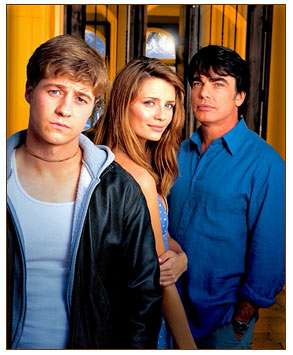
Today, my 14-year-old daughter and I saw a huge ad in Seventeen magazine for the hot new Fox television show “The O.C.” Beside the tan-burnished teens looking pensively over the ocean, the ad read: “It’s nothing like where you live, and nothing like what you imagine.”

We laughed, because that morning we’d read in our local newspaper that our mayor pro tem wanted to explore legal options against the network for slandering our city. On “The O.C.,” a show about the lives of rich kids and their parents in Newport Beach, characters take special care to imply that Riverside is a white-trash hell. And the nearby city of Chino doesn’t fare much better: City officials there say their city is being depicted as a “dirtbag town.”

“The O.C.” view of Chino isn’t pretty: scorched-earth streets overrun with burnt-orange weeds and tiny stucco box houses surrounded by chain-link fences. Chino is where Ryan, the good-looking, troubled kid who steals a car in the premiere episode and gets sent to juvenile hall, is from. Soon he is taken in by his public defender, Sandy Cohen, who lives in an ocean-view Newport Beach McMansion with his real-estate developer wife. When Cohen’s neighbor, Julie Cooper, complains bitterly that the hardscrabble Ryan is from Chino, Sandy Cohen points out that Cooper herself is from Riverside. Cooper, a woman who wears too much makeup, obsesses over clothes, and bemoans her child’s pony’s new case of alopecia, snarls that night to her husband: “He basically called me white trash. He said I was from Riverside!”

Her husband says gently, wearily, “Honey, you are from Riverside.”

When we heard this line, my daughters and I laughed so hard we figured they could hear us all the way into the next county: the O.C. It’s hilarious to watch California counties, and cities, broken down into easily digestible puzzle pieces for a national audience. All the Newport characters surf, sail and shine. And Summer, one of the snobby rich girls on the show, sums up Ryan this way: “Chino? Eeww.”

“The O.C.” is a cross between “Beverly Hills 90210″ and “Melrose Place,” according to the New Yorker (which called Riverside “downscale,” we noticed). It’s a soap opera, and most of those shows don’t come close to resembling reality. Still, in one episode, when Ryan is arrested by a black cop, my daughter pointed out that his was the first African-American face we’d seen since the show began. There sure wasn’t anyone of color at the fashion show, the beach party or the cotillion. Yet when Riverside high school teams play Orange County teams, whatever sport, we’ve seen black players, Asian cheerleaders, Chicano kids in the band. But they’re not on the show. Only on the episode in which Ryan was in juvenile hall did some Chicano and black characters appear. Naturally, they were gang members.

Last week, we actually went to the O.C. Not Newport, where the show is set, but the neighboring town of Corona del Mar. We saw for ourselves that there is a huge portion of Orange County not being shown on Fox. At the beach, we swam with numerous members of a Samoan family, countless Mexican-born and Mexican-American families, a few black families and, yes, some white people.

When I got tea for our drive home to the Inland Empire, I asked the barista what a “tea latte” was. He rolled his eyes. I couldn’t resist. I told him we didn’t have that drink where I was from — Riverside. He frowned and said, “Really?” I told him usually we just drink Coors. All day and night.

On the drive home, my 14-year-old, who is the prime target audience for “The O.C.,” said, “I don’t see why people are getting mad that they make fun of Riverside. I mean, I don’t want to be those kids on ‘The O.C.’ I don’t even want their clothes.”

“You don’t?” I said.

“No. The clothes are kind of ugly.”

“What about Summer’s clothes?”

“Mom,” she said impatiently. “She’s wearing a bikini top and skirt in the first two shows. She’s wearing a bra and a skirt in the third one. It’s hard to judge her fashion sense since she doesn’t actually wear many clothes.”

Ouch.

Even though the show is hopelessly unrealistic, and undeniably whitewashed, the public outcry from Riverside and Chino officials seems like a bit much. I, for one, am not offended by the fact that a woman on the show who has much better clothes and makeup than I do is equated with white trash because she’s from Riverside, my native city. After all, when a neighbor’s friend, who drives a limo for a living, met a man in Newport who wanted to date her, but refused to even drive his Porsche into our city limits, we said to her, gently, wearily: “Honey, he’s from Newport.”

When Luke, the spoiled, violent, rich boyfriend of Julie Cooper’s daughter Marissa beats up Chino’s finest, Ryan, Luke sneers, “Welcome to the O.C., bitch.”

Wait. He’s not including Tustin and Santa Ana and Fullerton and the actual city of Orange, is he? They’re all in Orange County. What about Westminster, known as Little Saigon, where many of my former English-as-a-second-language students reside and which has the largest concentration of Vietnamese outside Vietnam. Or Anaheim, where my college roommate’s family are Japanese-Americans who owned strawberry fields for three generations, surviving internment during World War II. Or Santa Ana, where streets are lined with apartment buildings filled with thousands of Mexican immigrants

No, “The O.C.” isn’t a real place, it’s a fantasy. And here in Riverside, at least in my house, that fantasy sure is funny.

We hear that future episodes reveal more about the misunderstood Julie’s Riverside background. We can’t wait.

Pack of four

My daughters and I seem impenetrable to outsiders. Maybe that's why I haven't had a date in five years.

  • more
    • All Share Services

Pack of four

When I hear my three daughters shout through the bathroom door, “Hurry up, we’re going out to the van to wait for you!” I know I have about four minutes left for my entire beauty routine. Of course, I’ve already combed and braided their hair, signed homework and found socks.

I put on moisturizer since I just turned 42, apply the kind of cheap Maybelline lipstick that doesn’t come off so I can kiss my kids goodbye without leaving traces of me on their cheeks, and attempt to plug in the curling iron before hearing them turn up the car stereo.

That’s why they take my keys and wait in the van — so they can blast the music. I give up, unplug the curling iron, and pull my hair into those clips all the harried moms wear.

When I descend the porch steps, I see all three of my daughters, heads bobbing, bass thumping from the open window as they sing along with their new favorite song: “Angels Must Die.”

OK. So if there had been a personable single male jogging in front of my house, or maybe wanting to use the phone because he’d run out of gas, I’m willing to bet that he’d take one look at us and head the other way.

Earlier this month, I realized that I haven’t had a date in exactly five years. I have been divorced for six. I try to figure this out sometimes, when I’m not too tired. My friends try to figure it out all the time. Terri K, a landscaper twice divorced, berates me for not even attempting to date. She got a new boyfriend in two months. Of course, on her equipment trailer she also has a sign: “Grow Your Own Dope — Plant a Man.”

“You refuse to wear mascara,” my neighbor Juli says. This is true, but somehow I don’t think eyelashes would help.

One reason I’ve been thinking more about my dateless life is “The Gilmore Girls,” which we began to watch a few months ago. Lorelai had a baby at 16, looks great in her 30s, and meets men all the time. This seems like a fantasy life to me.

At 22, I married a guy I met in the eighth grade. I had kids in my late 20s, and we got divorced when he went through midlife crisis early — at 35. Other people are just getting married at 35 and starting their families, and I feel ancient next to them. In those magazine or “Oprah”-show formulas where you add years to your life or subtract them, according to lifestyle, I must be 89.

There is no cute guy who owns the diner near me, no brilliant teacher at my kids’ school who looks soulfully at me during parent-teacher conferences, and when I mention this jokingly to those friends impatient for me to date again, they say, “Well, yeah, not with the way you and the girls act!”

So I’m not a great role model for romance. When I was dating their father, we were all so poor that a night out consisted of eight or nine of us — my girlfriend, me, and a bunch of guys from the basketball team — cramming into a car and cruising aimlessly. For diversion, we played games: When someone saw a car with one headlight, she (it was always my girlfriend or me) shouted, “Padiddle!” and then hit everyone else in the back of the head. When we saw a Volkswagen, we shouted, “Slug Bug,” and, well, you can guess. We slugged the guys.

My girls know all this, because they are obsessed with Slug Bug, punching out anyone in the car. They’ve also added their own twists: Con-hurt-ible, which requires a slap for a top-optional car, and PT Bruiser, which requires a pinch.

Inventive, they are. Scary, I’d assume. We all have a blast on the way to school, I must say, but as their favorite song fades and is replaced by something equally loud and nihilistic, like the new Sublime or System of a Down song, I realize no interesting guy in the Volkswagen, convertible or PT Cruiser is going to do anything but stare at us, appalled.

They’re beautiful, my girls, head turners. I’m more generic blond and short with that whole no-beauty-routine thing. It’s not that we don’t make an appealing picture. Just a frightening package. Because we’re always together — laughing, singing, punching, practicing basketball, lugging tubas, walking the dog, or hanging out on the couch.

And that’s the other reason I probably won’t get a date anytime soon. I hadn’t realized what we were until this summer, when poet Terry Tempest Williams, who was very kind to us at a writer’s conference, observed my little family and told me with a smile: You and your girls are a pack. We have our own running rules and secret language and we seem impenetrable to outsiders.

This Valentine’s Day, as my women friends compare appropriate/laughable gifts and I shrug, empty-handed, they will again admonish me about not dating, not providing a male role model for my girls, not attempting to be a female role model for my oldest, who is 13 and has boys calling her. They will repeat the mantra: “If they see how you handle relationships, they’ll be better off.”

In the past I’d had a game plan for my daughters’ dating, and it made “Eight Simple Rules” look friendly. I had their father — 6-foot-4 and 295 pounds, brown skin and Big Dog shirt, a correctional officer with that whole preemptive-strike face.

Once I was divorced, though, I had to set the tone alone. It somehow happened instinctively. That first week of fall, when the junior high boys walked home past my yard and said, “Bitch,” not even directing it at anyone but letting it hang in the air casually while my girls and their friends lingered on the grass, I went outside and said, “If I hear you say that word again on my sidewalk I will take off this high heel and make a hole in your forehead.”

They started walking on another street altogether. My eldest rolled her eyes and said, “Oh, I’m gonna have so many guys wanting to talk to me,” but she has inherited the same kind of mouth, I’m afraid, as mine. When boys tried to impress her on the junior high court by praising her favorite team, she said, “You don’t even know their offensive rebounding percentages. Please.”

My middle daughter, who looks like a tanned Audrey Hepburn, is 11, such a good ballplayer and yet so beautiful that boys get angry during games, saying, “I’m gonna kick your ass, bitch.” She responds by extending her elegant neck and stealing the ball from them five or six more times, finally asking the deadpan question: “And that’s gonna start when?”

My youngest is 7. When men try to make friends with her, possibly to ingratiate themselves with me, it’s difficult: She head-butted one, and stomped on another one’s sandaled foot so hard a toe began to bleed. She doesn’t like men at all. She likes dogs.

This fall, my daughters played basketball six days a week, and anxious women friends suggested that nice single fathers might have kids in the gym, or there could even be nice single referees. But my ex-husband was coaching the girls’ team, and I ended up on the bench next to him or just behind him, yelling instructions or applying ice. Any interested man, I informed those women friends, would see me adjacent to a very large man wreaking havoc on his own huge knuckles and directing his daughters to “Rip him, now!” when a kid brings the ball upcourt. Not a real encouraging setup.

And so I realize, as the ads featuring flowers and jewelry for Valentine’s gifts repeat themselves on my TV during “Gilmore Girls” reruns: I will probably never date, as I am never alone except when I walk the dog, the only male in the household, who, as a former pound dog who wasn’t neutered until he was 7, hates every canine on the sidewalk, and thereby prevents any possible conversation with an eligible and kind dog owner.

It’s me, too, I know. I am afraid of dating, afraid not of rejection, but of having to speak the language not spoken in our pack. I am afraid of someone looking too closely at my face, my hands, because my girls are so used to my face that if I had tar on my forehead they would never notice. Then I read another of those endless parenting articles that suggests that after divorce, kids have to be eased into the idea that moms will eventually share their love with another adult.

Five years, I think. OK, but how long until I’m eased into it?

I sleep after midnight, listening to my daughters turn in their sleep down the hall from my open door. Two or three nights a week, someone comes into my room because of a scary dream, or a fever. I open the covers and she curls against my back and eventually her sighs turn to sleep again.

In the mornings, I make breakfast, comb hair and pull on Dickies for work after briefly considering a skirt, which entails tights and trouble. A neighbor who remarried after her divorce always says chidingly to me, “No wonder — you dress like a guy.”

But not until I go down the porch steps and see my daughters sitting in the van, windows open, moving their lips to a song, do I know in my heart that Terry was right: We are a pack, and I don’t know how to let anyone else in. We are four throats and one eye, watching for Slug Bugs, our laughter trailing to the early-morning moon.

Continue Reading Close

Flour power

The authorities have decided that hauling around sacks of flour will teach middle schoolers not to get pregnant. My daughter and I think it's a half-baked idea.

  • more
    • All Share Services

Flour power

It was another Dear Parents letter, and I rolled my eyes when my oldest daughter, a seventh grader, handed it to me.

FLOUR BAG BABY, it began. My daughter rolled her eyes much more dramatically than I did and folded her arms. “This is the dumbest assignment ever. I can’t believe we have to do this.”

I read (with errors intact): “Your student is participating in the Family Life section of Science. Part of this section includes a major project called the ‘Baby Project.’ Materials: One five-pound bag of flour. Please wrap the bag in plastic so that the flower doesn’t leak onto the ground. You may wrap the flour with masking tape, but only making tape. Do not use packing tape, duck tape, or electrical tape.”

Remembering kids walking past my house last year carrying flour bags, I shrugged, resigned. Then I read further and realized that the assignment included no actual science, and required me, the parent, to do everything to “assist your child to experience a real-life situation.” We buy the flour, wrap it in plastic with them, dig out the old baby clothes (assuming we saved them), buy disposable diapers and a baby bottle (even though most of us are probably way done with those purchases). Then, we have to initial the daily log, indicating that we’ve shown them how to give this baby two sponge baths (swiping with a rag), three feedings and three diaper changes. And I loved this part: “Crying — The baby will cry four times a day. Parents, this is when you get to have some fun. It is your privilege to randomly tell your student that the baby is crying and needs to be rocked (minimum of 20 minutes). Do your student a favor and pick both convenient and inconvenient times.”

Have some fun? Waking her up in the middle of the night? Been there, done that, when she was a baby herself. A favor? How could this project teach any student that babies take way more care and nurturing than a middle-schooler can give when the parents were doing all the work, just as they would if their own children had children? Being realistic would have helped. Being more scientific would have helped. I looked at the daily log — at the end of the week, the student would have a chart with a bunch of initials.

My daughter sighed. “You’re supposed to make me sit there for 20 minutes at night, I guess. But we have tests this week. Math.”

I got down the bag of flour, wondering how, when California students already lag so far behind other students (let’s not bring up other nations), we use up weeks and weeks on anti-drug lessons, sexually transmitted disease facts and flour bag babies. My daughter knows more about heroin and cocaine and gonorrhea than I ever did.

My seventh-grade year, at a junior high a mile from here, we did actual experiments with test tubes, dissected frogs, grew a vegetable plot and kept logs on various methods of watering and fertilization and pests. We tested seeds, we went on field trips to the desert. And before it’s assumed this was a “better” school, mine was the “underprivileged” junior high everyone was afraid of, with bars on the windows and an at-risk population. Yes, two eighth-graders got pregnant. But surely two more could get pregnant this year in my daughter’s school, which is actually middle-income.

As “underprivileged” kids then, we needed science. Where is the science in this project? How about genetic markers and traits, how they’re passed on? That would be fascinating to this class of many racial groups, including mixed-race kids like my own. The formation of the baby in the womb, followed by how the real care of a baby would include the umbilical cord falling off, the soft spot on a baby’s head pulsing and vulnerable, the evolutionary reason a baby smiles: These might be actually useful and scientific, along with sociological.

I don’t want Gaila to have babies until she’s ready, and she’s told me that won’t be until she’s done with college and married. I fervently hope this is true. She wants to be a marine biologist, or teach marine biology, and so this is even more ironic, because she needs science, specific science, right now. She is a girl, and of color, and in a middle-to-low-income school — all of which puts her at risk for not having enough science and math for higher education.

Talking with parents around the state about flour bag babies, I found out that in some cities, this curriculum isn’t offered at all. I wondered if that was because those districts considered their middle- or upper-income students not likely to get pregnant, which is not true, statistically. Kids of all races and income groups are having babies. But Ojai didn’t offer it, San Francisco did, and Los Angeles was completely confusing. High school teachers in L.A. told me that in “at-risk” districts, it was offered, while in others, higher-income or suburban, it wasn’t.

What kind of message does that send? If you’re an at-risk teen, I understand parental and district concern. But aren’t those the very same students who are already missing out on academics, such as more rigorous science, and who need science and math to compete at the college level, so they’ll be better educated and have more incentive not to have a baby so young? Are we saying that we expect them to get pregnant, anyway?

I discussed this at a restaurant in San Francisco with two other mothers, and a member of the wait staff came over and said, with incredulity, “Am I hearing this right?”

He told us that he’d been a music teacher in Harlem. He was an avid jazz musician who loved transferring the love of art to kids, and he remembered the babies given to the students at his school: not just flour bag babies, but more lifelike, realistic babies. But the Harlem students got a crack baby, one guaranteed to be more inconsolable and shaky and desperate, just to let them know how bad that was. And the music was cut out, because it was deemed frivolous.

The second day of the baby project, our eighth-grade neighbor Whitney came in with Gaila from school and said, “I don’t know why we have to do the flour bag, ’cause we have the real baby in 10th grade.”

“What?” I asked.

“The baby with the key in its back, and it cries at all different times. You should hear how loud they are in church.”

I looked up this real baby on a Web site, and found its name: Baby Think It Over, which, according to the site, is a “realistic educational program” that comes with a lifelike infant who cries, shakes and needs attention.

“Now a computerized doll takes over for the eggs and flour, making the experience much more like parenting and less like a Julia Child cooking class. How it works: An identification tag is attached to the teen’s wrist with a tamperproof wristband to ensure that only the assigned teen can care for Baby. Baby cries for care according to schedules selected by the instructor. When Baby cries, it is the teen’s responsibility to determine and provide the type of care Baby needs: feeding, rocking, burping or diapering. Sometimes Baby is just fussy and cannot be quieted by the teen. The electronics in the Baby’s back monitor the quality of care Baby receives. The doll reports the number of times each type of care was provided, as well as positioning, rough handling, Shaken Baby Syndrome and more.”

It retails for about $250. And I assume they make the crack-baby version I’d heard about. We’d have to do this in two years. It sounded like a combination of house arrest, colic and Big Brother.

“But 12-year-olds do get pregnant,” other people pointed out.

And when these students have babies, who takes care of the infants, and the mothers? The grandmothers, we agreed.

I realize that we’re trying to prevent unwanted pregnancy among teens. But Gaila, studying the flour bag that was wearing her old infant gown, the one that tied at the bottom, the one I’d pointed out many mothers might not have saved, felt insulted and demeaned. “I’m not even allowed to hold hands yet,” she pointed out, with more eye rolls. She is a straight-A student, plays the trombone in the band, plays on a basketball team and was just confirmed in the Methodist church, where she lights the candles on the altar for services. She is 12.

I know that some 12-year-old girls in her class are not those things, that they do far more than hold hands. But many other parents I talked to that week were dismissive of the project as a deterrent. “They thought it was hilarious and threw those bags of flour all over the place,” one neighbor told me.

Another friend said, “The girls made such a fuss over the babies that it seemed like it was teaching them how much fun it could be without the real messy stuff.”

And without any of the actual rewards, like the smile, the warmth, the fingers grasping yours, the seductive, indescribable baby smell. What if the teen was raised by a single father who knew nothing about babies? What if the teen was afraid?

Some of Gaila’s friends did seem afraid of this flour bag baby, because it meant a grade, and they weren’t sure what to do with it. Perhaps their parents were around to help, or perhaps they are the kind of students who will never be comfortable with babies.

Much of the baby week seemed as arbitrary and absurd as the tape restrictions. Gaila’s friend Chris, who rides his bike to school, put his flour bag baby in his backpack when leaving for the day, whereupon a math teacher who witnessed this threatened to call the science teacher and fail him for the week, and told him to carry the baby. OK, I thought, when he passed by my house as he does daily: Is it better for him, or his parents, that he have an accident on his bike, whereupon the flour bag will fly into the four-lane avenue? And is this better, litigation-wise, for the school?

At the end of the week, I asked Gaila’s best friend Jackie what she’d learned. She replied, “That flour makes a big mess when you throw the bag and it breaks.” I repeated my question, and she repeated her answer verbatim, quite pointedly.

I asked a few other students, and they said, “That when you wrap it with duct tape, you can kick it really hard and nothing happens.”

“That my baby clothes fit the bag.”

“That babies are a pain.”

“That I never want a baby, not now, not never.”

OK. Except babies are not just a pain, they are wonderful and fragile and when you’re ready, or not, they are alive. None of this seemed proven by the flour bag, which couldn’t suck at your cheek or do the aforementioned great baby things. The bag also couldn’t throw up or scare the heck out of you.

One Web site, Teen-Aid, Inc., based in Spokane, Wash., agreed, saying, “When returning computerized babies or dumping the bag of sugar, students express relief at being rid of the responsibility.” Using this approach, abstinence educators are merely modifying Planned Parenthood’s motto, “Every child a wanted child,” to “Every child is a pain.”

Another Web site, Catholic Exchange, featured an article by Amy Welborn, who had been in church holding her own real baby when she encountered a teen holding a science class baby. “Undoubtedly on a timer, the baby clicked and in a tinny, taped voice, began to cry. The girl poked around in the bag, took out a bottle, put it between the doll’s lips and the crying stopped. She tried to take it out after a minute or so, but the doll just started crying again.”

Welborn says succinctly about the “see how much of a pain baby is” experiments that kids don’t have babies because they are unaware of how much work it is, but because they have a “specific, wrenching failure of will at a very crucial time.”

She’s right. They have sex. They are experimenting, scientifically, and randomly, and seeking warmth, smells and smiles. They might remember a flour bag or a mechanical baby, or their parents’ warnings, or they might need that moment of intimacy too much to care. And inconvenience, fear, the real frightening stuff of babies and parenthood, might have come from somewhere far from school.

Our rabbit had babies today, a planned pregnancy. My 6-year-old wanted to put Mel Jr. and Emily together, and that was really how her older sisters figured out conception and parenthood, from previous bunny litters. We came home from school and were shocked by eight babies in various states on the bottom of the cage. Two had been pushed out, and lay in the dirt. We gently put them in the nesting box, and my girls watched, fascinated and frightened and repelled, as I detached the umbilical cord from one struggling baby and put it with the others. Emily’s hindquarters were very bloody, and she passed a clot just then, to the disgust and consternation of the girls. “But human mothers do that, too,” said Melissa, who’d come to see with her own daughters.

“Gross,” all five of our combined girls chimed, and we nodded and grinned. Gross is what it takes, most of the time, to learn the truth.

When we turned to leave, my youngest asked in a worried voice, “What if Emily’s not a good mother? What if she kills them, like that bad bunny we had once?”

I raised my hands helplessly. “Then she does. She’s the only one who can take care of them. Remember, we tried to save that one with kitten milk? It didn’t work.”

In the kitchen, Gaila whispered, “I hope we don’t go out there in the morning and find them dead.”

“I hope not, either,” I said. She frowned and went off to her room, the weight of assisted parenthood on her face for the first time.

I opened the cupboard door, and the flour bag was still wrapped in blue Saran. I had asked Gaila, when the project was finished, what she wanted me to do with her baby, and she’d grinned and said, “Let’s make brownies.” I unwrapped the bag and felt it very light in my hands.

Continue Reading Close

All about basketball

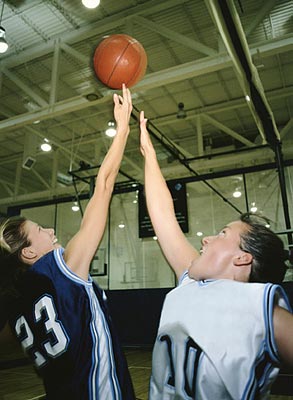
My girls live and breathe hoops with a passion that carries us beyond the season into moments of frightening uncertainty.

  • more
    • All Share Services

 All about basketball

“Dye will be injected into your bloodstream so we can see how fluids are traveling in and out of your brain,” the MRI technician said to my 12-year-old daughter. Gaila endured skull surgery more than a year ago to correct a slight malformation present at birth, but now she was having severe headaches again, and she’d nearly collapsed at her last basketball game.

“Do we get to pick a color?” I asked, trying in best goofy-mother fashion to distract Gaila.

She looked serious, though, and said, “I want purple. Purple and yellow. For the playoffs.”

My three daughters are fierce and absolute in their devotion to the Los Angeles Lakers, and since this is an all-female household, the sight of Laker bumper stickers, Kobe jerseys, and the sound of shouts on game nights have startled some unwary neighbors. Especially junior-high boys who know Gaila.

She rolls her eyes as only someone her age can. “Every morning after a game, I hear the boys talking and I say, ‘Samaki’s got more offensive boards than Shaq because the refs aren’t even letting Shaq breathe under the basket.’ They look at me like I’m crazy.”

I like this crazy.

I actually met their father in junior high, when he was on the basketball team. I was not a cheerleader, but a secret sportswriter. I had been a fledgling cheerleader, but was run over by a car in a freak accident that left a femur broken and me in traction for six weeks. I watched football on my tiny hospital TV, writing stories and summaries after each game.

By 10th grade, their father and I were having the kind of dates that carless, moneyless teens have: We would meet at the school or park courts and shoot around. Of course, he was 6-foot-4, I was 5-foot-4. He became a star forward for the high school team, and I was half of the No. 1 doubles team for tennis. But all season, I kept team stats for the coach, even stepping in as scorekeeper now and then. And on weekends, I literally stood in front of the television to see every play in the college and pro games, afterward writing my secret sports stories.

At USC, I was one of the first female sportswriters, and finally, other people saw my articles. I covered football, basketball, track and soccer. I was the only girl on my dorm floor who read agate, the tiny statistics in the sports section. But I had plenty of guy friends who were impressed by my knowledge of free-throw percentages and offensive tackles.

I stayed loyal, though, and married my high school sweetheart, who helped me choose a graduate school by judging the proximity of potential colleges to sports teams he liked. No Iowa, no Brown or Johns Hopkins. I had to go to University of Massachusetts at Amherst so we could possibly watch the Lakers play the Celtics.

Except that we were poor. So my husband and I watched the games on our ancient black and white, and according to legend (which I tell our kids), he nearly broke his toe one night kicking the cinderblock wall in married student housing when the Lakers became the victims of some bad officiating at Boston Gardens.

After I graduated, we returned to Riverside, had three girls, got older and slower, and became distracted by making a living. We didn’t watch much sports on TV since he worked graveyard and I worked days. We parted ways, but by then, our girls had begun to play sports. Though we were divorced, we sat in the same bank of bleachers at practices and games, usually worrying about Gaila.

When she was 5, Gaila, our eldest, began having fearsome headaches, enduring pain so intense that she would become nearly comatose. It began when she started jumping rope in kindergarten, and got worse when she tried gymnastics.

She had her first MRI in 1994, during that kindergarten year, and was diagnosed with Chiari syndrome — her skull was 8 millimeters too flat at the back, and was pressing against the cerebellum. We told her she was too smart, her brain was too big, and she believed us because she had been designated a gifted and talented student and knew there were only a few in her class.

But she didn’t care about being smart, because her Chiari diagnosis meant she had to comply with strict physical restrictions that included no jumping, running or trampolines. She couldn’t even jump off a low wall, or leap into the air for a volleyball, because the jouncing of her cerebellum could push it into the spinal column.

For six years, every time her sisters frolicked down the sidewalk or jumped off a garden wall, or played on a trampoline in a friend’s yard, Gaila watched, glowering with anger and frustration.

She swam well, and played tennis, but she was so tall that people always asked her why she didn’t play volleyball, or basketball, like her dad. The only way she could do that was to have surgery on her skull to relieve the pressure that was still causing severe headaches. Finally, when Gaila reached sixth grade, we took her to UCLA for the procedure.

By that time, Delphine, our middle daughter, had begun to play basketball. She is not as tall as Gaila (every morning, she used to glare balefully at me in the bathroom and say, “Thanks for being so short”), but she inherited my ball-stealing skills and my meanness. A keen eye gives her the ability to always find the open player, and she is so fast that she frequently sails down-court for an easy layup after picking the ball, infuriating the opposing players to the point of revenge. In one game, a boy knocked her down and then stomped on her hand. Her finger looked broken, but she told me after the game, “That just made me want to steal it a few more times.”

Her nickname is Baby Kobe. And she became obsessed in the purest sense — reading sports biographies, covering her walls with Kobe posters, waking up at 6 to shoot free throws, practicing in the evening with a glow-in-the-dark ball from her godmother. We took her entire girls’ league team to a Sparks game last summer, and she followed the WNBA all season. Every night, the sound of the basketball echoes off the driveway.

Gaila had been watching, for all these years. She said she didn’t like basketball now, she wanted to play volleyball instead. And truthfully, I was afraid for her to play with her sister, not just because of her health, but because Delphine was so good. She had dominated two leagues by age 10, and I didn’t want Gaila to be bad at it, to have her father and sister shake their heads and suggest she try something else.

Gaila fell in love with the Lakers, too, but she didn’t look at Kobe. That was Delphine’s style. She talked about Robert Horry and Samaki Walker, knowing she had a power forward body. Casually, she started shooting baskets in the driveway, alone, and after a few weeks she challenged Delphine and her friends.

I watched her block Delphine’s shots, back up into opponents in the best Shaq Diesel fashion and rebound like Samaki. My girls elbowed each other in the following weeks, glaring fiercely, stalking off the driveway complaining bitterly about fouls only to stalk back on and go at it again.

Gaila played her first season this spring, in the girls’ league Delphine has starred in for three seasons. And when she yanked down a rebound over three girls and passed it to her sister to start the fast break, I could hardly breathe. I didn’t know I would feel this way. It was completely different from watching their father play in college.

Delphine passed off for the assist, and they high-fived. Rosette, my 6-year-old, said, “That was so cool.” Their father was on the bench, finally as assistant coach. He grinned and raised his brows at me, and I sat back down. Delphine didn’t meet my eyes, because she was used to this, but Gaila smiled big and waved my way, negating the cool, which was fine with me.

We are not just conference finals Laker fans. We are known, at the junior high and elementary school, as hardcore followers. We watch nearly every game in the regular season. During weeknights, we finish homework fast, eat quickly and turn on the radio, since we have no cable, or watch the regular channel if it’s broadcasting an away game. During spring break this year, we sat in a hotel bar (yeah, I know that’s against the law for minors) because the bartender didn’t mind us watching the big-screen. The bar was nearly empty. The Lakers were playing the Utah Jazz, and patrons were amused by my girls’ subdued shouts.

As passionate sports fans and athletes, we find a rhythm to our weeks during the season. My girls rush out to the driveway in the morning for the newspaper, which they’ve rarely read before. When I enter the kitchen, they’re going over game stats. Agate. They sit in front of the TV at the appointed hour with homemade rosters, and they paint their nails purple and yellow. We eat Nutella because Kobe is on the jar.

On game nights, no one bothers us. If they’re visiting their father, who has lost his grand passion for the Lakers, they call me every few minutes: “Did you see that? That was such a charge!” “Kobe’s hurt, Mama.”

Their concentration and loyalty, their intense devotion, could have gone other places: movies, video games, pop music or rap or country, Pokémon or Star Wars. But I have to admit I’m glad they’re obsessed with living, running, fallible, desperate, brilliant people who leap into the air when they win and cover their faces when they lose. Like all of us.

It’s preparation for life, I think — painful and hopeful and joyous, and always another chance, another season. Like parenting, I hoped, watching Gaila’s arm being rubbed down by the MRI tech. We have to find out what’s going on with the headaches, because her new season starts in two weeks.

“Purple, right?” the tech says. “Laker fan?”

As she slid into the huge machine, Gaila thought she saw a faint lavender tinge in the IV apparatus. “My blood is purple now,” she said, grinning up at me. “Do you think it will last until the game tomorrow night?”

This weekend she turned 13. Her MRI showed no obstruction to her brain due to the surgery, and she’s on an anti-seizure medication for the headaches. We listened to the conference championship game on the radio while she and her school friends played volleyball on the beach. She and her sisters and her father and I shouted loud enough that everyone up and down the coast knew the final score. And in the van, on the way home, the two eighth-grade boys she’d invited were forced to listen to the post-game wrap-up on the radio. “Gaila,” one boy said, “I don’t even know all the Lakers. You know all the players on every team in the NBA.”

“Yeah,” she said happily, proudly. I thought, Hope that’s not intimidating to him. And I was proud, too, because she’s hardcore.

Continue Reading Close

Tourmaline

If she slept in the heat long enough, maybe she could melt away the baby. If there was a baby.

  • more
    • All Share Services

Tourmaline

Elvia sat on the makeshift bed she’d set up under the cottonwoods, braiding her hair tightly to keep it off her neck, to piss off her father and his girlfriend. She would sleep out here in the yard, against the chainlink fence and cottonwood trunks which butted up against the desert. If she slept long enough, sweat pouring from her skin, August heat coursing through her veins, maybe she could melt away the baby.

If there was a baby. She was dizzy, her head ached, she tasted oil at the back of her throat. But she felt nothing in her belly. She wouldn’t look down. She wouldn’t even touch her skin, by the navel, because what if there was a baby, and it felt her fingertips? Thought she loved it?

She didn’t. Because there wasn’t anything to love. She was dizzy because it was 110 today in Tourmaline, and she’d been washing clothes in the bathtub. Her father’s girlfriend Callie said, “We can’t walk to the laundrymat in this heat and anyhow we ain’t got the money.” As Elvia hung them outside, the t-shirts were already drying, stiff as flat people.

She had seen a pregnancy test in the medicine cabinet. Callie must have used the other one. Elvia wasn’t going to pee on a stick. There was no baby. She wasn’t going to have a baby and then leave it someday, like her own mother had left her, in the light of a windshield with only the sound of mothwings against the glass.

She remembered strange fragments from when she must have been about three: bowls of red pomegranate seeds, flickering candles, the crescent grin of white at her mother’s brown heels.

Useless things. She couldn’t even imagine a mother. She wasn’t going to be a mother when she couldn’t even make one up for herself.

Her father had always refused to tell her anything.

“Why talk about somebody when she’s gone? Huh, Ellie?”

Her father never called her Elvia. Never.

“You said she wasn’t regular Mexican. She didn’t even speak Spanish. She talked some kind of Indian words.”

Her father had gotten mad. “And you’re not a regular kid. She’s a gone Indian, okay? That kind. I’m a right-here dad. Most kids don’t get that. You’re lucky.”

She leaned against the chainlink fence, guessing that she was lucky compared to most kids in the desert. Her father brought home food, he had never hit or even touched her, and he hadn’t disappeared.

My mother disappeared. She left me at a church. Like some old Bible story about a baby wrapped in a blanket and stuck in a basket and headed down a river. Except I was in a Nova with no license plates in a parking lot. I remember one of the foster ladies telling somebody on the phone.

She tied her braids with leather shoelaces. Bracelets of gold light from the cottonwood leaves fell on her arms. Her father hated the braids.

“You’re not Mexican,” he said, over and over. “You’re not Indian. You’re American. Wear your hair like everybody else at school.”

“Shave it off?” Elvia had offered. “All the guys shave theirs. Whatever they are.”

Callie hated the braids, too. “I could curl all that hair for you, make you look gorgeous,” she said. “But you want to pretend you’re a cross between a squaw and a boy.”

Elvia always shrugged. She liked looking strange, like someone no one would want and no one would want to mess with. Every time her father got into trouble with someone, at a bar or at a job or at a store, and they moved to a new place in the desert — Indio, Cabazon, Palm Springs, and now Tourmaline — she had to start a new high school.

A girl would say, “You look Hawaiian.” Elvia would shrug. Another girl would sneer, “I hate when girls get green contacts that don’t even go with their skin.”

Elvia would fold her arms and glare. “Try pullin these out then.”

Her father’s eyes. Her mother’s skin. She felt dizzy again. She wondered if she had her mother’s heart. A heart that would let her leave a baby.

She wasn’t huge. A quiltlike layer of soft fat surrounded her ribs and hips, that was all. She wore baggy jeans and big t-shirts, like always. She and her father had always gone to the Army surplus for clothes. She stared out into the desert trembling white with afternoon heat. Michael had braided her hair. He was a Cahuilla Indian. She had met him at the high school in Cabazon, but she’d spent hours with him in an arroyo outside Tourmaline. He’d built a plywood shelter with a car windshield for a window. Months ago, when darkness had turned the shattered glass into sparkling silver webs, when they’d drunk vodka and juice, she had fallen asleep with his chest pressed like a bony shield against hers.

Then he disappeared from school, from the shelter, from the desert. People said he had a job building windmills in the pass, he had stolen a car, he had gotten casino money, he had vaporized himself.

She closed her eyes, sweating, melting, hoping the cells inside her were melting, too.

“It’s just a blob,” a girl whispered to another in a school bathroom. “It’s just cells. Not a person. So when you get rid of it, it’s no big deal.”

“Nu-uh,” the other girl said, fiercely. “It sucks its thumb inside you. For reals.”

Elvia didn’t know how to get rid of it. She had no money. She didn’t want to imagine what a doctor would do. Could you smoke something, drink something, that would dissolve it, if it was only a tiny blob? She wouldn’t look down.

She squinted at the small brown-stucco house her father had rented this time. The place had been silent since morning. Elvia knew Callie was winding down. She hadn’t slept for three days, and she’d probably given her son Jeff a tablespoonful of sweet orange Benadryl to knock him out before she dropped into her own coma.

Did Callie dream, after she’d smoked the white pellets turned to embers, after she stayed awake so long and then collapsed into unconsciousness? Elvia usually slept against Jeff’s damp back, on their mattress. She wondered if her father dreamed, maybe of her mother’s long black hair so different from Callie’s straw-pale strands.

Maybe speed burned up all their dreams when it fried the edges of their brains. She’d seen kids smoking speed in the high school parking lot. She recognized the powdery grains Callie palmed from Dually, who came to the house in his huge black truck, with two sets of tires rumbling through the sand.

When her father came home from work, he and Callie sat outside in the truck cab, pulling in long breaths, the chalky embers in the glass pipe glowing red as night-animal eyes. They stayed awake for days, breaths hot as eucalyptus. Her father took his clouds of smoke and drove a truck, hauling concrete pipe for new golf courses in Palm Desert and Rancho Mirage. He came home with overtime money, fingers coated with cement dust and lips gray as ash.

Callie took her clouds and whirled around the tiny stucco box, exchanging piles of clean and dirty clothes that lined the walls like the only support for the fingerprinted plaster. Callie had moved in six months ago, and Jeff’s hands could reach higher now on the paint and doors, leaving tracks like snails. Callie’s hands were red and dry as tiny beached starfish, scrubbing the stove with a toothbrush and then spilling coffee, brushing off the baby-boy fingers in downward sweeps like she felt ants on her legs. He followed her everywhere, calling, “Maa! Maa!”

Elvia heard him now. She felt sweat trickling down her neck, and she followed the hot chainlink toward the house.

He was in the doorway, calling, “Maa! Kips! Kips! Doggie!” She knew he wanted potato chips in a bowl, and he wanted his mother to find his stuffed Dalmatian. Elvia watched Callie do whatever Jeff yelled that first day, after she’d breathed in sharpened Dually-delivered smoke. Then she twisted and swerved away more each hour until now she was screaming at him. “One minute, okay? Leave me alone so I can pretend I have a life for one goddamn second? One!”

That’s why I’m not doing this, Elvia thought, seeing Jeff’s mouth open, his tiny teeth. Because I like him. I don’t want to hate a baby. For making me crazy.

“I’m right here, Callie,” she said, crossing into the shade of the eaves.

“You sleeping outside again?” Callie paused near the wall, thin as blue graffiti in her demin shorts and shirt. Her skin was pale and shiny as wax with layers of sweat built up on her forehead, her cheeks scored with purple marks. Speed bumps. “Shoot,” Callie said absently, staring at the pale asphalt road that shimmered in the heat. “I was in Blythe two years, and I’m still not used to days like today. Gotta be 113.”

“Yeah,” Elvia said. Jeff butted his head against Callie’s thighs, his cries high as a mockingbird. He was hungry and Callie was coming down hard.

“Ellie? Keep him outside for a minute, sweetie, so I can hear myself think? One minute, so I can call a friend?” Callie’s blond hair was thin as string on the knobs of her shoulders. Elvia took Jeff’s soft elbow and made a detour inside for Honeycomb.

With the cereal in a margarine tub, she sat with Jeff in the narrow corridor of shade along the east wall. He trickled dirt through his damp fingers. Elvia leaned against the stucco and felt tiny bumps of fire through her shirt. She touched Jeff’s back, covered with a heat rash like a mist of spray paint.

She couldn’t remember her mother’s fingers. She remembered the clicking nestle of dry beans in a bowl, dropping from her mother’s hands. She remembered riding on her mother’s hip, holding a long braid, smelling cinnamon.

Jeff made the trilling sound at the back of his throat, the constant noise that drove Callie crazy. He was almost two. Elvia touched Jeff’s plump foot with toes like pale moth cocoons nestled in a row. She thought, What did I do, when I was little like this, to make her leave me?

Jeff didn’t look up from the dirt mixed like brown sugar on his Honeycomb. I have her hair. Her skin. Her insides. I’m not having this baby and leaving it when it remembers riding around on my hip, holding my braid. What did I do? Did I make a lot of noise? Did I follow her around? I drove her crazy.

Inside, Callie talked on the phone, her nervous fingers offering Jeff the Dalmatian. “Swear to God,” Callie said into the receiver.

Elvia stumbled back to the bed under the cottonwoods. A veil of pain dropped over her forehead. What do they do — drain some of your brain? They eat your brain. There is no baby. He didn’t — it was on my legs. My hip. That blanket.

He said he didn’t want a baby. He was kind of drunk. He fell asleep.

No one said it only took a few minutes. That it hurt. That you could barely tell what the hell was going on.

A mother was supposed to tell you. She was supposed to give you something to drink in a teacup with flowers, even if it wasn’t coffee like the commercials, and then she’d tell you about feminine protection and also, by the way, this is what happens with a guy.

Not the sex ed classes at school, where you couldn’t act interested or pay attention with everybody laughing and joking and sleeping. You were supposed to know already. You were supposed to put on nail polish, real bored, like other girls who knew everything. Who had mothers.

You couldn’t ask a father, she thought angrily, sleepily, the sun a red frisbee hanging over the mountains. You couldn’t ask a father anything.

She woke up when she heard his truck pull into the yard. Callie was saying, “Don’t you love me? I’m windin down, and Dually ain’t shown up. Come on, Larry, you’re the best at makin em.” Her rubber thongs brushed ceaselessly over the sand.

“Ellie’s sleepin again?” Her father lit a cigarette. Elvia heard the hiss of the match.

“I guess.” Callie’d probably mistaken the heaps of clothing on the mattress for her. “She’s actin all grown. You’re liable to see boys pretty soon.”

“She’s barely fifteen.”

“Hell if that ain’t grown,” Callie laughed. “Why you raisin her anyway? For reals?”

Elvia felt the chainlink cooler now against her arms. She stared at the dim blue roots inside her wrist. Her father said, “I didn’t want her in a foster home. Didn’t want fuckup people messin with my kid. My only kid.” He always said that.

“That’s love, huh?” Callie’s voice was softer now. Elvia closed her eyes to hear. “When I first met you, and I seen this Indian-lookin kid, I thought no way that’s his daughter. I thought you musta took her or bought her.” Callie was quiet for a minute. “But after awhile, I knew you weren’t lyin. She had to be your kid cause you didn’t pay no attention to her. If you’da stole her or bought her, you’d be watchin like a hawk. Touchin her arm, messin with her hair.” Callie laughed low. “Ain’t that somethin.”

“Hey,” her father said, the word hard as a shovel. “Like you’re a fuckin expert.”

“Not me,” Callie said, just as hard. “I’m wound down, and Dually’s either busted or packed up. This girl Lee, she’s cookin her own.” The screen door slammed, and then a bag of something tinkled like bells. “Lee said if you do these up for her, she’ll take care of us.”

Elvia moved carefully off the cot, down the dark tunnel of cottonwood trunks toward the side of the house. “Damn, Callie,” her father said. “I worked all day. I’m fuckin tired.”

“Don’t you love me?” Elvia heard Callie’s whisper again, exactly the same, like a CD.

“Damn.” Her father picked up his toolbox and clanked toward the metal shed. Elvia slipped behind the spindly mesquite bushes that grew near the chainlink, where traces of water dripped. She heard Jeff’s tiny palms slapping the door now, Jeff calling, “Maa! Maa!” He couldn’t reach the doorknob yet.

She could see her father’s shape outside the shed. Flames sprayed like purple tongue from his hand. Car air fresheners spilled from the bag like clear macaroni, the cardboard labels strewn on the sand. Pine. Vanilla. Baby powder.

Her father was intent on the acetylene torch. He lifted a tube, dipping it to the flame once, twice, the glass like a drunk moth. Then he pulled it to his lips, and the glass expanded into a golden bubble. He drew it through the cooled night air like he was the school band director.

The glass bulbs were perfect pipes for speed. The flames licked out under her father’s thumb. How could she explain a phantom baby, or a real one, to her father, bent over sparkling bubbles and broken glass?

She slid toward the house and into her bedroom. Callie came in, stared at her rumpled clothes, eyes hot as the blue torch flame, fingers red on Jeff’s legs when she changed his diaper.

She must have slept, and woke to her father crouched beside the mattress. “I work hard, Ellie. I make sure we got walls and AC. But Callie says you been sleepin outside like a wino.”

She glanced at his boots, covered with ocher dust. “How come you never tell me where she went?”

He looked surprised. His goatee was blond and stiff as a paintbrush on his chin. “She probably went back to Mexico. She never liked it here. But I don’t know. Why talk about the past when it’s over?”

“We say that same shit in history class, but nobody listens.”

“Watch your mouth, Ellie.”

“Why didn’t she take me, then?” She nearly shouted it.

“How the hell do I know? I was in Wyoming workin a gas pipeline. I came back and the apartment was empty. I found you in foster care. You know all I know.”

She looked at his green eyes, pale as drying foxtails in the fields.

“I’m not goin anywhere,” he murmured, standing up.

What if I am? she thought. Like the hospital. To have a baby — a brown Indian and Mexican and you baby. With green eyes. You don’t know all I know. You don’t know me at all.

Continue Reading Close

Detachment parenting

My mother let us ride without seat belts. I let my daughter play with sharp tools. I am such a mess as a mother.

  • more
    • All Share Services

Detachment parenting

I spent all weekend slinking around my house, telling myself, “You’re a horrible mother.” If I’d had a whip, I would have flagellated myself, but all I had was the vacuum hose hitting me in the thighs. I muttered, “You’re irresponsible. Selfish. She could have lost a finger!”

Very dramatic.

I knew the pick hammer was a bad idea when my neighbor handed it to my daughter. But I was detached. I thought, “Cool. They’ll stay busy excavating that huge dried-mud pile and I’ll clean the kitchen.”

Detachment parenting is not good, I know now. I admit right here that I only learned what attachment parenting was last year, by reading about it in magazines. Bonding with your baby, the family bed, carrying your infant and toddler at all times, like in a Snugli. Cool.

But see, I’m 11 years into this already. I’ve been messing up for more than a decade. First off, I work. I have been working since I was 14. And the choice remains clear today, in my house: Mom works 25 hours a week, we eat three meals a day plus mucho snacks.

I bonded big time with my first daughter, Gaila. At 3 months, she stayed with my mother-in-law, who cuddled her and sang without cease, while I rushed back from work twice a day to breast-feed. When Gaila was 2, though, I had to leave her with my husband’s godmother, who’d provided home day care for 30 years.

I will never forget the sight of Gaila splayed on the yard’s chain-link fence, clinging like a kitten on a screen, screaming so loud the neighbors and relatives would grin and say, “There goes Gaila the Waila. Her mama must be off to work.”

We didn’t live in an attachment kind of place. I didn’t even know what a Snugli was. But I carried Gaila all the time when she was an infant — too much, according to my roughneck friends and relatives, who said, “Put that baby down. She’s spoiled.”

I didn’t listen. I liked the way Gaila’s fingers felt clutching my collar or hair into a tangle of security.

We didn’t have a changing table, and our floors were hard wood except in her bedroom, so I changed her on the floor and then lay around with her while she crawled on me.

One day the second toe on her right foot swelled and turned purple, and I rushed to the pediatrician. It was my fault — one of my long blond hairs had wrapped around her toe, nearly cutting off the circulation. The doctor had to wedge tiny scissors in and cut the hair. Gaila’s toe bled a little, and I felt a sharp pain ricochet between my hipbones, like a shadowy contraction. My fault, I kept thinking, for days. All my fault. How could I have been so careless? I am such a mess as a mother.

Now, 11 years later, I still feel that way: distracted, detached, fierce and loving, yet somehow never enough of what I am supposed to be. I have three daughters, and I am divorced. I know what past-babyhood attachment means: spending every waking moment with your children, being a stay-at-home mom, driving them to sports and social events, making crafts, just being there for them 24 hours a day. That’s how I’ve heard some mothers describe parenthood in the pre-school or elementary school parking lot, glancing at other mothers with disapproval. Family bed, family vacations, family fun nights, family sports, family 5K runs.

Not that I don’t spend most of my time with my kids. I help with homework, sitting at the same table with my daughters while grading my own papers. I watch “Sabrina” and “The Parent Trap,” companionably. But I also like to read, sitting on the porch within yelling distance while the kids are on the swing set, or in the mulberry tree, or jumping on their beds.

Most of my attachment seems accidental. My baby, Rosette, just turned 5 and she still sleeps with me. It’s not a family-bed, conscious thing — hey, mine is a two-bedroom house, and a third bed wouldn’t fit in the girls’ room. So when my friends and family say, “That big girl’s still sleeping with you?” I shrug and think, “I should kick her out and let the clean-laundry pile warming our feet take over that side of the bed?”

But I am often detached, though I feel guilty. Sometimes, on the weekend, I want to be alone! Not for romance; I want to clean the kitchen in peace. I say, “Go play outside.”

I should say, first, that when my mother said this to us, she meant it. We went outside and climbed the foothills in summer heat and smog, avoiding rattlesnakes, excavating huge tunnels with hammers and chisels in decomposed granite. After hours, when we came back and complained that we were thirsty, she would lift the hose from her flowers in a detached manner, and we’d drink.

What did they do, those moms? So coolly detached that we could walk to the store a mile away, lingering to play in the flood-control ditch. So impervious when we rolled like Lincoln Logs on the huge bench seat of the station wagon as she stopped quickly at the light.

And yet, her arm, their arms, always shot out like a railway crossing gate to keep us from hitting the dashboard.

That morning, I watched my daughters through the kitchen window while I scoured the sink. They began investigating the huge dirt clods caused by our new construction. My neighbor, a contractor, is adding two bedrooms and a bathroom. In a few months, Rosette will detach from my side at night. She will not clutch my pajama top in a damp fist, mistaking it for her blankie.

“Rosette is so tall now, at 5,” I was thinking. But she’s still my baby.

They threw dirt clods at the large hump of sculptured dry mud near the foundation, and I went outside to yell, “Throw clods from the same side, so you won’t hit each other!”

They did. I lingered at the counter, watching them chip the dirt with a garden trowel. I unearthed bread heels and chip-dusted baggies and Oreo shards from that corner of the counter that acts like a magnet whose steel filings are lunch castoffs. I thought, “Maybe Delphine will find a treasure today.”

She loved excavating around our 1910 former orange-grove farmhouse. She’d found half a bisque doll’s head, a mother-of-pearl button and a license plate from the ’40s.

My neighbor was putting in windows, and when Delphine picked up his sharp claw hammer, he studied her for a moment, then handed her a shiny pick hammer. He thought it would be safer, he said.

I went outside and said, “You be careful.” Of course I did. Mike glanced at me and grinned. He has boys. And they’re still so young.

I said “Be careful” about five more times while I took out the recycling and trash. Then I said, “That thing’s very sharp. Do you know what you’re doing?”

Then I went inside to clean the week’s worth of hair ornaments from the bathroom counter. It was only half an hour before Rosette screamed, and I ran out to see her holding a finger, dripping blood.

The pain that I get when I see their wounds is like barbed wire pulled across the inside of my belly, low down, between the hips, where I carried them.

I screamed, too, at Delphine. “How could you?!” I slapped her on the shoulder, and her eyes went black and tear-shined as stones.

I couldn’t tell what was gone from Rosette’s left index finger until I got it under the tap. I thought she’d lose the end. A huge flap of skin, nearly the whole tip, but a shallow layer. It bled as fingers and lips and toes and chins do, on children. All those extremities. “All my responsibility,” I kept thinking furiously.

We rushed her to urgent care, just to make sure it didn’t need stitches. “I don’t want to see,” Rosette moaned, looking away from the proverbial dish towel. Delphine cried silently. I sat there remembering broken wrist, dresser-corner split forehead. Meningitis, scarlet fever, pneumonia. All Delphine. And this hurt her way worse.

Of course Rosette only cried for the first five minutes. My girls are stoic, like me. Delphine never cried when she broke her wrist. (The E.R. nurses all came to see her stony fierce gaze over the dangling limb. “Look at that one — she’s scary.”)

Even in the car, I was saying, “When I was 5, just like you, someone slammed my finger in the kindergarten gate and it tore just like that.”

“Did Grandma take you to urgent care?” they asked.

“Heck no,” I laughed. “She probably said, ‘Go get a Band-Aid.’”

But later, I tried to remember. Had my mother carted us off for every scrape, as we mothers do now? We had broken bones, pneumonia. Do I just not remember? And that led me to wonder if my own kids will remember these trips. Will they think, “My mother was so detached. She let us play outside with sharp tools because she wanted to clean the bathroom sink in peace.”

Stitches and casts and butterfly bandages — they are the attachments of our mothering lives. The doctor didn’t even seal Rosette’s wound with that new glue. He pressed the flap of skin down and bandaged it, then gave her a tiny splint like a flat, silver gingerbread man. She was dry-eyed, fascinated.

So why did I mope around for the next two days thinking, “But she could have lost her finger! I’m the worst mother in the world”?

Because that’s what we do now. Attached like limpets to everything about our kids — schoolwork and clothes and friends and food and games — we see ourselves in every move they make, every facet of their days and nights. We take credit for soccer game victories, because we drove to practice or coached. We suffer with every spelling mistake, every birthday party snub, every childhood injury. Perfect mom is who we are supposed to be. Not like the moms of my childhood, who shooed us from gold-flecked Formica tables and said, “Go play outside.” We drive our kids everywhere, rarely let them play in the yard unsupervised, never let them walk to the store. We can’t. We won’t.

I’m not wholesale romanticizing the old days. My mother was a foster parent, and I lived for 12 years with children whose parents were detached to the point of drunkenness, hunger and abandonment.

I’m only saying that all weekend, I wanted the misery and pity and guilt of Rosette’s finger for myself. Our bad luck turned into my personal failure.

I pictured myself at the playground fence come Monday, seeing other mothers’ frowns at Rosette’s splint, hearing them say, “One of yours got hurt again?” I heard them already saying, “My God, she could have lost a finger! She’d have been scarred for life!”

I know. That’s what I kept thinking, all weekend. I also realized I didn’t even know Radio Disney existed until someone else’s child rode in my van and showed me the station. (I had to take out the Van Halen tape Rosette loves just as her favorite song, “Running With the Devil,” came on.) I have never played a Raffi tape. We never finger-paint. I never made baby food from scratch. The girls don’t even have a real closet. Rosette doesn’t even have a bed.

Delphine came bleary-eyed to show me the rough draft for her fourth-grade writing assessment, titled “The Most Valuable Lesson I Have Ever Learned.” Her sentences were fine constructions full of references to “sharp tools” and “blood,” wrapping up with, “I should have listened to my mom.”

Then we went to church. I glanced behind us to see the older men rising to sing, their hair silvery and gone, their fingers gnarled and big-knuckled on the pews. I felt Rosette pressed against me, playing with her splint. Who am I to think I own her fingers, I own her safety forever, I own every drop of her blood, her life?

On Monday morning, she awoke crying, and I sat up with a start. Was she in pain?

She’d lost her splint and bandage in the sheets, and she had wanted to show them to everyone in kindergarten. “Does your finger hurt?” I asked, as perfect as I could be this early in the morning darkness.

“No,” she said matter-of-factly, now that I was holding the splint. In the bathroom, while I slid the bandage back on, she raised her eyebrows critically and said, “Mommy, did your pajamas actually come with the wallpaper?”

My ancient, cheesy flannel pajamas have a stripe with a floral design inside. The wallpaper in the hallway, something I was so proud of getting done after my divorce (since during my marriage the raw drywall had been exposed for years), has exactly the same pattern. “I’m just asking ’cause, you know, it’s kinda funny that you match the wall,” Rosette went on, nonchalantly jamming the splint onto her finger. “Tighten that up for me, Mommy, OK?”

Continue Reading Close

Page 2 of 4 in Susan Straight