Spring Offer: Get 1 Year, Save 58%

“Why did you kill that lady?”: Alec Baldwin smacks away person’s phone when targeted at cafe

Alec Baldwin is making headlines again for that famous temper of his. On Monday, a video began circulating showing him slapping away an artist known as Crackhead Barney's phone when confronted at a coffee shop just feet away from his New York City home. 

In the video, Barney approaches Baldwin at the cafe, pressuring the actor to say “free Palestine,” blocks away from NYU students forming a “Gaza solidarity encampment” on the school’s campus Monday afternoon. Managing to ignore this request, Baldwin visibly lost his cool when Barney added, "Why did you kill that lady?" Referring to cinematographer Halyna Hutchins, who was killed on the set of “Rust” during a 2021 mishap, in which Baldwin pleaded not guilty to involuntary manslaughter charges.

“You killed that lady and got no jail time? No jail time, Alec?” Barney said as Baldwin asked employees to remove them from the store, taking matters into his own hands when they didn't. 

The three-time Golden Globes winner has found his career seemingly derailed after Hutchins’ death, facing investigations and charges in New Mexico, where “Rust” filming resumed last year. The film’s armorer, Hannah Gutierrez-Reed, was sentenced this month to 18 months in prison.

Charges against Baldwin, which were initially dropped in 2023, have been re-filed.

The incident comes just months after the “30 Rock” actor shouted at pro-Palestinian demonstrators before being escorted away by police. He reportedly told protestors to “Shut the f**k up” as they pressed him on his stance on the conflict.

Baldwin’s frequent public outbursts have a deep history, including a 2018 incident when a New York man accused him of punching him over a parking spot. The two settled out of court on the matter. Baldwin also publicly feuded with American Airlines over his removal from a flight in 2011, which the airline claimed was due to his rude and unruly behavior.

Trump and Giuliani named unindicted co-conspirators in Michigan fake elector plot

In a preliminary hearing on 15 Republicans who had been indicted on charges of election forgery for their plot to send illegitimate electors to the electoral vote count on January 6, 2021, a state investigator unveiled that Donald Trump, alongside advisor Rudy Giuliani and former White House Chief of Staff Mark Meadows, were considered unindicted co-conspirators in the case.

The revelation came as an attorney for alleged fake elector Michele Lundgren questioned Howard Shock, an investigator at the Michigan Attorney General’s office, on other conspirators in the case.

"Finally, former President Donald Trump?" Silverthorn asked, per ABC News.

"Yes," Shock said under oath.

The scope of the state’s investigations into the actions of Trump and others is unknown, although a recording obtained by The Detroit News reveals that Trump pressured two election officials in the state not to certify the vote. Michigan isn’t the only jurisdiction looking into fraudulent election actions made by Republicans close to the former President.

Prosecutors in Arizona are leading a similar charge against illegitimate electors, revealing indictments Wednesday evening against Kelli Ward, former Arizona Republican Party chair, and others. 

The Michigan unindicted co-conspirator status comes as a number of legal challenges, including a fraud appeal in New York and a criminal trial involving hush money payments to Stormy Daniels, threaten to derail Trump’s campaign efforts.

Trump’s sons will head up the transition team’s effort to find loyal government officials

Donald Trump’s adult sons, Donald Trump Jr. and Eric Trump, will be tapped for transition team roles to vet potential members of a future Trump administration for ideological and personal loyalty, underscoring Trump’s documented paranoia in regards to his staff.

A number of former inner-circle Trump officials have rebuked their former boss, including John Bolton, Nikki Haley, and others. The former president has often sought to build a loyal apparatus around him, recently pushing for his daughter-in-law, Lara Trump, to lead the Republican National Committee.

Donald Trump Jr. seeks to “keep the John Boltons of the world outside a second Trump administration,” a source close to the campaign told Axios. Bolton, once National Security Advisor for the Trump administration, wrote a scathing book outlining his time in the White House, despite the Trump Justice Department’s attempts to block its publication.

Another key goal of Don Jr. and Eric’s roles is to make it clear that the Trump family is steering the Republican Party, Axios reports. Trump is reportedly frustrated by the influence that the Heritage Foundation and other conservative groups have purported to hold, and he seemingly intends to tighten his grip on building a new administration.

Notably, Ivanka Trump is maintaining her distance from her father’s campaign and transition, despite her major role in the past. 

Lara Trump says the Republican National Committee can “physically handle” ballots

Lara Trump says the Republican National Committee has “people who can physically handle the ballots” in polling places, prompting concerns on election integrity with her comments made in a recent Newsmax appearance.

The RNC co-chair and Donald Trump’s daughter-in-law described to Newsmax host Eric Bolling an RNC maneuver to deploy 100,000 volunteers and attorneys to polling places, adding that the lifting of a moratorium stemming from past incidents of voter intimidation gave the RNC new abilities in the election. 

Lara Trump inaccurately identified the moratorium as ending last year upon a judge’s death, despite the fact that it ended in 2018. Former RNC chairman Michael Steele reminded Trump of the moratorium’s history on X, saying that it was put in place “because the RNC was caught cheating.”

As Democracy Docket founder and election lawyer Marc. E. Elias noted in response to the interview, “Poll observers are NEVER permitted to touch ballots.” The National Conference of State Legislators also says that monitors are “prohibited from interfering in the electoral process apart from reporting issues.”

Describing 2024 as “the most important election of our lifetimes,” Lara Trump echoed false claims about fraud in the 2020 election, and said she didn’t want to see a “repeat.” Her father-in-law has claimed that the election was stolen, and was recently named as an unindicted co-conspirator in a Michigan plot to send illegitimate electors to the Electoral College.

Some people are missing the point of “Baby Reindeer”

If the little voice inside your head has recently taken on a new accent — specifically a rolling Scottish brogue — it's likely that you're not alone. 

That might be the "Baby Reindeer" effect. In Netflix's limited series creator and star Richard Gadd chronicles the emotional account of his real-life experience through his portrayal of Donny Dunn, a floundering comedian living in London who is aggressively pursued by a mentally unwell woman named Martha (Jessica Gunning). 

Through seven succinct episodes, the show teems with emotional content and explores dark themes. Aside from Martha's incessant stalking and sometimes violent behaviors, Donny is repeatedly sexually abused during drug-fueled hangouts by Darrien (Tom Goodman-Hill), a television comedy writer who promises to propel his career.

In a digital world consumed by an insatiable desire for knowledge, it's no surprise that Gadd's openness about "Baby Reindeer's" real-life origins might ignite the latent Sherlock Holmes in some of us. I'll be the first to admit that I quickly took to Google after Gadd's cloudless admission in the first episode's opening that "this is a true story," keen to learn more. It's part of why true crime is so popular. We have something palpable and immersive to follow down a rabbit hole, indulging our curiosities just a bit further in the darkness of our rooms, cradled by the dim glow of our phones and the knowledge that, at the very least, we aren't as perverse as whatever we just watched. We simply want to read on.

My searches didn't yield much, which was to be expected. Gadd, who previously told Variety that the show is "emotionally 100% true," ostensibly took an ironclad approach to protect the identities of real individuals involved. Speaking to GQ, Gadd said that "Baby Reindeer" went to “such great lengths to disguise [his stalker] to the point that I don’t think she would recognize herself.”

And yet, since the show dropped earlier this month, conspiracy theories about the "real" Martha and Darrien are unspooled across social media as vigilante fans of the show deluged TikTok and X/Twitter with their flimsy conclusions. More than that, as Cosmopolitan's Kimberely Bond writes, the unsubstantiated online probes served to supply "cheap laughs or for viewers to boast about their stellar detective work for social media clout." Armchair sleuthing went to such extremes, in fact, that British actor, writer, and director Sean Foley was baselessly accused of being the real-life Darrien.

Sure, not all internet sleuthing has negative consequences. Lest we forget "Don't F**k With Cats: Hunting an Internet Killer," Netflix's 2019 limited series details how a group of cat lovers banded together online to investigate animal cruelty videos that went viral. Their concerns eventually prompted an international manhunt for a murderer. 

But that's not the case here.

On Monday, Gadd posted to his Instagram story to ask "Baby Reindeer" viewers to cease their amateur detective work. 

“People I love, have worked with, and admire (including Sean Foley) are unfairly getting caught up in speculation,” Gadd wrote. “Please don’t speculate on who any of the real-life people could be. That’s not the point of our show.”

While many social media users have played into the potentially harmful hunches, others have voiced genuine concern, pointing toward the irony underlying it all.

"Bring back media literacy," one X/Twitter user wrote. "People are not getting the point of Baby Reindeer, and it’s infuriating. The show is meant to increase your awareness and empathy. Why tf are people using it to bully/stalk and further abuse? This is why people don’t speak out ffs."

"People really need to chill with the #BabyReindeer speculation. It’s potentially damaging to those who are being speculated," wrote another. "Certain identities haven’t been revealed for a reason . . .  leave it!

Of course, as humans, there's an innate desire to know more. But how has a seemingly obvious concern been eclipsed by not only a want of truth, but by a parasocial sense of entitlement? Richard Gadd has already been so incredibly vulnerable with his viewers. He chose to share, if not the hyperspecific minutiae of what he endured, an undeniably raw and accurate emotional portrayal of his experience with being stalked and groomed. 

"I was very keen for Martha to be layered," Gadd recently told Netflix. "To show this side of stalking, that it is a mental illness. And show the fact that there was someone there who was doing a bad thing, who wasn't necessarily a bad person, that just had a lot of trauma in their life that they were going through."

If you've seen "Baby Reindeer," you know Martha's antics are, to put it lightly, extreme. But in carelessly throwing accusations and supremely untenable breadcrumbs into the internet void, people are partaking in a different kind of morally unsound behavior.

Perhaps we should take heed of a statement Gadd shared through Netflix ahead of the show's release, in which he articulates the anxieties, the catharsis and the undoubtedly enormous weight of translating his lived trauma onto the screen for millions of viewers:

"I would be lying if I said I was not back exactly where I was all those years ago in 2019 at the Edinburgh Fringe. Fearing the worst. Praying for the best. Hoping that in amongst all the messy, complicated, f**ked up, themes 'Baby Reindeer' throws at you that people might take notice of its beating heart. "

"Baby Reindeer" is now streaming on Netflix.


Snakes, diss tracks and Kanye West: a timeline of Kim Kardashian and Taylor Swift’s beef

It seems like the bitter feud between Taylor Swift and Kim Kardashian just unlocked a new chapter

Swift and Kardashian's long-standing beef really begins with Kardashian's ex-husband Kanye West's complicated history with the singer. Almost two decades ago, the then-19-year-old Swift won the 2009 VMA for the best female video, edging out Beyoncé's video for "Single Ladies (Put A Ring On It)." In the infamous televised moment during Swift's acceptance speech, West hopped on stage, grabbed a mic and interrupted with, “Yo, Taylor, I’m really happy for you and I’mma let you finish, but Beyoncé had one of the best videos of all time. One of the best videos of all time!”

The fallout was swift — literally. West was condemned by the likes of former President Barack Obama and even Beyoncé herself. Later that same evening, while Bey accepted her Video of the Year award, she brought out Swift to join her on stage. Little did West and Swift know that moment would have a domino effect that would play out for years to come and even involve West's now ex-wife Kardashian. 

After initial apologies from West, the singer and rapper made up and in 2015, Swift even presented West with the Video Vanguard Award at VMAs. However, their budding relationship quickly soured a year later when West debuted his song "Famous." The line, "I feel like me and Taylor might still have sex/Why? I made that b***h famous" caused a stir and went viral. Swift's team denied that she had ever approved the lines. Kardashian swooped in and defended her husband, and the rest is history.

Swift is now at the height of her superstardom and continues to blow upon the embers of a feud that seemingly ended but now has been renewed in a new diss track "thanK you aIMee" on her dual album, "The Tortured Poets Department." In light of this revival, Salon looked back at the women's enmity and how it's played out publicly.

Here's everything you need to know about the long-standing beef between Kardashian and Swift:

February 11, 2016: Kanye releases “Famous” 

The song that started it all was released eight years ago. Its virality prompted the question of whether Swift had approved being mentioned in the song. West said that he had received permission from Swift, but this was later disputed by Swift's team. He said that he “called Taylor and had a hour long convo with her about the line,” that she “thought it was funny,” “gave her blessings,” and even “came up with” the lyric, GQ reported.

Years before its release Kardashian was quoted saying that she loves Swift. "I’m the biggest Taylor Swift fan.” In 2015, they were seen together hugging at awards like the Grammys and the VMAs. However, when "Famous" was shared with the world, it did irreparable damage to the women's relationship. 

June 2016: Swift's spokesperson denies the song approval

A statement from Swift’s PR team argued that “Kanye did not call for approval, but to ask Taylor to release his single ‘Famous’ on her Twitter account. She declined and cautioned him about releasing a song with such a strong misogynistic message. Taylor was never made aware of the actual lyric, ‘I made that b***h famous.’”

Kanye continued to stress that Swift approved of the lines in "Famous."

June 16, 2016: Kardashian says Swift knew about the "Famous" lines

In an interview with GQ, Kardashian stoked the fire in the brewing feud. When asked if Swift has actually approved the lines in the song, Kardashian said, “She totally approved that.

“She totally knew that that was coming out. She wanted to all of a sudden act like she didn't. I swear, my husband gets so much s**t for things [when] he really was doing proper protocol and even called to get it approved.” She continued, “What rapper would call a girl that he was rapping a line about to get approval?”

June 2016: Swift's team responds to Kardashian's comments

Swift's team said, "Taylor does not hold anything against Kim Kardashian as she recognizes the pressure Kim must be under and that she is only repeating what she has been told by Kanye West. 

"However, that does not change the fact that much of what Kim is saying is incorrect. Kanye West and Taylor only spoke once on the phone while she was on vacation with her family in January of 2016 and they have never spoken since," the statement continued. "Taylor has never denied that conversation took place. It was on that phone call that Kanye West also asked her to release the song on her Twitter account, which she declined to do."

June 24, 2016: West releases "Famous" video

The music video also pushed boundaries by featuring West, Kardashian naked and in bed surrounded by celebrity lookalikes, one of whom bore a resemblance to Swift. West himself said that he had nothing to say about the actors in the video. He said it was a "comment on fame" and then tweeted, “Can somebody sue me already #I’llwait.”

July 17, 2016: Kardashian explains why she defended West

In a new episode of "Keeping Up with the Kardashians," Kardashian shared more about her perspective on the situation between West and Swift.

She said that when she did her GQ interview, she felt like she had to respond. "I never talk s**t about anyone publicly, especially in interviews. But I was just like, I had so had it," she said. "I wanted to defend him in it.” 

At the end of the episode, Kardashian and her mom, Kris Jenner sat down to discuss the controversy. Jenner asked her daughter, "What would happen if you just called Taylor up and say 'What happened? How did this go so south?' I guess I don't understand the motivation to flip . . . maybe she took it the wrong way. My advice would be to give Taylor Swift a call."

"Thank you for your lovely advice," Kardashian replied, "but I'm not going to take it.

July 17, 2016: Kim Kardashian releases video footage of Kanye West's phone call with Taylor Swift

Kardashian went on Snapchat to share the elusive videos she had been hinting at during her GQ interview. The videos were seemingly of a phone call between West and Swift talking about the  "Famous" lyrics. 

"It's like a compliment," Swift said in the video after West read the lyrics, "For all my Southside n***a that know me best / I feel like me and Taylor might still have sex."

West said to Swift, "What I give a f**k is you as a person, and as a friend, I want things that make you feel good." He also thanked Swift "for being like, so cool about it" after she said she appreciated the "heads up" on the lyrics.

"I never would've expected you to like tell me about a line in your song," Swift said. "I mean, I don't think anybody would listen to that and be like, 'Oh, that's a real diss.' You gotta tell the story that way that it happened to you and the way you experienced it."

Shed continued, "If people ask me about it, look, I think it would be great for me to be like, 'He called me and told me before it came out . . . Joke's on you, guys. We're fine.'"

Swift's spokesperson told People Magazine, "Taylor was never made aware of the actual lyrics, 'I made that b***h famous.'"

July 17, 2016: Swift defends herself after leaked footage

Swift responded immediately. She said that the phone call never showed West telling her he was going to call her "that b***h."

"It doesn't exist because it never happened. You don't get to control someone's emotional response to being called 'that b***h' in front of the entire world," she said.

"Of course I wanted to like the song. I wanted to believe Kanye when he told me that I would love the song. I wanted us to have a friendly relationship. He promised to play the song for me, but he never did," Swift said. "While I wanted to be supportive of Kanye on the phone call, you cannot 'approve' a song you haven't heard. Being falsely painted as a liar when I was never given the full story or played any part of the song is character assassination.

"I would very much like to be excluded from this narrative, one that I have never asked to be a part of, since 2009," Swift continued. She captioned the post, "That moment when Kanye West secretly records your phone call, then Kim posts it on the Internet."

It wasn't long before the internet thought Swift was public enemy No. 1. Countless snake emojis flooded the singer's comments on Instagram and Twitter. She was essentially canceled as people online cheered #TaylorSwiftIsOverParty and #KimExposedTaylorParty.

August 27, 2017: Swift references West and Kardashian in “Look What You Made Me Do” music video 

A year later after the star had removed herself from the public eye, she released the song “Look What You Made Me Do” and its music video. The musician also teased the release of her sixth studio album, "Reputation." The album's theme clearly highlighting the public's condemnation and cancellation of Swift.

But for “Look What You Made Me Do," the singer had essentially reclaimed the snake imagery that people had so closely associated her with for a year. In the video, she has the quote, “Et tu, Brute” from William Shakespeare’s "Julius Caesar" written on her chair as a reference to West stabbing her in the back. 

At the end of the video, she references the drama with different past “versions of herself” lined up in a row, including one that kept taking videos on her phone, saying, “I’m going to edit this later.” 

November 10, 2017: Swift releases "Reputation," aiming right at Kardashian and West 

In songs like “I Did Something Bad,” Swift sings, “I never trust a narcissist, but they love me,” and, “If a man talks s**t, then I owe him nothin’, I don’t regret it one bit ’cause he had it coming.”

“This is Why We Can’t Have Nice Things" alluded to Swift and West's relationship rekindling and how she felt tricked by the musician and wife's motives. She described the rapper as “shady." She sings "And here’s to you / ‘Cause forgiveness is a nice thing to do / Hahaha, I can’t even say it with a straight face.”

January 14, 2019: Kardashian denies a feud with Swift

During an interview with Andy Cohen on "Watch What Happens Live," Cohen asked Kardashian about Swift. She said she was "over it."

"I feel like we'd all moved on," Kardashian stated.

April 2019: Swift says she hasn't received an apology

However, Swift said in Elle, “I learned that disarming someone’s petty bullying can be as simple as learning to laugh. . . . In my experience, I’ve come to see that bullies want to be feared and taken seriously. A few years ago, someone started an online hate campaign by calling me a snake on the internet.

“It would be nice if we could get an apology from people who bully us, but maybe all I’ll ever get is the satisfaction of knowing I could survive it, and thrive in spite of it,” she continued.

We need your help to stay independent

March 2020: The “Famous” phone call fully leaks

Four years after the initial incident, the full video leaked. In the clip, Swift was seemingly relieved that she was not “that stupid dumb b***h” that West raps about in the song.

“I’m going to send you the song and send you the exact wording and everything about it, right? And then we could sit and talk through it,” West said to her.

Swift addressed the leak:

“Instead of answering those who are asking how I feel about the video footage that leaked, proving that I was telling the truth the whole time about *that call* (you know, the one that was illegally recorded, that somebody edited and manipulated in order to frame me and put me, my family and fans through hell for 4 years) . . . SWIPE UP to see what really matters,” wrote Swift, a link to the World Health Organization days after it declared the COVID-19 pandemic," she said.

Kardashian followed with a statement too. “To be clear, the only issue I ever had around the situation was that Taylor lied through her publicist who stated that ‘Kanye never called to ask for permission,’” she said. “They clearly spoke so I let you all see that. Nobody ever denied the word ‘bitch’ was used without her permission.”

December 2023: Taylor said the public cancellation was a “career death”

Swift dominated last year, even snagging the title of TIME's person of the year. In the magazine, the singer talked about her career and how it has been through its highs and lows.

“Make no mistake — my career was taken away from me,” she said of the leaked phone call.

“You have a fully manufactured frame job, in an illegally recorded phone call, which Kim Kardashian edited and then put out to say to everyone that I was a liar,” she said. “That took me down psychologically to a place I’ve never been before. I moved to a foreign country. I didn’t leave a rental house for a year. I was afraid to get on phone calls. I pushed away most people in my life because I didn’t trust anyone anymore. I went down really, really hard.”

April 19, 2024: Swift releases "The Tortured Poets Department" with diss track "thanK you aIMee" 

Eight years after the leaked phone call and the immediate backlash against Swift, she released her 11th studio album with the song "thanK you aIMee" on it. The song title not-too-subtly capitalizes the letters K, I and M, in reference to Kardashian.

In the song, Swift refers to Aimee as a bully and spends most of the song yelling, "f**k you Aimee." 

Swift sings, "I don't think you've changed much/And so I changed your name and any real defining clues/And one day, your kid comes home singing/A song that only us two is gonna know is about you." This has widely been speculated to be referring Kardashian and her daughter North West, singing and dancing to one of Swift's songs on TikTok.

Mass graves of Palestinians point to “serious violations” of international law, UN official says

Palestinian civil defense workers sifting through Gaza's rubble have uncovered nearly 400 bodies in mass graves near the territory's two largest hospitals, CNN reported. The hospitals were raided and occupied by Israeli forces before their withdrawal earlier this month.

According to the civil defense workers, the bodies found at Nasser Medical Complex and al-Shifa hospital – both now destroyed by Israeli fire – include those of hospital workers, women, and the elderly. Some of the bodies were discovered with their hands bound and bearing gunshot wounds to the head.

A spokesperson for the United Nations High Commissioner for Human Rights said that the state of the bodies indicated "serious violations of international human rights law and international humanitarian law, and these need to be subjected to further investigations," The Guardian reported. The location of the mass graves also raises alarms as hospitals, medical staff, and patients are entitled to special protection under international humanitarian law.

Volker Türk, UN human rights chief, called Tuesday for an independent investigation “given the prevailing climate of impunity." The U.S. State Department, which has called the reports "troubling," has said it is asking for more information from the Israeli government.

The Israeli military, responding the the reports, claimed that it had exhumed previously buried bodies in a search for the remains of hostages that Hamas took during their October 7 attack on Israel, then re-buried them.

Human rights watchdogs have criticized Israel for waging a war with little regard for civilians in Gaza, accusing Israeli forces of targeting noncombatants, demolishing civilian infrastructure and blocking food and medical supplies from entering the besieged enclave. Violence has also escalated in the West Bank, where Israeli security forces have been accused of aiding settlers in attacking and displacing Palestinian residents.

Trump Media CEO begs congressional Republicans to investigate short sellers

Trump Media CEO Devin Nunes is begging his former GOP colleagues in Congress to investigate ‘DJT’ short sellers.

In the Tuesday letter to Congressmen Jim Jordan (R-OH), Patrick McHenry (R-NC), and other top committee chairs, Nunes asked the House of Representatives to look into allegations of illegal “naked” short selling, a practice where a stock is shorted without borrowing the asset. 

“We assess there are strong indications of unlawful manipulation of DJT stock,” Nunes said in the letter, which was filed with federal regulators. “I respectfully request that you open an investigation of anomalous trading of DJT to determine its extent and purpose, and whether any laws including RICO statutes and tax evasion laws were violated.”

Nunes previously asked the CEO of the NASDAQ exchange for a crackdown on what he called “potential market manipulation” by major Wall Street players, including Citadel Securities, who did not take the accusations kindly. 

Nunes again pointed to Citadel Securities, Virtu, Jane Street and G1 Execution Services in the letter for making over 60% of trades on Trump Media stock, echoing previous claims that institutional investors are unfairly betting against the former president’s media company.

In the letter, Nunes specifically asked House Republicans to protect “TMTG’s retail investors,” many of whom are some of Donald Trump’s most fanatical supporters. Even these fanatical supporters may be losing confidence in the stock, which is bleeding valuation.

The company, which posted a 2023 revenue of $4.1 million and losses of $58.2 million despite a valuation in the billions, faces calls from Democratic-aligned groups for investigation, too. In an early April letter to Congress, the Congressional Integrity Project asked the House Oversight Committee to look into “possible influence peddling and corruption” by investors in the company.

Expert: Regardless of immunity ruling, Supreme Court already “helped Trump” by delaying his trial

The Supreme Court will hear oral arguments Thursday on whether Donald Trump can face criminal prosecution for alleged misconduct that the former president claims involved official acts. While legal experts expect the justices will be tough on all parties, they predict Trump will face greater scrutiny.

The high court's case arose from Trump's carousel of efforts to have his federal election interference case dismissed on grounds of absolute presidential immunity, which he argues completely shields him from prosecution for any actions taken while in office. Special counsel Jack Smith, who brought the four-count indictment against Trump last summer, has accused him of conspiring to thwart his 2020 electoral defeat and the peaceful transfer of power to President Joe Biden. 

During Thursday's arguments, the court will be considering the broader question presented of "whether and if so to what extent does a former President enjoy presidential immunity from criminal prosecution for conduct alleged to involve official acts during his tenure in office.”

But because "so much" of Trump's conduct fell under his "private capacity as office-seeker," University of Texas law professor Lee Kovarsky told Salon he expects "many justices to be skeptical that the prosecution would be precluded by any immunity, even if they were inclined to find that such immunity exists."

Also of consideration for the justices is the lack of precedent in the case, a distinction both the special counsel and Trump's legal teams have grappled with in filings to the court, according to The Associated Press.  

Trump's lawyers have argued that allowing former presidents to face criminal prosecution after their term ends could tamp down their sense of independence in carrying out official acts and, ultimately, usher in "destructive cycles of recrimination." The special counsel, however, has emphasized that the "absence of any prosecutions" of a former president "underscores the unprecedented nature" of Trump's alleged conduct. 

Smith will face "tough questioning" from the justices about his urging them to decide on the issue quickly, Kovarksy predicted, noting that they will likely wonder why the special counsel's interest in receiving a ruling before the 2024 election "should matter here."

He also said he expects the court's special session Thursday to mark a "difficult day for Trump's counsel" because their immunity arguments "just aren't very good" and their briefing on those arguments "has made them look worse."

Lower courts have routinely rejected Trump's absolute immunity argument, with trial Judge Tanya Chutkan first denying the claim in December. A three-judge panel of the D.C. Circuit Court of Appeals later unanimously canned the argument in February.

Bennett Gershman, a Pace University law professor and former New York prosecutor, told Salon he believes the Supreme Court's hearing will resemble that of the D.C. Circuit, with the justices peppering Trump's team with "very tough, almost surreal" questions meant to expose the "implications and consequences" that an absolute presidential immunity could give rise to.

We need your help to stay independent

When asked by U.S. Circuit Judge Florence Pan earlier this year if a president could be prosecuted for ordering SEAL Team Six to assassinate a political rival, Trump attorney John Sauer pushed an expansive interpretation of presidential immunity that amounted, in essence, to: yes, but only after impeachment and conviction by Congress. 

"Some members of the [Supreme] Court likely will pose questions to Trump’s lawyer, as the judges on The D.C. Circuit did, by raising a parade of the most astonishingly horrible consequences to our democracy and constitution if a president has such immunity: Immunity from assassinating political enemies and opponents? Threatening or bribing members of Congress? Conspiring to rig elections? On and on," Gershman told Salon. Such protection, he added, "would allow a tyrant like Trump to remain in power indefinitely and be able to crush any opposition."

Their questions are also poised to "demonstrate the massive legal and political differences" between the immunity for official acts president's enjoy in civil matters — as established in the 1982 case Nixon v. Fitzgerald — and immunity for crimes, he said, noting that he doesn't see any "limiting principle" the high court may look for. Those could include a president committing misconduct in an "official capacity" versus in a "personal" one, crimes of extreme gravity or petty crimes, and criminal acts carried out by a president's staff or allies with his knowledge yet without his formal approval. 

"It’s hard (and far too depressing) to imagine that any member of the Court would entertain Trump’s unbelievably insanely dangerous claim," Gershman said, adding: "If the decision is anything other than unanimous, it would further add to this Court’s reputation as the most partisan and ethically challenged Court in American history."

While the court likely won't take up a broad immunity that could cover all the conduct charged in Trump's indictment, Kovarsky said he suspects the justices are interested in some level of immunity. The most "plausible solution set" to come from the court rests between finding a former president has "no immunity" and finding immunity for official acts but determining that "such immunity would not preclude" Trump's prosecution in D.C., he added. 


Want a daily wrap-up of all the news and commentary Salon has to offer? Subscribe to our morning newsletter, Crash Course.


The Supreme Court's decision to hear the case has ground the former president's federal election interference case to a halt, with proceedings in the Washington, D.C. trial stayed pending the ruling. 

While the justices are moving faster on the case than is typical, the AP notes, experts have also voiced concern about whether the court's current pace will allow for the federal election interference case to go to trial before the November presidential election should the justices affirm the lower court rulings. 

The justices' decision to review the case "actually undermines core democratic values," argue NYU law professors Melissa Murray and Andrew Weissmann, the co-authors of "The Trump Indictments: The Historic Charging Documents with Commentary."

"The court’s insistence on putting its own stamp on this case — despite the widespread assumption that it will not change the application of immunity to this case and the sluggish pace chosen to hear it — means that it will have needlessly delayed legal accountability for no justifiable reason," they wrote in a New York Times opinion, adding that even if the justices rule against absolute immunity, "its actions will not amount to a victory for the rule of law and may be corrosive to the democratic values for which the United States should be known."

That delay runs the risk of stripping citizens of a "trial before a judge and a jury" and plays into Trump's efforts to "avoid a legal reckoning," the professors said, calling for the court to administer its decision "quickly after oral argument." 

The federal election interference case is one of four criminal cases Trump is facing. The presumptive GOP nominee has tried to delay his federal criminal proceedings, including the classified documents case in Florida, until after the November presidential election when he, if elected, could order the Justice Department to drop the charges. 

While Gershman agrees that the Supreme Court "has helped Trump by further delaying the start of the trial," he finds that a pre-election trial is still possible.

"Assuming the Court rules against Trump’s immunity claim even at the end of the term in late June, there is no reason why the federal election case cannot be tried this summer," he said.

Are there any actually adult health benefits of drinking breast milk?

"I just pounded a glass of breast milk because I feel sick 🤧 goodnight!" wrote Kourtney Kardashian Barker on an Instagram story to her 224 million followers in April 2024.

Her comment attracted shock, horror and disgust from many social media users, but it's not the first time Kardashian Barker has used her milk as medicine. In 2013, she applied her breast milk to her sister Kim Kardashian's leg in an effort to heal a patch of psoriasis.

The Kardashians are usually trendsetters. But by drinking her own breast milk, the eldest Kardashian sister helped promote a health trend already steeped in centuries of medical history.

After giving birth to Rocky, her child with Blink 182 drummer Travis Barker, Kourtney clearly wanted to put her extra breast milk to good use again. But is there any evidence that human milk is an effective remedy for illness?

The production of milk defines mammals. Every mammal produces milk which has been tailored to their offspring over millennia of evolution. As well as providing all the energy and nutrients needed for growth of newborns, human milk packs a punch of extra components that support the development of the immune system.

The World Health Organization recommends exclusive breastfeeding for the first six months of life. Once solid food is introduced, it is recommended that breastfeeding continues to two years of age and beyond. One thing that is not recommended by any health organization is adult consumption of human milk.


History of human milk as medicine

Historically, there have been reports of human milk as a treatment for a range of illnesses. The physician and naturalist Thomas Muffet claimed in 1584 that human milk was good "not only for young and tender infants, but also for men and women of riper years, fallen by age or by sickness into compositions".

In the 18th century it was also used to feed adults ill with consumption (now known as pulmonary tuberculosis). Many healers of the day also recommended treating eye infections with human milk, which was known as "whitened blood".

We know that human milk contains many components which can be effective as antimicrobials – lactoferrin and antimicrobial peptides, for example. However, there is no robust evidence to suggest that that human milk can be used to treat illness and infections in adults.


Bodybuilders think breast is best

Human milk is also used by some bodybuilders to lose fat and bulk up. This has created an online marketplace allowing easy access to breast milk.

The 2020 Netflix series (Un)Well featured an episode focused on the safety and ethics of breast milk for bodybuilding. The practice was found to be both expensive and dangerously unregulated.

As with any private and unregulated market, there are risks, the primary one in this case being microbiological contamination. This can come through the expression process and is typically associated with handling and cleanliness of pumps and tubing.

This can be easily minimized by following health authority guidelines (such as from the UK's NHS). Contamination of expressed milk can also be made worse through improper storage, such as more than a few hours at room temperature or a few days in the refrigerator, before freezing at around -20°C.

Unless they have a well equipped microbiological testing laboratory at home, people who buy human milk have no way of testing the safety of their purchase. Researchers at Nationwide Children's Hospital in the US have shown that human milk purchased over informal networks has shown concerningly high levels of microbiological contamination. One in ten samples were also found to have added formula milk or cow's milk.


Lack of research into potential benefits

The evidence does not exist that the use of human milk is beneficial to treat illnesses in adults. This does not, however, mean that it will not come. Considering human milk feeds most of the world's population for the first six months of their life, it is a surprisingly understudied area.

Researchers have shown preliminary evidence that specific components of human milk could have antimicrobial activity against pathogens that infect adults. This may provide novel ways of treating infections in the future, but the work will require time and resources to reach this point.

Even though there is no established benefit of consuming human milk for adults, there is plenty of evidence of its benefit for newborns. For those who are unable to receive their mother's own milk, WHO recommends the provision of donor human milk processed by regulated milk banks to ensure its safety. This will normally involve the screening of the donor and donated milk, similarly to blood donations, and pasteurisation to inactivate viruses and other microorganisms.

Kourtney Kardashian Barker may find that she has a surplus of expressed milk again in the future. If she does, there are many human milk banks in her native California that would welcome her donation. This would benefit vulnerable newborns in a way that is very much supported by evidence.

Simon Cameron, Senior Lecturer in Microbiology, School of Biological Sciences, Queen's University Belfast

This article is republished from The Conversation under a Creative Commons license. Read the original article.

“I want to be the funniest person in the room”: After “Top Chef,” Padma Lakshmi eyes stand-up comedy

In her new life after “Top Chef,” the series’ longtime former host Padma Lakshmi is attempting to cross over into a creative endeavor separate from fine dining and hosting — stand-up comedy. 

As Lakshmi told The New Yorker’s Helen Rosner in a new, wide-reaching profile, she anticipated that she would transition from “Top Chef” to the third season of her award-winning Hulu program “Taste the Nation,” but the streaming service has put the program on hold. But as she contemplates her next career move, Lakshmi has been spending time hosting various shows at the Comedy Cellar, which is close to her home, where she platforms “queer, nonwhite or non-male” comedians alongside Jesse David Fox. 

According to Rosner, Lakshmi has also tried her hand at improv and stand-up while on-stage as she is “learning learning how to be more of [her] wilder, wackier, zanier self” Her interest in comedy isn’t new; Lakshmi has taken classes at the Upright Citizens Brigade and appeared on “Saturday Night Live” last fall for a quick cameo (she received no feedback from longtime showrunner Lorne Michaels which, as Lakshmi said, “is great feedback”). 

Lakshmi is also reportedly in talks with filmmaker Paul Feig, who was behind films like “Bridesmaids” and “The Heat,” about a potential upcoming movie vehicle for her now-crystalizing comedic talents. 

"I don’t care about being the most beautiful woman in the room — I want to be the funniest person in the room,” Lakshmi told Rosner. “That’s who stays with you. Beauty is not an accomplishment, but wit is.

Anna Gunn says her “Breaking Bad” character is finally out of the “ring of fire” of misogyny

Audiences are apparently beginning to view Skyler White, the character played by Anna Gunn on the hit AMC series "Breaking Bad," in a new light, thanks to the "seismic" cultural changes that have happened in the more than a decade since the show's finale.

Gunn, who nabbed two Emmy Awards for her portrayal of Skyler, the wife of Brian Cranston's Walter White, spoke to The Hollywood Reporter about the misogyny her character faced from much of the show's fanbase.

The actor cited a 2013 op-ed that she authored for The New York Times, in which she delved into the "vitriolic response" Skyler garnered as the effective antagonist to Walter. While Gunn told The Hollywood Reporter that her decision to look into the discourse surrounding Skyler "was probably a mistake," she acknowledged that it "led to a great deal of soul searching and me thinking, 'Well, is it me?'"

"I really just had to go through that ring of fire, for lack of a better phrase, to understand that a lot of it was, frankly, misogynistic," Gunn added. "A lot of it was the way that female characters were treated, and I think we've come a long way since then. If I may call them my sisters, I'm really proud of all the actresses who've spoken up and continued to pave the way and created their own antihero characters for themselves."

Gunn observed that, in the past, online comments about Skyler were often "threatening" and "violent" in nature, something which concerned her. "I just didn't want to feel bullied by all that, and I felt that it was my responsibility to stand up and answer to it, which is what I did," she said.

Now, the actor said, "seismic changes" in the culture have led to a newfound interpretation of and appreciation for Skyler. "People come up to me now and say, 'You were the linchpin for me. You were the conscience of the show. You were what pulled me into the show,'" Gunn continued. "Or they say, 'The first time I watched it, I hated that character. But the second time I watched it, I realized, oh my God, that poor woman.'"

Megan Thee Stallion accused of harassment by cameraman who claimed she made him watch her have sex

Megan Thee Stallion is in another legal battle.

NBC reported that Emilio Garcia in a suit filed in Los Angeles County Superior Court on Tuesday alleged the rapper subjected him to a hostile work environment in June 2022. He claims during a trip to Ibiza, Spain, Megan proceeded to have sexual relations with a woman next to him in a moving SUV and was cautioned, "Don't ever discuss what you saw." 

“I felt uncomfortable. I was kind of frozen, and I was shocked. At kind of just be the overall audacity to do this right, right beside me,” Garcia told NBC. 

He also claimed on the same trip, she'd tell him to “spit your food out” and “you don’t need to be eating.” The "harassment was so severe or pervasive” that it created "intolerable" working conditions. Following the trip, Garcia alleged he saw a drop in bookings from Megan before being told in June of 2023 “his services would no longer be required."

Garcia claims he now “grapples with mounting anxiety, depression, and physical distress stemming from the toxic work environment."

“Megan just needs to pay our client what he’s due, own up to her behavior and quit this sort of sexual harassment and fat shaming conduct,” Ron Zambrano, one of Garcia's lawyers, said in a statement to NBC. “Emilio should never have been put in a position of having to be in the vehicle with her while she had sex with another woman. ‘Inappropriate’ is putting it lightly. Exposing this behavior to employees is definitely illegal.”

"This is an employment claim for money — with no sexual harassment claim filed and with salacious accusations to attempt to embarrass her. We will deal with this in court," Alex Spiro, an attorney for Megan, said on Tuesday.

“Shōgun” bosses discuss that ending and the glorification of the so-called Great Man

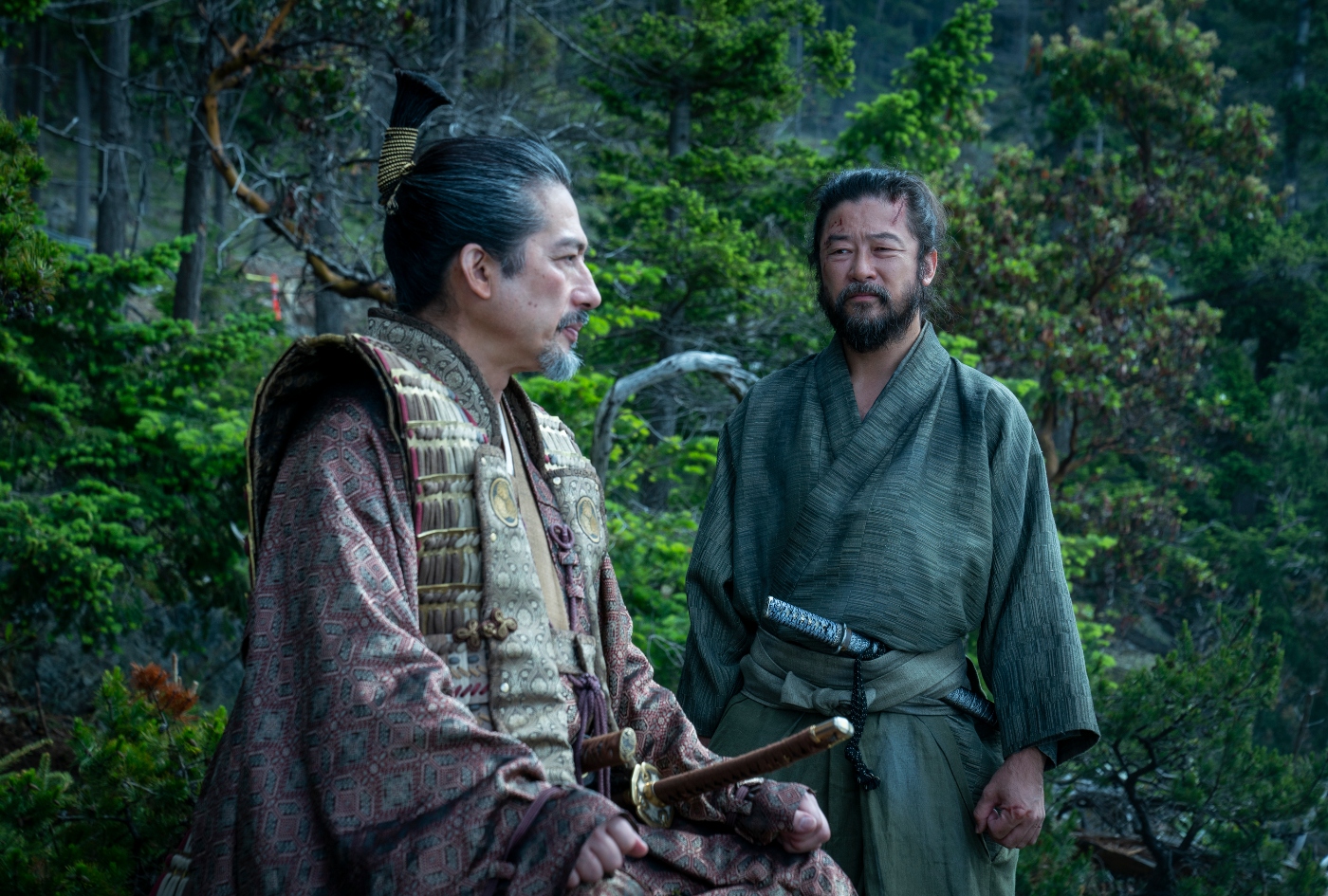
At the climax of 10 episodes spent spinning up a war, the titular leader of “Shōgun” guarantees that we won’t see one. 

This is as its hero Lord Toranaga (Hiroyuki Sanada) intended. As he explains to his traitorous vassal Yabushige (Tadanobu Asano) moments before stabs himself in the gut, marching into the battle against his united enemies would have spelled bloody defeat.

"We were banking on the dragons within and encountering other dragons within."

Instead, he sent Lady Mariko (Anna Sawai) to Osaka both to antagonize his adversary Ishido (Takehiro Hira) and show her childhood best friend Lady Ochiba (Fumi Nikaido) the kind of scrub she’d sided with. Whether Toranaga expected Mariko would die in the course of fulfilling her duty isn’t clear, but her assassination swayed Ochiba to his cause.

“I sent a woman to do what no army could,” Toranaga tells Yabushige, explaining that her actions were, in fact, the crux of his mysterious Crimson Sky strategy. Her sacrifice cleared the path for Toranaga to forge a nation without wars, “an era of great peace,” he says.

Hiroyuki Sanada as Lord Toranaga and Tadanobu Asano as Yabushige in "Shogun" (Katie Yu/FX)“Shōgun” unfurls as a collection of elegant feints. James Clavell’s 1975 novel and the 1980 TV adaptation foregrounds the perspective of an English sailor who washes up on the shores of Japan. In this version, the white guy is a distraction and nothing more. We’re primed to side with Toranaga, portrayed as a noble lord who only wants the best for Japan’s underage regent and the country itself. 

“All of us have made this possible. You, me, Mariko, even the barbarian who came out of the sea,” he continues, referring to Cosmo Jarvis’ John Blackthorne. He neglects to mention Hiromatsu (Tokuma Nishioka), his wisest counsel, whose protest suicide kicks off the entire gambit.

By that point in the finale, “A Dream of a Dream,” we may have gotten the message that Toranaga doesn’t think much of the people around him or their lives. Toranaga knew Yabushige wasn’t to be trusted but sent him to Osaka with Mariko anyway. The minor lord didn’t intend his betrayal to result in Mariko’s death, but it did.

When Blackthorne and Yabushige’s ship pulls into the bay near the turncoat daimyo’s village to bring home her remains, the Englishman sees his ship has been burned and sunk, and that Toranaga is randomly executing peasants in the name of rooting out the disloyal perpetrators. Toranaga drives Blackthorne to nearly kill himself before the lord will agree to stop killing the villagers.

It's only to Yabushige that Toranaga admits to orchestrating the ship’s arson himself, along with navigating every other piece in place. Despite Toranaga’s frequent denials of desiring to be shōgun, that was always his plan.

Toranaga’s a celebrated warrior, political tactician and a paragon of honor. But he also understands the power of theater, which is a nice way of dressing up deceit. “A Dream of a Dream” doesn’t quite amount to his unmasking, but it provides a full understanding of what type of protagonist we might have been pulling for this whole time.

Series creators Justin Marks and Rachel Kondo didn’t necessarily intend to mark Sanada’s lord as the series’ hero. That honor was always Mariko’s. “The book really does wrap the whole spine of the story around her trajectory,” Marks explained to Salon, “so we focused it in that direction.”

Cosmo Jarvis as Blackthorne in "Shogun" (Katie Yu/FX)As for Blackthorne, Clavell's white savior, “The journey of his character is letting go of himself and accepting that he has no real privileged agency over this world,” Marks said. “We thought that was a really important message to hit in any era, you know, but especially today.”

Fair enough, but what does Toranaga’s reveal tell us about what we value in leadership and power? Marks and Kondo address that and other aspects of the character's development in our conversation, which took place before the limited series’ premiere in Pasadena, Calif.

“Shōgun” is being compared to “Game of Thrones,” mainly because that’s a familiar reference that perhaps captures its scope. On the one hand, that’s a huge compliment. But before we get into other aspects of what that means, let’s talk about how Toranaga’s plan culminates. 

The entire season builds toward the expectation of a climactic battle, but “Shōgun” resolves without delivering one. I appreciated that, but that’s also kind of risky because I’m guessing that most viewers expect a massive action piece.

Justin Marks: Strangely, that was the same experience of reading the book. It’s exactly how the book ends, although we tied a prettier bow on it in certain respects, because we're a closed-ended series.

Historically, this does culminate in a battle, Sekigahara, and there was a lot of bloodshed. But the difference is the outcome of the battle was essentially predetermined because of everything that has already happened. That's what Toranaga’s plan has been in our story and in the book as well.

Rachel Kondo: I guess we were banking on the noise and the explosions [occurring] internally, especially in Episode 9. A lot of my experience of the book was so visceral. Right? You've seen the episodes. When Mariko dies in the book, that was when I had to close the book and just say, "I need a minute," because of that emotional upheaval and shock and astonishment.

We had all the stuff that you get with these big battle scenes — all the stuff you get with “Game of Thrones” and the dragons streaking across the sky. We were banking on the dragons within and encountering other dragons within.

Yes, and “Game of Thrones” aired over many seasons, and was eventually viewed as a reflection of the politics and the mores of our time, which brings us to the way our view of Toranaga might change by the end of “Shōgun.”

Marks: When you talk about these qualities of leadership, yes, you can't take culture out of it. But that's where we also step back and try to withhold commentary one way or another.

Toranaga is based on the real-life figure Tokugawa Ieyasu, the man who ushered in 260 years of peace in Japan, but also closed the doors and in doing so made it a very isolated place.

I think we came into it originally as a very complicated Great Man kind of archetype. I can look at his character from the outside, from my modern-day perspective, and see him as someone who sent a lot of people – and a baby! — to die in service of this ambition. It's a very difficult, complex thing.

We need your help to stay independent

Within Japan, or at least with Hiro and our conversations, you have to look at it from the place of what he created for the next 260 years. And yes, it is a “Do ends justify the means?” conversation.  But we wanted to neither lionize that type of figure nor otherwise. I think the last look between him and Blackthorne acknowledges the sort of control that exists, the invisible strings that he exerts over him.

Cosmo Jarvis as Blackthorne and Hiroyuki Sanada as Lord Toranaga in "Shogun" (Katie Yu/FX)Is that something to applaud? I don't know. But again, look at what he created. The same could be true for any leader in our history with its very complex legacy. Some of us want to really simplify it and just forget about all the complex, messy details in between. There's also the temptation to get lost in all the details, and then you don't believe in anything.

So it's a tricky balance that we tried to create.

I can imagine. And this series spends a lot of time intentionally winning us to Toranaga’s side only to drive home, in the end, that we've been admiring an authoritarian. 

Kondo: Toranaga is the embodiment of the word complex. He's a little bit right, and he's a little bit wrong. It all comes down to perspective.

As you said, James Clavell wrote the ending that way. But we're also in an uneasy period right where a lot of people are doing something similar with world leaders and a certain presidential candidate. Now, to be fair, people made those same observations about Daenerys Targaryen at the end of “Game of Thrones.”

Kondo: That's why I found it fascinating to experience Toranaga through the eyes of Mariko. Because here we have this loyal, devoted vassal who gave her life for his cause. And up until that point, I was kind of with you in the lionizing of this man for whom she would give anything. Then at the point of her death, that shifted my perspective and made me say, “Wait a second. He just sacrificed this life – this story and this ache and all these things that she was, and for what?”


Want a daily wrap-up of all the news and commentary Salon has to offer? Subscribe to our morning newsletter, Crash Course.


You’re a better person than I am because the moment it hit me was when he ordered the slaughter of the villagers — 

Marks: As performance art . . .

Exactly. 

Marks: . . . in order to get a reaction out of Blackthorne – to use Toranaga’s analogy when he’s talking about falconry – to break him to the fist.

But it speaks to the kind of man we think it takes to be the Great Man, again, in the capital sense. I went into it early, and Rachel knows this, with the sort of bold proclamation that we don't do this to celebrate great men in that sense. And we wanted to be very careful about what we're saying about Toranaga. And in the conversations with Hiro and bringing this story out, I think we started to see more of the shades of gray.

We began to see this is a story about control over chaos and agency, and how we exert that control.

"I hope it’s seen as not the ending we thought we were going to get, but the one we need."

The times he lived in, he couldn't control and the violence of those times and what would have been around the corner had he not been there. What he could control was how he turned it. I mean, how he adjusted his own sails in those winds. And who's to say that wasn't the best possible choice one could make?  But man, I don't know what it does to the soul, and I hope to never have to know.

But it’s a great twist in the book. It really is. . . . And it's been right there the whole time. I mean, the book is called “Shōgun.” But I hope, even though it's unexpected, I hope it’s seen as not the ending we thought we were going to get, but the one we need.

All episodes of “Shōgun" are streaming on Hulu.

Summer Lee, progressive lawmaker, defeats “moderate” challenger backed by GOP megadonor Jeff Yass

Progressive "squad" member Summer Lee brushed aside a primary challenge from the right on Tuesday, winning over 60 percent of the vote in her Democratic contest despite facing a slew of attacks funded by GOP megadonor Jeff Yass.

Lee's opponent, Pittsburgh-area council member Bhavini Patel, had criticized the incumbent for breaking with some of President Joe Biden's public positions. Looming largest in this election was Lee's support for a ceasefire in Gaza, where an Israeli military offensive has killed around 35,000 Palestinians so far. Patel repeatedly asserted that, on this issue, Lee was out of step with Biden and the rest of the party.

A group called "Moderate PAC" echoed Patel's line of attack, intoning in one ad that residents of Pennsylvania's 12th district need someone "who will work with Joe Biden." The PAC dropped nearly $600,000 for such attacks, a majority of its funding coming from Yass, a billionaire supporter of former President Donald Trump.

Yass has poured his money not only in Trump's campaign coffers but also in various conservative policy initiatives and organizations. His wealth has positioned him in GOP circles of influence, which he might have used to persuade Trump to reverse course on a potential ban on TikTok; Yass is an investor in TikTok's parent company.

Patel previously told Salon that she had herself criticized Yass, despite his support for her primary challenge. During her campaign, she too knocked Lee for being insufficiently pro-Biden, though Biden himself mentioned Lee favorably during a recent campaign swing through western Pennsylvania.

Yass' attempt to knock out a progressive incumbent was thwarted by a robust campaign from Lee, a coalition of political groups that countered Moderate PAC with their own heavy spending, and a string of endorsements from Democratic elected officials, including both U.S. senators from Pennsylvania. Lee's opponents also dearly missed the support of groups like AIPAC, which signaled interest in the race early in the cycle but ultimately chose not to engage after earlier failing to prevent Lee's first election in 2022.

From TikTok to “Make it Fancy”: Brandon Skier’s mission to demystify fine dining for home cooks

Brandon Skier is so much more than just a TikTok cook. 

Known as “Sad Papi” on the platform where he has over 2 million followers — and is regarded as something of a culinary darling — Skier has spent the last few years making short videos, with titles like “Dry aging duck” and “Rendering tallow,” that demystify some of the techniques and recipes that underpin fine dining cuisine. 

Skier's teaching style straddles a pleasant line between cool mentor and in-the-know friend (“Now, I can’t make you a saucier overnight,” Skier said in his “Sauce 101” tutorial posted last year. “I can give you some tips”), which is a tone that he has carried over into his debut cookbook, “Make it Fancy: Cooking at Home with Sad Papi,” out now from Simon & Schuster. 

Now, I’ll be frank, I’m not typically especially enthused when I see something about a “viral TikTok cook” — it’s a realm that sometimes prioritizes virality over actual taste, know-how and technique — but Skier is a notable exception and one quick perusal through his cookbook extinguishes any doubts. Skier's prowess and evident passion for showing all the terrific ways in which a home-cooked meal can be just as satisfying and enriching as a dinner out, or perhaps even more so, helps elevate "Make it Fancy" in myriad ways. 

Prior to becoming “Sad Papi,” Skier began working in Los Angeles restaurants as a teenager, "usually one place for dinner service [and] another job doing bread and pastry in the mornings." He then went to culinary school before ending up at Redbird, where he stayed for three years, in addition to staging at other restaurants on his days off. He was working at Auburn, a California-focused fine dining restaurant from chef Eric Bost, when it closed permanently because of the pandemic. 

Cookbook author Brandon SkierCookbook author Brandon Skier. (Brandon Skier)

That’s when TikTok came calling. 

"There were a lot of unknowns at the time of how long things were going to be restricted or what the restaurant landscape was even going to look like when everything was said and done,” Skier said. “So I initially started posting videos as a way to keep busy during lockdowns." As restaurants started opening up more and more, Skier realized that he had actually grown quite a following and he "had to sit down and decide if I wanted back in a restaurant or if I should pursue social media."

With the encouragement of a few friends, he took a self-described gamble; he bought a camera and laptop “and said YOLO.” 

The title of his cookbook, “Make it Fancy,” is a nod to Skier’s time on TikTok. That’s what he called a video series of his in which followers would recommend random dishes and he would “proceed to make it completely over the top.” Think items like smoked s’mores or fancy oatmeals, peanut butter and jellies, cereals and poutines. However, the book’s layout and many of its contents are directly pulled from Skier’s fine dining background. 

“I really wanted the layout to read like a menu so you could go through and pick a first course, second course, third course, dessert, and there's drinks in there as well,” he said. “You can make a 12-course tasting menu if you really want to.” 


Want more great food writing and recipes? Subscribe to Salon Food's newsletter, The Bite.


I mentioned some of the standout flavor profiles and ingredients — pistachio dukkah, mostarda, "puffed" beef tendon, duck confit with mole (featured on the book cover) and much more — and Skier noted how "the flavors are a pretty good representation of my culinary journey for sure." Skier grew up in Los Angeles and remarks on the Mexican influence in his recipes across the board, "mixed in with the training I received working under so many amazing chefs over the years." 

His original book proposal was "tweaked slightly to make it more home-friendly,” but even still, he encourages readers to not be afraid of further adapting them to their skillset. "I'm sure someone would look at one of the entrees and see the long list of ingredients or the steps and feel slightly overwhelmed,” he said. “So my tip would be: Make it make sense for you." 

He mentions the bone marrow and bordelaise as an example, discussing how he would break down the steps across different days. 

Cover for the cookbook "Make It Fancy" by Brandon Skier.Cover for the cookbook "Make It Fancy" by Brandon Skier. (Simon Element)

"You can break up a bigger project and focus a little more on each thing individually until you're comfortable,” he said.

One of the most compelling elements of Skier’s book, however, are the best practices dispensed along the way — tiny techniques that will really help elevate weeknight dinners, whether that’s singing the praises of the dehydrator (or "dehy," as he puts it), an unsung kitchen hero in his opinion, or getting into the formulas behind well-constructed dishes. For instance, one of the standout chapters for me was the "Lettuce and Things" section, in which he breaks down what makes a good salad work. 

Skier noted that he's "huge on texture" — same for me — saying that "If there's no crispy greens I need some crunchies on top or a firm fruit or vegetable. And then fat, and acid. For me it's a balancing act between feeling satisfied but not bogged down." 

We need your help to stay independent

He specifically identities the tomato peach salad as an example of this breakdown: fresh cheese (fat), tomatoes and peaches tossed in a dill vinaigrette (acid), plus nuts and seeds for "crunchies and a nice toasty warm flavor." 

Skier also offers solid tips for expanding one’s pantry to more easily elevate everyday dishes. His favorite recipe in the book is the gnocchi, which incorporates one of his favorite pantry staples: dukkah, 

“You can eat it on its own or use it as a topping for any number of things, a really quick way to add a bunch of textures and flavors,” Skier said. “For example in the book I use it to crust a rack of lamb. But in my own time I'll throw a handful over eggs in the morning and it's fantastic."

My conversation with Skier fittingly ended with him aiding me with a culinary conundrum of my own. A few years back, I had a yuzu lemonade at a local ramen restaurant and was bowled over. Ever since, I've searched for yuzu to no avail. In his book, however, Skier actually recommends using yuzu juice, which is cheaper and more accessible than the actual fruit. He also recommended carbonating the blend and making something like a homemade yuzu soda — truly the perfect way to “Make it Fancy.” 

Trouble for Trump? Nikki Haley wins 156,000 votes in closed Pennsylvania primary

Nikki Haley dropped out of the GOP presidential race in early March, but her name on the Pennsylvania ballot still drew more than 156,000 votes from registered Republicans on Tuesday, potentially spelling trouble for Donald Trump, the party's presumptive nominee.

Primary returns show 16.6 percent of voters choosing Haley in Pennsylvania's Republican primary, where only registered party members could participate, with her strongest performance coming in the suburban counties around Philadelphia. President Joe Biden won the state in 2020 by roughly 80,000 votes, in part due to support from Republican-leaning women in the Philadelphia suburbs.

In the suburban counties of Montgomery, Chester, and Delaware, Haley, the former UN ambassador under Trump, managed to get 23-25 percent of the GOP primary vote. Haley also over-performed in some more rural counties where Trump beat Biden, gaining 20-23% of the vote in Lancaster and Cumberland counties.

Haley voters told The Philadelphia Inquirer that they were frustrated with their options. "I don't like [Trump]," said Eric Miller, a 2020 Biden voter who plans on supporting the Democratic nominee again. "I don't think he was a valid president. I think he's a danger to our democracy."

Another Haley voter, Jeffrey Gladstein, said he voted for Trump in 2020 but probably would not support either candidate this cycle in wake of the Jan. 6 assault on the U.S. Capitol. “That was a threshold after which I cannot vote for him anymore,” he said. 

Trump himself attracted 140,000 fewer voters than President Joe Biden did in Tuesday's primary, despite Biden facing a campaign from pro-Palestine activists who had encouraged voters not to support the incumbent in the Democratic primary.

Trump falsely claims police are preventing “thousands” of people from protesting his trial

With Donald Trump's hush money trial now in its second week, the former president has been hoping for a crowd of supporters to show up in force outside the Manhattan courthouse. Instead, just a "handful" of people have showed up for the former president, outnumbered by detractors waving signs about Trump's alleged encounter with adult film actress Stormy Daniels, according to The New York Times.

The poor turnout has not been for a lack of trying. Trump, who has framed his legal woes as a threat to America itself, often uses his Truth Social platform to mobilize followers. “GO OUT AND PEACEFULLY PROTEST. RALLY BEHIND MAGA. SAVE OUR COUNTRY!” he wrote on Truth Social early Wednesday morning.

Trump would have clearly seen the small number of supporters at the designated protest site across the street as he arrived at the courthouse. He has repeatedly blamed authorities for the tepid attendance, claiming in a string of Truth Social posts that "thousands of people were turned away from the Courthouse in Lower Manhattan by steel stanchions and police, literally blocks from the tiny side door from where I enter and leave." He has contrasted the supposed restrictions with pro-Palestine protesters who he said, inaccurately, are "allowed to do whatever they want."

Trump has also attacked those, such as New York Times reporter Maggie Haberman, who have commented on his anger over the lack of clear public support. She "falsely reported that I was disappointed with the crowds," he wrote on Truth Social. "No, I’m disappointed with Maggot, and her lack of writing skill, and that some of these many police aren’t being sent to Columbia and NYU to keep the schools open and the students safe."

The claim of police blockage does not match up eyewitness accounts and videos showing that the street, rather than being blocked off, remains open to traffic. Despite that, no more than a dozen open Trump supporters have ever been present outside the Manhattan courthouse.

“Seismic win for workers”: FTC bans noncompete clauses

U.S. workers' rights advocates and groups celebrated on Tuesday after the Federal Trade Commission voted 3-2 along party lines to approve a ban on most noncompete clauses, which Democratic FTC Chair Lina Khansaid "keep wages low, suppress new ideas, and rob the American economy of dynamism."

"The FTC's final rule to ban noncompetes will ensure Americans have the freedom to pursue a new job, start a new business, or bring a new idea to market," Khan added, pointing to the commission's estimates that the policy could mean another $524 for the average worker, over 8,500 new startups, and 17,000 to 29,000 more patents each year.

As Economic Policy Institute (EPI) president Heidi Shierholz explained, "Noncompete agreements are employment provisions that ban workers at one company from working for, or starting, a competing business within a certain period of time after leaving a job."

"These agreements are ubiquitous," she noted, applauding the ban. "EPI research finds that more than 1 out of every 4 private-sector workers—including low-wage workers—are required to enter noncompete agreements as a condition of employment."

The U.S. Chamber of Commerce has suggested it plans to file a lawsuit that, as The American Prospect detailed, "could more broadly threaten the rulemaking authority the FTC cited when proposing to ban noncompetes."

Already, the tax services and software provider Ryan has filed a legal challenge in federal court in Texas, arguing that the FTC is unconstitutionally structured.

Still, the Democratic commissioners' vote was still heralded as a "seismic win for workers." Echoing Khan's critiques of such noncompetes, Public Citizen executive vice president Lisa Gilbert declared that such clauses "inflict devastating harms on tens of millions of workers across the economy."

"The pervasive use of noncompete clauses limits worker mobility, drives down wages, keeps Americans from pursuing entrepreneurial dreams and creating new businesses, causes more concentrated markets, and keeps workers stuck in unsafe or hostile workplaces," she said. "Noncompete clauses are both an unfair method of competition and aggressively harmful to regular people. The FTC was right to tackle this issue and to finalize this strong rule."

Morgan Harper, director of policy and advocacy at the American Economic Liberties Project, praised the FTC for "listening to the comments of thousands of entrepreneurs and workers of all income levels across industries" and finalizing a rule that "is a clear-cut win."

Demand Progress' Emily Peterson-Cassin similarly commended the commission "for taking a strong stance against this egregious use of corporate power, thereby empowering workers to switch jobs and launch new ventures, and unlocking billions of dollars in worker earnings."

While such agreements are common across various industries, Teófilo Reyes, chief of staff at the Restaurant Opportunities Centers United, said that "many restaurant workers have been stuck at their job, earning as low as $2.13 per hour, because of the noncompete clause that they agreed to have in their contract."

"They didn't know that it would affect their wages and livelihood," Reyes stressed. "Most workers cannot negotiate their way out of a noncompete clause because noncompetes are buried in the fine print of employment contracts. A full third of noncompete clauses are presented after a worker has accepted a job."

Student Borrower Protection Center (SBPC) executive director Mike Pierce pointed out that the FTC on Tuesday "recognized the harmful role debt plays in the workplace, including the growing use of training repayment agreement provisions, or TRAPs, and took action to outlaw TRAPs and all other employer-driven debt that serve the same functions as noncompete agreements."

Sandeep Vaheesan, legal director at Open Markets Institute, highlighted that the addition came after his group, SBPC, and others submitted comments on the "significant gap" in the commission's initial January 2023 proposal, and also welcomed that "the final rule prohibits both conventional noncompete clauses and newfangled versions like TRAPs."

Jonathan Harris, a Loyola Marymount University law professor and SBPC senior fellow, said that "by also banning functional noncompetes, the rule stays one step ahead of employers who use 'stay-or-pay' contracts as workarounds to existing restrictions on traditional noncompetes. The FTC has decided to try to avoid a game of whack-a-mole with employers and their creative attorneys, which worker advocates will applaud."

Among those applauding was Jean Ross, president of National Nurses United, who said that "the new FTC rule will limit the ability of employers to use debt to lock nurses into unsafe jobs and will protect their role as patient advocates."

Angela Huffman, president of Farm Action, also cheered the effort to stop corporations from holding employees "hostage," saying that "this rule is a critical step for protecting our nation's workers and making labor markets fairer and more competitive."

“Trump’s lawyer got creamed”: Experts say flailing Todd Blanche “blew it” at gag order hearing

Todd Blanche was a partner at a prestigious law firm when he quit and took on Donald Trump as a client. He chose this life, in other words, deciding to chase fame at the cost of trying to represent an impossible client. And while we are still weeks away from a verdict – and being able to conclusively judge the direction of his career – Blanche’s performance on Tuesday has others questioning whether he can come out of this without long-term embarrassment.

“The real challenge for him is how to do this without losing his dignity and reputation,” criminal defense attorney Ty Cobb told Reuters. The risk, he said, is that Blanche, in defending a man accused of falsifying business records to cover up a sex scandal ahead of the 2016 election, feels tempted to cross ethical boundaries, unable to avoid “falling prey to the base desires of your own client.”

Cobb worked as White House counsel under Trump and has since likened the former president to a “mob boss.” He knows.

So far, at least, Blanche appears to be doing the job that his client wants. There’s no evidence that work has been unethical, per se – though Blanche could face sanctions for his client’s willful violations of any court order, experts say – but following Tuesday’s contempt hearing, at which Judge Juan Merchan told Blanche that he was “losing all credibility,” other lawyers are saying it’s been painful to watch.

“Trump’s lawyer got creamed on the gag order,” conservative attorney George Conway put it on MSNBC. It wasn’t really his fault, Conway continued, because the client – Trump – posted items on Truth Social that plainly attacked witnesses against him, violating the rules imposed by Merchan. “They had nothing substantive to say in Trump’s defense.”

Charles Coleman, a former New York prosecutor, said that, normally, an attorney would have a proposal to present a judge that, in the face of a clear violation of a court order, could serve both sides as something of a face-saving compromise. Merchan appears prepared to hold Trump in contempt but neither he nor prosecutors are seeking any time in jail, for now – something that a defense lawyer could try to work with.

Instead, Coleman said on MSNBC, “They blew it, in grand fashion.”

We need your help to stay independent

“At a minimum,” Coleman said, “I would have expected them to walk into court and at least have some sort of plan or guideline to present to Judge Merchan, to say, look, this is how we should go about evaluating these things to try and give his client some wiggle room. You know Donald Trump is not going to change. You know he’s going to continue to violate it. So you at least have to try and give Judge Merchan something he can work with in an opinion, in an order, that Donald Trump might be able to follow.”

That didn’t happen. Instead, Blanche was left flailing, forced to argue that attacks on witnesses like Stormy Daniels and Michael Cohen constituted “political” speech and that quoting others’ attacks did not constitute Trump himself making those attacks, even when he in fact added his own words to them.

That Blanche stuck with an implausible, indeed Trumpian line on the gag order was “a shocker,” Coleman said, one that “reeks of a client that cannot be controlled.”

Former federal prosecutor Renato Mariotti also thinks Trump is to blame for harming his own defense. "When the judge tells your attorney that he has 'lost all credibility in this courtroom,' that’s really bad news for you," he posted on X. "Trump is hurting himself by insisting that his attorneys stand by falsehoods and take weak legal positions."


Want a daily wrap-up of all the news and commentary Salon has to offer? Subscribe to our morning newsletter, Crash Course.


Trump did not seem to appreciate his lawyer’s work, either, even if Blanche is likely doing exactly what’s been asked of him. Joy Reid, an MSNBC anchor who attended Tuesday’s court session, said she sensed some attorney-client tension. “The energy between him and his main lawyer, Todd Blanche, was very kind of frenetic,” Reid said. “He didn’t seem all that pleased with Blanche’s performance, nor did the judge, I will add.”

Damned if you do what the client wants, damned if you don’t. Tim Parlatore, another attorney who previously represented Trump, thinks that what the former president actually desires is to represent himself.

"He's a guy used to being the one standing up and making the speeches himself,” Parlatore told CNN, and now “he has to sit there all day, every day… and instead of being allowed to say anything, he has to have somebody like Todd Blanche do all the speaking for him.”

One can only speculate how this works out for Blanche. But, Parlatore said, for Trump the consequences are already visible, clearly demonstrating that he is not a man who enjoys his days in court. “This is, I think, mentally torturing him, that he has to sit there and go through this.”

Donald Trump has neutered Republicans’ power to sabotage Joe Biden

While most of the country was riveted by recaps of Donald Trump's sordid hush-money trial on Tuesday, something amazing was happening in Washington: the Senate debated and then passed the national security package that's been consuming the Capitol for the last six months. With a lopsided vote of 79-18, the bills with aid for Ukraine, Israel and Taiwan among some other things will soon be signed by the president and behind us. Notably, there is no increased funding for the border because Donald Trump ordered the Republicans to reject it so that he could keep demagoguing the issue during the campaign. Nevertheless, Tuesday's vote is a big win for President Joe Biden and the Democrats.

The GOP infighting has escalated in the wake of the House's months-long tantrum led by the far-right extremists who seemed to truly believe that they could hold their breath until they turned blue and they would eventually get everything they wanted. Leading MAGA rebel Marjorie Taylor Greene, R-Ga., left town without calling for Speaker Mike Johnson to vacate the chair, demanding instead that he resign, which isn't going to happen. Podcaster Steve Bannon and a couple of fellow right-wing sad sacks — Thomas Massie, R-Ky., and Paul Gosar, R-Az. — joined the call but it's clear that however frustrated some of them might be there is no appetite in the House GOP for any more internecine fights, at least for the moment. And the rest of the party is obviously sick of the kooks. 

GOP Sen. Tom Tillis of North Carolina pulled no punches talking about Greene's malign influence, calling her "uninformed" and "a terrible leader" and complaining that she's "dragging our brand down." 

Republican Rep. Tony Gonzales of Texas probably speaks for many in his party who are too cowardly to say it as plainly as he did when he called the wild extremists in the GOP "scumbags."

They all might want to take a look at the big orange guy who's actually pulling the strings but he's even turning his back on Greene and continuing to support Johnson, recently telling a radio host:

Look, we have a majority of one, OK? It's not like he can go and do whatever he wants to do. I think he's a very good person. You know, he stood very strongly with me on NATO.

It was a bit low energy but it's pretty clear that Trump not going to back any play to oust Speaker Johnson so Greene is sidelined, at least for now. 

There's no doubt that it took a very steady hand in the White House to stay the course and keep working the legislative levers to get the job done.

It's been a bad run for Trump and for Greene these past few weeks. But you know who's having a great run? President Joe Biden. His poll numbers are edging up but the general election still looks incomprehensibly tight considering how much policy success the president has had with a Congress that is so dysfunctional. Somehow he and the Democrats have made it work for them. 

I think we're all familiar with Biden's big legislative wins in the first two years: the American Rescue Plan, which set the table for a very positive economic recovery, a big infrastructure bill that is just now coming online all over the country, the first major gun safety bill in decades, capping prescription drug costs for seniors and much more. And it was all done with razor-thin majorities in both chambers. Most pieces of legislation passed with bipartisan votes despite what is arguably the most toxic political environment since the 1850s. It was a remarkable feat but I think most observers assumed that it was going to be the end of it when Republicans managed to eke out a tiny victory and flip control of the House in 2022. How could anything get done with Donald Trump pulling the strings and crazed right-wing extremists dominating the caucus? 

We need your help to stay independent

House Republicans had their fun with the Hunter Biden farce and the various "investigations" into the so-called Biden Crime family which have gone nowhere. And immigration has been a genuinely vexing problem that the GOP has exploited as they always do. But as it turns out, while the House Republicans ran around in circles causing chaos on a weekly basis, the important sausage kept getting made. And despite all the drama, the Biden White House ended up getting most of what it wanted without having to give up much of anything in return, at least in part because the Republicans wouldn't take yes for an answer when concessions were offered.

The biggest achievement was avoiding a costly debt limit/government shutdown and I wouldn't have bet that would happen. But former speaker Kevin McCarthy and the White House negotiated a spending deal that served as the excuse to take down McCarthy. (As it turns out it was really about McCarthy refusing to stop an ethics investigation into Florida gadfly Matt Gaetz, but that's another story.) McCarthy's successor Mike Johnson kept the spending agreement in place and fought off another attempt to shut down the government. Just this past month, House Republicans passed the FISA extension backed by the White House and now the big national security package: the ugliest sausage-making extravaganza ever. 

It's been such pandemonium that it was hard to see exactly what was happening but now that the smoke is clearing it's obvious that the writing was on the wall when McCarthy gave so many concessions to the crazies during that bizarre speakers' race at the beginning of the term. Handing the keys to that faction was a major mistake because those people are maximalists for whom politics is all or nothing and they can't accept that having a tiny majority in one house of Congress makes that impossible. 

In the end, it took the House Democrats being unprecedentedly united, despite some very real tensions within their own coalition, and a willingness for some moderate Republicans to finally stand their ground despite dilly-dallying around for months. Senate Majority Leader Chuck Schumer, D-N.Y., kept his majority together without the centrist divas causing any trouble for once. Not only that, Senate Republicans who haven't completely gone insane refused to follow the House model and came through on the important issues as well. But there's no doubt that it took a very steady hand in the White House to stay the course and keep working the legislative levers to get the job done. It wasn't pretty but under the circumstances, the achievements are very big wins at little cost. Meanwhile, the Republicans are reeling with internal strife while their leader sits fuming in a courtroom daily. 

FTC chief says tech advancements risk health care price fixing

New technologies are making it easier for companies to fix prices and discriminate against individual consumers, the Biden administration’s top consumer watchdog said Tuesday.

Algorithms make it possible for companies to fix prices without explicitly coordinating with one another, posing a new test for regulators policing the market, said Lina Khan, chair of the Federal Trade Commission, during a media event hosted by KFF.

“I think we could be entering a somewhat novel era of pricing,” Khan told reporters.

Khan is regarded as one of the most aggressive antitrust regulators in recent U.S. history, and she has paid particular attention to the harm that technological advances can pose to consumers. Antitrust regulators at the FTC and the Justice Department set a record for merger challenges in the fiscal year that ended Sept. 30, 2022, according to Bloomberg News.

Last year, the FTC successfully blocked biotech company Illumina’s over $7 billion acquisition of cancer-screening company Grail. The FTC, Justice Department, and Health and Human Services Department launched a website on April 18, healthycompetition.gov, to make it easier for people to report suspected anticompetitive behavior in the health care industry.

Khan said the commission is also scrutinizing the use of artificial intelligence and algorithms to set prices for individual consumers.

The American Hospital Association, the industry’s largest trade group, has often criticized the Biden administration’s approach to antitrust enforcement. In comments in September on proposed guidance the FTC and Justice Department published for companies, the AHA said that “the guidelines reflect a fundamental hostility to mergers.”

Price fixing removes competition from the market and generally makes goods and services more expensive. The agency has argued in court filings that price fixing “is still illegal even if you are achieving it through an algorithm,” Khan said. “There’s no kind of algorithmic exemption to the antitrust laws.”

By simply using the same algorithms to set prices, companies can effectively charge the same “even if they’re not, you know, getting in a back room and kind of shaking hands and setting a price,” Khan said, using the example of residential property managers.

Khan said the commission is also scrutinizing the use of artificial intelligence and algorithms to set prices for individual consumers “based on all of this particular behavioral data about you: the websites you visited, you know, who you had lunch with, where you live.”

And as health care companies change the way they structure their businesses to maximize profits, the FTC is changing the way it analyzes behavior that could hurt consumers, Khan said.

Hiring people who can “help us look under the hood” of some inscrutable algorithms was a priority, Khan said. She said it’s already paid off in the form of legal actions “that are only possible because we had technologists on the team helping us figure out what are these algorithms doing.”

Traditionally, the FTC has policed health care by challenging local or regional hospital mergers that have the potential to reduce competition and raise prices. But consolidation in health care has evolved, Khan said.

Mergers of systems that don’t overlap geographically are increasing, she said. In addition, hospitals now often buy doctor practices, while pharmacy benefit managers start their own insurance companies or mail-order pharmacies — or vice versa — pursuing “vertical integration” that can hurt consumers, she said.

The FTC is hearing increasing complaints “about how these firms are using their monopoly power” and “exercising it in ways that’s resulting in higher prices for patients, less service, as well as worse conditions for health care workers,” Khan said.

Policing noncompetes

Khan said she was surprised at how many health care workers responded to the commission’s recent proposal to ban “noncompete” clauses — agreements that can prevent employees from moving to new jobs. The FTC issued its final rule banning the practice on Tuesday. She said the ban was aimed at low-wage industries like fast food but that many of the comments in favor of the FTC’s plan came from health professions.

Health workers say noncompete agreements are “both personally devastating and also impeded patient care,” Khan said.

In some cases, doctors wrote that their patients “got really upset because they wanted to stick with me, but my hospital was saying I couldn’t,” Khan said. Some doctors ended up commuting long distances to prevent the rest of their families from having to move after they changed jobs, she said.

KFF Health News is a national newsroom that produces in-depth journalism about health issues and is one of the core operating programs at KFF—an independent source of health policy research, polling, and journalism. Learn more about KFF.

Subscribe to KFF Health News' free Morning Briefing.

The terrible equations of war: What GOP success stalling Ukraine aid looks like on the battlefield

Both chambers of Congress, including the Republican-led and disarrayed House of Representatives, just passed a supplemental foreign aid bill that includes $61 billion for Ukraine. Passage of the bill came after months of Republican stalling on aid for the besieged nation, largely at the behest of House Republicans’ Dear Leader, Donald Trump. The immediate media analysis is already questioning if the aid will be enough for Ukraine to stave off an expected offensive push by Russia expected to begin sometime in June.

That is equation number one: Take the sum total of the U.S. aid bound for Ukraine and divide it by the per-unit cost of weapons such as ammunition for 155 mm howitzers that has been in short supply since last fall. That equation is intended to produce the number of shells Ukraine will reap from the aid package, at which point there will be yet another spate of news analysis asking if that number is enough.

In war, the bodies of soldiers are exchanged for land. How much that costs cannot be calculated back in Washington D.C.

The same sort of equation will be done with the rest of the weapons in Ukraine’s wish-basket – Patriot missiles to replace those that have been fired over the past two years in defense of Kyiv and Ukraine’s other population centers, as well as its energy infrastructure which has been underdefended since new anti-aircraft munitions and anti-missile missiles stopped being shipped over due to Republicans stalling aid funding. A massive drone and missile attack heavily damaged the Trypilska power plant on April 12, one of Ukraine’s largest. Trypilska serves the Kyiv, Cherkasy and Zhytomyr regions. The Associated Press quoted Andrii Gota, chairman of Centrenergo, one of the largest of Ukraine’s state energy companies, as saying, “there’s nothing left to shoot down” incoming missiles.

So there’s another equation: If Ukraine receives “X” amount of aid in the form of air defenses, what percentage of Ukraine’s power grid will survive Russian attacks and the pressures of supplying electricity to the rest of the country during the increased temperatures summer will bring?

Measuring billions in aid and ammunition stocks against the number of Russian soldiers expected to take part in the summer offensive isn’t enough. How Ukraine will use that ammunition and against whom is the unknown in that equation, as it is in every other calculation in this war and all wars. Against the advice of U.S. military officials who have been involved in counseling Ukraine’s military on tactics and strategy, Ukraine has begun using larger amounts of its military might to strike within Russia, rather than applying more force on the frontline battlefield. Ukraine’s strategic equation seems to be that they will accomplish more by attacking cities and infrastructure in Russia and terrorizing the civilian population in regions close to the Ukraine border than they can accomplish by pushing harder against Russian forces on the front lines. So, Ukraine has been expending ground-to-ground rockets supplied by the U.S. and NATO countries, as well as suicide drones that Ukraine is now manufacturing itself in the attacks, on Russian soil.

War strategy is set in the upper echelons of Ukraine’s military command structure and defense establishment. But the equations that produce casualties on the ground for each side are written by lower-level commanders and individual soldiers in muddy bunkers along the trench lines that now define this war. In an excellent article published earlier this month, the New Yorker’s war correspondent Luke Mogelson described a battle near the  Ukrainian city of Kupyansk, located in the country’s far northeast about 20 miles from the Russian border. The article, titled “Battling Under a Canopy of Drones,” describes in exquisite detail the way drone warfare is affecting this war – how armor units cannot be deployed in combat the way they were before inexpensive drones could take out tanks and armored personnel carriers as they have done recently. 


This, and the lack of artillery ammunition, has left Ukraine’s struggles on the battlefield to small units operating largely on foot. Mogelson describes an attack on Russian soldiers holding a tree line near the destroyed Russian-held village of Tabaivka. “A road descending from the ridge cut straight through Tabaivka, and the conventional thing to do would have been to send some tanks or armored vehicles down it,” Mogelson writes. “Recent technological developments have made such brute assaults suicidal, however.” 

He goes on to describe a new equation on the battlefield between moving soldiers, called in military terms “maneuver,” and the tactical reality of surveillance by drones used by both sides. The unit Mogelson was embedded with waited several days for a snowstorm to set in and blind Russian drones before they could send a squad on foot to attack a ruined farmhouse being used as a defensive post by the Russians.

We need your help to stay independent

Every war has been fought by maneuvering soldiers to attack enemy defenses, but the new calculation necessary in this war, according to Mogelson’s reporting, is that every time you make a move, the enemy can see you. And if they can see you, the enemy can shoot at you.

The battlefield equation goes both ways, so the front lines have devolved into a war of cat-and-mouse surveillance backed up by snipers, artillery, and cheap suicide drones armed with grenades. The commander of the unit Mogelson followed makes terrible calculations within this new military equation. At one point, the Ukrainians identify a root cellar beneath a destroyed farmhouse as a shelter for Russian soldiers. A squad of men working in pairs are sent to attack the Russian bunker, with one pair throwing grenades into an underground entrance, and the other pair dropping grenades down a stovepipe leading into the root cellar.

The terrible equation in this single maneuver of Ukrainians against their Russian enemy is the same as in any war: what is to be gained by risking the lives of the Ukrainian soldiers? After assaulting the bunker on foot and shelling it with artillery, only a few Russians were left inside. Under cover of darkness, the last three Russians made what Mogelson called “a desperate dash” and escaped the bunker where they had been trapped. 

Control of the tree line that had been defended by the Russian bunker finally returned the village of Tabaivka to the Ukrainian army. Mogelson asks a commander if Ukraine “might lose Tabaivka again, nullifying 1st Battalion’s hard-earned gains. He shrugged resignedly,” Mogelson writes. “Maybe.”

In the scheme of the war controlled back in Washington by fickle Republicans answering to a criminal defendant in the thrall of Vladimir Putin, the equation is even worse. With support for Ukraine by Washington coming in dribs and drabs at best, and always running the risk of disappearing altogether, Mogelson asks a Ukrainian platoon leader how it looks to the soldiers on the ground. “We’re losing. Not badly, but steadily,” the platoon leader tells him. “If the West maintains its current level of assistance, Ukraine can hold out for a few more years; if the assistance diminishes,” the platoon leader tells him, “we’re screwed in a matter of one year”; if aid increases, “there will be a stalemate until we run out of soldiers.”

That is the most terrible equation of all: In war, the bodies of soldiers are exchanged for land. How much that costs cannot be calculated back in Washington D.C.

Trump keeps begging for a “rally behind MAGA” — but his supporters aren’t showing up to court

Donald Trump can't decide how he wants his supporters to feel about the scene outside of the Manhattan courtroom where he's being tried on 34 felony indictments for election interference and business fraud. He repeatedly argues that the city he travels through in a daily motorcade to his trial is a war zone. "Violent criminals that are murdering people, killing people" are free to "do whatever they want," he's falsely claimed, blasting District Attorney Alvin Bragg as "lazy on violent crime" because he's supposedly too focused on prosecuting Trump. 

It's all a lie — crime is way down from the pandemic-related spikes — but it's one Trump repeats ad nauseam. And it's constantly reinforced by Fox News, which pushes out a series of misleading stories and images meant to scare their elderly suburbanite audiences into believing that going into the nation's largest city results in instant murder. Nonetheless, Trump keeps pleading with his followers to run through what they've been told is a "bloodbath" in order to, you know, persuade Bragg and presiding Judge Juan Merchan to just give up on this whole trial nonsense. 

On Monday, Trump begged his followers on Truth Social to "RALLY BEHIND MAGA" at courthouses, unsubtly suggesting that they model themselves after the mostly imaginary leftist rioters who "scream, shout, sit, block traffic, enter buildings, not get permits, and basically do whatever they want." When the MAGA hats failed to show, Trump tried to inspire them with a post complaining that it's "SO UNFAIR!!!" that he doesn't get throngs of people like the kind seen at the antiwar protest a few miles north at Columbia University. Other than a few scattered people with pro-Trump signs, the mob he longed for never showed. So he took his pleas to the cameras outside the courthouse Tuesday morning:


Want more Amanda Marcotte on politics? Subscribe to her newsletter Standing Room Only.


What's especially funny about all this is that Trump can't quite admit that his people just aren't showing up, and keeps on blaming the barricades and the cops. His lies got to the level of childish make-believe on Tuesday afternoon, as he falsely claimed on Truth Social that "Thousands of people were turned away from the Courthouse" while denying that he was "disappointed by the crowds." Of course, by fantasizing about a massive caravan rallied to his defense, he proved he is not satisfied with reality.

No matter what story Trump wants to tell, it's obvious what's happening: MAGA isn't there because they don't want to be.

As the New York Times reported, "A day after Trump issued a call for more supporters to gather outside the Manhattan Criminal Courthouse, the number reached its nadir. The number of identifiable Trump fans across the street in Collect Pond Park on Tuesday sank to the mid-single digits, after hovering at about a dozen for a week."

Trump's lies are about soothing his own ego, of course, but it also reads like a dare: C'mon, MAGA! Cops didn't stop you on Jan. 6! And yet, they keep not showing up to protest Trump's criminal trial, peacefully or otherwise. It's not like anyone is stopping them, either. No matter what story Trump wants to tell, it's obvious what's happening: MAGA isn't there because they don't want to be. 

Perhaps the reason is they really are too scared to go into the city, after imbibing years of lies that New York is a war zone. I'd wager it is mostly because, despite the horror show on Jan. 6, 2021, it turns out that most of MAGA is not actually as gung-ho to risk injury, prison or even death just because Dear Leader commands it. 

One would think, even with the shrinking possibility that Trump could face trial this year for his attempted coup that led to the Capitol insurrection, that he might not blatantly try to order up a rampaging mob like it's a Diet Coke. Nor does it seem likely that causing more violence would help him win the 2024 election. It speaks to his justified fear that the evidence against him is overwhelming that he's grasping at this particular straw. Lucky for him, even people dumb enough to love Donald Trump are still smarter than he is, which is why they aren't rioting in the streets of Manhattan. Even the guy who died by suicide in front of the courthouse wasn't a Trump fan, but a bespoke conspiracy theorist who thought "The Simpsons" are out to destroy the world. 

There are two main reasons MAGA continues to ignore Trump's cries for crowds to mob the courthouse on his behalf. First of all, they don't think it would really change anything. Second, they don't see what's in it for them. Trump, who is unable to think about anyone but himself for even a second, hasn't bothered to persuade his followers that it would somehow benefit them to take such serious risks. 

Lucky for him, even people dumb enough to love Donald Trump are still smarter than he is, which is why they aren't rioting in the streets of Manhattan.

On the second point, it's crucial to remember that while MAGA has cult-like properties and Trump is its leader, it isn't actually a cult of personality in the true sense. Fundamentally, it's a fascist movement focused on restoring an imagined past based on white supremacy and male dominance. Trump is the vehicle for his followers' grievances, not the other way around. His anger over losing the 2020 election resonated with them not because they pitied him, but because they pity themselves. They wanted to win that election too, and when he offered them a chance to steal it, they went for it, to protect their own egos more than his. 

With the first of his four criminal cases, it's not really clear how demanding Trump's "right" to commit fraud and lie about adultery serves the larger goals of MAGA. Plus, a lot of Trump's appeal to his base is the aura of impunity he's woven around himself. They've been led to believe he's got near-magical abilities to wriggle out of legal trouble, so why should they doubt he can do it again? And why stick their own necks out to help? 

As hard as it may be to believe, even Trump voters have some rationality and understanding of cause and effect. As a rule, even people who are enthusiastic about political violence aren't willy-nilly about such a serious undertaking. They want to know how the proposed act of violence will work to advance their political goals. Anti-abortion terrorists wanted to marginalize providers and scare other doctors out of the work. People who commit hate crimes are trying to drive people they hate out of their community. Timothy McVeigh and Terry Nichols believed that bombing the Oklahoma Federal Building would draw attention and support for their white supremacist, far-right views. Decades later, Trump is winking at their terrorism publicly, so they weren't entirely wrong in their theory of the case, even as they were deeply evil.

We need your help to stay independent

Trump is not good at logistics or long-term planning. The only reason January 6 got as close as it did to working is that right-wing lawyers like John Eastman and Kenneth Chesebro — both of whom have also been charged in Georgia for their roles in attempting to overturn the election — did all of the planning for him. They used social media and circulated memos to spread the word through MAGA that shutting down the election certification would give Trump and Republicans space to void the election and declare him president. It didn't work, but it was a plan.

Trump doesn't have other people plotting illegal ways to derail his trial. As such, it's not even clear to his followers what he expects of them. If they riot, perhaps they shut down the courtroom for a day, but then what? The trial will just resume when things have quieted down, perhaps at another location. Or perhaps Trump wants them to show up in en masse to scare the jury a little. But that is just as likely to backfire since the message sent to the jury would be that Trump is so guilty he is resorting to intimidation because he can't win honestly. Either way, Trump hasn't communicated, even through his wink-and-nod method, how he thinks his followers could change the outcome here. So they're staying put. 

The good news is that it all suggests Trump is not a Svengali-type leader who can materialize a violent mob out of nothing. He really does need other people to draft his battle plans, recruit his foot soldiers, and communicate his wishes for him. Right now, he has no one to do that for him because, again, what's it in for them? People like Eastman and Chesebro were in on the coup because they're devoted fascists, not because of some great love of Trump. So they're not going to risk even more indictments to get him out of this particular pickle. 

The bad news is that we still don't know how much enthusiasm still exists in MAGA world for effective political violence. On one hand, Republican leaders have grown even more aggressive about promoting political violence. On the other hand, some polling data shows that the wind is starting to seep out of the MAGA sails, especially as their leader continues to fall apart mentally under the pressure of prosecution. Security officials would be wise to assume we're not out of the woods yet and continue to have heightened vigilance against domestic terrorist threats. But if MAGA lashes out, they will not be doing it for Trump. They'll be doing it for themselves.