Lynn Harris
Is there a better word than “pro-choice”?
By calling themselves "pro-life," abortion foes won the rhetorical war. Could "pro-freedom" win it back?
In the Washington Post, political historian Nancy L. Cohen analyzes polling data (and “misleading media reporting abetted by partisan hype”) to show that national opinion on abortion is more complex than folks like Sarah Palin, who cannot see nuance from her house, have recently made it out to be. Cohen draws this conclusion: “A majority of Americans do not want to see abortion criminalized, but the nation is evenly divided between those who call themselves pro-life and those who call themselves pro-choice. Although abortion rights supporters can take heart that they retain the advantage on practical matters of law and policy, the antiabortion movement seems to be winning the framing war with its ‘pro-life’ label. It is this trend, not changing policy views, that the Gallup polls have picked up.”
Frankly, I’m surprised Gallup took this long. While “pro-choice” may once have been “good enough shorthand for liberty, human dignity, individualism, pluralism, self-government and women’s equality,” Cohen writes, we lost the war of words the day the liars took “life.” (Liars, and also crooks, because now they’re even stealing “choice” and “messaging” it into meaninglessness. “More young women agree with these feminist foremothers [on abortion] than ever before,” Palin said in a recent speech to the anti-abortion Susan B. Anthony List. “And believe in that culture of life, empowering women by offering them a real choice.” Wait, what?)
“Choice,” as I’ve said before, doesn’t cut it any more. Honestly, “choice” sounds to me like what you make between baked and mashed. “Choice” sounds — to the opposition, or the undecided — like a bunch of “choosy” women choosing among an array of options, including abortion on a whim (sic); not the fundamental right to bodily integrity and full participation in society. Even if it weren’t up against “life” — the rhetorical rock that will always beat our scissors — “choice” has become, as Cohen writes, “inadequate to our actual policy preferences and to the philosophical values Americans hold on the subject of abortion. It essentially cedes the moral high ground to the antiabortion movement. It doesn’t do enough to communicate the very American ideals at the foundation of the abortion rights movement — the belief that, in a free and democratic nation, the decision to have a child should rest with the individual woman and those with whom she freely consults.”
Alternatives? I like “reproductive justice” for the whole movement, but it’s got about five too many syllables to preach to anyone but the Reproductive Justice Chorale. We’ve got some good ones for them, like “advocates of forced pregnancy,” but again, way too big for bumper stickers. Calling abortion (along with all reproductive rights) a fundamental human right speaks to the deepest, deepest truth. But rhetorically, it doesn’t give you a good new suffix for “pro-” — and sorry, but mention “human,” and someone’s gonna go, “ISN’T THE BABY HUMAN, TOO?!”
Cohen has an idea. Her sly, stirring proposal: “The words of three Supreme Court justices, all appointed by Republican presidents, can guide the abortion rights movement back to its deeply American roots. In the 1992 decision Planned Parenthood vs. Casey, upholding Roe, Justice Sandra Day O’Connor, Justice David Souter and Justice Anthony M. Kennedy wrote: ‘At the heart of liberty is the right to define one’s own concept of existence, of meaning, of the universe and of the mystery of human life,’” she writes. “Are you pro-freedom or pro-life? Now those are values worthy of debate.”
Ooh, good one? Right? “Freedom”? That’s better than “choice,” right? (As we’ve learned, it’s also better than “French.”) Speaking of which, it kind of sticks it to ‘em, stealing “freedom” back from those who invoke and champion it with their fingers crossed behind their backs. (And who attach it to the prefix “hates.”) Shades of Roosevelt, Bill of Rights; nice. Right?
Well, Gloria Feldt, for one, isn’t quite ready to start rewriting our signs. “I like ‘freedom’ fine,” says the activist, writer, former Planned Parenthood prez, and author of the forthcoming “No Excuses: 9 Ways Women Can Change How We Think About Power.” “But I’m a realist from experience, both with using the rhetoric and studying public opinion polls. Freedom is a strong American value but it doesn’t move the dial of public opinion because in the rhetorical wars, ‘life’ still trumps ‘freedom.’” (Goddammit!) “Anti-choicers easily turn ‘freedom’ into ‘license.’ Especially when it pertains to women and sex. There are limits to freedom, legally and ethically,” she continues. “Frankly, if choice weren’t a good word, the anti-choice people wouldn’t be co-opting it at every turn. I agree that it has become so diffuse as to lose its meaning. Still, in the end what is morality but choosing?”
Where does that leave us? “I think the only answer is to turn the tables and put the spotlight back on women,” Feldt says. “Our right to life, our human rights.” Well, OK. That doesn’t give us a new catchword, but — more importantly — it reaffirms the moral core of our fight. (Perhaps especially as the forced-pregnancy establishment has shifted strategies from pretending they don’t hate women to telling the truth.) Certain words are potent weapons, yes, but they’re not the war itself. And, as the polls suggest, we can win the war without them. Perhaps we should choose other battles after all.
Scott Roeder’s life sentence: What it means
Slain abortion doctor George Tiller's closest colleague talks about the justice served -- and the challenges ahead
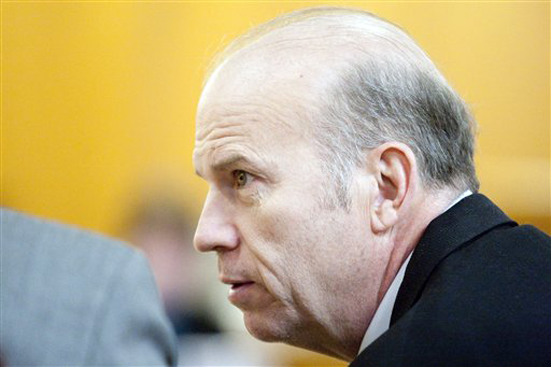
FILE - In this Jan. 28, 2010 file photo, Scott Roeder confers with his attorney during this first-degree murder trial in Wichita, Kan. Roeder could be sent to prison Thursday April 1, 2010 for the rest of his life, but he may have gotten what he wanted all along: It is markedly harder in Kansas to get an abortion. No one has stepped in to fill the void left by abortion doctor George Tiller's death nearly 10 months ago. (AP Photo/Jeff Tuttle, Pool, File)(Credit: Jeff Tuttle) Scott Roeder, 52, has been sentenced to spend the rest of his life in prison for the 2009 assassination of late-term abortion provider George Tiller, M.D. The sentence was handed down Thursday by Judge Warren Wilbert at the end of a remarkable nine-hour hearing in which a self-righteous Roeder, shadowed by a burly bailiff, spoke unrepentantly in his own defense while the doctor’s widow, Jeannie Tiller, sat shaking her head “no.”
Continue Reading CloseGodly discipline turned deadly
A controversial child "training" practice comes under fire -- this time from Christians themselves
Four years ago this month, a 4-year-old boy named Sean Paddock died when his adoptive mother wrapped him in blankets so tightly that he couldn’t breathe. His adoptive mother, Lynn Paddock, was later convicted of his murder. The case brought some mainstream attention — including a 2006 Salon story — to the popular, pervasive and controversial child “training” practices of Michael and Debi Pearl, which Lynn Paddock was said to have followed. The teachings of the Pearls and their Tennessee-based No Greater Joy ministry, which brought in $1.8 million last year in sales of books, DVDs and the like, are widely known and normalized across many conservative Christian churches and home-schooling communities. Perhaps the most popular of several ultra-conservative Christian figures to carry forward this centuries-old strain of Christian thought, the Pearls advocate a specific program of even-tempered, non-injurious corporal punishment, or “chastisement,” designed to bring about total obedience — even by infants – to their sovereign parents. (The Pearls’ ministry and principles are described in greater depth, and broader context, here.) By no means do the Pearls advocate suffocation with blankets; they are emphatically against “abuse.” But they do not spare the rod. From their Web site: A length of quarter-inch plumbing supply line is a “real attention-getter.”
Continue Reading CloseOur daughters should not be cut
Female genital mutilation isn't just a problem in other countries. It's happening here, and we need to face it
FGM in the USA Some girls came back from this past winter break with Christmas loot, ski tans, still more to say about “Twilight: New Moon.” But others, women’s health experts suspect, came back with deep, and literal, wounds to heal. According to human rights advocates and service providers, families in the U.S. who have immigrated from countries where female genital mutilation (FGM) is practiced often take their daughters home, when school is out, to be cut.
Yes, FGM is practiced — or at least planned — on U.S. soil, on girls in immigrant families who were born and/or raised here. Perhaps even among people you know: Not long ago, a concerned mother posted on my Brooklyn-area parenting list-serv that she believed an eight-year-old friend of her daughter’s had undergone some form of the procedure in her home country in the Middle East (and appeared to be markedly traumatized). Archana Pyati, an asylum attorney for Sanctuary for Families in New York, has encountered dozens of FGM cases just in the past six months. “The majority of our African clients have been through it, and most often, they are fighting to protect their daughters,” she says. (Older relatives with “seniority” often push for the procedure.) “It is our hope that by recognizing that FGM may be occurring under our noses we will become better able to respond to it, just as we would any other form of violence against children,” she says.
Continue Reading CloseCan we ever win the abortion wars?
The fanatical fringe has hijacked medicine and wrought terror. But there is hope, says the author of a new book
A Right To Life supporter stands near a Planned Parenthood clinic in Dubuque, Iowa, Thursday, January 22, 2009. As jury selection continues in the Wichita, Kan., trial of Scott Roeder — whose alleged murder of late-term abortion provider Dr. George Tiller was lauded by the extreme antiabortion group Army of God — the title of sociologist and reproductive rights historian Carole Joffe’s new book becomes all the more chillingly apt. In “Dispatches From the Abortion Wars,” Joffe shows that the battles over abortion rights in the United States are being “fought on numerous fronts”: not only with guns, bombs and fire, and not only in foreign relations, national politics and state legislatures.
Continue Reading CloseLate-night’s real problem
Comedy writers -- male and female -- dish about the strange, men-only world of late-night TV
If we can agree on anything following the week of the big Leno-Conan shakeup, it’s that late-night these days is, well, kind of lame. Leno moving to 11:30? That’s like getting back together with the dumb boyfriend you finally dumped last year. There are so many weak links — corporate meddling, dwindling viewership, multimedia competition, a spectacularly un-21st-century monopoly of male hosts — that there’s no one quick fix. But those hoping to try something new might heed the advice of former David Letterman scribe and sitcom veteran Nell Scovell, who, in the wake of the Letterman sex scandal last year, made a convincing case on VanityFair.com for improving late-night comedy. Her bold, call-me-crazy, whacked-out suggestion? Hire more women.
Continue Reading ClosePage 2 of 103 in Lynn Harris