Spring Sale: Get 1 Year, Save 58%

“Tip of the iceberg”: Legal experts say Jack Smith has “a lot more evidence” than indictment shows

Special Counsel Jack Smith, who charged former President Donald Trump for his efforts to remain in power after he lost the 2020 presidential election, could have more evidence to offer on Trump’s state of mind that could be introduced at trial, according to legal experts.

Ryan Goodman, co-editor-in-chief of Just Security and professor at New York University School of Law, said on X, the platform formerly known as Twitter, that Smith likely presented “only a subset of the most compelling evidence.”

For instance, the indictment omits certain significant events, such as White House Counsel Pat Cipollone referring to the letter former Justice Department official Jeffrey Clark drafted as a “murder suicide pact” during the Jan. 3, 2021 Oval Office meeting with Trump, according to Just Security.

The former president wanted the DOJ to send the letter to Georgia and other key swing states, falsely claiming that they had “identified significant concerns that may have impacted the outcome of the election in multiple States.” 

“Smith may not be including certain pieces of evidence because that evidence could be too confusing, or because it wouldn’t directly address the question of Trump’s criminal intent,” Former federal prosecutor Neama Rahmani told Salon. 

He added that if Smith had “a smoking gun about Trump’s state of mind,” we would have heard about it by now. 

The indictment also doesn’t include the Jan. 3 draft resignation letter from senior DOJ officials, the piece pointed out, where they expressed that “Acting Attorney General Jeff Rosen over the course of the last week repeatedly refused the President’s direct instructions to utilize the Department of Justice’s law enforcement powers for improper ends.” 

“An indictment is not intended to be a recitation of all of the evidence,” former U.S. Attorney Barb McQuade, a University of Michigan law professor, told Salon. “All that is required is a brief, plain statement of the charge.”

Protecting the identity of witnesses in the integrity of the evidence is important to avoid improper tampering, she added. In this case, Smith wanted to issue more detail than is required to help the public understand why a former president is being charged with crimes, but “indictment almost never includes every piece of evidence.”

But all these pieces of evidence that are being discussed could still be introduced at trial, without having been mentioned in the indictment, Rahmani said. 

“This is a speaking indictment meant for public consumption by the American people, but it’s not comprehensive of all the evidence that will be used at trial,” he added.

We need your help to stay independent

The ex-president faces four counts of charges including conspiracy to defraud the United States, conspiracy to obstruct an official proceeding, obstruction of and attempt to obstruct an official proceeding and conspiracy against rights.

The indictment also lists six co-conspirators who remain unnamed, but they are identified as four lawyers, a Justice Department official, and a political consultant. Their involvement includes spreading false claims of election fraud and devising strategies to obstruct the certification of Joe Biden’s victory in 2020. 

An attorney for Trump ally Rudy Giuliani, Robert Costello, told the New York Times that he “appears” to be co-conspirator 1 and John Eastman, a former Trump attorney, has said he is co-conspirator 2.

Former Attorney General Bill Barr told CNN’s Kaitlan Collins Wednesday night that the Justice Department has “a lot more” evidence to come on Trump’s state of mind and that the public is “only seeing the tip of the iceberg on this.”

“That’s one of the things that impressed me about the indictment,” Barr said. “It was very spare, and there were a lot of things he could have said in there and I think there’s a lot more to come and I think they have a lot more evidence as to President Trump’s state of mind.” 


Want a daily wrap-up of all the news and commentary Salon has to offer? Subscribe to our morning newsletter, Crash Course.


A key argument in the special counsel’s case is that Trump was aware his election claims were false, as he had been informed by multiple close aides about his election defeat. Trump’s legal team has contended that his statements were protected by the First Amendment, but other legal experts argue that their defense won’t fly in any court of law.

“Smith included more details than typical in the indictment because he wanted the American public to know how important the case is,” Rahmani said. “But it’s not everything. An indictment only requires factual allegations, that if proven, are sufficient to satisfy the elements of the crime.”

However, since the investigation is still ongoing, more evidence may be uncovered in the coming weeks and months, Rahmani added.

James Sample, a professor at Hofstra University’s School of Law, echoed a similar sentiment. With months remaining before trial and the possibility of new cooperating witnesses, it is reasonable to anticipate that Smith will continue to develop new evidence. 

“As extensive as the indictment is, there should be little doubt that there will be superseding indictments as the case moves forward…” Sample said. “For that matter, Trump may find himself in situations in which, in attempting to defend himself in each individual case, he compromises himself in one or more of the others.  At a certain point, Trump’s house of lies will collapse on itself.”

“Heartstopper” returns for a sweeter, more heartfelt exploration of coming-of-age queerness

Netflix’s young adult comedy-drama “Heartstopper” is a sweet, delightful gem. It is one of the few television shows in the ether that prides itself in being a safe place for its characters and audience. In its second season, the British series based on the comic by Alice Oseman elevates its storytelling and allows all its characters — main and supporting — to live in the uncertainty of coming of age with the just right amount of realness and sugariness. It is still the sweet-tooth-tinged show that made us believe in love, but it has added complexities that fill out the questions that were previously left unanswered.

Nick and Charlie learn to tackle each one of their hurdles together as a couple.

In the series directed by Euros Lyn, Charlie (Joe Locke) is an out teenager who crushes on his schoolboy seatmate Nick (Kit Connor), who eventually realizes he’s bisexual and reciprocates Charlie’s feelings. By the end of the wildly successful first season Nick comes out to his mom (the wonderful and surprising Olivia Colman), and is intent on coming out to others as he and Charlie officially start dating. 

This season, Charlie and Nick’s relationship evolves effortlessly through eight episodes and allows them to explore their developing identities and sexuality, troubles with mental health and eating disorders, and tense familial drama. Through it all, Nick and Charlie learn to tackle each one of their hurdles together as a couple, and their bond becomes an impenetrable forcefield as they lean on each other and their friends for support.

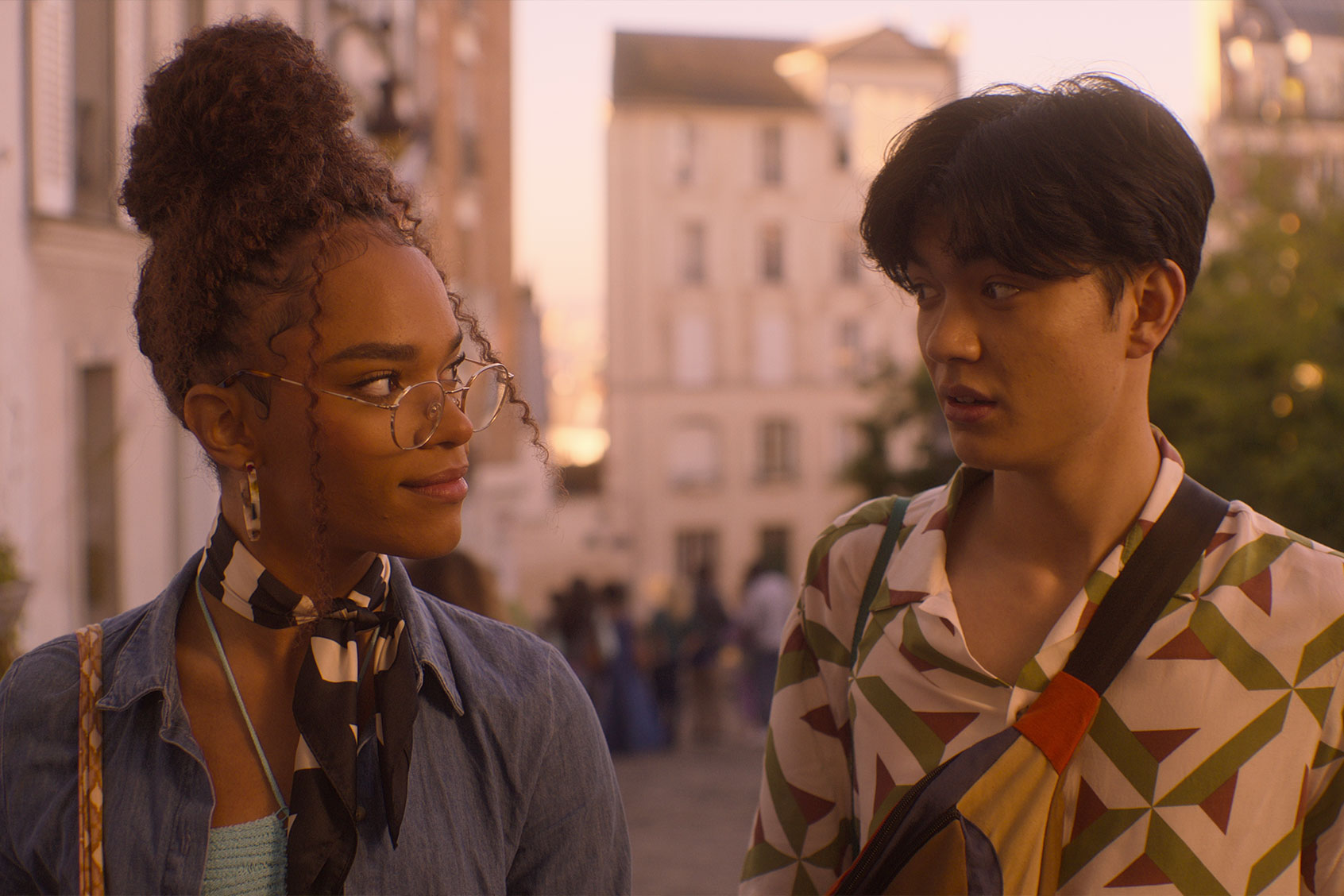
HeartstopperYasmin Finney and Will Gao in “Heartstopper” (Netflix)During the first season, Nick struggled to understand what his bisexuality meant and how it fits into the idea he had of himself as a straight, popular rugby player. This year, with Charlie’s support, Nick blossoms into his identity while confronting what it means to come out. Unlike Charlie’s horrific outing (and Connor’s own personal outing on Twitter last year), Nick is never pressured to share his identity with anyone — in fact, every time he struggles, Charlie assures him that there’s no pressure. Coming out is solely based on his terms — not anyone else’s.
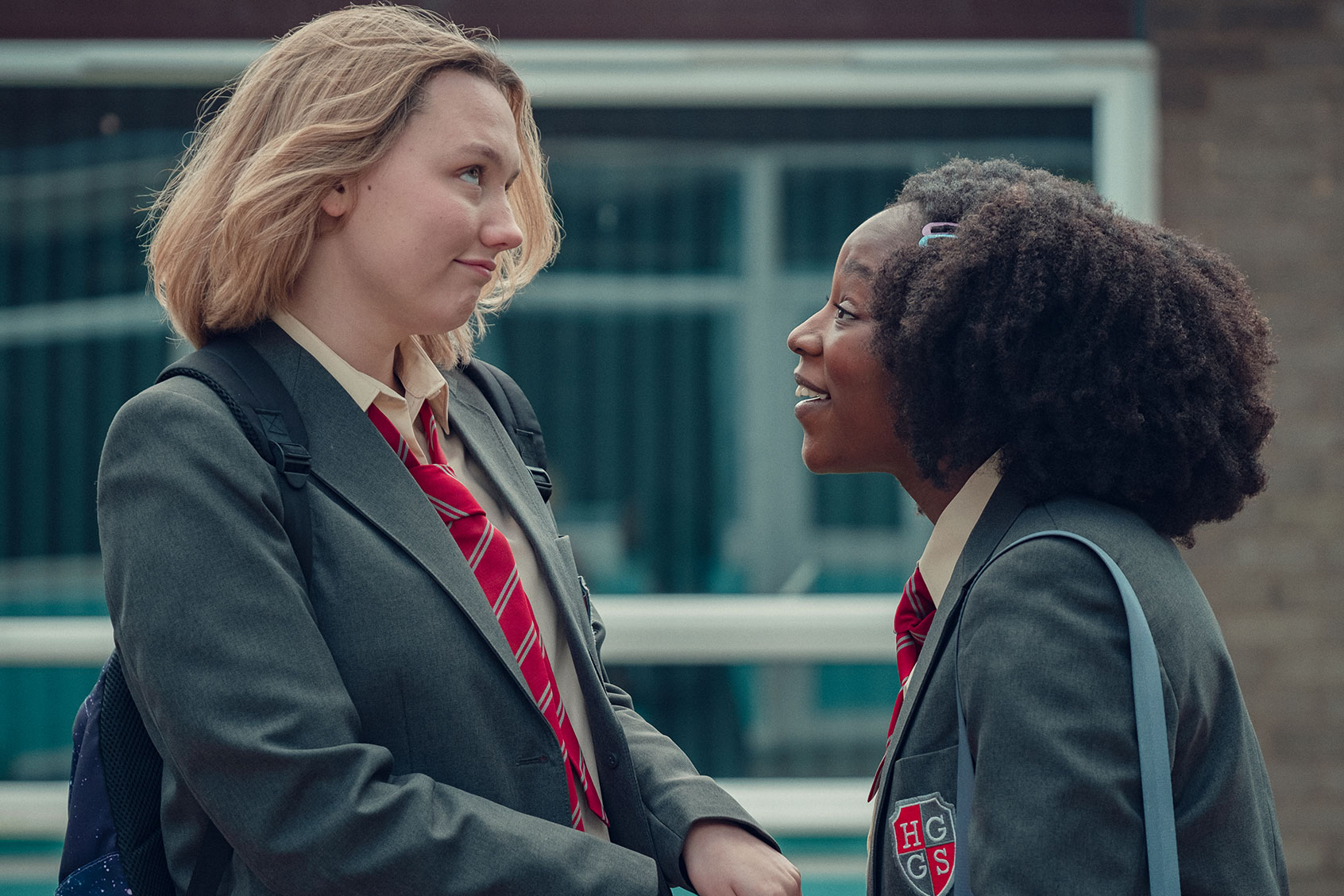
Meanwhile, the show delves into some of Charlie’s unprocessed issues that resulted from last season’s outing, bullying and the end of his toxic relationship with the closeted Ben (Sebastian Croft). Although Charlie is an eternal optimist, cracks begin to peek through as Nick notices evidence of self-doubt and self-hatred in his boyfriend. Locke’s performance demonstrates more uneasiness as Charlie struggles in class and in his self-esteem but pretends like everything is perfect. In a beautifully and quietly acted scene, Nick asks his boyfriend to allow himself to be vulnerable, and Charlie finally lets down his guard in a raw and tender moment.

We need your help to stay independent

In contrast, quirky film nerd Tao (William Gao) and the ethereal artist Elle (Yasmin Finney) stop dancing around their feelings and go for it, but with a few hiccups along the way. While there are many will-they-won’t-they moments, the relationship matures into their well-established friendship, showing that not only are Charlie and Nick the main queer love story this year but so are Tao and Elle. Girlfriends Darcy and Tara (Kizzy Edgell, Corinna Brown) also account for the show’s other female queer plotline, focusing on emotional vulnerability and familial acceptance of queerness. We also learn more about Isaac (Tobie Donovan), the friend who is often silent in the background reading, and his burgeoning identity. Welcoming Imogen (Rhea Norwood) and Sahar (Leila Khan) into the fold broadens the warm and familial friend group.

HeartstopperKizzy Edgell and Corinna Brown in “Heartstopper” (Samuel Dore/Netflix)Mirroring the heartwarming dynamics are whimsically animated sketches of hearts and butterflies, a nod to the story’s graphic novel roots, that float around the characters. The show increases the romantic atmosphere by having the students head to Paris on a school-sponsored trip for three episodes. In a warm, sepia-toned filter flare lens, the cinematography and landscapes change from a dreary England to the bustling and hopeful Parisian streets. There’s nothing more bright and heartening than to see them experience teenage wonder exploring the Louvre, local Parisian bookstores and the city’s queer spaces. 

If this season of “Heartstopper” attempts to teach its audience anything — it’s that queer stories exist in all shapes, sizes, ages and experiences. These experiences do not always exist to be traumatizing or even to teach a lesson. These experiences are real and grounded in human connection and the universal question of belonging and purpose. “Heartstopper” does exactly that with an achingly sweet message of love and community.

“Heartstopper” Season 2 is now available on Netflix. Watch a trailer via YouTube.


Does it matter what time of day I eat? And can intermittent fasting improve my health?

Early hunter-gatherers faced long periods of fasting. Their access to food relied on successful hunting, fishing and the availability of wild plants.

Over time, the development of modern agriculture and the transition to industrialised societies changed our regular eating patterns, shifting our dinner time to later in the day to accommodate work schedules.

Today, with access to an abundance of food, we rarely experience prolonged periods of fasting, except for weight loss or religious practices. It’s now common to have four or more meals a day, with the most calories consumed later in the day. Frequent snacking is also common, over a window of around 15 hours.

However, research increasingly shows our health is not only affected by what and how much we eat, but also when we eat. So what does this mean for meal scheduling? And can intermittent fasting help?


Our body clock controls more than our sleep

Our internal biological timekeeper, or circadian clock, regulates many aspects of our physiology and behavior. It tells us to be awake and active during the day and rest and sleep during the night. It can also tell us the best time to eat.

Our body is biologically prepared to have food during the day. Food digestion, nutrient uptake and energy metabolism is optimized to occur when we’re supposed to be active and eating.

Working against this default stage, by regularly eating when we’re supposed to sleep and fast, can compromise these processes and impact our health. Erratic eating patterns, including late-night meals, have been linked to weight gain and a greater risk of metabolic disease.

Shift-workers, for example, and people who work evening, night or rotating shifts, have a higher risk of obesity, heart disease and diabetes.

But adopting an eating pattern that aligns with our circadian rhythm can reduce these risks.


So can intermittent fasting help?

Nutritional interventions are increasingly focused not only on “what” we eat but also “when”. Intermittent fasting is one way to restrict the timing, rather than the content, of what we eat.

There are several types of intermittent fasting, one of which is time-restricted eating. This means eating all our calories in a consistent 8-12 hour, or even shorter, interval each day.

But is it backed by evidence?

Most of what we know today about intermittent fasting and time-restricted eating is from mouse studies, which demonstrate remarkable weight loss and overall health benefits associated with these types of dietary interventions.  

However, some aspects of mouse physiology can be different to humans. Mice need to eat more frequently than humans and even a short period of fasting has a more significant physiological impact on mice. One day of fasting in mice leads to a 10% loss of body weight, whereas humans would need to fast for 14 days to achieve similar results. This makes a direct translation from mice to humans more complicated.

While health benefits of intermittent fasting and time-restricted eating have also been observed in humans, the findings in respect of weight loss are less clear. Current data suggest only modest, if any, weight loss in human participants who undergo these diet regimens when compared to calorie-restricted diets.

Drawing definitive conclusions in humans may be more difficult because of the small sample sizes and individual differences in metabolism, variations in study design (such as the use of different protocols with varying times and duration of food restriction) and participants not complying with their instructions.


Health benefits could be due to eating fewer calories

Most studies describing the health benefits of time restricted eating or intermittent fasting also found these diets were accompanied by calorie restriction: Reducing the time of food access implicitly leads people to eat less.

Studies that controlled calorie intake did not detect any more benefits of intermittent fasting than calorie restriction alone.

The weight loss and health benefits observed with intermittent fasting is likely attributed due to the resultant reduction in calorie intake. Similar findings have been reported for time-restricted eating.


Benefit of following our body clock

Nevertheless, time-restricted eating offers additional health benefits in humans, such as improved glucose metabolism and blood pressure, even without differences in calorie intake, in particular when restricted to the earlier part of the day (that is, when having a six-hour eating window with dinner before 3pm).

Restricting food intake to the daytime for shift-workers can alleviate metabolic differences caused by shift-work, whereas this effect is not observed when food intake is restricted to nighttime.

One idea is that consuming food early, in alignment with our circadian rhythm, helps to synchronize our circadian clock. This restores the rhythm of our autonomous nervous system, which regulates essential functions such as breathing and heart rate, to keep our physiology “tuned”, as it was shown in mice.

While there’s much still to learn from research in this field, the evidence suggests that to maintain a healthy weight and overall wellbeing, aim for regular, nutritious meals during the day, while avoiding late-night eating and frequent snacking.

Frederic Gachon, Associate Professor, Physiology of Circadian Rhythms, Institute for Molecular Bioscience, The University of Queensland and Meltem Weger, Postdoctoral Research Fellow, Institute for Molecular Bioscience, The University of Queensland

This article is republished from The Conversation under a Creative Commons license. Read the original article.

“I am not the villain”: Lizzo responds to sexual harassment lawsuit, calls dancers’ claims “false”

Lizzo responded Thursday after three of her former backup dancers filed a lawsuit, alleging sexual harassment and accusing the four-time Grammy winner of creating a hostile work environment. In a statement posted across social media, Lizzo said she’s “hurt” and called the “false allegations” both “unbelievable” and “outrageous.”

“These last few days have been gut-wrenchingly difficult and overwhelmingly disappointing. My work ethic, morals and respectfulness have been questioned,” the 35-year-old pop star wrote. “My character has been criticized. Usually I choose not to respond to false allegations but these are as unbelievable as they sound and too outrageous to not be addressed.” 

The lawsuit was filed on Tuesday in Los Angeles County Superior Court against Lizzo, her production company, Big Grrrl Big Touring, Inc.; and her dance team captain, Shirlene Quigley. In it, the dancers allege the singer pressured them to touch nude performers at a club in Amsterdam, called a dancer out for gaining weight and later berated, then fired, that dancer after she recorded a meeting on her phone because of a health condition. Lizzo dismissed the allegations, calling them “sensationalized stories,” and said the former employees “have already publicly admitted that they were told their behavior on tour was inappropriate and unprofessional.”

“I am not here to be looked at as a victim, but I also know that I am not the villain that people and the media have portrayed me to be these last few days,” she added. “I am very open with my sexuality and expressing myself but I cannot accept or allow people to use that openness to make me out to be something I am not.”


Trump sued Michael Cohen for $500 million. Now he’s worried he’s at “risk of self-incrimination”

Former President Donald Trump expressed concern that evidence his former lawyer, Michael Cohen, sought in the $500 million lawsuit he filed against Cohen could potentially incriminate him in any of his other ongoing cases.

According to Bloomberg, Trump, who is expected to appear in court Thursday in connection to his latest indictment, argued in a Wednesday court filing that the documents Cohen requested, particularly the financial records of the Trump organization, should be protected with a confidentiality order as his other criminal cases progress.

Cohen “has already requested documents that interfere with and/or relate to the pending criminal proceedings and the underlying facts that form the basis of such criminal proceedings,” Trump attorney Alejandro Brito wrote in the Miami filing. “The existence of the criminal proceedings currently ongoing against the Plaintiff establishes ‘good cause’ for the entry of the confidentiality order due to the risk of self-incrimination.”

Cohen, however, has countered that the evidence should be public regardless of any prosecutions. He told Bloomberg that every document his attorneys have sought is integral to his defense against the “frivolous and retaliatory” lawsuit.

“If Donald was concerned that release of this information could or will cause him damage in the ongoing criminal investigations, he should have thought twice about bringing the lawsuit in the first place,” Cohen said. “You can’t have it both ways.”

Trump filed the suit against Cohen in April, claiming that his former lawyer violated their attorney-client bond and spread “embarrassing or detrimental” lies. He also accused Cohen of violating their non-disclosure agreement and fraudulently misrepresenting a $74,000 business expenditure.

We need your help to stay independent

Cohen denies the allegations, and Brito did not immediately respond to Bloomberg’s request for comment. 

“This is what happens when you don’t think through your lawsuit before you file it,” national security lawyer Bradley Moss wrote Thursday of Trump’s argument on X, the platform formerly known as Twitter.


Want a daily wrap-up of all the news and commentary Salon has to offer? Subscribe to our morning newsletter, Crash Course.


Cohen’s public statements helped build the foundation of Manhattan District Attorney Alvin Bragg’s March indictment of Trump, which accused the former president of falsifying business records in connection to a hush money payment to adult film star Stormy Daniels ahead of the 2016 election. Cohen’s statements after the 2016 election also sparked New York Attorney General Letitia James’ years-long probe of Trump’s business transactions. The investigation resulted in a $250 million civil fraud suit against Trump and his company.

Cohen has been a key witness in James’ case against the former president, which is slated to go to trial in Manhattan in October.

Trump has denied wrongdoing in all of his cases, dismissing them as part of a broader political “witch hunt.” Cohen, now a vocal critic of Trump, pleaded guilty to crimes, including bank fraud and finance violations. 

Fulton County sheriff vows “we’ll have a mugshot” if Trump is indicted

Fulton County Sheriff Patrick Labat said his office is prepared in the event that former President Donald Trump is indicted for his efforts to overturn the 2020 election results in Georgia, The Atlanta Journal-Constitution reports. Speaking to journalists Tuesday afternoon at the Fulton Government Center, Labat explained that he sent deputies to the former president’s New York and Miami court proceedings to gauge what could happen in downtown Atlanta in the coming weeks if an indictment is handed down.

The sheriff added that if Trump is charged, he would likely be subject to the same booking and photographing process of any other detainee. No president has ever been indicted in Atlanta, and Labat did not describe any specific plan’s for that possibility. “It doesn’t matter your status. We have a mugshot ready for you,” Labat said, telling a room full of reporters that “if an indictment came today, we would be ready.” He added, “Unless someone tells me differently, we are following our normal practices.”

Last week, orange barricades popped up around the Fulton County Courthouse ahead of a possible indictment. Labat said that deputies are working with federal agencies and local law enforcement in preparation for possible demonstrations. The sheriff also revealed that, in recent weeks, his office has fielded and investigated dozens of threats against himself, Fulton District Attorney Fani Willis and unnamed judges. Willis is expected to release charging decisions in the case by September. 

Michael Cohen thinks indictment suggests Jared Kushner is a “cooperating witness”

The six unindicted co-conspirators listed in former President Donald Trump’s latest 45-page indictment, which accuses him and his associates of scheming to overturn the 2020 election, “are in the honeymoon stage” where they believe they might not be indicted, former Trump lawyer Michael Cohen claimed Wednesday.

“That is a foolish way to think. The government, especially Jack Smith, is not allowing anybody to escape,” Cohen said during an appearance on “CNN Tonight,” where he discussed the co-conspirators’ possible hope to skirt prosecution. He added that he believes “Rudy Giuliani has already spoken.”

“Rudy has no interest in spending his remaining days on this planet behind bars for Donald Trump,” Cohen said of Giuliani, who is clearly identifiable as “Co-Conspirator 1” from the description in the indictment and met with prosecutors for a two-day proffer session in June.

Cohen also pointed out that it’s important to note who is missing from the charging document.

“In fact, I think the more important thing in this indictment to look at, are not who the six co-conspirators are, but rather who is missing from this indictment. For example, you don’t see any mention of Mark Meadows,” he said before turning his attention to the former president’s son-in-law. “You see nothing of Jared Kushner. Jared Kushner was the secretary of everything. How is it possible that he is not listed here? He was there, on Donald’s lap, the entire time, from the day Donald entered the white house to the day that he left.”

As for how he explains that absence, Cohen said he believes Kushner “is probably a cooperating witness.”

The indictment also dredges up another mystery, according to The Daily Beast: Who did federal investigators tap in order to write the conspicuously unsourced passage about Trump’s phone call on Jan. 6, 2021, with House Speaker Kevin McCarthy?

“At 3:00 p.m., the defendant had a phone call with the Minority Leader of the United States House of Representatives. The defendant told the Minority Leader that the crowd at the Capitol was more upset about the election than the Minority Leader was,” the charging document read.

Federal prosecutors’ lack of citation has fueled speculation about the origins of the information with questions swirling about whether there is a recording of the call, if Trump chief of staff, Meadows — who some believe was present in the room with Trump at the time — provided an account to investigators, or if McCarthy did.

At the time of the phone call, members of the House and Senate had just vacated their respective chambers minutes earlier, while the pro-Trump mob was continuing to storm the Capitol. 

Then-Rep. Jaime Herrera Beutler, R-Wash., came forward about a month after the Capitol attack with her version of the call, which she said McCarthy recounted to her. She reported that Trump sided with the rioters with no remorse, allegedly telling McCarthy that members of the mob were just “more upset about the election than you are.”

“While it’s possible Special Counsel Jack Smith is basing his description of the phone call off Herrera Beutler’s public account, that would be a sharp departure from his normal tactics,” The Daily Beast’s Jose Pagliery wrote. “Indeed, paragraph 115 appears to be one of the very few instances in the indictment where Smith doesn’t lay out his sourcing for a claim.”

Meadows has remained silent about the matter, and McCarthy has not given any indication that he spoke with the special counsel’s office. Both Meadows and McCarthy’s office declined The Daily Beast’s request for comment.

Shortly after the charging document was released to the public Tuesday, McCarthy posted a statement online about Hunter Biden’s current legal battles and called the indictment the “DOJ’s attempt to distract from the news and attack the frontrunner for the Republican nomination, President Trump.”

We need your help to stay independent

Notably, McCarthy said a week after Jan. 6 that Trump “bears responsibility” for the insurrection, and according to Herrera Beutler during a February 2021 podcast appearance, McCarthy immediately blamed Trump for the attack. 

“He called the president and said, ‘Hey, you basically need to get on TV, you need to call these people off,'” she said on the podcast. “And the president’s response to him was, ‘These aren’t my people, these are Antifa.'”

“Kevin, to his credit, responded, ‘No, they just came through my window, my staff are running, these are your people, they have MAGA hats on,'” she continued.

“And the president’s response to him was, ‘Well, Kevin, I guess they are just more concerned about this election than you are,'” Herrera Beutler concluded, painting a picture that now matches closely with the call’s description in Tuesday’s indictment.

The House Jan. 6 committee also described the phone conversation after their probe into it and the events of that day. 

“Multiple witnesses told the Select Committee that Minority Leader Kevin McCarthy contacted the President and others around him, desperately trying to get him to act. McCarthy’s entreaties led nowhere. ‘I guess they’re just more upset about the election theft than you are,’ President Trump told McCarthy,” the committee wrote in its report. 


Want a daily wrap-up of all the news and commentary Salon has to offer? Subscribe to our morning newsletter, Crash Course.


McCarthy, however, sported a different version of the phone call and the events on Jan. 6, changing his story when discussing the matter with Michael Fanone, who defended the Capitol and resigned from the Metropolitan Police Department after suffering injuries during the riot. Fanone confronted McCarthy about the call in a private meeting that Fanone secretly recorded and was later aired on CNN

“While you were on the phone with him, I was getting the shit kicked out of me, almost losing my life,” Fanone is heard telling McCarthy.

“I’m just telling you from my phone call, that, I don’t know that he did know that,” McCarthy responded.

A spokesperson for the special counsel’s office would not clarify to The Daily Beast whether prosecutors relied on public reporting or an inside source. 

Former Justice Department attorneys did note, however, that federal prosecutors have more freedom than one might think when crafting an indictment.

“It’s quite common for indictments to reference conversations without giving a source. The only reason this passage may stand out is that this particular indictment alludes to sourcing far more than usual,” Columbia law professor Daniel Richman, who is also a former federal prosecutor, told The Daily Beast.

Richman added that the special counsel could have also received the details about the call from another person present in the room who was just told about the conversation, whom the government would not need to identify at this point.

“Even though it is unsourced in the indictment, there is a record of presidential phone calls. There is a presidential call log and a presidential diary which documents the nature of the call, even though the call itself is not recorded. McCarthy could have cooperated with prosecutors or testified before the grand jury. But it’s more likely that this conversation was documented by a Trump or McCarthy staffer,” former federal prosecutor Neama Rahmani told The Daily Beast.

Another former federal prosecutor, Scott Tenley, pondered if the information could have come from Meadows.   

“What about Meadows? What is he doing? Why is he quiet?” Tenley asked. “Is there an agreement with Meadows that we aren’t going to expressly source him in a charging document? Maybe that’s what his counsel demanded to keep the heat off of him over the next six or eight months.”

“It would be abnormal, but this is an abnormal case. Mark Meadows is an abnormal witness,” he added.

Former Rep. Denver Riggleman, R-Va., also questioned Meadows’ role and level of cooperation in the investigation at-large during an appearance on MSNBC Thursday morning, Mediate reports

“When you’re looking at the text messages from Mark Meadows, you know, alternate electors and state legislators were texting with Mark Meadows. Not only that, the people that were doing the crappy studies [in] Michigan … all that stuff runs through those text messages,” he said. “So to come full circle, when you look at it, the amount of money that was coming in. The other thing is absolutely fascinating is that Mark Meadows, at this point, you’re right, Joe, at this point was not as far as the definition, not on the descriptors for the co-conspirators.

“And I think to have the chief of staff who was involved with every single person on that co-conspirators list, think about it, every single person Mark Meadows was actually dealing with, every person. For him not to be on there is just a massive indicator to me,” Riggleman concluded before signing off.

Scarborough continued the train of thought afterward, noting that Meadows had turned over a lot of evidence to investigations, including messages that likely “not only embarrassed a lot of [Trump’s] allies at Fox News, but also provided a roadmap, a roadmap that Jack Smith walked down all the way to this 45-page indictment.”

Geist went on to suggest that Meadows could possibly be seeking “redemption.”

“In effect, he said, ‘That’s my testimony. Take it, take it. I want to help you along here. I’m just not going to show up and be seen on camera testifying.’ And then more recently, of course, two weeks ago, we saw him walk into a federal courthouse offering no comment on January 6 because it’s an ongoing matter,” Geist said.

“So you can see where Mark Meadows, despite what we learned during those January 6 hearings, his extreme cowardice on that day, and it was, he said, ‘There’s nothing I can do about this. The big guy wants this and it’s just going to happen,’ that he is now perhaps trying to seek some form of redemption by helping Jack Smith make his case,” he concluded.

“Or ‘I just don’t want to go to jail,'” Brzezinski quipped.

Former U.S. attorney Joyce Vance, however, argued online that the suggestions that Meadows flipped on Trump “feels a bit strong.”

“Answering questions, truthfully under oath because he has no other choice? Since he’s not an unindicted co-conspirator, that seems more possible,” she wrote on X, the platform formerly known as Twitter.

This verdant gazpacho with seasoned lump crab is the perfect no-cook, chilled summer soup

It was common on rainy, wintry school mornings for my mother to pack my lunchbox with one of my favorite lunches: Vegetable soup spooned into my Batman thermos along with packs of oyster crackers and a Rice Crispy Treat. That steamy soup not only made me feel warm and cozy physically, but made me feel loved and cared for, too. 

I can’t remember not loving soup. Maybe it was my finicky appetite, or my nervous stomach when I was young, but soup has always been my favorite comfort meal. So when I was introduced to gazpacho for the first time (as an adult), I assumed I would love it.

But I didn’t love it. Nope, not at all. 

Despite the fact it was July in south-central Alabama and despite knowing gazpacho is cold soup, the taste of it’s not being hot was somehow a problem for me, or more like an affront to my senses. I actually thought it tasted like cold, thinned pasta sauce and did not want a second taste to confirm my supposition. 

In my mind it either needed to be thinner, in a glass over ice and spiked with vodka; or hot and thicker, served over noodles with a hefty bit of salty cheese. I would have been happy had it been unblended and seasoned for salsa, but no, it was evidently soup. Unfortunately, I was a guest at a small, elegant engagement party where there was no escaping it or the eyes of the other’s at the table, who all clearly loved it.  


Want more great food writing and recipes? Subscribe to Salon Food’s newsletter, The Bite.


I spent years after that first taste thinking I simply did not like gazpacho and effectively avoided it. I don’t know if I changed or the gazpacho recipes changed, but over the last few years, I have had several variations that I have enjoyed quite a lot. Most recently a neighbor friend of mine served it as a first course to what turned out to be a brilliant dinner and her gazpacho was spectacular. Needless to say, I have become more adventuresome and gazpacho-friendly.  

I had never heard of nor had green gazpacho until recently when my abundance of avocados, cucumbers, jalapeños and the like were on display a few weeks ago. My friend who is also a chef, Rebecca Barron, suggested I make green gazpacho out of my lovely bounty and then went on to further suggest I serve it topped with seasoned crabmeat.

We need your help to stay independent

She didn’t give me exact measurements, but did give me a basic plan and enough direction so that I felt confident and inspired. What resulted was a work of art by yours truly.

I would love to think that just because I made it that it is mine, but I must humbly give credit to Rebecca. I would have never thought to add a green apple or red wine vinegar or dill or numerous other things. She is such a creative genius. She rattled this recipe off in about thirty seconds, like it was nothing — and it is nothing short of the stupendous. 

Hats off to Rebecca! You did it again. This soup is a work of art.   

Green Gazpacho with Seasoned Jumbo Lump Crab
Yields
4 to 6 cups
Prep Time
10 minutes

Ingredients

4 cucumbers, peeled and deseeded

1 jalapeno, deseeded

2 avocados

1 small green apple, peeled and cored

1 green tomato, peeled and deseeded

Small handfuls of fresh dill, cilantro and basil

2 tablespoons honey

1 tablespoon extra-virgin olive oil

1 tablespoon red wine vinegar

Dash of cayenne or hot sauce

Kosher salt

Freshly ground black pepper

Fresh lemon 

Jumbo lump crab, thoroughly picked over for shell (Use as much or as little as desired)

Optional: chopped peppers, radishes, chives, sprigs of herbs, for garnish


Directions

  1. For the soup: Coarsely chop all fruits and vegetables and place in a blender with just enough water to blend. Add only as much water as needed for a soup-like consistency. 

  2. Add remaining ingredients (not the crabmeat!) and blend thoroughly. *Strain, cover and refrigerate. (*I used a Vitamix and did not feel the need to strain. It was delicious.)

  3. For the crab: After picking through the crab for bits of shell, season with a bit of olive oil, red wine vinegar and/or fresh lemon juice, salt and pepper. Cover and refrigerate. 

  4. Upon serving, adjust seasonings and ladle into cold bowls. Top with crabmeat, garnishes and the smallest swirl of olive oil. 

Sexually transmitted diseases are on the rise — so why are fewer Americans using condoms?

Earlier this month, public health officials warned of a syphilis outbreak in Houston, with cases jumping 57 percent between 2019 and 2022. Syphilis is a bacterial infection spread by sexual contact. The outbreak mirrored a national trend in which sexually transmitted infections (STIs), such as chlamydia, gonorrhea and syphilis, are all sharply rising. More than 2.5 million cases of chlamydia, gonorrhea and syphilis were reported in 2021.

Experts like Dr. Allen Ghareeb, a maternal-fetal medicine fellow based in Washington, tells Salon there are many reasons why STIs are on the rise. For one, like many suspected, the COVID-19 pandemic kept people out of routine care, particularly when it came to sexual and reproductive health. Because many STIs can be asymptomatic, a lack of routine checkups proved to exacerbate the already worrisome trend.

Compounded with the ongoing shame and stigma attached to getting tested or having an STI, the rise in infections makes some sense. However, an overall decline in condom use is partly to blame for the trend as well. This is puzzling given that reproductive rights are regressing and STD rates are rising. One would expect contraceptive options like condoms to be flying off shelves — but they’re not.

“Condom use has declined — and it’s not trivial by any means,” Ghareeb said. “Over the last couple of years, obviously, a lot of the attention in reproductive health care has been diverted to other issues and important issues, but I think we need to kind of refocus some efforts on those safe sex practices.”

According to a survey published by the Department of Health and Human Services, men’s condom use declined from 75% in 2011 — being the top contraceptive option — to 42% in 2021. While a promising market analysis showed that condom sales increased by 23.4% between February and mid-April of 2021 compared to the same time in 2020, that increase could simply have been attributed to a rebound from the pandemic. Overall, the trending drop of condom use is worrisome amid an STI epidemic after years of maintaining a strong foothold in the United States’s contraceptive market. In 1998, researchers hailed that condom use was in fact on the rise. What gives?

The decline of condoms

“Condom use has declined, and it’s not trivial by any means.”

Gigi Engle, a certified sex educator and lead intimacy expert at 3Fun, said she suspects condom use is declining for a few reasons. First, it could be due to inadequate sex education in schools, particularly in states where abortion bans are taking place like Texas and Idaho. As Guttmacher Institute found, adolescents between 2015 and 2019 were less likely to report receiving sex education on key topics than they were in 1995.

The same report found discrepancies in gender, such as that female adolescents between 2015 and 2019 were more likely than their female predecessors in 1995 to be instructed “on waiting until marriage to have sex.” Sex education laws are determined on local levels, and as documented by Planned Parenthood, have been under attack since before overturning Roe v. Wade. Only 30 states and the District of Columbia require sex education to be taught in schools, and there’s no guarantee for the information promoted to be medically accurate.

Engle added “pervasive patriarchal myths about condoms” could be to blame, too.

“There is this idea that cis-men will experience less sensation when wearing a condom, and therefore, don’t want to use them,” Engle told Salon via email. “This can lead to cis-men pressuring their female partners into forgoing condoms for the sake of their ‘pleasure.’Tthis is a dangerous idea and can lead to unplanned pregnancy and the spread of STIs.”

“There is this idea that cis-men will experience less sensation when wearing a condom.”

Ghareeb said alternative contraceptive options could be responsible for the decline in condom use as there are more effective birth control options such as intrauterine devices or oral contraceptives available.

“If you’re taking the birth control pill or if you have the Mirena IUD, those are wonderful options that prevent pregnancy,” Ghareeb said. “But those do not prevent the transmission of sexually transmitted infections.”

For men who have sex with men, the rise of PreP could be to blame for a decline in condom use. Taking PrEP lowers a person’s chances of getting HIV from sex by up to 99 percent. Users can take it one of three ways: as a daily pill, a bimonthly shot or “on demand” 2 to 24 hours before having sex. Most insurance plans cover PrEP — including Medicaid, according to Planned Parenthood. Public health research has concluded that the drug has decreased new HIV infections by a “statistically significant” margin. However, it doesn’t prevent other STIs.

“The rise in the availability and use of PreP has led to a massive decline in condom use, as the fear of HIV transmission has diminished substantially,” Engle said. “While PreP is an amazing drug and should be used by those who engage in sex with frequently with different partners, it does not prevent the spread of other STIs like chlamydia and gonorrhea.”

From groceries to housing, the cost of living in the U.S. has increased over the last decade. Dr. Leandro Mena, the director of CDC’s Division of STD Prevention, told Salon via email there are “social and economic conditions” that make it difficult for people to remain healthy, including protecting themselves from STIs.

“For example: poverty, stigma, and lack of medical insurance or a provider, unstable housing and a higher burden of STDs in some communities,” Mena emphasized, also highlighting “decreases in condom use by some groups, including young people and gay and bisexual men.”

Certainly, access to free condoms and cost are a barrier. In 2011, the average cost for a 12-pack was $10.99. Now, it can cost nearly $18.

“The prohibitive cost of condoms might be an issue for young people,” Engle said. “This shows a need for more resources available to provide free condoms to high schoolers and college students.”

A brief history of condoms

This isn’t the first time condoms have taken a backseat in the public sphere. As examined by Planned Parenthood, condoms were discovered in the foundations of Dudley Castle in England, dating back to 1640. They were made out of animal guts, but still used as a barrier to prevent sexually transmitted infections. Historians remain unclear how accessible these condoms were to everyone. Condoms were also used in Ancient Rome and they were believed to be made out of linen or animal intestines.

It wasn’t until the mid 1800s when condoms were mass-produced using rubber, soon becoming the most common form of birth control as manufacturing techniques improved. However, after the introduction of the combined oral contraceptive pill, condoms experienced a decline in sales, later making a comeback after the HIV and AIDS crisis.

“I think it’s a really scary time for a lot of people in medicine, particularly in the reproductive health space,but also in infectious disease,” Ghareeb said. “If you talk to any infectious disease specialist right now, one of the largest problems or STIs we’re trying to combat is actually syphilis in heterosexual couples.”

Ghareeb said this is concerning for a number of reasons.

“A lot of these STIs can have really grave consequences on fertility and pregnancy,” Ghareeb said. “So when we’re talking about things like chlamydia, gonorrhea, which often go asymptomatic, those can lead to scarring in the fallopian tubes and pelvic inflammatory disease that actually might predispose you to some issues with infertility later on.”

Relatively “new” STIs like MGen are also on the rise, as well as sexually transmitted infections that are resistant to antibiotics. Ghareeb emphasized that there’s been a 200% increase in congenital or neonatal syphilis in some parts of the country. Syphilis in pregnancy can lead to stillbirth, early pregnancy loss, skeletal deformities and sensorineural hearing loss. “And the distressing part is that it’s preventable,” Ghareeb said.

As GOP wages “morally appalling” war on food aid, data shows 35% rise in hunger

Data recently published by the U.S. Census Bureau shows that more than 27 million people across the country didn’t have enough food to eat during a one-week period in late June and early July, a 35% increase over the same period in 2021.

Joel Berg, the CEO of Hunger Free America, said in a statement Wednesday that the surge in food insecurity was likely caused by a combination of elevated costs and the expiration of benefits enacted during the coronavirus pandemic, such as the expanded child tax credit.

Berg also pointed to congressional Republicans’ ongoing attacks on Supplemental Nutrition Assistance Program (SNAP) benefits. In May, House Republicans secured a deal with President Joe Biden to impose new work requirements on older adults receiving federal food aid—a move that experts say will put 750,000 people at risk of losing benefits.

The White House-GOP deal came months after SNAP benefit enhancements implemented during the pandemic expired, slashing aid for tens of millions of people. Food banks across the country subsequently reported a surge in demand, according to a survey by Feeding America.

“No one should be shocked that when the government takes away food, as well as money to buy food, hunger increases,” Berg said. “Given that the gaps between wages and living costs are still so great that tens of millions of Americans can’t afford enough food, the mass deprivation in the midst of an overall recovery is one key reason why the U.S. public still tells pollsters they have a negative view of the U.S. economy.”

“This new data should be a wake-up call for elected officials at the national, state, and local levels that they need to take bold, concrete actions to raise wages, make quality housing and childcare more affordable, and strengthen—not cut—the food safety net,” Berg added. “The ongoing push by key congressional conservatives to further slash these programs is both morally appalling and economically counterproductive.”

Members of the far-right House Freedom Caucus are reportedly pushing for additional SNAP benefit restrictions as part of the annual farm bill, which authorizes the critical and effective anti-hunger program.

In addition to targeting SNAP, House Republicans are also proposing cuts to the Special Supplemental Nutrition Program for Women, Infants, and Children (WIC) in their fiscal year 2024 agriculture appropriations bill.

The Center on Budget and Policy Priorities estimated last week that if the House GOP’s bill becomes law, “650,000 to 750,000 eligible people—primarily toddlers, preschoolers, and postpartum adults—would be turned away” from WIC and an additional 4.6 million would face benefit cuts.

House Republicans failed to pass the agriculture bill last week before leaving town for August recess.

In a scathing statement, Rep. Rosa DeLauro (D-Conn.) said that Republicans couldn’t rally sufficient GOP support for the measure “because it was not extreme and dangerous enough.”

“Apparently—for House Republicans—it did not take enough food out of the mouths of women and children, it did not prevent enough farmers from buying homes and accessing clean water, it did not prevent enough rural homes from accessing the internet, it did not prevent enough women from accessing an abortion, and it did not protect enough billionaires and corporations from paying their taxes,” DeLauro added.

“All fraud involves speech”: Bill Barr rips apart Trump’s “First Amendment” defense

Former Attorney General Bill Barr slammed claims that former President Donald Trump’s latest indictment for his efforts to overturn the 2020 election violates his right to free speech. During an appearance on CNN’s “The Source” Wednesday, Barr told host Kailtan Collins that while the special counsel’s case against Trump is a “legitimate” one, he believes it will have “issues of proof” and is “concerned about the slippery slope of criminalizing legitimate political activity.” But when Collins later asked if Barr had spoken to federal investigators in this case, he had less to say: “I’m not gonna get into that,” he replied before an awkward silence between him and the host ensued. 

Collins noted that Trump’s attorneys were alleging that all three of his criminal indictments constitute 2024 election interference, asking Barr if he thought their argument that Trump was just exercising his First Amendment right in the latest case was valid. “No, I really don’t think that’s a valid argument,” he responded. “As the indictment says, you know, they’re not attacking his First Amendment right. He can say whatever he wants. He can even lie. He can even tell people that the election was stolen when he knew better. But that does not protect you from entering into a conspiracy. All conspiracies involve speech, and all fraud involves speech. So, free speech doesn’t give you the right to engage in a fraudulent conspiracy.” 

Legal experts mock Trump’s demand to move trial from D.C. to “more diverse” West Virginia

Former President Donald Trump wants to move his upcoming federal trial from D.C. to West Virginia, arguing that he cannot get a fair trial in the heavily Democratic nation’s capital. Trump lawyer John Lauro told CBS News on Wednesday that West Virginia would be a “political opposite” and argued that it was “more diverse” than D.C. “The bottom line is the President, like everyone sitting in this room, is entitled to a fair trial, and we’re going to get that,” he added.

Trump on Truth Social echoed that sentiment, writing that the case “will hopefully be moved to an impartial Venue, such as the politically unbiased nearby State of West Virginia! IMPOSSIBLE to get a fair trial in Washington, D.C., which is over 95% anti-Trump, & for which I have called for a Federal TAKEOVER in order to bring our Capital back to Greatness. It is now a high crime embarrassment to our Nation and, indeed, the World. This Indictment is all about Election Interference!!!”

Legal experts expressed skepticism at the argument. “Crime in DC, get charged in DC,” tweeted Georgia State Law professor Anthony Kreis. National security attorney Bradley Moss mocked Trump for seeking to “Transfer Venue to a State with Fewer Minorities.” Former U.S. Attorney Barb McQuade said Trump’s move is “unlikely” to succeed. “Low approval rating is not the test. He must show that an impartial jury cannot be found in all of DC,” she wrote. Former Mueller prosecutor Andrew Weissmann agreed that “Trump motion to change venue will be rejected as the crime was so nationally televised that all venues were exposed.”

The Jan. 6 Trump indictment is traumatic — and cathartic: We may be free of him at last

I cannot say this more bluntly: Donald Trump is going to prison — and I don’t think he’ll be on the ballot next year.

Or, perhaps: Donald Trump is going to prison and could be sworn as president at Leavenworth in January of 2025 while wearing an orange jumpsuit. Then he’ll pardon himself, change into his expensive suit, jump into Air Force One and fly back to D.C., where his satanic reign of terror will commence.

Just kidding. He won’t win the election. 

Let us recap. 

I walked away from the Capitol on the afternoon of Jan. 6, 2021, silent.

I kept my head on a swivel. Rioters were climbing the walls, beating police, charging the Capitol and screaming that they wanted to hang Mike Pence.

I had been physically threatened. Other reporters had been assaulted.

Earlier, before I had walked to the Capitol from the White House, I had been among the many reporters asking the White House press office if President Trump would come out and denounce the violence. 

He never went to the Brady Briefing Room to do so. It was more than three hours before he issued a video statement in which he professed his love for the rioters and asked them to go home.

By then the damage had been done.

I watched the rioters urged on by the president who claimed he would march with them up Pennsylvania Avenue, but didn’t. I heard Rudy Giuliani scream, “Trial by combat.” I saw thousands of people with anger in their hearts and minds try their best to keep the November general election from being certified.

I have been to several conflict zones, and on that day in Washington I felt more at risk than in any conflict zone I’d ever visited.

For the last two and a half years, a narrative has emerged among Trump’s supporters: The insurrection I witnessed, according to those who weren’t there or who choose to ignore the facts, never occurred.

For the last two and a half years, a narrative has emerged among Trump’s supporters, one that he encouraged from the day of the insurrection onward. It has repeatedly been echoed by those who are gullible or ignorant, or who have a stake in defending him. The insurrection I witnessed, I am told either by those who weren’t there or those who choose to ignore the facts, never occurred. It was, according to some like Joe Rogan, a “false flag.” To others, like Tucker Carlson, it was a tourist picnic or a peaceful protest. Some have produced video footage from the sidelines, showing people milling about and protesting without violence or mayhem.

Yes. That did happen, along the fringes of the riot. But that doesn’t reflect what I saw closer to the Capitol, and it ignores the testimony of Harry Dunn and other Capitol Police officers who put their lives on the line and suffered that day. That picnic narrative ignores reality.

We need your help to stay independent

As for a false flag, well that’s just another case of not letting the facts get in the way of a good story. It’s the Robert F. Kennedy Jr. approach to life – when the facts don’t fit the narrative, change the facts. Those in the Rogan camp say that the U.S. intelligence community didn’t like Trump, so it incited the rioting to make Trump look bad. That’s garbage. While it’s true that many in the intelligence community didn’t trust Trump, and thought he had roughly the integrity of a rabid coyote and the intelligence of a paramecium, they had no reason to start anything. Trump had just two weeks left in office, once the election was certified. Stopping the certification benefited no one but him.

All these ridiculous narratives, while they have no relationship to the facts, are unfortunately consistent with a widespread mindset across the country.

I know the facts. I was a first-hand witness, not just to the events of Jan. 6 but the four years preceding them, because I covered the Trump administration on a daily basis. But there are many who don’t know the facts, or who simply don’t believe them. 

Thus there are two competing beliefs to this day about Donald Trump:

The first is that Donald Trump is the biggest criminal ever to inhabit the White House. He is a slovenly and craven man with the appeal of a carnivorous sloth, and he has thus far been able to waddle his way through life without accountability. He lacks any empathy or decency and has just enough self-awareness to stubbornly and tenaciously survive against the odds. He is darkly appreciated by his worst enemies for his survival instincts.

Those who believe that welcome Jack Smith’s latest indictment. They believe Trump may have finally run out his string of luck, and that the facts will lead to a reckoning.

Then you have those who believe Donald Trump is a modern-day saint, a man of the ages. Deemed by the Lord to be used for his will, this sinner is a tool of the Most High and is impervious to the criticism of mortal man. After all, no one among us can understand the workings of God. (Except for those most loyal to Trump, of course.)

Others acknowledge that Trump may be a con man, but rationalize it: “He’s our con man!” And: “He deserves his First Amendment rights!” (Pro tip: None of the charges against him have anything to do with the First Amendment.)

Then there are those who say, “I got me a ‘collectible’ MAGA hat for only $47. That’s a whole dozen now!”

Since Trump left office, he has been investigated in New York, Florida, Georgia and the District of Columbia. So far, every empaneled grand jury has returned indictments against him — except the one in Georgia. We’ll hear from them soon.

Some believe that Donald Trump’s innate ability to skate through by the seat of his pants means that the large and growing number of criminal charges against him actually play in his favor. Katie Phang, writing for MSNBC, suggests that he may be able to postpone and delay all these criminal cases, run out the clock and skate once again: “And the irony is that because Trump is a gold medal crimer and does not cease in his persistent criming, he is actually creating heightened criminal exposure for himself while simultaneously creating credible support for his arguments for a delay in proceeding to trial.”

In the New York Times, Randall D. Eliason, former chief of the fraud and public corruption section at the U.S. attorney’s office in D.C., believes that Jack Smith’s recent indictment reflects “smart lawyering,” and will present a “compelling case” while avoiding some “potential land mines that could be lurking in other charges,” including the potential for a First Amendment defense.

The facts show that for two and a half years, since Trump left office, he has been investigated in New York, Florida, Georgia and the District of Columbia. Grand juries composed of ordinary people have heard evidence and so far every empaneled grand jury — we’re still waiting to hear from the one in Fulton County, Georgia — has returned an indictment against Trump. Georgia is likely to do so by the first week of September.

This isn’t politics. This isn’t the weaponization of the Justice Department. This is the American justice system working. It’s grinding it out slowly, but it’s working. 

The latest indictment of Trump brings his current count of felony charges to 78, with more to come. I hear that Vegas is giving even odds on him reaching 100 felony indictments before the end of summer.


Want a daily wrap-up of all the news and commentary Salon has to offer? Subscribe to our morning newsletter, Crash Course.


In the Jan. 6 indictment, special counsel Jack Smith (who also filed felony charges in the Mar-a-Lago classified documents case) relies heavily on the House select committee report spearheaded by Liz Cheney and Adam Kinzinger, two former Republican legislators. It also relies heavily on Trump’s own employees, staff and political consultants. 

Some of the documentation in the 45-page indictment (it’s merely a coincidence that our 45th president had a 45-page indictment) is not only damning, but bizarrely comic.

As early as mid-November of 2020 an unnamed “senior campaign advisor” had informed Trump that his claims of a large number of dead voters in Georgia were lies. That person also wrote in an email, “When our research and campaign legal team can’t back up any of the claims made by our Elite Strike Force Legal Team, you can see why we’re 0-32 on our cases. I’ll obviously hustle to help on all fronts, but it’s tough to own any of this when it’s all just conspiracy shit beamed down from the mothership.”

Worse yet, nearly two dozen lies told by Trump are outlined in the latest indictment. For any other person, that might seem like a lot. But those of us who covered Trump often heard that many lies come out of the administration on a daily basis. The Jan. 6 indictment begins by noting the egregious lie that election fraud had changed the outcome and that Trump “had actually won.” It ends with the lie about dead voters in Georgia.

Trump lied that his fake electors were legitimate. He lied that the Justice Department had “concerns” about the legitimacy of the election, even after Bill Barr told him that the fraud claims were untrue. He lied about vote dumps in Detroit, about Pennsylvania’s “205,000 more votes than voters,” about Nevada’s “double votes” and about 30,000 “non-citizen” votes. He lied about voting machines in swing states switching votes. He lied about Dominion voting machines being involved in “massive election fraud.” He lied about voting irregularities in Arizona. He lied about ballot stuffing in Georgia. He lied about fraud in Wisconsin. He lied that he won “every state” by hundreds of thousands of votes. 

Only one Republican has so far come out since this indictment to publicly chastise Trump for his lies and the insurrection: Mike Pence, his former vice president. A lot of good that’s done him. Pence is polling below the margin of error in the 2024 race right now. Still, give him some credit. He’s late to the party, but at least Pence is trying to carve out a lane independent of Trump. He knows what’s coming. 

On MSNBC Wednesday morning, attorney George Conway said of Trump, “I just don’t see how he survives all of these cases,” because “he’s played Russian roulette with the law.” 

Right sentiment. Wrong analogy. The facts show that Trump put a fully loaded gun to his head and pulled the trigger, after threatening to for years. 

This journey for all of us began six weeks before the 2020 presidential election. 

I asked Donald Trump in the White House briefing room whether he would accept a peaceful transfer of power,”win, lose or draw.” He wouldn’t commit to it.

Everything that has occurred since, up to and including the latest indictment in D.C. federal court stems from the fact that Trump said he would only accept the election results if he won. “If you get rid of the ballots, you won’t have a transfer of power,” he said.

He didn’t care then and doesn’t care now about the rule of law, majority rule or our democracy.

That’s why he must stand trial and, if found guilty, go to prison. No one is above the law.

Expert: TrumpWorld can’t wait to spill the beans on “hated” aide named as “co-conspirator 6” suspect

A New York Times review of an email cited in the federal indictment of former President Donald Trump in connection with the efforts to overturn his 2020 election loss suggested that the mystery “co-conspirator 6” in the charging document is longtime Trump aide Boris Ephsteyn.

The indictment described six alleged co-conspirators, five of whom were quickly identified as TrumpWorld lawyers Rudy Giuliani, John Eastman, Sidney Powell, Jeffrey Clark and Kenneth Chesebro but the sixth has remained a mystery, identified only as “a political consultant who helped implement a plan to submit fraudulent slates of presidential electors to obstruct the certification proceeding.”

The Times pointed to a December 2020 email from Ephsteyn to Giuliani matching a description in the indictment of an interaction between co-conspirator 6 and co-conspirator 1, whose lawyer has confirmed is Giuliani.

The December 7 email with the subject line “Attorneys for Electors Memo” was sent to Giuliani and his son Andrew.

“Dear Mayor, as discussed, below are the attorneys I would recommend for the memo on choosing electors,” listing lawyers in seven states, according to the Times.

Paragraph 57 of the indictment alleges that co-conspirator 1, Giuliani, “spoke with Co-Conspirator 6 regarding attorneys who could assist in the fraudulent elector effort in the targeted states” and received an email from co-conspirator 6 “identifying attorneys in Arizona, Georgia, Michigan, Nevada, New Mexico, Pennsylvania and Wisconsin.”

The report noted that the email does not “eliminate the possibility that someone else” sent Giuliani a similar note, though Ephsteyn’s lawyer did not comment on the report.

The indictment also alleges co-conspirator 6 was involved in a conference call organized by Trump’s campaign with fake electors in Pennsylvania. When the electors expressed concerns about the scheme, Giuliani “falsely assured them that their certificates would be used only if” Trump won his court challenges, according to prosecutors.

We need your help to stay independent

The allegations match previous reporting about Ephsteyn’s role in helping to organize the fake elector scheme.

Ephsteyn, who has been at Trump’s side since the 2016 campaign, has been the source of a lot of infighting among Trump’s legal team and advisers, according to numerous reports.

“He is so deeply, viscerally hated right now,” a Trump confidant told The Daily Beast’s Zach Petrizzo on Thursday after the news broke.

“So sad!” another Trump adviser wrote, sending a meme of a cat crying with a Kleenex.

“He’s the king of the court jesters,” the unnamed adviser told the outlet. “All he cares about is being close to Trump, and he’ll do or say whatever it takes to accomplish that. Mostly that means sticking his nose in everyone else’s business so he can run back to the boss and take credit or lay blame.”


Want a daily wrap-up of all the news and commentary Salon has to offer? Subscribe to our morning newsletter, Crash Course.


Another TrumpWorld operative told Petrizzo that Ephsteyn has “always been loyal to Trump” but “has sharp elbows and a big personality, which can rub some people the wrong way.”

Another source argued that there “may be some people who are jealous because Boris is brave enough to throw himself in front of a bus to protect Trump.”

An unnamed source previously told The Daily Beast in May that Ephsteyn “pissed off” all of the lawyers working on Trump’s Mar-a-Lago documents case.

“People are dropping like flies. Everybody hates him. He’s a toxic loser. He’s a complete psycho,” the source said. “He’s got daddy issues, and Trump is his daddy.”

Though the unnamed co-conspirators in the indictment have not been charged, legal experts predict they could still face a separate indictment and pressure to cooperate with prosecutors to save themselves.

If co-conspirator 6 is Ephsteyn, wrote New York University Law Prof. Ryan Goodman, “it could spell benefits” for special counsel Jack Smith’s Mar-a-Lago investigation as well.

“It’d mean Epshteyn has a lot of criminal exposure in J6 case, and incentives to flip and tell prosecutors all,” he tweeted.

twitter.com/rgoodlaw/status/1686827392705208320

Former U.S. Attorney Harry Litman warned that “also, there are any number of people who would pick a number and stand in line to give evidence against him.”

twitter.com/harrylitman/status/1686835849692958721

Why Trump’s Jan. 6 indictment feels so different: This time, there are victims

The weeks between November 3, 2020 and January 6, 2021 often feel like a blur. That was very much by the design of Donald Trump and his co-conspirators. At the time, Sidney Powell, Trump lawyer and fellow coup plotter, told the press, the strategy was to “release the kraken.” The idea was that a frenzy of assaults on the election process would overwhelm the system so that it would break, allowing Trump to seize power illegally. 

But even in the melee of lawsuits, attempts to disrupt election certification, and sweaty Rudy Giuliani press conferences, one moment stands out in my memory: The day after the election, when Giuliani and Eric Trump tried to stop the ballot counting in Philadelphia, Pennsylvania, where I live. Those two jackasses showed up at the convention center, where mail-in ballots were being processed, for a “press conference” that looked very much like an effort to gin up a MAGA crowd to storm the building. Similar efforts had already been launched, to varying degrees of success, in Michigan and Arizona. In Philly, it failed miserably, in no small part because hundreds of city residents turned out to stop them. I watched folks march and dance after running off the would-be fascist storm troopers, celebrating a successful defense of the ballots inside. After all, those were our ballots, the ones we had so carefully filled out and dropped off mere days before. 

The indictment spells out how much Trump and his co-conspirators were ready — eager, really — to inflict harm on everyday people, simply for defending our right to vote for someone other than Trump.

Special prosecutor Jack Smith packed a lot into the 45-page indictment filed against Trump late on Tuesday. He details four felony counts against Trump and much of the evidence supporting the prosecution’s claims. The fourth count stands out for being spelled out briefly but profoundly, accusing Trump of trying “to injure, oppress, threaten, and intimidate one or more persons” out of “the right to vote, and to have one’s vote counted.” The law being invoked was signed by President Ulysses S. Grant in 1870, as part of a larger effort to crush the KKK, which was conducting a terror campaign against former slaves. It has been used innumerable times since, including by the Justice Department against people who try to use violence or force to attack the civil rights of others. 


Want more Amanda Marcotte on politics? Subscribe to her newsletter Standing Room Only.


In discussing Trump’s attempted coup, the language in the media can get awfully abstract. There’s a lot of talk about protecting democracy and our institutions from Trump, which can feel ennobling to the pundits, but often feels bloodless to ordinary people listening. So I was grateful to Smith for making a point of charging Trump under the anti-KKK law. Unlike most of the crimes Trump has been indicted for, this time the document mentions “persons,” the flesh-and-blood human beings Trump victimized: You. Me. Every single person who exercised their right to vote, only to see Trump try to take that away from us. Yes, even Trump voters were victims. Plenty of them also filed ballots that would have been destroyed in Trump’s scheme. 

I was grateful to Smith for making a point of charging Trump under the anti-KKK law.

During the coup, a Trump-supporting relative of mine took offense at a Facebook comment of mine, pointing out that Trump was trying to take away my personal right to vote. She denied that I was specifically being harmed, but had no answer. but sputtering, when I pointed out that my actual, physical ballot was in the Philadelphia batch that Trump was demanding be thrown in the trash. I had carefully filled the bubble next to “Joseph R. Biden.” I had slid it into an envelope, signed and dated it. I had walked it all the way to the Philadelphia High School for Creative and Performing Arts and handed it over to the nice young man putting ballots in the box. That vote belonged to me, and Trump was trying to destroy it. When Trump called Philly voters “frauds,” the people he was lying about were me and my neighbors. 

The indictment spells out how much Trump and his co-conspirators were ready — eager, really — to inflict harm on everyday people, simply for defending our right to vote for someone other than Trump. As the indictment outlines, Trump’s conspirators regularly spoke about suppressing dissent against the coup through violence. When one White House advisor worried that the public would rise up if Trump stole the election, Trump lawyer John Eastman said sometimes “violence is necessary.” When a White House lawyer worried again about public resistance to Trump’s coup,  Justice Department official-turned-co-conspirator Jeffrey Clark casually suggested using the military to put it down. 

As the events of January 6 show, Trump’s embrace of violence to get his way was not merely hypothetical. Indeed, even before these indictments, there have been a number of people who have spoken publicly about how they were personally affected by Trump’s coup. There are the Capitol and Metro police who were injured in the riot, some so badly they were forced into early retirement. There are the election officials who have been terrorized by right wingers who have threatened them and their families. There’s Shaye Moss and her mother, Ruby Freeman, who became the target of MAGA conspiracy theorists falsely accusing them of stealing votes for Biden. Even former vice president Mike Pence registers, in reading this indictment, as a person directly endangered by Trump’s actions. 

We need your help to stay independent

Victims with names and faces: That’s something that’s been missing from a lot of the other crimes Trump has been accused of. The Manhattan tax-and-campaign fraud case involves serious crimes, but it’s hard to argue any person was directly harmed by all of Trump’s cheating. The classified documents case is more concrete, with photos showing Trump’s hordes of stolen boxes. But since the government can’t really say what is in the documents or whether foreign spies got hold of them at Mar-a-Lago, the consequences of Trump’s crimes are still maddeningly abstract. 

And while we can see the importance of centering human victims of Trump’s crimes in the E. Jean Carroll case, at first, the press had a muted response to the case because Carroll only filed a civil lawsuit, not a criminal one. That swiftly changed when it became apparent that public interest in the case was high. The reason was simple: Carroll was a real person who had a story to tell about being sexually assaulted by Trump. Her suffering provoked an empathetic response, one that is a lot harder to gin up when talking about tax fraud or shuffling classified documents around. 

We’re looking at months or, god help us, years of discussion about this as the case moves forward. It is my fondest hope that none of us — not the pundits or lawyers or just ordinary people talking about this on social media or at dinner tables — will lose sight of the very human cost of Trump’s crimes. His coup ruined lives and killed people. His lies continue to distort the minds of his followers, detaching them from reality and, in many cases, turning them against their families and communities. And he tried to steal your right to vote, just like he stole those classified documents. Trump didn’t just commit crimes against the government or an abstract concept like “democracy.” He abused regular people, and his victims number in the millions. 

Trump’s Jan. 6 indictment is his biggest grift yet

Donald Trump’s latest indictment for trying to obstruct the 2020 election will likely become his biggest grift to date.  This week’s FEC filings revealed the extent to which Trump uses his donors’ money, rather than his own, to pay his lawyers.  

Trump’s Save America PAC spent over $40 million of small donor money on Trump’s legal defense in the first half of 2023.  The PAC has now spent $56 million on his legal fees since 2022, more than any other expense category.  

Following the FBI’s search of Mar-a-Lago, Trump’s PAC raised as much as $1 million per dayAn Open Secrets analysis shows Trump also collected hundreds of millions in donations to a non-existent “Official Trump Defense Fund” by continuing to claim the 2020 election was stolen, a claim he will now amplify as part of his Jan. 6 defense.  Overall, supporters have donated over $500 million to date to return Trump to the same office he tried to subvert.  

First the Big Lie, then the Big Rip-off

Long before Tuesday’s indictment, Trump’s 2024 re-election campaign presented a bombastic blend of ego, retribution, and misinformation that monetized his criminal exposure.  Rather than undermining his candidacy, his assorted legal challenges have fattened his campaign war chest and elevated him to political martyrdom, as his mounting indictments invigorate a fact-challenged base cocooned by right-wing media.

We need your help to stay independent

Trump’s federal indictments in Washington and Florida, felony charges in New York, and looming criminal indictment in Georgia prompted GOP contender Will Hurd to observe that Trump is running for president to stay out of prison.   Hurd was booed at the GOP’s Lincoln Dinner for stating the obvious.

Using a poor man’s dollar to pay a billionaire’s bill 

Despite the staggering sums Trump’s PAC has spent on lawyers, no definitive answer as to the legality of using donations to pay legal fees has emerged from the FEC.  

Whether litigation expenses can be paid from campaign funds at all turns on the FEC’s “irrespective test,” which asks whether the legal challenge would have arisen irrespective of holding or seeking office.

Bracketing the ethics of paying Trump’s witnesses’ legal fees and thus influencing their testimony, under the Federal Election Campaign Act, campaign funds may be used for “ordinary and necessary” expenses that arise under the duties of an individual holding or seeking Federal office. The law prohibits using donated funds for “personal use” to pay an expense that would exist irrespective of the candidate’s campaign or duties, like a mortgage or tuition, because those bills do not arise from holding or seeking office.  

The FEC’s “irrespective test”

Using donations to pay legal fees falls into the ‘maybe’ category and will likely be determined on a case-by-case basis in an FEC advisory opinion.

Whether litigation expenses can be paid from campaign funds at all turns on the FEC’s “irrespective test,” which asks whether the legal challenge would have arisen irrespective of holding or seeking office.  In several advisory opinions, the Commission has said that campaign funds may be used to pay for up to 100 percent of legal expenses related to campaign or officeholder activity, where such expenses would not have occurred had the individual not been a candidate or officeholder. 

Although Trump was a president of many firsts, including the first to be found guilty of sexual assault, the FEC has approved using campaign donations for litigation expenses where the candidate/officeholder was the defendant and the litigation arose directly from campaign activity; and has approved using donated funds to defend against investigations into to the candidate/officeholder’s role as a candidate or officeholder.  

Legal ambiguity gives Trump wiggle room 

Applying the FEC’s irrespective test could deliver absurd results.  In the E. Jean Carroll case, for example, the irrespective test could give Trump a semi-colorable argument that he would not have been the target of her successful sexual assault and defamation suit, had he not held the highly visible office of President.  In the Mar-a-Lago documents case, Trump could argue that he wouldn’t have taken the beautiful papers if he hadn’t been provided access to them to begin with, the whole thing is a political witch hunt, pass the donation plate.

In Georgia, Trump’s request to the Secretary of State to “find” 11,000 votes needed to defeat Biden would not have occurred but for Trump’s campaign.   On the latest indictment relating to the Jan. 6 coup attempt, Trump assembled the mob to stop a stolen election, which he would not have done had he not been the president from whom the election was stolen.  

It will be interesting to follow the advisory ruling(s) to see if the FEC teases out a crime/fraud exception to the “irrespective test.”  To protect the public, donated funds should never be used to defend a clear pattern of criminality.  Otherwise, as Will Hurd observed, Trump’s campaign is another instrument of fraud designed to insulate him from culpability and make someone else pay for his crimes.

Tick-related meat allergies are on the rise — yet most doctors don’t recognize the symptoms

They wait for prey in low-lying shrubs before latching on to a viable, warm-blooded host. These parasitic creatures we call ticks can take days to finish feeding, secreting anesthetic chemicals that prevent the host from noticing its iron-gripped bite. All this slurping our fluids makes the tick a prime candidate to spread pathogenic viruses and bacteria. Unfortunately, playing host to ticks makes it easy to contract a variety of diseases.

Lyme disease is the most common form of tick-borne illness and is on the rise, with one study estimating 14 percent of the global population has had it and other data suggesting its incidence has doubled in the past 30 years. But data from the Centers for Disease Control and Prevention (CDC) published last week suggests a relatively new mysterious disease called alpha-gal syndrome (AGS) is also on the rise — and your doctor might not know how to treat or diagnose it. 

Estimates suggest up to 450,000 people in the U.S. may actually have been infected with AGS since 2010.

AGS triggers an allergy to the alpha-gal sugar molecule found in red meat, dairy, cosmetics, medicines and other mammal products. In some cases, this “meat allergy” can be life-threatening. The report found 110,000 cases of have likely occurred between 2010 and 2022. But because AGS is so poorly understood, it’s likely that number is vastly underestimated. Forty-two percent of healthcare providers responding to a CDC survey published last week reported not knowing what it was and another 35 percent said they were unsure how to handle it.

Estimates suggest up to 450,000 people in the U.S. may actually have been infected with AGS since 2010, said study author Ann Carpenter, of the CDC’s Epidemic Intelligence Service. The illness was only discovered in 2008.

“There are still many questions about alpha-gal syndrome,” Carpenter told Salon in an email. “The specific mechanism by which the allergic condition develops, the association between alpha-gal syndrome and bites from other tick species, why reactions are inconsistent between and among people and how long the condition lasts are just a few of the topics where research is ongoing.”

You may have AGS and not even know it. Symptoms can be mild or severe and range from hives, nausea, heartburn or swelling of the face. Others include diarrhea, coughing or shortness of breath, dizziness and stomach pain. Reactions are also typically delayed, starting at least two hours after exposure, so it might be difficult to tell what is causing them.

AGS can be diagnosed with a simple blood test, but there is currently no cure or treatment besides avoiding products with alpha-gel sugars.

AGS is thought to be spread by the lone star tick (Amblyomma americanum), although the possibility it could be spread by other tick types hasn’t been ruled out. The leading theory on how this allergy develops is the tick secretes alpha-gal sugars with its bite, to which the body reacts by sending antibodies to combat the sugar. But once the threat of the sugar is gone, and the tick has left or been removed, the immune response continues to fire whenever the body interacts with alpha-gal again — like when eating a steak. This allergic reaction to these sugars found in red meats and dairy can be debilitating or even fatal.

AGS can be diagnosed with a simple blood test, but there is currently no cure or treatment besides avoiding products with alpha-gal sugars in them. These red meat and dairy allergies can last for years or even a lifetime once they develop, Carpenter said.


Want more health and science stories in your inbox? Subscribe to Salon’s weekly newsletter The Vulgar Scientist.


Because AGS is thought to be transmitted by the lone star tick, it is of most concern in the southern and southeastern U.S. states, as well as the Mid-Atlantic region. However, tick populations are extending their habitat range as a consequence of climate change. As global temperatures rise, spring and summer seasons in which ticks become active and reproduce are also becoming longer — meaning more ticks and more potential disease, said Richard Ostfeld, of the Cary Institute of Ecosystem Studies.

Lone star tick habitats are already expanding, along with that of the deer tick (Ixodes scapularis), which spreads Lyme disease and another illness called Babesiosis. In the CDC study, the number of AGS cases also rose by 41 percent between 2017 and 2021.

“There are things humans do to the environment that exacerbate the threat of tick-borne illness, including climate change, habitat disruption and biodiversity loss,” Ostfeld told Salon in a phone interview. “Given the strong links of those anthropogenic environmental changes to tick-borne disease, we might expect that in general, these diseases will get worse.”

There are things you can do to reduce your risk of AGS and other tick-borne diseases, primarily by avoiding ticks in the first place. That includes learning about what types of ticks are in your region and when they are active, said Felicia Keesing, of Bard College, who conducted a study examining possible interventions to prevent tick diseases called The Tick Project.

We need your help to stay independent

When going hiking or anywhere where ticks might be present, reduce the amount of exposed skin by as much as possible by wearing long-sleeved clothing. Opt for lighter clothing as well, so you can see any ticks that might have tried to latch on. When you get home, check your skin for ticks. For safe measure, toss your clothes in the dryer after any potential exposures, which will kill lingering critters, Keesing said.

In her study, various methods to prevent tick-borne illness successfully reduced the number of ticks in an area, but none managed to decrease the number of tick-borne diseases, she said.

“There are products that have been shown to reduce the abundance of ticks in various habitats, but none of those have been successfully linked to reducing people’s actual cases of tick-borne disease,” Keesing told Salon in a phone interview. “We need to really rethink whether and how reducing ticks in an area connects to tick-borne disease.”

Leprosy is probably endemic to central Florida, CDC reports, posing yet another public health threat

A 54-year-old man in central Florida is being treated for leprosy, without known contact with previous exposures, suggesting the illness, “has become endemic in the southeastern United States,” according to a case report released by the Centers for Disease Control and Prevention’s (CDC). The man, who works in landscaping and spends a lot of time outside, represents one leprosy case of hundreds reported in the past several years, with 216 cases reported in 2019 and 159 in 2020, the last year for which data is available. Nearly one-fifth of 2020’s national cases were reported in Florida while central Florida accounted for 81% of cases in the state, per the CDC report. 

Leprosy, formally known as Hansen disease, is a chronic infectious disease treatable with a multi-drug regimen of antibiotics. But left untreated it can cause nerve damage. It is spread from person to person, likely with bacteria from water droplets in coughs or sneezes transmitting the disease in prolonged extended contact, according to the World Health Organization. It can also be spread by coming into contact with armadillos that are carrying the bacteria, Mycobacterium leprae.

Like the landscaper’s case, about one-third of leprosy reports between 2015 and 2020 are thought to have been contracted within the country. “The absence of traditional risk factors in many recent cases of leprosy in Florida, coupled with the high proportion of residents, like our patient, who spend a great deal of time outdoors, supports the investigation into environmental reservoirs as a potential source of transmission,” the report stated.

This isn’t the first time Florida has been a breeding ground for the resurgence of uncommon diseases. This summer, the first cases of malaria reported in the country since 2003 were documented in the state. In 2015 and 2022, officials also reported outbreaks of rare flesh-eating bacteria.

“I intend to be the last”: Leah Remini sues Church of Scientology citing “psychological torture”

In a lawsuit filed in the California Superior Court on Wednesday, actress Leah Remini claims that the Church of Scientology and its leader, David Miscavige, have harassed, defamed and harmed her in ways that have impacted both her personal and professional life — seeking compensatory and punitive damages from the organization she was a part of between 1979 and 2013.

In a statement obtained from Variety, Remini addresses the suit saying, “For 17 years, Scientology and David Miscavige have subjected me to what I believe to be psychological torture, defamation, surveillance, harassment, and intimidation, significantly impacting my life and career. I believe I am not the first person targeted by Scientology and its operations, but I intend to be the last.” In terms of her goal, she goes on to say that the lawsuit is an attempt to, “require Scientology, and any entity it controls and funds, to cease and desist its alleged practice of harassment, defamation, and other unlawful conduct against anyone who Scientology has labeled as an ‘enemy.”

“With this lawsuit, I hope to protect my rights as afforded by the Constitution of the United States to speak the truth and report the facts about Scientology,” Remini furthered. “I feel strongly that the banner of religious freedom does not give anyone license to intimidate, harass and abuse those who exercise their First Amendment rights.” 

Update: The Church of Scientology provided the following statement the day after news broke of Remini’s lawsuit. Read it in full here

Are e-cigs better for pregnant people trying to quit? New research is at odds with expert advice

By now, most people know that smoking tobacco isn’t great for your health. It can cause cancer, and chronic obstructive pulmonary disease, heart disease, stroke, diabetes and it can even increase a person’s risk for tuberculosis. Commercial tobacco use is the leading cause of preventable disease, according to the Centers for Disease Control and Prevention (CDC). While the U.S. adult cigarette smoking rate reached an all-time low in 2022, e-cigarette use rose. 

For pregnant women, smoking cigarettes is not advised by medical professionals, as fetuses are at risk for birth defects, premature birth and sudden infant death syndrome (SIDS). One study published in the journal Pediatrics reported that sudden infant death rates would be improved “substantially” in the U.S. if expectant moms quit smoking. Yet nicotine has been proven to be as addictive as heroin and cocaine, making it especially difficult to quit.

While the CDC considers e-cigarettes and other nicotine products to be unsafe during pregnancy, new research published in NIHR Journals Library suggests that pregnant women should consider e-cigarettes over nicotine patches when quitting smoking cigarettes entirely is difficult, perhaps signaling a shift in guidance in a potential harm reduction approach.

“Nicotine in nicotine patches or e-cigarettes can in fact reduce this harm if it leads to stopping or reducing smoking.””

In the study, 1,140 pregnant women who were daily smokers trying to quit were split into two groups. In the first group, the women received e-cigarettes. In the second group, they received nicotine patches. Both groups received support calls prior to their target quit date. Researchers said in the study that both options were equally safe. After giving birth, researchers found that the e-cigarette group had fewer children with low birthweight, which has been linked to poor health later in life.

“E-cigarettes seem more effective than nicotine patches in helping pregnant women to quit smoking and because of this, they seem to also lead to better pregnancy outcomes,” Peter Hajek, Director of Health and Lifestyle Research Unit at the Wolfson Institute of Population Health at Queen Mary University of London said in a media statement. “The evidence-based advice to smokers already includes, among other options, a recommendation to switch from smoking to e-cigarettes. Such a recommendation can now be extended to smokers who are pregnant as well.”


Want more health and science stories in your inbox? Subscribe to Salon’s weekly newsletter The Vulgar Scientist.


In the study, the researchers state that they found twice as many women quit with e-cigarettes than with nicotine patches after pregnancy. Initially, the researchers did not find that the e-cigarettes group had a significantly better quit rate due to limitations in the saliva return samples: only 55 percent of the study’s participants returned usable samples to determine that they quit smoking. When taking this limitation into account, the researchers state that they found e-cigarettes were twice as effective.

Nicotine patches haven’t been found to be successful in pregnant smokers. In 2012, a study published in the New England Journal of Medicine looked at 1,000 pregnant smokers in the United Kingdom. Half all of them were asked to wear a nicotine patch, and the other half received a placebo. All women received counseling. Researchers found there was no difference in the quit rate between those who wore the patch and those who received the placebo.

Twice as many women quit with e-cigarettes than with nicotine patches after pregnancy.

“[E-cigs] seem better at allowing smokers trying to quit to adjust the nicotine intake to their needs, select flavors they like and retain a degree of enjoyment that they previously obtained from smoking,” Hajek told Salon via email. “The risks of smoking to pregnant women and their babies are primarily from combustion and other tobacco chemicals rather than from nicotine. Nicotine in nicotine patches or e-cigarettes can in fact reduce this harm if it leads to stopping or reducing smoking.”

But what about the chemicals in e-cigs? As Salon has previously reported, concerns have been raised surrounding the safety of the flavoring chemicals inside e-cigarette liquids — many of which are billed by manufacturers as safe because the FDA has approved them for ingestion, but not necessarily inhalation. For example, propylene glycol (PG) is a common ingredient in vaping products.

“It is not considered dangerous and it is approved for use in pregnancy, e.g. in asthma inhalers,” Hajek told Salon. “In this trial, women given e-cigarettes had fewer babies with low birthweight (under 2500 g) than those given the patches, most likely because they smoked less.”

While it might seem counterintuitive, Hajek said e-cigarettes can help pregnant smokers quit. Nonetheless, the study’s results are at odds with current guidance in the U.S. The National Cancer Institute’s informational website SmokeFreeGov advises against e-cigarettes.

We need your help to stay independent

“There is little evidence that e-cigarettes help people quit,” SmokeFreeGov states on its website. “Quitting all forms of tobacco products, including e-cigarettes, is best for you and your baby.”

Dr. Melissa Simon, an obstetrician gynecologist at Northwestern University, told Salon via email that the data of this study is “not convincing.”

“I would not endorse these conclusions,” she said. “I think they overstated the conclusions [and] this is not a practice changing study.”

Foul comments made by Giuliani revealed in audio transcripts back accuser’s claims

Earlier this year, Rudy Giuliani was hit with a sexual harassment suit by former staffer Noelle Dunphy, now vindicated in her claims via the release of audio transcripts indicating the extent to which they’re valid. Filed Tuesday in New York Supreme Court and certified by a court reporting agency, Dunphy tips her case with documentation of conversations with Giuliani in which he makes lewd comments about her body and propositions her sexually, saying such things as, “These breasts belong to me. Nobody else can get near these, okay? I don’t care if they’re flirting or they give you business cards. These are mine, you got it?”  

Elsewhere in the transcripts, Giuliani makes non-related, but equally vile comments, calling the actor Matt Damon a f*g, and saying that Jewish men have small genitalia. According to a statement made to The Daily Beast by Ted Goodman, a political adviser to Giuliani, “Dunphy and Giuliani shared ‘a consensual relationship’ and Dunphy was ‘making harrassmanent [sic] claims against men for the purpose of making money.'” Read a section of the transcripts below:


WWE boss Vince McMahon served with federal search warrant and grand jury subpoena, company says

World Wrestling Entertainment (WWE) executive chairman Vince McMahon was served a federal search warrant and a grand jury subpoena last month, WWE disclosed Wednesday, amid allegations that McMahon made hush money payments to four women after being accused of sexual misconduct. The recent actions against McMahon are “a continuation of the investigation that commenced last summer,” the entertainment company told CNBC. WWE also asserted that the company “has cooperated throughout and fully understands and respects the government’s need for a complete process.”

McMahon stepped down as the chief executive and chairman of WWE last June, after the Wall Street Journal reported McMahon allegedly paid more than $12 million over the past 16 years to suppress allegations of sexual misconduct and infidelity. McMahon rejoined the company’s board early this year, only a few months after his exit. 

In a separate statement to CNBC, McMahon said, “I have always denied any intentional wrongdoing and continue to do so. I am confident that the government’s investigation will be resolved without any findings of wrongdoing.” WWE said in its SEC filing Wednesday that it has received voluntary and compulsory legal demands for documents “concerning the investigation and related subject matters.” The company also announced that McMahon was on medical leave, after McMahon underwent major spinal surgery two weeks ago. He is still serving as executive chairman during his leave.


Jason Aldean’s “Try That In A Small Town” hits No. 1 on the Billboard Hot 100

It looks like controversy worked in Jason Aldean’s favor as his recent tune “Try That in a Small Town” soared to No. 1 on the Billboard Hot 100. The song made its Billboard debut just last week, when it secured the No. 2 spot behind “Seven,” the solo single from BTS’ Jungkook featuring Latto.  

“Well, yesterday was a monumental day for @jasonaldean,” Brittany Aldean, Aldean’s wife, posted to Instagram. “#1 on the Billboard Hot 100 Chart!! . . . A career first That sure did backfire, didn’t it?? The best fans EVERRR.”

Aldean’s song has continued to receive widespread backlash after several critics claimed its lyrics are both pro-gun and pro-lynching. In response, Country Music Television removed the song’s music video from its channel, but that hasn’t stopped it from rising to popularity. Aldeans’ video currently has over 24 million views, and is the No. 1 trending video under YouTube’s “Music” category.

Amid widespread criticism, Aldean has vehemently defended his song and video, asserting that the recent allegations are “meritless” and “dangerous.” While performing at Cincinnati’s Riverbend Music Center on July 21, Aldean told his audience, “Cancel culture is a thing . . . which means try and ruin your life, ruin everything. One thing I saw this week was a bunch of country music fans that could see through a lot of the bulls**t, all right?” per The Columbus Dispatch.


Maternity care deserts are spreading across the U.S., March of Dimes report finds

This week, the nonprofit March of Dimes released a series of reports focused on access to maternity care across the country. Nationwide, they found that more than one-third of the U.S. is now considered to be a maternity care desert, leaving more than 5.6 million women in counties with no or limited access to maternity care. The report estimates that since 2018 there are now 70 counties that newly classify as a maternity care desert. The loss of obstetric units in hospitals was cited for a lack in maternity care access in 369 counties. 

To put this in perspective, an estimated one in 10 women across the country who gave birth within the past year lived more than a half hour away from a birthing hospital. This burden is more pronounced in rural states. For example, in North Dakota, March of Dimes estimates that on average a woman must travel 32.4 miles to a hospital providing obstetric care.

“A person’s ability to have a healthy pregnancy and healthy birth should not be dictated by where they live and their ability to access consistent, quality care but these reports shows that, today, these factors make it dangerous to be pregnant and give birth for millions of women in the United States,” Dr. Elizabeth Cherot, CEO and president of March of Dimes, said in a statement. “Our research shows maternity care is simply not a priority in our healthcare system and steps must be taken to ensure all moms receive the care they need and deserve to have healthy pregnancies and strong babies.”