Mad Men

Where are the heroes?

Dislikable antiheroes have taken over the TV landscape. It would be nice to have someone to root for again

  • more
    • All Share Services

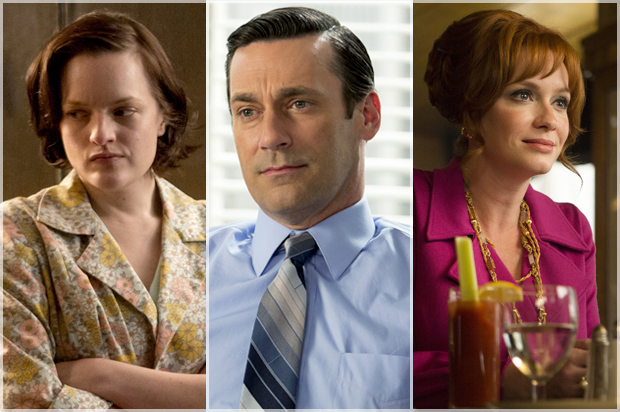
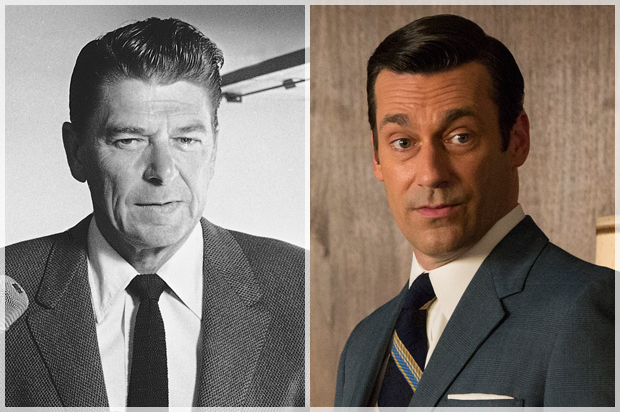
Where are the heroes?Bryan Cranston in "Breaking Bad," Jon Hamm in "Mad Men" and Steve Buscemi in "Boardwalk Empire

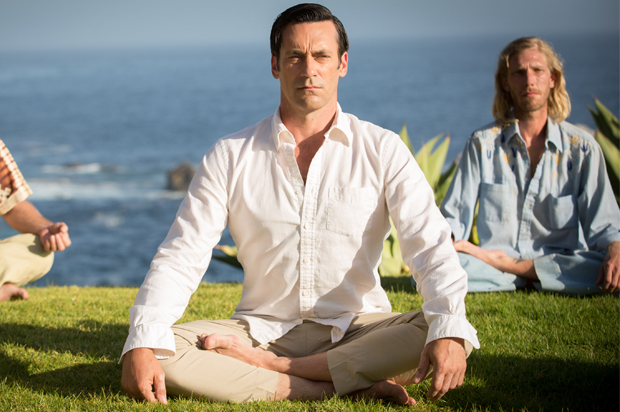
Last week, a strange thing happened on “Mad Men,” stranger than Fat Betty, Roger’s marriage-ending acid trip, or even Don’s blindingly plaid dinner jacket: Don Draper lectured Pete on the sanctity of marriage. In the cab ride home from a business-slash-pleasure trip to a brothel, Don condescended to Pete, “Look, I am just trying to tell you because I am who I am and I’ve been where I’ve been that you don’t get another chance at what you have … If I’d met [Megan] first I’d have known not to throw it away.” Up to that point in the season, king cad Don Draper has been transformed into an adoring, puppyish married man, one who had nightmares about committing infidelity and swaggered while fixing busted sinks, not pleasuring other people’s wives. Before last night’s episode, and his wild display of bossy childishness, workplace dysfunction, and enforced sherbet eating, Don Draper was no longer quite an antihero. Of course it couldn’t last.

The antihero, the alluring, charismatic, sometimes sympathetic, but simultaneously immoral, selfish, unethical and often criminal protagonist, has long since taken over the television. Tony Soprano, Stringer Bell, Walter White, Don Draper and their kin comprise an omnipresent archetype found in the best shows on the air (“Breaking Bad,” “Mad Men,” “Homeland,” “Game of Thrones”), some of the most unimaginative shows on the air (Fauxpranos like “The Killing,” “Magic City,” “Hell on Wheels” and “Boardwalk Empire,” series that have been conceived in “The Sopranos’” image, but lack all of its depth), and many of the dramas in between  (“Dexter,” “Sons of Anarchy,” “Revenge,” “Damages,” “House,” “The Borgias,” “Shameless,” “Boss,” “Weeds”). The preponderance of antiheroes and the masculine worlds they tend to inhabit is now so extensive that on Twitter a few weeks ago, when NPR’s Linda Holmes wondered, “Hypothetical: I want in on this ‘golden age of TV drama.’ I am not really into blood or macho power jostling. How many choices do I have?” the only answers seemed to be “Friday Night Lights,” “The Good Wife,” “Parenthood,” “Downton Abbey” and “Justified,” which does take place in a world of macho power jostling, but at least features a hero who deserves the white hat he wears.

The sheer ubiquity of antiheroes has numbed us to the oddness of their prevalence. It shouldn’t. The number of antiheroes on television is straight up weird, as if 80 percent of the people on the street were wearing eye patches, or, more accurately, if 80 percent of the people on the street were wearing eye patches because this guy named Tony Soprano made them look cool.

Consider the state of the antihero in the decade prior to 1999’s “The Sopranos.” When “Twin Peaks,” TV’s first audaciously auteurist series, premiered in 1990 it kicked off a decade of TV whose best shows revolved around more standard good guys, even if they were complex and conflicted ones. Think of “Peaks’” Zen-practicing, pie-eating FBI agent, the dedicated doctors of “ER,” the charming-irritating Ally McBeal, the idealistic civil servants of “The West Wing,” Mulder and Scully and their endless search for the truth and a diminutive but lethal vampire slayer named Buffy.

Then in 1999, “The Sopranos” arrived. “The Sopranos” had antecedents — from comic book vigilantes and the Dirty Harrys, Travis Bickles and Michael Corleones of 1970s cinema to “NYPD Blue’s” racist, alcoholic, butt-baring detective Andy Sipowicz and the convicts of HBO’s “Oz”— but it quickly out-influenced all that had come before it. With backup from 2002’s “The Wire” and “The Shield,” it all but annihilated the hero, give or take a few survivors on “Lost’s” Oceanic Flight 815 or “Six Feet Under’s” the Fishers.

The first wave of antihero shows acted as a statement of purpose about television’s new, serious ambitions. If historically, TV had been a medium designed to sell you soap, to entertain and distract you, a vehicle for commercials, the antihero thoroughly upended that. If you watched Tony Soprano, Vince Mackey or any of the corner boys, cops or drug kings on “The Wire” like they were characters you had seen before, heroes in waiting, you were going to get sucker-punched and devastated over and over and over again. An antihero was an aggressive way to short-circuit viewers’ expectations, to show them they were watching something brave and new. TV could be challenging, thorny, difficult, and there was no better way to convey this than through the challenging, difficult, thorny central character.

But we are well past the place where thinking people doubt TV’s artistic potential, and well into the territory where the antihero is a cliché. And yet he still flourishes, in shows both good and, increasingly, not so good, even as series like “The Good Wife” and its cynical worldview, or “Friday Night Lights” and its dazzling, wonderful Mr. and Mrs. Coach demonstrate, yet again, that the antihero is not necessary to ambitious television.

It’s against the backdrop of the oversaturated antihero market that the possibility, however brief, that Don might be maturing was so fascinating to me: Redemption is not a typical fate for an antihero, and here was Don, inching down that path. I had my fingers crossed that Don was making real progress, even as that meant ignoring all the ways he remained a jerk. (He may believe the self-deluding nonsense he said to Pete, but it was still nonsense, if only because Don never could have married a woman like Megan — confident, knowing — the first time around.) If Don was still unpleasant, at least he was a faithful while he was doing it.

As of last night’s episode, fidelity and bold speeches to Pete aren’t enough to cover up Don’s still glaring flaws. Even in love, Don commands Megan around like his favorite docile toy, remains uninterested in her wants and desires, abandons her when he gets mad, gets threateningly physical, and entirely ignores his professional responsibilities. Wishing this not to be so, wishing that Don Draper would cease to be an antihero just for variety’s sake, would be to miss the tree for the forest, when Don makes for such stupendous, watchable, handsome, volatile and emotionally damaged tree. “Mad Men” is “Mad Men,” and I feel lucky to watch it, antihero or otherwise. But I do hope the fact that “Mad Men” was still working during the brief calm of Don’s temporary personality makeover is taken as proof that there is no possible twist — not even the happy ending, or the nice guy — that a great show can’t pull off.

We’ve seen the antihero die and we’ve seen him stagnate; wouldn’t it be nice, every so often, to see him get better?

Willa Paskin

Willa Paskin is Salon's staff TV writer.

“Mad Men” on drugs

Roger takes the leap into LSD, while Peggy and Don dramatically discover their own dependencies

  • more
    • All Share Services

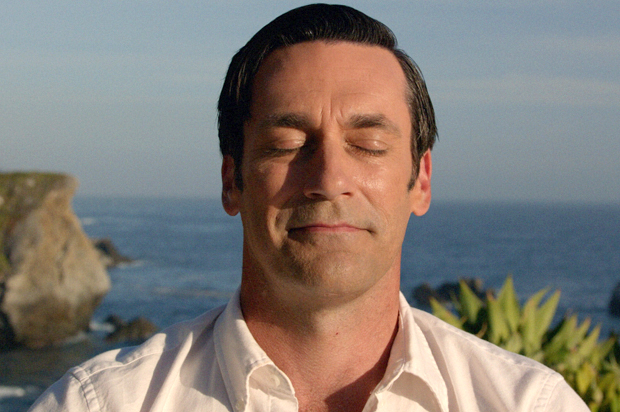
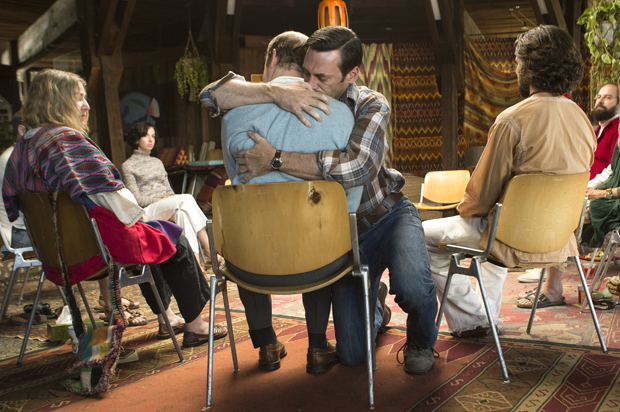
Jon Hamm in "Mad Men"
Nelle Engoron recaps "Mad Men" every week on Salon. She is the author of "Mad Men Unmasked: Decoding Season 4."

As long as we’re being totally real with each other, I have a confession to make: I’ve never taken LSD. But I did work at a Hojo’s for three summers in high school, and the particular shades of orange and turquoise the company used for its décor and uniforms is forever burned into my brain. I’ve been seeing those colors all season on “Mad Men” and feeling a bad acid flashback to the long hot days I spent in a polyester uniform serving up “tendersweet fried clams” and sticky bowls of ice cream. But I kept shaking off the feeling that those colors represented anything significant. Like others who’ve picked up on subtle symbols and made predictions about the show, I should have realized that this was a sign something big was going to happen in a Hojo’s.

Wait, let’s go back a minute. Because that’s what happens in the latest “Mad Men” episode, “Far Away Places.” People go back a minute or a day or two, and they race forward in time as well. The parallel storylines of a day in the life (when a man blew his mind out in his car) of Peggy, Roger, and Don are supposed to remind us of how time can get all wonky when you’re under the influence of a drug, as all three are during this episode. Peggy goes with her familiars, alcohol and marijuana, Roger takes the leap into LSD, and Don drowns himself in the new drug he’s addicted to called Megan. (I’d say “love” but it looks more like possessive dependence to me.)

Actually, there’s another substance they’re all sampling and it’s called honesty. It didn’t become a widespread drug of choice until the 1970s, but these are trendsetters we’re following, so they’re ahead of the curve. Instead of puking up martinis as we used to see them do, the characters are starting to spill their feelings with equal force, and with some of the same messy consequences. This week Peggy, Roger, and Megan each find out that other people can’t always handle the truth, even when they’re entitled to it.

In a time when the famous tweet their most personal thoughts and ordinary people blog about their sex lives and both rush to appear on embarrassing reality TV shows, it can be hard to believe that until very recent human history, people considered it sinful, vulgar or simply inappropriate to talk about what they really felt or thought. The shift from hiding one’s true self to revealing it to your intimates to broadcasting it to the world is one of the biggest changes in human culture that’s ever occurred, and “Mad Men” has been exquisitely illustrative of the moment when this change began.

Abe starts off the honesty binge in this episode by accusing Peggy of the typically male sin of compartmentalizing, saying she puts him in a drawer and then pulls him out when she needs him. Pulling it out of a drawer when she needs it is exactly what she’s desperately trying to do with her “good luck” box of violet candy from Don, but she finds it only to lose her real lucky charm, Don, who leaves her in the lurch to play hooky with Megan. Abe’s promise of a brucha (blessing) is angrily transformed into a wish that she have a bad day, a curse that comes to pass with her truth-telling to the Heinz clients. After they reject her Blazing Saddles with Boomers bean campaign, Peggy tries to impersonate the missing Don by telling them she knows better than they do. But as every woman painfully realizes at some point, behaving like a man at work doesn’t, well, work.

After she accuses the client, Ray, of ignoring the feelings that the “Home is Where the Heinz Is” campaign has engendered in him, he says that’s precisely the trouble – the campaign must be sentimental and old-fashioned if it appeals to an old fart like him. Stop writing down what I say and figure out what I want, he scolds her, placing Peggy in the classic female bind of desperately trying to please a man even if it means doing the opposite of what he says. Ken suggests that Peggy’s passionate feelings show how powerful the campaign is, but all the client can see is young woman who’s told off her Daddy. Seeing which way the wind is breaking, Ken then lets loose with the words every woman hates to hear and tells Peggy she’s being overly sensitive. (Remember, Pegs, when they garrote you, it’s only business, not personal.)

Criticizing the client for having no response other than, “I don’t like it,” she tries to put the right words in his mouth, just as he’s suggested she do. “It’s young and beautiful,” she argues, “You have to run with it.” But in fact, he doesn’t, and Peggy’s the one who’s run off the account.

As an ex-Catholic, Peggy knows that she wasn’t “Born Free” but watching Elsa’s story play out onscreen, she can’t help but empathize with the young and sheltered lioness trying to survive in a hostile environment. “She’s not going to make it out there on her own,” a stoned Peggy moans to the strange guy she’s met at the movies. “Aren’t you worried?” she asks, trying to find common ground, but he responds with the assuredness of male privilege that everything will turn out all right.

That’s a different answer than we would get from Don, who after having been called “Superman” in the last episode, now spends his time in a phone booth unable to transform himself into the hero he once was, either to his wife or to his business partners. He instead ends up re-enacting the African movie that Abe wanted to see, “Naked Prey,” in which humans are hunted like animals.

Ordering Megan to join him on a business trip, he fails to recognize her desire to be part of the “team” at work, seeing only the society of two that he’s constructed in his possessive fantasy. Megan’s also seeing double, as she’s whipsawed between the twin roles of employee and wife at Don’s whim, as well as torn between her ambition and that female “desire to please” that Stan congratulates Peggy for lacking. In Don’s fantasy, Megan has no desires of her own, not even when it comes to dessert, and he gets his just ones when she uses the truth she knows about him and throws not a drink but his dead mother in his face.

Having angrily refused to “Yes, Master” him like Jeannie, she’s deserted by Don, but rather than waiting for him to come back and rescue her like he expects a woman to do, she strikes out on her own. At first frantic and worried, Don is furious rather than relieved when he finds her safely at home, chasing and catching her (the Naked Prey of his dreams) before showing his emotional dependency by kneeling at her feet and revealing he was terrified that he’d lost her. A mute Megan merely nods to acknowledge the power she has over him.

It’s precisely this power that the old lion Bert has roused himself from slumber to rebuke Don for. Telling him a client’s walked out because Don left a “little girl (Peggy) running everything,” he accuses Don of having been on “love leave” and neglecting work to his – and the company’s – peril. When Don tells him it’s none of his business, Bert reminds him of whose name comes before his on the sign, and when Don claims he only needs “more bodies,” Bert makes it clear that it’s not the body but the head (of the department) that’s required. Already immersed in a do-over of married life, and never one to balance home and business well, it’s an open question whether Don can fulfill the command that Bert’s scribbled all over his work.

With Don down, it’s only natural that Sterling would rise, but who knew an expanded mind would give him lift? Last season I suggested that Roger might somehow embrace the progress of the 1960s while avoiding the embarrassment of becoming the old guy in love beads, but I wouldn’t have guessed he’d be the first of our merry pranksters to drop acid. (My money was on Peggy.)

Having been talked into it by Jane, who doesn’t want to face the truth alone, Roger’s the one who has the breakthrough, but only in discovering the chemical version of no-fault divorce. “I imagined screaming, fighting and lawyers,” he marvels, “But we were able to be there together in the truth, like you wanted.” Insecure Jane has a temporary truth blackout and recovers from it only to show she hasn’t changed at all, telling Roger it’s going to be an expensive divorce. “I know,” he says with the calm of a man who’s not only been down that rabbit hole before, but has seen the truth that’s made him free – of an unhappy marriage.

Having conjured as his psychedelic guru not Jesus or any other deity but Don, and fixating on details such as what color his hair is and why the Stoli bottle is singing in Russian, Roger doesn’t seem enlightened but merely on a more interesting high than usual. Like Tony Soprano, he’s too inflexible to be transformed by a mere hallucinogen, but his cheerfulness suggests he’s shrugged off the sour Roger and will join Bert in reasserting his dominance at the firm.

With this episode’s tilt of the seesaw back to the older generation from the flailing youngsters, we’re reminded that while the 1960s saw a cultural shift towards youth, like a drunk, no historical change walks a straight line. For all the claims that Don and others have made that the “kids” increasingly hold the cards, the real truth (if we’re telling it) is that older white guys like Bert and Roger never truly lost power, even if they began to hide behind the scenes while fresh young faces took the public glory.

A plaintive story that Ginsberg tells Peggy illuminates this point. Revealing he was born in a concentration camp, he frames the seemingly impossible event as a fable in which he’s a Martian (perhaps soon to be our favorite one) sent not to conquer Earth but merely to live there as a displaced person, unable to find any others of his kind. With his mother dead (just like Don’s), he’s located in an orphanage by his supposed father, who sends “one communication – a simple order: Stay where you are.”

Such is the message that elders have always sent to their children, putting them in their place and ordering them to stay there. But these traditions are unraveling faster than Peggy and Don’s careers, leaving the older generation to wonder at these alien creatures they’ve given birth to, who seem to come from a far away place. They may not want to conquer the world yet, but just wait until they find others of their kind — as in Peggy’s pitch, when the kids arrive at the campfire alone, but feel included when they gather in a circle, safe from whatever’s out there in the dark.

Sitting in the darkness of her apartment, Peggy turns to Abe for solace of her own, not after she fails at work, but after hearing Ginsberg’s story, which she requires his insight to make sense of. “You need me now,” Abe says without rancor, to which she replies softly, “I always need you.” By agreeing to come and comfort her, he proves his earlier assertion that he’s not like most men, who would leave rather than play the traditionally female role of nurturer while she pursues her career.

“Is there a cure for neurosis?” one of the LSD party guests asks a shrink who’s argued that discovering the truth of why you behave a certain way doesn’t do the trick. “Love works,” comes the answer from another guest. Real love, it might be added, which doesn’t require the other person to change for you and acknowledges when the most loving thing may be to part peacefully.

Abe and Peggy demonstrate the first, and Roger the second, while the damaged Don can’t understand that real love isn’t trading the separateness he had with Betty for the merging of identities he seeks with Megan. Don fantasizes longingly about a never-ending vacation in which Megan is still the eager young woman who fulfilled every desire he had, from the sexual to the maternal, but Megan has shattered that fantasy by asserting desires of her own. Rejecting Don’s possessive, angry love, she explains that, “Every time we fight, it diminishes us a little bit.”

In doing so, she’s implicitly asking him to grow rather than to shrink, to become a bigger and better person than he’s ever been before. For that he will require something stronger than any drug: The realization that the truth about himself is neither good nor bad, but merely relative. Like Ginsberg, his origins are improbable and full of tragedy, but running from them is what has made him miserable. It’s only by accepting that far away place where he began that he will finally find a home in the present, whether the Heinz is there or not.

Continue Reading Close

Nelle Engoron is a freelance writer, an Open Salon blogger and the author of "Mad Men Unmasked: Decoding Season 4."

“Mad Men” loses its cool

For a show known for its subtlety, this season has been filled with obvious, stagey moments

  • more
    • All Share Services

Jessica Paré and Jon Hmm in "Mad Men"

In the run-up to “Mad Men’s” fifth season, series creator Matt Weiner said over and over again that one of the year’s big themes would be “When does everything get back to normal?” — the idea that epic, necessary changes don’t always feel real, not to mention welcome, to the people they’re happening to. Four episodes into the new season, I’m wondering a similar thing: When will “Mad Men” get back to normal?

In past seasons, strings of episodes went understatedly by, only occasionally punctuated by the sudden shock of an office-based John Deere tractor incident. But every episode this season has contained at least one big, showy, bringing-down-the-house scene or talking point— and I’m not just talking about the infamous “Zou Bisou“— along with a sort of heightened, antic energy. What was previously subtext is now often text (the season opened with a racist water balloon incident cribbed straight from the New York Times, which may have made it real, but didn’t make it particularly subtle) and there’s an increasingly stagey, meaning-laden quality to the dialogue. The episodes have felt juiced, sloshing-over with meaning. They’re vibrating at a higher, frantic frequency than before.

Consider: In Episode 2, we were introduced to the twitchy, neurotic, Jewish copywriter Ginsburg, an endearing character who has all the subtlety of a stampeding elephant doing a Woody Allen impression. That same episode also contained Fat Betty, showcasing January Jones in a neck ruff made of fat and possibly the largest pink house coat ever manufactured. The music playing as that episode faded to black on Betty eating her second ice cream sundae was “The Sound of Music’s” “16 Going on 17,” a painfully on-the-nose reference to what used to be subtext— Betty’s incredible, childish immaturity — as well as a pun on her increasing dress sizes. Then last week, Don fever-dreamed that he had cheated on Megan and murdered the dream-woman, in the sort of fugue that only happens to people in movies and TV shows, ones that look exactly like their lives and have a direct, not even metaphorical, bearing on it. And then, soon after Joan had kicked out her rapey, doctor husband, the episode ended to the song  “He Hit Me (It Felt like a Kiss).”

This sort of thematic transparency and high energy was on display again last night, in an episode that Twitter has noted could be called The Emasculation of Pete. As is typical of this whole season (think back to last week’s round of Peggy-Roger bartering), there were some amazing, deliriously enjoyable scenes, as when Don strips to his T-shirt to fix Pete’s busted kitchen sink, proving once again that Don does his best seducing with his clothes on, and then later, when Lane removes his glasses, put up his dukes and knocks Pete down. But the episode was also single-mindedly, stridently focused on Pete’s downward spiral. After cheating on Trudie, being shown up by Don, beaten up by Lane, and then forced to watch a far more handsome, swaggering high school boy make out with the high school girl Pete had creepily intended to seduce, the episode ends on a close-up of Pete and the very ironic strains of Beethoven’s “Ode to Joy.” Pete’s pathetic. Did you know?

I’m more than willing to believe that “Mad Men’s” new, frantic tone is intentional, a reflection both of a more frenzied time and a way to unsettle the audience, not just the characters, with a new normal. And last night’s episode highlighted the extent to which “Mad Men” can’t go back to the old normal. The engine of “Mad Men” through four seasons was Don’s unhappiness, his struggle with who he is and who he appears to be. But Don is now happily married, to a woman whom he adores and who knows about his past. Things have improved so markedly for him that he can sit in a swanky whorehouse, not cheat, and tell the madam the truth about where he comes from: He grew up in a place just like this. In last night’s episode, riding in a cab with Pete, who had not abstained at the brothel, Don went so far as to caution him against throwing his marriage away. It’s a brave new world. No wonder everything feels so weird.

Continue Reading Close
Willa Paskin

Willa Paskin is Salon's staff TV writer.

“Mad Men”: Pete’s spiral of doom

The Mad Man becomes even more insufferable, dejected and delusional. Are we being prepared for his death?

  • more
    • All Share Services

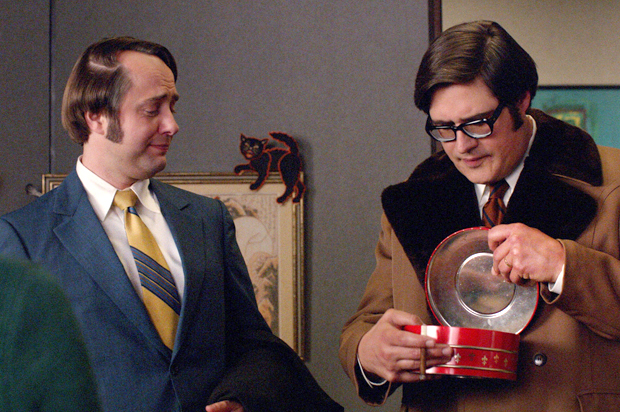
Vincent Kartheiser in "Mad Men"
Nelle Engoron recaps "Mad Men" every week on Salon. She is the author of "Mad Men Unmasked: Decoding Season 4."

No, Roger, you’re not the only one who wanted to see it.

Many “Mad Men” fans were no doubt just as eager as the staff of SCDP to see someone finally smack Pete’s smug little face. Rarely a sympathetic figure, Pete’s been made increasingly insufferable this season, whining about getting no love from his colleagues while doing everything possible to make them despise him.

In the latest episode, “Signal 30,” he childishly belittles Lane for landing a new client, Jaguar, and initially refuses to help him close the deal even after Don points out that adding automobiles to planes will raise the struggling agency’s stature.

Perhaps the value of cars is lost on the immature Pete because he’s only now learning to drive, and is more focused on getting into the car’s back seat with a young female classmate in his driver’s ed class. Made to watch the warning film “Signal 30” (police code for an extreme emergency), which shows footage of teenagers’ bodies mangled by car crashes, the girl, Jenny, feels appropriately queasy but Pete laughs and seems unaffected by the “mayhem.” Frustrated by her rejection of him in favor of a teenager appropriately nicknamed “Handsome,” Pete uses the excuse of client entertainment to indulge himself in a look-alike prostitute. Warned that it won’t be easy to please him, she quickly figures out that it requires kneeling on all fours and calling him, “My king.” While Lane may be overstating the case by calling him a “monster” and a “grimy little pimp,” his actions in the episode are questionable enough to draw a lecture from Don about how he should appreciate and not screw around on his wife. And when Don Draper lectures you about fidelity, you should know that you’re in trouble.

Pete may turn out to be everything we’ve always feared he is – including marked for death – given all the talk of guns, Don’s drawing of a noose, and those bloody accident scenes, but if he’s going to be pushing up daisies soon at least he believes “God’s all over the garden.” When Don warns him that you don’t get a second chance at what he has, Pete responds with a mocking, “I have everything,” and ends the episode weeping and declaring that he has nothing. If Roger’s the privileged guy who thinks he’s hit a triple, Pete’s the guy who was born on third base and thinks he’s sitting in the bleachers, utterly unable to appreciate his loving and spunky wife (who has won over even the socially resistant Don) or “take credit” for his adorable baby (but then again, there was another baby he couldn’t do that with, either, through no fault of his own).

Paralleling the slick deception of advertising, “Mad Men” has always been about the difference between appearance and reality – between what people seem to be and what they really are, as dramatized by the initial MacGuffin of Don’s secret identity. But the truth is that all human beings are mysterious, even to those people they’re most intimate with – and even to themselves. In “Signal 30,” we begin with a film prologue explaining that what viewers are about to see isn’t a slick Hollywood production but grisly reality. The horror we see in the episode is the tragedy of a young man who can’t appreciate the gift of life, and a lucky one at that. In the optimistic reframing of Ken’s Pete-inspired short story, “everything ordinary has become too beautiful to bear” for the protagonist, but in fact, we see that for Pete, everything ordinary has become too disappointing. Like his teenage classmate, he feels that “things seem so random all of a sudden” (rather than that his own poor choices are creating the fate he bemoans) and that time is “speeding up” (just like a car heading for a crash).

Pete’s spiral into a depressive and perhaps even suicidal state is the negative space that defines the hidden reality of the other characters. While Pete is less than he seems – unhappy despite having “everything,” not as strong as the prostitute flatteringly says he is, unable to win a fight or even fix a faucet like a man is supposed to do – other characters are revealed to be even more than they’ve seemed in the past.

While Don is still the series’ “Superman” the women joke about (when he whips off his shirt to fix the faucet) – tickling the client’s fancy with his idea to sell Jaguars as a literal wet dream for men, and such catnip to women that, as Roger jokes, he even does better than the others at a whorehouse — he also shows how much he’s changed by staying faithful to his wife and getting all “broody” upon seeing Trudy and Pete’s baby. Having joked that Saturday night in the suburbs makes you want to blow your brains out (another hint that Pete’s not long for this world), Don spurns the idealization of “country life” that the others indulge in, defining it as shitty by recalling only the horse manure and outhouses. Telling Megan that when he opens his eyes, he wants to see skyscrapers, he makes it clear that he’s found his true home in the city, which offers not only stimulation but a pleasing anonymity that makes him feel safe. While Megan pointedly teases him about lacking friends (other than his accountant), and the other characters spiral around him like eager satellites orbiting a planet, Don seems content to be a society of two, wanting to be alone with his new wife as much as he wanted to be away from Betty, and forcefully telling Pete that he wouldn’t have thrown away what he had if he’d met Megan first (as Pete did Trudy). Literally loosening what Pete has tightened too much by fixing the faucet that “blew in (Trudy’s) face,” the formerly angry and now relaxed Don controls what we increasingly see bursting out of Pete.

With Don and Pete squared off in different corners of the marital arena, a surprising referee appears. Last season I called Roger a potential Zen master when he showed glimmers of wisdom, but his recent sour attitude left me unprepared for the shift in this episode, as he takes his reduced status in stride, holds his temper, and dispenses not nastiness but the old Roger witticisms (abetted by a guardian angel-like Bert hanging over his shoulder). He actually seems to relish his new role as “Professor Emeritus of Accounts,” coaching Lane in the art of forming a “conspiracy” with the client by finding common ground in shared misfortune, which will lead to finding out everything you want to know.

Trying to put this plan into action, Lane fails miserably when his happy client doesn’t “have a complaint in the world” — although it will turn out he has one about Lane, who didn’t get Lesson No. 2 from Roger, “How to Please the Client With a Trip to the Whorehouse.” As Lane says about his client’s good fortune, “Well, that’s too bad, isn’t it?” And too bad is what the other boys are when they take over entertaining the client, losing the account when a hooker literally gums up the works.

Which leads to our little replay of the American Revolution, this time with the Brits coming out triumphant over the Yanks. “Good day to be an Englishman,” as Lane says earlier in the episode when England beats another old adversary, Germany, in the World Cup, temporarily putting on hold that “messy divorce from Great Britain” he’s been having. Lane’s triumph is short-lived, however, as he misreads Joan’s sympathy and tries to plant his flag, only to have her make it clear that she’s not ready to be conquered. “There is no end to my humiliation today,” he moans, a strange complaint from a man who’s just won a fight, but it follows asking her what he does that’s of importance, showing that Pete struck the harder blow by questioning his relevance to the firm. “Something essential,” Joan soothes, before reassuring him that being different from the other men in the office is a good thing.

That’s something she might do well to tell Ken Cosgrove, another example of someone who isn’t quite what they seem. Jovial Ken gives every appearance of being a lightweight, but while the other men are busy being johns, he’s turning himself into a John – Cheever, that is, or maybe Updike. Having openly published in the past (and drawn Pete’s jealousy as a result), he’s gone Don Draper by assuming a pseudonym, Ben Hargrove, to hide his moonlighting as a successful writer of sci-fi/fantasy stories. When Peggy discovers his secret, we also discover one they share: a “pact” to leave the agency together if the opportunity arises.

Having admitted to Peggy that he makes time for writing by cutting client dinners down to drinks, he’s outed by his proud wife at Pete and Trudy’s dinner party, leaving sneaky Pete to squeal to Roger. In another nod to dual identity, Roger scolds Ken for being “you by day, and Edgar Allan Poe by night,” saying he already has both a day and a night job at SCDP, and that his attentions can’t be “divided.” It’s an ironic statement from a man who makes a sport of being unfaithful to his wives, and followed by the unintentionally self-revealing assertion that “when this job is good, it satisfies every need. Believe me, I remember.”

But what we remember is that Ken has previously talked about the limited importance and satisfaction of business, and that he rejects the belief of Roger’s generation that success at work is the be-all and end-all for men. He tells Peggy that “Ben Hargrove is dead” and he’s “through with all that fantasy stuff” but this is merely a literal truth, when the reality is that he’s adopted a new pseudonym under which he’s writing realistic stories in the Cheever/Updike mold. Perhaps familiar with Roger’s tactic of using a client’s unhappiness for gain, Cosgrove takes Pete’s misery and turns it into literature, thereby transforming reality into art – a rebuke to advertising, which turns reality into artifice. Pete may not be long for this world, but I suspect Ken is not long for the world of advertising, even if that book contract doesn’t come through.

In order to maintain that “shred of privacy” he tells Peggy he craves, Ken hides his intelligence and his talent. Letting others see him as less than he really is gives Ken more power and freedom; by contrast, trying to be more than he is exposes Pete to ridicule and rejection. Having overestimated his importance at work (while denigrating others such as Roger and Lane), he thinks a teenage girl will find him attractive, only to be mistaken for a teacher. After being too afraid to fight war hero Roger, he apparently takes in the prostitute’s flattery about his strength and takes on Lane, who proves to be more of a fighter than anyone expected. Having been badly licked, he is humiliated a second time by weeping in front of Don, who has no answer when Pete says he thought they were friends.

“You have to pay both ways,” the cab driver tells Pete when he hears his destination is the suburbs, to which Pete responds, “I’m aware of that.” No matter which way you choose to live your life, there is a cost – to yourself, and to others. The mass murder of University of Texas students by Charles Whitman is attributed to a brain tumor, and then compared to Ken’s sci-fi story of a robot who has no power to decide anything, but only knows how to turn a bolt, and in doing so, kills thousands. Despite his words to the cab driver, Pete seems to subscribe to this mechanistic view of human behavior, leaving him no agency to change his life for the better.

At the end of this stylishly directed (by John Slattery) episode, the writer Ken imagines his fictional Pete hearing Beethoven on the “miniature orchestra” of his hi-fi and reflecting on the pathos of Beethoven composing his ninth symphony while deaf and heartbroken, with Death biding his time in the doorway. But the real Pete sits in a different kind of hell, listening not to glorious music but to the whir of a film projector spewing images of death while the endless drip of banal mortality echoes in his ears – a noise that Trudy agrees “goes all day” but which, unlike Pete, she doesn’t hear.

Ask not for whom the faucet drips, Pete Campbell – it drips for thee.

Continue Reading Close

Nelle Engoron is a freelance writer, an Open Salon blogger and the author of "Mad Men Unmasked: Decoding Season 4."

A most disturbing “Mad Men”

Recap: In a nightmarish episode, a woman from Don's past returns -- and Joan discovers a big secret

  • more
    • All Share Services

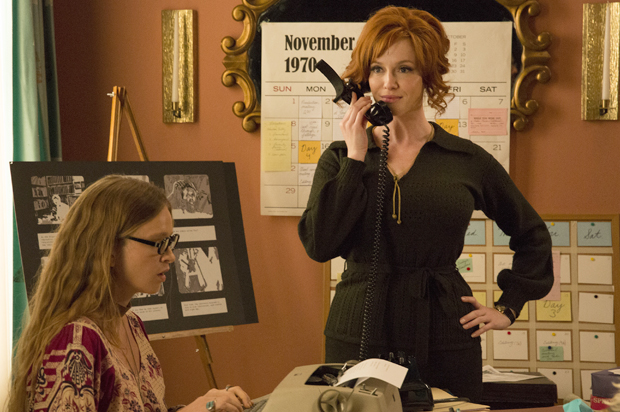
A most disturbing Joan (Christina Hendricks) in a scene from last night's "Mad Men"
Nelle Engoron recaps "Mad Men" every week on Salon. She is the author of "Mad Men Unmasked: Decoding Season 4."

I once read about a research study that surveyed men’s and women’s worst fears about the opposite gender. What the majority of men feared most was that a woman would laugh at or humiliate them. What women feared most was that a man would kill them.

Research into abusers and killers suggests a strong link between those two fears, with violence often triggered by feelings of humiliation and powerlessness. Both genders see the power to destroy as resting in the other’s hands – those hands that you may want to hold, or hands that may want to hold you, either lovingly or violently.

All of these fears are portrayed in “Mystery Date,” which may rank as the most disturbing episode ever of “Mad Men.” The dark side of the fairy tale of American life and of American marriage has been a constant theme of the series, and in this spooky house of an episode, various characters play Sleeping Beauty, only to wake up safely back in the brighter world (at least we hope that Sally will, once that Seconal wears off).

Our nightmare in shining amour, Don, feels his happy second marriage threatened by the specter of his past when he and Megan run into Andrea, a plaything from the Betty years. Andrea calls Don her “bad penny,” but she’s the one who keeps turning up in a sick Don’s fever dream. As if put under a spell, Don thinks that Andrea’s pursuing him, turning up at his apartment and refusing to leave even when he says she’ll wish she’d jumped off the balcony if his wife catches her (thus displacing his violent feelings onto a woman, one who took the male role earlier when she was “embarrassed” at Don’s “careless appetite” for sex). In a symbolic return of the repressed – those dark desires he’s tried to turn away from – Don’s nightmare Andrea both seduces and threatens him until he must strangle her and push her dead body under his marital bed, leaving only a red high heel behind, as if she’s a bloody Cinderella.

Don may be a psychic killer rather than a psycho killer, but this glimpse of his hostility toward women feels real, especially given the anger and rough treatment we’ve seen in the past (toward Bobbie Barrett and Betty). Yet in Don’s view, it’s women’s anger that’s to be feared – Megan’s about both his past and possible future infidelity – as well as the humiliating taunt that he places in Andrea’s mouth, about how sick he is (and not in a viral way). “Think you’ll be safe over there by yourself,” Don joke-taunts Megan when she backs away from his coughing. Being by himself  – alone with his often-repellent feelings and memories – is clearly something Don fears.

The real woman under the bed is not dead, but the lone survivor of the horrific nursing student murders committed by Richard Speck in Chicago, an event that fills both headlines and heads throughout this episode, just as it did in real life. (Like Sally, I read about those killings as a child and felt so afraid I could barely sleep for weeks. I didn’t actually crawl under something to sleep like she does, but I often thought about it.) In the mid- to late 1960s, killers became truly serial, a recurring nightmare of American life. That slaughter of eight student nurses was followed by other horrific murders that were sensationalized by the media, creating a morbid fascination with the grisly details and making Americans feel that crazy killers were lurking around every corner. Worst of all, these killers were no longer professional criminals, but the “quiet guy next door” types — neighbors who were revealed to have a secret homicidal life (a transformation suggested by Stan jokingly putting the pantyhose over his head like a criminal).

As with Don’s dream, victimhood keeps getting displaced in the episode. Ginsberg, who’d earlier been the only one to find the crime scene photos “disgusting,” nevertheless pitches the footwear clients a campaign that puts the consumer in the self-justifying serial killer’s shoes: First with the chilling slogan, “You’ll never tell, they’ll never be able to,” and then with the elaborate Cinderella fantasy he spins in which the girl is “wounded prey” who falls for the killer because he’s so handsome, and who “knows she’s not safe but doesn’t care” because “in the end, she wants to be caught.” The client loves the idea, not because he can admit it plays into some male fantasy, but because he thinks Ginsberg’s gotten into a woman’s head and is reflecting how they really feel (Ginsberg at least has the grace to say he really doesn’t understand women). The simultaneously self-deprecating and self-congratulatory “Ginzo” would be as pleased to find out he’s the author of Don’s nightmare as he is about winning over the client, though he narrowly escapes being fired. This doubly lucky guy is labeled a victim, first when Don threatens to “or else” him if he doesn’t stop shooting his mouth off, and later by Stan, who jokes about Don having “scattered his ashes.”

Similarly, Pauline explains Speck’s homicidal acts to a bewildered Sally by saying that the nurses “stirr(ed) his desire” (for rape and murder) with their short skirts, conjuring a scene in which they opened the door to a “handsome man” (in reality, Speck was quite ugly) and were too naive to realize what was happening and save themselves. As in a fairy tale, only one escapes death, because of a secret hiding place, but Pauline imagines that she’ll never be able to speak again, as if rendered mute by a spell. As Ginzo says to Don in the pre-pitch meeting, it’s all about “a woman and her secrets, the things she’ll never tell,” or perhaps the things that no one wants to hear. Pauline similarly tells Sally it’s time for her to start acting like an adult, and recounts a story about Pauline’s abusive father striking her “for nothing” and saying this warning was “valuable advice” that made her a better person. Three cheers for Sally for fighting this nightmare grandmother with, “I know you don’t think so, but I’m a good person.” This episode makes clear that the messages that girls and women are getting are still as poisonous as Snow White’s apple.

In a lighter vein, another sleeping beauty, Roger Sterling, finds out that he’s taken a $410 nap. Having snoozed through business as usual, he’s lying down in his dark office when interrupted by that pesky dwarf, Pete, who reminds him of the need for a campaign for Mohawk on Monday. Roger’s nightmare of being proven useless by Pete becomes Peggy’s dream come true when she extracts $10 for the work and $400 for the lie, proving a saying popular in the years ahead: that it’s not the crime but the coverup that costs you. Working late, Peggy finds out that the office is indeed haunted, but only by Dawn who (like so many fabled children) can’t get safely home.

This launches Peggy’s fairy tale, in which she and Dawn have a drunken girlfriend-y sleepover in which she’s the open-minded liberal and liberator who tells Dawn they have to stick together because they’re both the first of their kind in the office. She wants so much to see Dawn as being like her that she’s clearly disappointed when she doesn’t want to be a copywriter. Peggy shows her own fear by asking if she acts too much like a man, and when Dawn allows that she probably has to in order to succeed, she admits that she doesn’t know if she wants to play that role. Before going off to sleep, Peggy eyes the proverbial bag of gold she’s leaving on the coffee table in front of Dawn, clearly having to fight her own racist thinking. She’s rewarded for her trust with a thank-you note from a woman who must rise at the crack of her own name, and doesn’t even check that her treasure is intact.

But the real triumph of the episode belongs to Joan, who makes a dream come true for “Mad Men” fans by getting rid of her nightmare of a husband, saying he’s never been a “good man,” even before they were married and that he knows what she means by that. Even if he doesn’t, we do, which makes her mother’s description of Greg’s re-entry as “finding a little hole in his life, and sticking his elbow in until he can walk all the way in” horrifyingly appropriate.

There may be no bologna in Vietnam, but there is in the weasel-y Greg, who lets Joan think the Army has extended his tour and answers her anger about that with, “Nobody lied to anybody – it’s more complicated than that – it’s war.” And indeed, this is a war between the sexes. When the truth comes out, Joan relieves herself of military duty, rejecting Greg’s orders to be an obedient wife, before taking one last shot at his ego by saying she’s happy to surrender the job of stroking it to the Army.

Even before the breakup, Joan is wary, telling Greg she doesn’t want to know if he’s seen or done terrible things in Vietnam, and if he has to tell her about it, he certainly shouldn’t hold her hand while he does it. She rightly suspects the linking of intimacy and violence, especially at this man’s hands. While Greg’s right that she “slept a long time” in their relationship, her response that she “barely slept at all” sums up her changed state this season. The beauty who can’t sleep, Joan’s wakefulness signals a shift to clear-eyed action. When Greg issues his version of the “or else” threat, she responds by jerking her arm out of his grasp for the last time and saying, “That’s it.” At the end of the episode, she’s still wide awake, contemplating her future while her mother and baby slumber.

“I better not see you again,” Don says to the phantom Andrea. But nightmares and dreams aren’t so easily banished, and the hold that people have on us, whether loving or abusive, can never be shaken off entirely. As Don explains to Megan, our past is going to show up now and then. But these encounters are survivable, if we don’t let them get the best of us. The real mystery date is the one we’ll have some day with death, which we fear will arrive like a terrifying stranger, but which, if we’re lucky, we will welcome like a friend.

Continue Reading Close

Nelle Engoron is a freelance writer, an Open Salon blogger and the author of "Mad Men Unmasked: Decoding Season 4."

“Mad Men’s” generation gap

Recap: In an episode obsessed with youth and death, even Don Draper can't always get what he wants

  • more
    • All Share Services

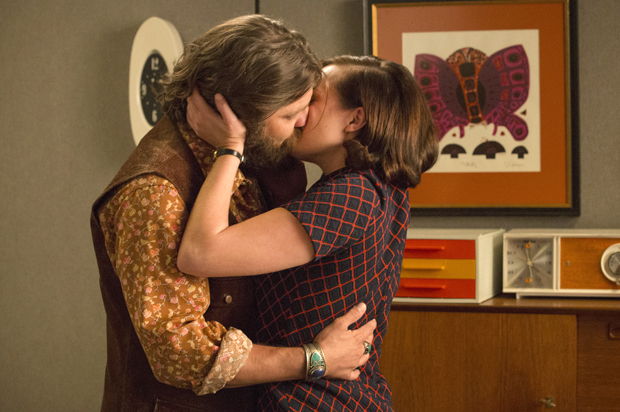
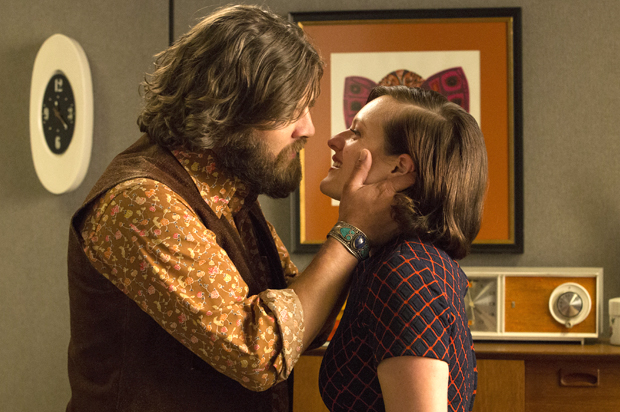
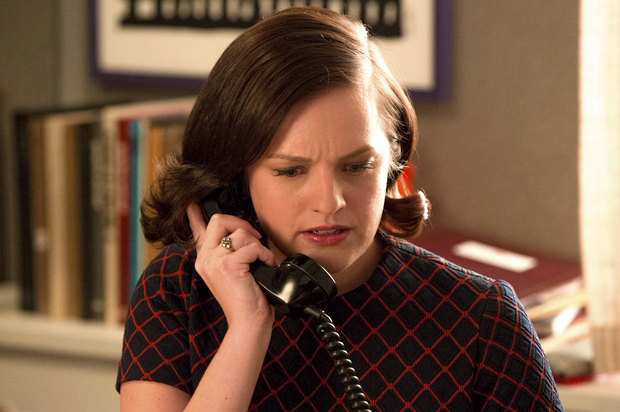
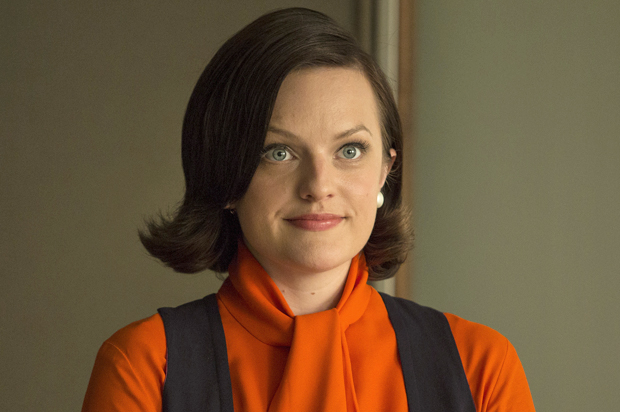
Elisabeth Moss in "Mad Men"

Bill Murray’s brilliant existentialist comedy “Groundhog Day” proposed that life consists of the same day lived over and over again with only minor variations, but that the key to happiness is finding a way to make the most out of the mundane. “Tea Leaves,” the third episode (the second to air, but the two-hour premiere was labeled as two episodes) of “Mad Men’s” new season, suggests something grimmer: Life is like waiting all night in a crowded concrete hallway thinking you’re about to meet the Rolling Stones, only to find out that you’ve signed a deal with the Trade Winds instead.

All youthful dreams die, and adult life is the long, slow accommodation to the way things actually are versus the way we not only hoped but believed they’d be. (As Henry puts it later in a more hopeful context, “This is what it could be, but it’s not gonna be.”) “Tea Leaves” draws a bright line between those who are still young and optimistic enough to have dreams – like sunny, yellow-outfitted Megan, back-to-connivingly-striving Pete, our plucky career gal Peggy, and even the new gaffe-a-minute copywriter Michael Ginsberg. On the other side, the middle-aged realists who are in the process of giving their dreams up, including the superannuated Roger, the always-doubtful Don, and the model-turned-matron Betty.

It’s Betty’s middle-aged spread that we’re first invited to gaze upon, and it’s a shock to see the woman who subsisted on Melba toast while pregnant failing to be shoehorned into a plus-size dress despite Sally all but putting a foot on her ass. Following her usual tactic when faced with a problem, Betty has avoided dealing with her overeating, leaving Henry’s battle-ax of a mother to drop in for a lecture, a case of the pot belly calling the kettle fat.

Frankly, I’d be overeating, too, if I lived in Betty’s new house, which looks like a combination of Manderley, the “Citizen Kane” estate and Lizzie Borden’s home. Betty seems to have taken that affection for an antique fainting couch she felt a couple of seasons ago and spread it over an entire mansion, the décor of which exudes musty old house smell even on-screen. Betty’s own upholstery is overstuffed because she’s swallowing unhappiness with an ice cream chaser, but that hard reality (which her doctor notes is common for “middle-aged women,” making Betty wince at being so classified) is quickly obscured by the possibility that she might have thyroid cancer. This threat sends her rushing back into Don’s ears, phoning him frantically for the auld lang syne of his “Everything’s going to be OK.” Looking concerned for her, Don throws in an affectionate “Birdy” to boot, although Betty’s clearly been eating like anything but.

Running into an old acquaintance, Joyce, at the specialist’s office, Betty is both shocked and intrigued by the fact that the woman has cancer, and asks her what it’s like. Joyce tells her it’s like paddling in the ocean alone while getting farther and farther away from the people on the shore. While you struggle, “because it’s natural,” you also get distracted and start thinking about mundane things like making dinner, before finally getting so tired you just “give in and hope you go straight down.” Betty seems to take this last part as advice, giving herself over to the idea like a child who imagines how very sorry her family would be if she died, even dreaming of them breakfasting while in mourning. She weeps when the fortuneteller who reads her tea leaves says she’s a “great soul … who means so much to the people around her,” and self-pityingly tells Joyce that if she dies, her children will never hear a good word about her ever again.

When word comes that she’s fine, she seems disappointed to have her romantic fantasy of death dispelled and angers Henry by complaining about being put through the wringer only to be told she’s fat (better dead than overfed, I guess, to paraphrase a saying of the era). Henry, on the other hand, is thrilled, saying he feels like Scrooge waking up after seeing his own grave, an indication he’s more engaged with life than others his age. (Especially Roger, who muses,  “Actual life and death. I’ve given up on that.”)

Proving they were perhaps better matched than we thought, Don, too, prematurely kills Betty off, telling Roger she has cancer before clarifying that it’s not certain, and worrying that his kids will grow up without a mother — just like he did. Wondering how it will end up if Megan tries to parent them, it’s clear that the awe he held her in last season (when she charmed his kids in California) has been tempered. In this episode, we see that Don is increasingly drawing a dividing line between the people he sees as grown-ups like himself and those crazy young kids, including his 26-year-old wife, who he calls “such an optimist” in a tone that suggests it’s not a compliment.

Don’s doubts about the younger generation are also on display in that bright and busy hallway at the Stones concert, which Harry explains is “backstage” but not the “real backstage” – that lies behind a door that few can pass through (unlike death, a destination we’ll all get passes to some day). Harry and Don have no more luck than the teenage fans, even though they think they’ll be let in to pitch the Stones on singing for their client, Heinz. To pass the time, they chat with two young women, Harry sharing a joint while Don sticks to market research, picking the brain of one woman so relentlessly that she compares him to a shrink. And he does analyze her fantasy of meeting guitarist Brian Jones and suggests her toying with his tie is something that she’s seen in a movie. Having been compared by the girls to adman “Durwood” in the TV show “Bewitched,” Don’s right that this generation is deeply infected with the pop culture virus, but he’s one who gets the summary diagnosis: “None of you wants us to have a good time because you never did.”  “No, we’re worried about you,” demurs Don in a patronizingly paternal tone, echoed by his telling Harry that the Stones aren’t right for either Heinz or the client’s daughter who worships them.

Naturally, the song that the client wants the Stones to sing is “Heinz, Heinz, you’re on my side,” pointing out for us (in case we’re too stoned to get it) that time isn’t on the side of Don, Roger or even the hapless Harry, who talks to the girls about seeing Charlton Heston in a way that would make Sal Romano blush. He apparently needs a weatherman to tell him which way the Trade Winds blow. Proving he might be a good match for Betty, Harry swallows his failure with a bag of White Castle burgers, eliciting Don’s disgusted view as a responsible father, “I thought those were for your family.”

Harry childishly replies, “Let them get their own,” before adding that his advice to anyone getting married and having kids would be “Eat first,” a motto reminiscent of Bert Cooper’s intoning, “Eat or be eaten – that’s how I was raised.”  Unlike some of the sharks he’s surrounded by, Harry’s a pacifist who doesn’t want to destroy others, but he definitely wants his share, and like Pete, often feels that someone else is hogging the plate.

It’s Pete’s turn to hog things this time out, as he calls an “all hands” meeting to unveil Mohawk as their born-again client and humiliate Roger by not just taking all the credit, but telling the staff that even though Roger will do the day-to-day client work, “rest assured, everything he knows, I’ll know.” No older generation wants to be bested by the younger, but Roger is especially furious at being disrespected by a “kid” he hired and mentored, and who he feels is stepping on his fingers while he hangs from a ledge, a metaphor that brings to mind the falling man of the credits. (A tantalizing statement when paired with his later reflection that he’s long considered throwing something out the window.) Roger then plaintively raises the question that just about every white American male asked in the 1960s, “When is everything going to get back to normal?”

But there’s a new normal in town, and it shows up in staff changes that are curiously glossed over. We’re casually introduced to Don’s new secretary, Dawn, who Harry suggests is always being confused with her boss, despite the fact that she’s conspicuously female and black. After the dramatic buildup to breaking the color barrier at SCDP, the story line reaches an abrupt and anti-climactic conclusion that barely even draws a racist joke from Roger (“always darkest before the dawn over there”). Roger’s as surprised as we are that it’s no big deal to start hiring a more diverse staff, having checked with Mohawk about the Jewish copywriter that Peggy’s interviewing and finding out that “everyone’s got one now” and it makes an agency seem more “modern.” While that’s a fair depiction of tokenism, the integration of lily-white Christian offices didn’t go so smoothly in real life, so let’s hope we see some more repercussions at SCDP. At least sexism is still with us, since Roger informs Peggy that the hard-drinking Mohawk clients require a copywriter “with a penis,” leading her to joke that she’ll work on that.

Her work leads to Michael Ginsberg, who has not only a resume but some talent up his sleeve, and an even larger portfolio of quirks. On first impression, Ginsberg seems a tic-y bag of shtick, humorously eccentric (if not ethnocentric) as if designed to contrast as sharply with those WASPs as possible (including that sharp-edged Don, who Megan notes “has corners” even when going to a rock concert). Peggy worries that Ginsberg’s too strange, even after Roger dismisses her fears by saying all copywriters are crazy and smell like pee. (Peggy has obviously blocked Freddy’s disgrace from her mind since she asks, “Who smells like pee?”)

Roger doesn’t even bother with an anti-Semitic joke, and sexism still seems to be the real problem, as Stan warns that she’s hiring a guy who will end up being her boss. Roger preemptively reassures her that she won’t lose her job, leading Peggy to explain she’s not threatened by talent, but “inspired” by it. What she fears instead is Don blaming her for a bad hire, a worry that Roger understands once Pete Mohawks him in the back, telling her, “Forget everything I said before. That’s the last guy I hired.”

Ginsberg seems another character who may up-end the status quo of SCDP, not only because of his provocative ads (which Don seems to approve of), but because, as he tells Peggy, he’s willing to insult someone to be honest and to apologize because he’s brave. “Telling it like it is” is yet another cultural change rushing headlong at the older generation that will shock them to their core. Having been raised to talk around the truth and hide their own secrets as well as guard those of other people (at least until you can use them to your advantage), Roger, Don and Betty have already expressed horror at the blunt honesty of the younger characters on the show.  “I don’t want to have that conversation,” Don firmly announces when Megan frankly mentions the possibility of mothering his kids if Betty died, once again affirming that ultimate Don Draper principle, “If you don’t like what’s being said, change the conversation.”

Being interviewed by Don, Ginsberg ping-pongs from being indiscreet about his past employers to agreeing with Don that he shouldn’t talk about them behind their backs, because after all, he knows prospective boss Don wouldn’t want his own secrets shared, either. We’re used to these jokes that wink at Don’s secret identity, but the fact is that Don’s merely one character with a hidden past on the show, and at this point, we know more about his history than many of the others.

In an era when both celebrities and ordinary people bear everything to the public at the drop of a reality TV show contract, it’s hard to recall that until the middle of the 20th century, unfettered self-disclosure was considered wholly inappropriate. Information was to be parceled out slowly and only in the most intimate of relationships, if at all. (In fact, spouses and children often were as unlikely to know a person’s secrets as anyone, making Don’s deception to Betty seem more a matter of degree than kind. Hiding previous spouses, children born out of wedlock, family scandals and criminal records wasn’t just the province of characters in soap operas, but more ordinary people than you’d imagine.) Betty and Joyce’s conversation in the episode is perfectly scripted for its avoidance of terms like “cancer” or “death,” as well as Joyce’s explanation that she only realized what was wrong when she saw her husband sitting in the waiting room after her third visit.

This growing schism in communication styles is suggested in Michael Ginsberg’s description of Don’s letter renouncing tobacco advertising as “the funniest thing I ever read.” Peggy shoots Don a worried look at this, but Don’s already told her to stop interrupting and let him talk, and appears to take this seeming insult in stride. Peggy’s the one who’s upset, saying it’s the fact that Michael “can control” his behavior that scares her, a cryptic statement that seems to mean she fears he’s more manipulative than odd, and therefore a danger to her just as Stan has warned. We’re left wondering who the real Michael Ginsberg is when we see him come home and talk to his father in a much quieter, more rational manner, suggesting that in fact perhaps he’s merely playing the role of wild creative guy (especially since we find out he lied about having no family).

While having dinner with Megan and Don, Raymond — the Heinz client — remarks that “back in Pittsburgh, everyone is who you expect them to be.” He thinks that he’s speaking of honesty and authenticity, the same allusion made by current political candidates who speak of “real Americans,” yet the same statement could be made about any of the SCDPers – they are who you expect them to be because they become who you want them to be. But then every person adapts to social expectations in order to fit in and survive. Megan tries to play the good corporate wife for Don at the client dinner, Michael Ginsberg tries to say whatever will get him hired, and Peggy tries to edit him into an acceptable version for Don, while Pete loses Roger and Don’s respect because he doesn’t shape his words to suit his audience, and instead cuts them to fit his own ego. But even lies told to soothe can hurt, as when the fortuneteller’s compliments toward Betty merely remind her of the way she’s failed in her relationships, failure that she seems to be taking to heart after her health scare.

“If, if, if – Betty, let’s not play that game,” Henry scolds when she considers various scenarios before getting her test results (an admonition that she neatly transforms into a mournful self-reproach by the Henry in her dream). But he’s arguing against human nature — everyone wants to read the tea leaves and find out what’s going to happen. Joyce promises Betty that the fortuneteller always offers good news, but real life doesn’t tell people what they want to hear, especially in matters of mortality. Having seen death up close from an early age, Don has always known this, and it’s made him the prematurely old person that he is, incapable of the youthful ease exemplified by Megan. “Stop looking at your watch,” the young woman at the concert advises Don, but he can’t help it; he knows that his time is ending and someone else’s is beginning.

Continue Reading Close

Nelle Engoron is a freelance writer, an Open Salon blogger and the author of "Mad Men Unmasked: Decoding Season 4."

Page 2 of 15 in Mad Men