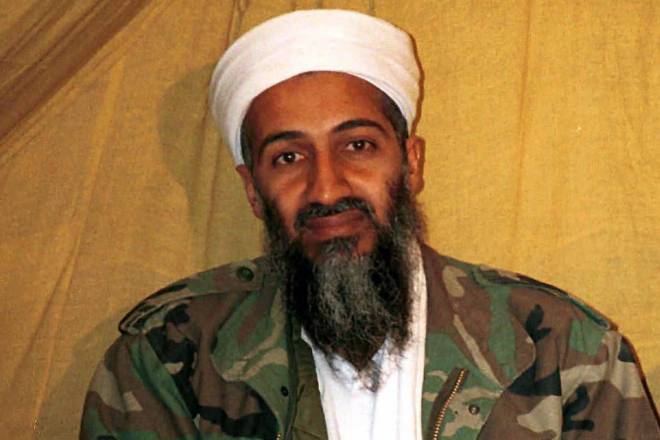
Osama Bin Laden

What should we believe about al-Qaida?

Too much of what we "know" about bin Laden and the terrorist group he led comes from anonymous U.S. officials

  • more
    • All Share Services

What should we believe about al-Qaida?

Almost everything we learn about Al-Qaida and Osama bin Laden these days is coming from anonymous U.S. officials.

Wednesday, for instance, U.S. officials told us via The Washington Post that Al-Qaida was on the verge of being totally wiped out. The comments echoed earlier ones from Defense Secretary Leon Panetta, the former C.I.A. director, who earlier said that only a couple dozen more Al-Qaida militants needed to be killed before the war was over.

Last week the officials were talking to the Wall Street Journal. They told the paper that Al-Qaida would likely be shifting the focus of its attacks to Western targets outside of the United States. They said this was because it had become too difficult for them to strike inside the United States.

The Wall Street Journal said the U.S. officials had come to this conclusion based on evidence gleaned from flash drives found in the compound where bin Laden was killed. Much of the information we are learning about bin Laden and Al-Qaida, in fact, is said (by U.S. officials) to be coming from those flash disks, as well as a computer.

It was from the computer, for instance, that U.S. officials learned that bin Laden liked porn. Everyone ran with that story. It was great story. Not only was it sure to drive traffic, combining two of the most searched items on the internet these days (porn and bin Laden), but it also tweaks the legacy of a man who claimed that a strict adherence to Islam is what guided him in his global campaign of terror.

It is reminiscent of the news, also released by U.S. officials, immediately following the raid that led to bin Laden’s death that, in a vain attempt to protect himself, bin Laden used his wife as a human shield. Not so heroic. That detail turned out to be false. As was news that bin Laden was armed.

The news that bin Laden liked porn also came from U.S. officials. They leaked it anonymously to Reuters and then everyone else reported the Reuters report (including GlobalPost). In fact, all the details about the raid, what transpired and what was found after, has come from U.S. officials.

The New York Times reported on May 6 that the details surrounding the raid and the discoveries that followed have been fluid in their accuracy. It partly blamed a ravenous media, itself included. But it also blamed a desire by the United States to spin facts in order to diminish bin Laden’s legacy.

Was the revelation that bin Laden liked porn part of that spin? What about everything else we are learning from U.S. officials? Is that spin too?

If it’s not spin, all the reports surely play into the hands of the U.S. government. Not only did the Wall Street Journal story infer that our defense measures are working but it justified our continued pursuit of Al-Qaida militants all over the world, both through the war in Afghanistan and the ramping up of drone attacks in Yemen and Somalia.

The Washington Post story, meanwhile, suggests that we have been successful in Pakistan, where drone strikes have been plentiful, but Al-Qaida remained strong in Yemen, where the U.S. plans to increase its use of unmanned drones.

Other things we learned recently about bin Laden: He was planning an attack on the 10-year anniversary of Sept. 11, he had a “direct” role in the planning of the July 7 bombings in London, a belief that runs counter to previous reports, and he was actively planning any number of other attacks as well — all according to “U.S. officials.”

If you say so.

The man who hunted Osama bin Laden

Meet the CIA analyst who tracked down the al-Qaida leader over the course of a decade

  • more
    • All Share Services

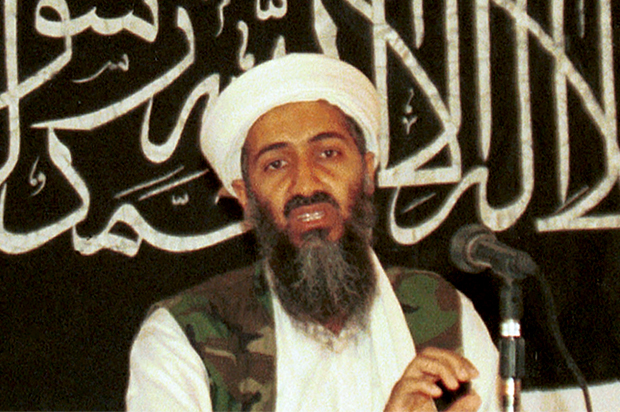
The man who hunted Osama bin LadenThis is an undated file photo shows then-al Qaida leader Osama bin Laden, in Afghanistan. After Navy SEALs killed Osama bin Laden, the White House released a photo of President Barack Obama and his cabinet inside the Situation Room, watching the daring raid unfold. Hidden from view, standing just outside the frame of that instantly iconic photograph was a career CIA analyst. In the hunt for the world's most-wanted terrorist, there may have been no one more important. His job for nearly a decade: finding bin Laden. (AP Photo)(Credit: AP)

After Navy SEALs killed Osama bin Laden, the White House released a photo of President Barack Obama and his Cabinet inside the Situation Room, watching the daring raid unfold.

Hidden from view, standing just outside the frame of that now-famous photograph was a career CIA analyst. In the hunt for the world’s most-wanted terrorist, there may have been no one more important. His job for nearly a decade was finding the al-Qaida leader.

The analyst was the first to put in writing last summer that the CIA might have a legitimate lead on finding bin Laden. He oversaw the collection of clues that led the agency to a fortified compound in Abbottabad, Pakistan. His was among the most confident voices telling Obama that bin Laden was probably behind those walls.

The CIA will not permit him to speak with reporters. But interviews with former and current U.S. intelligence officials reveal a story of quiet persistence and continuity that led to the greatest counterterrorism success in the history of the CIA. Nearly all the officials insisted on anonymity because they were not authorized to speak to reporters or because they did not want their names linked to the bin Laden operation.

The Associated Press has agreed to the CIA’s request not to publish his full name and withhold certain biographical details so that he would not become a target for retribution.

Call him John, his middle name.

John was among the hundreds of people who poured into the CIA’s Counterterrorism Center after the Sept. 11 attacks, bringing fresh eyes and energy to the fight.

He had been a standout in the agency’s Russian and Balkan departments. When Vladimir Putin was coming to power in Russia, for instance, John pulled together details overlooked by others and wrote what some colleagues considered the definitive profile of Putin. He challenged some of the agency’s conventional wisdom about Putin’s KGB background and painted a much fuller portrait of the man who would come to dominate Russian politics.

That ability to spot the importance of seemingly insignificant details, to weave disparate strands of information into a meaningful story, gave him a particular knack for hunting terrorists.

“He could always give you the broader implications of all these details we were amassing,” said John McLaughlin, who as CIA deputy director was briefed regularly by John in the mornings after the 2001 attacks.

From 2003, when he joined the counterterrorism center, through 2005, John was one of the driving forces behind the most successful string of counterterrorism captures in the fight against terrorism: Abu Zubaydah, Abd al-Nashiri, Khalid Sheik Mohammed, Ramzi bin Alshib, Hambali and Faraj al-Libi.

But there was no greater prize than finding bin Laden.

Bin Laden had slipped away from U.S. forces in the Afghan mountains of Tora Bora in 2001, and the CIA believed he had taken shelter in the lawless tribal areas of Pakistan. In 2006, the agency mounted Operation Cannonball, an effort to establish bases in the tribal regions and find bin Laden. Even with all its money and resources, the CIA could not locate its prime target.

By then, the agency was on its third director since Sept. 11, 2001. John had outlasted many of his direct supervisors who retired or went on to other jobs. The CIA doesn’t like to keep its people in one spot for too long. They become jaded. They start missing things.

John didn’t want to leave. He’d always been persistent. In college, he walked on to a Division I basketball team and hustled his way into a rotation full of scholarship players.

The CIA offered to promote him and move him somewhere else. John wanted to keep the bin Laden file.

He examined and re-examined every aspect of bin Laden’s life. How did he live while hiding in Sudan? With whom did he surround himself while living in Kandahar, Afghanistan? What would a bin Laden hideout look like today?

The CIA had a list of potential leads, associates and family members who might have access to bin Laden.

“Just keep working that list bit by bit,” one senior intelligence official recalls John telling his team. “He’s there somewhere. We’ll get there.”

John rose through the ranks of the counterterrorism center, but because of his nearly unrivaled experience, he always had influence beyond his title. One former boss confessed that he didn’t know exactly what John’s position was.

“I knew he was the guy in the room I always listened to,” the official said.

While he was shepherding the hunt for bin Laden, John also was pushing to expand the Predator program, the agency’s use of unmanned airplanes to launch missiles at terrorists. The CIA largely confined those strikes to targets along Pakistan’s border with Afghanistan. But in late 2007 and early 2008, John said the CIA needed to carry out those attacks deeper inside Pakistan.

It was a risky move. Pakistan was an important but shaky ally. John’s analysts saw an increase in the number of Westerners training in Pakistani terrorist camps. John worried that those men would soon start showing up on U.S. soil.

“We’ve got to act,” John said, a former senior intelligence official recalls. “There’s no explaining inaction.”

John took the analysis to then CIA Director Michael Hayden, who agreed and took the recommendation to President George W. Bush. In the last months of the Bush administration, the CIA began striking deeper inside Pakistan. Obama immediately adopted the same strategy and stepped up the pace. Recent attacks have killed al-Qaida’s No. 3 official, Mustafa Abu al-Yazid, and Pakistani Taliban leader Baitullah Mehsud.

All the while, John’s team was working the list of bin Laden leads. In 2007, a female colleague whom the AP has also agreed not to identify decided to zero in on a man known as Abu Ahmed al-Kuwaiti, a nom de guerre. Other terrorists had identified al-Kuwaiti as an important courier for al-Qaida’s upper echelon, and she believed that finding him might help lead to bin Laden.

“They had their teeth clenched on this and they weren’t going to let go,” McLaughlin said of John and his team. “This was an obsession.”

It took three years, but in August 2010, al-Kuwaiti turned up on a National Security Agency wiretap. The female analyst, who had studied journalism at a Big Ten university, tapped out a memo for John, “Closing in on Bin Laden Courier,” saying her team believed al-Kuwaiti was somewhere on the outskirts of Islamabad.

As the CIA homed in on al-Kuwaiti, John’s team continually updated the memo with fresh information. Everyone knew that anything with bin Laden’s name on it would shoot right to the director’s desk and invite scrutiny, so the early drafts played down hopes that the courier would lead to bin Laden. But John saw the bigger picture. The hunt for al-Kuwaiti was effectively the hunt for bin Laden, and he was not afraid to say so.

The revised memo was finished in September 2010. John, by then deputy chief of the Pakistan-Afghanistan Department, emailed it to those who needed to know. The title was “Anatomy of a Lead.”

As expected, the memo immediately became a hot topic inside CIA headquarters and Director Leon Panetta wanted to know more. John never overpromised, colleagues recall, but he was unafraid to say there was a good chance this might be the break the agency was looking for.

The CIA tracked al-Kuwaiti to a walled compound in Abbottabad. If bin Laden was hiding there, in a busy suburb not far from Pakistan’s military academy, it challenged much of what the agency had assumed about his hideout.

But John said it wasn’t that far-fetched. Drawing on what he knew about bin Laden’s earlier hideouts, he said it made sense that bin Laden had surrounded himself only with his couriers and family and did not use phones or the Internet. The CIA knew that top al-Qaida operatives had lived in urban areas before.

A cautious Panetta took the information to Obama, but there was much more work to be done.

The government tried everything to figure out who was in that compound.

In a small house nearby, the CIA put people who would fit in and not draw any attention. They watched and waited but turned up nothing definitive. Satellites captured images of a tall man walking the grounds of the compound, but never got a look at his face.

Again and again, John and his team asked themselves who else might be living in that compound. They came up with five or six alternatives; bin Laden was always the best explanation.

This went on for months. By about February, John told his bosses, including Panetta, that the CIA could keep trying, but the information was unlikely to get any better. He told Panetta this might be their best chance to find bin Laden and it would not last forever. Panetta made that same point to the president

Panetta held regular meetings on the hunt, often concluding with an around-the-table poll: How sure are you that this is bin Laden?

John was always bullish, rating his confidence as high as 80 percent.

Others weren’t so sure, especially those who had been in the room for operations that went bad. Not two years earlier, the CIA thought it had an informant who could lead him to bin Laden’s deputy. That man blew himself up at a base in Khost, Afghanistan, killing seven CIA employees and injuring six others.

That didn’t come up in the meetings with Panetta, a senior intelligence official said. But everyone knew the risk the CIA was taking if it told the president that bin Laden was in Abbottabad and was wrong.

“We all knew that if he wasn’t there and this was a disaster, certainly there would be consequences,” the official recalled.

John was among several CIA officials who repeatedly briefed Obama and others at the White House. Current and former officials involved in the discussions said John had a coolness and a reassuring confidence.

By April, the president had decided to send the Navy SEALs to assault the compound.

Though the plan was in motion, John went back to his team, a senior intelligence official said.

“Right up to the last hour,” he told them, “if we get any piece of information that suggests it’s not him, somebody has to raise their hand before we risk American lives.”

Nobody did. Inside the Situation Room, the analyst who was barely known outside the close-knit intelligence world took his place alongside the nation’s top security officials, the household names and well-known faces of Washington.

An agonizing 40 minutes after Navy SEALs stormed the compound, the report came back: Bin Laden was dead.

John and his team had guessed correctly, taking an intellectual risk based on incomplete information. It was a gamble that ended a decade of disappointment. Later, Champagne was uncorked back at the CIA, where those in the Counterterrorism Center who had targeted bin Laden for so long celebrated. John’s team reveled in the moment.

Two days after bin Laden’s death, John accompanied Panetta to Capitol Hill. The Senate Intelligence Committee wanted a full briefing on the successful mission. At one point in the private session, Panetta turned to the man whose counterterrorism resume spanned four CIA directors.

He began to speak, about the operation and about the years of intelligence it was based on. And as he spoke about the mission that had become his career, the calm, collected analyst paused, and he choked up.

Continue Reading Close

Pakistan to let bin Laden widow return to Yemen

Officials have not revealed when Amal Ahmed Abdullfattah will leave

  • more
    • All Share Services

Pakistan to let bin Laden widow return to YemenFILE - This undated image taken from video released by Al-Jazeera television on Oct. 5, 2001, shows Osama bin Laden at an undisclosed location. A cellphone of bin Laden's trusted courier recovered in the U.S. raid last month that killed both men in Pakistan contained contacts to a militant group that is a longtime asset of Pakistan's intelligence agency, The New York Times reported late Thursday. (AP Photo/Courtesy of Al-Jazeera via APTN, File)(Credit: AP)

Officials in Pakistan say the country has agreed to let Osama bin Laden’s youngest widow return to her native Yemen. But they would not reveal when she’ll leave.

Amal Ahmed Abdullfattah, two other widows and eight of bin Laden’s children were detained following the May 2 U.S. raid that killed the al-Qaida chief in the northwestern Pakistani city of Abbottabad.

A Pakistani security official said Friday that Pakistan has granted Abdullfattah permission to go home. An official at the Yemeni embassy in Islamabad confirmed an agreement had been reached on her deportation.

Both officials requested anonymity because of the topic’s sensitivity.

The security official says Abdullfattah has fully recovered from a bullet that struck her leg during the raid.

Osama wanted new name for al-Qaida to repair image

In his final writings, the terrorist leader lamented that the West was winning the public relations fight

  • more
    • All Share Services

Osama wanted new name for al-Qaida to repair imageFILE - In this Oct. 7, 2001 file photo, Osama bin Laden, left, and his top lieutenant Egyptian Ayman al-Zawahri, right, are seen at an undisclosed location in this television image broadcast. Al-Qaida has selected its longtime No. 2, Ayman al-Zawahri, to succeed Osama bin Laden following last month's U.S. commando raid that killed the terror leader, according to a statement posted Thursday, June 16, 2011 on a website affiliated with the network. (AP Photo/Al-Jazeera, File)(Credit: AP)

As Osama bin Laden watched his terrorist organization get picked apart, he lamented in his final writings that al-Qaida was suffering from a marketing problem. His group was killing too many Muslims and that was bad for business. The West was winning the public relations fight. All his old comrades were dead and he barely knew their replacements.

Faced with these challenges, bin Laden, who hated the United States and decried capitalism, considered a most American of business strategies. Like Blackwater, ValuJet and Philip Morris, perhaps what al-Qaida really needed was a fresh start under a new name.

The problem with the name al-Qaida, bin Laden wrote in a letter recovered from his compound in Pakistan, was that it lacked a religious element, something to convince Muslims worldwide that they are in a holy war with America.

Maybe something like Taifat al-Tawhed Wal-Jihad, meaning Monotheism and Jihad Group, would do the trick, he wrote. Or Jama’at I’Adat al-Khilafat al-Rashida, meaning Restoration of the Caliphate Group.

As bin Laden saw it, the problem was that the group’s full name, al-Qaida al-Jihad, for The Base of Holy War, had become short-handed as simply al-Qaida. Lopping off the word “jihad,” bin Laden wrote, allowed the West to “claim deceptively that they are not at war with Islam.” Maybe it was time for al-Qaida to bring back its original name.

The letter, which was undated, was discovered among bin Laden’s recent writings. Navy SEALs stormed his compound and killed him before any name change could be made. The letter was described by senior administration, national security and other U.S. officials only on condition of anonymity because the materials are sensitive. The documents portray bin Laden as a terrorist chief executive, struggling to sell holy war for a company in crisis.

At the White House, the documents were taken as positive reinforcement for President Barack Obama’s effort to eliminate religiously charged words from the government’s language of terrorism. Words like “jihad,” which also has a peaceful religious meaning, are out. “Islamic radical” has been nixed in favor of “terrorist” and “mass murderer.” Though former members of President George W. Bush’s administration have backed that effort, it also has drawn ridicule from critics who said the president was being too politically correct.

“The information that we recovered from bin Laden’s compound shows al-Qaida under enormous strain,” Obama said Wednesday in his speech to the nation on withdrawing troops from Afghanistan. “Bin Laden expressed concern that al-Qaida had been unable to effectively replace senior terrorists that had been killed and that al-Qaida has failed in its effort to portray America as a nation at war with Islam, thereby draining more widespread support.”

Bin Laden wrote his musings about renaming al-Qaida as a letter but, as with many of his writings, the recipient was not identified. Intelligence officials have determined that bin Laden only communicated with his most senior commanders, including his deputy, Ayman al-Zawahri, and his No. 3, Mustafa Abu al-Yazid, according to one U.S. official. Because of the courier system bin Laden used, it’s unclear to U.S. intelligence whether the letter ever was sent.

Al-Yazid was killed in a U.S. airstrike last year. Zawahri has replaced bin Laden as head of al-Qaida.

In one letter sent to Zawahri within the past year or so, bin Laden said al-Qaida’s image was suffering because of attacks that have killed Muslims, particularly in Iraq, officials said. In other journal entries and letters, they said, bin Laden wrote that he was frustrated that many of his trusted longtime comrades, whom he’d fought alongside in Afghanistan, had been killed or captured.

Using his courier system, bin Laden could still exercise some operational control over al-Qaida. But increasingly the men he was directing were younger and inexperienced. Frequently, the generals who had vouched for these young fighters were dead or in prison. And bin Laden, unable to leave his walled compound and with no phone or Internet access, was annoyed that he did not know so many people in his own organization.

The U.S. has essentially completed the review of documents taken from bin Laden’s compound, officials said, though intelligence analysts will continue to mine the data for a long time.

——

Follow Matt Apuzzo at http://twitter.com/mattapuzzo

Continue Reading Close

Report: Bin Laden courier’s phone provides leads

The cellphone reveals contact between al-Qaida and a militant group called Harakat-ul-Mujahedeen

  • more
    • All Share Services

Report: Bin Laden courier's phone provides leadsFILE - This April 1998 file photo shows Osama bin Laden in Afghanistan. Federal authorities dropped terrorism charges against bin Laden in court papers filed Friday, June 17, 2011, formally ending a case against the slain al-Qaida leader that began with hopes of seeing him brought to justice in a civilian court. U.S. District Judge Lewis Kaplan approved a request made by federal prosecutors to dismiss the charges — a procedural move that's routine when defendants under indictment die. (AP Photo, File)(Credit: AP)

A cellphone of Osama bin Laden’s trusted courier recovered in the U.S. raid last month that killed both men in Pakistan contained contacts to a militant group that is a longtime asset of Pakistan’s intelligence agency, The New York Times reported late Thursday.

In a story posted on the Times website, senior American officials and others briefed on the findings said the discovery indicates bin Laden used the group, Harakat-ul-Mujahedeen, as part of his support network inside Pakistan.

It raises questions about whether the group and others helped shelter and support the al-Qaida leader on behalf of Pakistan’s spy agency.

The officials and analysts told the Times that Pakistan’s intelligence agency had mentored Harakat and allowed it to operate in Pakistan for at least 20 years.

In tracing the calls on the cellphone, U.S. analysts have determined that Harakat commanders had called Pakistani intelligence officials, the senior American officials said. One said they had met. The officials added that the contacts were not necessarily about bin Laden and that there was no “smoking gun” showing that Pakistan’s spy agency had protected bin Laden.

Beyond providing leads about why bin Laden was able to live comfortably for years in Abbottabad, a town dominated by the Pakistani military just 35 miles from the capital city of Islamabad, the discovery also may help shed light on bin Laden’s secret odyssey after he slipped away from U.S. forces in the Tora Bora region of Afghanistan nearly 10 years ago.

Harakat has especially deep roots in the area around Abbottabad, analysts familiar with the group told the Times. Its leaders have strong ties with both al-Qaida and Pakistani intelligence, known as Inter-Services Intelligence.

The senior American officials did not identify the commanders whose numbers were in the courier’s cellphone but said the militants were in South Waziristan, where al-Qaida and other groups had been based for years. Harakat’s network would have allowed bin Laden to pass on messages and money to Qaida members there and in other parts of Pakistan’s tribal areas, analysts and officials said.

Bin Laden and his courier, Ibrahim Saeed Ahmed, were discovered by U.S. intelligence through a chance interception of an Ahmed phone call. That set in motion the secret CIA search of the Abbottabad region, culminating with the May 2 raid by Navy SEALs that killed bin Laden, Ahmed’s brother Abrar and two other people.

Reached by the AP on his cell phone last month, Harakat chief Fazle-ur-Rahman Khalil dismissed suggestions that he may have been in touch with bin Laden while the al-Qaida leader was hiding in Abbottabad.

“It is 100 percent wrong, it’s rubbish,” Khalil said. “Osama did not have contact with anybody.” The AP obtained Khalil’s phone number from a former aide who has since left the group.

Continue Reading Close

US dismisses criminal charges against bin Laden

Such requests are procedural and routine in case where defendants named in indictment die

  • more
    • All Share Services

US dismisses criminal charges against bin LadenFILE - In this 1998 file photo made available Friday, March 19, 2004, Ayman al-Zawahri, left, poses for a photograph with Osama bin Laden, right, in Khost, Afghanistan. Al-Qaida has selected its longtime No. 2, Ayman al-Zawahri, to succeed Osama bin Laden following last month's U.S. commando raid that killed the terror leader, according to a statement posted Thursday, June 16, 2011 on a website affiliated with the network. (AP Photo/Mazhar Ali Khan, File)(Credit: AP)

A federal judge has approved a request by prosecutors to officially dismiss all criminal charges against Osama bin Laden.

The order was made public Friday, more than six weeks after bin Laden was killed by the U.S. military in a raid on his hideout in Pakistan. Such requests are procedural and routine in case where defendants named in indictment die.

The al-Qaida leader was indicted in June 1998 in federal court in Manhattan on charges related to the terrorist attacks on the two U.S. embassies in Africa. It’s the only federal indictment to charge him.

The charges included conspiracy to kill U.S. citizens, conspiracy to destroy U.S. property and use of a weapon of mass destruction.

Page 2 of 58 in Osama Bin Laden