Allen Barra

Paul McCartney: A biographer’s nightmare

A new book proves how difficult it is to turn the Beatle's life into the stuff of compelling storytelling

  • more
    • All Share Services

Paul McCartney: A biographer's nightmareCover detail from "Fab: An Intimate Life of Paul McCartney"

With Barry Miles’ “Paul McCartney: Many Years From Now” (1997, 720 pages), Peter Carlin’s “Paul McCartney: A Life” (2009, just under 400 pages), and enough Beatles histories and anthologies to fill a small library, Paul McCartney is already qualified for the unofficial title of “Most Uninteresting Person Ever to Inspire a Mountain of Literature.” If there was any doubt, Howard Sounes’ “Fab: An Intimate Life of Paul McCartney,” which clocks in at 634 pages, must have put Paul way over the top.

I’m not going to pretend that I’ve read everything or even most of what has been written about McCartney; from what I have read, Sounes’ book is easily the best. For one thing, he can write. He has published serviceable biographies of Bob Dylan (“Down the Highway”) and Charles Bukowski (“Locked in the Arms of a Crazy Life”) as well as “The Wicked Game: Arnold Palmer, Jack Nicklaus, Tiger Woods and the Story of Modern Golf.” For another, Sounes has a proper appreciation of how much sleaze is needed in a book about any pop idol; I would bet that the number of pages given to McCartney’s flings with mistresses and groupies trumps those in all other bios combined. (And believe me, when you’re fighting your way through countless thousands of words on interpretations of song lyrics and record sales, the sex is a much-needed break.) Finally, “Fab” is, unlike some other McCartney books, entirely unauthorized, yet another thing working in its favor.

Unfortunately, “Fab” has some major things working against it, most obviously whether even the most devoted fan wants to read another book — even the best book — about McCartney. Another problem is how one can be a genuine biographer and, at the same time, an honest critic and pretend that virtually all of McCartney’s music after splitting with the Beatles isn’t sheer dreck. Sounes deals with that problem admirably: He doesn’t pretend to like most of McCartney’s post-Beatles music. But since the Beatles years end on Page 267, there’s an awful lot of bad music to be covered, and he covers it in excruciating detail.

To back up for a moment, Sounes is quite good on Paul’s childhood years, his Liverpool working-class background, and his early associations with the other future Beatles. I found some charming details I had never seen before, such as this from George Harrison: “I discovered that he had a trumpet and he found out I had a guitar, and we got together. I was about thirteen. [Paul] was probably late thirteen or fourteen. He was always nine months older than me. Even now, after all these years, he is still nine months older!”

Except for the death of his mother when he was 14, McCartney’s youth was distressingly smooth; a few John Lennon-like complications might have made for livelier reading. (His mother inspired many of his songs, most notably “Let It Be.”)

The rise to superstardom is presented here, as it has been everywhere else, as meteoric and dizzying. Sounes doesn’t have much to add to the story except to tell with a bit more pizazz of  “the pure, innocent joy of making music and seeing it successful.” One morning in the spring of 1963, Paul awoke at home in Liverpool to “hear the milkman coming up the garden path whistling a familiar tune, ‘From Me to You.’ It was the moment that Paul felt he had made it.”

It’s all pleasant reading, but you probably know where it’s all going. If you do, you might wonder why you’re going there again, and if you don’t you might wonder what all the fuss is really about. Sounes’ biggest weakness in telling the story is his inability to give us a fresh focus on the other Beatles: John seems beyond his ken, George is a bit of a dim bulb, and Ringo, the bane of all Beatles biographers, is simply a cipher. Most of the women in Paul’s life don’t come off well either, Linda Eastman in particular, who “notched up approximately twenty lovers” over a two-year span, “most of whom were famous, including singers Tim Buckley and Jim Morrison.” (One must at least give her credit for a musical range at least the equal of Paul’s.)

Inevitably, Yoko makes her entrance, the boys split, and Paul’s long, dreary stint with Wings and then as a solo artist begins. If this music be your food of love, this is your meat; if not, put on a pot of coffee. Sounes goes to tortuous length to try to make this music interesting. On “Band on the Run,” “Forced to remember his songs after muggers stole his demo tapes, Paul laid down a series of minor classics.” (I wish the muggers had returned to the scene of the crime.)

The most interesting part of the post-Beatles years occurs just before and after John Lennon’s death. On their last meeting: “The next night Paul dropped by the Dakota again. This time he met a less positive reception. As is often the way with men who have known each other as boys, then drifted apart, picking up an old friendship can be difficult.” In the last years before Lennon died, the two had little to talk about. Sounes feels that Lennon may have been “a tad jealous of Wings’ success” — not to say the music, just the success.

Nonetheless, McCartney wept on the morning of Dec. 9, 1980, when a call from his manager informed him that Lennon had been murdered and again when Yoko called to tell him. That, it turns out, is the best side of Paul McCartney, and there’s nearly 300 pages to go. There’s plenty of tedious detail about what a wretched boss Paul could be as well as a shrewd businessman, but the music itself no longer holds you, so the narrative inevitably begins to wind down.

Ultimately, the movie producer Lord David Puttnam probably makes the most accurate assessment in comparing McCartney with the director Ridley Scott: “both men of immense, immense, immense talent who on their deathbed are likely to look back on their career with some satisfaction, but with some dissatisfaction, in that I’m not sure that either of them — Ridley and Paul, both very wealthy and everything — I’m not sure either of them has absolutely delivered what was in them.” According to Sounes, Puttnam believes that “in the years since the Beatles, Paul has not been able to summon the crucial extra effort — he quantifies this an additional 15 per cent — required to transform good work into something exceptional.”

It’s hard to believe that Putnam’s judgment isn’t Sounes’ as well, which leads the reader down a long and winding road and leaves us wondering whether a book that is done very well was really worth doing at all.

Mickey Mantle: From golden god to alcoholic wreck

"The Last Boy" goes further than any biography yet in capturing the baseball legend -- and the mess he became

  • more
    • All Share Services

Mickey Mantle: From golden god to alcoholic wreckMickey Mantle

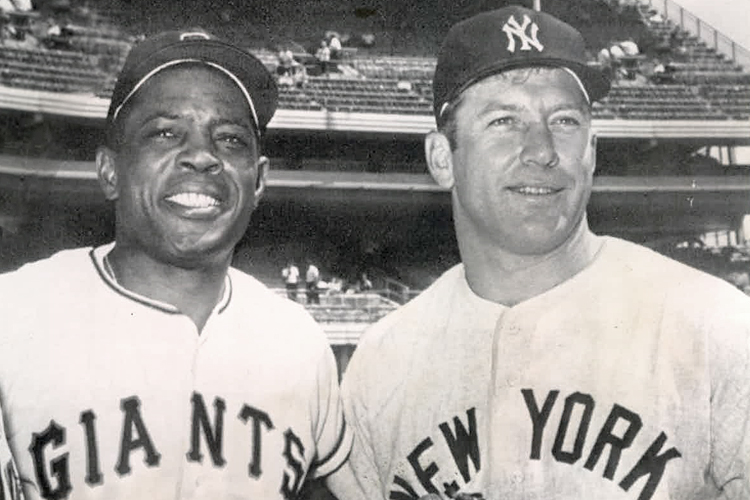
Mickey Mantle’s image looms over American sports like a golden god from a time only dimly remembered but still strongly felt. He was the consummate blend of power and speed ever to play baseball (he was clocked going from home to first base at 3.0 seconds, the best time of his era), his prodigious 500-foot blasts creating the term “tape measure home run.” He was also, with an assist from his exact contemporary, Willie Mays (the player with whom he was destined to be compared to and contrasted with), the creator of baseball nostalgia, the king of the card show-autograph circuit.

Jane Leavy, author of a superb baseball novel, “Squeeze Play,” and the best-selling “Sandy Koufax, A Lefty’s Legacy,” zooms right in on the essence of Mantle’s appeal in “The Last Boy: Mickey Mantle and the End of America’s Childhood.” He was the last boy in the last decade ruled by boys. He was L’il Abner in a posse of dreamy reprobates: James Dean, Buddy Holly, Frankie Avalon, Dean Martin, Elvis. Women wanted to have them or mother them, young men aped them, while behind the scenes, elders and handlers tried to tame them.”

Mantle has inspired several fine biographies over the years, including David Falkner’s “The Last Hero: The Life of Mickey Mantle” (1995) and Tony Castro’s “Mickey Mantle: America’s Prodigal Son” (2002), and Mickey himself coauthored several highly readable memoirs, most notably “The Mick” (1985), which kicked off the resurgence of interest in Mantle and his career. Leavy, though, brings an insight to Mantle’s story that previous writers, including Mickey himself, lacked — namely, a personal insight into the blond, self-destructive former Adonis.

Late in his life, when Mantle resembled an alcoholic train wreck, Leavy spent several hours with her childhood idol trying to interview him. She failed to get much that was usable at the time, but nearly three decades later, the encounters paint a vivid picture of Mickey and his twilight years — a pathetic, broken, self-deprecating middle-aged man baffled by people’s adoration.

“Oh, well,” he said cheerfully after Leavy rebuffed his advance at an Atlantic City hotel, “y’know what they call me, doncha?”

“‘No, Mick, I don’t.’ ‘Well,’ he drawled, ‘they call me Mighty Mouse, because I’m hung like him.’ I went up to my room and cried.”

Mickey Mantle made a lot of people cry in his 64 years. The son of an Oklahoma zinc miner, Mickey was groomed practically out of the cradle to play ball and thus escape the brutal and dangerous mines. No ballplayer was ever given greater natural talents and worse luck. His father, grandfather and uncle, miners all, died premature deaths. Mickey, who began drinking at an early age, became, like the men on his mother’s side of the family, an alcoholic; contracted the bone disease osteomyelitis from a high school football injury; when the draft board ruled him 4-F because of the disease, he received hate mail by the thousands accusing him of being a draft dodger.

At the Yankees spring training camp in 1951 he was hailed as the second coming of Babe Ruth and Joe DiMaggio combined. The expectations put on the 19-year-old were ludicrous; in retrospect, it’s almost scary how close he came to fulfilling them. The second game of the 1951 World Series with the New York Giants was, writes Leavy, “the last time Mantle set foot on a baseball field without pain.” Chasing a fly ball hit by — quel irony! — Willie Mays, Mickey got his cleats tangled in an open drain pipe, tore up his knee and, from then until his retirement after the 1968 season, was plagued with injuries.

It seemed at time there were two Mickey Mantles, the one who, from the early 1950s through 1964, was the best player in the American League and the one most sportswriters thought he could have been. He won three Most Valuable Player Awards, and in the opinion of baseball analysts, could justifiably have won three or four more. As his teammate Clete Boyer put it, “Jesus Christ, how much better could he have been?” He was berated almost his entire career by skeptical writers, hostile fans and even his own manager, Casey Stengel, for his reticence; Jackie Robinson scolded Mantle’s critics after Mickey destroyed the Brooklyn Dodgers in the 1952 World Series, telling a reporter, “We got plenty of guys that stupid, but we don’t have anybody that good.”

Part biography, part memoir, and part fan’s note, “The Last Boy” is the most complete book ever about Mantle, the one that puts his career into best perspective as well as the one that deals most openly with his failures as a husband and father. Mickey was the world’s greatest teammate: “Rookies or veterans, slumping teammates, got invitations to dinner. You come with me tonight.” But he drove his wife, Merlyn, his childhood sweetheart back in Oklahoma, to drink and despair with his constant womanizing and allowed his four sons to sink into alcoholism with him.

Leavy accomplishes the astonishing feat of capturing Mickey’s big-heartedness without ever slipping across the foul line into sentimentality. She records Mantle’s sins and achievements with the diligence of a first-rate reporter, never losing sight of what drew her to Mickey as a fan in the first place: “He had a lonely heart and it was a good heart and it was open and big,” says a woman who knew Mantle for more than 50 years. It was a heart big enough to make everyone who knew him look past his transgressions.

In the final analysis, Leavy remains a fan, and in the process makes fans of us all.

Continue Reading Close

Andrew Morton’s “Angelina”: The worst book of the decade

Andrew Morton's new biography of the movie star is ill-informed, moralistic and just plain mean

  • more
    • All Share Services

Andrew Morton's Angelina Jolie

I know you’re not supposed to judge a book by its cover, but it’s hard to understand what the people who put together “Angelina” were thinking. I mean, if you want to sell a book on Angelina Jolie, wouldn’t you put a nice color photo of her face on the front? Instead we get a shot of her neck and back (which, to be honest, aren’t all that unattractive) revealing a couple of her tattoos.

What exactly is the point? Is the author, Andrew Morton, trying to tell us that he is approaching the phenomenon of Jolie from a different perspective? If so, he is deluding himself and trying to delude us. The cover of Angelina makes it appear to be a novel, and on closer inspection, that’s what it proves to be: a fictional account of an actual life.

Morton, his dust jacket informs us, wrote a “groundbreaking 1992 biography” of Princess Diana as well as books on Monica Lewinsky and Tom Cruise; I haven’t read any of them, but judging from “Angelina,” he has written more biographies than he’s read. In his acknowledgments, Morton writes, “For the most part, I have relied on original research and interviews with contemporaries, or at the very least tried to place Angelina Jolie’s own words in a coherent framework.” The last part shouldn’t be all that difficult since Jolie has been about the most accessible celebrity in the world over the last 10 years and is usually a great deal more coherent on her life than Morton is.

Regarding Morton’s “original research,” this Jolie junkie found practically nothing that I hadn’t seen before and mostly dismissed as utter crap. Much of Morton’s research seems to have been done while standing in supermarket lines, and as for the rest, he plays a clever shell game with his evidence. His sources include “a friend” (the phrase used at least 12 times), “an unnamed friend” (at least 5 times, and there is no explanation as to the difference between a friend and an unnamed friend), “an unnamed friend [who] told the magazine,” “a friend at that time,” “a mutual friend” (twice), “a mutual friend, a writer.” Morton must define the word “friend” as someone who dislikes Angelina enough to say something nasty about her but doesn’t want her to know who said it.

There are also “a well-informed source” (twice), “a girlfriend who knew Angie well at this time,” “the maid,” “the hotel worker,” “a psychologist who has met with Jennifer socially,” “a member of Brad Pitt and Jennifer Aniston’s circle,” and “a psychologist who mingled in the Brad, Angie and Jennifer circle.” Oh, and my own personal favorite: “One former White House veteran.”

Stop me if you’ve heard these before, and if you flip through the National Enquirer, Us Weekly and Star magazine, as I have, you have heard them before. If you’re a Jolie aficionado, you already know just about everything that’s in this book: Angelina’s father, Jon Voight, deserted the family or was kicked out when Angelina and her brother, James, were little, Angelina was a tomboy, as a child she always liked to take dares, she has always loved knives, as a young girl she practiced self-mutilation, she had at least one sexual relationship with a woman (Calvin Klein model Jenny Shimizu), she’s had bouts of depression and flings with drugs. (I did learn one thing that I hadn’t picked up in the tabloids, that Al Pacino was the unrequited love of her mother, Marcheline Bertrand.)

We know these things are true because Jolie has freely talked about them so often. That’s not enough for Morton; he must drag in all kinds of outside witnesses to lend credibility to his own theses. A friend of Marcheline, Lauren Taines, thinks “a lot of Angelina’s dabbling with other women was to take a stab at her father.” As if getting revenge on her father is the only reason why a woman would ever have sex with another woman.

Morton calls in a swarm of experts to testify on Angelina’s behavior, their comments ranging from psychobabble to the banal. Psychologist Iris Martin tells us, “If you have an attraction to a woman, it is going to end up sexual.” Well, that certainly jibes with my own experience. According to another psychologist, Dr. Franziska De George, “Bisexuality is part of being lost; it is a way of expressing yourself.” I thought all sexuality was a way of expressing yourself. Dr. De George also says, “The ultimate disassociation is suicide.” Ya think?

Someone from Morton’s stable of professional busybodies is always available to weigh in on just about any aspect of Jolie’s life. De George thinks that “for Angelina to adopt a child from another country is symbolic of how alien she feels.” Might it also be symbolic of her love for children? When analysts can’t be found, higher powers are called on, including Princess Diana’s former astrologer, Penny Thornton, “who has carefully studied Angie’s birth chart.”

When not calling in a shrink, Morton is making his own pompous assessments. “The key to understanding this issue,” he writes of Angelina’s infancy, “is the fact that babies are born without the capacity to differentiate or articulate their feelings and needs. They are in what is termed ‘a global undifferentiated state,’ their emotions, if not met, lurching from anxiety to panic and finally disassociation.” Sifting through this rubble of jargon, I think it can be simplified as: Babies need love and can’t say that because they’re babies.

What really grates, though, is Morton’s unrelenting didacticism. He is absolutely convinced that Angelina Jolie has lived her life the wrong way and that he knows a better one: “She is still paying a price in currency that she barely understands,” but which, of course, Morton does. He writes to argue that Jolie’s mother, who died of cancer in 2007, should have forgiven Jon Voight for deserting the family — and that Angelina should have done the same. He doesn’t seem to understand that in his own book, Voight comes across as a loony bird.

Voight, who listed Gandhi, Martin Luther King and Bobby Kennedy among his early spiritual guides, later “began to explore Judaism more closely … even considering converting to Judaism.” He took to calling friends in the early hours of the morning and reading them passages from the Bible; over the last couple of years he has publicly ranted against “Obama oppression.” At a Paramount Pictures ceremony a couple of years back, he spotted Angelina and began crying her name out loud: “Voight planned to speak with his daughter about her life style, her exhibitionism, and her erratic behavior.” Who, I wonder, should speak to Voight about his own? Morton mocks the “Saint Marcheline image” of Jolie’s late mother while excoriating Angelina for shunning her father without even suggesting that it might be dangerous to have someone so unstable around her children.

“Angelina” is one long rant against just about everything Jolie has ever done or been said to have done. Her second husband, Billy Bob Thornton, “a homebody who lives for his music and art had gotten himself into a freak show where he was Exhibit A.” That homebody had been married three times before Jolie and walked out on Laura Dern after proposing marriage. Morton apparently does not trust Billy Bob’s own evaluation of the subject: “I was frightened of Angie because she was too good for me. She was too beautiful, too smart, and had too much integrity. I felt small next to her and just couldn’t live with it.”

Morton can’t live with it, either. One of the book’s more bizarre running themes is Angelina’s cruelty to … Mick Jagger? Mick lusted after and pursued Angelina for more than two years and “paid a high emotional price, falling into a deep depression as a result of Angie’s silence … He was completely heartbroken by her.” And, “Much to Jagger’s chagrin [Angelina] did not hang out with him backstage.” And “Jagger felt he was on the outside looking into Angie’s life.” Well, get in line, pal. “I feel,” he quotes Mick as saying, “like I am just a piece of luggage at an airport carousel, waiting to be picked up.” Morton actually wants sympathy for the devil.

As the object of desire for every man and most women she encounters, Angelina cannot win: If she fucks someone, in Morton’s eyes she’s a slut; if she doesn’t, she’s a tease. “She kept her stable of men in different compartments,” Morton writes, “never letting on that each was an interchangeable part of her posse.”  Lucky them, I say. “A friend,” unnamed, says, “She might have said that she’s slept with only four men [after her marriage to Thornton], but she is a total sexual deviant.” You can almost hear Morton tsk-tsking over your shoulder in the first half of that sentence, and licking his lips in the second.

Morton combines the soul of a pimp with the morals of a TV evangelist. Near the end of his book he tries desperately to set up a tryst between Angelina and Johnny Depp, her costar in  “The Tourist,” currently in postproduction. Certainly, he writes, “an affair would be box-office poison for Angie” — though terrific for paperback book sales of a biography, I bet. The only sour note is, “Astrologically, though, there is little connection between Depp’s and Jolie’s charts …”

Morton is incapable of evaluating Angelina Jolie as an actress, except to refer to the occasional critic, including Pauline Kael, who after watching her Oscar-winning performance in “Girl, Interrupted,” commented, “She’s absolutely fearless in front of a camera. This girl would scare the crap out of Jack Nicholson in ‘Cuckoo’s Nest’ ['One Flew Over the Cuckoo's Nest'].” (In the interest of full disclosure, he took that quote from a piece I wrote on Jolie for Salon in 2005.)

“Angelina” couldn’t really be called, in the words of a friend of mine (an unnamed friend, a mutual friend, a writer, a psychologist who has mingled in the Brad, Angie and Jennifer circle), “a journalistic disgrace,” because this is not journalism. The real disgrace is that this book is printed by a major publisher and is being referred to by some of the media as if it has some legitimacy. It’s too early to call “Angelina” the worst book of 2010. I can, however, call it, with some assurance, the worst book in the 21st century so far.

Continue Reading Close

The unpopular case for A-Rod’s brilliance

As the Yankees slugger closes in on 600 home runs, it's time to admit he's one of the greatest in baseball history

  • more
    • All Share Services

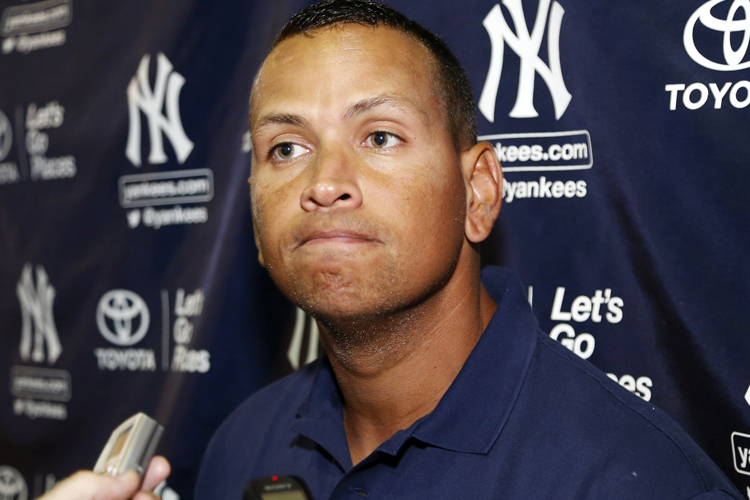
The unpopular case for A-Rod's brillianceNew York Yankees third baseman Alex Rodriguez warms up before a baseball game against the Baltimore Orioles, Thursday, June 10, 2010, in Baltimore. The Orioles won 4-3. Rodriguez left the game after the first inning. (AP Photo/Rob Carr)(Credit: AP)

Alex Rodriguez is perilously close to hitting the 600 home run mark. On Thursday night, the Yankees slugger hit number 599 against Kansas City. There are only six players ahead of him in career home runs. I’m telling you this now because you may miss it when it happens. I mean, it will be in the sports pages and on ESPN highlights, but I’m betting that the northeast media won’t make a big deal about it. In fact, some of them are already dissing the accomplishment, like Terrence Moore on MLB’s Fanhouse.com, who wrote a piece called “A-Rod’s 600th Merits Shrugs, Not Hugs.”

By the end of this season, Rodriquez will probably have passed up Sammy Sosa (number six at 609) and moved in just behind Ken Griffey, Jr. (630) on the all-time list. I can only imagine the bad taste it’s going to leave in the mouths of veteran New York sportswriters when late next season he starts to approach number four, the sainted Willie Mays (660). From there, it will probably just be a matter of time before A-Rod passes up Babe Ruth (714), Henry Aaron (755) and even Barry Bonds (762).

I’m suggesting that it might be good idea for Yankee fans to get used to the fact that Alex Rodriguez is one of the greatest players in baseball history, which they haven’t so much denied as simply declined to consider.

Rodriguez gets plenty of press in New York, but even after leading his team to a pennant and World Series win last year, most of it is still negative. For all the ink on him, including Selena Roberts’s 2009 book, properly called by former New Times columnist Murray Chass “a journalistic disgrace” (you can read my own thoughts about the book in my Salon story) — we really know very little about him.

No one, to my knowledge, has even attempted a genuine in-depth profile of Rodriguez. We know which movie star he’s dating, which nightclub he was at last night, and, every couple of months, when he gets together with his children – but that’s about it. The New Yorker’s Ben McGrath has done lengthy profiles of Boston Red Sox sluggers Manny Ramirez (who went to the Los Angeles Dodgers the next year) and David Ortiz, but nothing on A-Rod. (Or for that matter any New York players. Maybe the magazine should change its name to The Bostonian.)

Yet, when all those players wrap up their careers, there isn’t going to be much doubt that Rodriguez was a greater player than either Manny or Big Papi. There really shouldn’t be much doubt now. All three are comparable hitters, but neither Ramirez nor Ortiz ever made a single contribution to his team outside the batter’s box, while Rodriguez was a great shortstop, has been, for the last seven years, a fine third baseman, and has stolen nearly 300 bases in his career, more than six times as many as Ramirez and Ortiz combined.

Since coming to the Yankees in 2004, Rodriguez has led the league in home runs twice, slugging three times, and, despite missing more than 60 games in 2008-2009 with injuries, has averaged over 119 runs-batted-in per full season. He’s won three Most Valuable Player awards — an excellent case could and should have been made that he deserved it last year. When he was out of the lineup, the Yankees’ three replacements at third base hit a combined .202. The team was 13-15 during A-Rod’s absence; he returned to hit .322 over the rest of the season, during which the Yankees went 82-42 when he was in the lineup. Maybe playing in 124 games isn’t enough to establish MVP credentials (though in 1962 Mickey Mantle won the award, despite playing in 123 games), but they certainly were enough to prove his value to the team.

Exactly why the New York press and fans have never warmed up to Alex Rodriguez isn’t clear. None of the most popular reasons provide a satisfactory answer on their own. Some still insist that he’s arrogant, though egotistical might be the more appropriate term. At any rate, he’s nowhere near Reggie Jackson’s league when it comes to arrogance, and fans here loved Reggie. His brief association with steroids while he was with the Texas Rangers didn’t help, but then both Manny Ramirez and David Ortiz have also been tainted by steroid use, and it didn’t hurt their popularity with their home teams (or even at the New Yorker). Has he really lost favor with fans just for dating celebrities?

Rodriguez also spent a long time digging his way out from under the reputation of not being a “clutch” hitter, even though in his first 39 postseason games he had a higher batting average, .279, than Joe DiMaggio, Yogi Berra, Mickey Mantle or Reggie Jackson at similar points in their careers. In any event, his fantastic end-of-the-season run and 18 postseason RBIs in 15 games last year has obliterated that argument.

Still others maintain that he’s a “carpetbagger” — that he wanted to come to New York just to pick up a championship ring. This is the most curious rap of all: Isn’t coming to New York to win precisely what professional athletes are supposed to do — or at least what New York fans are supposed to want them to do?

New York can be a strange town sometimes. LeBron James is reviled by New York fans for not wanting to play here, while A-Rod is reviled by many because he wanted to.

It’s time for Yankee fans to start thinking the A-Rod thing through. The Yankees currently have the best record in baseball, and even with two of their five starters injured and out of the rotation, they are still the betting favorites to win the American League pennant and crush whatever hapless National League team gets in their way in the World Series. If Rodriguez ends up winning at least two World Series – the same number, by the way, as Reggie got in New York – and climbs toward the all-time home run mark, Yankees fans will have to decide whether or not he’s really a Yankee.

Think of it this way, folks: Do you really want Rodriguez to wear a Seattle Mariners or Texas Rangers cap when he’s inducted into the Hall of Fame?


Continue Reading Close

It’s the Year of the Pitcher! Wait, is it really?

Baseball pundits proclaim the end of an era dominated by heavy sluggers, but I'm not so sure

  • more
    • All Share Services

It's the Year of the Pitcher! Wait, is it really?Detroit Tigers pitcher Armando Galarraga throws against the Cleveland Indians in the first inning of a baseball game in Detroit Wednesday, June 2, 2010. (AP Photo/Paul Sancya)(Credit: AP)

“Good pitching,” veteran left-hander Bob Veale observed nearly half a century ago, “stops good hitting every time. And vice versa.” According to baseball commentators, 2010, at least so far, is one of those seasons that Bob Veale was talking about — before he got to the vice versa part.

Everyone from ESPN to Sports Illustrated has proclaimed this “the Year of the Pitcher,” and when you consider the highlights, it’s hard to disagree.

As Major League Baseball cruised into its midseason All-Star Game this week, there had already been four no-hitters, two of them perfect games, by the Oakland A’s Dallas Braden on May 9 and the Philadelphia Phillies’ Roy Halladay on May 29. If not for an infamous call at first base by umpire Jim Joyce while the Detroit Tigers’ Armando Galarraga was on the mound, there would have been an incredible three perfect games and five no-hitters through just the first four months of the season.

Those gems, together with the spectacular debut of Washington Nationals rookie Stephen Strasburg (who is striking out National League hitters at a beyond-Sandy Koufax rate of almost 13 per nine innings) and an eye-popping 15-1 win-loss record posted by Colorado Rockies right-hander Ubaldo Jimenez (who no-hit the Atlanta Braves on April 17 despite allowing six walks), have analysts’ heads spinning trying to determine what has thrown the baseball world off its axis.

Exactly why pitchers have seized the initiative this year isn’t clear. Baseball history has seen many eras in which pitching dominated hitting or vice versa. Babe Ruth, of course, is given the most credit for revolutionizing baseball and turning it from a defensive, low-scoring game into something akin to what modern fans would recognize. Perhaps Ruth’s biggest contribution was hitting the ball as hard as he could instead of simply trying to reach base as great hitters did in the dead-ball era. (For instance, in 1908, when runs scored reached a 20th century low of 6.76 per game.)

By 1930, though, many factors — bigger, stronger hitters; cleaner, fresher baseballs; the outlawing of certain pitches (such as the spitball); and, perhaps above all, bandbox ballparks with short fences — combined to create a run-scoring explosion: Major League hitters produced an average of 11.1 runs per game that year, still the all-time record.

Over the next eight decades, defense-minded managers reacted to the success of the sluggers with such innovations as bigger and better gloves and more sophisticated pitching techniques; first, the use of relief specialists, and then, over the last couple of decades, the creation of layered bullpens in which a team of relievers takes over when the starting pitcher tires in the seventh or sometimes even the sixth inning.

When the modern major leagues expanded by adding teams for the first time in 1961-62, it boosted run scoring; a smaller strike zone and slightly elevated pitching mounds gave the edge back to pitchers in the mid-to-late 1960s. 1968 practically represented a return to the dead-ball era: The average of 6.84 runs per game was the lowest since 1908. 1968 was the real Year of the Pitcher, led by Bob Gibson (whose 1.12 ERA was so small that his catcher, Tim McCarver, quipped that “it threatened to disappear”), Don Drysdale (who set a then-record of 58 and two-thirds consecutive scoreless innings), and Juan Marichal (who won 26 games, and even more amazing, completed 30).

For 20 seasons starting in 1973, pitchers and batters were more or less on even terms, pretty much holding steady at around 8.5 runs, on average, per game. But from 1993 until 2008, hitters ruled, never failing to average at least 9.2 runs per game and twice topping 10; the 10.3 runs per game in 2000 was the fourth highest since the start of the 20th century.

What accounted for the surge? Some credit ballparks more conducive to hitting, but the most usual suspect is performance-enhancing drugs. Former New York Mets pitcher turned broadcaster Ron Darling suggested, in an interview I conducted with him last year, “Increased testing might be the major reason run scoring has dropped so much over the last three seasons. It’s hard to believe that it’s just a coincidence that there’s fewer runs at the same time there’s less doping.”

Darling may be right, although the thesis doesn’t explain why, if pitchers were using PEDs as well as hitters, things wouldn’t have simply evened out. It also assumes something that’s never been proven: namely, that so-called PEDs gave hitters all that much of a boost. (Most of the players named in the Mitchell Report who were suspected or known to have used PEDs scarcely, if at all, boosted their numbers over the time they were supposed to be juicing.)

Still, I can’t help wondering whether the so-called Year of the Pitcher is largely an illusion. It’s too early to tell if pitching is really dominating the game. Halfway through the season, teams are averaging 8.92 runs per nine innings, which is down a little from 9.22 last year and 9.30 the year before. But there may not be one single reason behind that. It might be a combination of small factors that are almost imperceptible. For example, you see a lot of teams like the Boston Red Sox choosing players for their fielding ability over guys who can hit but play indifferent defense. When a team makes that choice, they’re not only taking a few runs away from their opponents, but also taking runs away from themselves. It’s a two-fer.

Perhaps the Year of the Pitcher is simply a natural reaction to a decade and a half of dynamic hitting as teams have learned to counter with new pitches and new pitching strategies. Most likely, within a few years hitters will learn to counter the pitchers’ counters. And then, vice versa.

Note: This story has been corrected since publication to reflect the correct number of no-hitters in 2010.

Continue Reading Close

“Hitch-22″: Christopher Hitchens’ name-dropping charade

Despite same-sex titillations, "Hitch-22" is an arrogant justification of the atheist's complicity in the Iraq war

  • more
    • All Share Services

Christopher Hitchens, polemicist and frequent radio and TV commentator, debates w[ith George Galloway, a member of the British parliament], in Baruch College in New York September 14, 2005. [Galloway kicked off a tour for his new book "Mr. Galloway Goes To Washington, The Brit Who Set Congress Straight About Iraq" in Boston.](Credit: © Shannon Stapleton / Reuters)

In interviews, Christopher Hitchens — pre-9/11 journalist and public intellectual turned celebrity journalist, TV talk show pundit and professional atheist — is calling “Hitch-22” “a selective memoir.” And while all memoirs, of course, are selective, Hitchens’ is really selective. 

The book certainly isn’t an autobiography. His icon, George Orwell, said that “Autobiography is not to be trusted unless it reveals something disgraceful,” and Hitchens fails to mention that his first wife was pregnant with his child when he left her. In fact, there is barely any mention of his three children, only a passing mention of his current wife, and none at all of his younger brother, Peter, a right-wing columnist in England.

If you’re interested in Hitchens trivia, “Hitch 22″ is loaded. The favorite “good-bad book” (to use G.K. Chesterton’s phrase) of his youth was “How Green Was My Valley.” He is part Jewish (on his mother’s side); she wanted him to be “an English gentleman.” His father, a military man, was known as “The Commander.” His “literary hero” is Borges, he thinks Costa-Gavras’ “Z” is “the greatest of all sixties movies.”

What about the big stuff, such as the supposed confessions of bisexuality that have been titillating the British press and his conversion from socialist or Marxist or whatever he felt like calling himself before the World Trade towers came down to defender of the Bush administration’s Iraq policy? More on the latter in a moment, but the former amounts to nothing at all. Hitchens never really says he is or was bisexual; he does admit to having slept with a couple of unnamed young men while at Oxford, but I thought something like that simply meant you were English.

In place of revelation, there is lots and lots of gossip. Hitchens, to take him by his own accounts, is the Zelig of modern Anglo-American letters; he seems to have been everywhere, talked to everyone and made friends in every corner of the world, whether or not anyone else was there to record the conversation.

People seem to want to tell Christopher Hitchens their secrets; like Nick Carraway, he is “privy to the secret of wild, unknown men.” Also some that are very well known: Gore Vidal, we learn, would take “rugged young men recruited from the Via Veneto … from the rear” where they were then taken into the next room where “Tom [Driberg, the journalist] would suck them dry.” (We are not told whether this occurred while Hitchens was still in his Oxford phase.)

Name-dropping, which has become a distressing trait in Hitchens’ work in recent years, is now approaching critical mass. Long stretches of “Hitch-22″ read like literary bouquets to Hitch gathered by himself. He names and quotes the usual suspects — Salman Rushdie, Martin Amis and Ian McEwan, long ago identified by Hitchens as partisans. Joining their ranks are “my Argentine anti-fascist friend, Jacobo Timerman,” “my Kurdish friends,” Susan Sontag’s son “my dear friend David,” “my dear friend and colleague Jeff Goldberg [who] said to my face over a table at La Tomate …,” “my friend and ally Richard Dawkins,” “my beloved friend James Fenton,” and “my then friend Noam Chomsky” (even former friends with well-known names make Hitch’s cut). Regrettably, the late great Trinidadian writer C.L.R. James didn’t quite make the list; he passed shortly after Hitchens arrived at his deathbed.

When he isn’t writing about his friends in “Hitch-22,” he is usually writing about how proud he is to have such friends. He was “proud” to be mentioned several times in Martin Amis’ memoir and “absurdly proud” to have a poem by James Fenton dedicated to him. He is, however, “offended” at the idea that he might have been Tom Wolfe’s model for the English journalist in “Bonfire of the Vanities” — in which case he shouldn’t have mentioned it or I would never have known there was such a rumor.

That Hitchens wants to flash his friendships and credentials is of minor importance. That he wishes to justify his complicity in the disaster of the Iraq war is another matter altogether. “I probably know more about the impeachable incompetence of the Bush administration than do many of those who would have left Iraq in the hands of Saddam,” he writes. To which the proper response would be: It’s a shame you didn’t know less or you might have made a smarter decision. “If I was ever naive about anything to do with Iraq WMD” — please, Christopher, don’t pretend to be disingenuous, you know very well if you were naive about this — “it was in believing that the production of evidence like that, or indeed any other kind of evidence, would make even the most limited impression on the heavily armored certainties of the faithful.”

In other words, Hitchens wanted war against Saddam whether there were WMD or not, and that those who disagreed with his position were guilty of “heavily armored certainties to the contrary” on the subject. In which case one wonders why Hitchens didn’t simply write at the time, “I’m positive Saddam has WMD, but even if I’m wrong you should agree with my position.”

Which leads to the one truly offensive section of “Hitch-22,” namely Hitchens’ dragging the family of a soldier who was killed in Iraq, Mark Daily of Irvine, Calif., into the story. Apparently the young man, a UCLA honors graduate, “had fairly decided reservations about the war in Iraq” but, according to a story in the Los Angeles Times that Hitchens quotes, “writings by author and columnist Christopher Hitchens on the moral case for the war deeply influenced him.”

“I found myself thinking,” Hitchens writes, “of William Butler Yeats, who was chilled to discover that the Irish rebels of 1916 had gone to their deaths quoting his play ‘Cathleen ni Houlihan.’” Hitchens adroitly dismisses “any comparison between myself and one of the greatest poets of the twentieth century” — except, of course, to point it out to us.

Hitchens goes on Jennings’ MySpace page and finds a link to one of his own articles. This makes him feel “hollow.”

“I don’t intend to make a parade of my own feelings here,” he writes, thus making a parade of his own feelings. He contacts the young soldier’s family and pays them a visit. Why, exactly, do we need to know about this? It seems very much as if Hitchens is trying to let those of us who were and are against the war know that the soldiers who died in Iraq were decent and noble and had honorable intentions. But who would argue to the contrary? The sentiments of those who served there, no mater who influenced them, are not the issue in Iraq any more than they were in the Vietnam War or even World War II.

If Hitchens’ intention was to take responsibility for having influenced the soldier’s decision, which led to his death, it would have been easier to accept without the allusion to Yeats, to say nothing of his double talk in defense of the war. I’m reminded of a much more courageous admission made by Norman Mailer to a reporter who asked him what he would say if the parents of the man Jack Abbott murdered told him he had blood on his hands. “I’d say,” Mailer replied, “that they were right.”

God — if Hitchens will excuse my use of the term — knows that we always need a good, hard-bitten contrarian, but something has become skewed in Hitchens’ vision since 9/11 shifted him to the right. In an article in October 2009 for the Atlantic, Hitchens feigned surprise at discovering that Jon Stewart, Stephen Colbert and Al Franken were … liberal. “Bush’s brain or IQ,” he observes, “is enough to ignite peals of mirth from those in Stewart’s studio crowd, who just know they are smarter than he.” Of course, they are smarter than Bush, and Hitchens surely knows this. He does himself and his readers no service by pretending, even for a moment, that this isn’t true, and he pretends it for more than 400 pages in “Hitch-22.”  

Continue Reading Close

Page 2 of 38 in Allen Barra