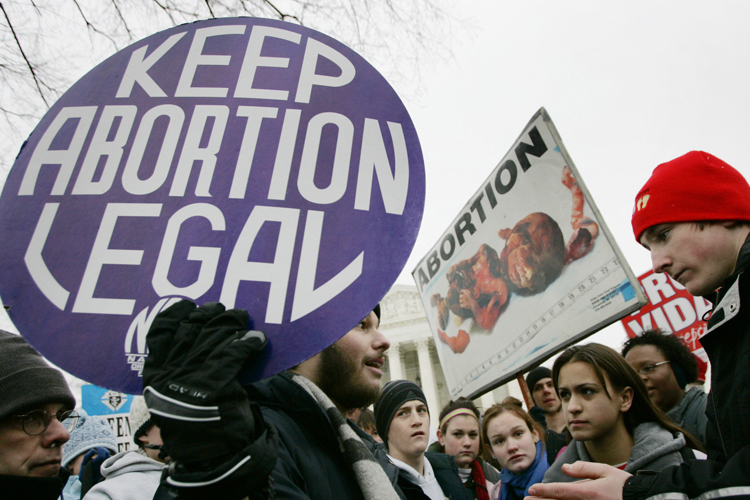
The midterm elections resulted in significant gains in the antiabortion political delegation: In the House, there are 44 more antiabortion votes and six in the Senate. Blue Dog anti-choice Democrats were also replaced by right-wing Republicans who are not only antiabortion but anti-family planning and far more likely to seek hard-line restrictions on access to abortion, rather than join any effort to make abortion less necessary by supporting better access to family planning.
For choice advocates it raises the question of whether President Obama’s efforts to bridge the divide on the issue remain worth pursuing. His call two years ago at Notre Dame for “open hearts, open minds and fair-minded words” on abortion wasn’t much help in negotiating healthcare reform. The major legislative vehicle for expressing common ground on abortion, the pro-life Tim Ryan and pro-choice Rosa DeLauro bill Preventing Unintended Pregnancy, Reducing the Need for Abortions and Supporting Parents Act has never garnered a single Republican co-sponsor — and with Republicans in control of the House, it’s effectively dead. Obama’s “common ground” allies were defeated by pro-life Democratic members of Congress and the Catholic bishops. Restrictive state bills continued to be introduced, especially in the wake of healthcare reform. At the White House policy office, interest in finding common ground has come to a halt. A promised common ground strategy paper was never issued.
These failures to make progress in the electoral and policy arena on abortion should come as no surprise. Politics is about the here and now. But if anything is ever to change the back-and-forth dynamic of so-called electoral solutions to the problem of abortion, Obama’s effort to get people to talk to each other has to be tried, outside of the Beltway.
That’s why I agreed to be one of four organizers of a public dialogue on abortion held at Princeton University in October, “Open Hearts, Open Minds and Fair-Minded Words.” Thirty-eight of the top scholars and some advocates were invited to talk to each other, not past each other, with an audience of 400 looking on and occasionally chiming in with tough questions. One would think the academy would be an easy place to have such a conversation, but Charles Camosy, the Fordham University professor who initiated the conference, was unable to get Fordham to agree to host the conference and turned to Princeton’s Peter Singer for help.
Clearly not everyone has an open mind on abortion. Yet most views have legitimate counterviews. Each side has an Achilles’ heel. For those opposed to legal abortion it’s usually the fact that they are willing to force women who don’t want to be pregnant to stay pregnant and deliver a child they don’t want. For those of us in favor, there’s the reality that abortion does take life — human life, and sometimes well into the fifth month of pregnancy.
A lot of energy goes into keeping our hearts and minds closed to the hard truths about the unintended and unavoidable negative consequences of either position. And bad things can happen when people who disagree about abortion get together. About 30 years ago Ellie Smeal invited Feminists for Life to dialogue with NOW. After what was by all accounts a civil meeting, at the post-meeting press conference, one of the pro-life attendees placed on the table a jar containing a dead fetus. Smeal said, “Never again.”
While few think there is much common ground on abortion to be found between, say, the Catholic bishops and NOW, the damaging effect of abortion conflict on the political process has pushed moderates on all sides toward more civil debate, which was a goal of the conference. And some cross conflict but civil conversations at the conference made my head spin. One of the most electric happened at the speakers’ dinner where place cards ensured that those who never rub elbows would break bread together. Just before dessert, there was an opportunity for a group discussion. The first to speak was Rachel MacNair, a “consistent ethic of life” advocate, who opposes war, capital punishment and abortion. MacNair described her prior work with combat veterans who suffer from post-traumatic stress disorder as a result of acts of violence and recent work with abortion doctors whom she believes suffer the same syndrome.
Almost immediately, Rebecca Gomperts, a former Greenpeace staff doctor, stood up and calmly noted that she found the remarks offensive; she was an abortion doctor and did not consider what she did an act of violence.
Forks dropped. Had MacNair committed a social faux pas? Should Gomperts have let it pass?
Before I could process it all, one of Gomperts’ dinner companions rose, somewhat agitated, but also sweet seeming, and expressed his amazement and mild discomfort at finding himself consuming asparagus crepes with someone who performs abortions. He regularly prays and pickets (politely, he assured us) with his children at an abortion clinic near his home. He concluded by noting that neither he nor the doctor had fangs.
Surely something subtle changed for each of us. Perhaps, as Peter Singer, another of the organizers, had hoped, it was one on those moments when those on different sides of the issue learned that not everyone who disagrees with them is either “stupid or evil.” Or simply that we are all human and things are complicated. In a blog post on the conference, MacNair expressed surprise that the two abortion providers she saw at the conference were young women, not old male doctors. “What brought them to a conference of this kind is still a question I’m mulling through,” she said.
Others are thinking about a remarkable argument by the Pulitzer Prize-winning civil rights historian David Garrow, who passionately defended the Roe v. Wade core holding on liberty as correctly decided. Garrow, a hard-liner on a woman’s right to choose with no limits, suggested that it’s time to think about post-12-week abortions differently than those under 12 weeks. Poignantly, Garrow acknowledged that a second-trimester abortion policy that reinstituted the pre-Roe state ethics committees that occasionally granted an abortion if women could prove they were crazy, or carried severely deformed fetuses, or had other severe health problems, would mean humiliation for some women and no abortion for others.
On the other side of the debate, Cathleen Kaveny, a pro-life lawyer and ethicist at Notre Dame, declared, “I do not think the American law should prohibit abortions in the case of rape, or where necessary to protect the life or health of the mother. I think that unborn life is equal in dignity to the rest of us. But I don’t think the law can rightly require a woman to bear the significant burdens associated with continuing a pregnancy in such instances.”
Such deviations from parallel orthodoxies are the stuff that gives one hope that the absolutism of politics can be transcended.
Not all dialogue was forward moving. Whether intentionally or innocently, even the best-willed can set each other off, and make it difficult to hear with an open heart what is being said, or identify what is positive in the other’s ideas. In a debate on the moral status of the fetus, the natural law philosopher John Finnis, who has mentored many of the bright lights of the Federalist Society, castigated all for using the “F word” — and he meant the fetus. “As used in the conference program … it is offensive, dehumanizing, prejudicial, manipulative. Used in this context, exclusively and in preference to the alternatives, it is an F-word, to go with the J-word, and other such words we know of, which have or had an acceptable meaning in a proper context but became in wider use the symbol of subjection to the prejudices and preferences of the more powerful.”
The J-word, it seems, is “Jew” and it was the first reference to the not useful and incorrect comparisons of pro-choice supporters to Nazis.
Garrow, in turn, used the “C” word, closing off dialogue with the “Catholics” who oppose abortion by claiming that their goal was not the protection of life, but outlawing contraception and moralizing about sex and gays. And while that is certainly true in Catholic officialdom, the sighs from the audience made clear that for many Catholics and evangelicals, banning birth control is the furthest thing from their minds.
Helen Alvare, who is best known for her tenure as the spokesperson on abortion for the Catholic bishops, set pro-choice feminists’ teeth on edge when she answered a question about women who decide to have an abortion. “Sometimes,” she said, “what women think they need now, is not in their best interest in the long term.” It was a line quoted over and over again in bewilderment and annoyance in conversations among pro-choice participants.
The singular focus of each side, one on women and the other on fetuses, was a complicating factor in achieving understanding at the Princeton meeting. It is perhaps an eternal divide, but it is becoming a richer and less polarized division as more partisans recognize that there are blind spots on both sides of the divide.
In the opening panel of the conference I noted that my greatest concern about the public debate on abortion has been that its stark yes or no legal focus has coarsened people on both sides. I left the conference still believing that is true. Opponents of legal abortion have written much about their fear that society has been insensitive to the value of fetal life — in research, pregnancy and into the neonatal arena. We need to hear that.
Much less has been written about a coarseness toward women that has developed among those opposed to abortion as they pursue efforts to make it illegal. There was as little recognition of coarseness toward women and their lives by pro-lifers as was there was of concern for the fetus by pro-choicers. This is not to say that pro-lifers don’t care about women; they just seem to care in very different ways than those of us who are pro-choice do. Most pro-life speakers at the conference wanted to protect women from themselves; most pro-choice speakers wanted to see women acknowledged as “moral agents” with the same moral status as other persons. There is, they believe, no “need” for abortion. Abortion is not healthcare. Adoption is absolutely and always a “positive.” Alvare dismissed a question about deaths from botched abortion in the developing world with a flick of her wrist and the claim that she was unfamiliar with the data.
Frustration on this matter followed several early panels that focused on the “moral status of the fetus” or asked speakers to accept that the fetus had the same moral status accorded to persons and to justify abortion on other grounds. Pro-choice attendees and speakers repeatedly asked why women seemed invisible on the program. Was their moral status to be considered? Lynn Paltrow, an advocate for pregnant women who among other things are shackled during delivery if they are unfortunate enough to have babies while imprisoned, asked about the moral status of women twice in a panel on fetal pain. Several speakers asked it in other sessions. In all but one case the question was ignored. Charles Camosy was the lone male of the 13 pro-life men on the program to answer the question and he noted that he had not considered the question of whether women’s moral status was an unresolved issue until recently and was still reflecting on the matter.
But a conference like Open Hearts also suggests pro-choice folks need to attend to our own house. We could start by not apologizing for or excusing women and girls who are sexually active and do not use contraception. Making babies is serious business, and sex is a pleasurable and meaningful activity with social consequences. We need to create a social and cultural movement around abortion that both acknowledges women’s rights and the seriousness of reproduction for all of society, not just women.
Not even the reproductive justice movement, the newest and best of abortion rights frames, adequately addresses the fact that abortion is a serious decision precisely because it involves how we, as humans, will foster respect for life, even if ending it is justified and not the same as taking the life of a person. Can we acknowledge that abortion is not just a medical procedure like having one’s tonsils out but entails many losses, including the inability to bring life one has created to fruition?
Is it possible that such acknowledgments might result not in greater restriction of abortion, but in a public that trusts us, and trusts women, even more?
I have a feeling that that suspicion was part of Obama’s call for open minds and his hopefulness about finding some common ground among advocates on both sides of the divide. Obama’s way of talking about abortion, separate from his policy actions, was and is brilliant. During his campaign and early in his presidency, he talked about abortion in a way most leaders who favor a woman’s right to choose have avoided.
In the Democratic Compassion Forum at Messiah College he set the bar for a new pro-choice approach when he acknowledged, “There is a moral dimension to abortion, which I think that all too often those of us who are pro-choice have not talked about or tried to tamp down. I think that’s a mistake because I think all of us understand that it is a wrenching choice for anybody to think about.”
The assumption of the Open Hearts conference was that that bar should be set higher for both those who are pro-life and those who are pro-choice. Perhaps some issues are “wrenching” enough or involve complex enough “choices” that the ways in which philosophers approach them in the academy are not that different from the way women and men sitting at their kitchen tables wrestle with decisions. Those who came to Princeton had the audacity to hope that way of thinking might have relevance to the political process as well.
It was just a week ago that I sat in Democratic Rep. Rosa DeLauro’s office, along with others in the Religious Coalition for Reproductive Choice, to strategize about getting pro-choice people of faith out to make sure that health insurance reform would include private and public options for women who choose abortion. It was a painful discussion. DeLauro, a pro-choice Catholic, is deeply committed to abortion choice as a matter of social justice, but she understood how important even a flawed reform bill would be to providing healthcare for low-income working people.
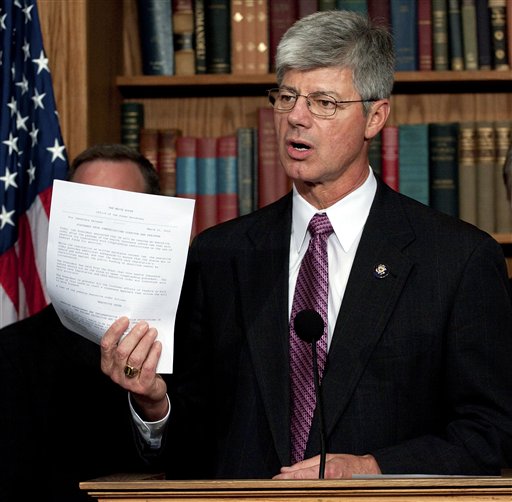
At one point I looked at DeLauro and both of us welled up with tears over the dilemma we knew she and others would face. About 20 antiabortion Democrats, mostly Catholics, with the full lobbying power of the Catholic bishops behind them, were very likely to force the inclusion of Rep. Bart Stupak’s antiabortion amendment to the Affordable Health Care for America Act, the inaptly named House bill. I did not envy the choice DeLauro and others would have to make. I knew the likeliest, and probably the right choice, would be to vote for passage of the bill.
That is just what happened when Democrats voted Saturday night for the act, which passed with the broadest restrictions on funding for abortion since the Hyde Amendment was enacted in 1976. The Stupak amendment forces insurance companies that currently provide abortion coverage to choose between continuing that coverage, or dropping it for all women if they want to participate in health insurance exchanges, and sell their product to government-subsidized consumers. If Democrats don’t get over their lust for a majority at any cost, this health insurance reform will haunt them the rest of their lives.
Ezra Klein of the Washington Post gets it exactly right.
Because of the limits placed on the exchanges, most of the participants will have some form of premium credit or affordable subsidy. That means most will be ineligible for abortion coverage. The idea that people are going to go out and purchase separate “abortion plans” is both cruel and laughable. If this amendment passes, it will mean that virtually all women with insurance through the exchange who find themselves in the unwanted and unexpected position of needing to terminate a pregnancy will not have coverage for the procedure. Abortion coverage will not be outlawed in this country. It will simply be tiered, reserved for those rich enough to afford insurance themselves or lucky enough to receive it from their employers.
Many Democratic women were shocked, and a wave of revulsion and anger at the Democrats who voted for these restrictions has ensued. The strongest advocates for choice in the House have moved quickly to pledge to reverse the restrictions. The Progressive and Pro-Choice Caucuses, led by Rep. Diana DeGette, announced they have 41 signatures on a letter to Pelosi that says they will not vote for a final bill if the restrictions on abortion go beyond current law.
President Obama is once again silent. Robert Gibbs refused in today’s press conference to offer any assurances that the president would stand up for choice. And, shockingly, Sen. Claire McCaskill, one of Obama’s “feminist” campaign surrogates, pushed the party’s flawed decision to sell out women for a Democratic majority, extolling the party’s commitment to “moderates.” So now anti-choice Democrats are moderate? McCaskill went further and pooh-poohed the restrictions, claiming most women would still get their coverage from employers and the bill would affect only a few women.
We started down this road in 1976 when the Hyde Amendment passed and when, in 1980, the Supreme Court upheld the principle that the federal government had the right to enact policies that favored childbirth over abortion by restricting funding for abortion. Most Democrats saw that giving antiabortion taxpayers greater moral standing than women who choose abortion was a political power play. After all, taxpayers don’t get any other say in how their taxes are used. Pacifists’ dollars support war; anti-bailout Americans saw their taxes go to banks just this year. Except on the issue of abortion, if you want to be a tax resister, the only thing to do is not pay your taxes and go to jail.
Clearly, the antiabortion right was using poor and powerless women as surrogates for their inability to control all women’s access to abortion. Sadly, a few pro-choice Democrats agreed with the antiabortionists that abortion should be legal but was morally repugnant, and should not be supported with federal dollars. Joe Biden, Jimmy Carter and Al Gore (who later changed his mind) were in that camp.
While efforts to overturn Hyde from 1976 to 2004 were sporadic and unsuccessful, at least some legislators tried. Most pro-choice legislators and advocates continued to agree that it was immoral to deny public funding to poor women for a service that was legal. All that changed with the Democratic defeats in 2004, which led the Democratic Party to falter seriously in its commitment to choice. Party leaders courted antiabortion Democrats as candidates for the House and Senate in conservative districts and states.
Howard Dean, then party chair, initiated an outreach plan to integrate anti-choice Democrats into the party. In fact, they were able to hold their press conferences in the Democratic National Committee building. Democrats for Life has proved to be radically antiabortion, and its members have been congressional ringleaders of the effort to exclude abortion coverage in health insurance reform. The party stopped calling them anti-choice and adopted the language they preferred, “pro-life.” In many ways, the message was sent that being pro-choice and antiabortion were equivalent, morally and politically. Deeply held beliefs were not to be critiqued, they were simply to be accepted so that Democrats would be seen as sensitive to religious values.
Religious groups that were broadly in alliance with the positions of the Democratic Party, but disagreed with the party on abortion, stepped up and began to “advise” the party on how to talk religion and gain the votes of the small percentages of anti-choice Catholics and evangelicals who are progressive on other issues. Democratic operatives promoted the new antiabortion progressives with deep-pocket party donors who were searching, post-2004, for new groups to support to reach out to “people of faith.” Most of those same groups have worked for the Stupak amendment, including Sojourners, Catholics United and Catholics in Alliance for the Common Good. They are now among the religious voices listened to on the Hill and in the White House.
Obama himself contributed to the rehabilitation of the immoral positions on abortion and poor women taken by these groups when he adopted the common-ground approach to abortion. The president chose to emphasize the “good will” and deeply held beliefs of those opposed to abortion and funding for poor women as opposed to a clear critique of the immorality of restricting a woman’s right to decide whether abortion was a moral decision for her, personally. The White House pushed pro-choice leaders to acquiesce to this form of diplomacy by creating a “dialogue” among all players, with no reference to the merits of various positions on abortion, simply a so-called shared commitment to “reducing abortion.” The president presented his own pro-choice position as just one view among many.
Common ground was featured and promoted even on Web sites devoted to choice, when RHRealityCheck.org dedicated a special site to providing a platform for both pro-choice and antiabortion views, further legitimating the idea that the legality and morality of abortion rights were debatable. We were treated to glowing descriptions of the “good” pro-lifers like Alexia Kelly of Catholics in Alliance for the Common Good, who compared abortion to torture and capital punishment, as well as the “bad” old pro-lifers like Doug Johnson of the National Right to Life Committee and the Catholic bishops. Following the vote on the Affordable Health Care for America Act, Catholics United issued a press statement in which they allied themselves with the bishops: “We are proud to stand with the US Catholic Conference of Bishops, the Catholic Health Association and other Catholic groups who have lent their unified support to this bill.” (How any progressive Catholic group can be proud to stand with a religious institution that just opened its doors to every homophobic and misogynistic Anglican to come on over and join our church is beyond me.)
Some pro-choice leaders warned that the party’s strategy, in the name of morality, muted the moral justice inherent in the pro-choice position. Former NARAL president Kate Michelman argued with Chuck Schumer and Howard Dean about anti-choice Democratic candidates to no avail. Party leaders were reassuring and adamant: If we could get a Democratic majority and a Democratic president, we would save choice.
So far, at least when it comes to health insurance reform, Dean and Schumer have been wrong. Let’s hope that the wrath that has gripped women in the face of this vote, and the immediate move by the Progressive and Pro-Choice Caucuses to adopt the take-no-prisoners strategy of the anti-choice crowd, saves the Democratic Party from itself.
Continue Reading
Close
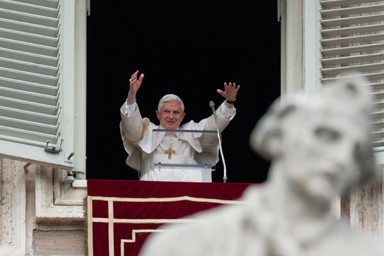
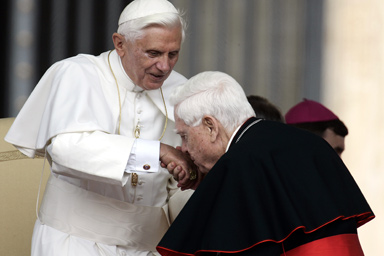
Pope Benedict XVI has made some Anglicans an offer he thinks they can’t refuse. The pope has opened his arms to welcome, en masse, Anglican and Episcopalian priests, bishops and even whole congregations into full communion with the Catholic Church — so long as they disagree with Anglican decisions to accept women priests and gay bishops. The Anglican priests and bishops can even bring their wives and kids with them.
In some ways this is nothing new. The U.S. Roman Catholic Church began reordaining married Episcopal priests in 1981. About 100 married Episcopal priests crossed over into Catholicism. At the time, news reports noted what seemed to be an injustice: Catholic priests who wanted to marry and have children needed to leave the priesthood while these ex-Episcopalians seemed to be getting a pass on the whole celibacy thing because of their conservative theological views. The ex-Episcopalians even had the right to get divorced and remain in the Catholic priesthood; in 1995, Father William Shields became the first married Roman Catholic priest to get divorced. His wife kept the five kids and in the divorce settlement it was agreed that the Roman Catholic Church did not have to pay any support for them.
But this latest gambit appears to be part of Benedict’s larger attempt to increase Catholicism’s market share without compromising on his version of theology. The invitation to the Anglicans, like Benedict’s earlier outreach to the once shunned ultra-right Lefebvrists, seems designed to grow conservatism in the European Catholic Church by scooping up dissidents on the right. But the danger is that Benedict’s push to pump up the church’s numbers will alienate as many as it attracts. As some customers come in through the sanctuary, many others will be fleeing out the side door.
The head of a conservative Anglican group in Britain, the Right Rev. John Broadhurst, estimates about 1,000 Anglican priests in the U.K. are disaffected and if the COE goes ahead and ordains women as bishops others think the numbers might grow. For Benedict XVI, a German who has railed against European secularism and called on Europeans to return to their Christian roots, adding 1,000 or so new clergy, a few more conservative bishops and possibly a few whole congregations would be a shot in the arm. Increasing market share by getting consumers to switch brands is a tried and true corporate strategy. (The unhappy U.S. Episcopalians for whom the installation of Gene Robinson, an openly gay priest, as bishop was the last straw have already formed their own Anglican church in America. Meanwhile, African Anglicans are considerably more conservative than even Rome so they are likely to stay put.)
But just as with the church’s latest mass-conversion offer a quarter-century ago, there are questions being raised about the pope’s plan. At an Oct. 20 press conference the Vatican said more information would be released within several weeks, but some elements of the agreement were explained. There will be a new, unified international procedure that will permit mass conversions rather than a case-by-case evaluation of each potential convert. The new Anglican-Roman Catholic priests and bishops will have their own leaders and not be part of the normal diocesan structure. It is expected that these leaders will be former Anglican priests and they may oversee individual priests, whole congregations or even new dioceses composed entirely of converts.
So eager is the pope to add to his army that he has agreed to allow the Anglicans to keep their liturgical practices as well as their wives and children. What, one wonders, might they have to give up? Well, they do have to accept the pope. And, if they are bishops and married, they can no longer serve as bishops. Married Anglican priests will not be able to climb the corporate ladder and become bishops but perhaps they can divorce and then be bishops.
Not yet clear is what they will do about sex with their wives. It is anticipated that they will need to take the vow of chastity — not celibacy, chastity. That means they can only have sex with their wives. In the early church, priests were married, but the ideal was for the priest and his wife to live like “brother and sister.” Contraception is another matter. Anglicans can use it. Roman Catholics can’t. If the crossover priests and bishops must follow Catholic rules on contraception, will the church be able to support all those kids? Parish priests don’t take a vow of poverty, so perhaps we will find the crossover guys will be more demanding about pay scales or take second jobs — or their wives will go out and get jobs.
And then there’s the case of Florida’s Father Cutie. Known in South Beach as Padre Oprah, Father Cutie left the Catholic priesthood earlier this year and became an Episcopal priest so he could marry the woman he loved. Can Father Cutie now come home again and be a Catholic married priest? What a slap in the face to the one in three Catholic priests who left the priesthood to marry and can’t even get the pope to answer a letter or their local bishop to provide them with a pension for the years they were priests.
This week the pope meets with the Lefebvrists, those “traditionalists” who broke with Rome over the reforms of Vatican II and whom Benedict has been courting along with the homophobes and misogynists of the Anglican communion. It was just a few months ago that he lifted the excommunication of four of their bishops and then discovered that one was a Holocaust denier and the others part of a system that consistently issued anti-Semitic statements. It seems he thinks they are worthy of religious leadership.
The pope is, as usual, unconcerned about how the Catholic people will react to his willingness to open his heart to homophobes and misogynists and anti-Semites in the name of corporate survival. A few die-hard optimists who still think justice can emanate from Rome are making soothing sounds. Sister Christine Schenk, the executive director of Future Church, a Catholic group that favors married priests, thought the Vatican ploy was “very interesting and probably somewhat encouraging in the sense of, yes, there is flexibility, there is openness.”
But for other Catholics a serious question has been raised about how long to stick it out. Mary Hunt, a Catholic feminist theologian not known for drinking the Kool-Aid, was blunt: “Let history record this theological scandal for what it is,” she wrote in Religion Dispatches, “the joining of two camps united in their rejection of women and queer people as unworthy of religious leadership.”
I personally am left asking at what point fighting to reform a corrupt system becomes the same as contributing to it. Bishop Martyn Minns, a leader of the dissident Anglicans in the U.S., rejected Rome’s offer out of hand. “I don’t want to be a Roman Catholic. There was a Reformation, you know.” If you are Roman Catholic, like me, you are still waiting for the Reformation.
Continue Reading
Close
The U.N. and the Council of Europe have together issued a new report on the horror of trafficking in human organs. The report, titled “Trafficking in Organs, Cells and Tissues and Trafficking in Human Beings for the Purpose of Removing Organs,” joins a stack of other reports that all repeat the same mantra: The body or its parts cannot be used for financial gain. It echoes the rightful condemnation of the traffickers who use poverty to convince poor people to give kidneys they are not healthy enough to give to some better-off person in exchange for a few thousand dollars. But like the other reports it also infers that the only ethical transplant policy is one exclusively based on altruism, and refuses to so much as explore whether there might be some forms of compensating donors for their generosity that would be ethical and fair.
Worldwide, 1 million people die each year from end-stage renal disease. About 600,000 live in such undeveloped countries that even dialysis is not available. But about 40 percent of the 1.2 million people on dialysis will also die and most of those lives could have been saved had a healthy kidney been available for transplant when they were first diagnosed. Right now the shortage of kidneys means that just under 70,000 people a year will get a transplant. The magnitude of this problem is lost in the COE/U.N. report’s rather single-minded focus on brokers and middlemen, the traffickers who are responsible for between 3,000 and 7,000 black market kidney transplants each year. When you realize that 1 million people need kidneys, it becomes clear very quickly that the problem is huge and the black market is small, and altruism is not enough to bridge the gap between them.
Everyone with kidney disease who has some control over their lives and some options confronts the reality of supply and demand. The way the system works in the U.S. is that patients who want to get a transplant in a timely manner are on their own to recruit a living donor. If you count on getting a deceased person’s kidney off the waiting list, your chances of dying on dialysis are higher than getting a kidney. I’m one of those people. I’m not yet in renal failure or on dialysis but I’m aware that the clock is ticking. My prospects for a living donor are great, since many friends have offered, although the first few tested did not make it. I need a younger person with stronger kidneys. So I must ask: Is there a way I could pay someone for their kidney that would be non-exploitative even if illegal? Of course there is.
I’ve considered three scenarios in which I would pay for a kidney. Two involve a degree of altruism combined with financial interest and the third is purely in the economic interest of the donor. Scenario one developed in response to the reaction of colleagues in the Latin American women’s movement to my search for a donor. Several friends offered to find a colleague who would like to give me a kidney but could also benefit from financial support for their work in the movement. So many people work for justice for organizations with little money and make next to no salary and have no pension. My friends felt that I could help such a person with a contribution to their work or an investment in their pension. I loved this idea. Reciprocal generosity. I would rather receive a kidney from someone who needed my help than from a friend who is well off. The second idea was to offer something meaningful to my well-off friends — I would contribute $50,000 to the charities of their choice. Their donation of a kidney would result in two goods — I would get a kidney that would enable me to live and a charity would be able to do better work.
The third option would put me in the realm of organ trafficking. I’m a well-connected, international person. I could beat the system and find a colleague in the health field in the countries where transplant tourism occurs. I could insist on a donor who meets U.S. medical standards, be admitted to a good hospital and get good care. In return, I could meet the donor’s real need. I have enough money to lift the donor out of poverty and into the middle class and I have enough money to guarantee any continued healthcare the donor would need if there were complications from the surgery. I could not promise the donor that he or she would not die, but I cannot promise that to an altruistic donor either. And the risk of death is considered small enough that kidney transplants are legal in the U.S.
None of the above options are optimal ways of saving my life or anyone else’s. And I am painfully aware of my financial privilege and how unfair it is to others. But people like me are forced to think about such options because altruism is not enough — because so few people have been convinced or motivated purely by the love of others to donate a kidney. The very people who are working to motivate donation via government transplant programs and nonprofit organizations have not themselves donated kidneys. Primary-care doctors routinely discourage healthy patients who want to donate a kidney from doing so. Two very healthy friends who told their doctors they were considering donating to me were told to forget it — that they should not take the risk. Neither doctor provided any information to them on what that supposed risk was. In a survey of primary-care physicians in Spain, only 21 percent approved of living kidney donation. The leading U.S. ethicist on organ transplantation, Arthur Caplan, a coauthor of the U.N. report, describes living donation as “maiming.” Caplan has said that the only possible justification for allowing someone to decide to “maim” themselves is if “the donor chooses to undergo the harm of surgery solely to help another.” Does Caplan think that conceptualizing living donation in this way, as something akin to martyrdom, is going to encourage people to donate organs?
There is no doubt that transplant policy needs to have as a top priority protection of donors against exploitation and fairness in the distribution of organs, but it must also recognize that the lives of millions of potential organ recipients are at stake. While a fine philosophical argument can be made that allowing people to receive direct compensation from the government in exchange for organ donation is fair and just, the concern we rightly have for the potential abuse of such a system and the vehemence of the professional and medical lobby’s opposition to such a system speaks against it. But there are viable policy positions that lie somewhere in-between the demand for absolute altruism and the drive toward a free but regulated market in organs. Just as we need to get out of our head the idea that organ donation must be pure, we should also shed the market mentality.
What might such a middle ground look like? The foundational principle would be generosity. The act of giving a kidney or part of one’s liver is an inherently generous act. Right now, it is treated in public as extraordinarily generous and in private as so crazy and dangerous no government should encourage it. A more temperate view would be for society to honor, and be generous toward, those who give organs. At a minimum donors should receive free and comprehensive health, disability and life insurance following transplant.
Sound sensible? Organizations like the National Kidney Foundation actually oppose such largess. They operate on the principle that a donor’s altruism should be so pure that she is not in any way better off as a result of transplantation and if insurance is provided it be limited to insurance for medical issues directly related to the transplant. Other possible acts of generosity toward donors might include tax credits and educational benefits similar to those received by military personnel. None of these should be conceptualized as payment for organs or as an incentive to convince or coerce people to give an organ. These are instead things that we should do out of a sense of fairness and appreciation for a good deed, whether or not they result in a single additional organ being donated.
Instead, we have the new U.N. report, which is no more helpful than past reports when it comes to solutions. It acknowledges that we will not end organ trafficking unless we end the shortage of organs for transplantation; it acknowledges that the methods tried up to now have not worked. It then insists that the same principles that have led to the failure to solve the problem and the same tired half measures that have failed are the only ones we can use. If the U.S. government adopts the values and solutions outlined in this report, it will have condemned people with ESRD to death as surely as has our policy in Darfur.
Perhaps the most damaging recommendation of the report is its insistence that efforts to expand organ donation should focus on more organs from dead people and that living donors should be viewed as a “complement” to that effort. There are simply not enough healthy kidneys available from dead people to meet the need. In the U.S., which has a sophisticated and efficient system for gaining consent to use deceased kidneys, about 10,000 are used annually in transplantation. Perhaps improvements in our consent process could yield another 5,000 kidneys. With 345,000 people on dialysis, 15,000 kidneys is a drop in the bucket.
Moreover, it is ethically and medically irresponsible for the U.N. report to favor the use of kidneys from deceased persons over living donation. The report notes that of the three types of kidneys used in transplantation, kidneys from living donors last the longest. More than 80 percent are still working after five years. Only 69.8 percent of kidneys from deceased persons are still working — and in a growing category of deceased kidneys that come from people who are much older or had conditions such as high blood pressure that would have disqualified them from use 10 years ago, the survival rate goes down to 55.1 percent.
How can the U.N. and the Council of Europe claim that such results are “excellent” and that we should favor deceased donation over living donation? Such advice might make sense if transplants had high complication rates for the donor. In fact, they are remarkably safe. The death rate in kidney removal is three for every 10,000 procedures — fewer than in liposuction. Other complications are rare. If the transplant field were not tied in knots by the ambivalence toward the ethics of living donation, it would strongly urge that living donation be the method of choice and efforts should be focused on increasing living donation and on educating health professionals and the public about its safety and efficacy. Instead of spending more millions of dollars on campaigns to get people to sign organ donor cards for donation when they die, let’s urge people to donate now.
The most confusing sections of the report attempt to address a difference between “trafficking in organs, cells and tissues” and trafficking in human beings “for the purpose of removing their organs.” The latter is clear and well-defined in various U.N. and Council of Europe documents and the report is right to absolutely and unequivocally condemn trafficking in persons for the purpose of removing their organs as an egregious violation of the “prohibition of making financial gains with the human body or its parts.”
But a problem is created if the report — and it is unclear on this point — wants to use trafficking prohibitions to criminalize any form of compensation or reward offered by government to organ donors. The U.N.’s 2000 anti-human-trafficking protocol defines trafficking as “the recruitment, transportation, transfer, harbouring or receipt of persons, by means of threat or use of force or other forms of coercion, of abduction, of fraud, of deception, of the abuse of power or of a position of vulnerability or of the giving or receiving of payments or benefits to achieve the consent of a person having control over another person for the purpose of exploitation.” Only one country has eliminated kidney waiting lists — Iran — and it has accomplished this by offering those who give kidneys free health insurance and a government payment of less than $2,000. (At the same time, it has criminalized brokers.) Ninety percent of kidney transplants in Iran are from living donors. Because there is no shortage of organs, poor people with renal disease get organs as frequently as the wealthy.
And an expansion of the prohibition on financial gain related to the human body or its parts cannot be the position of the Council of Europe, for its member states have already approved using the body for financial gain. They have legalized prostitution in the Netherlands, Germany, Austria, Switzerland, Greece, Turkey, Hungary and Latvia while criminalizing trafficking in sex workers. It also cannot be the position of the U.S., which allows the sale of eggs and sperm for fertility treatments and in some cases the use of eggs for embryonic stem cell research. Third parties from doctors and hospitals to commercial drug companies have patented other people’s genes with a view to making profits, and this is legal in the U.S. Volunteers for drug trials or other medical experiments are paid for their participation. Would the authors of the report like to see all these activities legally banned and punished? Or are only organ donors expected to be altruistic in the extreme?
No doubt some special circle of hell is reserved for traffickers in human beings, with a particularly nasty corner dedicated to those who prey on the poor and rob their organs. But it is not enough to wring our hands or shake our fists at these people. It is not enough to put them in jail and take away as much of their money in fines as we can. We must do something meaningful to motivate people who are in good health and want to save lives to see living donation of a kidney as something they can safely do now, not after they die. And we need not shy away from being generous to such donors in return. The idea that generosity is coercive is absurd. Sadly, no international body has yet figured this out and the reports they issue and policies they suggest are not only not helpful, they are damaging.
Continue Reading
Close
There’s little doubt that the 2002 sex abuse scandal in the Catholic church brought out the worst in official and some unofficial Catholic circles. Coverups and unconvincing explanations about why pedophile priests were routinely transferred to new parishes where they could continue to abuse children were the order of the day. While the U.S. bishops fairly quickly established a commission and put in place policies to prevent future abuse, they pretty much continued to claim innocence as more and more dioceses faced lawsuits for the coverups.
The Vatican was even less nimble. Pope John Paul II came in for heavy criticism for his handling of the scandal and for Vatican policies that used diplomatic immunity as well as orders of secrecy to suppress information and limit legal exposure. For John Paul II being pope seemed to mean never having to say you are sorry.
Benedict XVI made up for some of his predecessor’s actions by not only apologizing but meeting with abuse survivors on his 2008 U.S. visit. But any goodwill the Vatican gained was eroded when Archbishop Silvano Tomasi lashed out at criticism of the Vatican’s handling of clergy sexual abuse at last week’s meeting of the U.N. Human Rights Council in Geneva. In a petulant written statement Tomasi, identified in media reports as the Vatican’s representative to the U.N. but known within the Vatican by the strange title of Ambassador to Nowhere, became the Ambassador from Hell, repeating nearly every shibboleth the Vatican and its apologists have used to minimize clergy sexual abuse over the past decade. And Tomasi’s statement also exemplified the odd role that the Vatican plays in the U.N. He was exercising the Vatican’s “right to reply” as a “Non-member State Permanent Observer” to a complaint brought by an NGO. But is the Vatican really a state? For a long time, the Vatican has sought to have its cake and eat it too, enjoying the privileges of statehood without the responsibilities. Now the issue of child abuse has laid the contradictions bare.
Tomasi was responding to a charge brought to the U.N. Human Rights Council by the International Humanist and Ethical Union, alleging that the church had covered up abuse and allowed it to continue. Tomasi recited a familiar, and disappointing, litany. The problem is minor, the Catholic church is being picked on while other religious groups that are more abusive are ignored by the media and, of course, homosexuals, not pedophiles or bishops, are to blame. Outraged that anyone would question the church’s intentions, Tomasi noted that “the church has been busy cleaning its own house” and suggested “it would be good if other institutions and authorities where the major part of the abuses are reported could do the same and inform the media about it.”
In an unscientific critique reminiscent of Vatican claims that condoms don’t prevent AIDS because they have little holes in them, Tomasi argued that it would be more appropriate to consider the problem one of homosexuality rather than pedophilia: “While many speak of child abuse, it would be more correct to speak of ephebophilia, being a homosexual attraction to adolescent males. Of all priests involved in the abuses, 80 to 90 percent belong to this sexual orientation minority which is sexually engaged with adolescent boys between 11 and 17 years old.” Of course, 11-year-olds are not adolescents, but the archbishop seemed ignorant of the basic principle that sex between an authority figure and anyone in his or her care of any age is an abuse of power.
And he seemed totally oblivious to the fact that the reason he was called on the U.N. carpet had far more to do with the Vatican’s failure to protect children from such abuse. As recently as 2004 Pope John Paul II granted a special audience to Father Marcial Maciel, the Mexican priest who founded the right wing group the Legion of Christ and had been repeatedly and credibly accused of child sexual abuse since the 1970s. It was Benedict who finally had enough of Maciel and ordered him in 2006 to retire quietly to a life of prayer and initiated an investigation of the charges of sexually abusing young seminarians as well as fathering three or four children and supporting them with the order’s money. Not a single bishop has faced serious repercussions for his role in covering up sexual abuse. Boston’s Cardinal Law was forced to resign as archbishop of Boston but given a sweet job in Rome as the titular cardinal of Santa Susanna, the American Catholic church in Rome.
It is unsurprising, then, that for years NGOs interested in separation of church and state have criticized the Vatican’s special status within the U.N., calling it a violation of the separation of church and state. The Vatican is the U.N.’s sole Non-member State Permanent Observer, giving it all the privileges of a member state except voting. No other religious body enjoys this status in the U.N., and some would say its claim to statehood rests on shaky grounds.
The 1933 Montevideo Convention on the Rights and Duties of States defined the four criteria of statehood — permanent population, defined territory, government and the ability to enter into diplomatic relations. On the first count, the Vatican fails miserably. There is no permanent population at all. There are fewer than 1,000 residents and “citizenship” is temporary. One holds it only so long as one has a job or function related to the Vatican. Its territory is defined, though it occupies less than half a square kilometer in the center of Rome, but its governing capacity is minimal. The Vatican depends on the Italian government for most civic services, from garbage collection to healthcare and policing. And while the U.N. has no requirement that governments be democratic, the idea of a government run by an infallible head of state elected for life by a small group of men is a bit strange.
Even the Vatican admits its role in the U.N. is strange. “The Holy See finds itself in a particular situation because it is spiritual in nature. Its authority which is religious and not political extends over one billion persons throughout the world … Its strength … consists in the respect that its words, its teachings and its policy enjoy in the conscience of the Catholic world … The real and only realm of the Holy See is the realm of conscience.”
Sounds pretty much like an admission that the Vatican/Holy See is not a state. And yet, it has defended its right to participate in the U.N. as a state while seeking to have its cake and eat it as well. For the most part, the U.N. goes along. After all, on a number of traditional issues, the Vatican lends credibility to the peaceful objectives of the U.N. and to an emphasis on eradicating poverty. But in many areas, the Vatican uses its special privileges to obstruct more modern consensus on the usual issues — contraception, condoms, women’s rights and stem-cell research. And although the Vatican signs some U.N. treaties and conventions, it refuses to be held accountable.
This was the crux of the IHEU complaints before the Human Rights Council. The Vatican has signed the Convention on the Rights of the Child, which calls for all states to protect children from sexual abuse. Not only has the Vatican failed to do that, according to the IHEU it has actively engaged in practices that put children at risk. IHEU cites actions that include claiming that children and their parents have lied about abuse, failing to inform civil authorities of accusations of abuse and impeding investigations by transferring priests accused of abuse out of the country. On a minor level, it has neglected since 1994 to file the reports on the status of children in its “state” required of signatories every five years. IHEU calls on the Human Rights Council and the Committee on the Rights of the Child to open up all Vatican records on child abuse and permit CRC workers to interview workers with knowledge of these matters.
Lawyers for victims of clergy sex abuse in Ireland and the U.S. have sought to use the deposition process to gain access to the Vatican records without success as the Vatican uses diplomatic immunity to prevent any investigation of its role in covering up clergy sex abuse. It will be interesting to see if the United Nations will have any greater success or even try to get the Vatican to comply with the Convention on the Rights of the Child. Wasn’t it Jesus who said “suffer the little children to come to me” and “what you do unto the least of mine, you have done unto me”? Who would have thought it would take the U.N. to get the Catholic church to listen?
Continue Reading
Close