Frances Kissling

Should abortion be prevented?

Why the case for abortion rights must include a call for responsibility toward the creation of life.

  • more
    • All Share Services

Should abortion be prevented?

If abortion is a morally neutral act and does not endanger women’s health, why bother to prevent the need for it? After all, the cost of a first-trimester abortion is comparable to the cost of a year’s supply of birth control pills — and abortion has fewer complications and less medical risk for women than some of the most effective methods of contraception.

The above question has plagued advocates of choice since abortion was legalized. It has intensified in the face of antiabortion moralism about sex and responsibility, in the continued stigmatization of women who have abortions and in the increasingly expressed mantra that “there are simply too many abortions in the U.S.” Frustration has led some advocates of legal abortion to dig in their heels and insist that any talk about preventing abortions denigrates women as moral decision-makers, misunderstands the reasons women have abortions, retreats from principled support for the right of women to choose abortion without government interference, and tacitly lends credence to the contention that abortion is almost always morally wrong.

Some worry that the emphasis on prevention as a solution violates a core belief that good facts make good ethics. Demographers and social scientists are more than skeptical of claims by the group Democrats for Life that we can reduce abortions by 95 percent in 10 years if we modestly increase economic support for women who face unintended pregnancies. The critics note that the level of increased support suggested by this interest group compares unfavorably with the level of support currently afforded to women in European countries — and the rate of abortions in those countries, while lower than that in the U.S., comes nowhere near the 95/10 goal that DFL espouses.

Tactically, there is concern that an explicit goal of working to prevent the need for abortions or to reduce the incidence of abortion undermines efforts to demonstrate that those opposed to abortion are extremists. Are we buying into the anti-choice movement’s framing of the issue? Eleanor Smeal, president of the Feminist Majority, noted that “while we’re talking about all this, we could be putting the right wing on the defensive. We have to put the dying and suffering of women who don’t have access to safe abortion onto the table.”

Further exasperation ensues when efforts to prevent unintended pregnancy, and thus also reduce the abortion rate, are cast as a “common-ground” approach with both “sides” in agreement. In reality, the organizations most identified with opposition to legal abortion are at best only marginally interested in reducing unintended pregnancy through contraceptive use; they are focused instead on abstinence for those who are unmarried and are divided on contraception in marriage.

Many legislators who are opposed to legal abortion have discovered the hard way that embracing contraception diminishes their support from hard-line antiabortion groups. A case in point is Robert Casey, the pro-life Democrat running for Republican Sen. Rick Santorum’s seat in Pennsylvania. Casey has attempted to temper his antiabortion position by supporting a wide range of measures that would reduce the need for abortion. A progressive Democrat, he supports more economic support for low-income and poor women who become pregnant, and for children and families. He also supports contraception, including emergency contraception for adults over the counter. As a result, Casey has gone from being a pro-life Catholic poster boy to the whipping boy of antiabortion groups.

Pro-life Democratic Rep. Tim Ryan, who has led the effort for recognition of pro-life Democrats in the party, was dealt a blow when the group he is most closely associated with, Democrats for Life, refused to endorse his Reducing the Need for Abortion and Supporting Parents Act. The group’s executive director, Kristen Day, said the bill had become a problem for them because “when you start talking about contraception, people are very committed to one side or the other.” Day noted that her group was concerned only with helping women who had already become pregnant avoid abortion. Perhaps most sadly, the bill was introduced at a press conference at which the only “antiabortion” group willing to stand beside the pro-life Ryan and pro-choice Rep. Rosa DeLauro was Catholics in Alliance for the Common Good, which claims to be a progressive Catholic group challenging right-wing Catholicism. The Catholic Alliance was represented by Sister Sharon Dillon, who distanced herself from the bill by saying that as a Catholic group, her organization could not support the measures in the bill that provided support for contraception.

There is, of course, widespread support among abortion-rights advocates for contraception. Indeed, the country’s Planned Parenthood affiliates have prevented more abortions by providing family planning than have groups like Priests for Life and the American Life League, who remain adamantly opposed to abortion and refuse to support contraception, the best hope for reducing the need for abortion. Why should pro-choice groups accept the rhetoric of common ground on preventing the need for abortion, when the facts show that their counterparts in the antiabortion movement are unwilling to support contraception? Why should they, like Hillary Clinton, express respect for those in the antiabortion movement who actually are part of the problem?

Frankly, we shouldn’t. But our commitment is not with anti-choice leaders and groups. Our commitment is to women and to the vision of a just society that motivates our work. Our allies are those legislators who share substantially in that vision, including those who are far less accepting of a moral view that is broad enough to encompass the decision to have an abortion. Our link is to the vast majority of Americans who want abortion to be legal and find it not just practically but morally preferable to work to avoid its need.

So we definitely should not let any one or all of the above obstacles keep us from strongly supporting efforts to reduce the need for abortion. And we should not have an ounce of ambivalence about publicly declaring ourselves to be committed to ensuring that public policy include a focus on lowering abortion rates without restricting women’s freedom.

This takes us back to the very first sentence of this essay. Is abortion a morally neutral act? Is it, as some have said, an unambiguous moral good? This is where we go limp and get tongue-tied. If abortion is such a good thing — if it results in women coming to terms with their moral autonomy, making good choices for their lives, and acting in the interests of society and their existing and future children — then why, people ask us, do we want to reduce the need for it? Simply put, the movement as a whole and most of our leaders find it difficult to acknowledge publicly that we have spent our lives, our passion, fighting for something that both is central to human freedom and autonomy, and ends a form of human life.

We cannot imagine coercing a woman to continue a pregnancy that is unsupportable. At the same time, there is something valuable about encouraging public policy and personal decision-making that start from a presumption in favor of life. We interpret life broadly. We say we are in favor of legal abortion because it protects women’s lives. We do not mean just their physical lives; we mean their capacity to live full, free and happy lives. Why, then, should we think that a presumption in favor of life is inappropriately applied to fetal life? Why do we insist that because the fetus is not a person in any theological, scientific, legal or sociological sense, it does not deserve our consideration? Do not people want to know if those of us who advocate a moral right to choose an abortion also approach all aspects of life with wonder and awe? Can we totally separate our attitude toward the justifiable taking of non-personal life in abortion from the other principles of protecting life that have become crucial to our survival as civilized human beings?

A modern sensibility about an expanded definition of respect for persons and life became common in the last part of the 20th century. The war in Vietnam was almost over, and we thought we had learned a lesson about peace and justice. Women and racial minorities had their rights recognized. These advances now seem illusory as we see the way in which our country and other countries have morally distanced themselves from massive slaughter in war and in tribal and ethnic conflict. We see the continuing disregard for the lives and aspirations of the poor and marginalized people among us.

We are not just committed to the lives of persons; we are committed to being persons who respect many forms of life. We want to behave in ways that honor even non-human life — animals and plants included. We respect the environment, which is essential to our survival. We seek laws that ensure that human tissue and body parts are treated respectfully even as they are used to further the health and well-being of all. We insist that human subjects not be experimented upon. We speak out against the torture of one person, even if it would save the lives of many others, and we are horrified that this principle is not universally accepted.

It is foolish to think that these sentiments and values do not or should not affect the way in which we and the American people think about the fact that abortion necessarily results in the ending of potential human life. To think that we should remain inured to these instincts would tragically diminish our humanity and make us less worthy public leaders.

Although it would be unjust to place on women’s reproductive decisions the moral burden of upholding absolutely a presumption in favor of life, it is important that we express our belief that the ability to create and nurture and bring into the world new people should be exercised carefully, consciously, responsibly and with awe for our capacity to create life. That is one reason why we must commit ourselves to working to make abortion unnecessary, and be willing to use those words. We must not flinch when Hillary Clinton says abortion should be “safe, legal and rare.” We must applaud pro-choice members of Congress like Rosa DeLauro, who says: “We must create an environment that encourages pregnancies that can be carried to term.”

Such statements are not made in a vacuum; they are not the idiosyncratic thoughts of Catholics who have some creepy obsession with fetuses. They are part of thoughtful attempts to balance respect for a woman’s right to make the choice about when to bring a new child into the world with a deep presumption that life, even the life of non-persons, is worthy of respect. And they should be based on our values, on the desire not to better “message” abortion rights, but to respect the moral sensibilities of American women.

We have been on the defensive so long that we are like lionesses ready to rip out the throat of anyone who attacks our cubs — and women are our cubs! Yet the vast majority of American women act as if they do not want to need abortions. How many times have we heard a woman say, “I missed my period; I hope I am not pregnant; I don’t want to have to have an abortion”? According to the latest figures, 89 percent of women who are at risk of unintended pregnancy use contraception. They represent 48 percent of the 3.1 million women annually who have unintended pregnancies. The 11 percent of women at risk for pregnancy who are not using contraception account for the remaining 52 percent of unintended pregnancies.

They know there is no fully satisfying outcome to undesired pregnancy. The choice between having a child one is not prepared for (financially or parentally), giving a child up for adoption or having an abortion is a grim one. Women are strong and they cope well with these lousy choices. An unwanted child can become loved and cared for; an adoption, although painful, can be viewed as a generous gift; an abortion today may enable better parenting or a more fulfilled life without children in the future. Unwanted children can also remain unwanted and uncared for, though, and both adoption and abortion can result in lifelong sadness. For those who are pro-choice, this second set of outcomes of unintended pregnancies is inconsistent with our vision of a just and caring society. Women should not end up having children they do not want and cannot care for, nor should they end up having abortions they would have preferred not to have.

Why then do we get so caught up, so tongue-tied when we are asked if we want to prevent abortion? We spend countless hours trying to find the most nuanced way of answering this question. We worry that some woman will be hurt if we acknowledge the moral ambiguity of abortion. Yes, words are important, but so is vision. Should we say there are too many abortions in the U.S.? I doubt it. Which abortion tipped the balance from just enough to too many? It’s a little bit like Goldilocks and the Three Bears: too hot, too cold, just right. Which woman should not have had an abortion? What reason was frivolous? Our heads spin! We believe we are on thin ice if we say we want to reduce the number of abortions. Is there an ideal number of abortions? An arbitrary rate that is acceptable? Are some women irresponsible? Should we set an annual number and then stop performing abortions once we have hit that number? Does every woman who reaches puberty get an abortion chit which can only be redeemed once in a lifetime?

There is nothing unusual about moral complexity. Women — and men — live with it every day. It is what it means to be a human person. We are in favor of a woman’s right to decide when she will give the gift of life; after all, gifts must be freely given. We love life and want to act in its interest, and so we are in favor of supporting women’s own desire not to become pregnant when they do not wish to bring a child into the world, we strongly support the right of every woman to continue a difficult but wanted pregnancy, and we will do everything we can to support her economically and emotionally.

The reality is that we could use a lot of government involvement in supporting women’s moral agency. One of the most touching phrases in the Roe v. Wade decision was the recognition that women should not be isolated in their pregnancies. Government has washed its hands of pregnancy — it will not pay for abortion, it provides inadequately for contraception and sexuality education, and it certainly does not provide for women, children and families.

It is time to change that. A moral discourse that calls on individuals to act responsibly toward the creation of life cannot be separated from a call for social justice — including measures like those in the Ryan-DeLauro bill which affirm that it is not women alone who are responsible for respecting life, but government as well.

Getting religion

Democratic guru Jim Wallis's strategy to woo "values voters" compromises on abortion in unacceptable ways.

  • more
    • All Share Services

Getting religion

I was sitting in a Senate meeting room a few months ago when I felt the hairs on the back of my neck stand up. A senator started talking about Jesus. She (and it was not Hillary Clinton, so keep guessing) said, “What I want to do is get on the floor of the Senate and ask, ‘What would Jesus do about the budget? What would Jesus do about poor children? What would Jesus do about healthcare?’”

What I wanted to respond was that the floor of the U.S. Senate is not the place to invoke Jesus Christ. Most of us, whether we are people of faith or not, would vastly prefer that public policy be developed democratically, taking into account people’s views (including religious views, but not exclusively) about what they need to lead healthy and productive lives in relative freedom and peace. But I said nothing as I sent a private prayer of thanks to Jesus that no rabbis, imams, lamas or other non-Christian clergy were in the room. I vowed to send some money to the ACLU and People for the American Way, which seem to have the right strategies to deal with the rising tide of religious conservatism that has gripped the United States since the 1980s.

It was in 1981 that an outraged Norman Lear and others founded PFAW as a vehicle to combat the flag-waving bigotry of Jerry Falwell‘s Moral Majority. To counter it, they went to the core of American democratic values: the values of the Enlightenment, the idea of an America founded on a true secularism — one that understands that the government derives its powers from the consent of the people, not from the favored religion of the president. Religious leaders who shared that view of democracy joined with other opinion leaders in attempts to uphold those Enlightenment values, and we all proved that the Moral Majority was neither moral nor a majority.

Yes, there has been some ebb and flow in the tide of religious conservatism, with premature predictions of the death of the right followed by overblown assertions about its growing power. The Moral Majority fizzled out, to be replaced by the Christian Coalition, which fused with the Republican Party — and that party won America in 2004.

With the 2004 elevation of “religious values” voters, secular progressives and the Democratic Party decided they needed to get religion. Some deals have been cut, advice has been given, and coalitions are vying for a place at the table. Progressive religious groups claim to have registered 500,000 voters and put President Bush on the defensive with a piece of research that claimed abortion rates went down under President Clinton and up in the first two years of the Bush administration.

In the honeymoon period these groups are currently enjoying, few are examining closely what values are likely to enter the political discourse as a result of a left-wing God mediated or channeled by groups such as Sojourners and individuals like Jim Wallis (Sojourners’ executive director), who has become the most (self-)promoted voice for the religious left. I have no doubt that the senator who invoked Jesus had been tutored by Wallis. Her mantra was the most frequently used sound bite from Wallis’ textbook, “God’s Politics: Why the Right Gets It Wrong and the Left Doesn’t Get It” — “I find 3,000 verses in the Bible on the poor, so fighting poverty is a moral value.”

(In the interest of full disclosure, I have participated in an off-the-record dialogue with Wallis, Glenn Stassen and a few other progressive religious leaders to explore our perspectives on abortion. Nothing in this article comes from that dialogue, whose terms require that we not quote or characterize what participants say in the sessions.)

To a considerable extent, Wallis catapulted to success because no one else was available. And he was the new “man bites dog” story, an evangelical who claimed to be progressive. The rest of the progressive religious movement is amorphous and has not yet articulated an agenda or a set of values that can be generally agreed upon by those who enter the sanctuary. The main coalition vehicle is the Center for American Progress’ Faith and Progressive Policy initiative, whose structure and policy positions are still evolving. A second vehicle is the Freedom and Faith Forum organized under the auspices of Texas-based Drive Democracy, which focuses on grass-roots outreach to people of faith through an imaginative and inclusive bus tour. Everyone is welcome on this bus, including the gay, lesbian, bisexual and transgender community and reproductive-rights supporters, although, again, the group’s agenda is not yet carved in stone.

But Wallis is king, a constant presence at Center for American Progress events, brought by the organization to Democratic Party strategy meetings and trotted out to address the growing number of high-dollar donors looking for an answer to Democratic Party failures.

What does Wallis stand for? And how will women and democracy fare if his vision prevails in the party or progressive politics? His message prior to the 2004 election was based on a strategy long discarded by People for the American Way: Ignore hot-button issues like abortion and gay rights and concentrate attention on the Iraq war and poverty, and when all else fails, invoke tolerance.

It is on reproductive health issues and pay rights that Wallis’ views are most troubling. He is one of those religious leaders who set the teeth of feminist religious women, particularly Roman Catholics, on edge. He identifies himself as a progressive pro-life evangelical, but his heroes are … the Catholic bishops. His speeches are full of references to Cardinal Joseph Bernardin and the so-called consistent ethic of life. He claims to speak for “millions” of progressive Catholics who are eager to support the Democratic Party but balk at its stance on abortion. His pronouncements on Catholic teaching about abortion and what Catholics actually believe are firm and unshaken by facts. I know Wallis, and he is no theologian, but I would not be the least bit surprised if at some point Wallis followed conservative leader Richard John Neuhaus and became a Catholic.

The positions taken by Wallis on abortion, which remain unchallenged publicly by anybody in the Faith and Progressive Policy initiative, are likely to damage women’s reproductive health and rights. (The Center for American Progress, however, fully supports abortion rights.) Wallis’ views are hard to pin down. Attempts by interviewers to get Wallis to go beyond his well-rehearsed and often-repeated sound bites on the issue are met with politician-like repetitions of homespun theology. He thinks abortion itself is morally wrong but does not want to see it criminalized. His reason for such generosity is classically patriarchal beneficence: He doesn’t want poor women who are victims of poverty and injustice to suffer. There is no acknowledgment that a woman who is not a victim, but a thoughtful moral agent who could continue a pregnancy, might make a good decision to have an abortion.

In his attempts to seek “common ground” with others, Wallis focuses on the “too many abortions” argument. But his common ground is very shaky. It does not, for example, include contraception. Wallis has said he is in favor of contraception, but after a fairly extensive review of his writing and transcripts of speeches and sermons, I can find no reference to contraception as a common-ground means of reducing abortion rates. Wallis’ common ground is abstinence-focused sex education, adoption reform (with no specifics on what kind of reform he thinks would lead to a significant number of women choosing to give birth and then give up their babies for adoption), and better economic benefits and social support for pregnant women to encourage them to continue their pregnancies.

A lengthy Op-Ed published in the New York Times on Aug. 4 was the first indication of where Wallis would go in terms of abortion law. While he repeatedly has said that Democrats need not change their position on abortion, just the way they talk about it (comments echoed by party chairman Howard Dean), Wallis is now out of the closet. He supports “reasonable restrictions” on legal abortion. Which ones, and how many, are unclear. Does he support a cutoff of federal Medicaid funds for poor women’s abortions? Second-trimester abortions only when the pregnancies are likely to result in severe and long-lasting health consequences for the women or in dead children? Mandated scripts that lie about fetal development and the health consequences of abortion? Restrictions on access for adolescents unless their parents give consent? Waiting periods that make it hard for working women to get to clinics the several times required to prove they have “thought through” their decisions? Every restriction currently on the books adversely affects the poor women he claims to care about so much.

And here is where the challenge to the progressive religious agenda and its other leaders arises. Will any of them have the guts to take on Wallis in public? Will any ask if he is genuinely interested in presenting evidence-based policy solutions that really can reduce the need for abortions, or if he is using abortion as another way to push an antipoverty agenda? Are pregnant women a means to achieving Wallis’ agenda? There is no evidence that the positive measures he does suggest — better economic support, jobs, childcare and parental-leave benefits — would lead to a significant decline in abortion. There is, however, substantial evidence that access to contraception (both regular and emergency) would significantly reduce unintended pregnancy and thus abortion.

This overwhelming and admirable commitment to ending poverty and promoting policies that would do that has caught not only Wallis but another newly important figure in progressive evangelical circles, Glenn Stassen. Stassen, who describes himself as pro-life but is publicly in favor of legal abortion, is the author of the study that claimed that abortions decreased under Clinton and increased under Bush, and hypothesized that the reason was Bush’s cuts in the antipoverty budgets. More recent research by the Alan Guttmacher Institute has proved that Stassen was wrong on the facts. Abortions went down under Clinton but have continued to go down under Bush (although at a much slower rate). Most important, the data shows that Stassen’s conclusion — that the abortion rate went down under Clinton because of better support for poor pregnant women — is demonstrably wrong. Analysis by the AGI of government data shows that the reasons for the decline during Clinton’s presidency were an increased use of emergency contraception and a better use of traditional contraceptives such as the pill. When I asked Stassen why he continues to make his claims, despite the facts showing otherwise, instead of supporting contraception as a way to reduce abortion, he passionately responded, “Because I want to make an antipoverty argument.”

Stassen’s case provides a classic argument against the involvement of religious leaders in electoral campaigns. Stassen is a good man — sincere, honest and genuinely committed to women — but he shows how hard it is to be a prophetic and truly independent voice when you strongly support one candidate in an election. Perhaps I am naive, but I expect more of my religious leaders than I do of James Carville or Robert Shrum.

To the extent that the progressive faith community sees itself as another vehicle for the revitalization of the Democratic Party — and a vote getter — and party operatives also see that community as part of the electoral process, religion is in real trouble and democracy not far beyond.

Continue Reading Close

A divider, not a uniter

The charismatic Pope John Paul II chose not to engage all Catholics, and so leaves a tragic legacy of missed opportunity that has ultimately damaged the church.

  • more
    • All Share Services

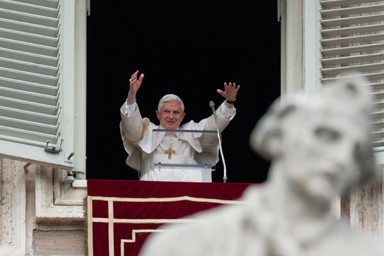
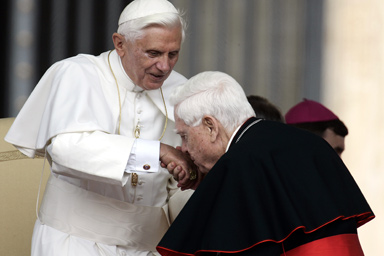
The death of friends, family and larger-than-life public persons is a time of great reflection — on the past, on our own lives and on the future. I am sure many people have found in the illness, suffering and death of Pope John Paul II a rich opportunity not only for personal moral growth but also for considering the Roman Catholic Church of the future. As we review his life and his ministry, we are strengthened by the paths he took that enhanced human freedom and dignity. At the same time, we are, I am sure, saddened by the paths not taken, the opportunities missed. I want to share with you my own thoughts at this most important moment in the life of the Catholic community, especially the lives of women in the church, who are natural seekers of greater justice and freedom.

On a personal level, I always felt a certain affinity for this Polish man. He looked like most of the people in my family of Polish-American coal miners, and he seemed too often as harsh as they were. Hardened by a difficult work life and much deprivation, they were quicker to say no than to say yes and stubborn to the core. Of course, my reactions to him are largely projections, as I never saw him in person and certainly was not on his A-list, never having had a chance to engage him or be engaged by him.

In the past year or two as I watched the pope age, suffer physical pain and experience emotional frustration, my anger at what I saw as his enormous failure to open his heart to those in the church who saw the commandment of love and the meaning of human dignity differently than he did receded. I was grateful that through his public suffering and vulnerability, I now had something I could hold to as a positive spiritual gift.

I watched him lose his charisma (but not his charism), stumble, fall, nod off while on camera, but also carry on, using his failing body in the same way he used his strong body — as a way to inspire and teach. I chose to learn from this, to let it inspire me. It has helped me understand my own embodied spirituality and passion for justice, and commit to using every ounce of my being for what I believe in. It has made me reflect on the concept of retirement, which I dearly long for.

John Paul II showed up for work every day until, we are told, the moment of his death. Nothing stopped him from serving God. This message, of course, will be experienced differently by the young Catholics whom he loved so much and by those of us gray-heads who are in the final phases of our service to humankind and cling to what we believed was the enduring contribution of the other charismatic 20th century papacy, that of John the XXIII.

I bristle a bit at the absence of any sense of history in the commentary on John Paul II. He was not the only 20th century pope with vision, charisma, mysticism and love of the poor. The enormous public recognition of those qualities had a lot to do with his longevity and the time in which he served. John XXIII was as inspiring, charming, stubborn, smart and committed as John Paul II. John XXIII opened the church to the 20th century, and John Paul II breezed through the door into the larger world. But John XXIII opened the church to internal democracy and left the church itself a better place; John Paul II, for all the bridges he built to the Jewish community, Islam and the poor, blew up the bridges that spanned the divide between clergy and laity, men and women, right and left, gay and straight. This is a great tragedy. The most important task of the next pope will be to rebuild those bridges.

I have always held the naive belief that John Paul II was really a better man than those whom he favored and lifted up to power in the church — that as a true mystic and intellectual, if he had only been able to truly engage in dialogue with those in the church, he would not have blown up those bridges. Had he been able to talk quietly and privately with women who chose abortion, couples who desperately needed to use contraception, gay couples who longed for family and faith, women called to the priesthood, married priests who deeply wanted to continue to serve as priests, in the same way he sat face to face with the man who shot him, things might have been different. Why he did not do that we’ll never know.

We can only hope that the next pope will engage all Catholics in ways this pope did not. An extraordinary communicator, John Paul II was also a great polarizer. Through the choices he made in dinner companions, papal appointments, religious orders and lay associations, he exacerbated the divide. Women in the North were told that we were exaggerated or extreme feminists and that our desire for autonomy — bodily, spiritual and intellectual — was not shared by the good women of the South. First-world Catholic women who believed in radical equality between men and women in the church were demeaned and caricatured by other women whom he appointed to Vatican commissions.

Conservative Catholic intellectuals who had unprecedented access to him and the Curia dined on that access and publicly degraded mainline Christian churches and leaders as irrelevant while lauding conservative evangelical and fundamentalist Christians as true partners in faith. Bullies who spoke to and of those they disagreed with in the ugliest terms were welcomed in the Vatican. I can only cringe at my memory of Randall Terry — who stood in front of abortion clinics in the United States screaming at women entering those clinics and justifying the murder of healthcare professionals who serve them — meeting the pope.

Given his great goodness, his intellectual rigor and his love of all humanity, one can only conclude that the pope did not know what he was doing when he empowered all of the above and more. One can also hope that the next pope will be aware of the unintended and negative consequences of this ugly undercurrent, which has so damaged the church throughout the world, and move to correct it.

In the next phase of the unfolding of God’s love, mercy and justice for the Catholic Church and the world, we must continue to work hard to help whomever is pope be an instrument of peace and justice for all — including those who have been marginalized within the church.

Continue Reading Close

Page 7 of 7 in Frances Kissling